Short answer: no. GPT-Live, the full-duplex voice model family OpenAI announced on July 8, 2026, is a ChatGPT feature at launch. OpenAI’s exact commitment to developers is one sentence: “We also plan to bring them to the API soon, and developers and enterprises can sign up to be notified using this form.”
That’s it. No endpoints, no model IDs, no pricing, no timeline beyond “soon.”
If you’re building a voice agent this quarter, waiting is the wrong plan, because OpenAI already ships a production-grade voice stack: the Realtime API, generally available, with models updated as recently as July 6. This guide covers what you can build today, how close you can get to GPT-Live’s interaction quality with the current stack, and what to prepare for when the GPT-Live API lands.
What GPT-Live would give you, eventually
Understanding what’s coming clarifies what to build now. GPT-Live’s architecture has two distinctive parts:
- Full-duplex conversation. The model processes incoming audio while generating output, deciding many times per second whether to speak, listen, pause, interrupt, or invoke a tool. Backchannels (“mhmm,” “got it”) come free.
- Background delegation. “When a question requires search, reasoning, or more agentic capabilities, GPT-Live can delegate the task to another model like GPT-5.5,” then weaves the answer back into the live conversation.
Neither is exposed to developers yet. Both have practical approximations in today’s API.
What you can build today: the Realtime API
The Realtime API is generally available and is the actual answer behind most “GPT Live API” searches. The current state:
| Capability | Status today |
|---|---|
| Models | gpt-realtime, gpt-realtime-1.5, gpt-realtime-2.1, gpt-realtime-2.1-mini |
| Transport | WebSocket and WebRTC |
| Phone calling | SIP support |
| Tool use | Function calling + remote MCP servers |
| Inputs | Audio, text, images |
| Pricing (gpt-realtime) | $4/M input tokens, $16/M output; audio rates billed separately |
Speech-to-speech in a single model, sub-second turn latency, interruption handling through server-side voice activity detection. We’ve covered the family as it evolved: the original gpt-realtime guide, the GPT-Realtime-2 walkthrough, and the GPT-Realtime-2.1-mini setup, which shipped two days before GPT-Live was announced.
What the Realtime API doesn’t do is true full-duplex. It’s fast half-duplex: excellent interruption recovery, but the model isn’t speaking while it listens, and it won’t backchannel while you talk. That’s the gap GPT-Live’s API will eventually close.
Getting close to GPT-Live behavior with today’s stack
Teams that want GPT-Live-like UX before the API exists are combining three patterns:
1. Aggressive interruption tuning. Server VAD with tight thresholds gets you conversational turn-taking that feels close to natural. Test the settings against real speech patterns, not demo scripts; background noise and thinking pauses are where configurations fail.
2. The delegation pattern, hand-rolled. GPT-Live’s background-delegation trick is reproducible today: run gpt-realtime-2.1 for the conversation loop, and when the user asks something hard, have a function call dispatch the question to a stronger model (GPT-5.5 via the standard API) while the voice model acknowledges and stalls gracefully. When the result returns, inject it into the session. It’s exactly what OpenAI productized; you’re building the plumbing yourself.
3. Filler-audio orchestration. Without native backchannels, some teams stream short acknowledgment audio during long tool calls. It’s a hack. It also works.
Testing the realtime stack
Voice agents fail in the transport layer more than the model layer, and this is where a proper API workbench matters. In Apidog, you can drive the WebSocket session directly: connect to the Realtime endpoint, send session configuration and audio events, and watch the server events stream back in order. That makes the failure modes visible: VAD boundaries firing early, function-call events interleaving with audio deltas, sessions dying silently on malformed configuration.
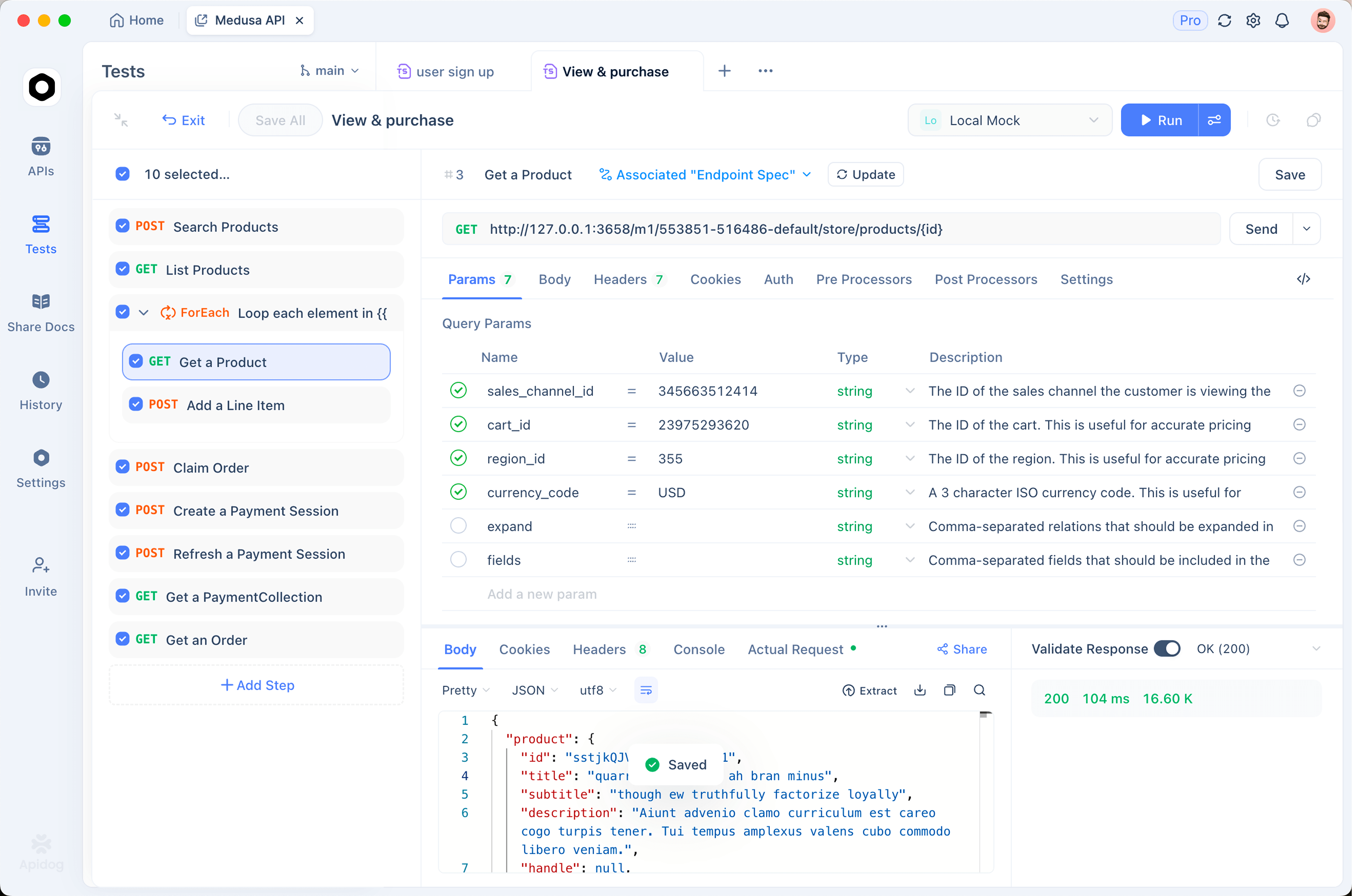
Two practical habits: keep your API key in an Apidog environment variable rather than in every client prototype, and mock your agent’s backend tool endpoints so you can test the conversation loop without your real services online. Download Apidog free; WebSocket testing is included.
When the GPT-Live API arrives: what to prepare for
Reading the announcement as an API roadmap, three changes are worth designing for now:
- Session semantics will change. Full-duplex means events flow both directions continuously, not in request-response bursts. Code that assumes “user turn, then model turn” will need restructuring; event-driven architectures will port cleanly.
- Delegation may become a first-class primitive. If OpenAI exposes the background-handoff mechanism, hand-rolled delegation plumbing becomes configuration. Keep yours loosely coupled.
- Expect a variant family, not one model. GPT-Live ships in ChatGPT as four variants (Instant-backed and Thinking-backed at two effort levels). An API release shaped the same way would mean latency/depth trade-offs selected per session.
Sign up for OpenAI’s notification form if the timing matters to your roadmap, and watch the naming distinction carefully as coverage multiplies: GPT-Live and GPT-Realtime are different stacks, and plenty of day-one articles conflate them.
The decision, plainly
| Your situation | Do this |
|---|---|
| Shipping a voice agent in the next 3 months | Build on gpt-realtime-2.1 now; the stack is GA and stable |
| Prototyping for a late-2026 launch | Build on Realtime API, keep delegation loosely coupled, sign up for the GPT-Live notification |
| Consumer-facing “talk to ChatGPT” needs | You don’t need an API; GPT-Live is already in the product |
| Deciding between OpenAI stacks | Read GPT-Live vs GPT-Realtime first |
FAQ
Is there a GPT-Live API? No. GPT-Live powers ChatGPT Voice only. OpenAI says it plans to bring the models to the API “soon,” with a sign-up form for notifications.
What’s the closest API to GPT-Live today? The Realtime API with gpt-realtime-2.1 or 2.1-mini: speech-to-speech, WebSocket/WebRTC, SIP calling, and MCP tool support, generally available.
Can I replicate GPT-Live’s delegation with the current API? Substantially, yes: use function calling to dispatch hard questions from the realtime model to GPT-5.5, then inject results back into the session. GPT-Live productizes this pattern.
Will GPT-Live replace the Realtime API? OpenAI hasn’t said. Given the four-variant structure and the GA status of the Realtime API, coexistence is the safer assumption for planning.