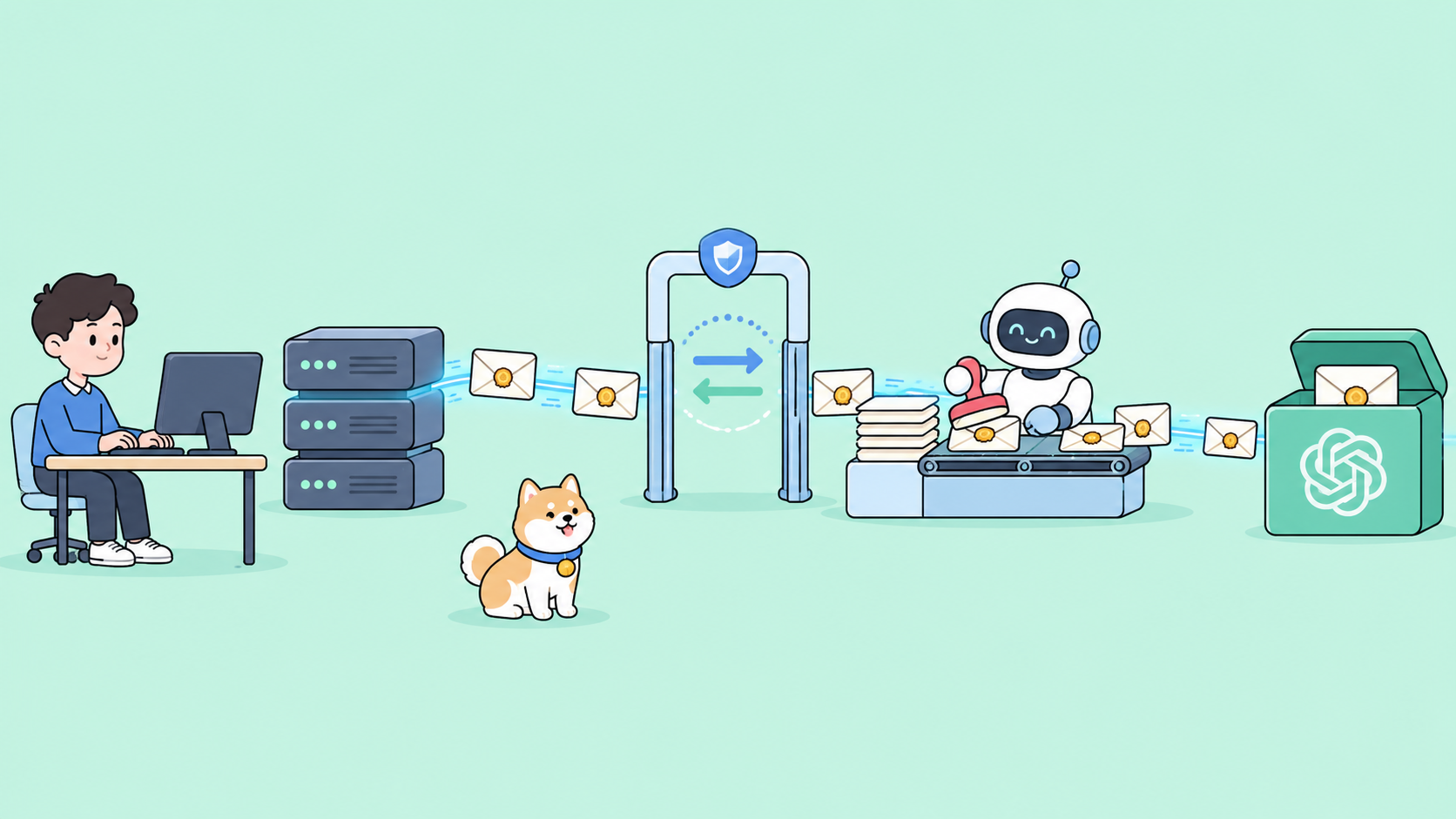
OpenAI introduced GPT-Live, a new generation of voice models that now powers ChatGPT Voice. The headline capability sounds simple and isn’t: GPT-Live listens and speaks at the same time.
Every previous ChatGPT voice experience, including Advanced Voice Mode, worked in turns. You talked, it waited, it answered. GPT-Live runs full-duplex: it processes incoming audio while generating output, and it decides many times per second whether to speak, keep listening, pause, interrupt, or call a tool. It can drop an “mhmm” while you explain something, wait while you think, and recover naturally when you cut it off mid-sentence.
GPT-Live at a glance
| Detail | |
|---|---|
| Announced | July 8, 2026 |
| What it is | Full-duplex voice model family powering ChatGPT Voice |
| Variants | GPT-Live-1, GPT-Live-1 mini, GPT-Live-1 Medium, GPT-Live-1 High |
| Backend | GPT-5.5 Instant (1 and mini); GPT-5.5 Thinking (Medium and High) |
| Default for paid (Go/Plus/Pro) | GPT-Live-1 |
| Default for Free tier | GPT-Live-1 mini |
| Platforms | iOS, Android, chatgpt.com (rolling out globally) |
| Video / screen sharing | Not at launch; “working to introduce these capabilities soon” |
| API | Not available yet; OpenAI plans to bring it to the API “soon” |
The four variants, and what runs behind them
GPT-Live ships as a family, and OpenAI is unusually clear about the wiring: “GPT-Live-1 (instant) and GPT-Live-1 mini use the GPT-5.5 Instant model in the background, while GPT-Live-1 Medium and GPT-Live-1 High use the GPT-5.5 Thinking model with medium and high reasoning effort.”
So the voice layer is the product, and GPT-5.5 does the heavy thinking behind it. In practice:
- GPT-Live-1 is the daily driver, now the default for Go, Plus, and Pro subscribers.
- GPT-Live-1 mini serves Free-tier users with the same full-duplex interaction style.
- GPT-Live-1 Medium and High trade response speed for deeper reasoning, backed by GPT-5.5 Thinking at medium and high effort.
Delegation: the second architectural idea
Full-duplex is one half of the design. The other is delegation. “When a question requires search, reasoning, or more agentic capabilities, GPT-Live can delegate the task to another model like GPT-5.5,” and it folds the result back into the conversation when it’s ready.
This solves the classic voice-AI dilemma: models fast enough for realtime chat are too shallow for hard questions, and models smart enough for hard questions are too slow for conversation. GPT-Live splits the job. The voice model keeps the conversation alive, backchannels included, while a stronger model works in the background. You keep talking; the answer arrives when it exists.
What GPT-Live can do at launch
Beyond conversation mechanics, the launch feature set includes:
- Web search, delegated and folded back into the dialogue
- Live translation between languages in conversation
- Visual cards rendered on screen for weather, stocks, and sports
- Image and file uploads inside a voice conversation
- Memory, consistent with the rest of ChatGPT
And the launch gap: “At launch, GPT-Live will not support voice with video or screen sharing in ChatGPT.” Advanced Voice Mode keeps those capabilities for eligible subscribers, and both Standard and Advanced Voice Mode remain available. If pointing your camera at things matters to your workflow, don’t switch yet; the details are in GPT-Live vs Advanced Voice Mode.
The benchmarks OpenAI cites
OpenAI names three evaluations, all framed against Advanced Voice Mode rather than rival products:
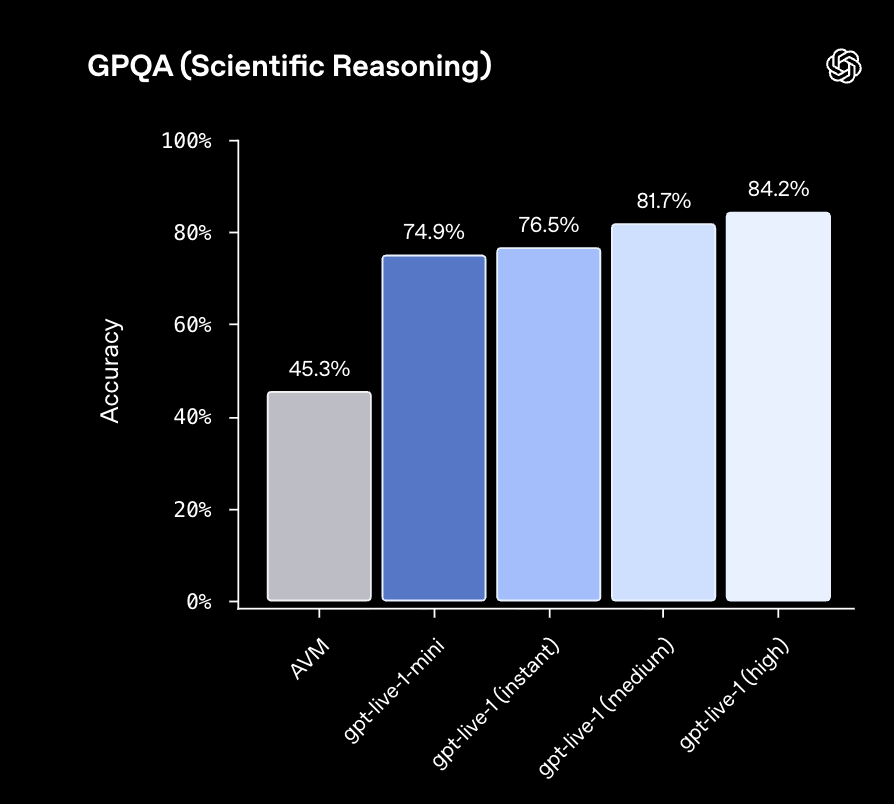
- GPQA: GPT-Live-1 “substantially outperforms” Advanced Voice Mode on expert-level scientific reasoning across biology, chemistry, and physics.
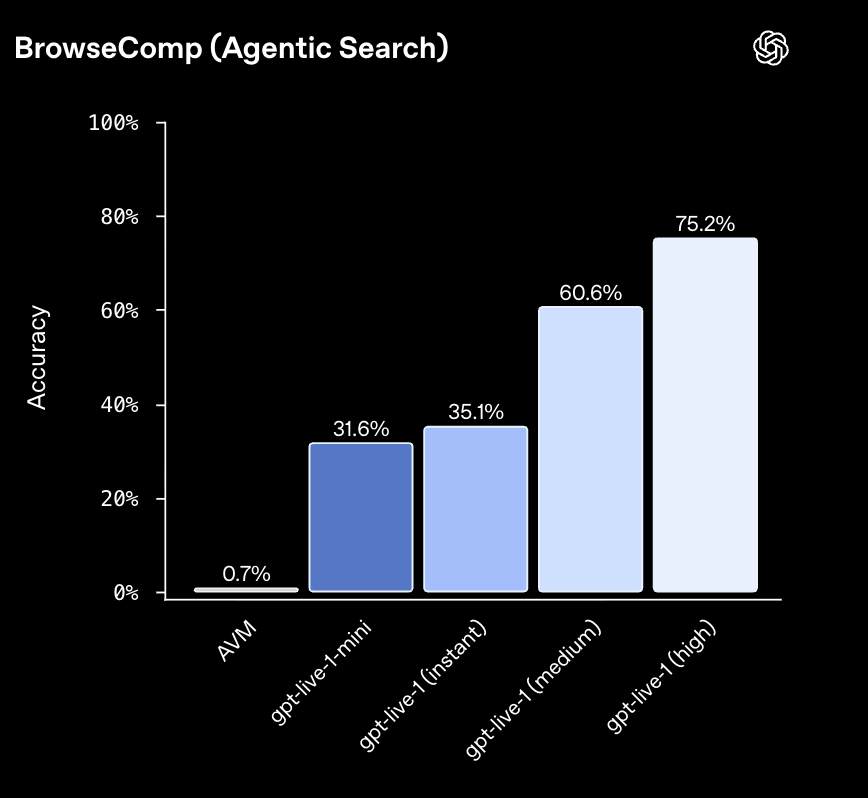
- BrowseComp: “strong gains” on agentic web search and hard-to-locate information.
- τ³-Voice Telecom (an internal variant): better performance on realistic multi-turn telecom support tasks.
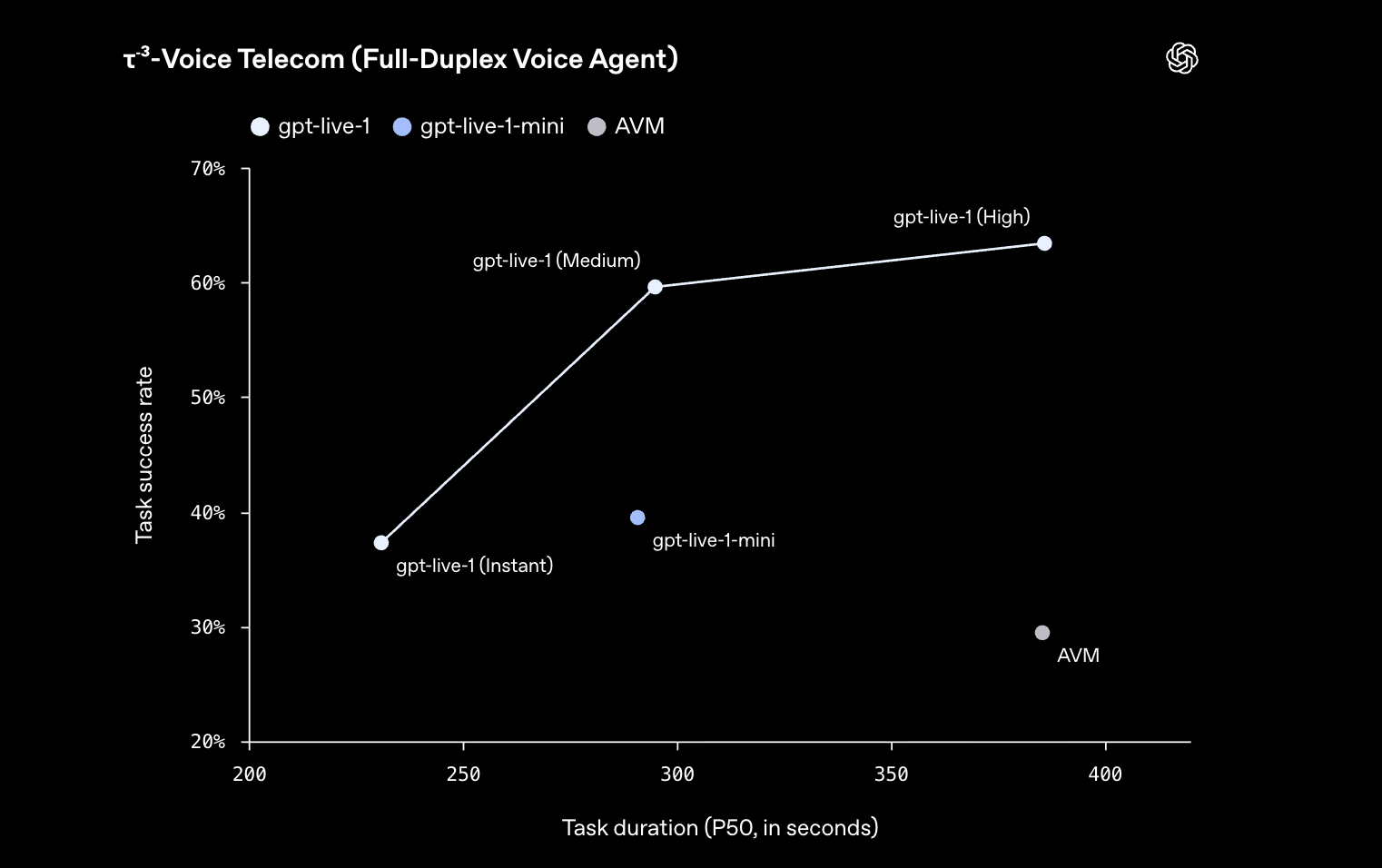
OpenAI also reports users “strongly preferred” GPT-Live in 5-to-10-minute head-to-head conversations. Note what’s absent: published scores, latency figures, and pricing. The claims are directional and vendor-reported, so treat them as a shape, not a scoreboard. Rival numbers will arrive when the comparison pieces can test the shipping product.
Where developers stand
There is no GPT-Live API today. OpenAI’s exact words: “We also plan to bring them to the API soon, and developers and enterprises can sign up to be notified using this form.”
What exists for building voice agents right now is the Realtime API, generally available with the gpt-realtime-2.1 family, WebSocket and WebRTC transport, SIP phone calling, and MCP server support. If you came here planning a voice product, the practical guide is Is there a GPT-Live API? What developers can use today, and the naming confusion between the two stacks is untangled in GPT-Live vs GPT-Realtime.
When you’re prototyping against the Realtime API in the meantime, Apidog handles the unglamorous parts: testing WebSocket sessions, inspecting streamed events, and mocking your voice backend so client work isn’t blocked on a live model connection.
How to try GPT-Live
The rollout is global but staged across iOS, Android, and chatgpt.com. Paid users get GPT-Live-1 as the new Voice default; Free users get GPT-Live-1 mini. Update the app, open Voice, and check which model responds; if nothing changed yet, the rollout hasn’t reached your account. Step-by-step setup, variant switching, and the CarPlay path (all plans, iOS 26.4+) are covered in how to use GPT-Live.
Why this launch matters
Voice has been the most demo-friendly and least production-ready AI interface for two years. Turn-taking made every assistant feel like a walkie-talkie. Full-duplex plus delegation is the first mainstream architecture that treats conversation as continuous rather than transactional, and OpenAI shipped it to hundreds of millions of users as the default, not as a lab preview.
The developer version of that architecture is coming “soon.” When it lands, realtime voice agents get a new baseline to test against; until then, the Realtime API path is where working systems get built. Download Apidog free if you’re building one now; the WebSocket debugging alone earns its place.
FAQ
What is GPT-Live in one sentence? OpenAI’s full-duplex voice model family powering ChatGPT Voice: it listens while speaking, backchannels naturally, and delegates hard questions to GPT-5.5 in the background.
Is GPT-Live free? Free-tier users get GPT-Live-1 mini as their default voice model. Paid tiers (Go, Plus, Pro) get GPT-Live-1.
Does GPT-Live support video or screen sharing? Not at launch. Advanced Voice Mode retains video and screen sharing for eligible subscribers; OpenAI says it’s working to bring these to GPT-Live soon.
Is there a GPT-Live API? Not yet. OpenAI plans to bring GPT-Live to the API “soon”; developers can build voice agents today on the Realtime API.
What model powers GPT-Live? GPT-Live-1 and mini run on GPT-5.5 Instant; the Medium and High variants use GPT-5.5 Thinking at medium and high reasoning effort.