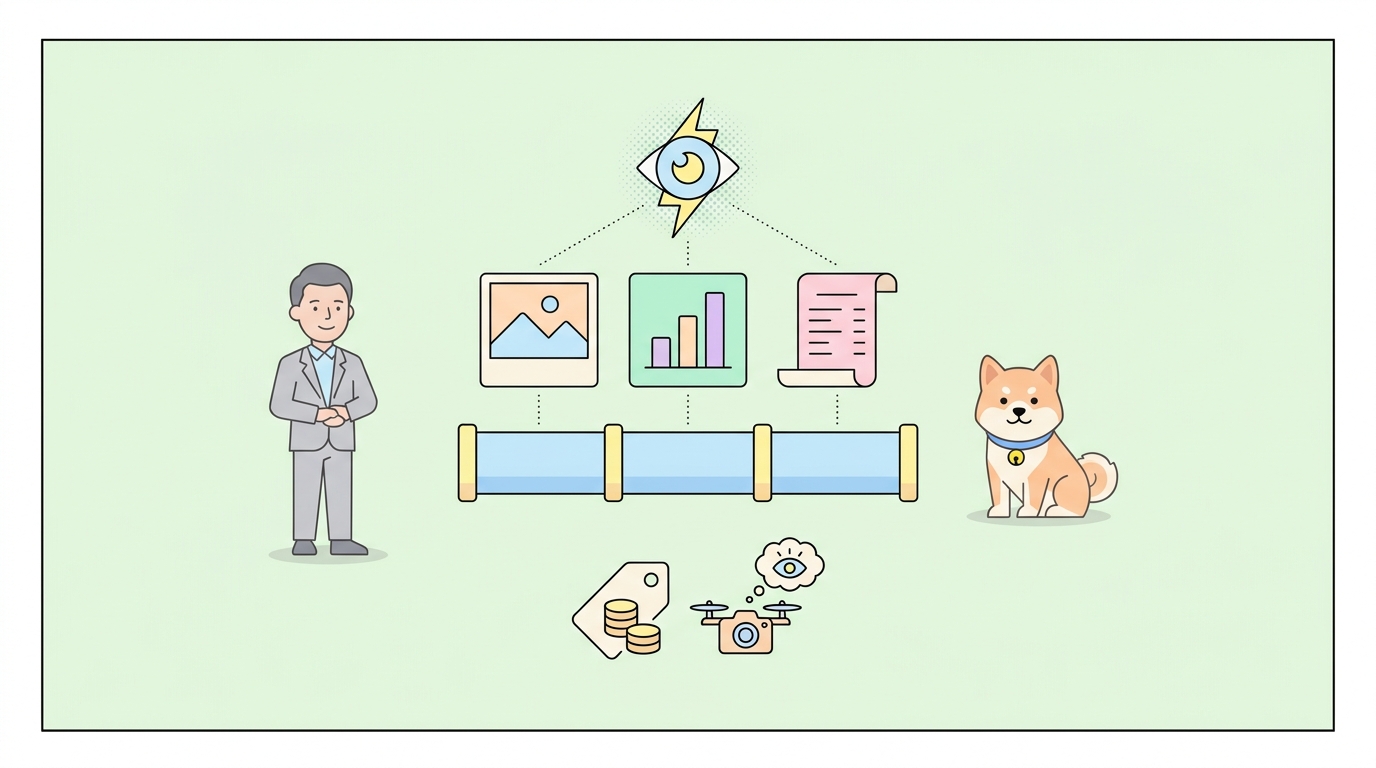
Buried in the Grok 4.5 launch materials is a sentence with more long-term significance than any benchmark: the model “was trained alongside Cursor.” Per Cursor’s own post, the editor contributed trillions of tokens of data capturing “user interactions with codebases and software tools.”
If you use Cursor, some version of developer sessions like yours helped train this model. This piece separates what’s confirmed from what isn’t, explains why this data strategy produced the model’s distinctive strengths, and covers what to check in your own settings. No panic, no dismissal; the facts are interesting enough on their own.
What the two companies have said
The confirmed statements, from the launch materials:
- Grok 4.5 was “trained alongside Cursor” and “jointly with SpaceXAI,” per Cursor.
- The training data captured “user interactions with codebases and software tools,” letting the model learn from “existing software as well as developer-agent interactions.”
- Reporting around the launch, including TechCrunch’s coverage, describes the ingested data as including debugging traces, multi-file diffs, and user corrections to agent output.
The corporate context: SpaceX agreed to acquire Cursor in June 2026 in a deal reported at $60 billion, folding the editor into the same family as xAI. The data pipeline is a product of that consolidation. Eleven days after Grok 4.5 entered private beta at SpaceX and Tesla, it shipped publicly with Cursor as a launch surface.
Why this data is different, and why it worked
Most code models train on static corpora: repositories, documentation, Q&A threads. That teaches what finished code looks like. It doesn’t teach the process of getting there.
Cursor session data is process data. It contains the sequence: what the developer asked, what the agent tried, which edit got reverted, what the human changed afterward, which tests ran, what the fix for the fix looked like. A user correction is a labeled example of “plausible output that was wrong in practice,” which is close to the most valuable training signal an agentic coding model can get.
The results are visible in the model’s published profile. Grok 4.5 wins terminal-and-workflow benchmarks (Terminal Bench 2.1: 83.3%, ahead of Opus 4.8) and posts an unusual token-efficiency figure: 15,954 average output tokens per SWE Bench Pro task, about 4.2x fewer than Opus 4.8 (max). Models learn verbosity from their data; a model trained on real sessions, where developers reward the shortest working fix, plausibly learned to stop talking sooner. The full numbers are in our benchmarks breakdown.
The questions that deserve straight answers
The Hacker News thread on the launch surfaced the questions most Cursor users have. Here’s what’s knowable today:
Was my data included? Not answerable from the outside. “Trillions of tokens” of interaction data implies broad collection, but neither company has published which user cohorts, time ranges, or consent states fed the pipeline.
What about Privacy Mode? Cursor has long offered a privacy setting whose stated policy is that code from those sessions isn’t stored or used for training. Neither launch post says whether the Grok 4.5 corpus predates, respects, or redefines those boundaries. The precise wording of Cursor’s privacy policy and your plan’s data agreement is what governs, and it’s worth reading now rather than assuming; policies at acquired companies get rewritten.
Is this against the rules? Cursor’s terms have permitted product-improvement use of non-privacy-mode data. Training a flagship model at an affiliated company can be read as exactly that, at unprecedented scale. Enterprises with data-processing agreements should have their counsel map “product improvement” against “training a commercial foundation model” rather than taking either company’s framing.
Is my code in the model? Verbatim regurgitation of training data is rare in well-built modern models but not impossible. There’s no public memorization audit for Grok 4.5.
What to do about it, practically
For individual developers:
- Check your Cursor privacy settings today. If you work on anything sensitive and privacy mode is off, that’s your action item, independent of anything Grok-related.
- Read the current data terms, not your memory of them. The acquisition makes this the right month to re-read.
For teams:
- Admins should audit workspace-level data settings. Team plans centralize this; one toggle covers everyone.
- Separate concerns properly. Editor telemetry is one exposure surface; what you send to model APIs at inference time is another. Inference calls are governed by API data-use terms, not training-corpus history.
- Keep secrets out of both surfaces. API keys, tokens, and credentials don’t belong in prompts or code sent to any AI tool. If you’re testing model endpoints, store keys as environment variables in Apidog rather than pasting them into editor sessions or shared collections; your secrets stay in a vault designed for them, and your team’s requests reference the variable, never the value. Download Apidog free to set up a shared vault for your team’s model keys.
None of this requires abandoning the tool. It requires knowing which switches exist and setting them deliberately.
The precedent matters more than this launch
Grok 4.5 is the first frontier model openly trained on a commercial editor’s user sessions. It won’t be the last. Every AI-editor vendor now has proof that session data produces differentiated capability, and every acquisition of a developer-tools company now has a data-asset subtext. GitHub, Google, and Amazon all sit on analogous interaction corpora.
Developers have effectively become unpaid data-labelers for agentic coding, with terms-of-service documents as employment contracts. That’s not inherently sinister; it’s how the tools improve, and Grok 4.5’s quality is partly your community’s accumulated corrections. But it makes reading privacy settings a professional skill rather than paranoia.
For the model these sessions produced, see what is Grok 4.5, how it stacks up against Opus 4.8, and how to run it inside Cursor, doubled usage and all.
FAQ
Did xAI train Grok 4.5 on Cursor user data? Yes, by both companies’ description: Cursor contributed trillions of tokens of developer-interaction data, including agent sessions and user corrections.
Does Cursor’s privacy mode protect my code from training? That’s its stated purpose. Whether and how it applied to the Grok 4.5 corpus hasn’t been publicly detailed; check the current policy text and your plan terms.
Can I use Grok 4.5 without contributing future training data? Controls live in Cursor’s privacy settings and xAI’s API data terms. Review both; API-only usage through the xAI console is governed separately from editor telemetry.
Why does training on sessions make the model better at coding? Session data teaches process: what failed, what the human corrected, and what the shortest working fix looked like. Static code teaches only the end state.