To use the Claude Sonnet 5.5 API, send a POST request to https://api.anthropic.com/v1/messages with "model": "claude-sonnet-5-5", your key in the x-api-key header, and anthropic-version: 2023-06-01. It costs $2 per million input tokens and $10 per million output tokens, reads up to 1M tokens of context, writes up to 128K, runs adaptive thinking by default, and defaults to high effort.
Anthropic released Sonnet 5.5 on September 28, 2026 (what is Claude Sonnet 5.5 covers specs and benchmarks). This guide walks through a first call in curl, Python and TypeScript, then effort, thinking, tools, streaming, refusals and rate limits. Moving Sonnet 5 code? The Sonnet 5.5 vs Sonnet 5 guide has every breaking change with before/after JSON. You can send each request below from Apidog and keep it as a saved test with assertions.
Claude Sonnet 5.5 API at a glance
| Parameter | Sonnet 5.5 behavior |
|---|---|
| Model ID | claude-sonnet-5-5 (Bedrock: anthropic.claude-sonnet-5-5) |
| Price per MTok | $2 input, $10 output, $0.20 cache reads; Batch $1/$5 |
| Context / output | 1M / 128K; 300K on Batch with the output-300k-2026-03-24 beta |
output_config.effort |
low, medium, high (default), xhigh, max |
thinking.type |
adaptive (default when omitted) or between_tools; disabled returns 400 |
thinking.display |
omitted (default), summarized, updates (beta) |
tool_choice |
auto or none; any and tool return 400 |
temperature, top_p, top_k |
Non-default values return 400 |
| Minimum cacheable prompt | 512 tokens (1,024 on Sonnet 5) |
max_tokens for agentic coding |
128,000, with streaming |
Sources: the Sonnet 5.5 model page and the migration guide.
Claude Sonnet 5.5 API example: your first call
Create a key (the Anthropic API key guide walks through it) and export it as ANTHROPIC_API_KEY rather than hardcoding it. Then send this:
curl https://api.anthropic.com/v1/messages \
  -H "x-api-key: $ANTHROPIC_API_KEY" \
  -H "anthropic-version: 2023-06-01" \
  -H "content-type: application/json" \
  -d '{
    "model": "claude-sonnet-5-5",
    "max_tokens": 4096,
    "output_config": {"effort": "medium"},
    "messages": [{"role": "user", "content": "Explain idempotency keys in two sentences."}]
  }'
The Python SDK reads ANTHROPIC_API_KEY from the environment:
import anthropic

client = anthropic.Anthropic()
response = client.messages.create(
    model="claude-sonnet-5-5",
    max_tokens=4096,
    output_config={"effort": "medium"},
    messages=[{"role": "user", "content": "Explain idempotency keys in two sentences."}],
)
print(response.stop_reason)
for block in response.content:
    if block.type == "text":
        print(block.text)
TypeScript works the same way:
import Anthropic from "@anthropic-ai/sdk";

const client = new Anthropic();
const response = await client.messages.create({
  model: "claude-sonnet-5-5",
  max_tokens: 4096,
  output_config: { effort: "medium" },
  messages: [{ role: "user", content: "Explain idempotency keys in two sentences." }],
});
for (const block of response.content) {
  if (block.type === "text") console.log(block.text);
}
Read content blocks by type. Thinking is on by default, so a response can open with a thinking block, and code that reads content[0].text breaks. Thinking tokens are billed as output and count toward max_tokens even when their text is hidden, so leave headroom above the reply you expect.
Choose an effort level
Effort, set in output_config.effort, is your main cost and quality dial. Anthropic recalibrated the levels for Sonnet 5.5, so a Sonnet 5 setting doesn’t carry over; run a fresh sweep on your own evals. The prompting guide suggests these starting points:
| Workload | Start at |
|---|---|
| General work | high (the API default) |
| Agentic coding, well-specified tasks | medium, moving to high for harder or longer ones |
| Chat and latency-sensitive calls | medium or low |
| Hard tasks where your evals show a measured gain | xhigh or max |
The spread is wide. On Anthropic’s own Terminal-Bench 4.0 runs, Sonnet 5.5 scored 43.0% at high for $1.94 per attempt and 70.6% at max for $12.54. The Sonnet 5.5 pricing breakdown works through cost per request.
Plan for three behaviors. From medium up, the model thinks before almost every reply, even a greeting, and prompting it to think less isn’t reliable: lower the effort instead. At low and medium it tends to check in early on long agentic tasks. And changing top-level effort between requests invalidates the prompt cache. To switch levels mid-conversation and keep the cache, use per-message effort (beta, header anthropic-beta: mid-conversation-output-config-2026-07-01): add a role: "system" message with empty content and the new output_config.effort.
Control thinking: adaptive or between_tools
Omit the thinking field and Sonnet 5.5 runs adaptive thinking. It rejects {"type": "disabled"} with a 400. To turn off up-front thinking, send between_tools, the lowest setting:
{
  "model": "claude-sonnet-5-5",
  "max_tokens": 16000,
  "thinking": {"type": "between_tools"},
  "output_config": {"effort": "high"},
  "messages": [{"role": "user", "content": "..."}]
}
Rules for Sonnet 5.5 between_tools:
- It works only at
low,mediumorhigh. Atxhighormaxit returns 400. - It takes no other field. Adding
display,budget_tokensorblock_bindingreturns 400. - It needs no beta header and works on every platform.
- Effort can’t change mid-conversation while it’s set.
- SDK versions that don’t define it fail type checking, so update your SDK.
Under adaptive thinking, display decides what thinking blocks contain. The default, omitted, returns each thinking block with an empty thinking field plus a signature. summarized returns readable summaries. updates (beta, header thinking-display-updates-2026-08-18) returns only progress updates as text.
Progress updates are the change most likely to confuse a UI. Sonnet 5.5 puts notes longer than a sentence or two, written between tool calls, into their own thinking blocks instead of text. Under the default omitted those blocks are empty, so an agent interface that used to narrate its steps goes quiet. Set display: "updates" or "summarized", or run between_tools, which returns the notes with text. Render each non-empty thinking block before the tool_use block that follows it. Asking for reasoning in the reply text invites a reasoning_extraction refusal, so read these blocks instead.
Use tools without forced tool_choice
Forced tool use is gone. A tool_choice of {"type": "any"} or {"type": "tool", ...} returns a 400 with this message, on the token-counting endpoint too:
tool_choice: type "tool" and "any" are not supported for this model.
Send auto, mark the tool strict: true so its input matches the schema, and tell the model in the prompt when to call it:
{
  "model": "claude-sonnet-5-5",
  "max_tokens": 1024,
  "tools": [{
    "name": "get_weather",
    "description": "Get the current weather for a city",
    "input_schema": {
      "type": "object",
      "properties": {"location": {"type": "string"}},
      "required": ["location"],
      "additionalProperties": false
    },
    "strict": true
  }],
  "tool_choice": {"type": "auto"},
  "messages": [{"role": "user", "content": "What's the weather in Paris? Use the get_weather tool."}]
}
A request can carry at most 20 strict tools, and strict schemas need additionalProperties: false on every object. On Amazon Bedrock, strict tools aren’t available for Sonnet 5.5: send auto without strict and validate the input in your code.
Two loop details matter. Pass every thinking block back unchanged with its tool_use block, empty ones included. And expect the occasional case slip, such as bash for a tool declared as Bash. The prompting guide suggests accepting unambiguous matches, or returning a tool_result with is_error: true that states the exact name.
Stream responses
Add "stream": true to the body, or use the SDK’s stream helper. For agentic coding, the prompting guide recommends max_tokens of 128,000 with streaming:
with client.messages.stream(
    model="claude-sonnet-5-5",
    max_tokens=128000,
    output_config={"effort": "medium"},
    messages=[{"role": "user", "content": "Review this diff for bugs: ..."}],
) as stream:
    for event in stream:
        if event.type == "content_block_delta" and event.delta.type == "text_delta":
            print(event.delta.text, end="", flush=True)
    final = stream.get_final_message()
Server-sent events arrive as message_start, then content_block_start, content_block_delta and content_block_stop for each block, then message_delta (carrying stop_reason) and message_stop. Under omitted, a thinking block streams one empty thinking_delta and a signature_delta, then text begins. Expect a pause of several seconds before a progress-update block opens.
stream.get_final_message() (TypeScript: stream.finalMessage()) rebuilds complete blocks with their signatures. Append that content to history as the assistant turn, unchanged, and keep history append-only. Sonnet 5.5 signs each thinking block over the conversation before it, so on accounts created on or after August 31, 2026 (00:00 UTC), replaying a block after editing earlier history returns 400. Blocks are also tied to the account that produced them.
Handle refusals and fallback
A refusal isn’t an error. You get HTTP 200 with stop_reason: "refusal" and a stop_details object whose category is cyber, bio, frontier_llm, reasoning_extraction or general_harms, plus an explanation. Display the explanation rather than parsing it; its wording isn’t stable. Branch on stop_reason before you read content.
Server-side fallback is opt-in. Add "fallbacks": "default" and the anthropic-beta: server-side-fallback-2026-07-01 header (beta, Claude API only), and the API retries cyber and frontier_llm declines on Sonnet 5. The other three categories aren’t retried. The response’s model field names the model that served it, and a fallback content block marks the handoff.
Rate limits
Sonnet 5.5 has its own rate limit, separate from Sonnet 5’s. The rate limits page lists four tiers:
| Tier | Requests/min | Input tokens/min | Output tokens/min |
|---|---|---|---|
| Start | 1,000 | 2,000,000 | 400,000 |
| Build | 5,000 | 5,000,000 | 1,000,000 |
| Scale | 10,000 | 10,000,000 | 2,000,000 |
| Custom | Contact sales | Contact sales | Contact sales |
For 429 handling and backoff, see the rate limit exceeded guide.
Test the Claude Sonnet 5.5 API in Apidog
Saved requests make effort comparisons and stream debugging repeatable. Here’s the setup in Apidog:
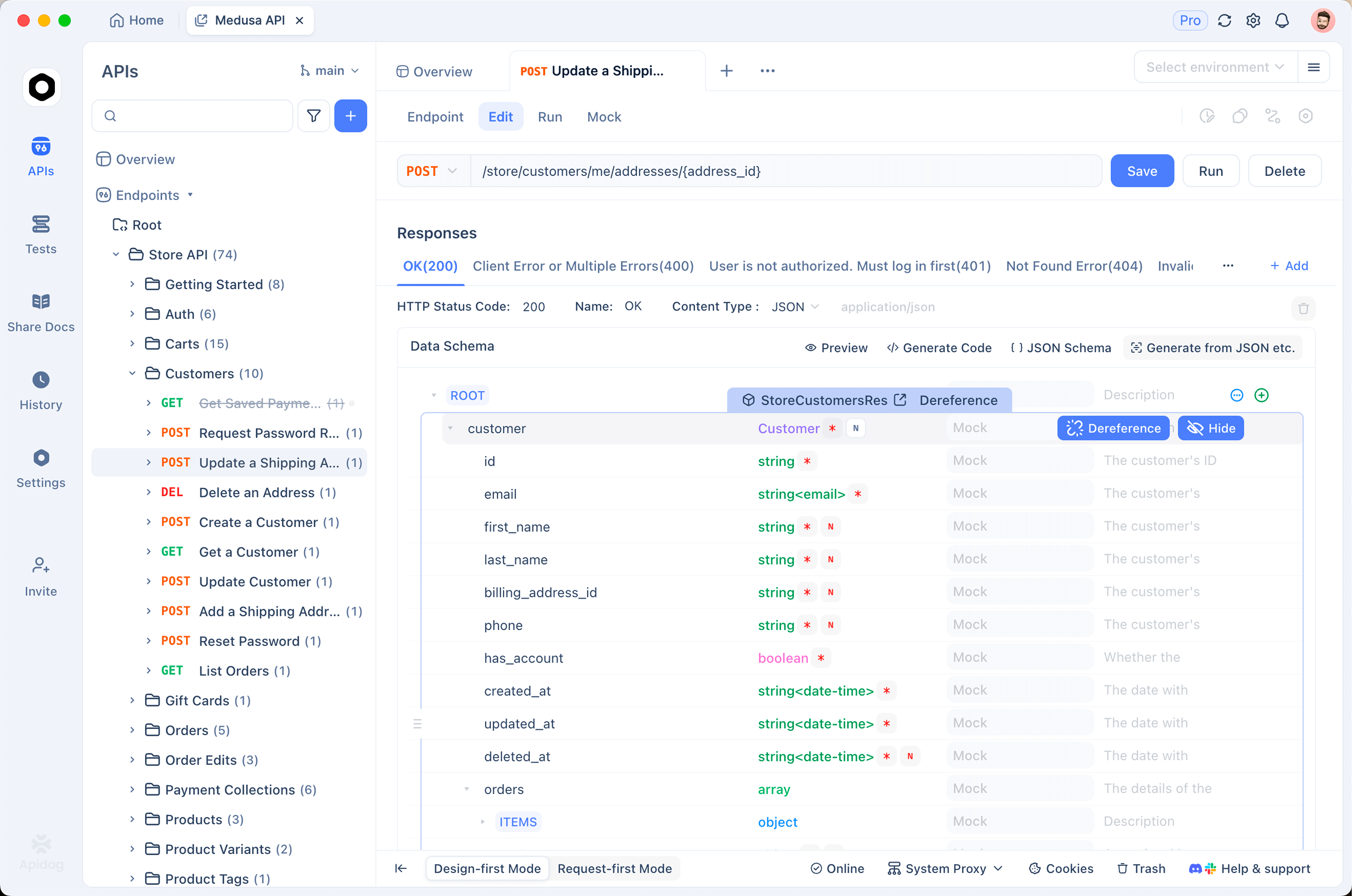
- Create an environment and add
ANTHROPIC_API_KEYas a variable. Reference it as{{ANTHROPIC_API_KEY}}in thex-api-keyheader, next toanthropic-versionandcontent-type. - Create a POST request to
https://api.anthropic.com/v1/messages, paste the first-call body, and save it. - Add assertions: status is 200,
$.stop_reasonequalsend_turn,$.usage.output_tokensis greater than 0, and$.content[*].typecontainstext. A refusal now fails the test instead of passing silently. - Duplicate the request with
"stream": true. Apidog shows thetext/event-streamresponse event by event, so you can watch the emptythinking_delta, thesignature_deltaand the text arrive in order. - Clone it again with
"model": "claude-sonnet-5"and keep the pair in one folder: same prompt, two models,usageside by side.
For broader patterns, see testing LLM applications and testing AI agent APIs.
FAQ
What is the Claude Sonnet 5.5 model ID? claude-sonnet-5-5, with no date suffix, on the Claude API, Google Cloud, Microsoft Foundry and Claude Platform on AWS. On Amazon Bedrock it’s anthropic.claude-sonnet-5-5.
Can I turn thinking off completely? No. disabled returns 400. between_tools is the lowest setting: no up-front thinking, at low, medium or high effort.
Why does my Sonnet 5 request return 400 on Sonnet 5.5? Check for thinking.type: "disabled" and a forced tool_choice first. The Sonnet 5.5 vs Sonnet 5 guide covers all five breaking changes and their fixes.
Is there a free Claude Sonnet 5.5 API? Anthropic’s API is prepaid, and no official page lists a free signup credit. A Claude chat plan doesn’t include API access either. The free API guide covers credit programs and the cheapest paid path.
Next step
Send the first-call request at medium, then rerun it at high and compare usage.output_tokens and answer quality on a prompt from your own workload. Download Apidog to save both runs with assertions. If you’d rather work from the terminal, see Claude Sonnet 5.5 in Claude Code.