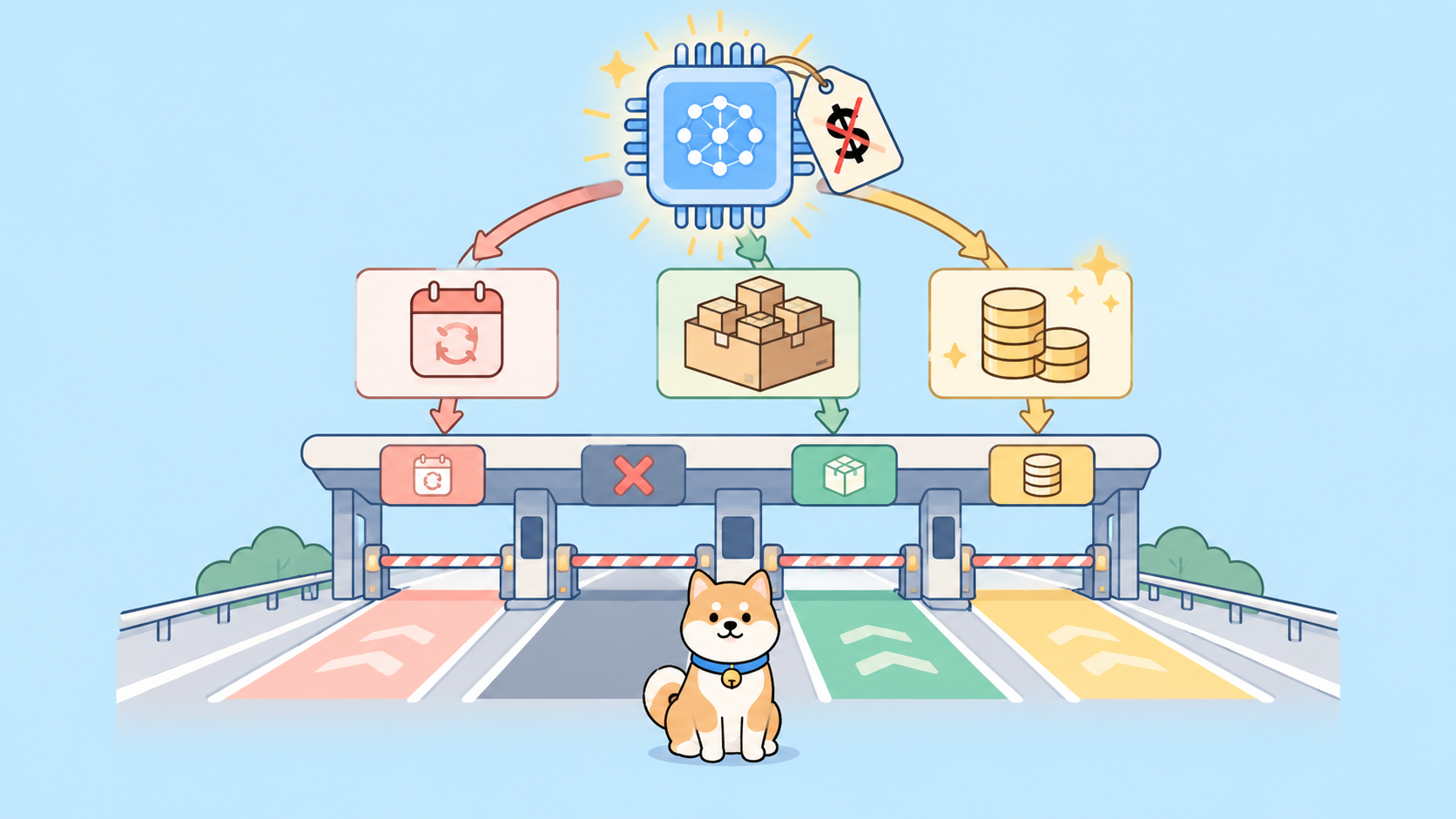
No. The Claude API has no free tier, and that includes Claude Sonnet 5.5 (claude-sonnet-5-5). Console usage is prepaid: you add credits to your organization’s balance before the first call, and those credits expire one year from the purchase date and are non-refundable. No official Anthropic page offers a signup credit, and a paid Claude chat plan doesn’t include API or Console access. What does exist is a short list of credit programs with real eligibility rules, and a paid path cheap enough that a typical test request costs under one cent.
Chatting with Sonnet 5.5 on the Claude.ai Free plan costs nothing, but it gives you no API key; our guide to using Claude Sonnet 5.5 for free covers that route. This post is for developers: which programs pay for API calls, which “free” gateway claims fall apart, the arithmetic behind the cheapest paid setup, and a first request saved in Apidog so every test run reports its own cost. For the model itself, start with what Claude Sonnet 5.5 is.
The short answer
| Route | Free? | Notes |
|---|---|---|
| Claude API (Console) | No | Prepaid, $2 input / $10 output per million tokens |
| Claude.ai Free plan | Chat only | No API key |
| Anthropic credit programs | If accepted | $1,000 to $50,000; startup amount unpublished |
| AWS Activate | If you hold credits | Pays for Claude on Amazon Bedrock |
| Gateways and cloud trials | No (AWS Free Tier unconfirmed) | See the table below |
Credit programs that can pay for Sonnet 5.5 API calls
These are the only routes where someone else covers the token bill, and each one gates on who you are.
External Researcher Access Program. Anthropic applies $1,000 in API credits to an accepted researcher’s account. The program targets AI safety and alignment research, and applications are reviewed on the first Monday of each month. Credits cover Anthropic’s standard model suite, not the Claude web app. The page doesn’t name Sonnet 5.5.
AI for Science. Researchers can apply for up to $50,000 in credits per project, and any researcher is eligible to apply. The catch: Anthropic says biology and chemistry researchers are still limited to its Opus-class models, so a bio or chem project won’t get Sonnet 5.5 through this route.
Claude for Startups. Venture-backed startups can apply for free credits and priority rate limits. You need equity funding from an institutional investor, a company founded within the last four years, and no earlier Anthropic startup credits. Anthropic doesn’t publish an amount. The credits work on the first-party Claude API through the Console only, not on Amazon Bedrock, Google Cloud Vertex AI or other third-party platforms.
AWS Activate. Since April 2024, AWS Activate credits can pay for third-party models on Amazon Bedrock, Anthropic’s included. The policy isn’t Sonnet-specific, but Sonnet 5.5 is on Bedrock as anthropic.claude-sonnet-5-5, and on bedrock-runtime in commercial Regions it runs only through global cross-Region inference (profile global.anthropic.claude-sonnet-5-5). Two limits affect cost testing: the Bedrock model card marks Batch as not supported, and strict tools aren’t available for Sonnet 5.5 there.
“Free” Sonnet 5.5 API claims that don’t hold
Gateways and cloud trials get pitched as free Sonnet 5.5 routes. Here’s what each official page said on September 29, 2026:
| Claim | What the official page says | Verdict |
|---|---|---|
| Free Sonnet 5.5 on OpenRouter | Only anthropic/claude-sonnet-5.5 ($2/$10) and its :batch variant ($1/$5); none of its :free models is Anthropic’s |
Paid |
| Vercel AI Gateway’s “$5 of credits every 30 days” | The free tier covers a subset of models, and Sonnet 5.5 is marked availableToFreeTier: false |
Not covered |
| Google Cloud’s $300 trial | Excludes generative AI partner models offered as a managed API | Not covered |
| Azure free account | Claude in Microsoft Foundry needs a paid subscription; free trial and credit-only accounts aren’t supported | Not covered |
| AWS Free Tier credits | No page confirms either way, and AWS promotional credits skip Marketplace charges unless AWS authorizes them | Unverified |
| A “$5 starter credit” on new Console accounts | Not on any official page; onboarding says to add credits | Not found |
If you want a gateway for routing or billing, compare the options in our OpenRouter alternatives roundup, but not for free Sonnet 5.5 tokens. If price matters more than the model, see the cheapest LLM API providers.
The cheapest paid path: a test request costs under a cent
Sonnet 5.5 lists at $2 per million input tokens and $10 per million output tokens, unchanged from Sonnet 5. Cache reads cost $0.20, 5-minute cache writes $2.50, 1-hour cache writes $4, and the Batch API halves input and output to $1 and $5 (pricing docs). Our Sonnet 5.5 pricing breakdown has the full table.
A test request with 2,000 input tokens and 500 output tokens costs:
2,000 x $2  / 1M = $0.004
  500 x $10 / 1M = $0.005
Total            = $0.009
A hundred of those is $0.90. Four settings decide whether your bill stays there.
Set effort to low or medium
On the Claude Platform, Sonnet 5.5 defaults to high effort, and a request with no thinking field runs adaptive thinking. Anthropic’s prompting guide says to use medium or low for chat and reserve xhigh and max for measured quality gains. From medium up, the model thinks before almost every reply, even a greeting, and asking it to think less in the prompt doesn’t work reliably. Lower the effort instead.
The spread is large. Artificial Analysis spent $544.49 to run its Intelligence Index at low effort, $1,175.84 at high and $8,976.65 at max: 7.6 times the high-effort bill for a score of 55.98 versus 46.74. Max is also verbose, at about 193,000 output tokens per index task according to OfficeChai’s write-up of the AA data.
Skip up-front thinking with between_tools
thinking: {"type": "between_tools"} replaced disabled on Sonnet 5.5 and turns off the up-front thinking pass; sending the old disabled value returns a 400. between_tools is accepted only at low, medium or high. At xhigh or max it returns a 400, and so does adding display or budget_tokens to it. One trade-off from the prompting guide: in a request without tools, between_tools answers without thinking first, so keep adaptive thinking for JSON answers that need a few steps of working out.
Cache the parts that repeat
Prompt caching needs a prompt of at least 512 tokens (Sonnet 5 needed 1,024). Say your test suite sends the same 10,000-token system prompt and fixtures 50 times:
Uncached: 50 x 10,000 = 500,000 x $2    / 1M = $1.00
Cached:   1 write:  10,000 x $2.50 / 1M      = $0.025
          49 reads: 490,000 x $0.20 / 1M     = $0.098
          Total                              = $0.123
That’s about 88% less on the repeated prefix. For spread-out runs, the 1-hour write costs $4 per million ($0.04 here). One trap: changing top-level effort between requests invalidates the cache, so sweep effort levels in separate runs. Our Opus 5.5 prompt caching cost math walks through break-even points in more detail.
Batch what can wait, and cap output
The Batch API cuts the rates to $1 input and $5 output, so the 2,000/500 request above drops from $0.009 to $0.0045. Use it for eval sweeps and regression runs that don’t need a reply right away (it isn’t available for Sonnet 5.5 on Bedrock). For smoke tests, set a small max_tokens and treat stop_reason: "max_tokens" as a failed response, as the prompting guide advises.
Get a key and send a first request
- Create an organization in the Claude Console and add usage credits to its balance.
- Create an API key. Our Anthropic API key guide walks through the screens.
- Export it as
ANTHROPIC_API_KEYin your shell so it never lands in a script or a commit.
Then send a cheap first call: low effort, no up-front thinking, capped output.
curl https://api.anthropic.com/v1/messages \
  -H "x-api-key: $ANTHROPIC_API_KEY" \
  -H "anthropic-version: 2023-06-01" \
  -H "content-type: application/json" \
  -d '{
    "model": "claude-sonnet-5-5",
    "max_tokens": 1024,
    "thinking": {"type": "between_tools"},
    "output_config": {"effort": "low"},
    "messages": [
      {"role": "user", "content": "List three edge cases to test for GET /users/{id}."}
    ]
  }'
The response’s usage object reports input_tokens and output_tokens; multiply them by $2 and $10 per million to get the cost. Leave temperature, top_p and top_k out, because any non-default value returns a 400 on Sonnet 5.5. For streaming, tools and the rest of the request surface, see how to use the Claude Sonnet 5.5 API.
Make every test run show its cost in Apidog
A curl call tells you the cost once. Saving the request in Apidog makes the check repeatable:
- Create an environment and add
ANTHROPIC_API_KEYas a variable. Set the header tox-api-key: {{ANTHROPIC_API_KEY}}so the key never sits in the request itself. - Create a POST request to
https://api.anthropic.com/v1/messageswith theanthropic-versionandcontent-typeheaders, and paste in the JSON body above. - Add assertions:
$.usage.input_tokensand$.usage.output_tokensexist and stay under your budget, and$.stop_reasonis notmax_tokens. - Add a post-processor script that turns usage into dollars:
const usage = pm.response.json().usage;
const cost = (usage.input_tokens * 2 + usage.output_tokens * 10) / 1e6;
console.log(`in=${usage.input_tokens} out=${usage.output_tokens} cost=$${cost.toFixed(4)}`);
pm.test("Test request costs under one cent", () => {
  pm.expect(cost).to.be.below(0.01);
});
The script uses standard list prices; change them if you add caching or batch. Duplicate the request at low, medium and high, put all three in a test scenario, and one run shows what each effort level costs on your own prompts. You can download Apidog to follow along, and our guide to testing LLM applications extends the pattern to response quality.
FAQ
Is there a free Claude Sonnet 5.5 API key? No. Every key draws on prepaid Console credits; the only no-cost routes are the eligibility-gated credit programs above.
Does Claude Pro or Max include API credits? No. Paid chat plans cover the Claude apps and Claude Code. API usage is billed separately through the Console.
Do new Console accounts get free API credits? No official page says so. The “$5 starter credit” some blogs mention isn’t on Anthropic’s pages.
Can AWS credits pay for Sonnet 5.5? AWS Activate credits can, on Amazon Bedrock. Whether AWS Free Tier credits cover Claude on Bedrock is unconfirmed, so don’t count on them.
What’s the cheapest way to test Sonnet 5.5? Low effort, between_tools, a small max_tokens, caching for repeated prefixes, and the Batch API for anything that can wait. The Claude Sonnet 5.5 API guide shows each setting in a full request.
Where to start
Add a small balance to a Console account, send the low-effort request above, and save it in Apidog with the cost script attached. A few runs will tell you what Sonnet 5.5 costs on your own prompts. If you qualify for a credit program, apply in parallel; the testing setup is the same either way.