API documentation is at the core of every successful developer platform. While Mintilify has become a popular AI-native documentation solution, it isn't always the perfect fit for every team. Whether you're seeking more customization, better security, or a solution that balances cost and features, exploring Mintilify alternatives is a critical step for engineering leaders and technical writers alike.
In this comprehensive guide, we’ll break down the top Mintilify alternatives, compare their features side-by-side, and provide actionable insights for teams ready to make the switch.
Why Look for Mintilify Alternatives?
Mintilify has made waves with its AI-powered, docs-as-code approach. But teams often seek alternatives for the following reasons:
- Security Compliance: Not all organizations find Mintilify’s compliance certifications sufficient, especially in regulated industries.
- Customization Gaps: Some users report limited theming and workflow flexibility.
- Budget Constraints: Mintilify’s pricing can be a hurdle for startups or teams with large documentation needs.
- Integration Needs: Teams may require deeper API, test, or CI/CD integrations than Mintilify supports.
If one or more of these resonates with your team, evaluating Mintilify alternatives makes good business sense.
Feature Comparison Table: Mintilify vs Alternatives
Below is a quick feature matrix comparing Mintilify and its leading competitors. For detailed breakdowns, see the sections that follow.
| Feature | Mintilify | Apidog | ReadMe | Stoplight | Docusaurus | Redocly |
|---|---|---|---|---|---|---|
| AI-Powered Docs | Yes | Yes | No | No | No | No |
| Docs-as-Code | Yes | Yes | Partial | Yes | Yes | Yes |
| Custom Themes | Limited | Extensive | Moderate | Moderate | Full | Moderate |
| API Testing | No | Full Suite | No | No | No | No |
| Mock Server | No | Yes | No | Yes | No | Yes |
| Security Compliance | Moderate | High | Moderate | High | N/A | High |
| Pricing Flexibility | Moderate | High | Moderate | Moderate | Free/Low | Moderate |
| Migration Tools | Basic | Yes | No | No | No | Yes |
| OpenAPI Support | Yes | Yes | Yes | Yes | Partial | Yes |
| Integrations | Moderate | Extensive | Extensive | Extensive | Moderate | Good |
Top 5 Mintilify Alternatives
1. Apidog
Apidog is an all-in-one API platform that merges documentation, design, testing, and mocking into a single, collaborative environment. For teams searching for Mintilify alternatives, Apidog stands out with its robust API testing suite and comprehensive documentation tools—features essential for modern development teams.
Key Features:
- Unified API Documentation & Testing: Document, test, mock, and validate APIs in one place.
- Automated Test Generation: Quickly generate comprehensive test suites from your OpenAPI or Swagger specs.
- Mock Server: Develop and test against realistic mock endpoints before backend completion.
- Custom Themes & Branding: More control over the look and feel compared to Mintilify.
- Advanced Security: Enhanced compliance features for enterprise-grade security.
- Easy Migration: Import existing OpenAPI, Swagger, or Postman collections directly.
Pros:
- Seamless workflow from API design to documentation and testing.
- Built-in collaboration tools for teams.
- Extensive integration options (CI/CD, Git, etc.).
- Superior environment management for multi-stage API development.
Cons:
- May be more feature-rich than needed for teams focused solely on documentation.
Pricing:
- Generous free tier.
- Flexible paid plans based on usage and team size.
Migration Example: Moving from Mintilify to Apidog
If you’re switching from Mintilify, you can:
1. Export your OpenAPI/Swagger docs from Mintilify.
2. Import directly into Apidog using the import tool.
3. Enhance your docs with Apidog’s interactive components and auto-generated test cases.
4. Set up a mock server to test endpoints before production.
5. Leverage team collaboration for faster review and publishing.
2. ReadMe
ReadMe is a developer-centric platform focused on interactive API documentation and dynamic API reference portals.
Key Features:
- Interactive API explorer.
- User authentication for personalized docs.
- Changelog and versioning support.
- Integrates with OpenAPI/Swagger.
Pros:
- Developer-friendly interface.
- Easy to embed code examples and dynamic responses.
- Good for public-facing APIs.
Cons:
- Limited integrated testing tools.
- Some customization restrictions.
- Pricing can scale quickly for high-traffic teams.
Pricing:
- Free tier available.
- Paid plans scale with usage and features.
3. Stoplight
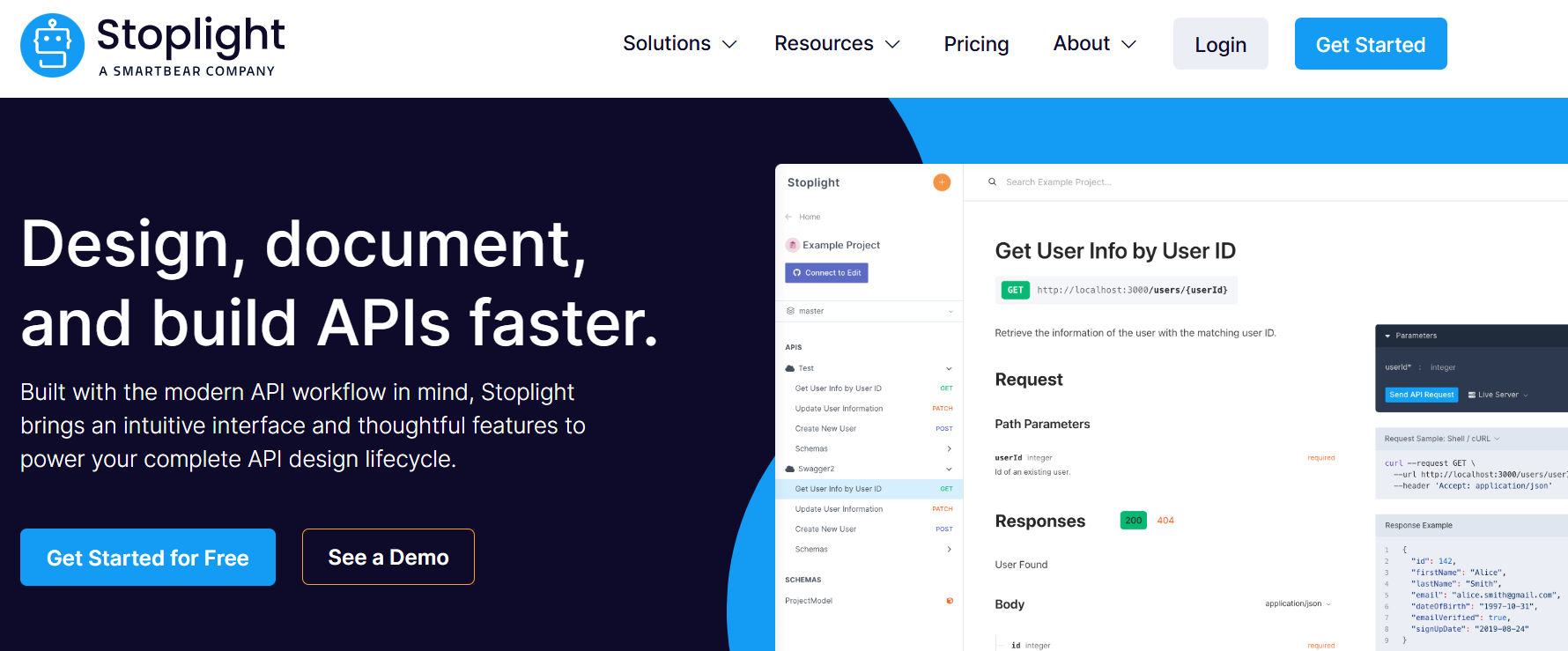
Stoplight offers a complete API design and documentation suite, centered around its visual OpenAPI editor.
Key Features:
- Visual API modeling and design.
- Docs-as-code workflow.
- Mock server support.
- Git integration for version control.
Pros:
- Excellent for teams designing new APIs from scratch.
- Collaborative editing and review.
- Robust OpenAPI support.
Cons:
- Fewer dynamic/interactive features compared to Mintilify or ReadMe.
- May require deeper technical knowledge for setup.
Pricing:
- Free community plan.
- Paid plans for professional teams, with advanced features.
4. Docusaurus
Docusaurus is an open-source static site generator optimized for technical documentation, built by Facebook.
Key Features:
- Markdown-based content.
- Full theme and plugin support.
- Versioning and localization.
- Docs-as-code with Git workflows.
Pros:
- Highly customizable and extensible.
- Free to use; ideal for open-source projects.
- Large plugin ecosystem.
Cons:
- No built-in API testing or mocking.
- Requires more setup and hosting management.
- Lacks AI or dynamic doc generation.
Pricing:
- Open-source and free; hosting may incur costs.
5. Redocly
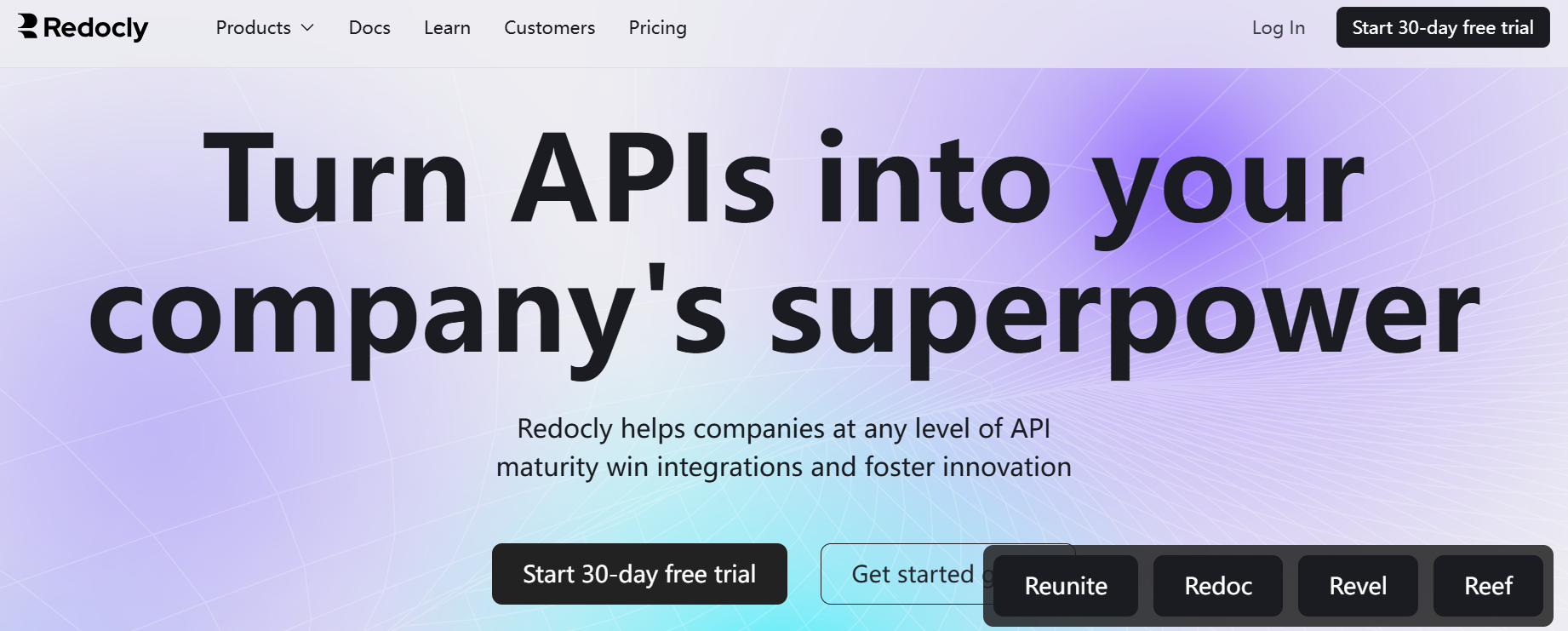
Redocly specializes in beautiful, highly customizable API documentation built directly from OpenAPI specs.
Key Features:
- Custom themes and branding.
- Multi-version support.
- Advanced OpenAPI extensions.
- Redocly CLI for continuous integration.
Pros:
- Produces elegant, developer-focused documentation.
- Strong enterprise features.
- Robust OpenAPI support.
Cons:
- No built-in API testing.
- Less focus on non-API documentation.
- Steeper learning curve for advanced customization.
Pricing:
- Free tier for open-source.
- Business plans for advanced features.
Case Study: Why a Fintech Startup Switched from Mintilify to Apidog
Background:
A fast-growing fintech company began with Mintilify to automate their API documentation. As their platform matured, compliance requirements and the need for integrated API testing became more urgent.
Challenges:
- Mintilify’s limited security certifications weren’t sufficient for their industry audits.
- No built-in API testing or mock server meant maintaining separate tools.
- Customization for branding was limited.
Solution:
They migrated to Apidog by importing their OpenAPI specs, leveraging Apidog’s integrated documentation and testing workflows. Apidog’s mock server allowed their frontend and backend teams to work in parallel, and environment management simplified staging and production deployments.
Result:
- Reduced documentation and testing overhead by 40%.
- Passed their security audit with Apidog's compliance features.
- Improved developer onboarding with interactive, testable docs.
Migration Guide: How to Switch from Mintilify to an Alternative
Switching documentation platforms can feel daunting, but the process below works for most Mintilify alternatives:
1. Audit Existing Content: List all your docs, API specs, and custom assets in Mintilify.
2. Export API Specifications: Use OpenAPI/Swagger export if available.
3. Choose Your Platform: Select the Mintilify alternative that aligns with your feature and security needs.
4. Import Assets: Most alternatives (e.g., Apidog, Redocly) support importing OpenAPI specs directly.
5. Enhance and Test: Add new interactive elements, run automated tests (using Apidog’s suite if applicable), and set up mock servers as needed.
6. Collaborate & Review: Invite team members to review and improve the docs.
7. Go Live: Publish to your preferred hosting or cloud environment.
Checklist: Evaluating Mintilify Alternatives
Here’s a quick checklist to help your team compare Mintilify alternatives:
- [ ] OpenAPI/Swagger support
- [ ] Docs-as-code workflow
- [ ] Custom theming and branding options
- [ ] Built-in API testing suite
- [ ] Mock server capabilities
- [ ] Security compliance (SOC2, GDPR, etc.)
- [ ] Collaboration features
- [ ] Flexible pricing
- [ ] Migration/import tools
Conclusion: Choosing the Right Mintilify Alternative
Mintilify is a solid choice for AI-driven documentation, but it's not one-size-fits-all. Whether you need deeper security, richer customization, or integrated API testing, the alternatives above offer compelling options.
Apidog stands out for API-focused teams needing a unified hub for documentation, testing, and collaboration—especially for projects where reliability and speed matter.
Before making your final decision, experiment with free tiers, import a sample project, and involve your engineering and documentation teams in the evaluation. The right Mintilify alternative will empower your developers, delight your users, and future-proof your API platform.
Frequently Asked Questions
What is the best Mintilify alternative for API teams?
Apidog is a top choice for teams needing integrated documentation, testing, and mock server features in a single platform.
Which Mintilify alternatives support OpenAPI?
Alternatives like Apidog, Redocly, ReadMe, and Stoplight all offer robust OpenAPI support for seamless migration.
Can I migrate from Mintilify without losing data?
Yes—most alternatives allow OpenAPI import/export, and tools like Apidog streamline the migration with automated validation and documentation enhancement.