Crypto swaps have become one of the simplest ways for users to exchange digital assets.
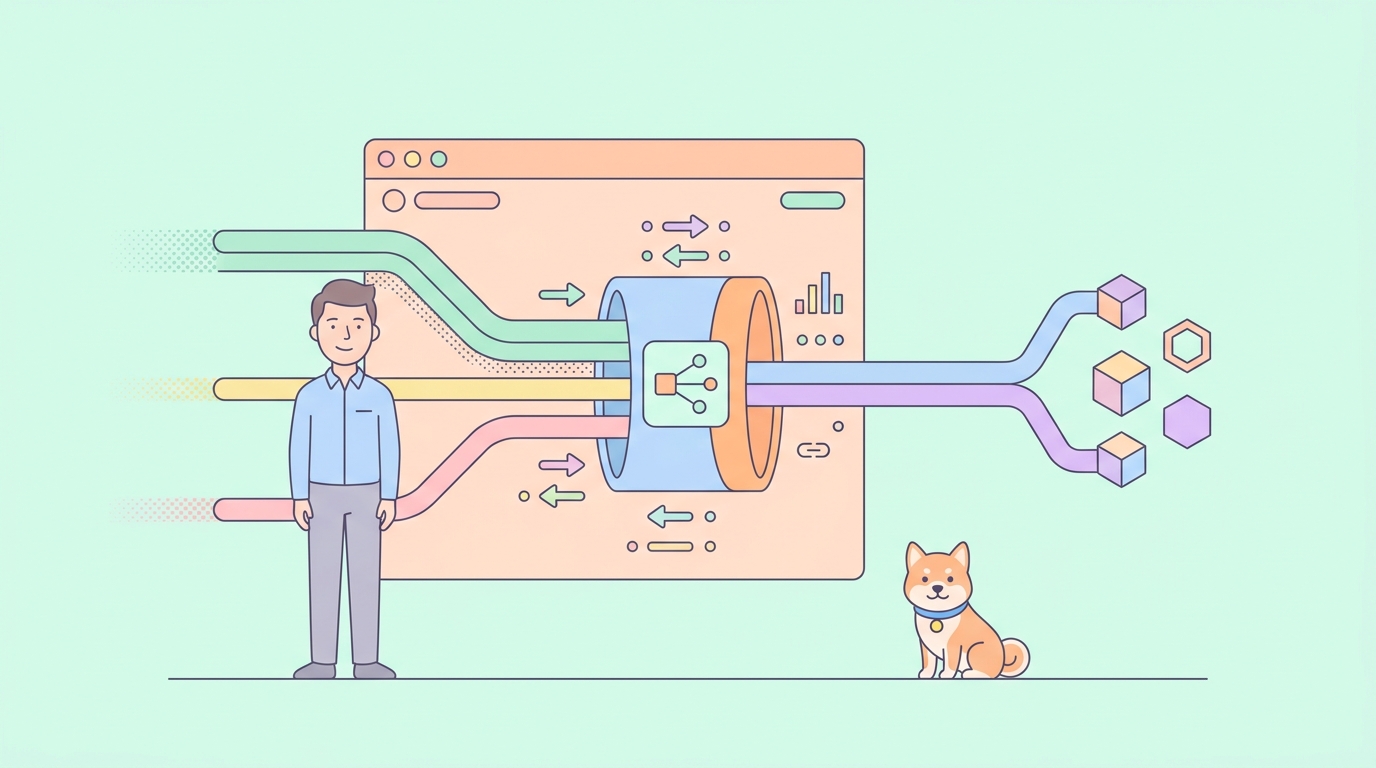
At first glance, the process looks straightforward: select one token, choose another asset, and complete the swap. However, behind that simple experience is a complex layer of infrastructure involving liquidity providers, routing systems, blockchain networks, and exchange mechanisms.
While researching this topic, I looked at how different crypto swap platforms approach this problem from non-custodial swap aggregators and decentralized exchanges to centralized trading platforms. I also explored how these solutions fit into the needs of developers building wallets, trading applications, and AI-powered crypto products.
Modern swap platforms need to solve several challenges:
- finding the best available liquidity,
- reducing slippage,
- supporting multiple blockchain networks,
- routing transactions efficiently,
- maintaining security,
- and providing a smooth user experience.
The crypto swap ecosystem has also expanded beyond traditional exchanges. Today, users can choose between:
- non-custodial swap aggregators,
- decentralized exchanges (DEXs),
- centralized exchanges,
- and developer-focused swap infrastructure.
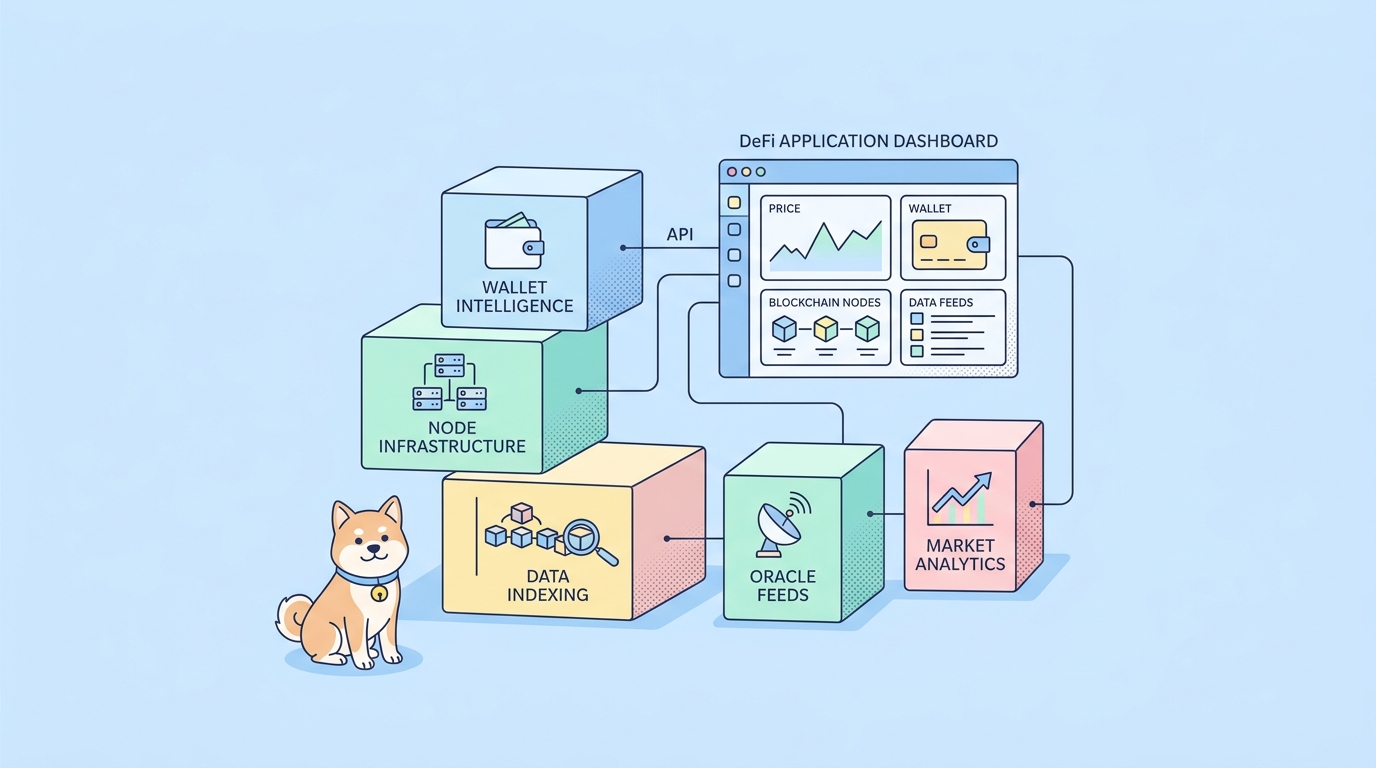
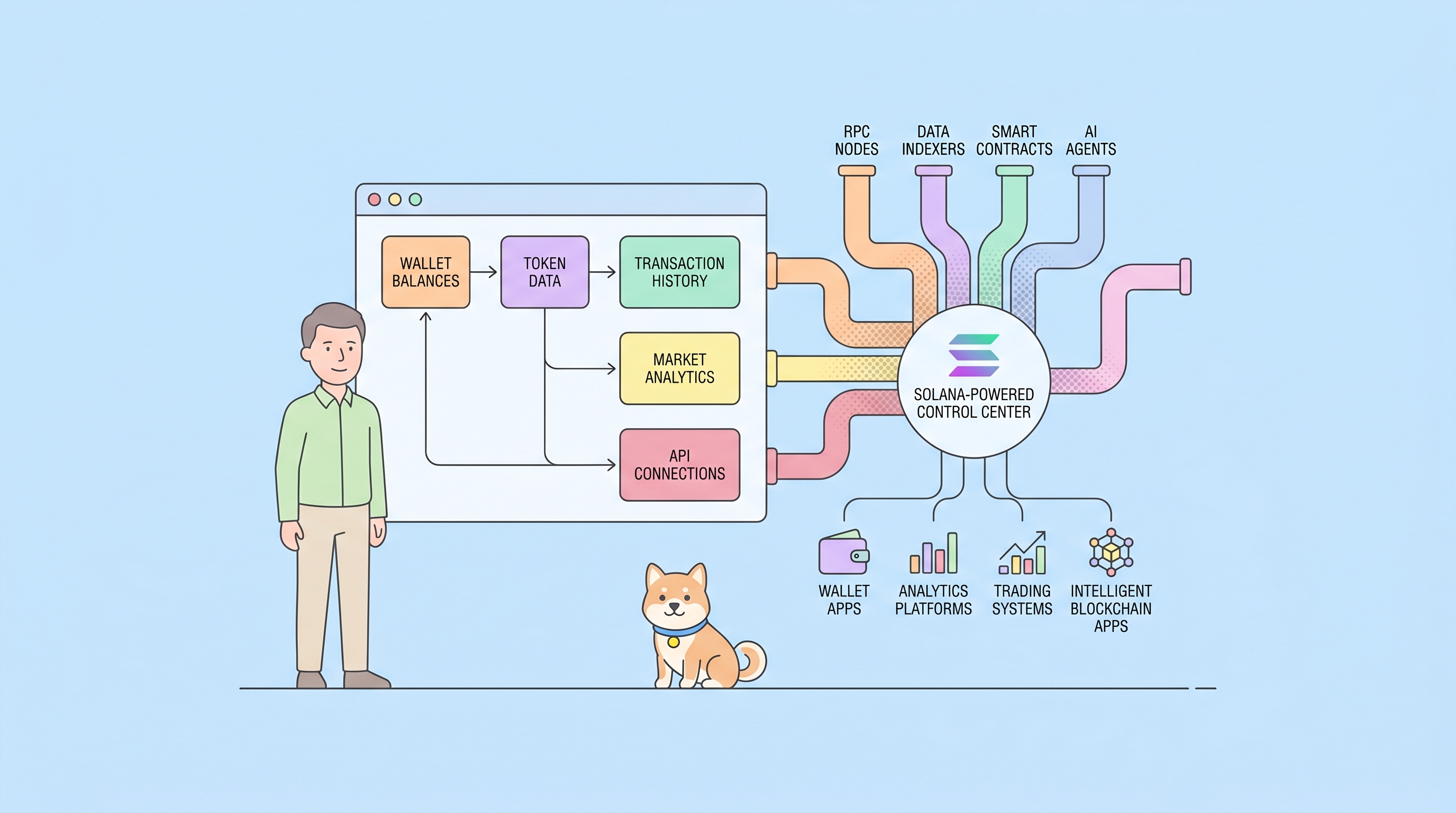
For developers, the decision is even more complicated. Building a wallet app, trading platform, or AI-powered crypto assistant often requires more than just token swapping. Modern crypto applications may need portfolio intelligence, wallet data, market information, liquidity access, and blockchain infrastructure alongside swap functionality.
The crypto swap ecosystem has also expanded beyond traditional exchanges. Today, developers and users can choose between non-custodial swap aggregators, decentralized exchanges, and centralized trading platforms depending on their priorities, such as privacy, liquidity, asset coverage, or advanced trading features.
In this guide, we compare some of the best crypto swap platforms and exchanges in 2026:
- StealthEX
- ChangeHero
- SimpleSwap
- Changelly
- Raydium
- Kraken
We will explore what each platform does best, how their approaches differ, and where they fit within the evolving crypto application ecosystem.
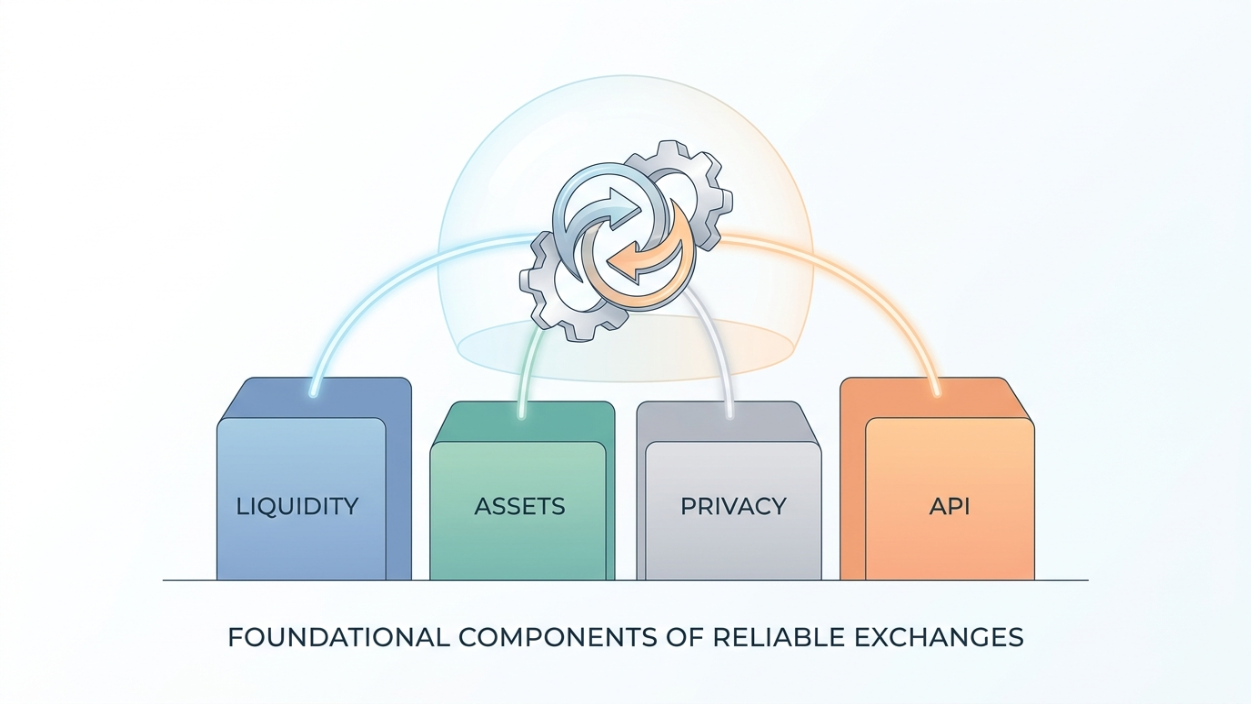
What Makes a Good Crypto Swap Exchange?
Not every swap platform is designed for the same users.
Some prioritize privacy and simplicity, while others focus on liquidity, trading features, or DeFi functionality.
Before choosing a crypto swap platform, there are several important factors to consider.
Liquidity Access
Liquidity is one of the most important parts of any swap experience.
A platform with stronger liquidity access can usually provide:
- better exchange rates,
- lower price impact,
- faster execution,
- and support for more trading pairs.
Some platforms achieve this by connecting to multiple liquidity providers, while others rely on their own exchange infrastructure or decentralized liquidity pools.
Asset and Blockchain Support
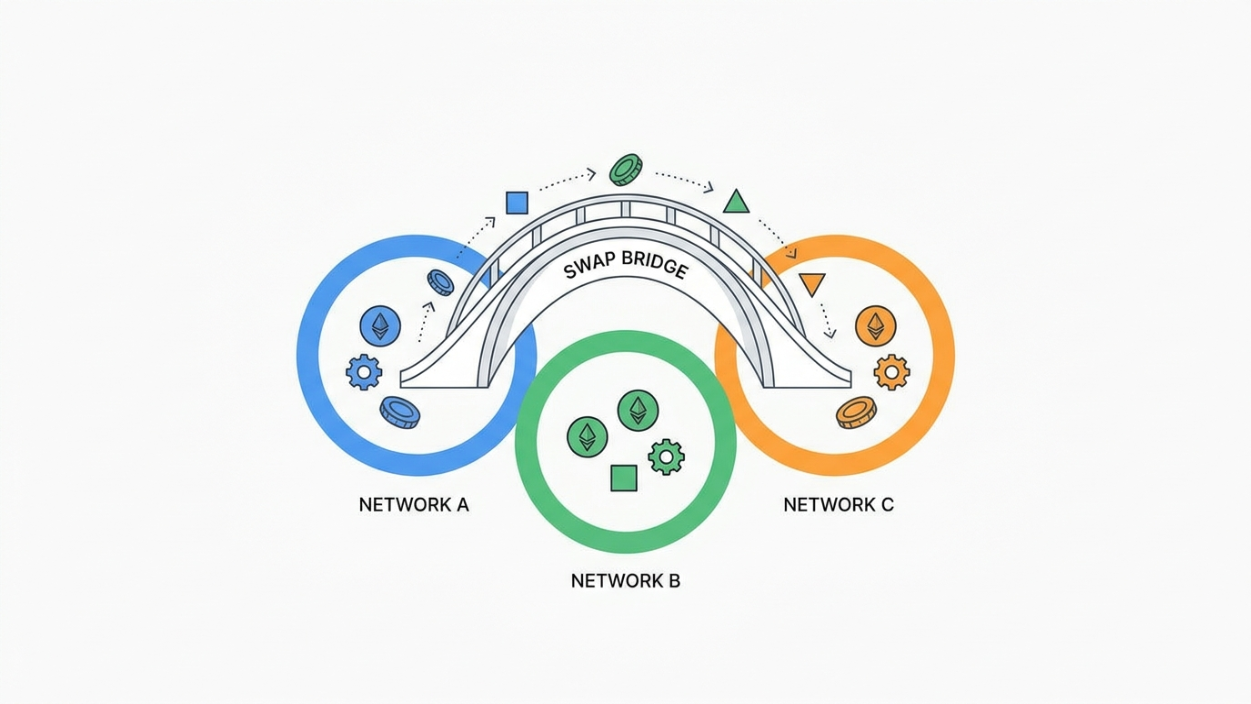
The number of supported assets has become a major factor for crypto users.
A modern swap platform may need to support:
- major cryptocurrencies,
- emerging tokens,
- multiple blockchain networks,
- and cross-chain transactions.
For developers building wallets or automated systems, broad asset coverage can reduce the need to integrate multiple providers.
Privacy and User Control
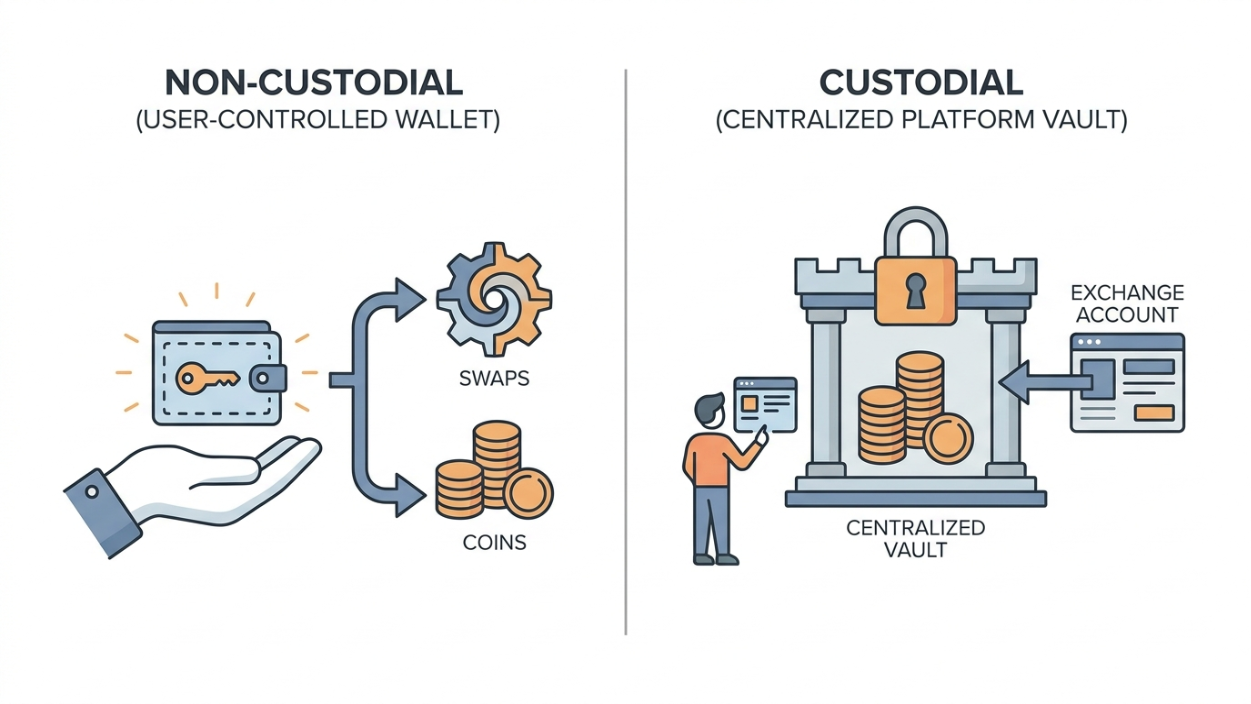
Crypto users increasingly care about controlling their own assets.
Different platforms have different approaches:
Non-custodial platforms:
- users keep control of their funds,
- swaps happen directly between wallets,
- no exchange balance is required.
Centralized exchanges:
- users deposit assets,
- trades happen inside exchange accounts,
- additional trading features are available.
Both models serve different needs.
Developer and API Support
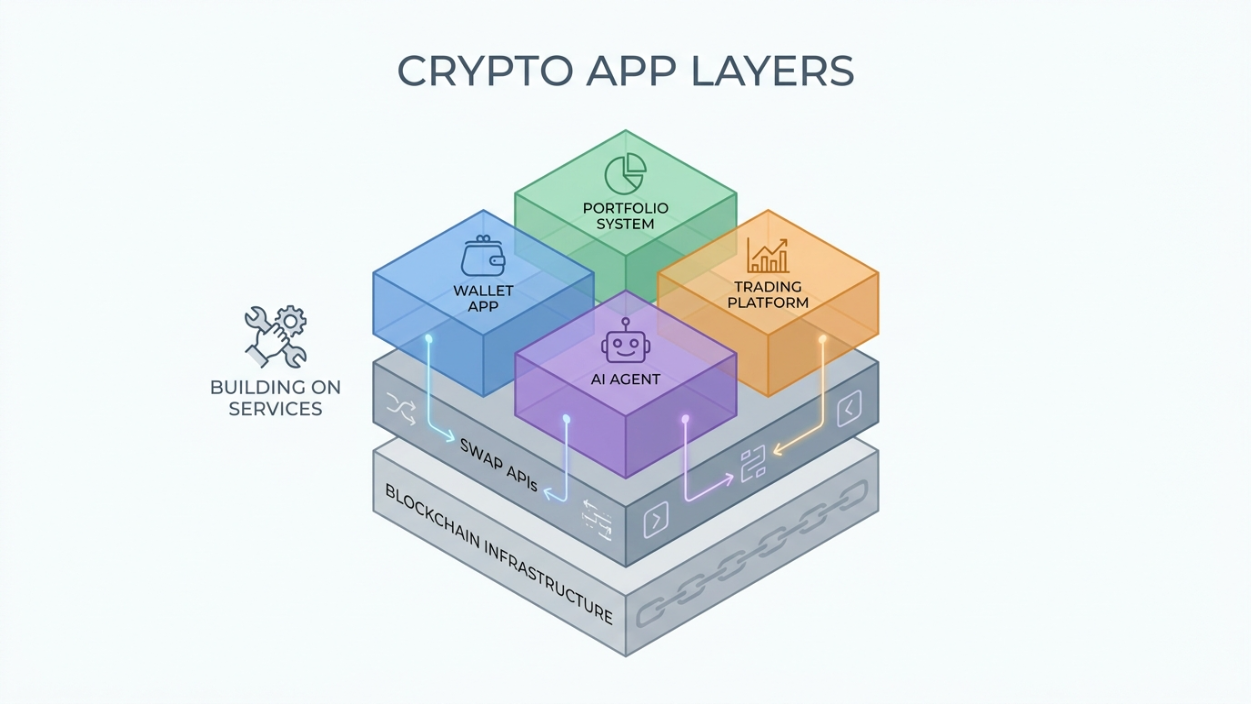
Crypto swaps are no longer only used by individual traders.
Developers are building:
- crypto wallets,
- portfolio applications,
- trading bots,
- AI agents,
- DeFi applications.
These products often need multiple layers:
- swap execution,
- wallet tracking,
- market data,
- portfolio analytics,
- and blockchain information.
This is why crypto APIs are becoming an important part of the ecosystem.
1. StealthEX: Best for Non-Custodial Instant Crypto Swaps
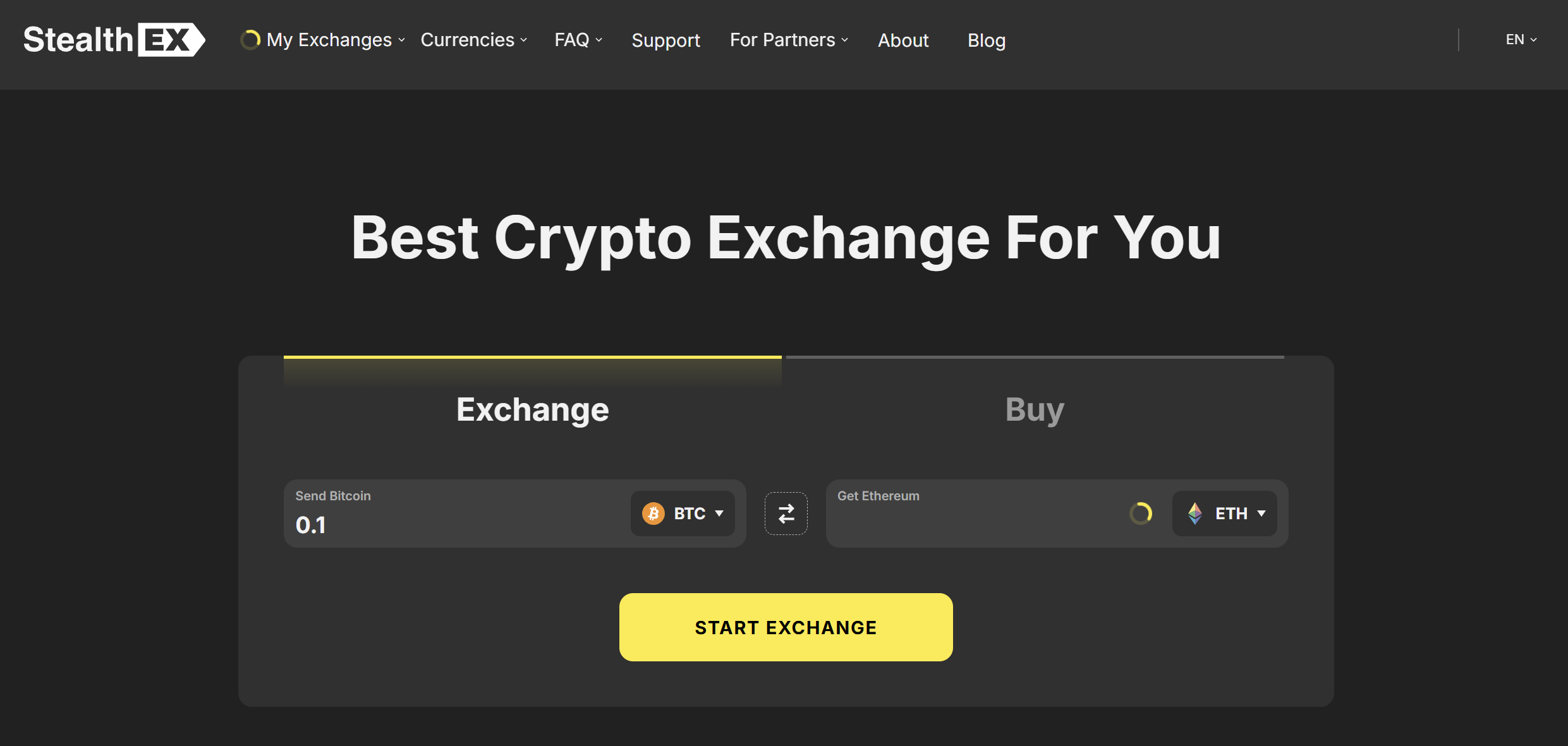
StealthEX focuses on making crypto exchanges simple without requiring users to create traditional exchange accounts.
The platform operates as a non-custodial instant exchange service, allowing users to swap cryptocurrencies while maintaining control over their assets.
Instead of requiring users to deposit funds into an exchange wallet, StealthEX connects users with liquidity sources and facilitates direct swaps.
This approach makes it attractive for users who prioritize:
- privacy,
- convenience,
- and simple asset conversion.
For developers, this type of infrastructure can be useful when building applications that need swap functionality without creating a complete exchange system from scratch.
Potential use cases include:
- wallet applications,
- portfolio tools,
- crypto payment systems,
- and automated conversion workflows.
Strengths
- Non-custodial swap model
- Simple user experience
- Wide cryptocurrency support
- No traditional exchange account required
Tradeoffs
- Not designed for advanced trading strategies
- Limited professional trading features
- Less suitable for high-frequency trading systems
Best For
Users and applications that need quick crypto swaps without managing exchange accounts.
2. ChangeHero: Best for Simple Crypto Exchange Workflows
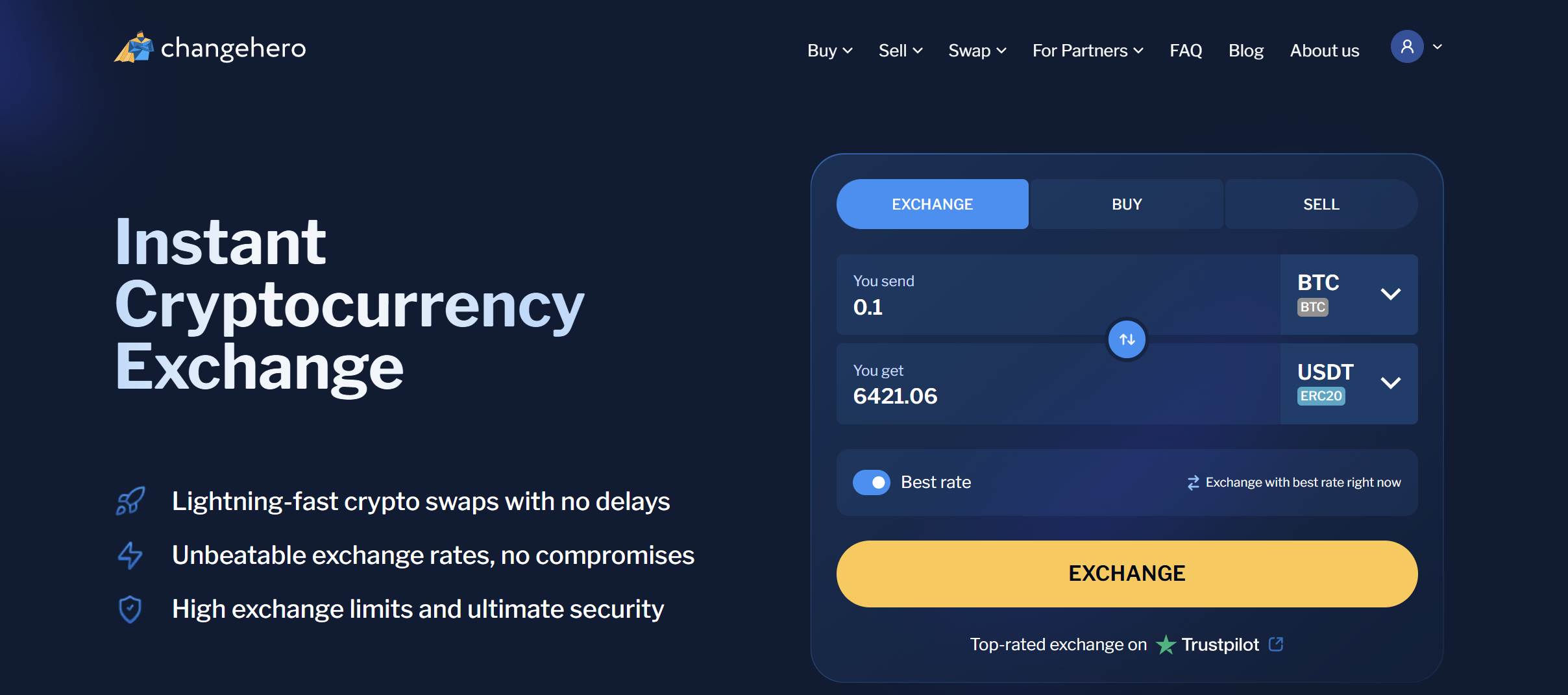
ChangeHero is an instant crypto exchange platform focused on making cryptocurrency conversions easier.
Instead of providing a traditional trading interface with charts and order books, ChangeHero focuses on straightforward swaps between digital assets.
The service supports crypto-to-crypto exchanges and provides an easier alternative for users who simply want to convert one asset into another.
This simplicity makes it useful for:
- beginner-friendly wallets,
- payment applications,
- crypto services,
- and platforms that need lightweight swap functionality.
For developers, integrating swap functionality through a service like ChangeHero can eliminate the complexity of building liquidity routing and exchange connections independently.
Strengths
- Simple swap experience
- Easy crypto conversions
- Suitable for wallet integrations
- User-friendly workflow
Tradeoffs
- Not designed for advanced traders
- Limited compared with professional exchanges
- Less focused on analytics and trading tools
Best For
Applications and users that prioritize simplicity over advanced trading functionality.
3. SimpleSwap: Best Multi-Source Crypto Swap Aggregation
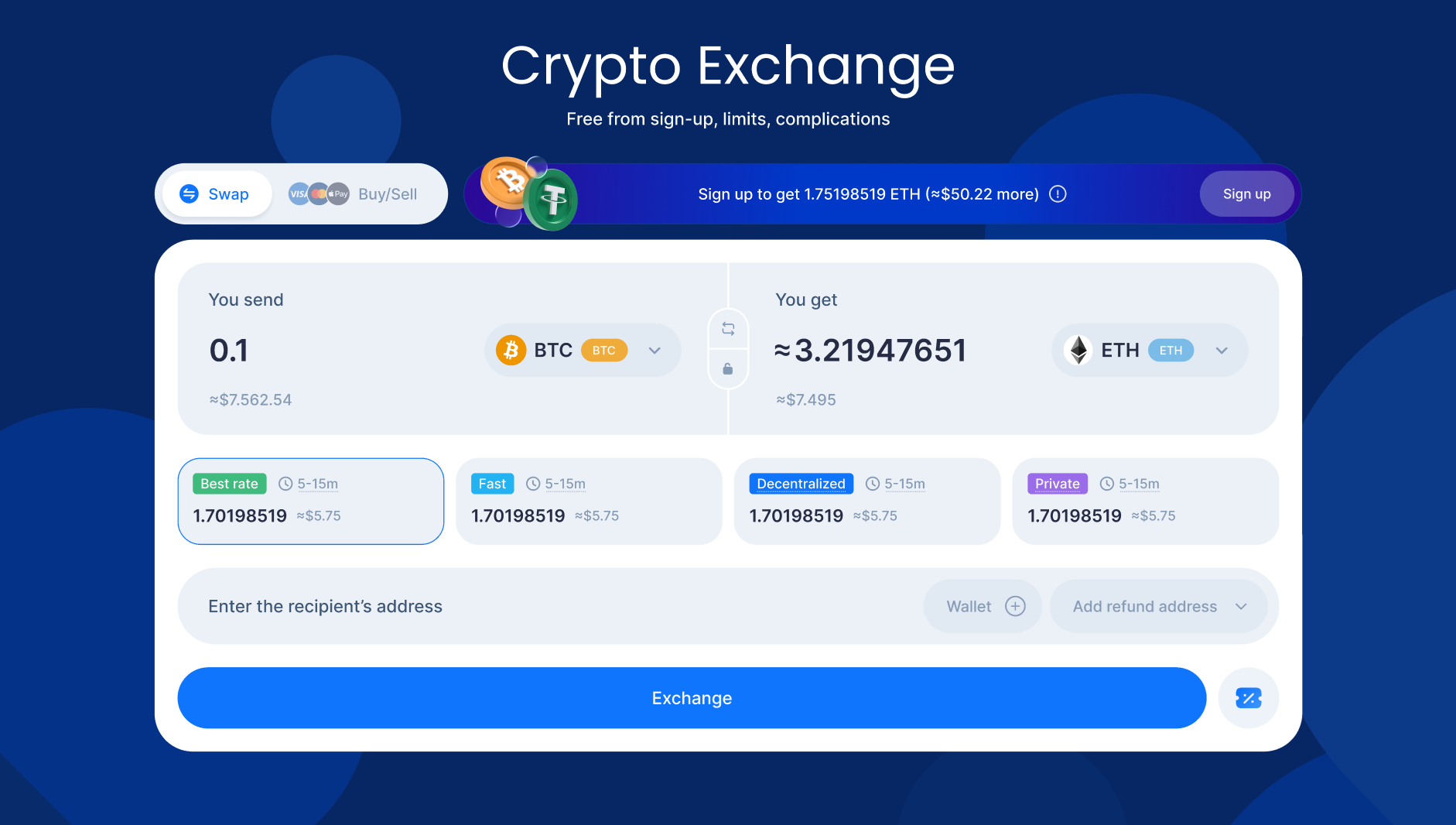
SimpleSwap focuses on removing complexity from cryptocurrency exchanges by combining liquidity from multiple sources.
SimpleSwap is a self-custodial multi-source swap aggregator that helps users exchange crypto with more privacy and control, without having to compare providers and routes themselves. It supports direct wallet-to-wallet swaps across 20+ liquidity providers and 2,800+ assets, combining liquidity from well-known CEX and DEX sources under the hood.
The platform's approach is different from a traditional exchange.
Instead of requiring users to manually compare different platforms, SimpleSwap cryptocurrency exchange infrastructure handles the process of finding available swap routes behind the scenes.
This makes SimpleSwap useful for users who want:
- access to multiple liquidity sources,
- direct wallet-to-wallet swaps,
- a simpler exchange experience,
- and broader asset availability.
For developers, SimpleSwap can act as a crypto wallet swap provider, allowing applications to provide conversion functionality without building their own routing systems.
Strengths
- Multi-source liquidity aggregation
- Large asset support
- Self-custodial approach
- Simple user experience
Tradeoffs
- Not built for professional trading strategies
- Limited advanced market analysis features
- Less control compared with direct exchange APIs
Best For
Users and applications looking for convenient swaps across multiple liquidity providers.
4. Changelly: Best for Crypto Exchange APIs and Wallet Integrations
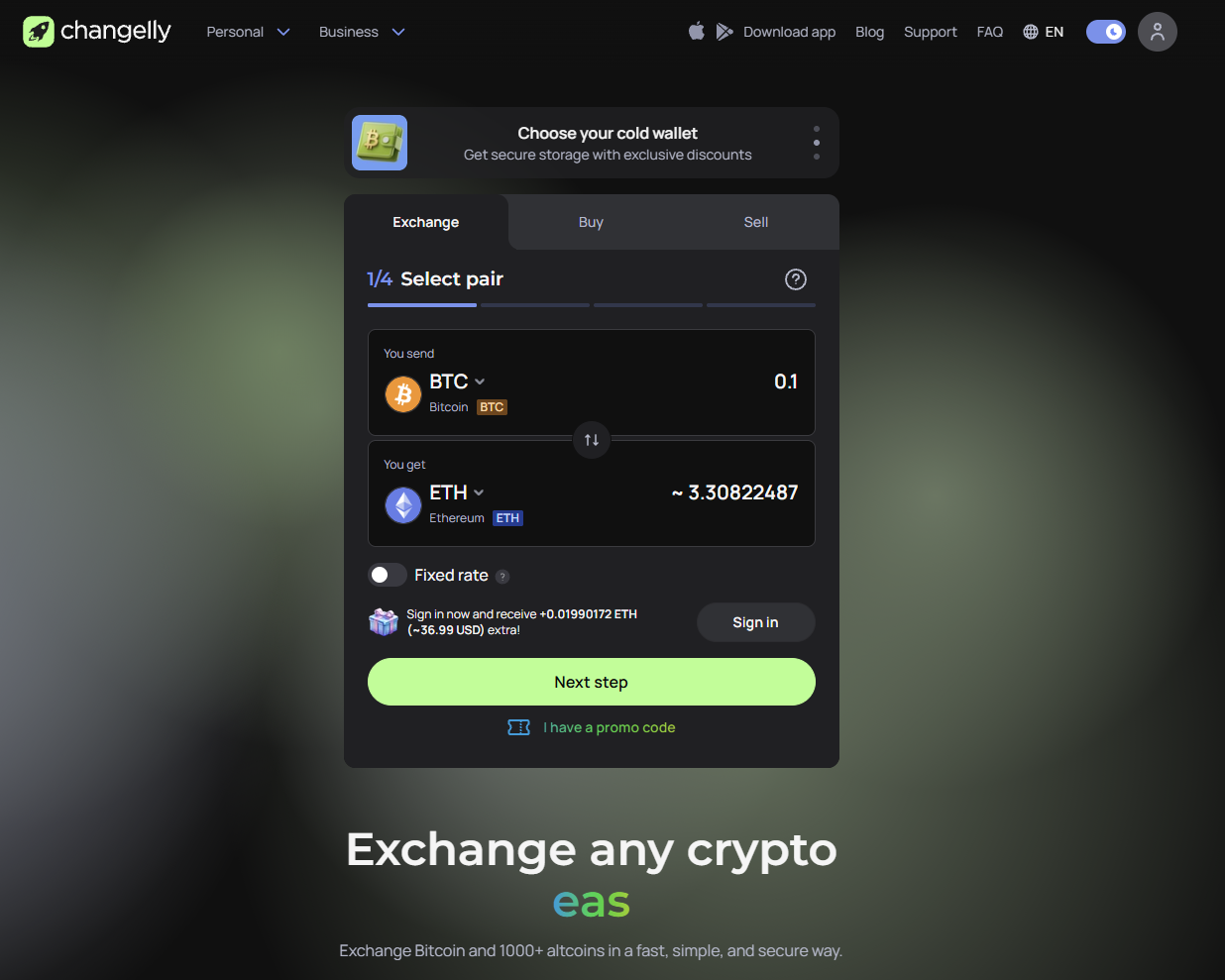
Changelly focuses on making cryptocurrency swaps easier for both individual users and businesses building crypto products.
Unlike decentralized exchanges that require users to interact directly with liquidity pools, Changelly provides an instant exchange infrastructure that connects users with crypto conversion services through a simplified experience.
The platform has been operating since 2015 and has grown into a broader crypto infrastructure provider, supporting more than 1,000 cryptocurrencies across 185 blockchains.
For users, Changelly provides instant crypto swaps, crypto purchases, and selling options through its platform. For developers and businesses, its APIs allow applications to integrate exchange functionality directly into their own products.
This makes Changelly particularly useful for:
- crypto wallets,
- payment platforms,
- Web3 applications,
- exchanges,
- and services that need built-in swap functionality.
One of Changelly’s main advantages is that developers do not need to build their own exchange infrastructure from scratch. Instead, applications can use Changelly’s crypto exchange API to provide users with crypto conversion features while focusing on their own product experience.
The platform also provides additional infrastructure options, including:
- crypto exchange APIs,
- fiat on/off-ramp APIs,
- crypto payment solutions,
- and partner integrations.
For wallet applications, this can create a smoother user experience by allowing users to swap assets without leaving the application.
For example, a crypto wallet could integrate Changelly to allow users to exchange tokens directly inside the wallet interface instead of manually transferring assets between different exchanges.
Strengths
- Long-established instant exchange infrastructure
- Support for 1,000+ cryptocurrencies across 185 blockchains
- Crypto exchange API for developers
- Fiat on/off-ramp support
- Strong wallet and partner integration ecosystem
Tradeoffs
- Less focused on advanced trading features
- Not designed for professional exchange-style trading
- Developers have less control compared with building directly on DEX infrastructure
Best For
Developers building crypto wallets, payment applications, Web3 products, and platforms that need reliable swap functionality without creating their own exchange infrastructure.
5. Raydium: Best Solana-Based Decentralized Exchange
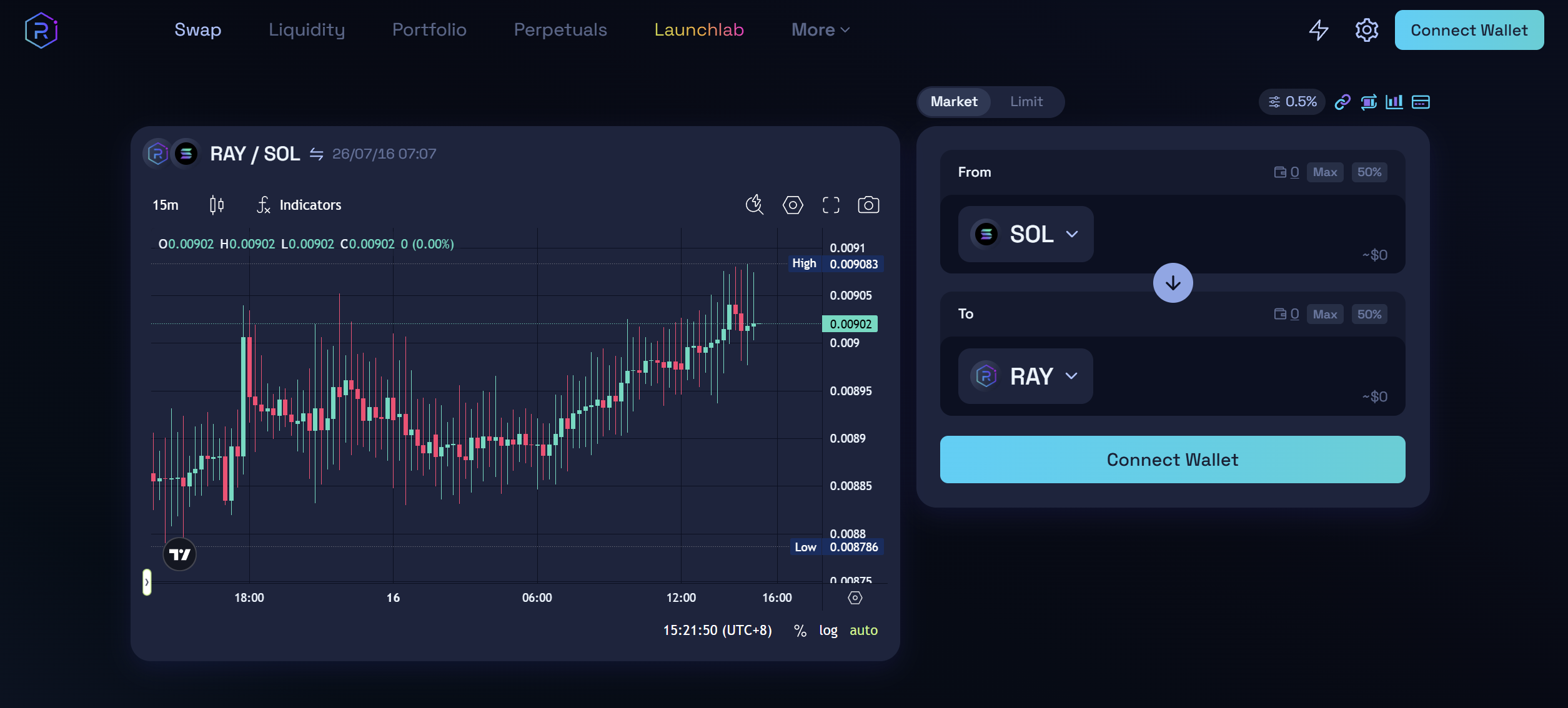
Raydium represents a different category of crypto swap platform.
Unlike centralized services, Raydium is a decentralized exchange built on Solana.
It allows users to trade directly through blockchain-based liquidity pools while interacting with decentralized finance infrastructure.
Raydium provides:
- automated market maker (AMM) functionality,
- liquidity pools,
- token swaps,
- and integration with the wider Solana DeFi ecosystem.
Because it operates directly on-chain, Raydium gives users more direct access to decentralized liquidity.
This makes it attractive for:
- Solana traders,
- DeFi users,
- liquidity providers,
- and developers building Solana applications.
However, the experience is different from centralized platforms.
Users need:
- compatible wallets,
- understanding of blockchain transactions,
- and familiarity with DeFi concepts.
Strengths
- Native Solana liquidity
- Direct DeFi interaction
- Fast blockchain transactions
- Strong Solana ecosystem integration
Tradeoffs
- Limited outside the Solana ecosystem
- Requires more technical knowledge
- DeFi risks such as smart contract exposure
Best For
Solana users, DeFi applications, and developers building decentralized trading experiences.
6. Kraken: Best for Exchange-Based Crypto Trading
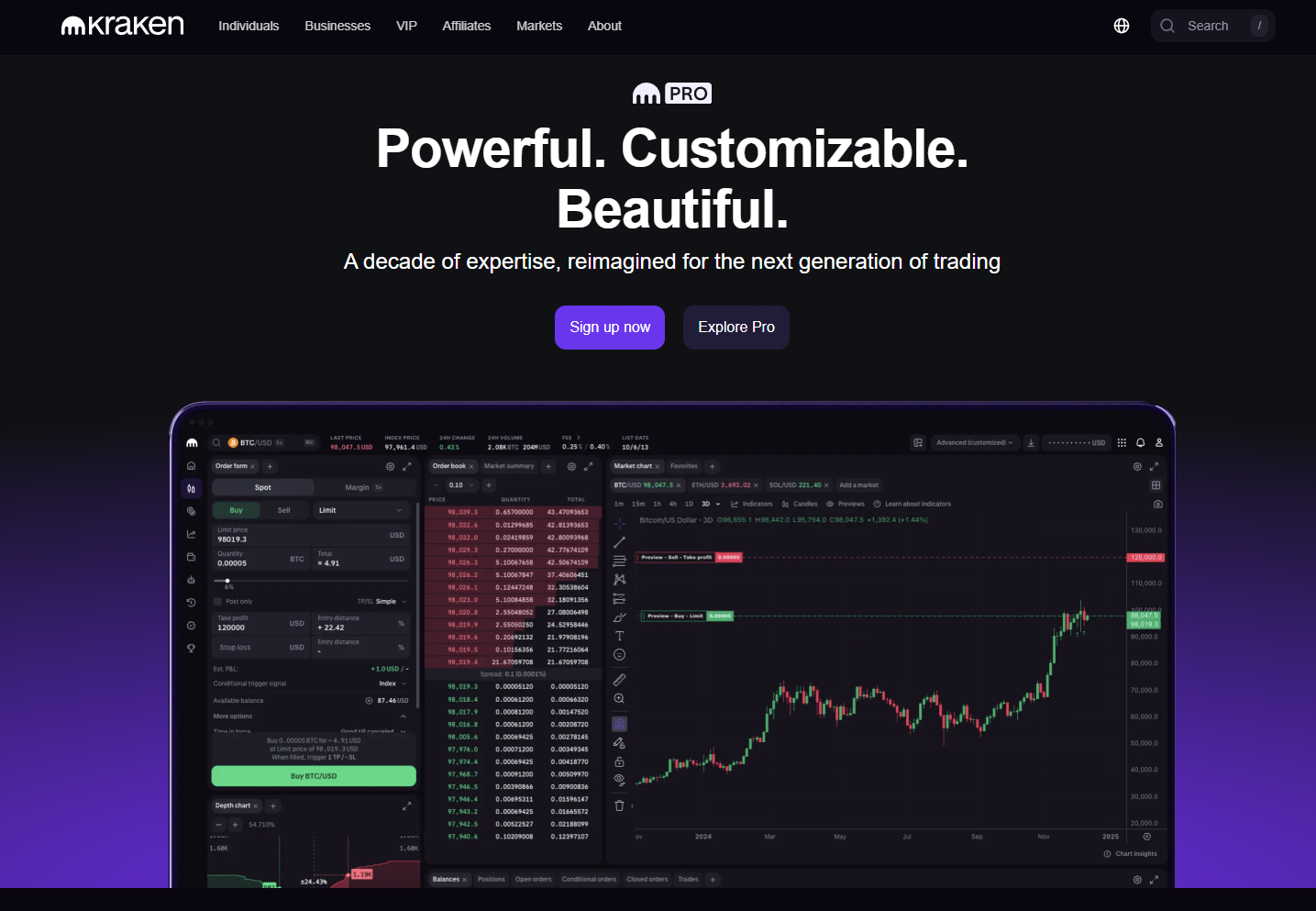
Kraken represents the centralized exchange model of crypto swapping.
Unlike non-custodial platforms, Kraken provides a traditional exchange environment where users manage accounts, balances, and trading activity through the platform.
Its infrastructure supports:
- spot trading,
- crypto conversions,
- advanced trading tools,
- account management,
- and professional market access.
For users who want deeper trading functionality, centralized exchanges often provide advantages such as:
- higher liquidity,
- advanced order types,
- trading interfaces,
- and professional tools.
Developers can also use exchange APIs to build:
- automated trading systems,
- portfolio applications,
- market monitoring tools,
- and trading bots.
Strengths
- Strong exchange liquidity
- Professional trading features
- Advanced market tools
- Established exchange infrastructure
Tradeoffs
- Requires account management
- Custodial model
- Less focused on wallet-to-wallet swaps
Best For
Traders and developers building exchange-based automation systems.
💡 Pro tip: Swaps only handle execution. If you're building a wallet or AI assistant, you also need portfolio context. The CoinStats API covers market data, wallet, DeFi, portfolio intelligence, and token security across chains. It ships an MCP server, so AI agents can read that data directly. Pair it with any swap provider above: the data API supplies intelligence, the swap layer handles execution. More in this crypto API guide.
Crypto Swap Platform Comparison
| Capability | StealthEX | ChangeHero | SimpleSwap | Changelly | Raydium | Kraken |
|---|---|---|---|---|---|---|
| Non-custodial swaps | Yes | Yes | Yes | Yes (instant exchange) | Yes | No |
| Wallet-to-wallet swaps | Yes | Yes | Yes | Yes | Yes | No |
| Multi-chain support | Strong | Strong | Strong | Very strong | Limited | Strong |
| Liquidity aggregation | Yes | Yes | Yes | Yes | No | No |
| API for developers | Limited | Yes | Yes | Yes | Limited | Yes |
| Fiat on/off ramp | No | Limited | No | Yes | No | Yes |
| Professional trading | Limited | Limited | Limited | Moderate | Moderate | Strong |
| Best use case | Instant swaps | Simple conversions | Multi-source swaps | Embedded crypto services | Solana DeFi | Exchange trading |
Which Crypto Swap Platform Should You Choose?
Choose StealthEX if:
You want:
- non-custodial swaps,
- privacy-focused exchanges,
- simple conversions.
Choose Changelly if:
You need:
- embedded crypto exchange APIs,
- fiat on/off ramps,
- wallet integrations,
- or business-grade crypto infrastructure.
Choose ChangeHero if:
You need:
- straightforward crypto exchanges,
- easy wallet integration,
- simple conversion workflows.
Choose SimpleSwap if:
You want:
- multiple liquidity sources,
- broad asset support,
- simplified swap routing.
Choose Raydium if:
You are building around:
- Solana DeFi,
- decentralized trading,
- liquidity pools.
Choose Kraken if:
You need:
- professional exchange infrastructure,
- advanced trading features,
- centralized liquidity.
What You Can Build With Crypto Swap Infrastructure
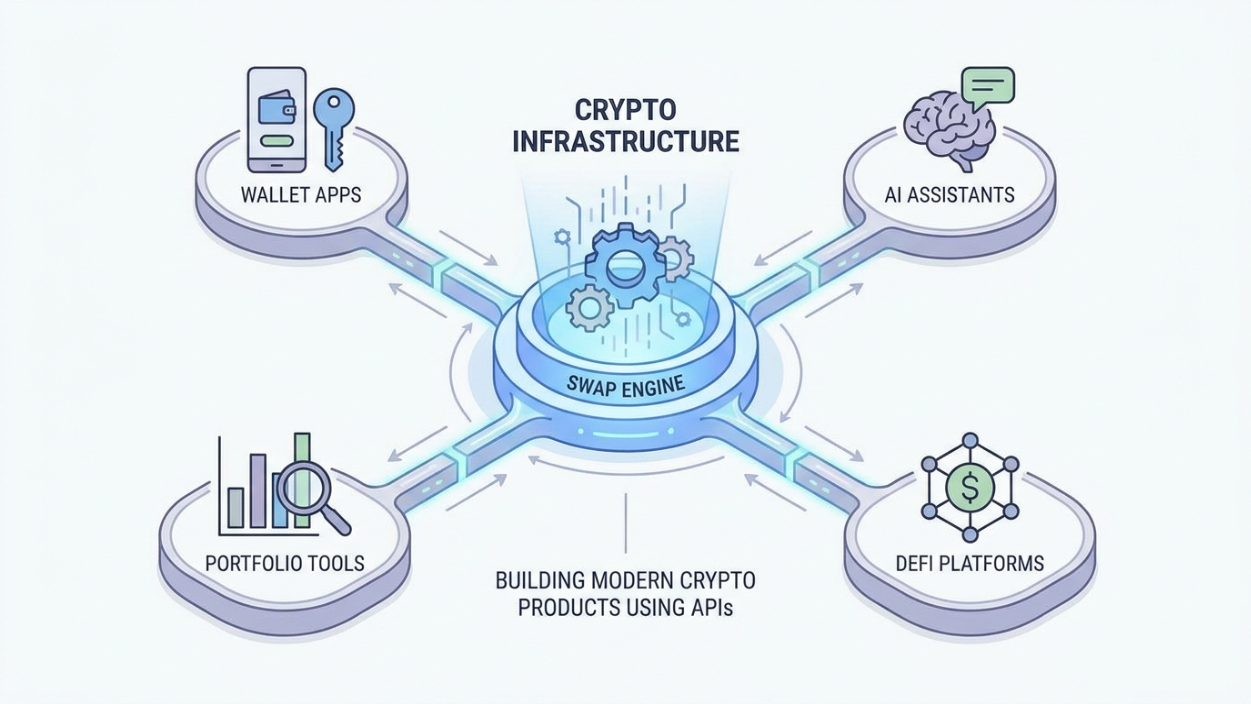
Crypto swaps are becoming a foundational component of many modern Web3 applications.
Instead of building a complete exchange from scratch, developers can combine swap infrastructure with wallets, APIs, and blockchain services to create more advanced products.
Crypto Wallet Applications
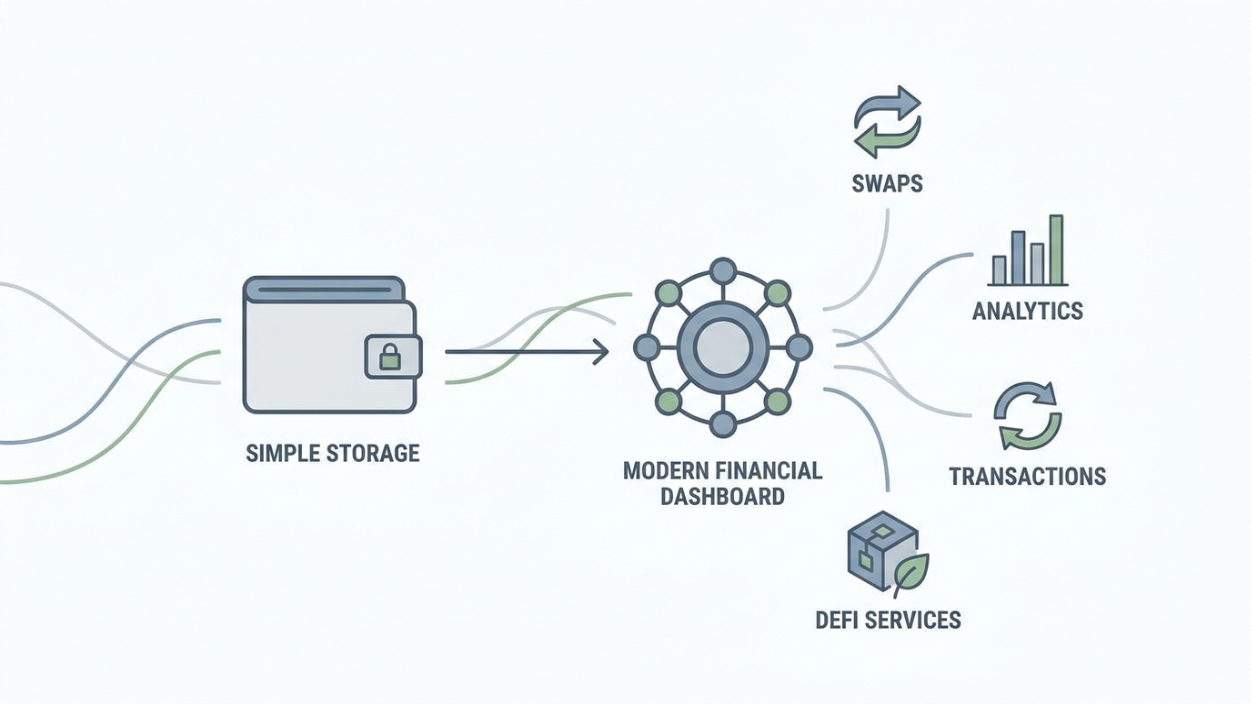
Many modern wallets are no longer only storage tools.
They now include:
- token swaps,
- portfolio tracking,
- transaction history,
- asset analytics,
- and DeFi integrations.
Platforms like Changelly provide exchange and fiat APIs that allow wallet developers to integrate crypto purchases, swaps, and selling directly into their applications without managing liquidity themselves.
Swap providers allow users to exchange assets directly inside the wallet experience without leaving the application.
AI-Powered Crypto Assistants
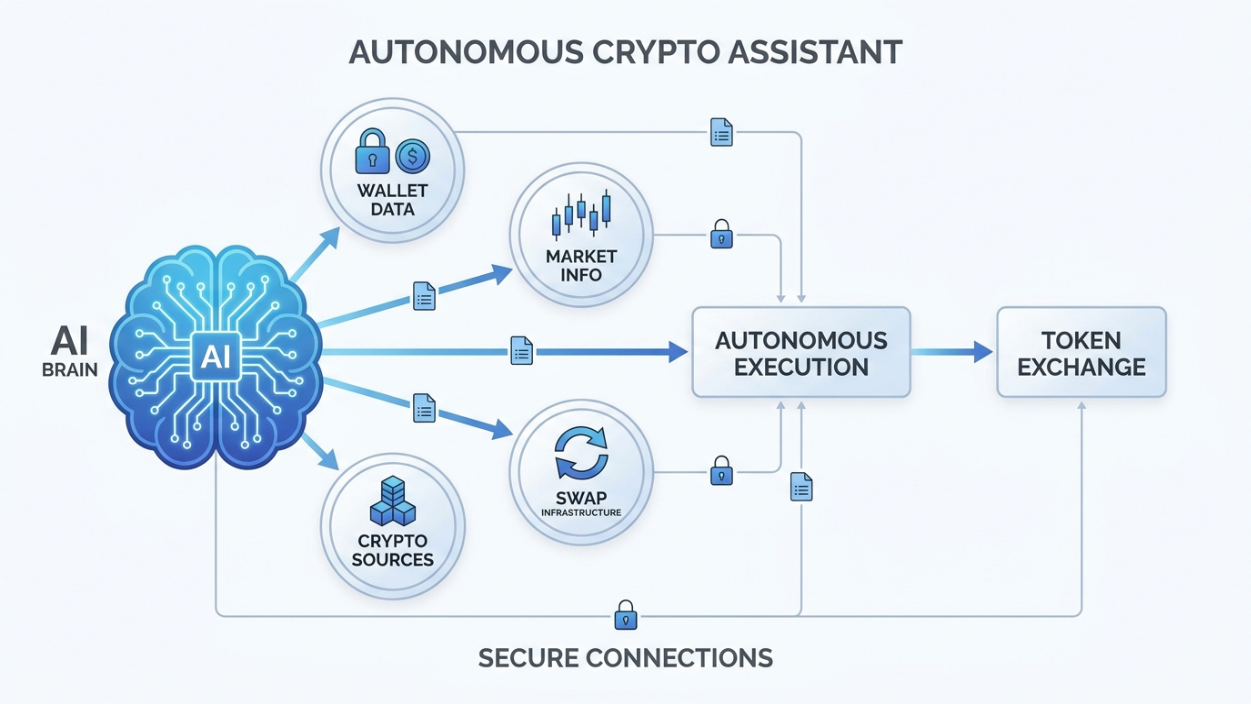
AI agents are creating new possibilities for crypto automation.
An AI assistant could:
- analyze a user's portfolio,
- identify allocation changes,
- suggest swaps,
- compare available routes,
- and help execute transactions.
However, AI systems need more than swap execution.
They require additional context such as:
- wallet balances,
- historical activity,
- market conditions,
- and portfolio performance.
This is why combining swap infrastructure with crypto data APIs is becoming increasingly important.
Portfolio Rebalancing Tools
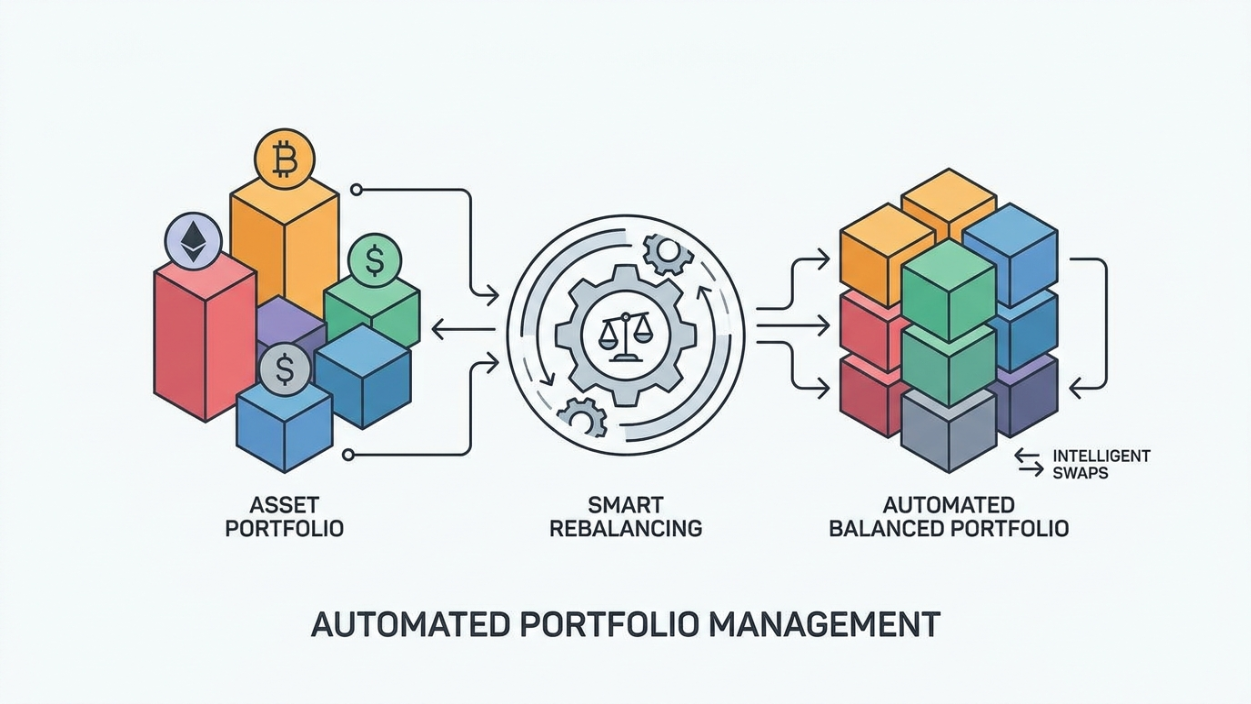
Automated portfolio management is another growing use case.
A rebalancing application could:
- Monitor user holdings.
- Detect when allocations move away from targets.
- Recommend adjustments.
- Execute swaps automatically.
This requires both portfolio intelligence and reliable swap execution.
DeFi Applications
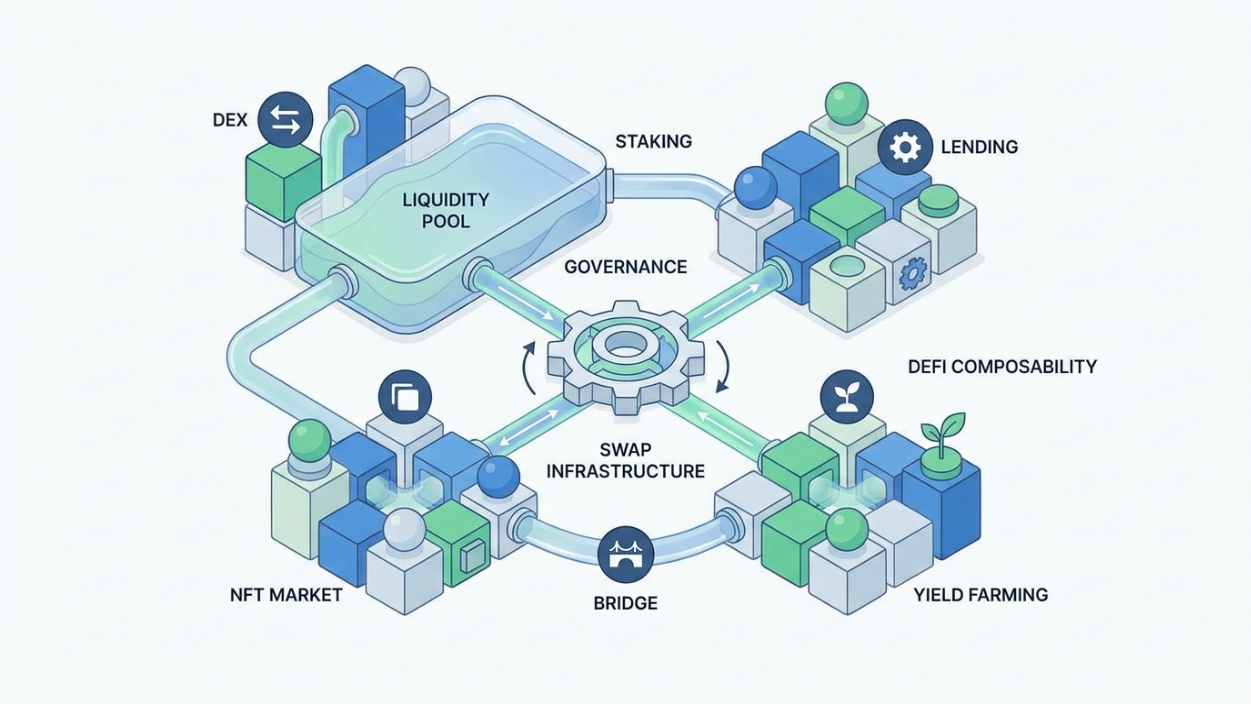
DeFi applications rely heavily on swap functionality.
Examples include:
- yield platforms,
- liquidity management tools,
- trading dashboards,
- and decentralized portfolio managers.
DEX infrastructure such as Raydium provides direct blockchain-based liquidity, while API-driven platforms can help developers build easier user experiences on top.
💡 Pro tip: A swap usually ends with value sitting in a stablecoin. Businesses still need to hold and spend it. The Altitude stablecoin corporate card covers that spend layer. It gives teams multi-currency accounts, virtual and physical cards, and stablecoin plus bank payments. Coverage spans 150+ countries, with APY on idle balances. Swap to convert, Altitude to spend.
Final Thoughts
Crypto swaps have evolved from simple token conversions into a much larger infrastructure ecosystem.
Today, different platforms solve different problems:
- StealthEX and ChangeHero focus on simple non-custodial exchanges.
- SimpleSwap focuses on combining liquidity sources into an easier swap experience.
- Changelly combines instant crypto exchanges with developer APIs, fiat on/off-ramp infrastructure, and business integrations.
- Raydium provides decentralized trading infrastructure for the Solana ecosystem.
- Kraken provides exchange-grade trading capabilities.
For developers, the future of crypto applications will likely involve combining multiple layers.
Swap infrastructure handles execution.
Data APIs provide intelligence.
Blockchain infrastructure provides connectivity.
Together, these components enable the next generation of wallets, trading platforms, and AI-powered crypto applications.