A blockchain application can have a great frontend, well-designed smart contracts, and a carefully planned architecture, but it still needs a reliable way to communicate with the network.
That communication usually happens through an RPC endpoint.
When a wallet retrieves a balance, a dApp reads a smart contract, a trading bot checks the latest block, or an application submits a transaction, the request ultimately needs to reach a blockchain node. Running and maintaining those nodes yourself is possible, but it can quickly become another infrastructure problem to manage.
That is where RPC node providers come in.
While researching this guide, I looked at how current RPC providers approach the problem, including their official documentation and product pages. I also looked beyond traditional node providers because the market has evolved: some platforms now offer intelligent routing across multiple providers, unified APIs, streaming infrastructure, and tools designed specifically for AI-powered applications.
For this guide, I’m focusing on five providers:
- Chainstack
- OnFinality
- RouteMesh
- Uniblock
- QuickNode
Rather than treating all five as identical, I’ll look at what each platform is designed to do, where it fits in a modern Web3 stack, and which types of developers are most likely to benefit from it.
What Is an RPC Node Provider?
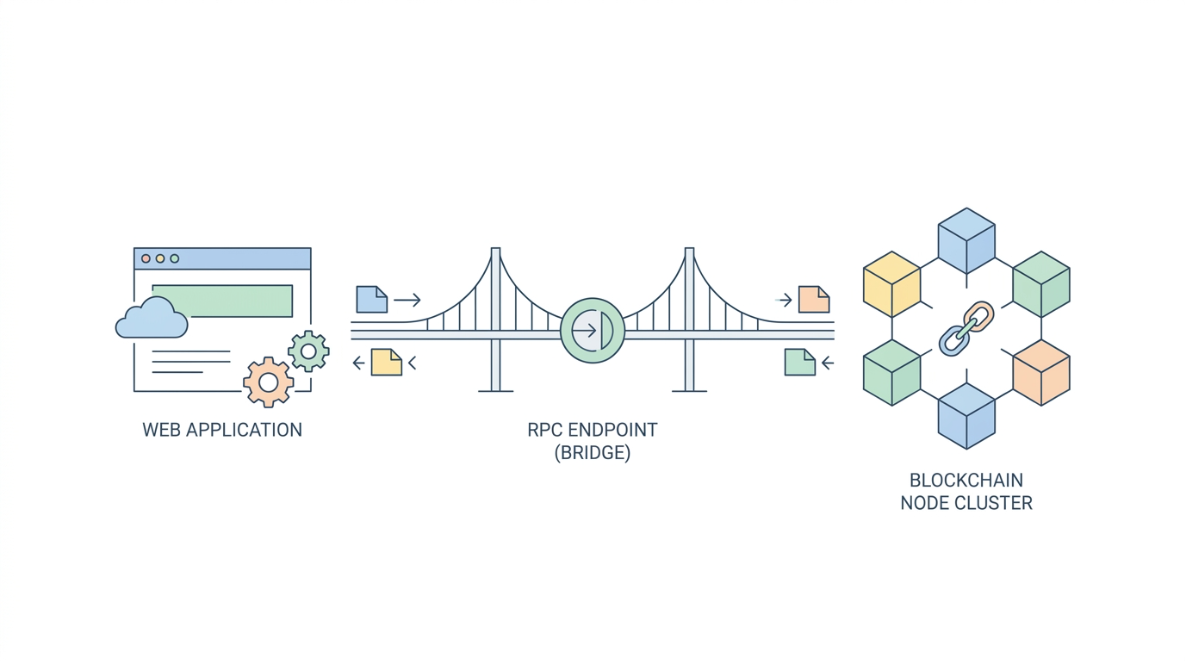
RPC stands for Remote Procedure Call.
In simple terms, an RPC endpoint is the communication layer between your application and a blockchain node.
Instead of your application maintaining its own Ethereum, Solana, Base, or other blockchain node, it sends requests to an RPC provider. The provider manages the underlying infrastructure and returns the blockchain data or result your application requested.
For example, an application might use RPC to:
- retrieve the latest block,
- check a wallet balance,
- read smart-contract state,
- submit a transaction,
- retrieve transaction information,
- listen for blockchain events,
- or interact with a decentralized application.
The basic architecture looks something like this:
Application → RPC endpoint → Blockchain network
For a small project, a public RPC endpoint may be enough. As traffic grows, however, developers usually need better reliability, higher throughput, lower latency, archive access, WebSockets, dedicated infrastructure, or more sophisticated routing.
That is where managed RPC providers become valuable.
What Should You Look for in an RPC Provider?
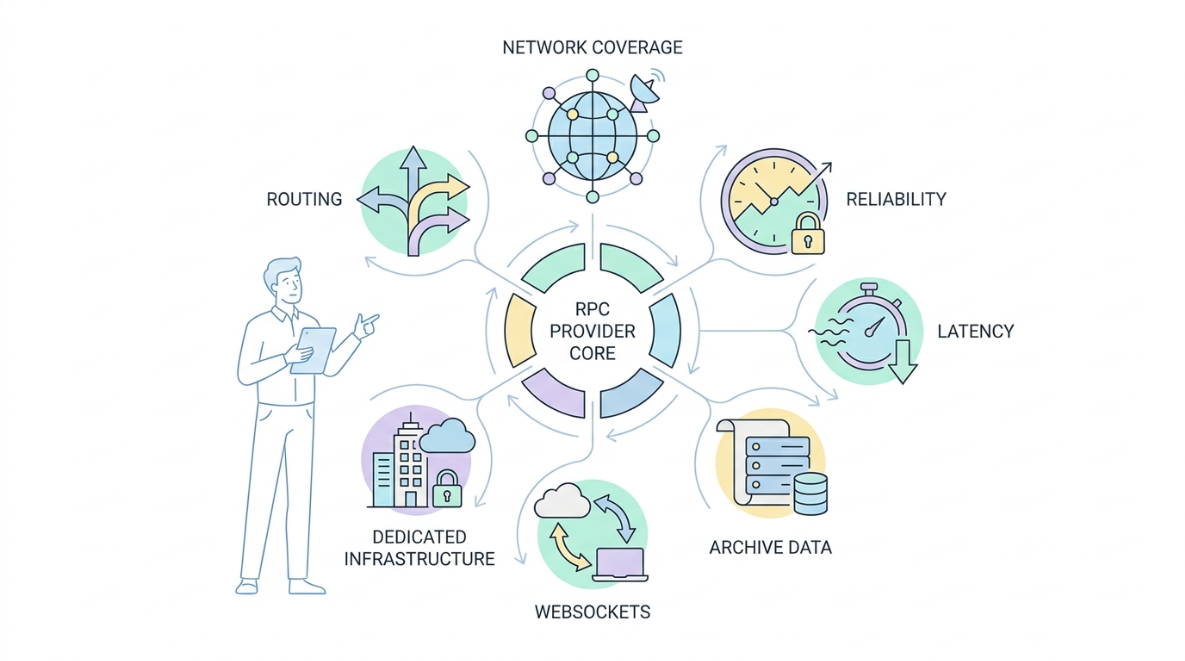
Not every RPC provider is optimized for the same workload.
Before choosing one, I would look at several factors.
Blockchain Coverage
The first question is simple: does the provider support the networks your application needs?
A single-chain application may only need Ethereum or Solana. A wallet, portfolio application, or multi-chain dApp may need dozens of networks.
It is also worth checking whether the provider supports both mainnets and testnets and whether the specific RPC methods your application requires are available on each network.
Reliability and Uptime
An RPC endpoint is part of your application's infrastructure.
If it becomes unavailable, your application may stop loading balances, fail to submit transactions, or lose access to real-time blockchain events.
Providers therefore differentiate themselves through infrastructure redundancy, geographic distribution, monitoring, routing, and service-level guarantees.
Latency and Performance
Latency matters particularly for applications that react to blockchain activity in real time.
Trading systems, arbitrage applications, liquidations, gaming applications, and real-time dashboards may need faster responses than a simple portfolio tracker.
The right provider depends on the workload rather than simply choosing whichever provider advertises the lowest latency.
Archive Data
A standard full node generally maintains the current blockchain state, while an archive node preserves historical state that can be queried further back in the chain's history.
Archive infrastructure becomes useful for:
- blockchain analytics,
- historical research,
- backtesting,
- auditing,
- debugging,
- indexers,
- and applications that need historical state.
Chainstack, for example, provides archive RPC infrastructure designed for historical queries and backfills.
WebSockets and Streaming
Polling an RPC endpoint repeatedly is not always the best way to build a real-time application.
WebSockets and other streaming technologies allow applications to receive updates as events occur.
This is particularly useful for:
- trading applications,
- transaction monitoring,
- wallet notifications,
- blockchain analytics,
- and AI agents reacting to on-chain events.
Dedicated Infrastructure
Shared RPC infrastructure is often sufficient for development and early production workloads.
As traffic grows, some applications benefit from dedicated nodes or isolated infrastructure that provides greater control over performance, resources, and configuration.
Routing and Failover
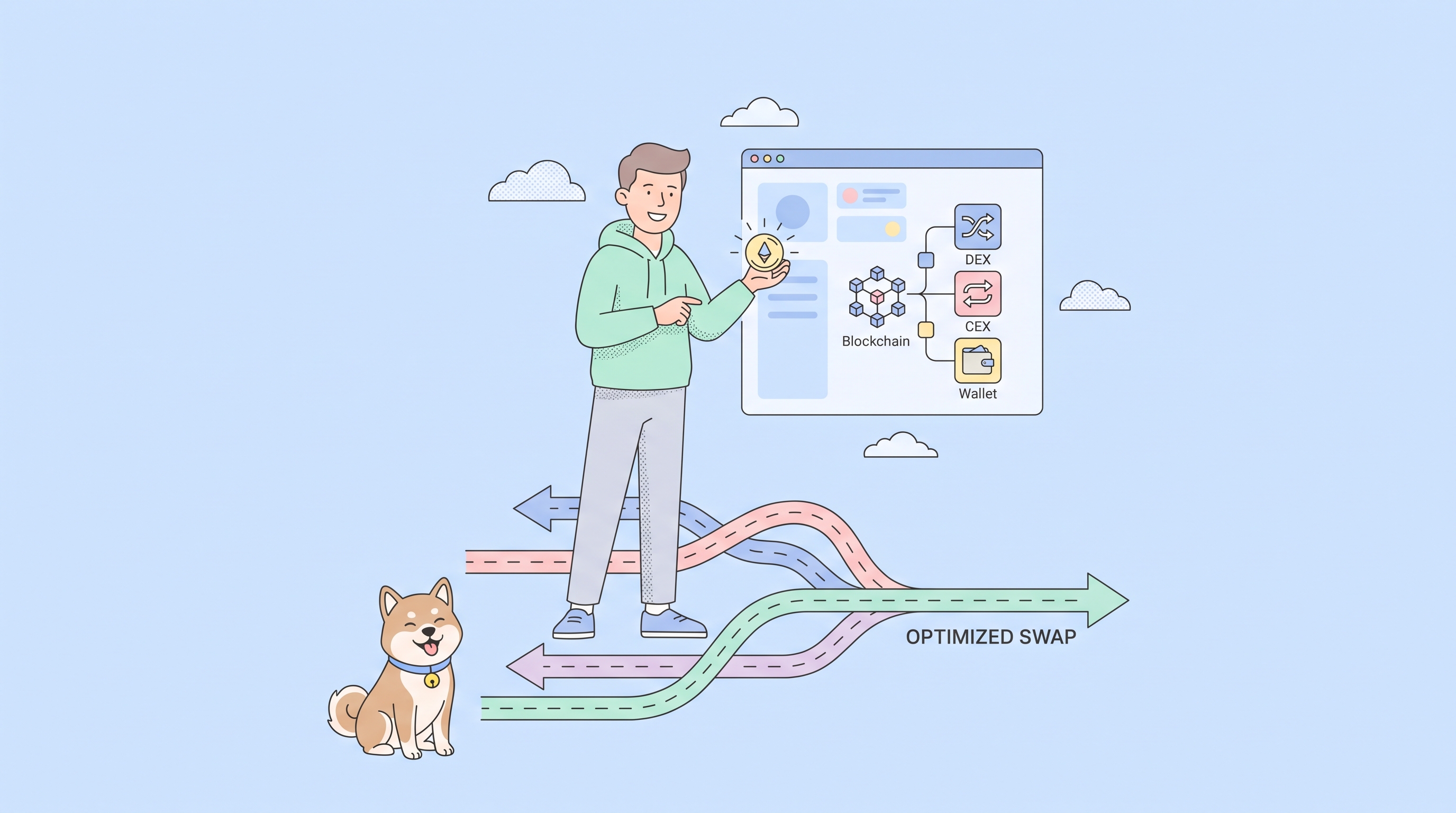
There is another approach becoming increasingly important: instead of relying on a single RPC provider, applications can use an infrastructure layer that automatically routes requests across multiple providers.
This can help reduce vendor lock-in and improve resilience when one provider experiences latency or availability issues.
The Best RPC Node Providers in 2026
1. Chainstack: Best for Managed Blockchain Infrastructure
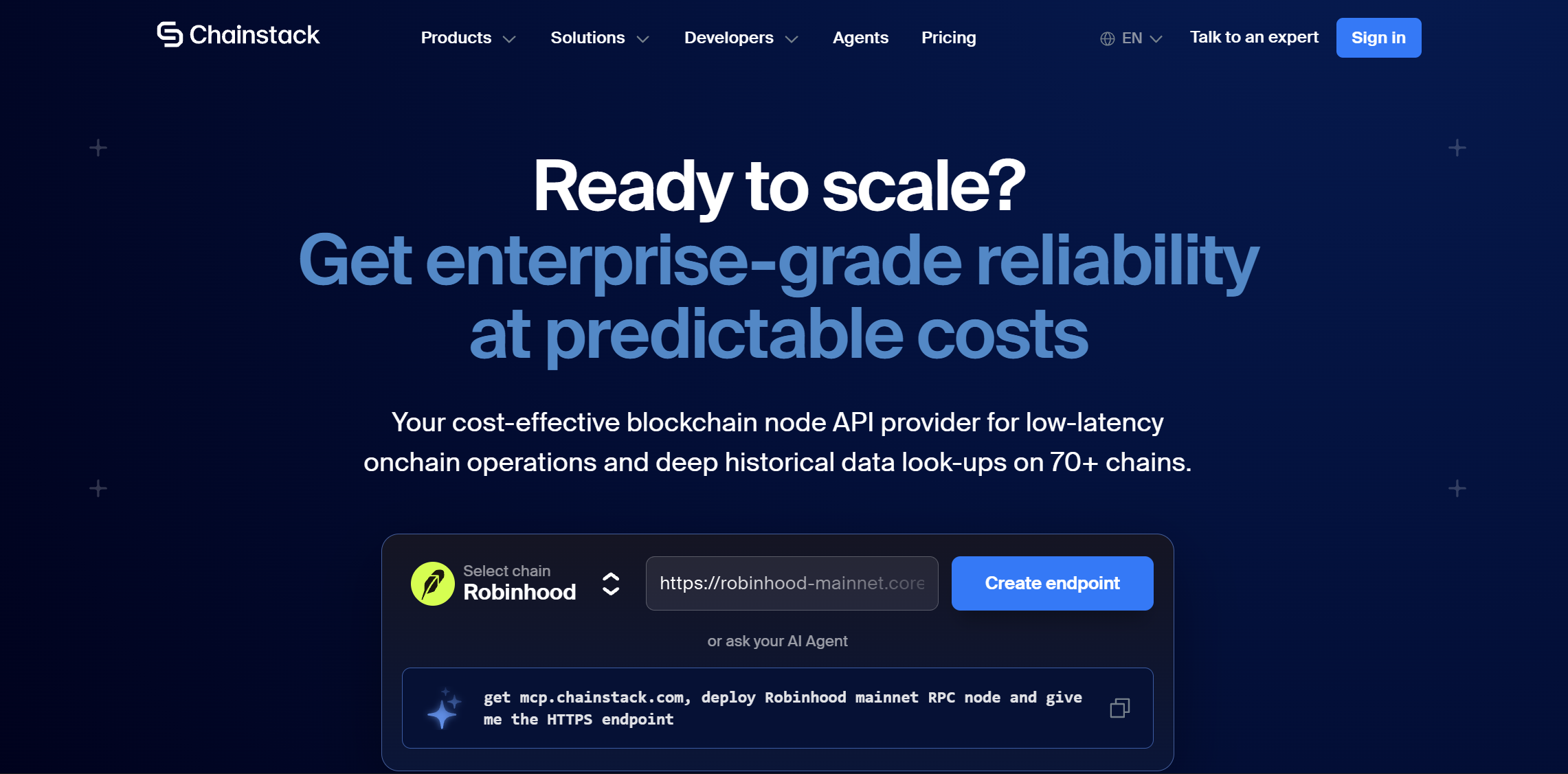
Chainstack is a managed blockchain infrastructure platform designed to give developers production-ready access to blockchain networks without requiring them to operate the underlying nodes themselves.
Its current infrastructure supports 70+ blockchain networks, including Ethereum, Solana, Base, Arbitrum, Polygon, BNB Smart Chain, Hyperliquid, Robinhood Chain, and others.
One of Chainstack's strengths is the range of infrastructure options available.
Developers can use Global Nodes for geographically distributed access, while Dedicated Nodes provide exclusive infrastructure and greater control. Chainstack also offers Unlimited Nodes for those who do not want to keep track of quotas, and Self-Hosted Nodes for deploying and managing nodes on their own infrastructure.
That makes the platform useful across different stages of development and deployment options.
Chainstack also provides archive infrastructure for developers that need historical blockchain state. Its archive nodes can be used for analytics, backfills, audits, and other workloads that require access to historical data.
Another important part of the current platform is its support for real-time infrastructure. Developers can use WebSockets, while Solana workloads can make use of Yellowstone gRPC streaming for structured real-time blockchain data.
Chainstack has also expanded into AI-oriented infrastructure with its MCP server. The current MCP implementation allows AI coding assistants to access Chainstack documentation, platform status, pricing, and, with authentication, node-management capabilities. It works with tools including Claude Code, Cursor, Codex, Gemini CLI, Windsurf, and others.
This is particularly interesting as AI agents move from simply generating code toward interacting with live blockchain infrastructure.
Strengths
- Broad multichain infrastructure
- Global, Dedicated, and Self-Hosted Nodes
- Archive data access
- WebSockets and Solana gRPC
- Production-oriented infrastructure
- MCP support for AI development workflows
Tradeoffs
- More infrastructure options than a very small project needs
- Advanced configurations take time to learn
- Dedicated and high-performance setups cost more than shared RPC
Best For
Developers building production dApps, wallets, DeFi applications, blockchain analytics platforms, trading infrastructure, and AI agents that need reliable access to multiple networks.
2. OnFinality: Best for Multichain RPC and Node Infrastructure
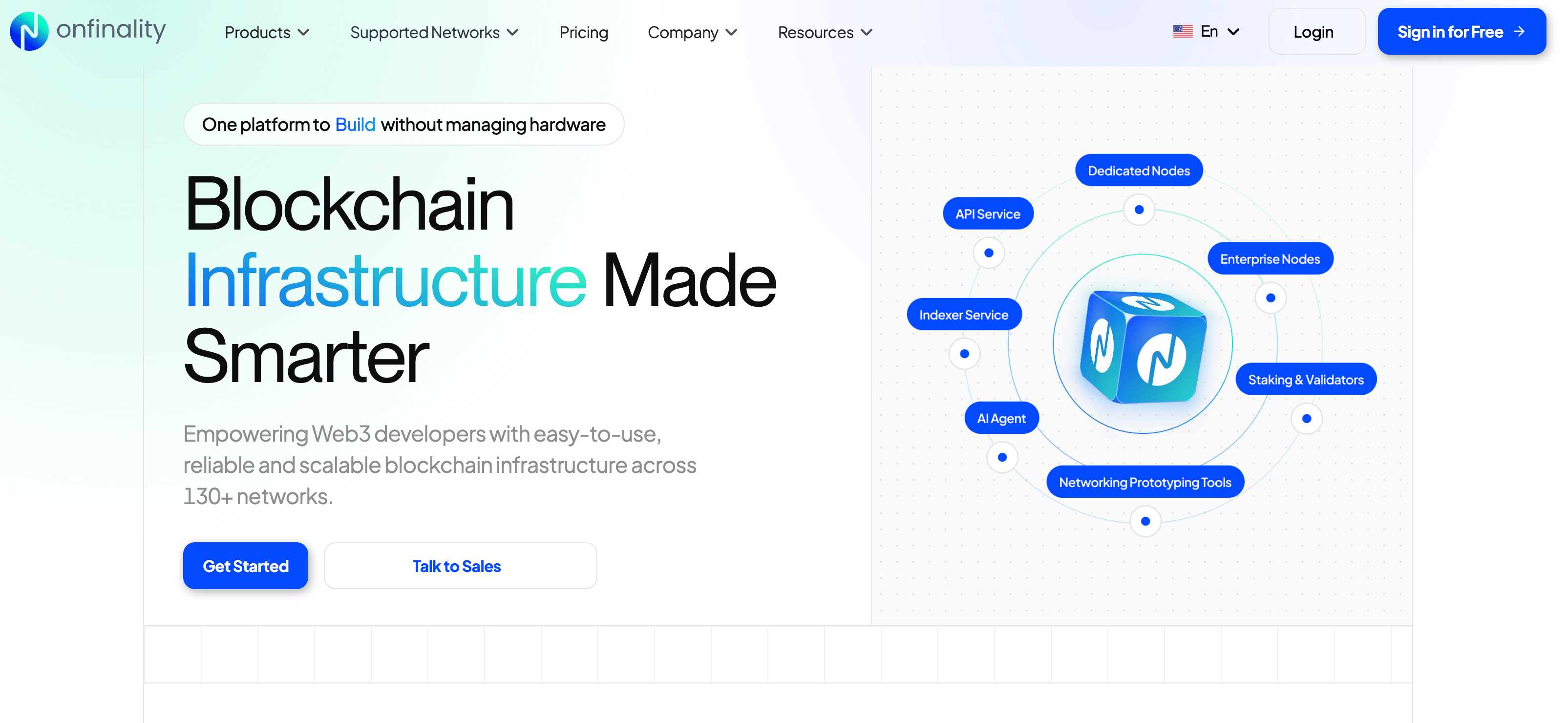
OnFinality provides managed RPC infrastructure and dedicated blockchain nodes for developers building across multiple networks.
Its current platform supports 130+ blockchain networks, with RPC access available across networks including Ethereum, Solana, Polygon, Base, Arbitrum, BNB Chain, Polkadot, Optimism, Hyperliquid, Sui, Aptos, TON, and others.
The platform provides shared RPC endpoints for getting applications connected quickly, while production workloads can move toward dedicated nodes when they require greater control or isolation.
OnFinality also provides archive access where supported, RPC request analytics, rate-limit visibility, and Trace API functionality.
The analytics layer is particularly useful because RPC usage can become difficult to understand once an application starts generating significant traffic. Monitoring request behavior can help developers identify inefficient calls, unexpected usage patterns, and performance issues.
OnFinality also supports both HTTP and WebSocket connections for its API service.
This gives developers flexibility when building applications that need either standard request-response interactions or more persistent connections for real-time workloads.
The provider's infrastructure is also designed to scale beyond simple shared endpoints. Dedicated nodes provide more control over infrastructure and are available across supported networks, making them an option for applications where sustained traffic or specialized requirements justify dedicated resources.
Strengths
- Broad multichain coverage
- Shared and dedicated infrastructure
- Archive access
- RPC analytics
- HTTP and WebSocket support
- Production-oriented scaling
Tradeoffs
- Developers with a simple single-chain project may not need the full platform
- Advanced workloads require more planning around infrastructure and usage
- Feature availability can vary between networks
Best For
Multichain dApps, wallets, DeFi applications, analytics platforms, and teams looking for a managed path from shared RPC access to dedicated infrastructure.
3. RouteMesh: Best for RPC Routing and Provider Aggregation
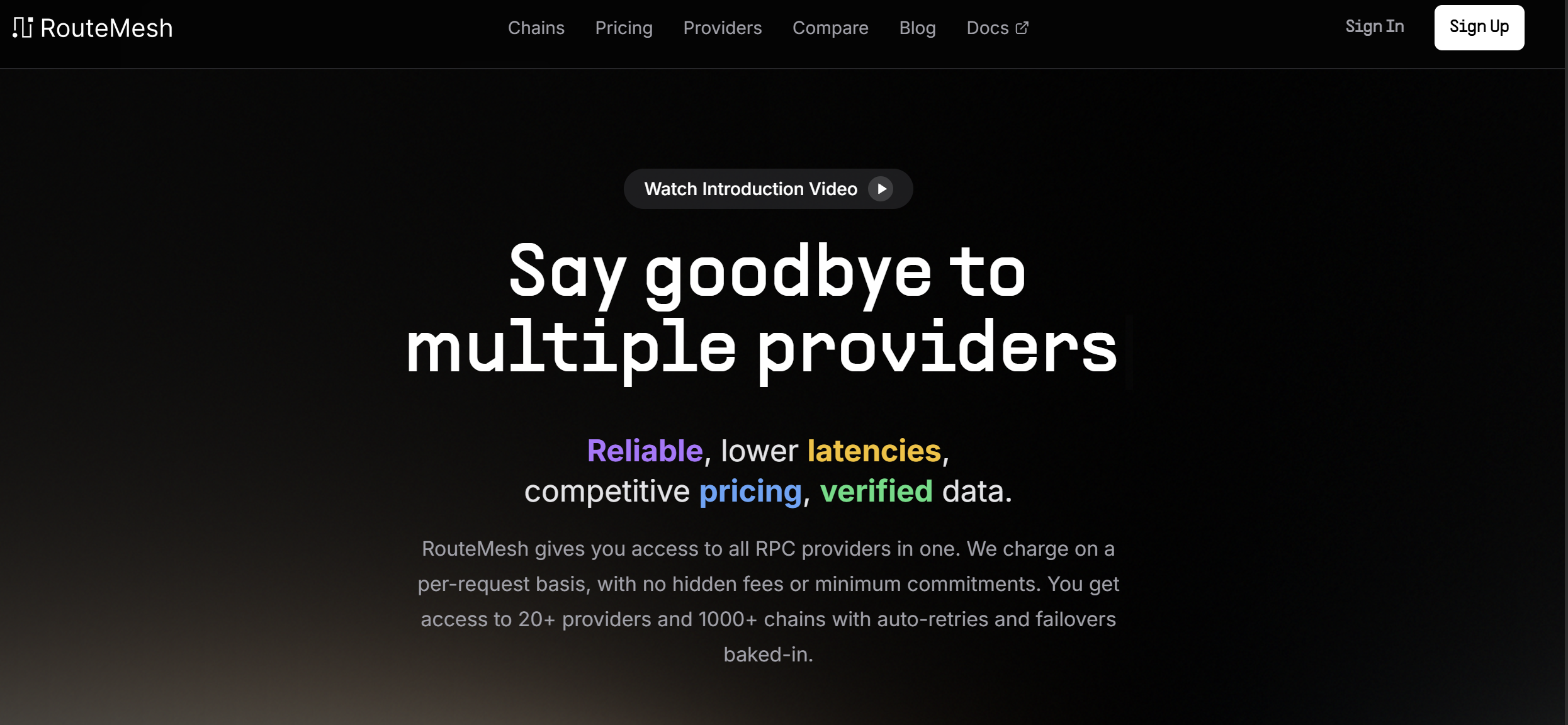
RouteMesh takes a different approach from traditional RPC node providers.
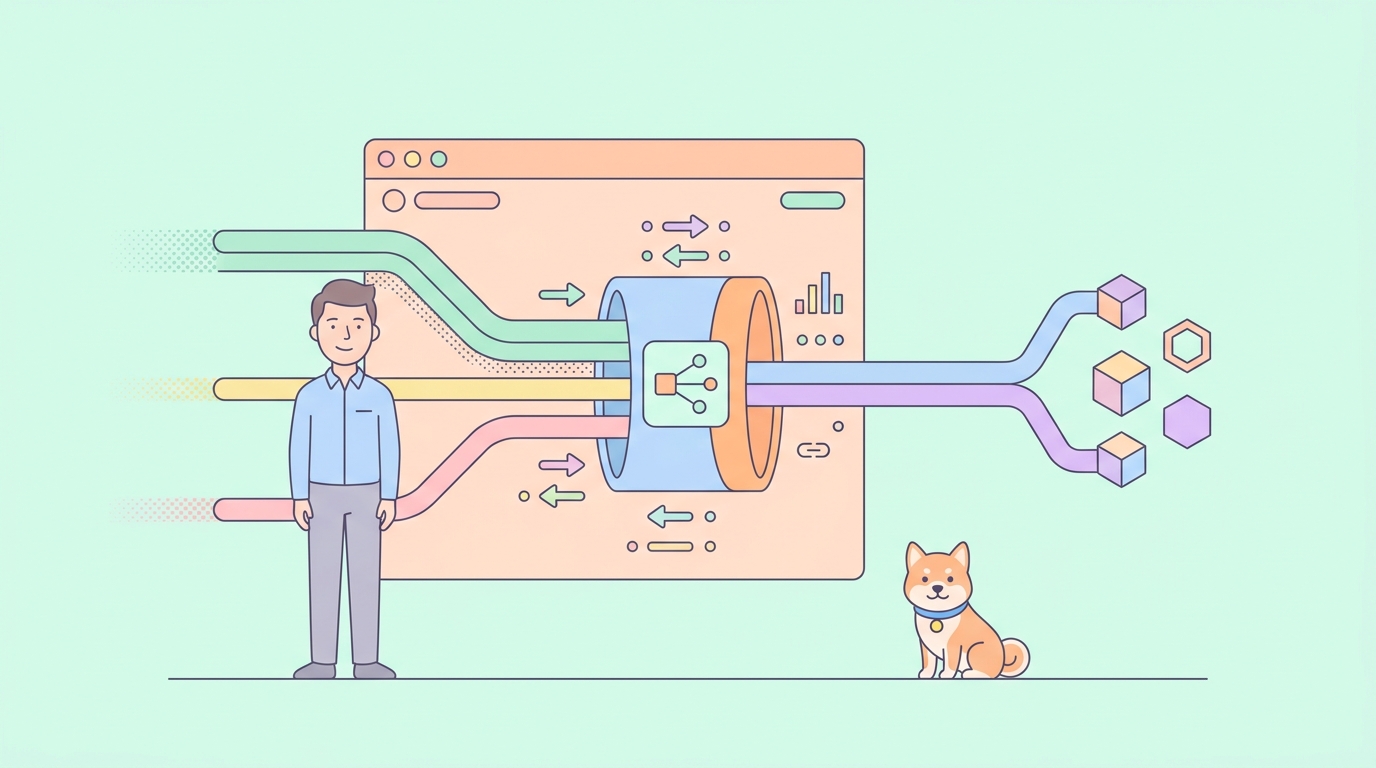
Instead of asking developers to select one RPC provider and send every request through that provider, RouteMesh acts as a routing layer across multiple RPC providers.
According to its current platform, RouteMesh provides access to 20+ providers and more than 1,000 chains, with automatic retries and failover built into the service.
That makes the platform particularly interesting for developers who are concerned about RPC reliability and provider dependency.
Imagine an application that depends on several blockchain networks. Instead of integrating and monitoring multiple RPC providers independently, the application can use a unified routing layer.
RouteMesh can then handle routing requests across available providers.
Its approach also focuses on latency and cost. The platform says it evaluates available routes and uses provider and node availability to determine pricing, while its routing model is designed to provide competitive latency and redundancy.
This is a different value proposition from simply buying a dedicated node.
The goal is not necessarily to give developers ownership of a particular node. Instead, it abstracts the provider-selection problem away from the application.
That can be useful when reliability matters more than having a direct relationship with one underlying RPC provider.
Strengths
- RPC provider aggregation
- Automatic retries and failover
- Broad chain coverage
- Unified access to multiple providers
- Per-request pricing model
- Useful for reducing provider lock-in
Tradeoffs
- Adds an abstraction layer between the application and underlying providers
- Developers have less direct control over individual infrastructure
- Not every workload needs multi-provider routing
Best For
Multichain applications, teams that want RPC redundancy, and developers who would rather outsource provider routing and failover than build that infrastructure themselves.
4. Uniblock: Best for Unified Blockchain APIs and RPC Access
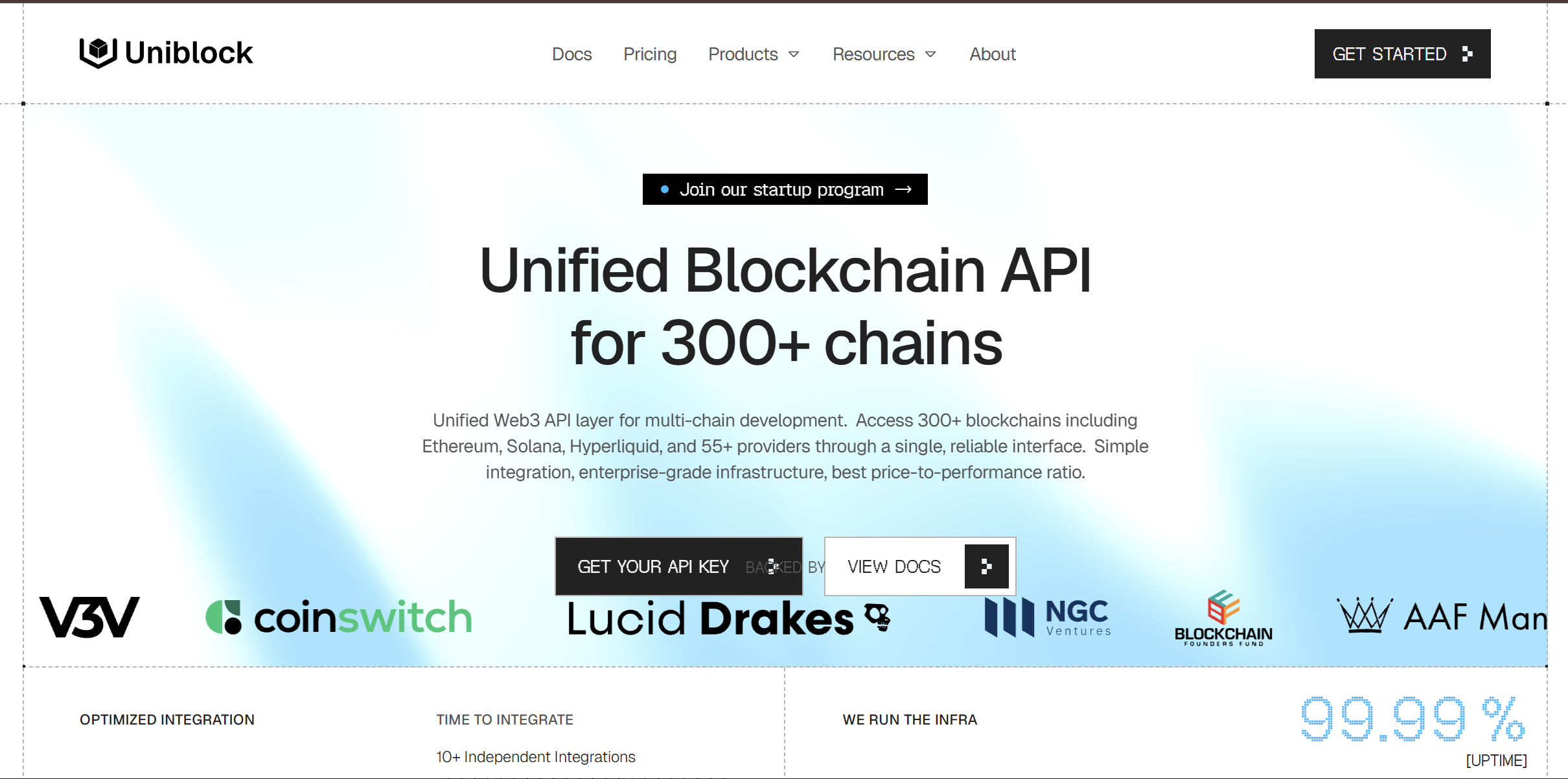
Uniblock approaches blockchain infrastructure as a unified API layer.
Its current platform provides access to 300+ blockchains and 55+ providers through a single interface. It also offers thousands of standardized APIs beyond basic RPC access.
This distinction is important.
A traditional RPC provider primarily gives your application access to blockchain nodes. Uniblock aims to abstract more of the infrastructure behind a unified API.
The platform connects developers to multiple RPC providers and handles routing, redundancy, and provider management behind the scenes. Uniblock says its routing system evaluates latency, cost, and reliability and can use parallel hedging when a response becomes slow.
That can significantly reduce the amount of infrastructure code a development team has to maintain.
Instead of implementing custom failover logic, monitoring several providers, and managing multiple contracts and billing relationships, developers can work through a unified integration.
Uniblock also extends beyond raw RPC.
Its API catalog includes market-data endpoints for information such as token prices, market capitalization, trading volume, and historical data, along with token, NFT, scan, and other blockchain APIs.
That makes it particularly relevant for applications where blockchain connectivity and higher-level data access need to exist together.
Strengths
- 300+ blockchain networks
- 55+ underlying providers
- Unified API interface
- Intelligent routing and failover
- Large set of higher-level blockchain APIs
- Helps reduce provider lock-in
Tradeoffs
- Adds another abstraction layer
- Developers needing direct node-level control may prefer traditional infrastructure providers
- The broad API surface can be unnecessary for simple RPC-only applications
Best For
Multichain applications, wallets, Web3 platforms, teams that want unified blockchain access, and developers who want to reduce the operational burden of managing multiple infrastructure providers.
5. QuickNode: Best for Broad Web3 Developer Infrastructure
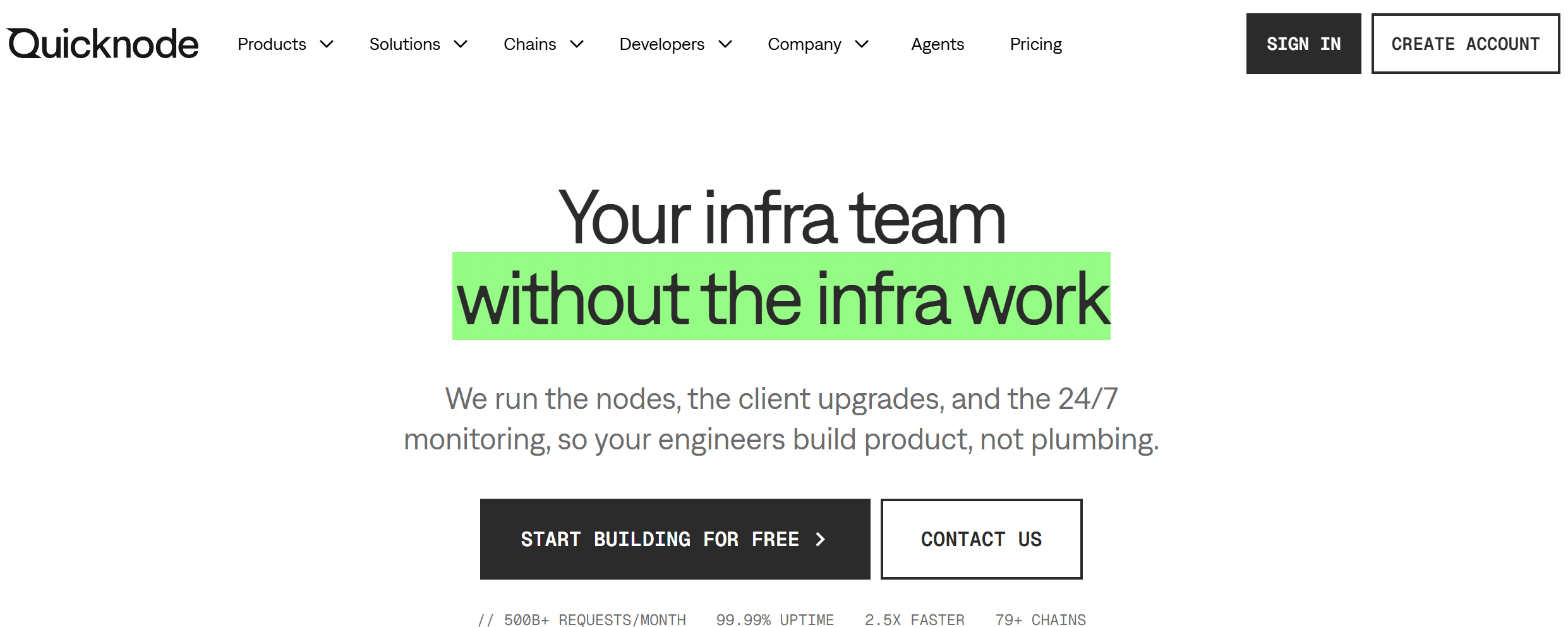
QuickNode is a broad Web3 infrastructure platform that combines RPC access with additional services for building and operating blockchain applications.
Its current documentation lists support for 80+ blockchains and provides access through RPC, REST, and gRPC interfaces.
The platform goes beyond basic RPC endpoints.
Developers can use Streams for real-time blockchain data pipelines, Webhooks for event-driven notifications, SQL Explorer for querying indexed blockchain datasets, and IPFS infrastructure for decentralized storage.
This broader product ecosystem can be useful when an application needs more than direct node access.
For example, a developer might use RPC to interact with a smart contract, WebSockets to receive events, Streams to process blockchain data, and SQL Explorer to query indexed information.
QuickNode has also added more tooling around AI agents.
Its current APIs use standard HTTP, JSON-RPC, REST, gRPC, and WebSocket interfaces, meaning AI agents can interact with the infrastructure without requiring a special wrapper. QuickNode also provides MCP and agent-oriented tooling for managing infrastructure and accessing its APIs.
The platform's streaming capabilities are also relevant for performance-sensitive applications. For example, QuickNode currently supports Solana WebSockets, gRPC, and Streams, with different approaches suited to development, high-frequency or low-latency workloads, and managed data pipelines.
Strengths
- 80+ blockchain networks
- RPC, REST, gRPC, and WebSockets
- Streams and Webhooks
- SQL-based blockchain data access
- IPFS infrastructure
- AI and agent-oriented tooling
- Broad developer ecosystem
Tradeoffs
- The large product surface can be more than a simple dApp requires
- Some advanced features depend on plan or chain
- Developers need to evaluate which products they actually need
Best For
Full-stack Web3 applications, production dApps, data-heavy applications, AI agents, and teams that want RPC plus additional blockchain infrastructure from one platform.
How to Choose the Right RPC Provider
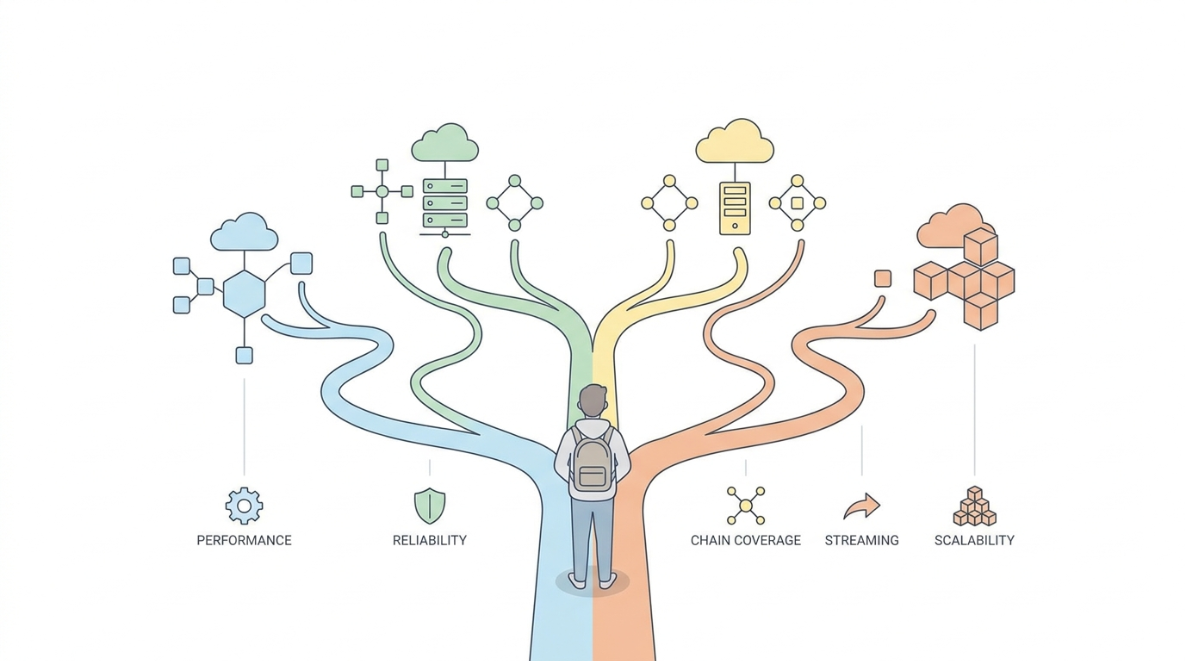
There isn't one RPC provider that is automatically the best choice for every application.
The right option depends on what your application needs from its infrastructure.
Choose Chainstack if you want managed infrastructure with multiple node configurations.
Chainstack is particularly attractive when you need to move from shared access toward dedicated, archive, or specialized infrastructure as your application grows.
Choose OnFinality if multichain infrastructure is your priority.
Its combination of managed RPC endpoints, archive access, analytics, and dedicated nodes makes it a strong option for teams building across many blockchain networks.
Choose RouteMesh if reliability through provider redundancy matters most.
Its routing and aggregation model is designed to reduce dependence on a single RPC provider and handle retries and failover automatically.
Choose Uniblock if you want one integration across many providers and APIs.
Uniblock makes sense when you want to abstract away RPC provider management while also accessing higher-level blockchain APIs.
Choose QuickNode if you want a broader Web3 infrastructure platform.
QuickNode is particularly useful when your application needs RPC alongside streaming, Webhooks, indexed data, IPFS, and other developer infrastructure.
RPC Nodes vs. Blockchain Data APIs
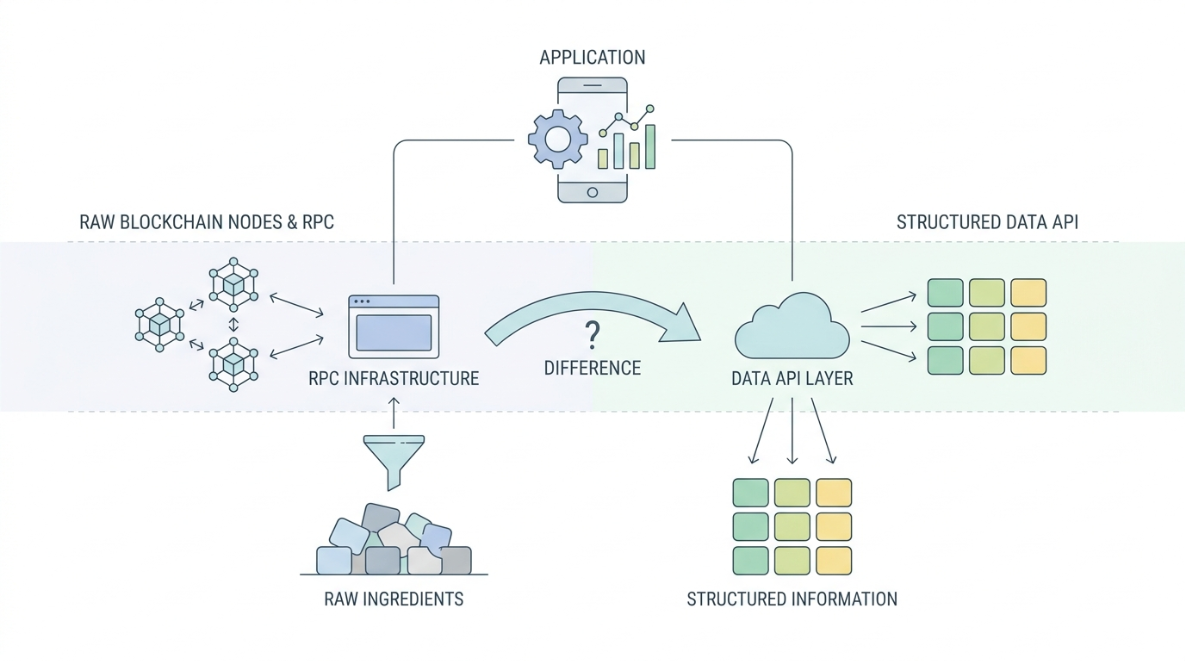
One distinction is worth making before choosing a provider: RPC infrastructure and blockchain data APIs are not the same thing.
An RPC endpoint gives developers relatively direct access to a blockchain node.
For example, your application can ask the network for the latest block or submit a transaction.
But applications often need information that requires additional processing.
A portfolio application might need:
- token balances,
- transaction history,
- token metadata,
- portfolio values,
- DeFi positions,
- market prices,
- and risk information.
Getting all of that directly from raw RPC calls can require significant development work.
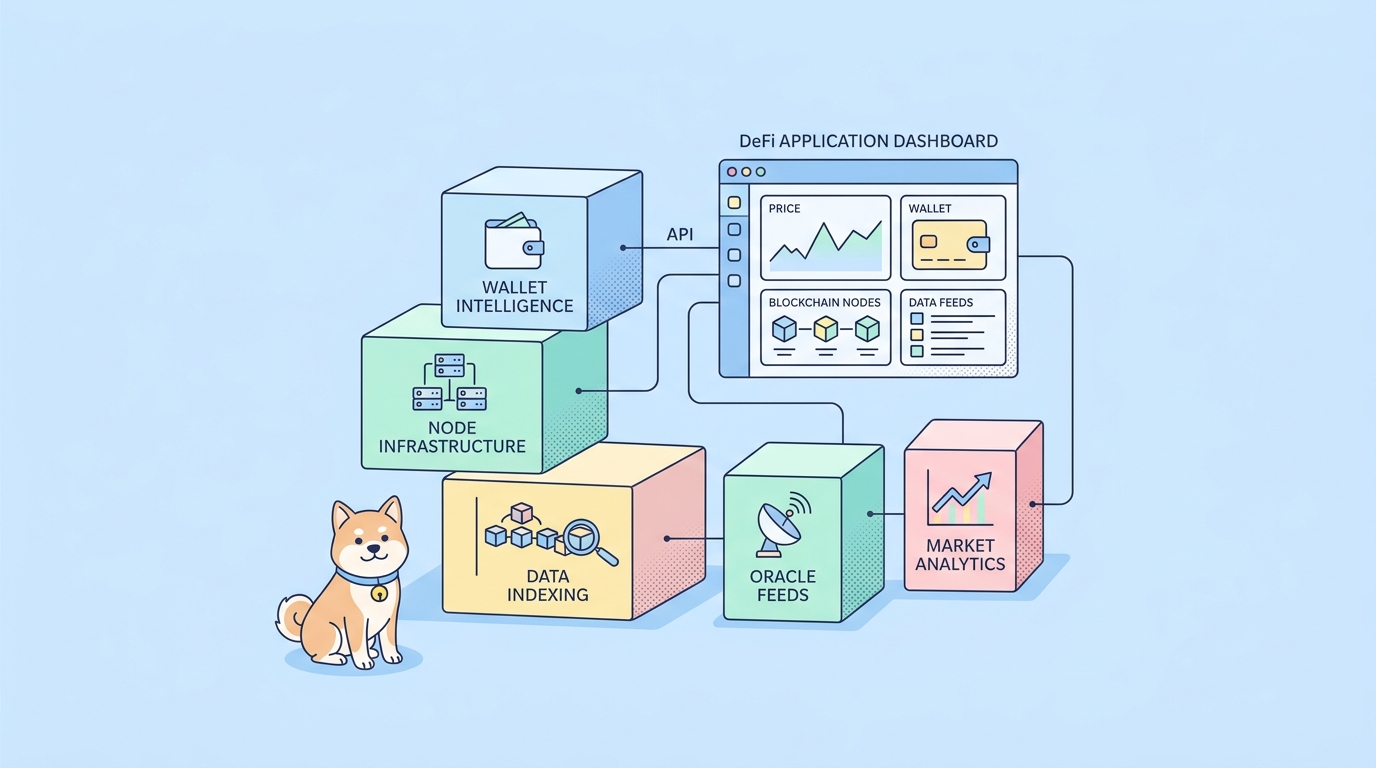
This is why modern Web3 architectures increasingly combine different infrastructure layers.
You might use an RPC provider for direct blockchain interaction, an indexing service for structured on-chain data, and a specialized data API for portfolio or market intelligence.
For AI agents, this separation becomes even more important.
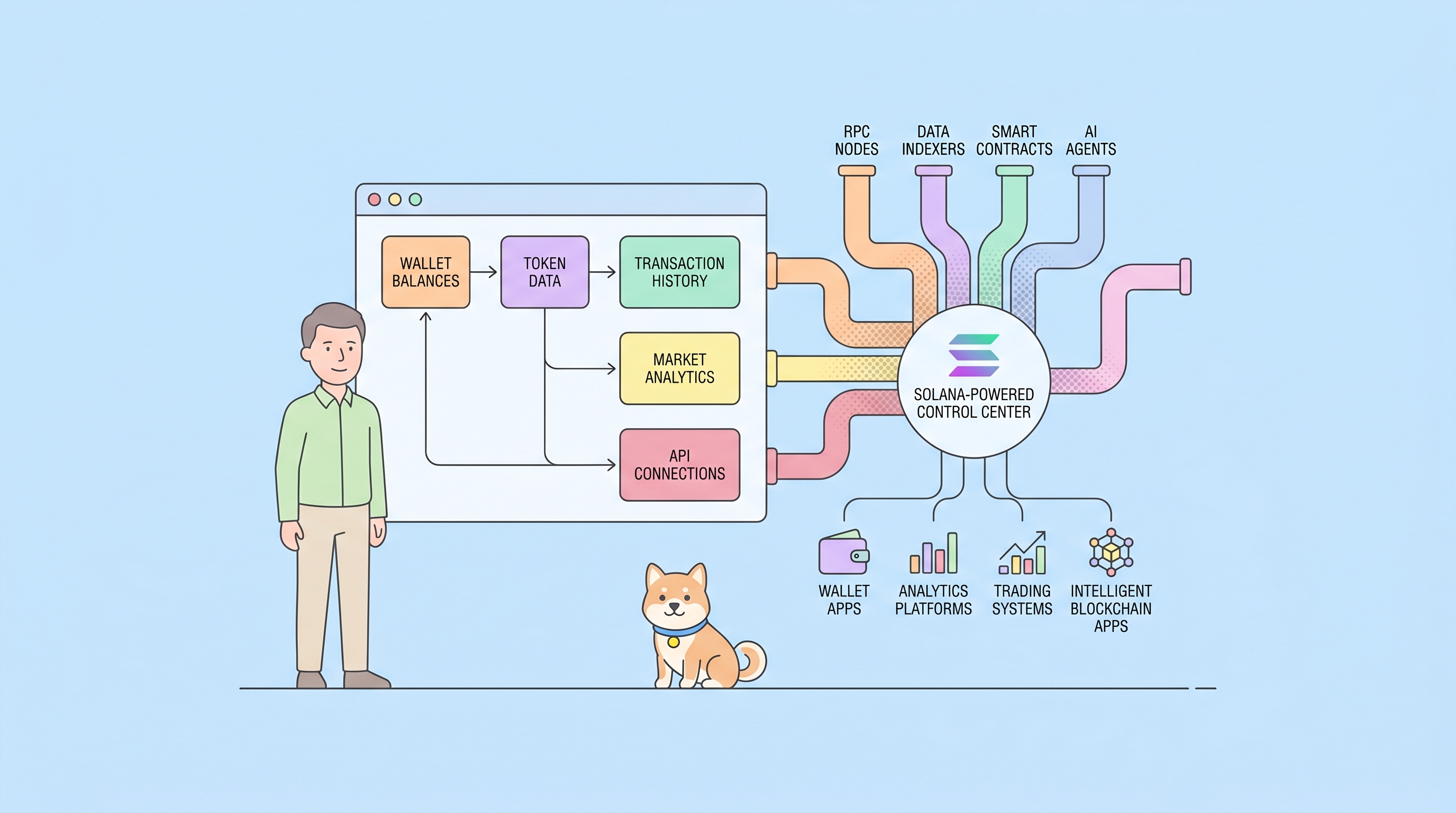
An AI agent needs context before it can make useful decisions. An RPC endpoint can provide raw blockchain information, but higher-level APIs can turn that information into structured data that is easier for an agent to consume.
What Can You Build With RPC Infrastructure?
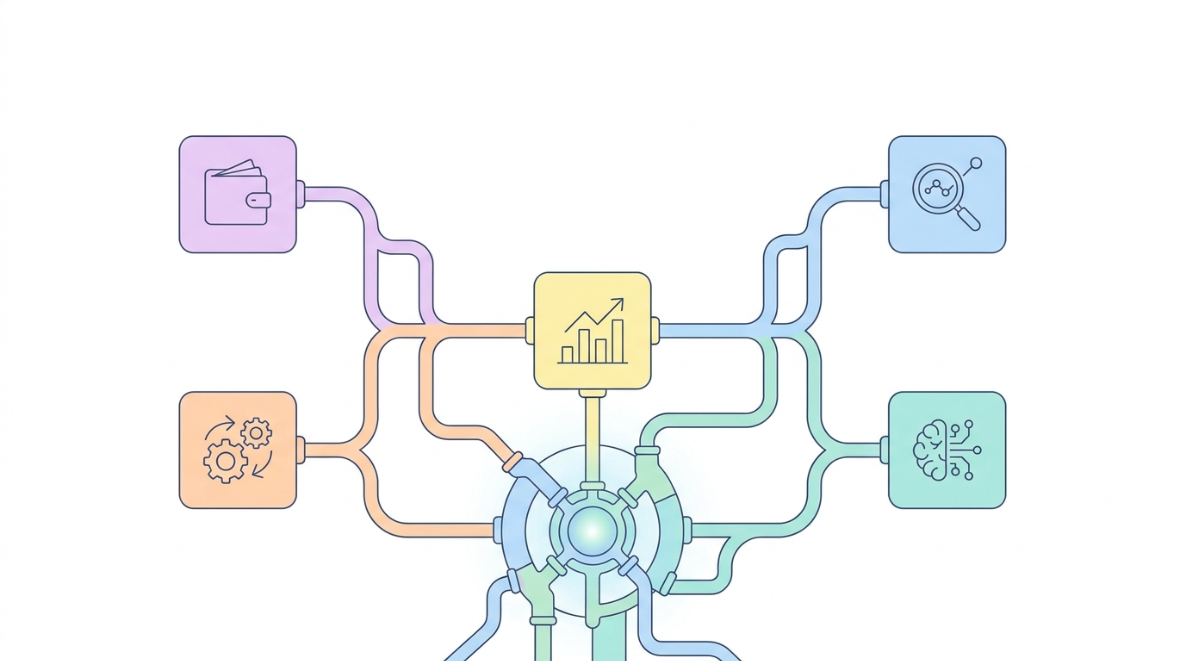
Once you have reliable blockchain connectivity, the range of applications you can build is much broader than a simple wallet.
Wallet Applications
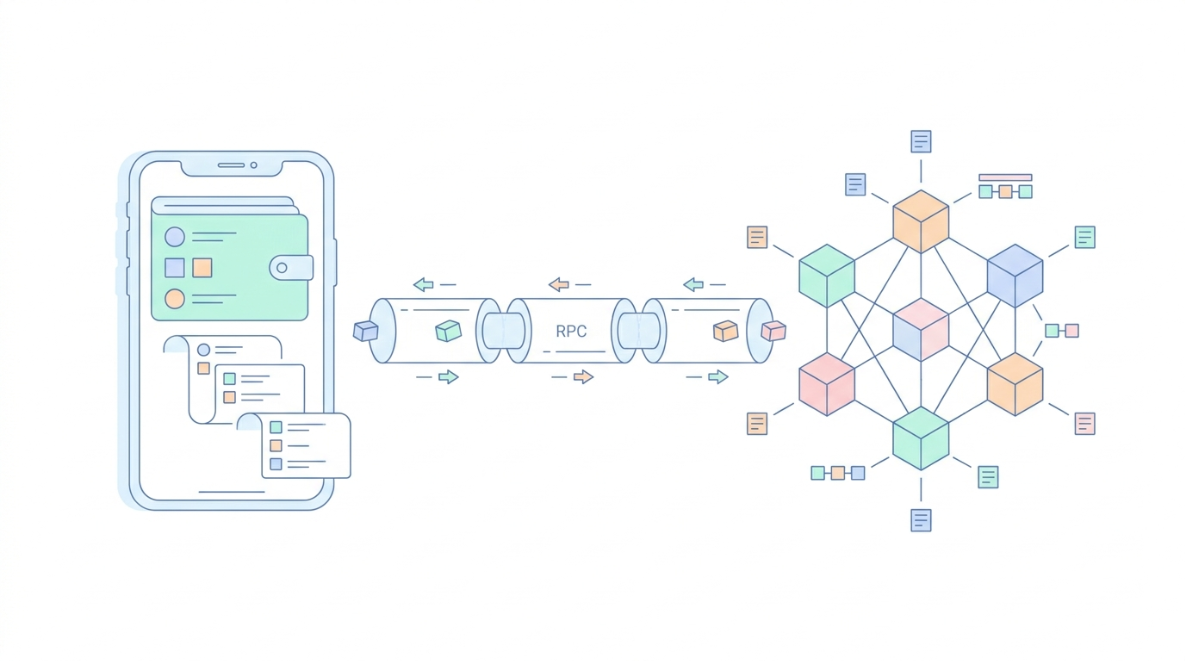
Wallets rely on RPC infrastructure to retrieve balances, interact with smart contracts, submit transactions, and monitor network activity.
As wallets become more sophisticated, developers can combine RPC with indexed data and portfolio APIs to provide richer experiences.
DeFi Applications
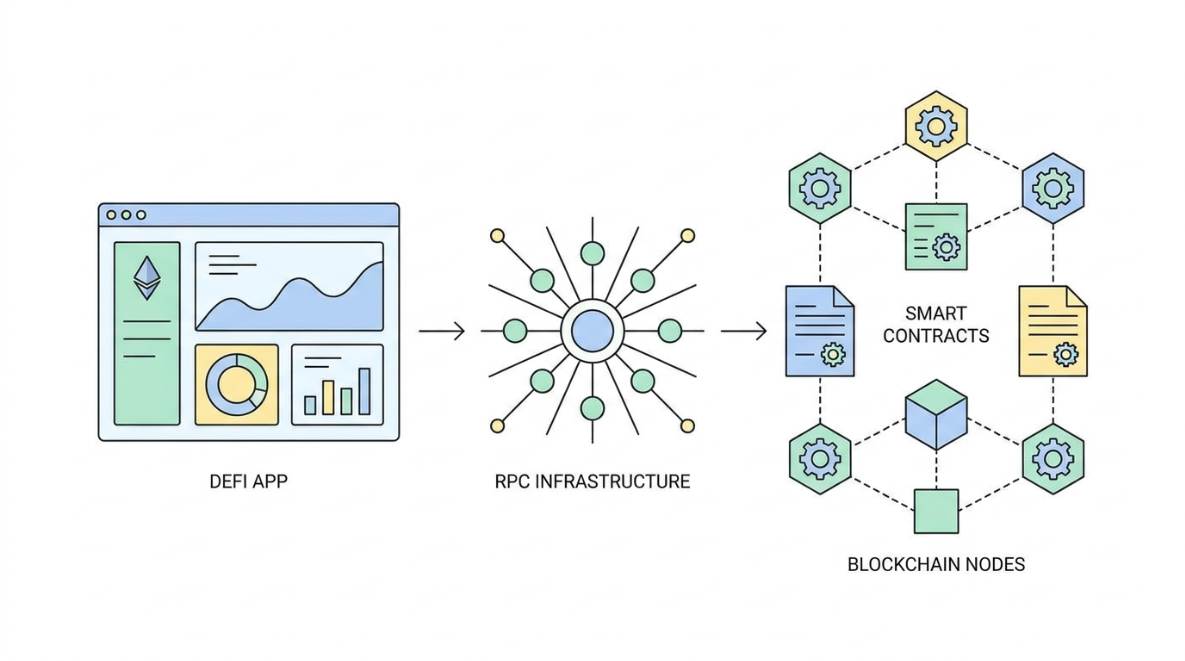
DeFi applications constantly interact with smart contracts.
Whether users are swapping tokens, supplying liquidity, borrowing assets, or staking, reliable RPC access is a core part of the application stack.
For more demanding applications, developers may also need archive access, WebSockets, or specialized infrastructure.
Trading Bots
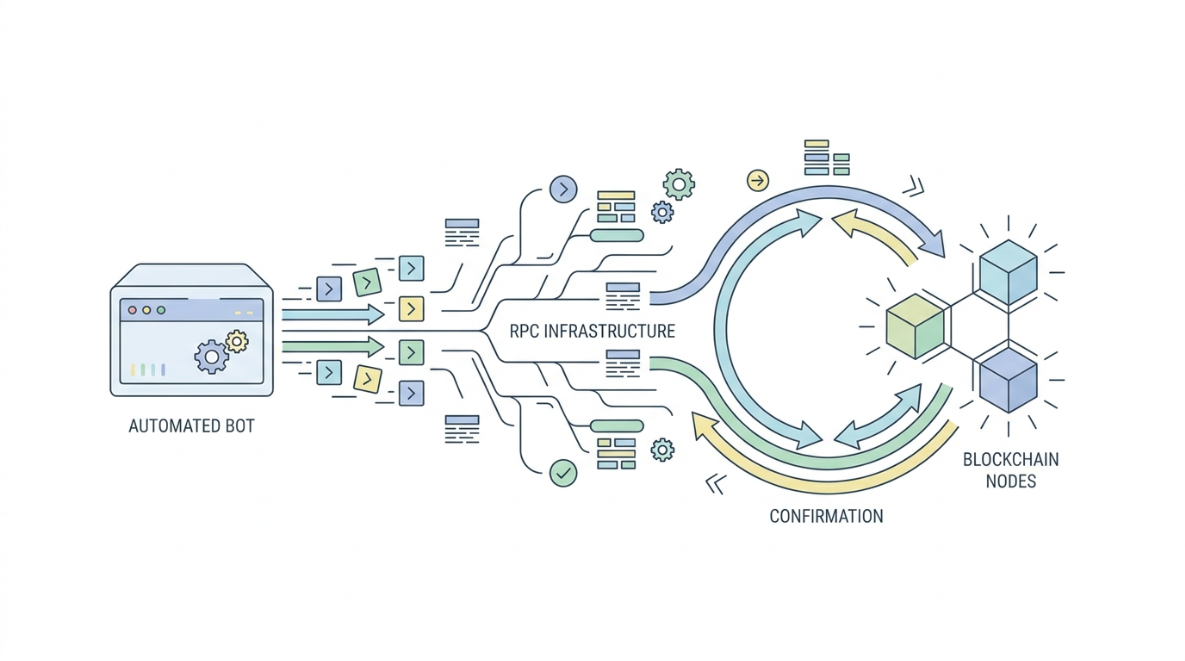
Trading systems are particularly sensitive to latency and reliability.
A bot may need to:
- monitor blockchain activity,
- identify an opportunity,
- read contract state,
- simulate a transaction,
- submit the transaction,
- and monitor its result.
In this environment, the RPC layer can become an important part of the overall trading architecture.
AI Agents
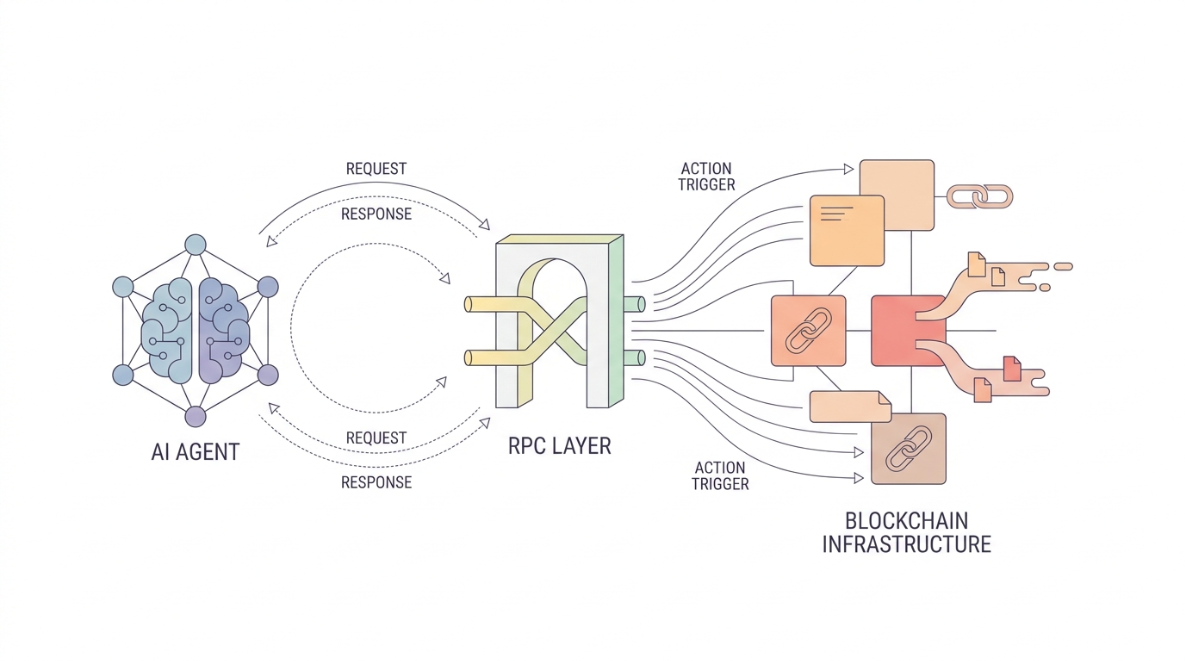
AI agents introduce another interesting workload.
Instead of following one predefined sequence, an agent may decide what information it needs next and make multiple blockchain requests during its reasoning process.
That means infrastructure needs to handle unpredictable request patterns while giving the agent reliable access to blockchain data.
This is one reason providers such as Chainstack and QuickNode are increasingly adding AI-oriented interfaces and tooling. Chainstack's MCP server, for example, gives AI coding assistants access to live blockchain data, documentation, and node-management functionality.QuickNode similarly exposes its APIs through standard interfaces that AI agents can call directly and provides agent-oriented tooling.
Final Thoughts
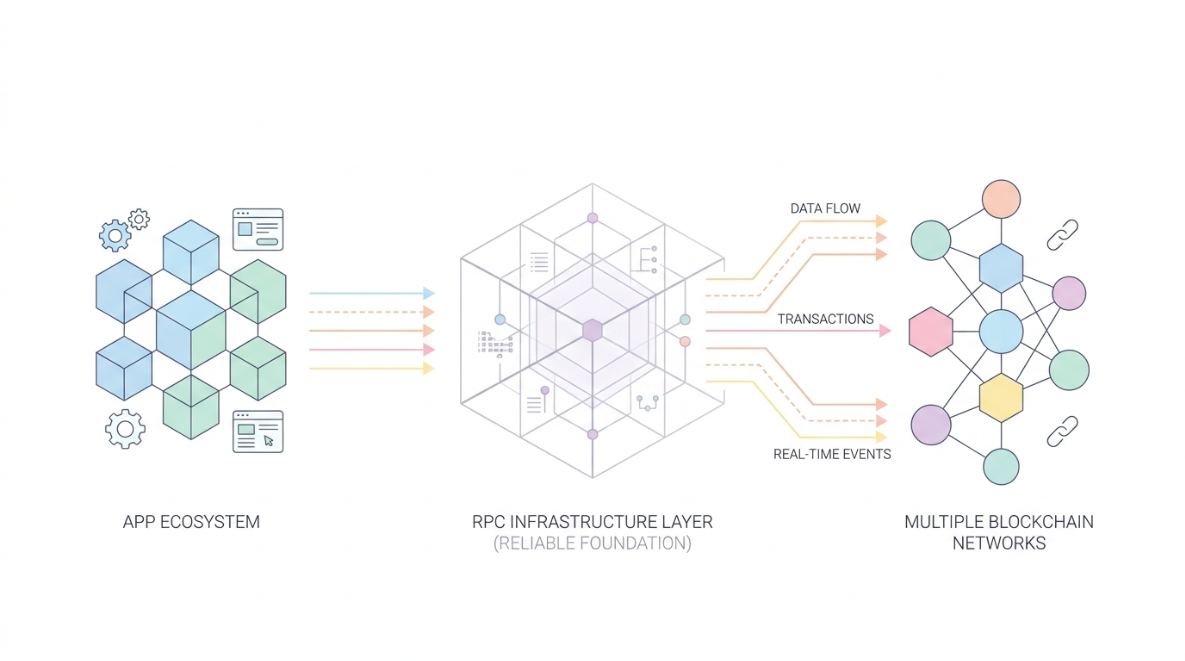
Choosing an RPC provider used to be a relatively simple decision: find an endpoint for the blockchain you need and connect your application.
That is no longer the whole story.
As Web3 applications become more complex, developers increasingly care about latency, reliability, archive access, streaming, dedicated infrastructure, routing, and the ability to support multiple blockchain networks without creating a maintenance burden.
The five providers in this guide approach that problem differently.
Chainstack focuses on managed blockchain infrastructure with multiple node configurations and production-oriented capabilities.
OnFinality provides multichain RPC access with archive, analytics, and dedicated-node options.
RouteMesh takes the routing approach, abstracting multiple RPC providers behind a reliability-focused layer.
Uniblock goes further into unified blockchain infrastructure, combining RPC access with higher-level APIs and provider abstraction.
QuickNode offers a broader Web3 infrastructure stack that combines RPC with streaming, Webhooks, indexed data, IPFS, and AI-oriented tooling.
For developers, the important question isn't simply "Which RPC provider is the best?"
It is:
"Which infrastructure model best fits the application I am building?"
A small dApp may only need a shared RPC endpoint. A production wallet may require multichain redundancy. A trading system may prioritize latency and dedicated infrastructure. An AI agent may need RPC access combined with structured blockchain data and agent-friendly tooling.
Understanding that difference early can save a significant amount of engineering work later especially when your application moves from a prototype into production.