Google shipped Nano Banana 2.1 on October 6, 2026, and it did it quietly. There was no launch blog post and no benchmark chart. The model showed up in Google Flow’s model picker on October 5, disappeared, and then came back the next day with a short post from @GoogleAIStudio saying it “outperforms our previous models across the board.”
The part that matters for anyone paying for image generation is on the pricing page. Nano Banana 2.1 costs half as much per image as Nano Banana 2 at every resolution the two share, and Google’s docs list “accurate text rendering” among its upgrades. Here is what changed, what it costs, and the catches the launch post skips.
TL;DR
- What it is: Gemini Nano Banana 2.1, model ID
gemini-nano-banana-2.1, an update to Nano Banana 2 (Gemini 3.1 Flash Image). Google’s docs call it “the primary high-efficiency workhorse model” for image generation and editing. - What Google says improved: better visual design, mask-based editing, subject consistency and more natural-looking images (the launch post), plus text rendering, multi-turn character consistency and search grounding (the docs).
- Price: $0.0336 per 1K image, $0.0504 per 2K image and $0.0756 per 4K image. That is half of Nano Banana 2 at each size.
- The catches: input tokens cost 3x Nano Banana 2’s, there is no 512px tier, there is no free tier on the Gemini API, and Google has published no benchmarks for 2.1.
- Where to try it: Google AI Studio, the Gemini API (Interactions API) and Vertex AI. It also appeared in Google Flow first.
What Nano Banana 2.1 is
Nano Banana is Google’s name for the image models in the Gemini family. The original Nano Banana (gemini-2.5-flash-image) is now legacy. Nano Banana 2 (gemini-3.1-flash-image) became the fast default, Nano Banana 2 Lite took the budget slot, and Nano Banana Pro (gemini-3-pro-image) covers professional asset work.
Nano Banana 2.1 slots in as an update to Nano Banana 2. Google’s image generation docs describe it as “built for high-efficiency image generation and conversational editing with improved visual quality, multi-turn character consistency, accurate text rendering, and search-grounded generation across 1K, 2K, and 4K resolutions.”
The key specs:
| Feature | Nano Banana 2.1 |
|---|---|
| Model ID | gemini-nano-banana-2.1 |
| Output resolutions | 1K, 2K, 4K |
| Inputs | Text, image, video (no audio) |
| Reference images | Up to 14 |
| Thinking | On by default, can’t be disabled in the API |
| Interim “thought images” | Up to two, not charged |
| Search grounding | Google Web Search and Google Image Search |
| Watermark | SynthID on every output |
What Google says got better
The launch post lists better visual design, mask-based editing, subject consistency and more natural-looking images. The docs add multi-turn character consistency, accurate text rendering and Google Image Search grounding.
Text rendering
Garbled lettering has been the giveaway of AI images for years. The docs describe the Nano Banana family as “capable of generating legible, stylized text for infographics, menus, diagrams, and marketing assets,” and they list accurate text rendering as a 2.1 improvement specifically.
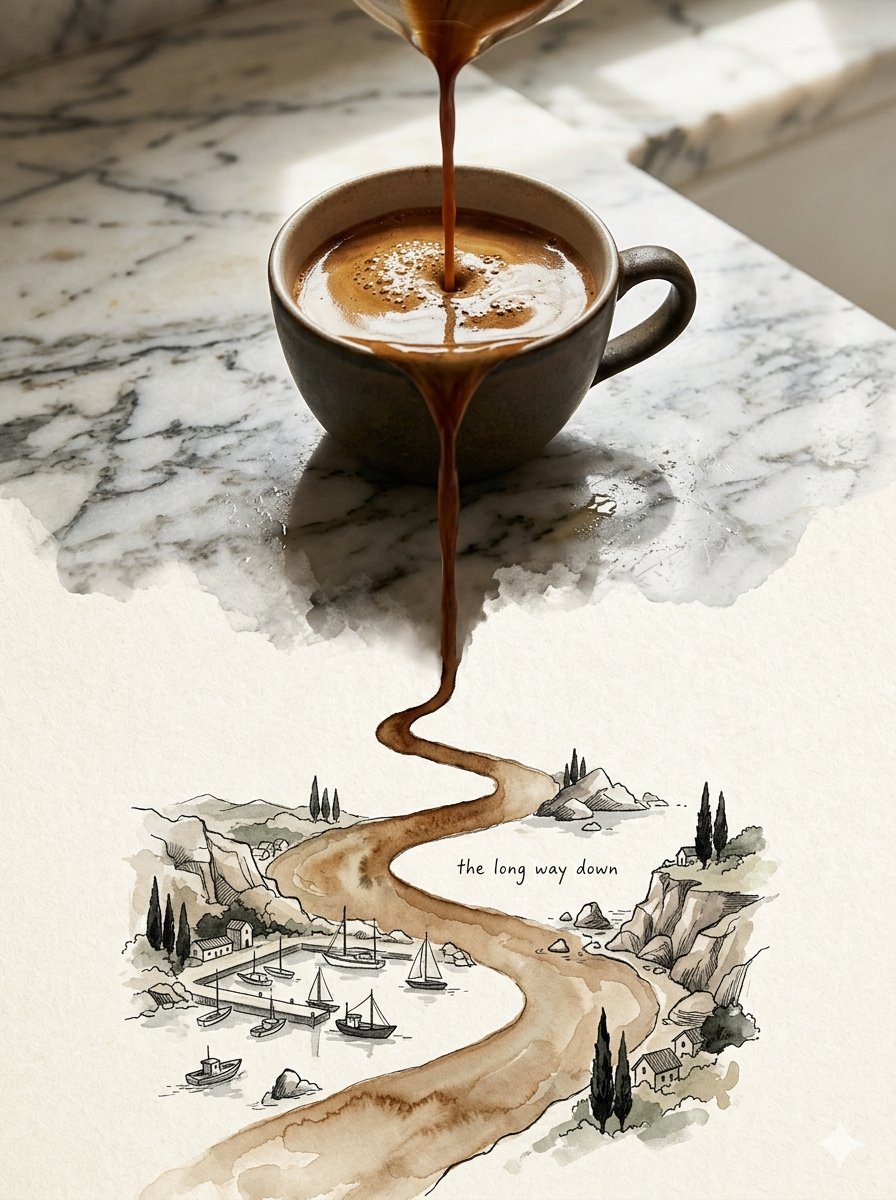
That is Google’s claim, not a measured result: there is no published text-accuracy benchmark for 2.1. If you render menus, posters or UI mockups with real copy, test your own prompts before switching production traffic.
Mask-based editing
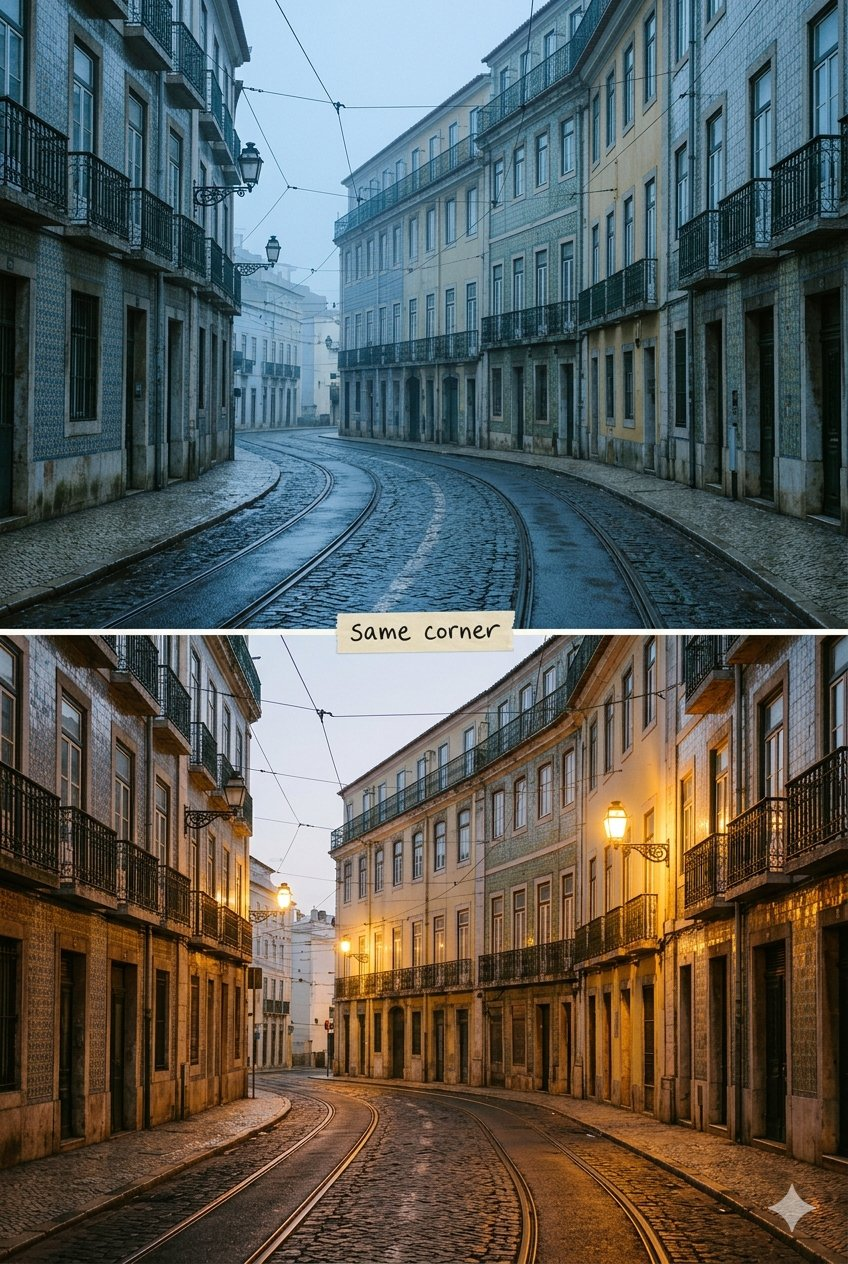
Google calls this “semantic masking.” You don’t draw a mask. You describe it in the prompt, along the lines of “Using the provided image, change only the [element] to [new]. Keep everything else exactly the same.” The model infers which region to touch and leaves the rest alone.
Subject and character consistency
A character, product or mascot should stay the same across a sequence of edits. In the API, you chain edits with previous_interaction_id and can mix up to 14 reference images.
Search grounding
Nano Banana 2.1 and 3.1 Flash Image can ground on Google Image Search as well as web search, which helps with recent events, weather maps or stock charts. One limit: grounding can’t use real-world images of people pulled from web search.
Price: half of Nano Banana 2 per image
Paid-tier Gemini API prices from Google’s pricing page, October 7, 2026 (standard, non-batch):
| Model | Input (per 1M) | Image output (per 1M) | 0.5K | 1K | 2K | 4K |
|---|---|---|---|---|---|---|
| Nano Banana 2.1 | $1.50 | $30 | n/a | $0.0336 | $0.0504 | $0.0756 |
| Nano Banana 2 | $0.50 | $60 | $0.045 | $0.067 | $0.101 | $0.151 |
| Nano Banana 2 Lite | $0.25 | $30 | n/a | $0.0336 | n/a | n/a |
| Nano Banana Pro | $2.00 | $120 | n/a | $0.134 | $0.134 | $0.24 |
A few things stand out:
- Half price per image. Image output tokens dropped from $60 to $30 per million, and the token count per image is the same for both models (1,120 at 1K, 1,680 at 2K, 2,520 at 4K). So 1,000 images at 1K cost $33.60 on 2.1 versus $67 on Nano Banana 2.
- Lite price, full feature set. At 1K, 2.1 costs the same as Nano Banana 2 Lite, but Lite only offers 1K. 2.1 gives you 2K and 4K too.
- About a quarter of Pro at 1K. $0.0336 against $0.134.
- Batch halves it again. Batch pricing for 2.1 is $0.0168 at 1K, $0.0252 at 2K and $0.0378 at 4K.
Search grounding is billed separately: 5,000 free search requests a month shared across Gemini 3.x models, then $14 per 1,000. For the full Nano Banana 2 breakdown, see our Nano Banana 2 pricing guide.
The catches
Input costs 3x more
Input tokens rose from $0.50 to $1.50 per million, and text and thinking output rose from $3 to $7.50 per million. Text-to-image prompts barely notice. Editing requests that carry several reference images do.
Some quick math using Google’s prices: on input alone, 2.1 costs $1 more per million tokens than Nano Banana 2. At 1K it saves about $0.033 per image. So 2.1 stays cheaper until a single request carries roughly 33,000 input tokens. At 4K, the savings per image are larger (about $0.075), and the break-even moves to about 75,000 input tokens. Billed thinking text narrows that margin, so check your own usage numbers.
No 512px tier
Nano Banana 2 offers a 0.5K (512px) size at $0.045. The docs state that size is “not supported on Gemini Nano Banana 2.1.” For thumbnails, 2.1’s 1K price ($0.0336) still beats Nano Banana 2’s 512px price, but you get larger files.
No free tier on the API
Google’s pricing page lists the Gemini API free tier as “Not available” for 2.1, as it is for Nano Banana 2, Lite and Pro. Its model card links to the Google AI Studio playground, but Google does not say how much a free account can generate there. Code that calls the API needs a paid key. We cover the options in how to use Nano Banana 2.1 for free.
No benchmarks yet
“Outperforms our previous models across the board” comes with no published numbers and no official blog post. Treat the quality upgrade as plausible but unproven.
A quiet rollout
The model surfaced in Google Flow before the API announcement. Third-party reports say it is in Flow (using subscription credits) and has begun surfacing in Gemini apps, but Google has not confirmed the Gemini app rollout.
Who should switch
Switch now if:
- You run Nano Banana 2 at 1K, 2K or 4K for text-to-image generation. You cut the per-image cost in half for a model Google calls an upgrade.
- You use Nano Banana 2 Lite but want 2K or 4K output at the same 1K price.
- Your images carry real text: product labels, menus, slide graphics. Test it, since that is where Google claims the biggest gain.
Hold off if:
- Your pipeline depends on 512px output.
- Your requests are input-heavy, with many reference images per call. Run the break-even math on your own token counts.
- You need Pro-level quality for final marketing assets. Our Nano Banana 2.1 vs Nano Banana 2 vs Pro comparison tracks the differences.
Try Nano Banana 2.1 via the API
Nano Banana 2.1 runs on the Gemini Interactions API. A minimal request looks like this:
curl -s -X POST "https://generativelanguage.googleapis.com/v1beta/interactions" \
  -H "x-goog-api-key: $GEMINI_API_KEY" \
  -H "Content-Type: application/json" \
  -d '{
    "model": "gemini-nano-banana-2.1",
    "input": [
      {"type": "text", "text": "A ripe banana wearing tiny sunglasses on a beach towel, bold hand-lettered sign that reads OPEN"}
    ]
  }'
The image comes back as base64 data. In Python:
from google import genai
import base64

client = genai.Client()
interaction = client.interactions.create(
    model="gemini-nano-banana-2.1",
    input="A ripe banana wearing tiny sunglasses on a beach towel",
    response_format={"type": "image", "mime_type": "image/png",
                     "aspect_ratio": "16:9", "image_size": "2K"},
)
with open("banana.png", "wb") as f:
    f.write(base64.b64decode(interaction.output_image.data))
Setting type to image returns only images and omits text. For a follow-up edit, call create again with new input and previous_interaction_id=interaction.id. To ground on search, add tools=[{"type": "google_search"}].
If you’d rather compare models without writing a script, Apidog works well for this kind of side-by-side test:
- Save the request. Create a
POSTto the Interactions endpoint and store your key as an environment variable, so the header readsx-goog-api-key: {{GEMINI_API_KEY}}. - Clone it per model. Duplicate the request and change only
modeltogemini-3.1-flash-image. Send both with the same prompt and compare responses, latency and token usage. - Add assertions. Check for a
200status and that the response contains an image output block. Saved as a test scenario, the pair becomes a regression check you can rerun whenever Google updates the model.
The step-by-step version, with image editing, multi-turn chains and cost tracking, is in our Nano Banana 2.1 API guide. If you still need a key, get a Gemini API key first.
FAQ
What is the Nano Banana 2.1 model ID? gemini-nano-banana-2.1. The official name is Gemini Nano Banana 2.1.
Is Nano Banana 2.1 cheaper than Nano Banana 2? Per image, yes: half the price at 1K, 2K and 4K. Input tokens cost three times as much, so very input-heavy editing requests can narrow or erase the gap.
Does Nano Banana 2.1 render text correctly? Google says it delivers “accurate text rendering.” Google has not published benchmarks to back that up yet, so test it on your own text-heavy prompts.
Is Nano Banana 2.1 free? Not on the Gemini API: the free tier is listed as not available. Google links it to the AI Studio playground, but has not published a free limit for 2.1 there.
Bottom line
Nano Banana 2.1 is a straightforward price cut for image developers: same per-image token counts as Nano Banana 2, half the per-token output price, and 2K and 4K output at Nano Banana 2 Lite’s 1K price. Google says text rendering, editing and consistency all improved, but those are Google’s claims until benchmarks appear. Watch the 3x input price if you send many reference images, and plan around the missing 512px tier. Then run your own prompts against both models in Apidog, measure the results, and switch the traffic that comes out ahead.