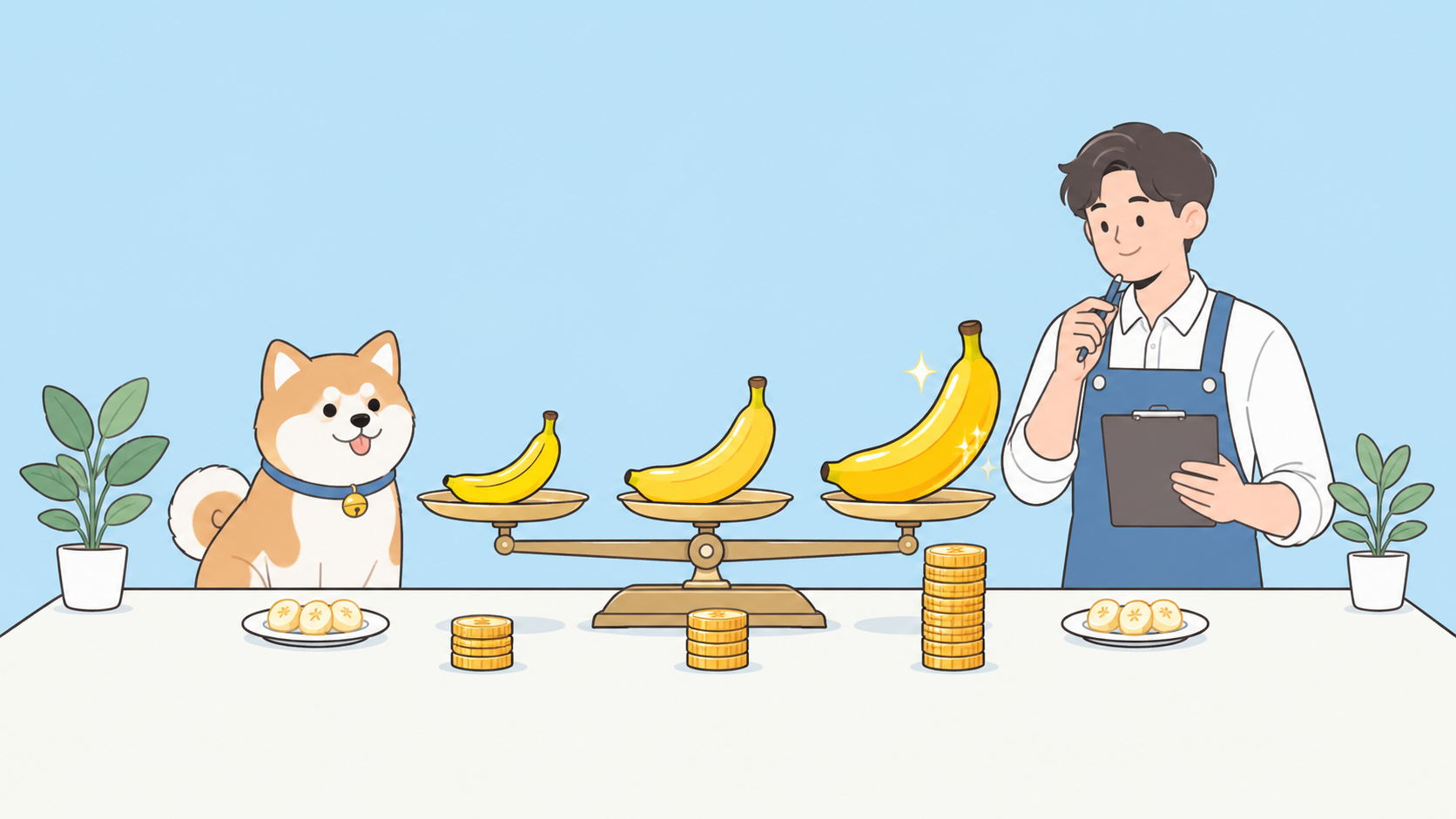
Google now sells four Nano Banana image models on the Gemini API. The newest, Nano Banana 2.1, launched on October 6, 2026 at half the per-image price of the model it replaces. That changes the default for most teams, but not for every workload.
This guide puts Nano Banana 2.1, Nano Banana 2 and Nano Banana Pro side by side, with Nano Banana 2 Lite as the budget option. Every price and limit below comes from Google’s image generation docs and pricing page as of October 7, 2026.
Quick verdict
- Default to Nano Banana 2.1 (
gemini-nano-banana-2.1) for new projects. Google itself says it is recommended for all new projects, and its output costs half of Nano Banana 2 at 1K, 2K and 4K. - Keep Nano Banana 2 (
gemini-3.1-flash-image) if you need 0.5K (512px) output. 2.1 doesn’t offer that size. - Use Nano Banana 2 Lite (
gemini-3.1-flash-lite-image) for high-volume 1K images with no grounding and few reference inputs. Same per-image price as 2.1 at 1K, cheaper input. - Pick Nano Banana Pro (
gemini-3-pro-image) when you need what Google positions as its premium tier for professional asset production, and you can pay about four times as much per 1K image.
One caveat: Google has published no benchmarks for 2.1. Its launch announcement says 2.1 “outperforms our previous models across the board,” with no side-by-side numbers. Nothing here claims one model looks better than another; test that on your own prompts, as shown below.
Side-by-side specs
| Nano Banana 2.1 | Nano Banana 2 | Nano Banana Pro | |
|---|---|---|---|
| API model ID | gemini-nano-banana-2.1 |
gemini-3.1-flash-image |
gemini-3-pro-image |
| Google’s positioning | Primary high-efficiency workhorse | Previous-generation workhorse | Premium choice for complex visual tasks |
| Resolutions | 1K, 2K, 4K | 0.5K, 1K, 2K, 4K | 1K, 2K, 4K |
| Input price (per 1M tokens) | $1.50 | $0.50 | $2.00 |
| Image output price (per 1M tokens) | $30 | $60 | $120 |
| Per image at 0.5K | n/a | $0.045 | n/a |
| Per image at 1K | $0.0336 | $0.067 | $0.134 |
| Per image at 2K | $0.0504 | $0.101 | $0.134 |
| Per image at 4K | $0.0756 | $0.151 | $0.24 |
| Batch per image at 1K | $0.0168 | $0.034 | $0.067 |
| Google Search grounding | Web Search + Image Search | Web Search + Image Search | Web Search |
| Reference images | Up to 14 (up to 10 objects, 4 characters) | Up to 14 (up to 10 objects, 4 characters) | Up to 14 (up to 6 objects, 5 characters) |
| Video input | Yes | Yes | No |
| Free API tier | No (test in AI Studio) | No | No |
What the table compresses:
- Token math. A 1K image is 1,120 output tokens, 2K is 1,680, and 4K is 2,520, for both 2.1 and Nano Banana 2. Same tokens, half the rate, half the bill.
- Batch. 2.1 also lists batch prices at 2K ($0.0252) and 4K ($0.0378).
- Thinking. Gemini 3 image models think by default, and you can’t disable it in the API. Up to two interim “thought images” are generated and not charged. Text and thinking output on 2.1 costs $7.50 per 1M tokens, versus $3 on Nano Banana 2.
- Grounding cost. 5,000 free search requests per month are shared across Gemini 3.x models, then $14 per 1,000.
Cost per 1,000 images
Output cost only, standard (non-batch) API, paid tier:
| Model | 0.5K | 1K | 2K | 4K |
|---|---|---|---|---|
| Nano Banana 2.1 | n/a | $33.60 | $50.40 | $75.60 |
| Nano Banana 2 | $45.00 | $67.00 | $101.00 | $151.00 |
| Nano Banana 2 Lite | n/a | $33.60 | n/a | n/a |
| Nano Banana Pro | n/a | $134.00 | $134.00 | $240.00 |
With the Batch API, 2.1 drops to $16.80, $25.20 and $37.80 per 1,000 at 1K, 2K and 4K.
Two numbers stand out. A 4K image on 2.1 ($0.0756) costs less than a 1K image on Pro ($0.134). And 2.1 at 1K ($0.0336) undercuts Nano Banana 2’s 512px tier ($0.045), so keep 0.5K only if you need that exact size.
When input-heavy editing changes the math
Output is only half the bill. 2.1 charges $1.50 per 1M input tokens, three times Nano Banana 2’s $0.50, so editing workloads with many reference images pay more on input.
Here is a worked example. Each input image costs 1,120 tokens, per Google’s Vertex AI model page.
Scenario: a product-shot pipeline that sends 14 reference images plus a 500-token prompt and gets one 1K image back.
| Nano Banana 2.1 | Nano Banana 2 | |
|---|---|---|
| Input tokens (14 x 1,120 + 500) | 16,180 | 16,180 |
| Input cost | $0.0243 | $0.0081 |
| 1K output | $0.0336 | $0.0670 |
| Total per request | $0.0579 | $0.0751 |
| Per 1,000 requests | $57.90 | $75.10 |
Even at the 14-image maximum, 2.1 still wins, but the gap shrinks from 50% to about 23%.
Where is the flip point? Each input token costs $0.000001 more on 2.1, and the output saving per image is $0.0334 at 1K, $0.0506 at 2K and $0.0754 at 4K. So 2.1 only costs more once a request carries about 33,400 input tokens at 1K, 50,600 at 2K or 75,400 at 4K. Fourteen reference images alone don’t get there.
Two things can push you closer:
- Long multi-turn edit sessions. If you chain edits with
previous_interaction_id, watch the input token count in each response’s usage data, since earlier turns can add to the context you pay for. A ten-turn session with full references could cross the 1K threshold. - Thinking and text tokens. 2.1 bills them at $7.50 per 1M, versus $3 on Nano Banana 2. Thinking can’t be turned off, so a prompt that triggers heavy reasoning narrows the gap further.
If you run 1K edits with long histories, measure both models on real traffic before switching.
Where Nano Banana 2 Lite fits
Lite is the budget option. Google calls it “the fastest and cheapest Gemini image model” and lists it at $0.25 per 1M input tokens with the same $0.0336 per 1K image as 2.1.
Lite only outputs 1K, doesn’t support Google Search grounding, and Google says it is “not optimized” for multiple reference inputs or multi-turn editing.
For plain 1K text-to-image at volume, Lite and 2.1 cost the same per image and Lite’s input is a sixth of 2.1’s. Once you need 2K, 4K, grounding or iterative editing, move to 2.1.
Google also recommends Lite as the migration path for the original Nano Banana (gemini-2.5-flash-image), which is now legacy. Our Nano Banana 1 vs Nano Banana 2 comparison covers that earlier jump.
Where Nano Banana Pro still makes sense
Google describes Pro as “the premium choice for the most complex visual tasks” and says it is optimized for professional asset production, with the highest level of world knowledge, advanced localization, accurate brand consistency and precision creative control. Its prompting guide also recommends Pro for professional text-heavy assets.
Those are positioning statements, not measured results. With no published Pro vs 2.1 comparison, treat it as a budget question you validate yourself:
- Choose Pro if your Pro workflows already meet the bar, or you depend on its five-character consistency limit.
- Test 2.1 first if you use Pro for volume work. At 4K, 2.1 is about a third of Pro’s price ($0.0756 vs $0.24). At 1K it is about a quarter.
- Pro can’t do Image Search grounding or video input.
For the full Pro request format, see our Nano Banana Pro API guide.
Migration notes
Moving from Nano Banana 2 to 2.1 is a one-line change to the model string. The endpoint, response_format and google_search tool stay the same:
curl -s -X POST "https://generativelanguage.googleapis.com/v1beta/interactions" \
  -H "x-goog-api-key: $GEMINI_API_KEY" \
  -H "Content-Type: application/json" \
  -d '{
    "model": "gemini-nano-banana-2.1",
    "input": [{"type": "text", "text": "A studio product photo of a ceramic mug on a walnut desk"}],
    "response_format": {"type": "image", "mime_type": "image/png", "aspect_ratio": "16:9", "image_size": "2K"}
  }'
Check these before you flip production traffic:
- Image size. If any call sends
"image_size": "512px"or 0.5K, keep it ongemini-3.1-flash-image. 2.1 doesn’t support that size. - Uppercase K.
"2K"works."2k"is rejected on every model. - Image Search. Add
"search_types": ["web_search", "image_search"]to thegoogle_searchtool, and display the returned search suggestions as Google requires. - Budgets. Your input line item will roughly triple for the same traffic. Your image line item will halve.
- Free tier. None of these models has a free Gemini API tier; see how to use Nano Banana 2.1 for free.
For a full code walkthrough, including multi-turn editing and grounding, see the Nano Banana 2.1 API guide, and the Nano Banana 2.1 overview for what changed.
How to A/B the three models in Apidog
With no published benchmarks, the comparison that matters is one on your own prompts. Apidog runs it without a test harness:
- Save one request. Create
POST https://generativelanguage.googleapis.com/v1beta/interactions, store your key as an environment variable, and set the headerx-goog-api-key: {{GEMINI_API_KEY}}. Paste the JSON body above, including any reference images as{"type": "image", "mime_type": "image/jpeg", "data": "<BASE64>"}parts. - Duplicate it twice. Change only the
modelfield:gemini-nano-banana-2.1,gemini-3.1-flash-imageandgemini-3-pro-image. Keep the prompt, references, aspect ratio andimage_sizeidentical, so the model is the only variable. - Send and compare. Apidog shows each response’s status, latency and size. Decode each base64 image and review them side by side.
- Make it a regression check. Assert a
200status and a non-empty image, group the requests into a test scenario, and rerun it when Google updates a model.
Run 10 to 20 real prompts, not one, then multiply each model’s per-image price by your monthly volume. Download Apidog free to follow along.
FAQ
Is Nano Banana 2.1 better than Nano Banana 2? Google says 2.1 “outperforms our previous models across the board,” citing visual design, mask-based editing, subject consistency and more natural-looking images. It has not published benchmarks, so verify on your own prompts.
Is Nano Banana 2.1 cheaper than Nano Banana 2? Per image, yes: half the price at 1K, 2K and 4K. Per input token, no: $1.50 vs $0.50 per 1M. For most workloads the output saving wins.
Should I replace Nano Banana Pro with 2.1? Test first. 2.1 costs about a quarter of Pro at 1K, but Google still positions Pro as its premium model.
Can I use Nano Banana 2.1 for free? Not on the Gemini API. The pricing page lists no free tier for any Nano Banana model, but you can test 2.1 in Google AI Studio.
How many reference images can I send? Up to 14 on all three models. 2.1 and Nano Banana 2 keep up to 10 objects and 4 characters consistent. Pro handles up to 6 objects and 5 characters.
Verdict
Nano Banana 2.1 is the sensible default for new Gemini image work: half the per-image cost of Nano Banana 2 with the same grounding, video input and reference-image limits. Stay on Nano Banana 2 only for 512px output or long-history editing you have measured. Use Lite for plain 1K images at volume. Keep Pro where its premium positioning matches your needs, and prove it with a side-by-side test before paying four times as much.