The best LLM for browser agents in October 2026 is Claude Opus 5.5 if you want the highest published success rate, and Claude Sonnet 5.5 if you want nearly the same score at half the price. For tight budgets, Claude Haiku 5.5 and Gemini 3.8 Flash cost a fraction per step. For open weights, Holo4 from H Company is the pick. Every number below comes from the vendor’s own page, read on October 27, 2026.
Quick answer: the best model for browser use by job
| Job | Pick | Why | Price per 1M tokens (in / out) |
|---|---|---|---|
| Top score | Claude Opus 5.5 | 81.8% on OSWorld 2.1 (partial score), native browser toolset | $4 / $20 |
| Best value | Claude Sonnet 5.5 | 80.1% on OSWorld 2.1 at half of Opus pricing | $2 / $10 |
| Best cheap | Claude Haiku 5.5 | 72.4% on the OSWorld 2.1 offline subset | $0.10 / $0.50 (prompts up to 100K) |
| Best open-weight | Holo4 35B-A3B | Apache 2.0 weights, 80.8% on OSWorld at $0.05 per task (H’s harness) | $0.30 / $2.00 on H’s API |
| Best for code-driven browsing | GPT-6 Astra | OpenAI recommends code execution (Playwright) over clicking | $10 / $50 |
| Best cheap DOM mode | GPT-6.1 Terra | Supports computer_use, 1.05M context, text plus image input |
$1 / $5 |
One warning: vendors score on different OSWorld versions, subsets and harnesses, so treat each number as that vendor’s claim, not a shared ranking.
How browser agents use a model
A browser agent is a loop: the model looks at the page, picks one action, your code runs it, and the new page state goes back to the model. A 2-minute human task can take 30 to 60 loops.
Models see the page in one of two ways:
- Screenshot mode. The model gets an image and returns pixel coordinates to click. It works on canvas apps, maps and remote desktops, but every step costs image tokens.
- DOM or accessibility-tree mode. The model gets a text list of elements with references like
[ref_2]and clicks by reference. It survives layout shifts and costs fewer tokens on text-heavy pages.
Most current toolsets mix both. Anthropic’s browser use tool (browser_toolset_20260801, GA) ships 31 member tools: read_page and find return the accessibility tree, while screenshot and zoom are the fallback for canvas, video and cross-origin iframes. OpenAI’s computer use guide offers a BrowserToolset that reads page text and calls driver functions. Google’s computer use tool is screenshot-based and covers browser, mobile and desktop.
Why steps multiply cost
Every step resends the conversation, so step 30 carries the toolset definition, your instructions and 29 steps of history. Two fixed costs set the floor:
- Toolset overhead. Declaring Anthropic’s browser toolset adds about 6,600 input tokens to every request, per Anthropic’s pricing page.
- Screenshots. Claude bills an image at one visual token per 28×28 pixel patch. A 1280×800 screenshot is 46 × 29 = 1,334 tokens.
Model-by-model notes
Claude Opus 5.5
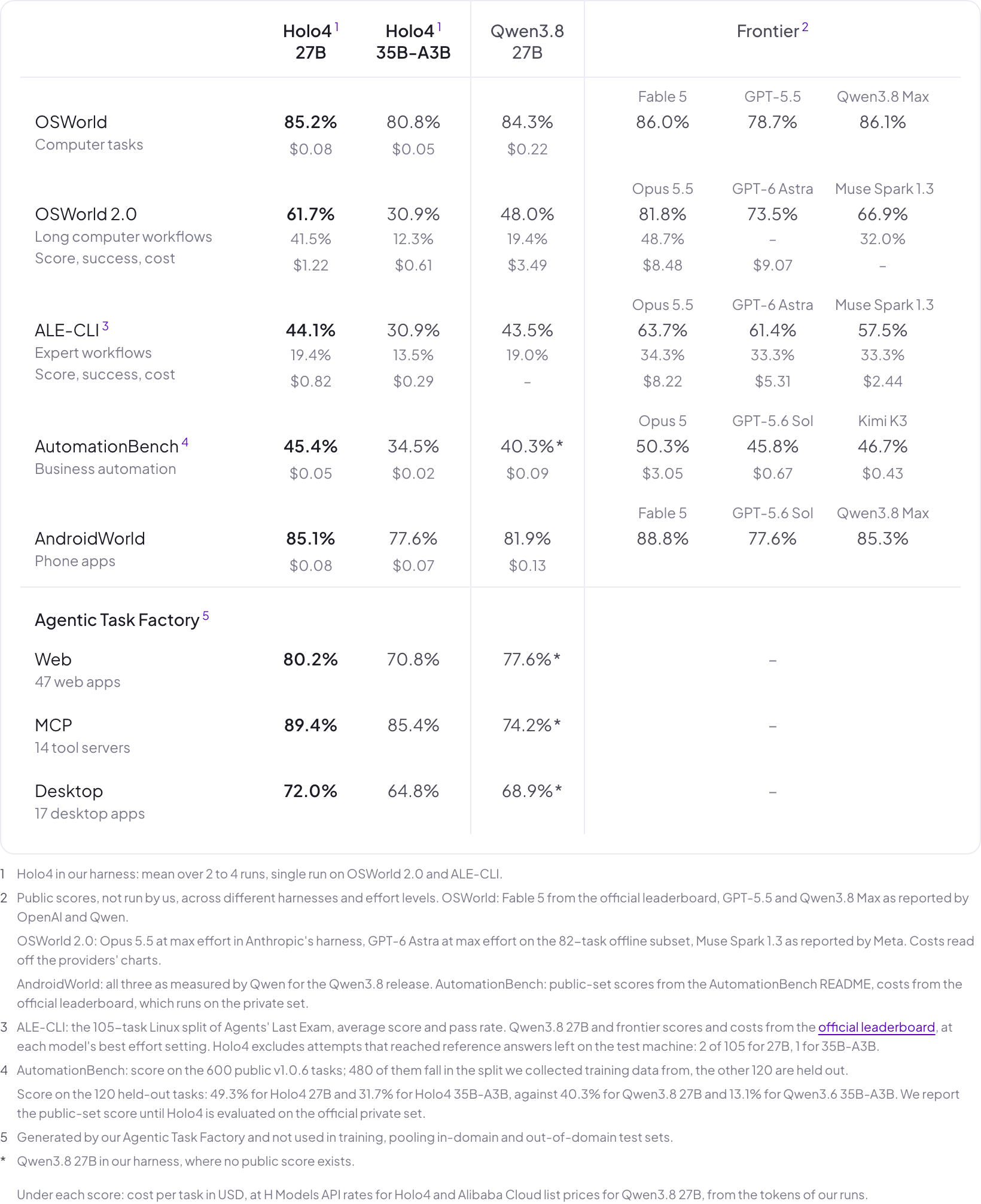
Anthropic released Opus 5.5 on September 22, 2026, and reports 81.8% on OSWorld 2.1 (partial score), ahead of Claude Fable 5.1 at 80.7%. Fable 5.1 costs $10 / $50, so Opus 5.5 beats it on this benchmark at 40% of the price. H Company’s Holo4 post puts Opus 5.5 at 81.8% on OSWorld 2.0 long workflows at $8.48 per task, with costs read off the providers’ charts.
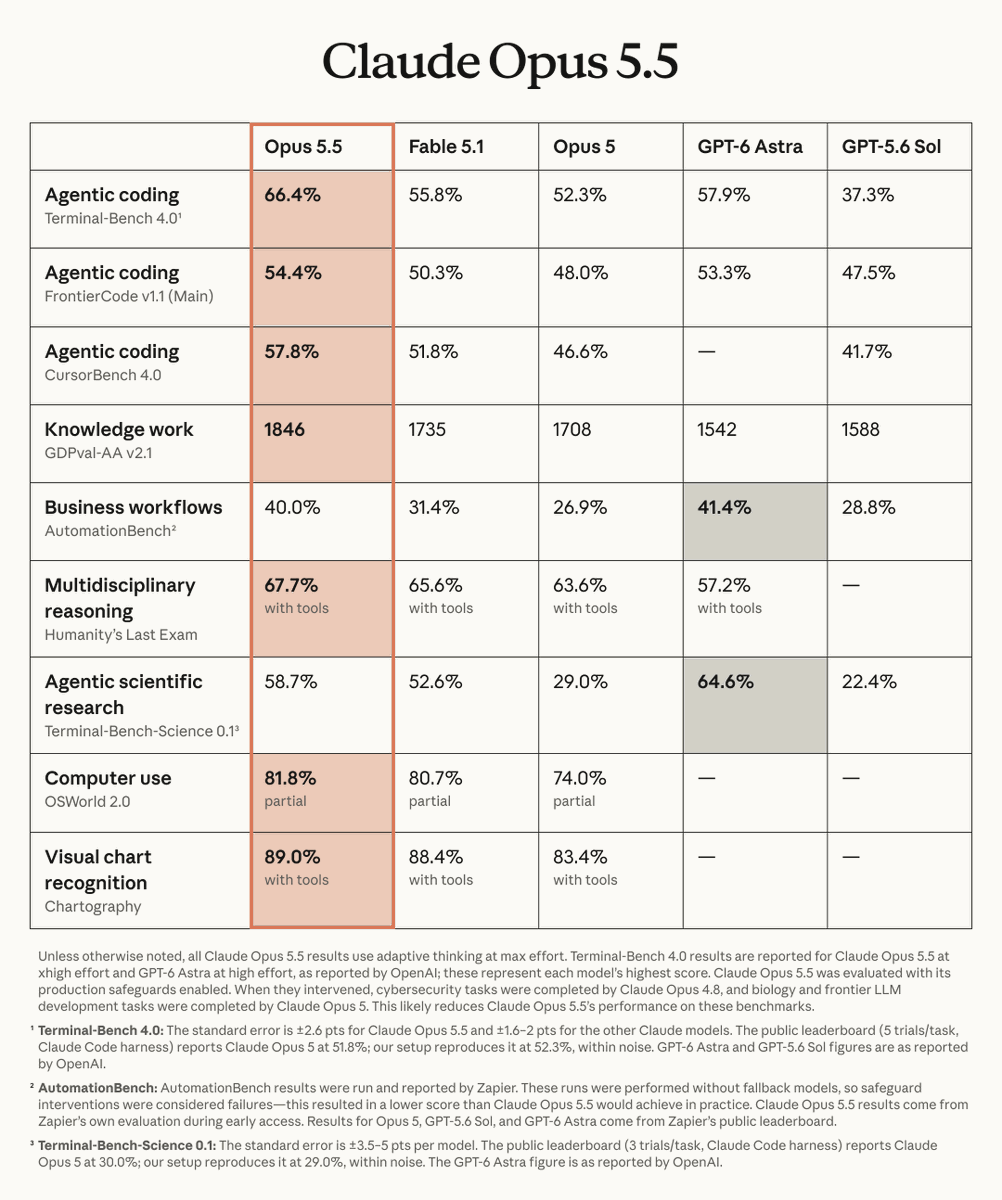
It also ties Fable 5.1 for the lowest prompt-injection success rate on Gray Swan’s benchmark, which matters when your agent reads untrusted pages.
Claude Sonnet 5.5
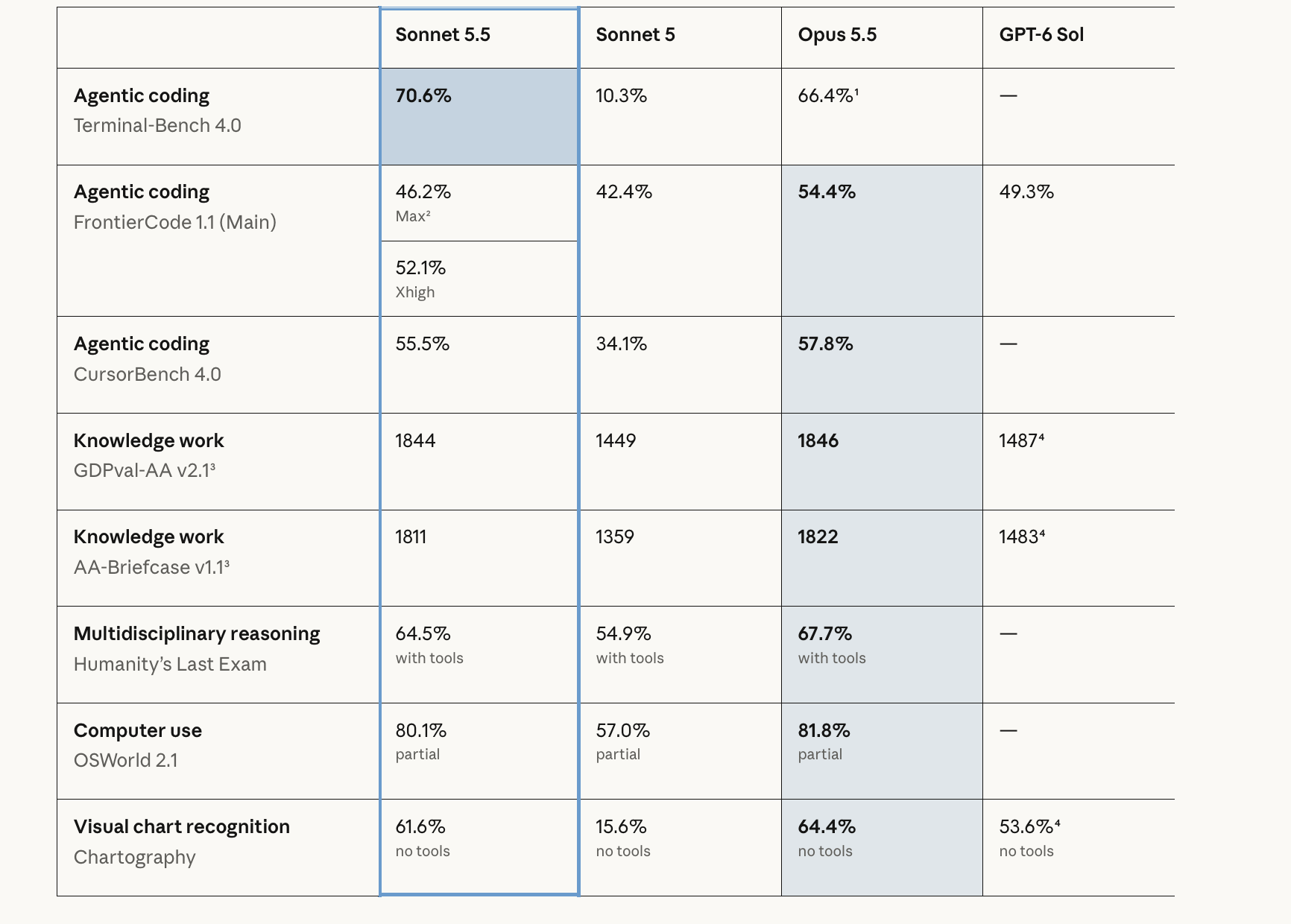
Sonnet 5.5 (September 28, 2026) scores 80.1% on OSWorld 2.1, 1.7 points behind Opus, at $2 / $10. Cache hits cost $0.10 per 1M tokens, and agent loops are mostly cache hits. For most production browser agents this is the default pick. If you drive the browser from Claude Code, see how to use Claude Code for browser automation.
Claude Haiku 5.5
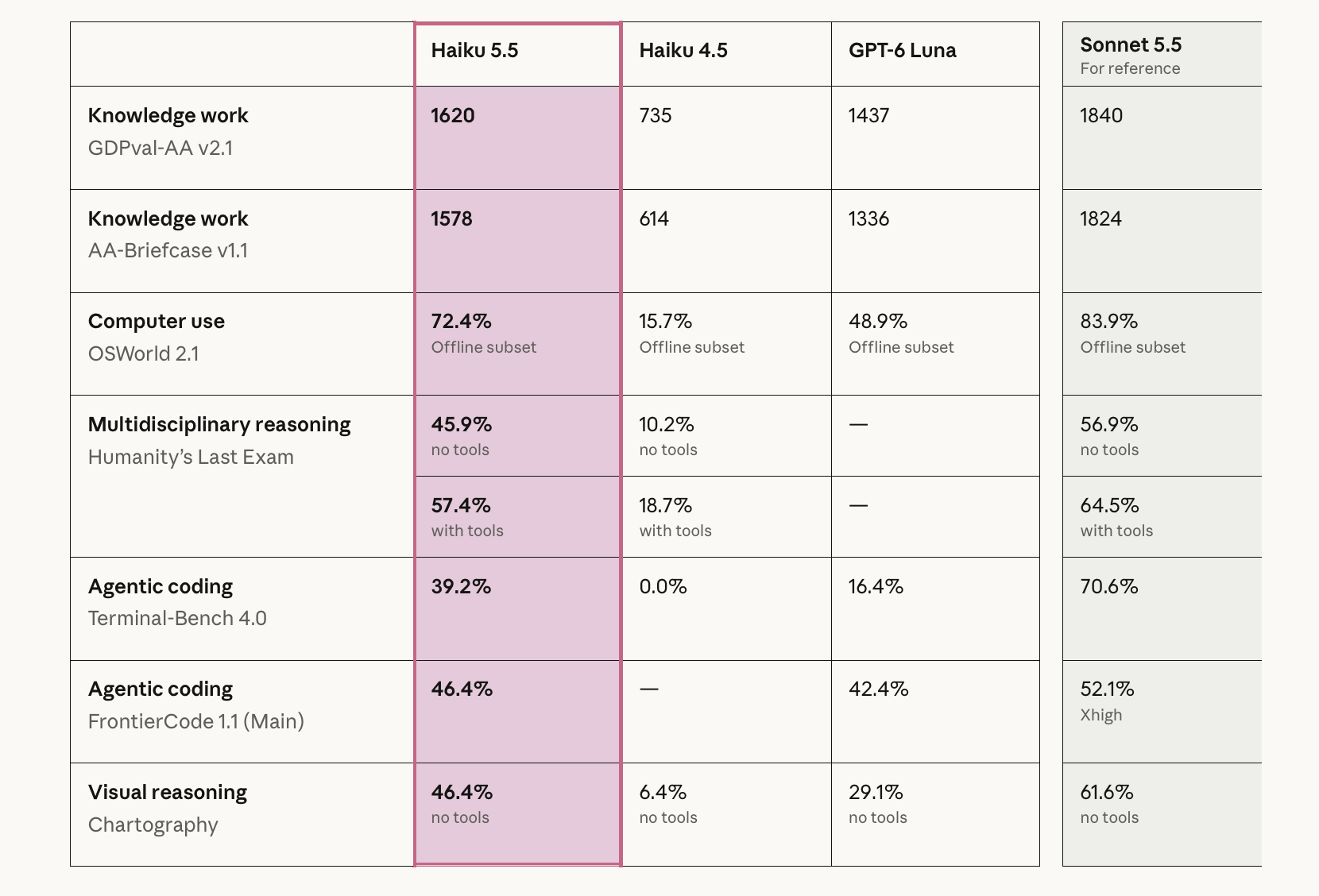
Haiku 5.5 (October 7, 2026) scores 72.4% on the OSWorld 2.1 offline subset, where Anthropic lists GPT-6 Luna at 48.9%. Pricing is two-tier: $0.10 / $0.50 for prompts up to 100,000 tokens, then $0.50 / $2.50 above that. Long sessions that keep every screenshot in history cross 100K fast, so trim old screenshots to stay in the cheap tier.
GPT-6 Astra
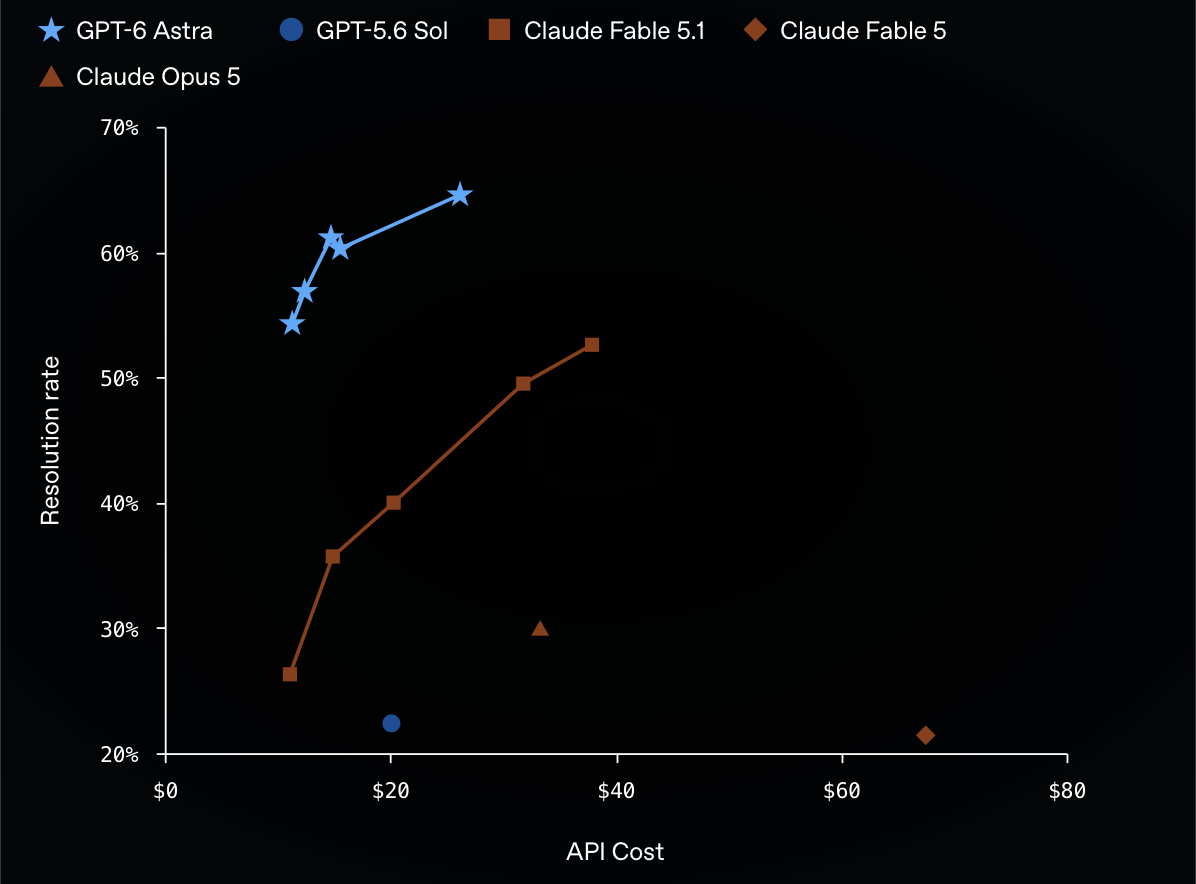
Google’s Gemini 4 Argon model card lists GPT-6 Astra at 72.6% on the OSWorld 2.0 offline subset (partial score). Astra costs $10 / $50 with a 1.05M context window. OpenAI’s guide says that for Astra it recommends code execution: the model writes Playwright or PyAutoGUI code instead of clicking one step at a time. That suits repetitive scraping and form work. Our GPT-6 Astra computer use post covers when to hand it a spec instead.
GPT-6.1 Terra and Sol
OpenAI’s model page lists computer_use as a supported tool for GPT-6.1 Terra ($1 / $5, cached input $0.05) and the computer use guide’s examples use GPT-6.1 Sol ($2 / $10). OpenAI publishes no browser or OSWorld score for either on those pages. Terra is a sensible DOM-mode workhorse, but benchmark it on your own tasks.
Gemini 4 Argon and Gemini 3.8 Flash
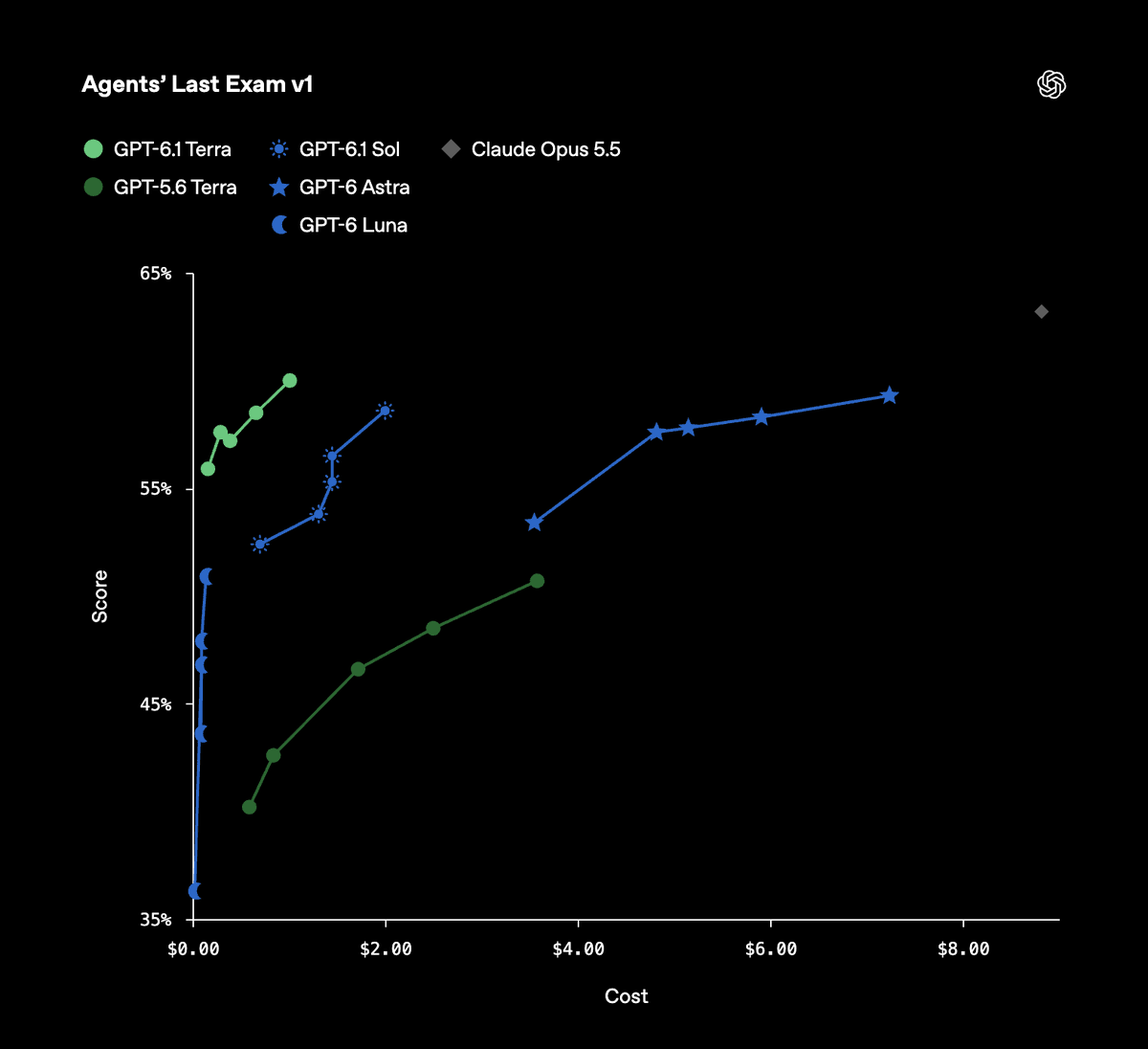
Gemini 4 Argon went GA on October 13, 2026. Its model card shows 69.2% on the OSWorld 2.0 offline subset and 39.5% on Agent’s Last Exam (computer use), above Astra’s 34.2% and Opus 5.5’s 38.2%. Computer use on Argon is still Preview. Pricing is $2 / $10 through November 30, 2026, then $4 / $20.
Google’s computer use page recommends gemini-3.8-flash ($0.75 / $3.75 through December 31, 2026) but gives no benchmark for it. Gemini 2.5 Computer Use no longer appears on that page, so we dropped it.
Holo4 (open weights)
H Company released Holo4 on September 28, 2026, replacing Holo3. On its own harness, Holo4 27B scores 85.2% on OSWorld at $0.08 per task and 61.7% on OSWorld 2.0 long workflows at $1.22 per task. The 35B-A3B scores 80.8% and 30.9% on the same two, at $0.05 and $0.61. H states that the 35B-A3B weights are Apache 2.0; check the 27B license on its model card before shipping it commercially. Both run on H’s API at $0.40 / $3.00 (27B) and $0.30 / $2.00 (35B-A3B). Our Holo3 post covers the previous generation’s API.
Kimi K3.1 Pro, DeepSeek V4.1 Flash and Qwen 3.7 Plus
- Kimi K3.1 Pro accepts images and video with a 1M context, per Moonshot’s quickstart. Its launch BrowseComp score measures web research, not clicking through pages, and no computer use score is published. Check the price on Kimi’s pricing page .
- DeepSeek V4.1 Flash (
deepseek-flash) now supports image input at $0.15 / $0.60 off-peak and $0.30 / $1.20 peak, per DeepSeek’s pricing page. No browser benchmark is published. It’s the cheapest option here for DOM mode. - Qwen 3.7 Plus reports 79.0 on ScreenSpot Pro, a screenshot grounding test. See our Qwen 3.7 Plus computer use agent guide.
What the framework teams measure
Browser Use’s model guide (BU Bench V1, updated June 11, 2026) shows the speed side: Claude Fable 5 hit 80.0% but averaged 6 minutes 53 seconds and about $5.80 per task. The 5.5 models are not on it yet. For the framework choice itself, see Browser Use Cloud, Stagehand and the Puppeteer MCP server.
Cost per task: a worked example
Assume a 30-step task on Claude with the browser toolset. Each step adds one 1,334-token screenshot plus about 450 tokens of action text and tool results, and the model writes about 300 output tokens.
- Step n input ≈ 6,600 + n × 1,784 tokens
- Total input over 30 steps ≈ 198,000 + 1,784 × 465 ≈ 1.03M tokens
- Total output ≈ 9,000 tokens
| Model | No caching | With prompt caching (about 95% cache hits) |
|---|---|---|
| Claude Opus 5.5 | about $4.30 | about $0.68 |
| Claude Sonnet 5.5 | about $2.15 | about $0.34 |
| Claude Haiku 5.5 | about $0.11 | about $0.02 |
These are illustrative numbers from Anthropic’s list prices, not measured runs. Two takeaways hold anyway: caching cuts the bill by over 80%, and dropping old screenshots from history saves more than switching to a cheaper model.
How to choose
- Start with Sonnet 5.5. It scores within 2 points of the leader at half the price.
- Move up to Opus 5.5 only if your success rate on real tasks is the bottleneck.
- Move down to Haiku 5.5 or Gemini 3.8 Flash for high-volume, short, repetitive flows. Measure first.
- Use Holo4 if data can’t leave your infrastructure.
- Use GPT-6 Astra with code execution when the job is a repeatable script, not exploration.
- Skip the browser entirely when the site has an API. An API call is one request instead of 30 steps. Our computer use vs structured APIs breakdown shows when each wins, and the list of browser automation tools covers the rest.
Let your coding agent test the API instead with Apidog CLI
Browser agents are the slow, expensive path. When the page your agent keeps clicking through is backed by a JSON API, the cheaper move is to find that API once and test it directly. Claude’s browser toolset even has an optional read_network member that lists the requests a page makes.
Let your coding agent do it with Apidog CLI. Set it up once:
npm install -g apidog-cli@latest
apidog auth login --with-token <YOUR_TOKEN>
apidog skill install
Then give your agent one prompt:
Export a HAR of the checkout flow you just ran in the browser. Import it into
Apidog project <id>, create a test case for POST /api/cart/items that asserts
a 200 status and a numeric cartTotal, then run it against the staging
environment and summarize any failures.
The agent imports the traffic, reads the payload schema, validates it, writes the case and runs it:
apidog import --project <id> --format har --file checkout.har
apidog cli-schema get test-case-create
apidog cli-schema validate test-case-create --file case.json
apidog test-case create --project <id> --file case.json
apidog run --test-case <caseId> --project <id> -e <envId> -r cli,json
Swap -r cli,json for -r junit and the same command runs in CI; see the Apidog CLI CI/CD pipeline guide. If Claude Code is your agent, Apidog CLI in Claude Code walks through the setup. Apidog’s Free plan covers up to 4 users.
FAQ
What is the best LLM for browser agents right now? Claude Opus 5.5 has the highest vendor-reported OSWorld 2.1 score (81.8%). Claude Sonnet 5.5 is the better default for most teams at 80.1% and half the price.
Which model is best for computer use on a budget? Claude Haiku 5.5 at $0.10 / $0.50 scores 72.4% on Anthropic’s OSWorld 2.1 offline subset. Keep prompts under 100,000 tokens to stay in its cheap tier.
Is there a good open-weight model for browser agents? Yes. Holo4 35B-A3B ships Apache 2.0 weights and scores 80.8% on OSWorld in H Company’s harness. Holo4 27B scores higher, but check its license first.
Screenshot mode or DOM mode? Use the accessibility tree or DOM when the page has one. It’s cheaper and survives layout changes. Fall back to screenshots for canvas, maps, video and remote desktops.
Can I compare OSWorld scores across vendors? Only loosely. Vendors report OSWorld 2.0, OSWorld 2.1, offline subsets and partial scores with different harnesses. Run your own 20 to 50 real tasks before you commit.
Is Gemini 2.5 Computer Use still available? It no longer appears on Google’s computer use page as of October 27, 2026. Google lists Gemini 4 Argon, Gemini 3.8 Flash, Gemini 3.5 Flash-Lite and Gemini 3 Flash Preview instead.