
If you’ve hit Beeceptor’s free-tier request cap or you need a mock server that does more than return canned responses, you’re looking for a Beeceptor alternative that scales without surprises. This guide explains what Beeceptor does well, where it gets tight, and which tools give you hosted API mocking with room to grow. For a broader view of the space, see our comparison of online API mocking tools, and you can confirm the current free-tier numbers on Beeceptor’s own pricing page.
What is Beeceptor?
Beeceptor is a hosted API mock server you can spin up in seconds. You pick a subdomain, and you instantly get a public endpoint that returns mock responses. No install, no signup required for a quick test, no local setup. That zero-friction start is the reason it’s so popular for demos, prototypes, and quick integration checks.
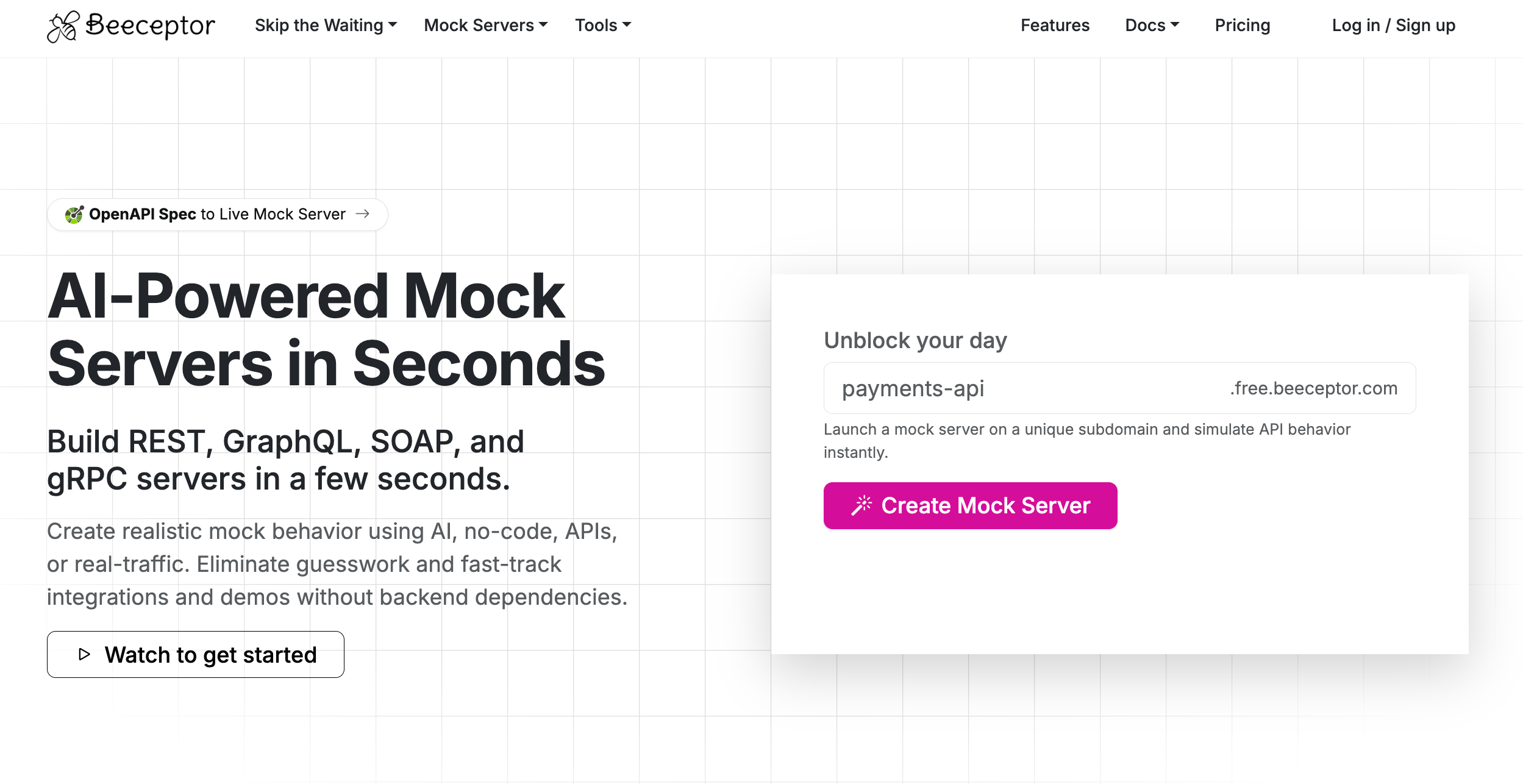
Beeceptor also offers request inspection on its proxy endpoints, conditional response rules, and OpenAPI-driven mocks on paid tiers. For a frontend developer who needs a fake endpoint before the backend exists, it’s a genuinely useful tool. Don’t let anyone tell you otherwise.
Where Beeceptor gets tight
The strengths come with real limits, and most of them show up once you move past a quick test.
- Free-tier request caps. The free plan gives you a single endpoint and roughly 50 requests per day with one-day history. That’s fine for a one-off demo. It’s not enough for a CI run, a shared team environment, or a busy local dev loop. You’ll burn through 50 calls before lunch.
- Hosted-only. Beeceptor runs in the cloud. If your security policy keeps test traffic inside your network, or you want to run mocks offline on a plane, the hosted-only model is a blocker.
- Pricing climbs with usage. Paid plans start around $10 to $25 per month and go up from there. The cost is reasonable for what it is, but it’s a per-seat, per-usage model that adds up across a team.
- Mock data realism. Static and rule-based responses cover a lot, but generating large, varied, schema-accurate datasets is more work than it should be.
None of this makes Beeceptor bad. It means you should match the tool to the job. If you’ve outgrown the free tier or you need self-hosting, here are the alternatives worth your time.
The best Beeceptor alternatives at a glance
| Tool | Hosted mock | Self-hosted | Schema/OpenAPI mocking | AI / smart mock data | Free tier |
|---|---|---|---|---|---|
| Apidog | Yes | Yes (runner) | Yes | Yes (Faker.js + smart mock) | Generous |
| Mockoon | No (desktop/CLI) | Yes | Yes | Limited | Fully free / open source |
| WireMock | Optional (Cloud) | Yes | Partial | No | Open source core |
| Postman | Yes | No | Yes | Limited | Limited free |
| Stoplight Prism | No | Yes (CLI) | Yes | No | Open source |
| Microcks | No | Yes | Yes | No | Open source |
Numbers and tiers change, so check each vendor’s current page before you commit. Now let’s get into the details.
1. Apidog (best all-in-one Beeceptor alternative)
Apidog is the closest direct replacement for what most people use Beeceptor for, and it covers the parts Beeceptor leaves out. Its cloud mock server gives you a public, hosted URL the same way Beeceptor does, so your existing workflow barely changes. You design or import an endpoint, flip on mocking, and you’ve got a live mock URL to share.
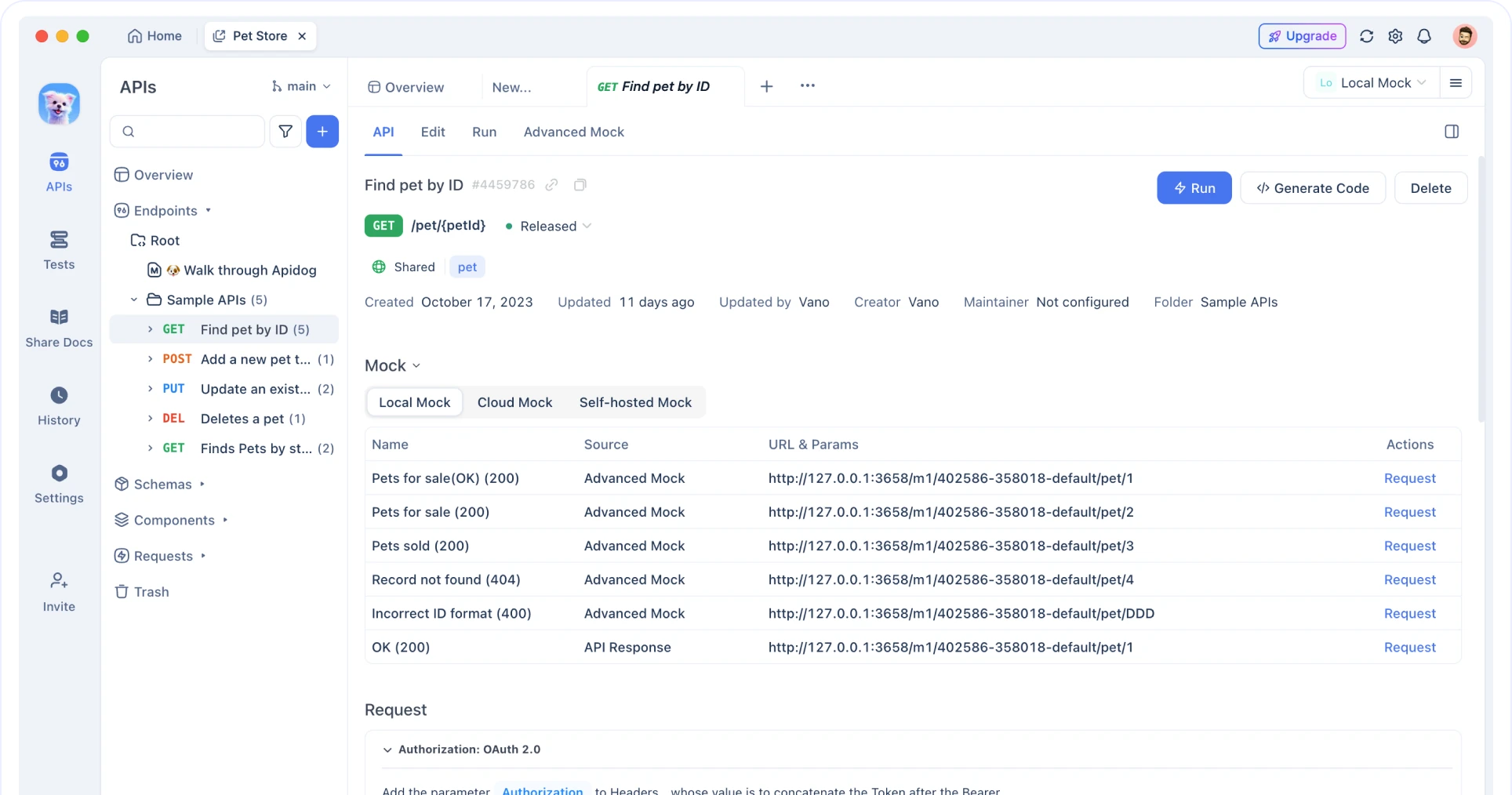
Where Apidog pulls ahead is what sits behind that URL:
- Smart mock and Faker.js data. Apidog reads your schema field names and types, then generates realistic values automatically. An
emailfield returns a real-looking email, acreated_atreturns a valid timestamp. You can wire in Faker.js for richer mock data without writing a generator by hand. - Schema-driven mocking. Import an OpenAPI spec and Apidog builds mock responses from it directly. That keeps your mocks in sync with your contract instead of drifting.
- Advanced mock rules. Return different responses based on query params, headers, or request body, including error states like a 500 or a 404, so you can test how your client handles failure.
- Self-hosted runner. Need mocks inside your own network? Apidog ships a self-hosted runner, so you get hosted convenience and on-prem control from one tool.
It’s also a full API platform, so design, debug, testing, and documentation live alongside your mocks. If you want the side-by-side detail, our mock server comparison between Postman and Apidog walks through the differences. You can download Apidog and have a hosted mock running in a few minutes.
One honesty note: Beeceptor’s request-capture and request-bin behavior on its proxy endpoints isn’t identical to Apidog’s request interception. If inbound request logging is your main use case, test both against your exact flow rather than assuming feature parity.
2. Mockoon (best free, open-source desktop option)
Mockoon is a free, open-source mock server that runs as a desktop app or CLI. There are no request caps, because everything runs locally on your machine. You build endpoints in a clean GUI, define dynamic responses with templating, and start the server instantly.
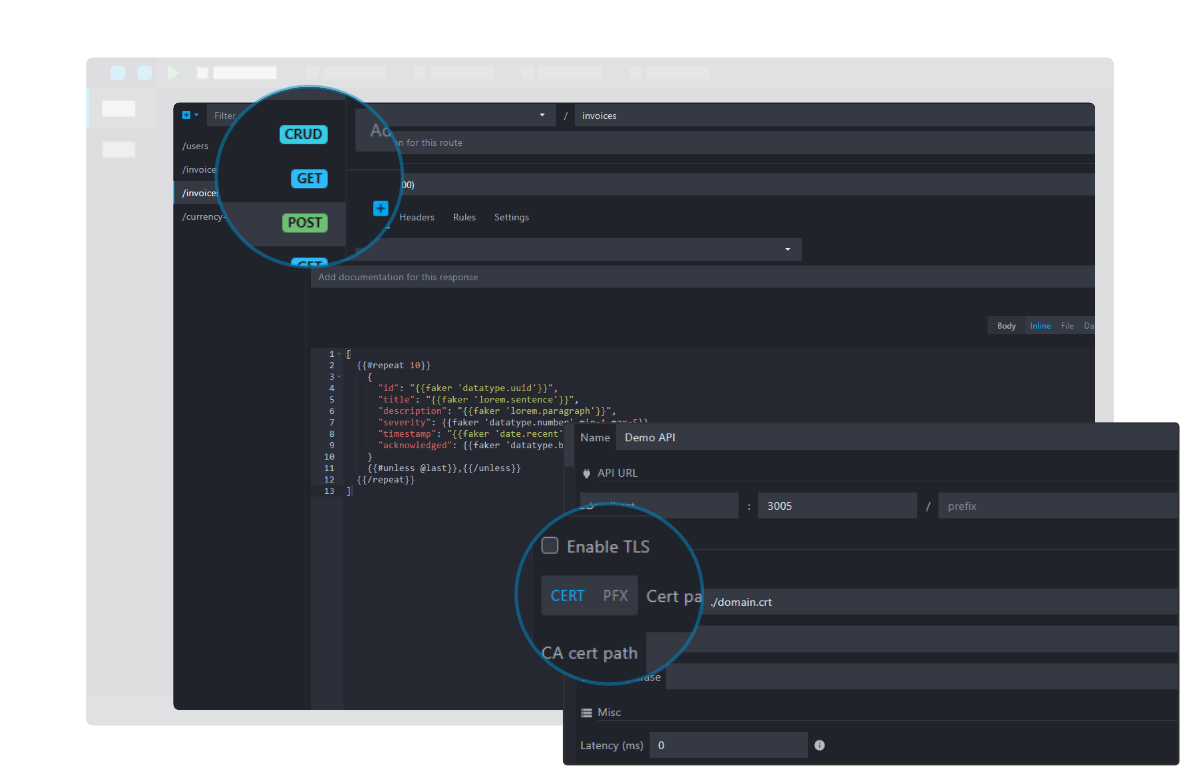
The trade-off is the inverse of Beeceptor. Mockoon doesn’t give you a public hosted URL out of the box, so sharing a mock with a remote teammate or a CI runner takes extra plumbing. If you want a desktop tool with zero usage limits and you’re comfortable handling hosting yourself, Mockoon is excellent. You can read more in our roundup of self-hosted API mock servers, and the project lives on Mockoon’s official site.
3. WireMock (best for advanced request matching)
WireMock is a mature, open-source mocking and service-virtualization tool, popular in Java and JVM shops. Its request-matching engine is one of the strongest around: match on URL, headers, body, JSON paths, and more, then return stubbed or proxied responses. There’s also a WireMock Cloud option if you want a hosted endpoint.
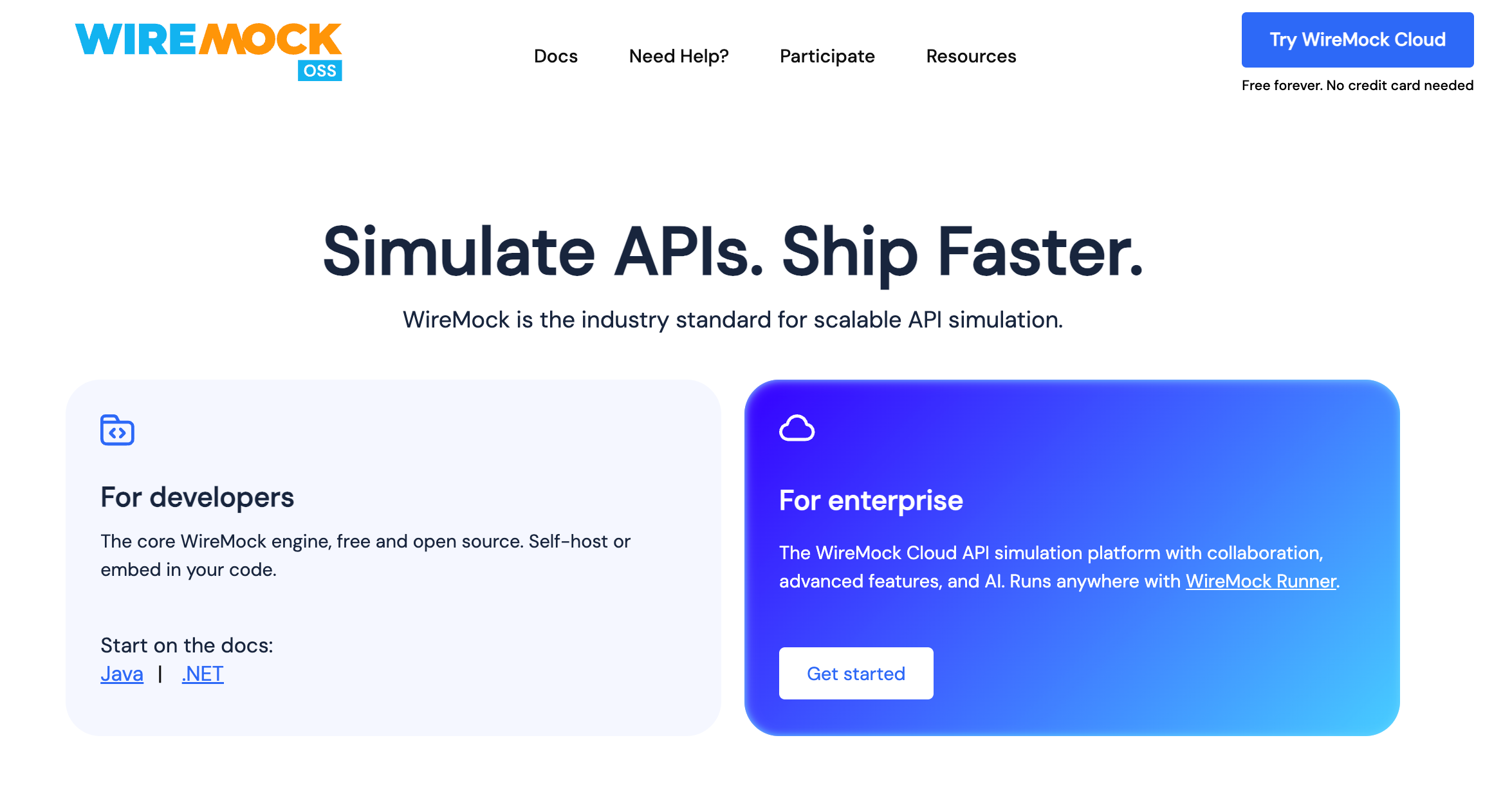
The cost is complexity. WireMock leans toward developers who are comfortable with config files, JVM setup, or its API. It’s overkill for someone who just wants a quick fake endpoint, and ideal for teams running detailed contract and integration scenarios. The WireMock documentation covers setup, and we go deeper in our piece on cheap and free API mock servers for startups watching costs.
4. Postman mock servers
If your team already lives in Postman, its built-in mock servers are the path of least resistance. You create a mock from a collection, and Postman hosts a URL that returns your saved example responses. Setup is quick, and it ties into the requests you’ve already organized.
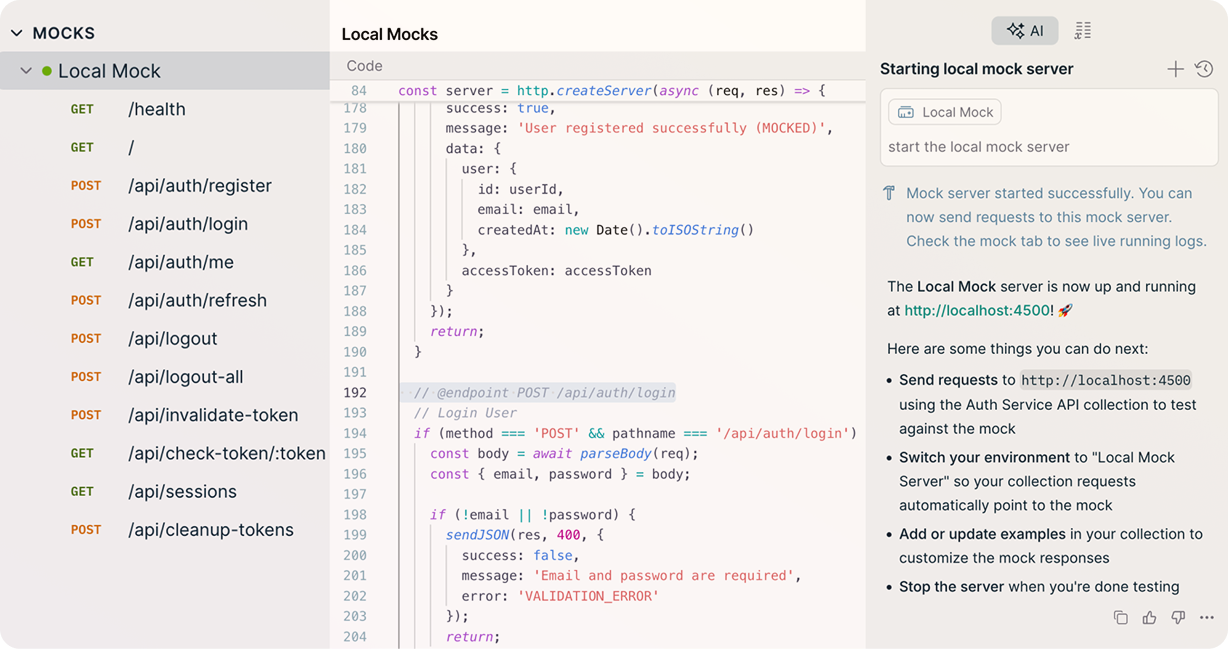
The limits are familiar Postman limits: the free tier caps mock-server calls per month, and you’re inside Postman’s cloud with no self-hosted option. For small projects it works. For heavier use you’ll bump into the same kind of usage ceiling that pushed you off Beeceptor in the first place. It’s a sideways move, not always an upgrade.
5. Stoplight Prism
Stoplight Prism is an open-source CLI that turns an OpenAPI document into a running mock server. Point it at your spec, and it serves responses that match your schema, including example values and validation. It’s a strong fit for a spec-first workflow where the OpenAPI file is the source of truth.
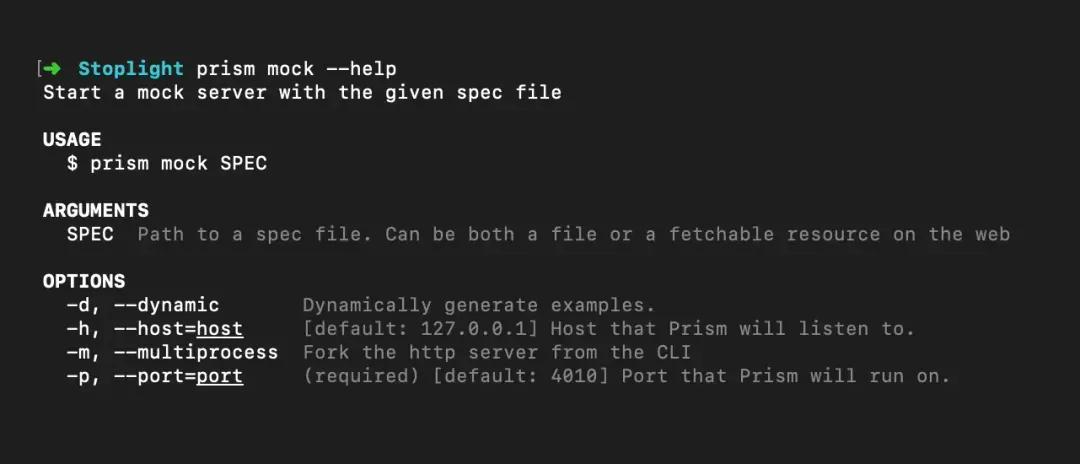
Prism is CLI-and-self-hosted by nature, so it has no hosted dashboard and no request caps. You handle running and exposing it. If your mocks should be generated straight from a contract, it’s a clean choice. The Prism repository on GitHub has install instructions.
6. Microcks
Microcks is an open-source tool built for mocking and testing across REST, GraphQL, gRPC, and event-driven APIs. It imports OpenAPI, Postman collections, and other artifacts, then exposes mocks plus contract tests. It’s a good fit for organizations standardizing mocking across many teams and protocols.
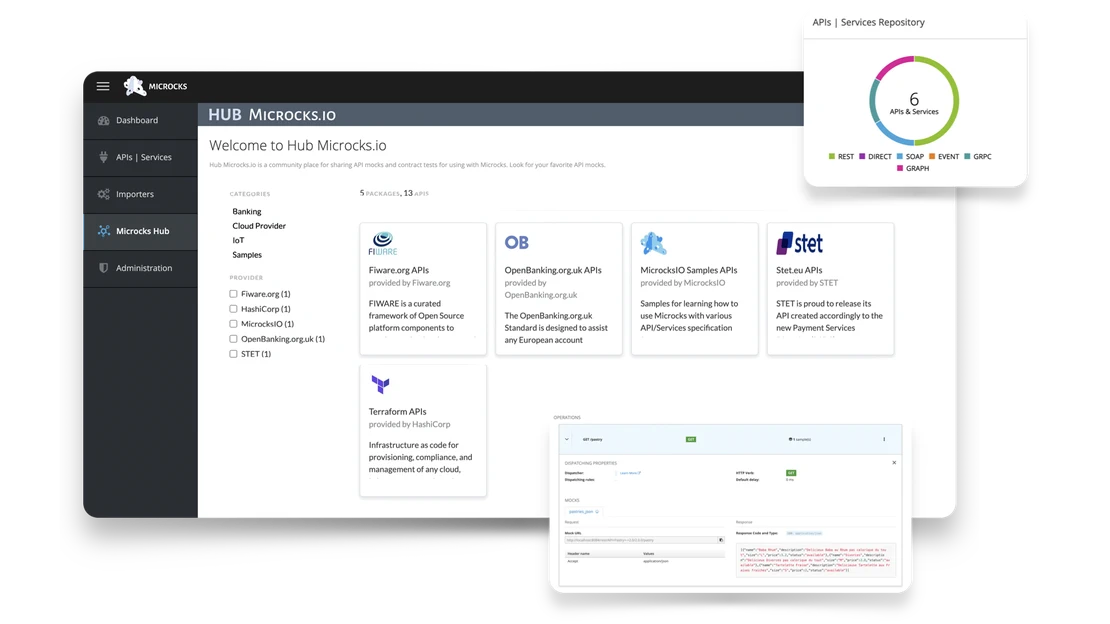
Like the other open-source options, Microcks is self-hosted, so you trade hosted convenience for full control and no usage limits. It’s heavier to operate than a quick subdomain, and worth it when you need centralized, multi-protocol mocking.
How to choose
The decision usually comes down to two questions: do you need a hosted URL, and how realistic must your mock data be?
- You want hosted convenience plus depth: Apidog. You keep the instant public URL, and you add smart mock data, schema-driven mocks, and a self-hosted runner when you need it.
- You want zero limits and you’ll host it yourself: Mockoon, Prism, or Microcks, depending on whether you prefer a GUI, a spec-first CLI, or multi-protocol coverage.
- You need heavy request matching: WireMock.
- You live in Postman already: Postman mock servers, with eyes on the call cap.
For more options across the whole category, our list of the best API mock tools compares features side by side.
Frequently asked questions
Is there a free Beeceptor alternative with no daily request cap?
Yes. Open-source, self-hosted tools like Mockoon, Stoplight Prism, and Microcks have no per-day request limits because they run on your own machine or server. Apidog’s mock server also gives you a generous free tier with a hosted URL, which avoids the usual self-hosting setup. If saving money is the priority, our startup guide to free and cheap mock servers breaks down the options.
Can I get a hosted mock URL like Beeceptor without paying?
You can. Apidog gives you a public, hosted mock endpoint on its free tier, similar to how Beeceptor hands you a subdomain. Postman also offers hosted mocks for free, though with a monthly call cap. Read the current limits on each vendor’s pricing page before you build a workflow on top of them.
What’s the difference between hosted and self-hosted mocking?
A hosted mock server runs in the vendor’s cloud and gives you a public URL with no install, which is Beeceptor’s model. A self-hosted mock server runs on your own infrastructure, so test traffic stays inside your network and there are no usage caps. Apidog supports both through its cloud mock plus a self-hosted runner, so you don’t have to pick one forever.
Does Apidog support OpenAPI-based mocking?
Yes. You can import an OpenAPI or Swagger spec, and Apidog generates mock responses directly from the schema, keeping your mocks aligned with your API contract. Combined with Faker.js and smart mock data, you get realistic responses without writing a custom generator.
Bottom line
Beeceptor earns its popularity with a frictionless start, and it’s a fine tool for quick demos. The trouble comes when the 50-requests-a-day cap, the hosted-only model, or the need for richer mock data gets in your way. For most teams, Apidog is the strongest Beeceptor alternative: you keep the instant hosted URL, then add smart mock data, schema-driven mocking, advanced rules, and a self-hosted runner in one place.
Try the hosted mock server, import a spec, and see realistic responses in minutes. Download Apidog to get started, or read more about how Apidog handles the full API lifecycle from design to mocking.