If you searched “mockserver,” you might mean two different things: the generic idea of a mock server, or the specific open-source project at mock-server.com. This guide is about the second one, the Java-based HTTP mock and proxy tool, and the alternatives worth trying if its setup feels heavy. If you just want to mock an endpoint fast, you can also skip ahead and download Apidog, but first let’s be clear about what MockServer actually does and where its friction shows up. For background on the concept itself, our explainer on what a mock API is covers the fundamentals.
What is MockServer (the project)?
MockServer is an HTTP(S) mock server and proxy built for testing. You define “expectations,” which are rules that match incoming requests, then return a canned response, forward the request, run a callback, or inject a failure. It runs as a standalone process, a Docker container, a Maven plugin, or embedded directly in your JVM tests.
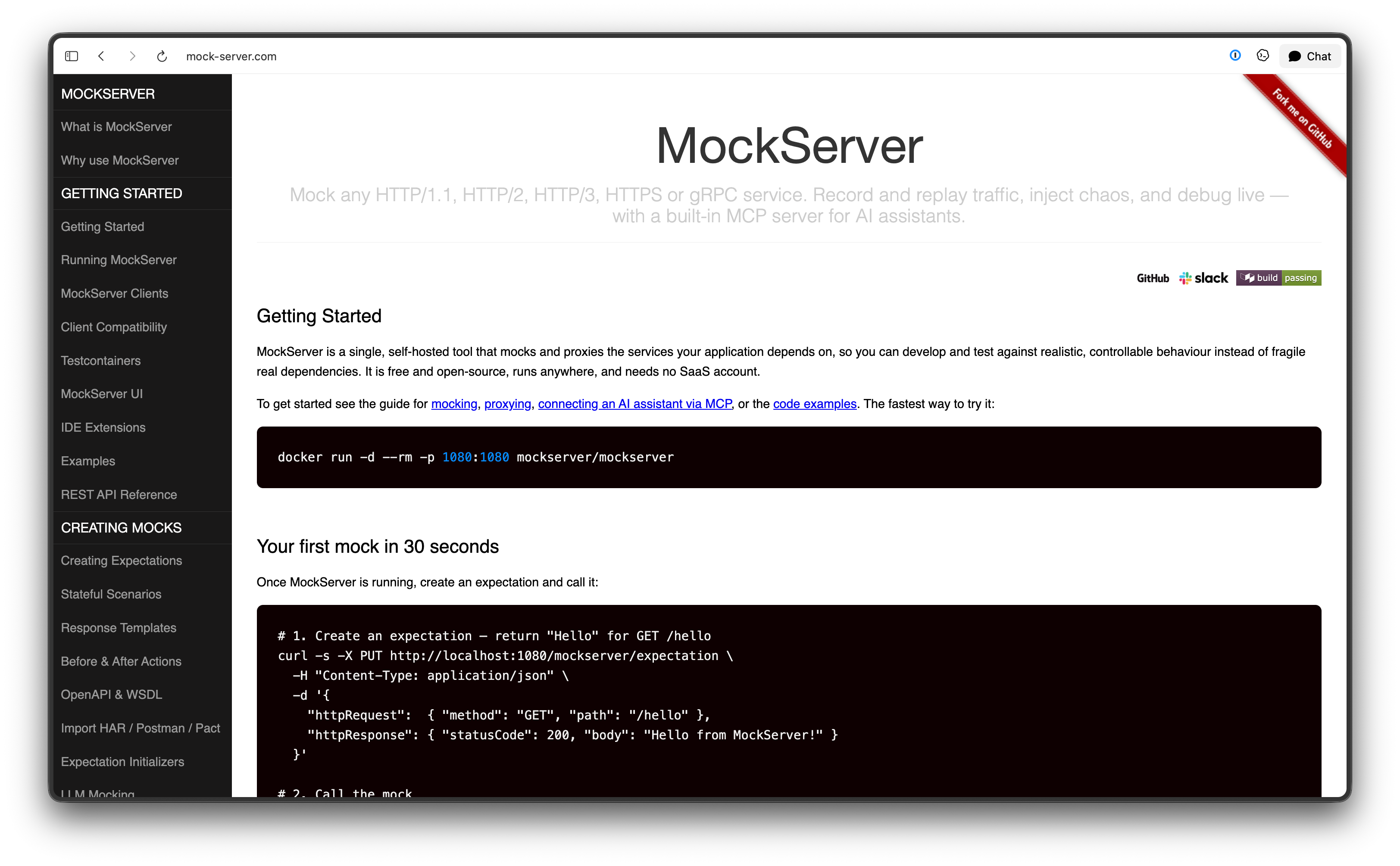
Its feature set is genuinely deep. MockServer matches requests, returns mock responses, and proxies real traffic when no expectation matches. You can record live traffic and replay it as expectations in Java or JSON. It supports HTTP/1.1, HTTP/2, gRPC, WebSockets, and TCP on a single port, plus chaos testing through injected latency and dropped connections. Recent versions even mock LLM chat-completion APIs and ship an MCP server for AI coding assistants. Clients exist for Java, JavaScript, Python, and Ruby, with first-class JUnit and Spring support. The project is open source on GitHub.
So MockServer is strong where it counts: programmable expectations, request proxying and recording, and tight JVM/CI embedding. If you live in Java and want a mock that runs inside your test lifecycle, it’s a solid pick.
Where MockServer creates friction
The same things that make MockServer powerful also make it heavy for a lot of teams.
- Java and Docker dependency. MockServer 6.x requires Java 17+. If your stack isn’t on the JVM, you’re pulling in a runtime or a container just to fake a few responses. That’s a tax frontend and QA teams rarely want to pay.
- Expectation DSL boilerplate. Every mocked response is an expectation you write in code or JSON. Simple cases stay simple, but realistic payloads with nested fields, dynamic IDs, and varied status codes turn into a lot of hand-written configuration.
- No visual layer. There’s no GUI to design responses or eyeball your mocks. You configure, restart, and read logs. For non-Java teammates, the learning curve is real.
- Static data by default. You get back exactly what you wrote. Generating realistic, varied test data means more code or external libraries.
None of this makes MockServer bad. It makes it a specialist tool. If your needs are broader, a more visual or schema-driven approach saves time. Here are the alternatives worth comparing.
The best MockServer alternatives in 2026
1. Apidog (best overall)
Apidog is an all-in-one API platform that designs, tests, documents, and mocks APIs in one workspace. For people leaving MockServer, the draw is simple: you skip the Java runtime and the expectation DSL entirely.
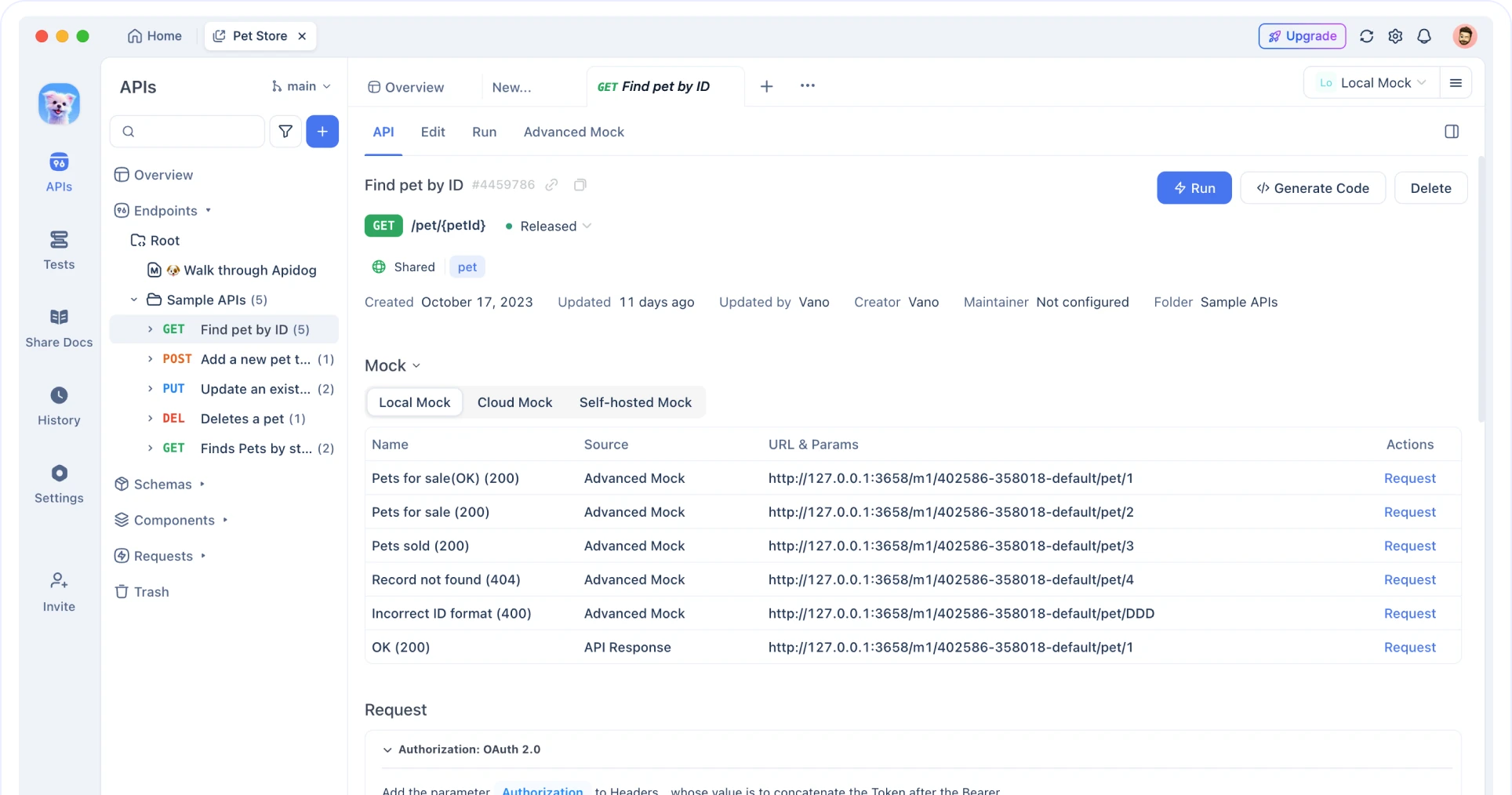
You point Apidog at an OpenAPI schema (or build endpoints visually) and it generates a working mock instantly. Smart mocking reads your field names and types, then produces realistic data automatically. A field called email returns an email, created_at returns a timestamp, and so on, powered by Faker-style data generation. No callbacks, no JSON expectations, no restart loop.
Where Apidog stands out against MockServer:
- No Java, no boilerplate. Mocks come from your schema, not hand-written rules.
- Schema-driven and visual. Design responses in a GUI, with conditional responses for different scenarios.
- Cloud or self-hosted. Run mocks in the cloud for instant sharing, or deploy on-prem when you need control. See our roundup of self-hosted API mock servers for how it compares to running your own.
- One tool for the lifecycle. Mocking sits next to design, testing, and docs, so the mock and the real spec never drift.
The honest tradeoff: MockServer’s programmable expectations and traffic proxying are more granular for low-level JVM integration tests. Apidog optimizes for speed and breadth across a team, not for embedding mock logic inside Java unit tests.
2. WireMock
WireMock is the other heavyweight in the JVM mocking space, and it’s the closest spiritual sibling to MockServer. It uses request matching with stubs, supports record-and-playback, and runs standalone or embedded. If you want MockServer’s model but prefer WireMock’s API and ecosystem, it’s a natural switch.
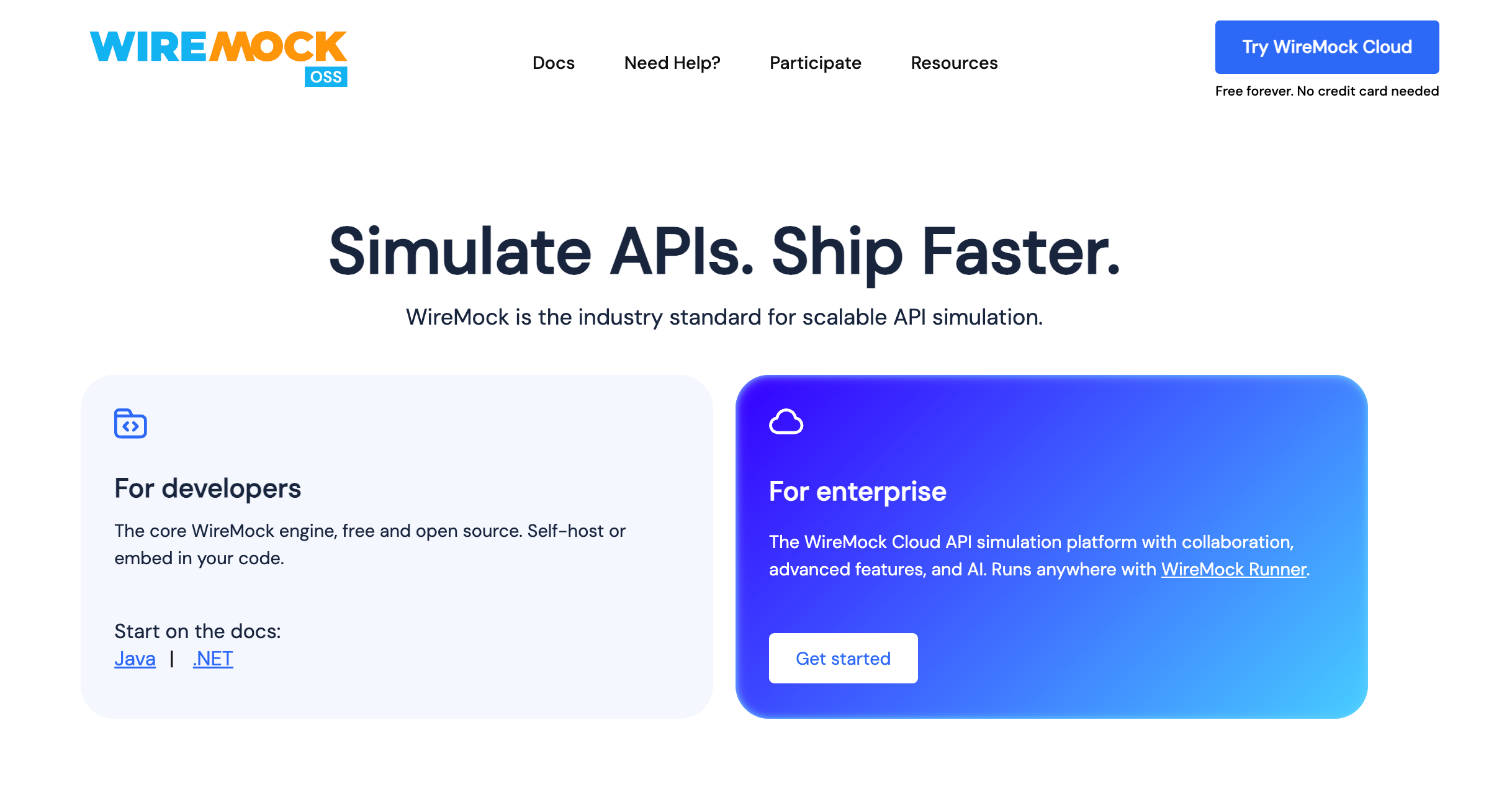
It carries similar tradeoffs: Java-centric, configuration-heavy, and no built-in visual designer in the open-source edition. If you’re weighing the two against lighter options, our WireMock alternatives guide breaks down when to stay and when to move on.
3. Mockoon
Mockoon is a free, open-source desktop app focused on speed and simplicity. You create mock APIs through a clean GUI, no code and no runtime to install beyond the app itself. For frontend developers who just need a fake endpoint in minutes, it removes almost all friction.
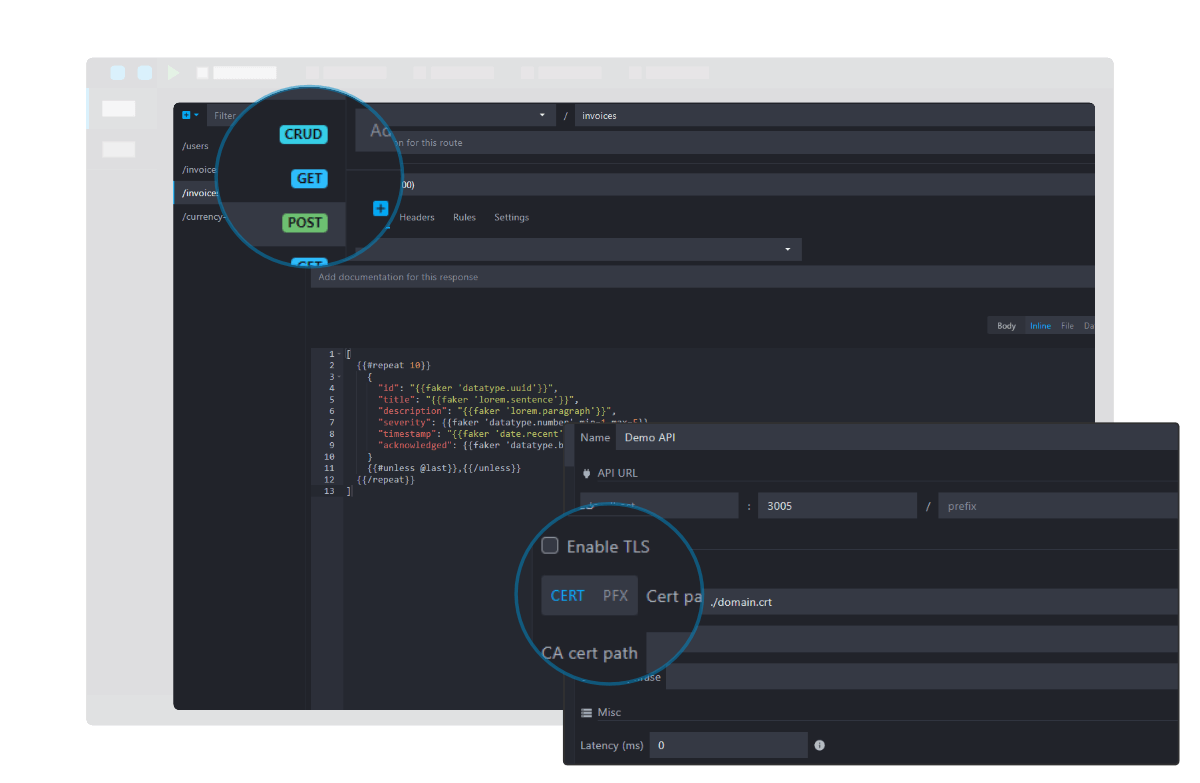
The flip side is scope. Mockoon is built for local, individual mocking, so team sharing and deep schema workflows are thinner than a full platform. Our Mockoon alternatives comparison covers where it fits and where you’ll outgrow it.
4. Prism (Stoplight)
Prism is an open-source mock server that runs straight off your OpenAPI document. Give it a spec and it serves responses that match your schema, including validation against the contract. That makes it a strong fit for schema-first mocking workflows where the spec is the source of truth.
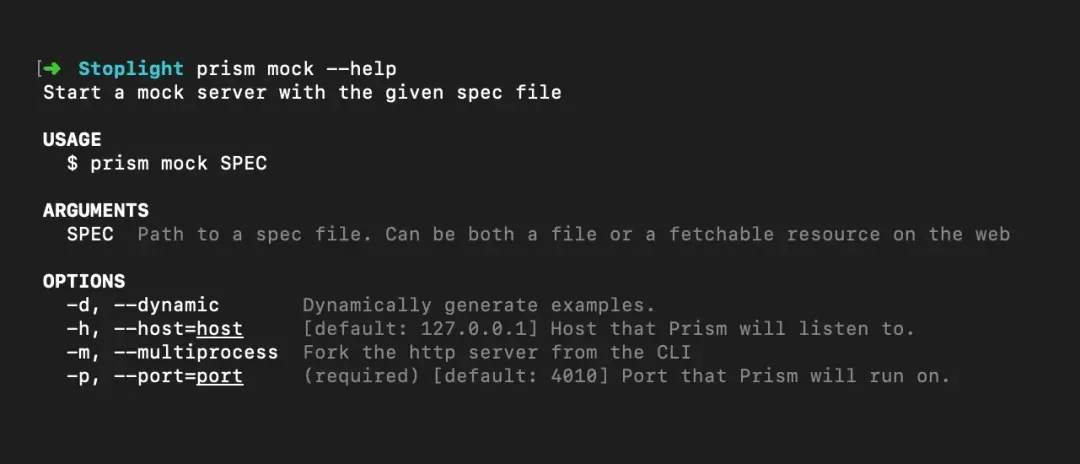
Prism is a CLI tool, so there’s no GUI, and its job is mocking from a spec rather than a broader design-test-document loop. If your spec is solid and you want a lightweight server in front of it, it’s a clean choice.
5. Beeceptor
Beeceptor is a hosted, no-install option. You create a mock endpoint in the browser and start hitting it in seconds, which is handy for demos, webhooks, and quick sharing. There’s nothing to run locally.
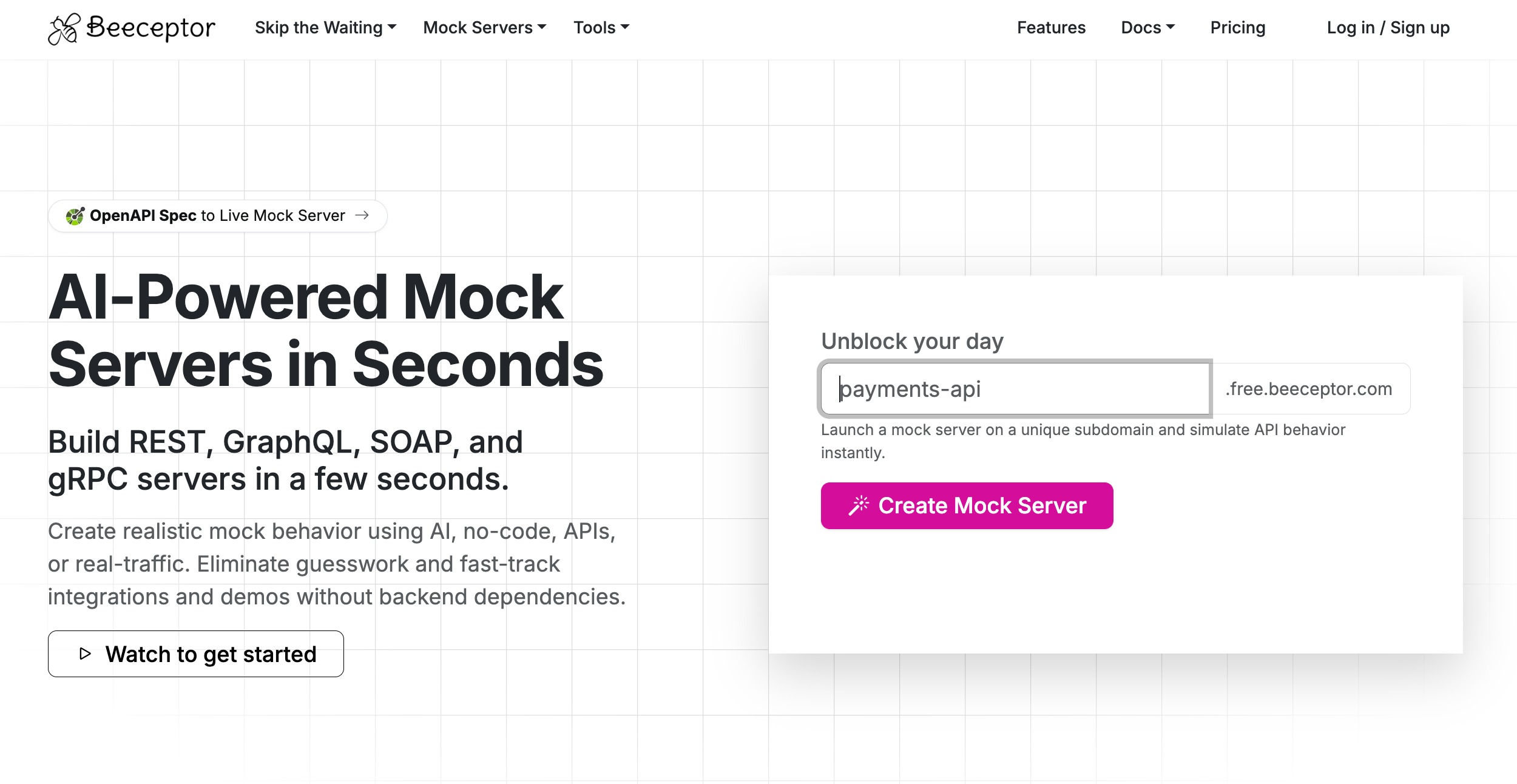
Being cloud-only is both its strength and its limit. Free tiers cap request volume, and offline or air-gapped work isn’t its lane. For a fully lightweight mock server for a RESTful API, it’s worth a look when convenience beats control.
Quick comparison
| Tool | Setup | Visual GUI | Data generation | Self-hosted | Best for |
|---|---|---|---|---|---|
| MockServer | Java 17+ / Docker | No | Manual | Yes | JVM/CI integration tests |
| Apidog | Desktop app, no runtime | Yes | Smart / Faker | Cloud + self-hosted | Teams wanting design + mock + test |
| WireMock | Java / Docker | Limited | Manual | Yes | JVM teams wanting record-replay |
| Mockoon | Desktop app | Yes | Templating | Local | Solo frontend devs |
| Prism | Node CLI | No | From OpenAPI | Yes | Schema-first mocking |
| Beeceptor | Browser, hosted | Yes | Templating | No (cloud) | Quick demos and webhooks |
If you want a wider field of contenders across these categories, the online API mocking tools comparison lines up several of them side by side.
How to choose
Match the tool to your real constraint, not to a feature checklist.
- You live in Java and run mocks inside JUnit/Spring tests. Stay with MockServer or move to WireMock. The embedded JVM lifecycle is their home turf.
- You want mocks without a runtime, with realistic data and team sharing. Apidog fits, because it’s schema-driven and visual, with cloud sharing built in.
- You need a free local app for personal use. Mockoon is the lightest path.
- Your OpenAPI spec is the contract and you want it served as-is. Prism keeps the mock honest to the schema.
- You need a throwaway endpoint in 30 seconds. Beeceptor gets you there.
The biggest decision is whether you want a mocking-only tool or a platform where the mock stays in sync with your design and tests. If endpoints change often, a single source of truth saves more time than any single mocking feature.
Frequently asked questions
Is MockServer free?
Yes. MockServer is open source and free to self-host. The cost it adds is operational, not financial: you maintain a Java 17+ runtime or Docker container and write expectations by hand. Tools like Apidog offer a free tier too, with the difference being a GUI and schema-driven mocks instead of code-based configuration.
What’s the difference between MockServer and Apidog for mocking?
MockServer is a Java-based mock and proxy you configure with code or JSON expectations, ideal for embedding in JVM tests. Apidog generates mocks from your OpenAPI schema through a visual interface, with smart data generation and no runtime dependency. MockServer wins on programmable, low-level control; Apidog wins on speed, realistic data, and team workflows. Our Postman vs Apidog mock server comparison shows the same GUI-versus-config tradeoff against another tool.
Can I mock an API without writing Java?
Yes. MockServer requires JVM setup, but several alternatives don’t. Mockoon and Apidog are GUI-driven, Prism runs off an OpenAPI file, and Beeceptor is fully browser-based. If avoiding Java is your goal, any of these removes that dependency.
Does MockServer support OpenAPI?
MockServer can initialize expectations from an OpenAPI specification, so you can seed mocks from a spec. It’s less spec-native than tools like Prism or Apidog, which treat the schema as the primary source and keep responses aligned with it automatically.
Conclusion
MockServer is a capable, programmable mock and proxy that earns its place in Java and CI-heavy stacks. Its strengths are real: granular expectations, traffic recording, and JVM embedding. The friction is also real, namely the Java requirement, the expectation DSL, and the lack of a visual, schema-driven layer.
If those tradeoffs don’t fit your team, you have good options. WireMock keeps you in the JVM, Mockoon and Beeceptor keep things light, and Prism keeps your mocks tied to your spec. For most teams that want realistic mocks without the runtime overhead, Apidog covers design, testing, documentation, and mocking in one place. Point it at your schema and you get a working mock in seconds. Download Apidog to try it free and see how mocking feels without the boilerplate.