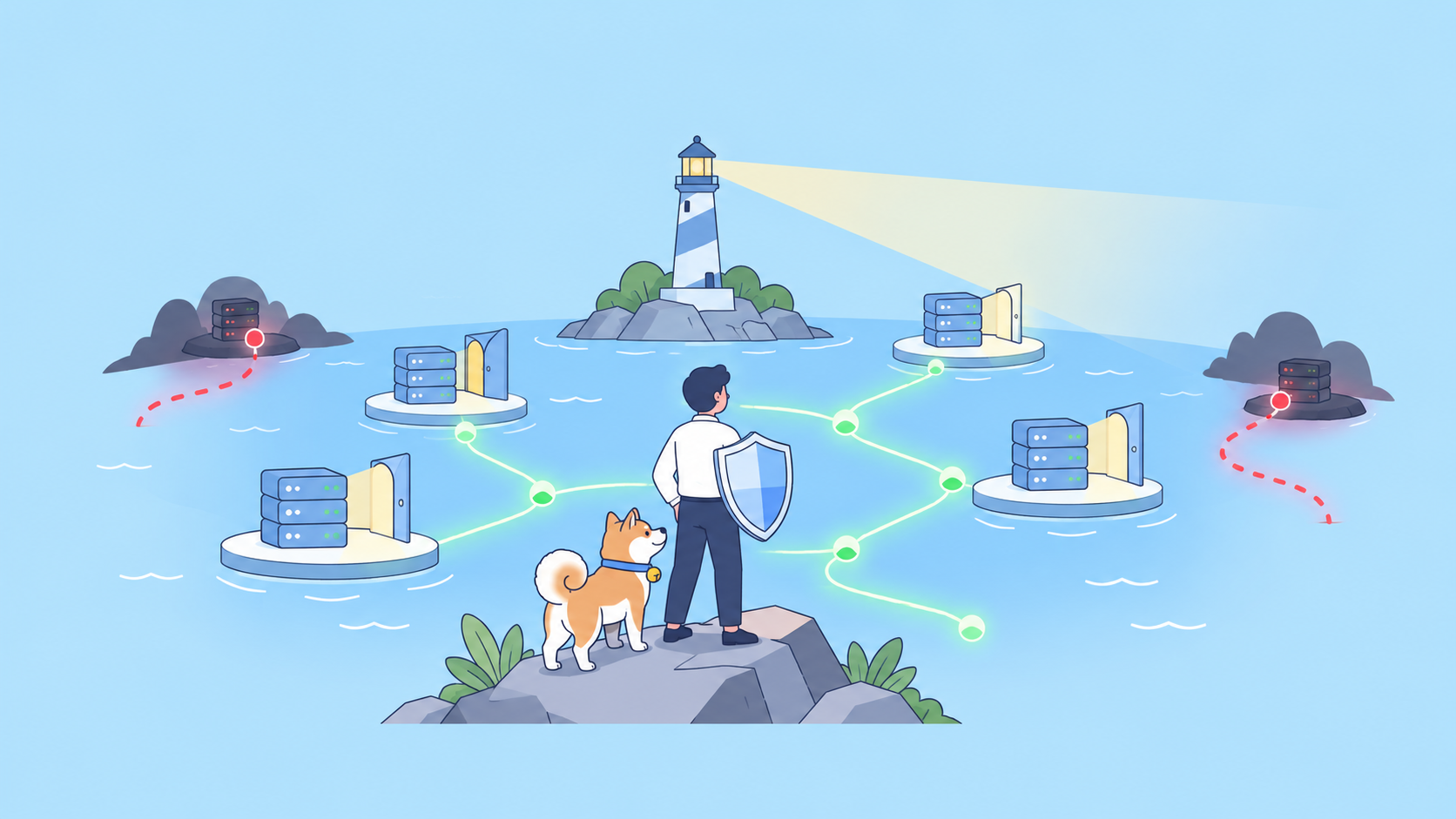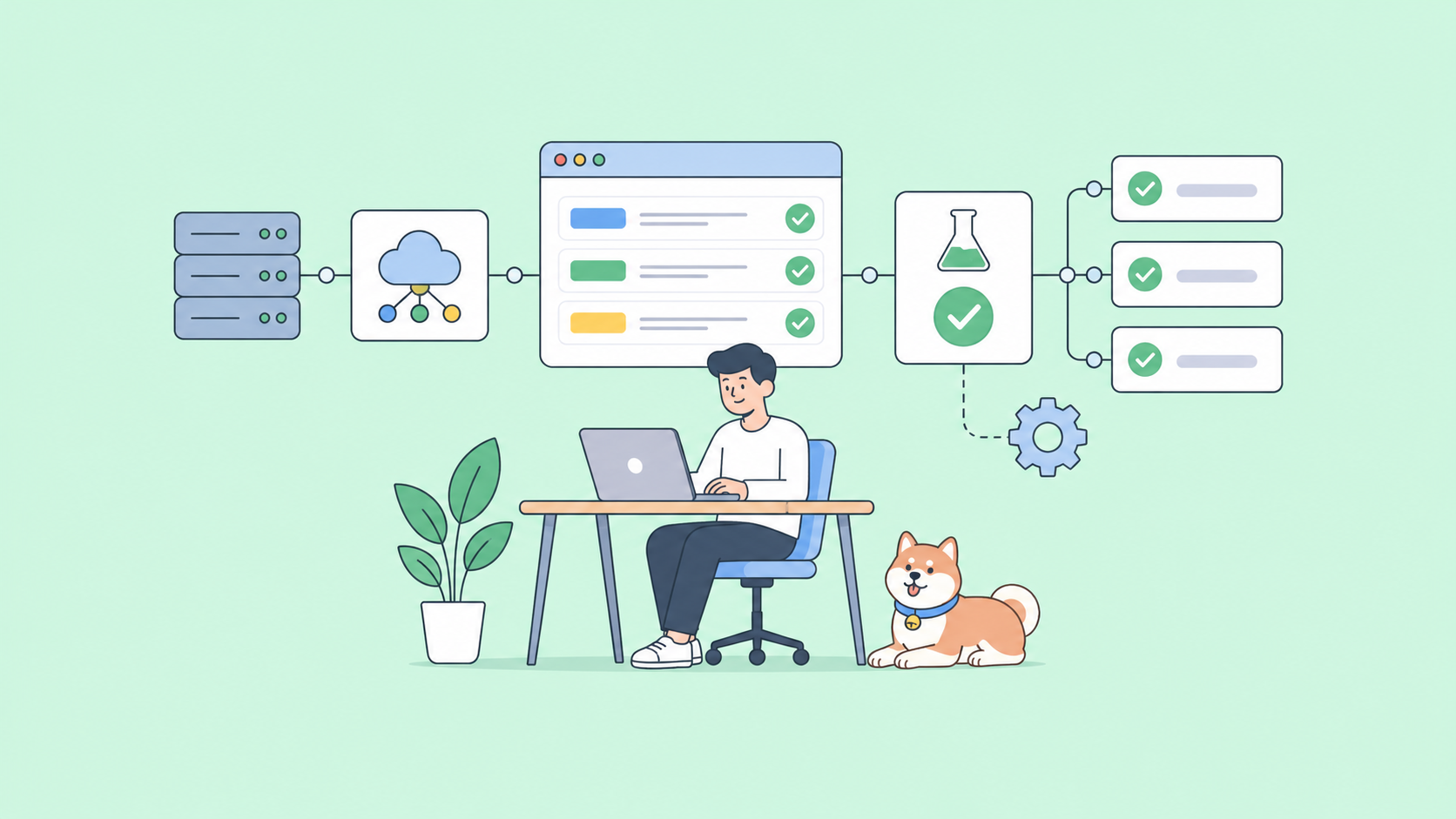
A headless application separates the backend from the frontend. The business logic, data, and core functionality live on one side. The user interface lives on another. The two talk only through APIs.
The name comes from a simple idea. The “head” is the presentation layer, the part users see. Remove the bundled UI and you get a “headless” system. The backend still does its job. It exposes that job through an API instead of rendering screens itself.
This guide explains what a headless application is, why teams adopt the pattern, what trade-offs you accept, and how it differs from related “headless” terms that get confused with it. It also shows why the API contract becomes the most important asset once your application goes headless.
What is headless architecture?
Headless architecture is the design pattern behind a headless application. It is the blueprint: an architectural approach that separates the backend logic and data from the frontend presentation, then connects the two only through APIs. The architecture describes the structure you are committing to, while the headless application is the running implementation of that structure.
In practice, people use “headless architecture” and “headless application” almost interchangeably, and that is fine. The distinction is one of altitude. When you talk about headless architecture, you are talking about the rule set: backend and frontend decoupled, every capability reachable through an API, no bundled UI. When you talk about a headless application, you are talking about a specific system built to follow those rules.
So the architecture is the plan, and the application is the thing you ship. The same trade-offs, benefits, and contract concerns apply to both, because the application inherits them directly from the architecture.
What “headless” actually means
In a traditional application, the backend and frontend ship as one unit. The server holds the data, runs the logic, and also generates the HTML the browser displays. The UI and the logic are tightly coupled.
A headless application breaks that link. The backend becomes a set of API endpoints. It returns data, not pages. Any client can call those endpoints: a web app, a mobile app, a smart TV, an IoT device, or another backend service.
The architecture is API-first by definition. Every piece of functionality has to be reachable through an API, because the API is the only way in. There is no built-in screen to fall back on.
That single rule reshapes how you build. The frontend is now just one consumer among many. You can swap it, rebuild it, or add new ones without touching the core. Each side deploys on its own schedule.
Why teams go headless
Decoupling sounds abstract until you see what it buys you. Here are the practical reasons teams choose this pattern.
Omnichannel delivery
One backend can serve every channel. You write the logic once, then build a web frontend, a mobile app, and a partner integration on top of the same APIs. Each client renders the response in the way that fits its context.
Adding a new channel means adding a new API consumer, not re-architecting the system. A voice assistant or a kiosk becomes another caller against endpoints that already exist.
Independent teams and deployments
When the frontend and backend share a codebase, the teams share a release cycle. One side waits on the other. Headless removes that coupling.
A frontend team can ship a redesign without a backend deploy. A backend team can refactor internals without breaking the UI, as long as the API contract holds. Both sides move at their own pace.
Reuse and flexibility
The same business logic backs multiple products. A pricing engine, an auth service, or a content store gets built once and reused everywhere. You also get freedom on the frontend. Pick any framework you want, since the backend does not care how the response gets rendered.
This flexibility is why headless sits next to ideas like API-first development and the broader thesis that software is going headless and the API is the product. When the UI is detachable, the API is what you actually sell and support.
The trade-offs
Headless is not free. The pattern moves complexity rather than removing it. Be honest about the costs before you commit.
You now run more moving parts. Two or more deployables instead of one. More infrastructure, more CI pipelines, and more services to monitor. A small team building a single, simple website may not need any of this.
You also own the frontend entirely. A traditional CMS or framework gives you templates and rendering out of the box. Go headless and you build the presentation layer yourself, for every channel.
Then there is the contract problem. With one codebase, a breaking change shows up immediately at compile time. With a headless split, a backend change can quietly break a client that calls the API. Nothing stops it until something fails in production.
That last point is the big one. The API contract is the seam that holds the whole system together, and it is also the easiest thing to break by accident.
Headless application vs related terms
“Headless” attaches to several different things. They share the same idea, no bundled UI, but they describe different layers. Mixing them up causes real confusion in planning conversations. Here is a clean breakdown.
Headless application
The broadest term. An architectural pattern for any software that separates backend logic from frontend presentation and exposes functionality through APIs. Your whole system is headless. A web app, a mobile app, and a service can all consume it.
Headless API
An API exposed without a bundled UI. This is closer to a description of one component than a whole architecture. A headless API is the interface a headless application offers to its consumers. In practice the two terms overlap heavily, the headless application is the system, the headless API is the door into it.
Headless CMS
A narrower, content-specific case. A headless CMS manages content in a backend and delivers it through APIs, instead of rendering web pages itself. Tools like Contentful, Sanity, and Strapi fall here. It is a headless application whose domain is content. The “head” you removed is the templating engine of a traditional CMS.
Headless browser
The odd one out. A headless browser is a real web browser that runs without a visible window. It renders pages, runs JavaScript, and behaves like a normal browser, but you drive it from a command line or a script. Teams use it for automated testing, screenshots, and scraping. Playwright and Puppeteer are common drivers. This has nothing to do with backend architecture, despite the shared word.
The throughline: all four drop a graphical interface and operate through code. But a headless application is an architecture, a headless API is an interface, a headless CMS is a content backend, and a headless browser is an automation tool. Use the precise term for the precise thing.
Where headless meets composable and MACH
You will often see headless mentioned alongside “composable” and “MACH.” They are related but not identical.
Composable architecture means building a system from independent, swappable services. Each piece does one job and connects through APIs. Headless is a prerequisite, you cannot swap a frontend freely if it is welded to the backend.
MACH stands for Microservices, API-first, Cloud-native, and Headless. It is a set of principles that bundles headless with three other ideas to describe modern, modular stacks. Headless is one letter of the acronym, the part that says the frontend is decoupled.
You do not need the full MACH stack to build a headless application. But if you have already gone headless, these adjacent patterns are the natural next questions.
Why the API contract becomes the product
Here is the shift that matters most. In a headless application, the API is no longer a side door. It is the only door. Every client depends on it. If the contract is unclear, unstable, or undocumented, every consumer suffers at once.
This is the heart of treating your API as a product. Your consumers, whether they are your own mobile team or an external partner, are users. The API’s shape, reliability, and documentation are the product experience. A clear, stable API contract is what lets independent teams trust each other across the seam.
That is why design-first practice pays off here. You define the contract before you write the implementation, agree on it across teams, and build against a shared source of truth. Compare the approaches in API-first vs API design-first vs code-first to see where this fits your workflow. Strong API design principles keep the contract consistent as the system grows.
The cost of getting this wrong scales with the number of consumers. One client can tolerate a sloppy API. Five clients across web, mobile, and partners cannot. The discipline you put into the contract is the discipline that keeps the whole headless system stable.
Where a tool like Apidog fits
Once the API is the product, you need to design it, test it, mock it, and document it well. That is the API-quality layer, and it is a narrow slice of the headless picture. Apidog works in that slice.
To be clear about scope: Apidog is not a CMS, a commerce platform, an API gateway, or a load generator. It does not build your headless architecture for you. What it does is help you keep the contract that holds the architecture together honest.
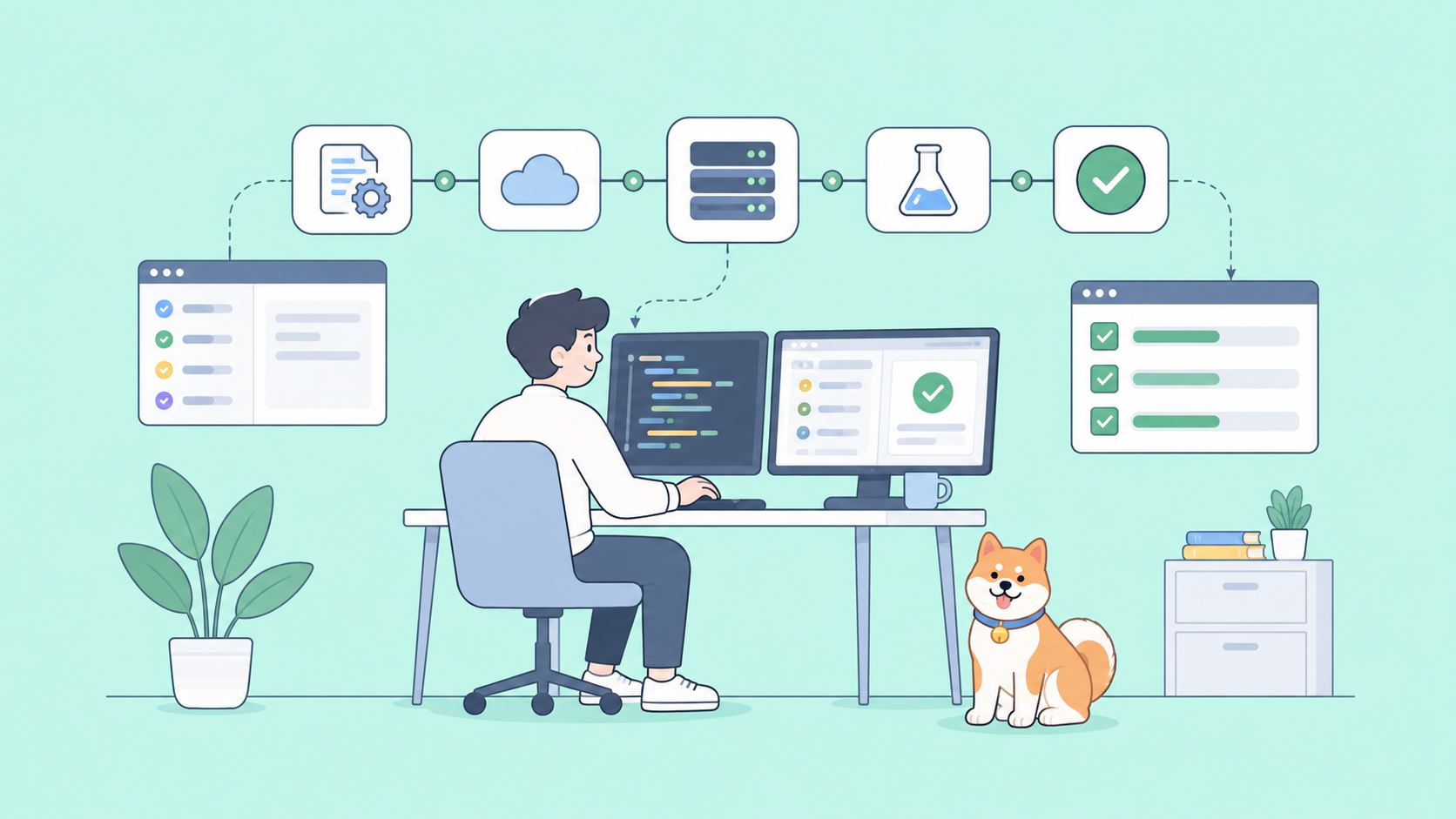
In practice that looks like a few things. You design the contract in a visual OpenAPI editor, so every team sees the same source of truth before code exists. You mock endpoints with dynamic data so frontend teams can build against the contract before the backend is ready. You write automated test scenarios with assertions that catch a breaking change before it reaches a client, and run them in CI with the Apidog CLI. You publish auto-generated, interactive docs so every consumer of your headless API knows exactly what to call.
Apidog covers REST, GraphQL, gRPC, WebSocket, SOAP, and Socket.IO, and runs as a desktop app, a web app, and a CLI. It is one option among several for the API-quality work. The point is not the tool. The point is that going headless makes contract quality a first-class concern, and that work has to live somewhere.
FAQ
Is a headless application the same as a single-page application?
No. A single-page application is a frontend pattern, a web UI that updates without full page reloads. A headless application is a backend pattern about decoupling logic from presentation. An SPA often consumes a headless backend, but they describe different layers.
Do I need microservices to build a headless application?
No. Headless is about separating the frontend from the backend, not about how you structure the backend internally. You can build a headless application with a single monolithic backend that exposes APIs. Microservices are a separate choice.
Is headless always better than a traditional coupled app?
No. Headless adds operational complexity and shifts frontend work onto your team. For a simple site with one channel, a traditional coupled stack is often faster to build and cheaper to run. Headless pays off when you have multiple channels, independent teams, or strong reuse needs.
What is the difference between a headless API and a headless application?
A headless application is the whole system, backend logic decoupled from presentation. A headless API is the interface that system exposes. In casual use the terms overlap, but the application is the architecture and the API is the door into it.
Is headless architecture the same as a headless application?
Mostly, yes, and people use the terms interchangeably. The precise distinction is altitude. Headless architecture is the design pattern, the blueprint that decouples backend from frontend and connects them through APIs. A headless application is a specific system built to follow that blueprint. The architecture is the plan, the application is the implementation, and both carry the same trade-offs and contract concerns.
Why is the API contract so important in a headless setup?
Because the API is the only connection between the backend and every client. A breaking change does not surface at compile time, it surfaces in production. A clear, stable, well-documented contract is what keeps every consumer working as the system evolves.