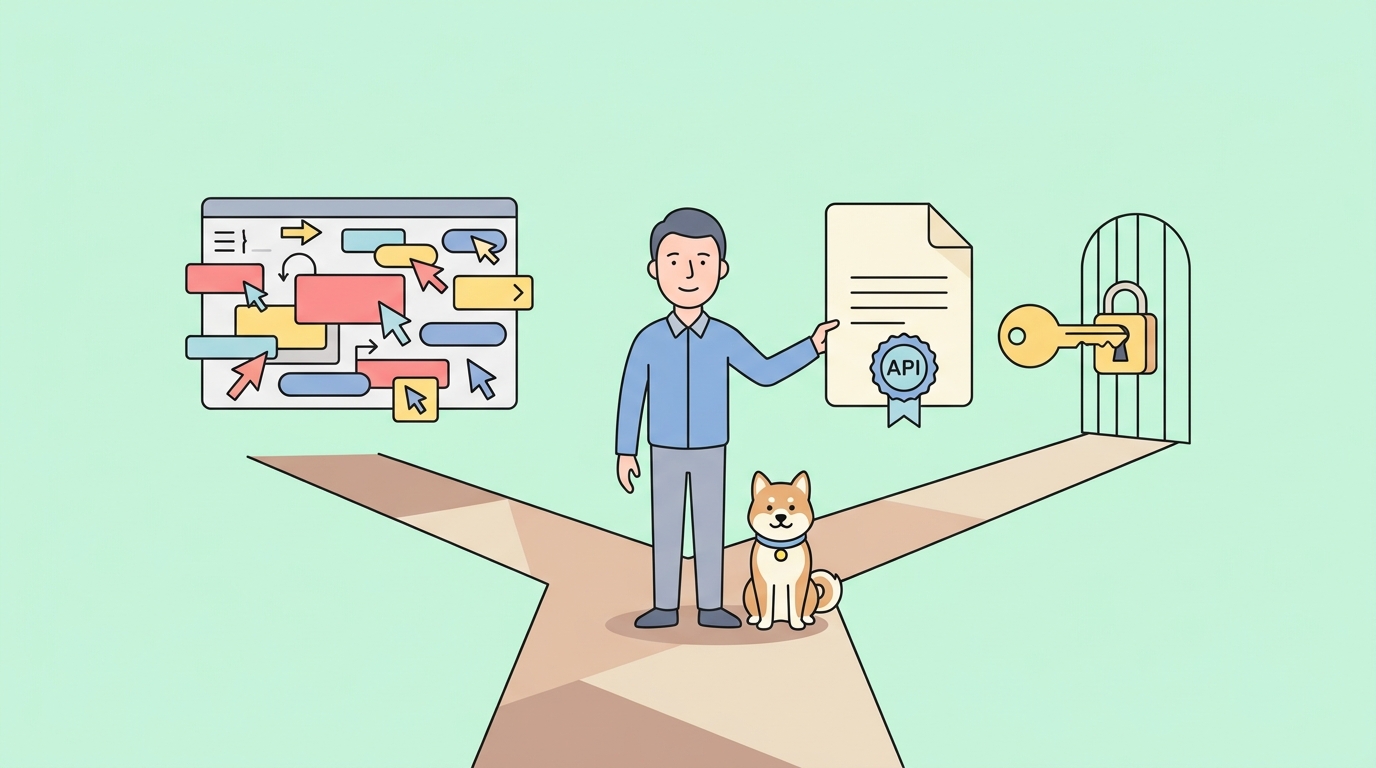
You let Cursor scaffold the endpoint. Copilot filled in the request body. Claude Code wrote the test and ran it once. So a fair question follows: if the agent does all of that, why keep a dedicated API tool open at all?
Yes, you still need one, but its job changed. AI agents generate more API calls, specs, and tests, faster than before, so verifying that output grows rather than disappears. What shrank is typing requests by hand. What grew is running tests deterministically, holding the spec as source of truth, and checking what your agent sent.
That distinction is the whole article. An agent is good at producing API work. It is not the thing that should grade its own homework. Below is what agents genuinely took off your plate, the four jobs they did not, and where a tool like Apidog fits without pretending to be something it isn’t. If you want the hands-on version, there’s a separate guide on using AI agents for API testing. For the protocol that connects agents to your specs, the Model Context Protocol is the reference.
What changed when agents entered the workflow
For years the API client was where you did the work by hand. You typed the URL, set the headers, pasted the token, saved the request, wrote the assertion. The tool’s value was the typing surface.
Agents took that surface. Point Cursor or Claude Code at a task and it drafts the request, the client code, the test, sometimes the OpenAPI file too. The volume of API work per hour went up. The number of endpoints, versions, and breaking changes a small team ships went up with it.
Here’s the part people miss: more generated output raises the value of the gate that checks it, it doesn’t lower it. Compilers and linters didn’t remove the need to run and test code. They raised how much code you could produce, which made the test suite matter more, not less. Agents do the same thing to APIs. The bottleneck moved from authoring a request to trusting what got authored.
Four jobs an AI agent doesn’t take off your plate
Start with a plain table. For each task, can an agent do it alone, and what still needs a dedicated tool?
| Task | Agent alone? | What still needs a tool |
|---|---|---|
| Draft a request or a first test | Yes, well | A place to run, save, and re-run it |
| Run the suite and gate CI on pass or fail | No, output varies | A deterministic runner in the pipeline |
| Keep the API spec as the source of truth | No, it drifts | A spec store the agent reads from |
| Reproduce a failing call for a human | No | An inspectable request history |
| Simulate an upstream 500, 429, or timeout | Partly | A mock server you control |
| Decide the contract is correct | No | A human, plus assertions |
The four rows where the answer is “no” are the jobs worth keeping a tool for.
1. Running and gating tests deterministically
An agent is probabilistic. Ask it to run your tests twice and you can get two shapes of output, two summaries, sometimes two verdicts. That’s fine for exploration. It’s not fine for a merge gate, where the same commit must produce the same pass or fail every time.
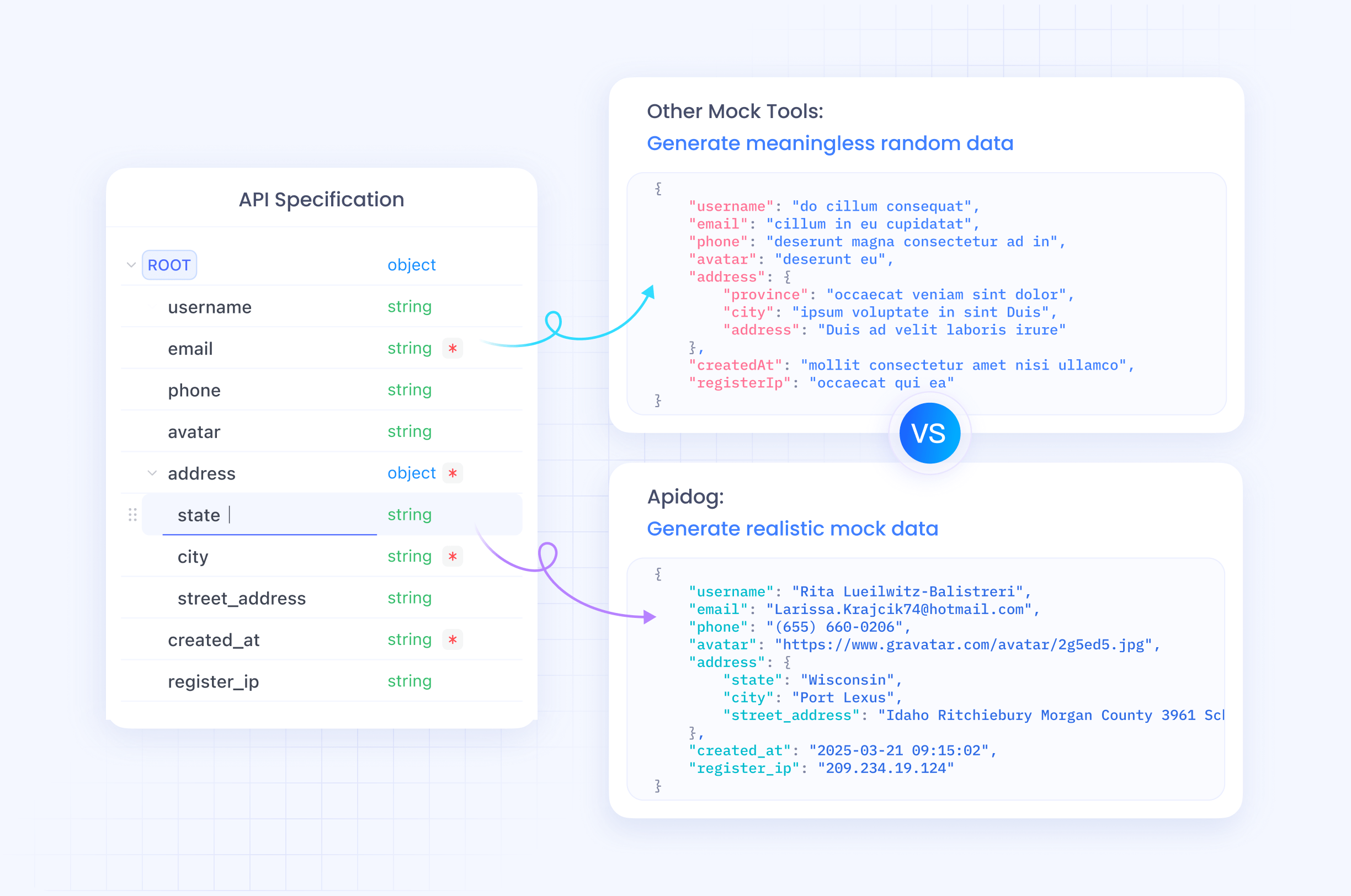
The split is clean: the agent can write the test, but something deterministic has to run it on every commit and block the merge when it goes red. That runner lives in CI, not in a chat window.
The practical test: can a broken contract fail your build without a human watching? If the only thing that ran the test was an agent in a chat window, the answer is no, because nobody re-runs a chat on every pull request. A runner with a real exit code does, and that exit code is what a merge gate reads.
Apidog’s role here is the Apidog CLI in an agent or CI workflow. It runs saved test cases headless, returns a real exit code, and fails the build on a broken contract. It runs without a login, so you can wire it into a pipeline before anyone signs in. For the deeper failure-mode version, see why AI agents break in production.
2. Holding the API contract as the source of truth
The most common agent failure on API work is a confident call to an endpoint that doesn’t exist, or a field that got renamed three commits ago. The agent isn’t looking at your real schema. It’s guessing from patterns.
The fix is not a better prompt. It’s giving the agent the real spec to read. That’s what the Model Context Protocol does: it hands your live API definition to the agent as a tool it can query.
Here’s the shape of it in practice. Ask an agent to add a call to your billing API and, without the spec, it might reach for POST /v1/charges because that pattern is common across the APIs it trained on. Your API might expose POST /v1/payments with a different body and a required idempotency header. Wire the spec in over MCP and the agent reads the real path, the real fields, and the auth it needs before it writes a line. The correction happens at authoring time, not in a failed test an hour later.
Apidog ships this as the Apidog MCP Server. Run npx apidog-mcp-server and your OpenAPI definition becomes available to Cursor, Copilot, Claude Code, or Cline, so the agent writes calls against your real endpoints instead of inventing them. It follows the OpenAPI definition you already maintain, and the command needs no account to try. There’s a walkthrough in vibe coding with the Apidog MCP Server. If your question is narrower, whether you still need an API client at all when you code inside an AI IDE, that has its own guide.
3. Mocking failures your agent has to survive
Real APIs return a 429 under load, a 500 during an incident, a timeout when a region goes down. Your agent’s code needs a recovery path for each, and you cannot test a recovery path against a happy-path sandbox that always returns 200.
You need to serve the failure on demand. A mock server does that: point the agent’s code at a mock, return the 500 or the timeout, and confirm the retry, the backoff, or the fallback fires the way it should. Apidog’s smart mock returns those responses without you standing up a broken server by hand. The methodology sits alongside the rest of AI agent API testing.
4. Seeing what your agent sent
When an agent’s API call fails, its summary of what happened is not the wire truth. You need the raw request and response: the exact headers, the body, the status, the order of calls. An agent that “thinks” it sent a valid token and a client that sent an expired one look identical until you read the bytes.
That’s an inspection job. Apidog keeps the request history, and the Apidog AI Agent Debugger lets you step through an agent’s execution: its LLM calls, its MCP tool calls, and multi-turn exchanges. Worth being precise about scope here, since this is where marketing usually overreaches. Apidog inspects what your agent did on the API layer. It does not build, run, or orchestrate the agent. It’s the debugger, not the runtime. Whether AI can replace that verification work entirely is its own honest question, covered in a dedicated piece.
What agents genuinely replaced
Credit where it’s due. Agents did remove real work, and pretending otherwise is how you lose the reader.
- Typing routine CRUD requests by hand. The agent writes them now.
- Boilerplate client code in whatever language you ship.
- The first draft of a test or a mock, which used to start from a blank editor.
- Hunting through docs to find the right endpoint. With the spec wired in over MCP, the agent finds it.
That’s genuine time saved, and the manual API client as a place to type requests is less central than it was in 2020. The workflow shifted. It didn’t vanish.
When you might not need a dedicated API tool
An honest answer needs a “no” case. You can skip a full API platform when:
- You’re writing a throwaway script and one
curlcall gets you there. - You’re prototyping solo, the surface is two or three endpoints, and nobody depends on your contract.
- Nothing you ship reaches another team or another company.
In those cases an agent plus curl is enough, and reaching for a platform is overkill.
The tool earns its place the moment the stakes rise: you ship to other people, you run CI, other teams build against your contract, or a bad response costs money. That’s most production work, which is why the question keeps coming up rather than settling.
Where Apidog fits in an agent workflow
Put plainly, Apidog is a deterministic verification layer around your agent. It’s not an agent framework, and it’s not open source. It doesn’t write your agent or make decisions for it. It runs the tests the agent drafts, stores the spec the agent reads, serves the failures the agent must survive, and shows you the wire when something breaks.
The parts that fit an agent-era workflow are the ones that need no account to start: npx apidog-mcp-server to feed specs into your AI IDE, and the CLI to run tests in a pipeline. You can wire both into an agent before a single person signs in. If you’re weighing options, the comparison against other clients is laid out in Apidog versus Postman for AI and LLM API testing, and there’s a broader field in 30 best API testing tools. If your doubt is sharper, whether Postman is dead in 2026 or which are the best API testing tools for AI agents, each has its own breakdown.
Download Apidog if you want to follow along; the free tier covers everything above.
Frequently asked questions
Can AI agents replace API testing entirely? No. Agents draft tests well, but running them deterministically and gating a merge on the result needs a stable runner, and deciding the contract is correct needs a human plus assertions. The drafting moved to the agent; the verification did not.
Do I still need Postman or Apidog if I use Cursor or Copilot? Usually yes, for two jobs the IDE agent doesn’t cover: feeding your real spec to the agent so it stops guessing endpoints (that’s what the Apidog MCP Server does), and running the resulting tests in CI. The agent writes the call; you still verify it.
Is the API client dead? No, but its center of gravity moved. Typing requests by hand shrank. Running, mocking, gating, and inspecting grew. A client that only offered a typing surface has less to do; one that verifies has more.
What does “deterministic verification” mean here? Same input, same pass or fail, every run. CI depends on it. An agent, by design, can vary its output run to run, which is why the gate that blocks a bad merge should be a deterministic tool, not the agent itself.
Does Apidog work without an account? The agent-facing surfaces do. npx apidog-mcp-server and the Apidog CLI run headless with no login, which is what lets you wire them into an agent or a pipeline first and sign in later.
The real question
It was never tool versus agent. It’s who does which job. The agent drafts the request, the test, and the client code, fast. The tool runs the suite the same way every time, holds the spec the agent reads, mocks the failures the agent must survive, and shows you exactly what went over the wire. Keep both, and give each the work it’s good at.
If you’re ready to wire the verification half into your agent workflow, start with npx apidog-mcp-server and the Apidog CLI, or try Apidog free.