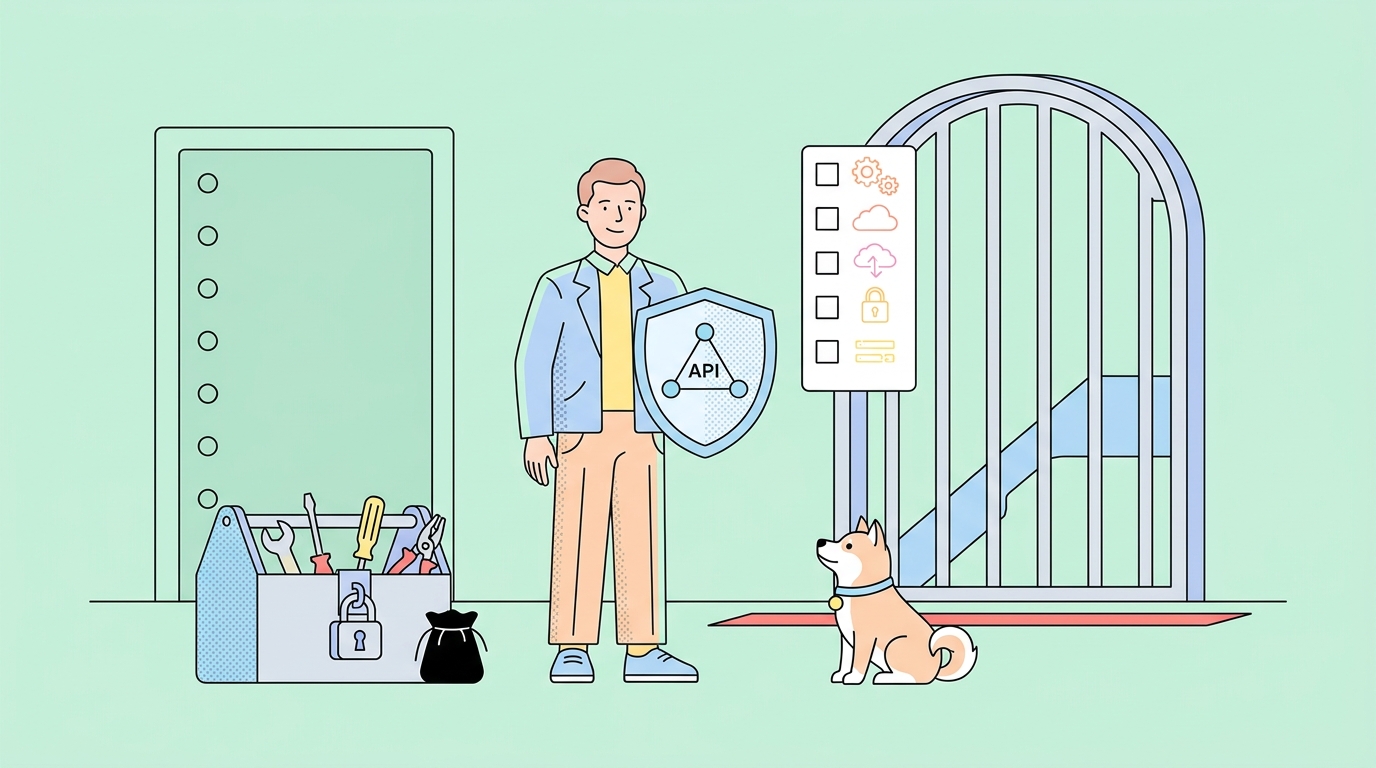
Your agent wrote the test. Cursor suggested three edge cases you hadn’t thought of. Copilot filled in the request body, and Claude ran the whole thing once and reported green. So a fair question follows: if the agent does all that, can AI replace API testing outright?
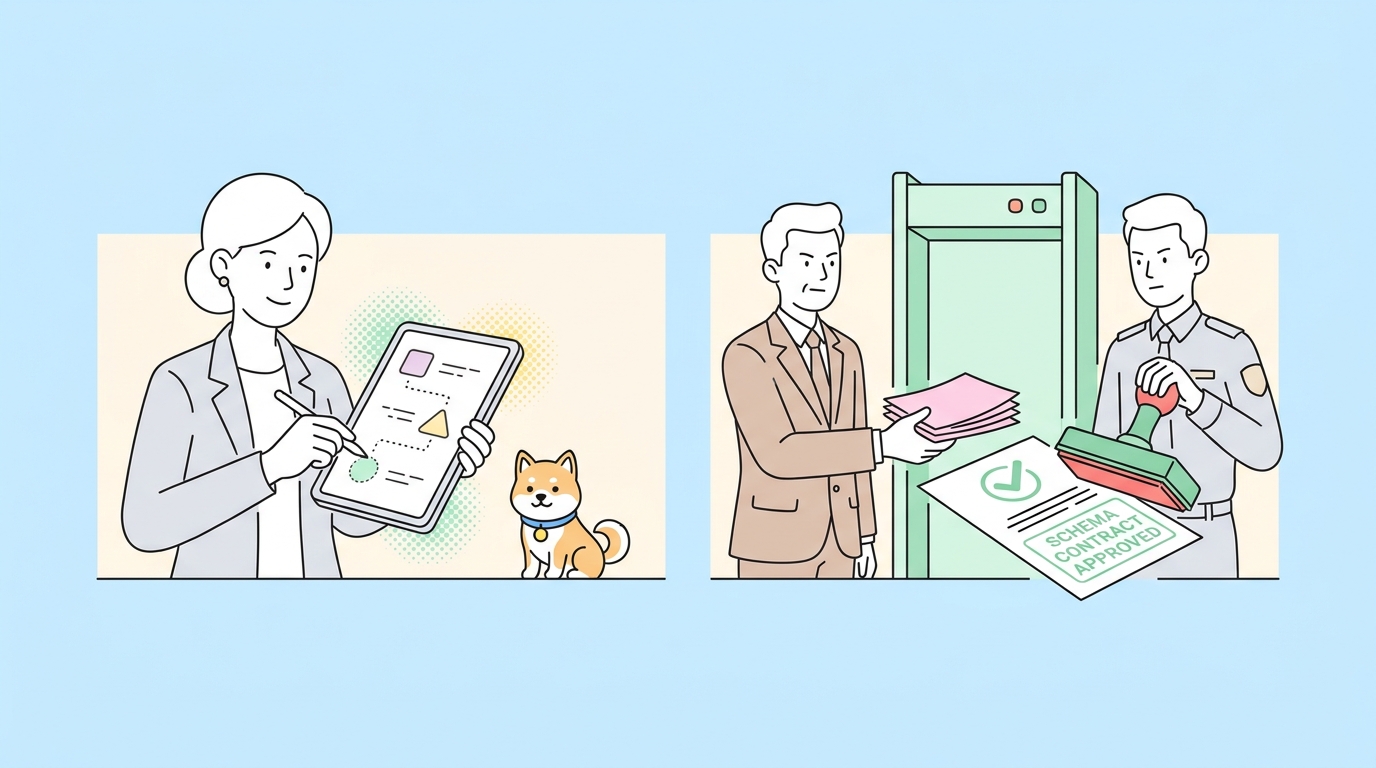
No, AI can’t replace API testing, but it can replace much of writing the tests. Agents draft test cases, suggest edge cases, and generate request bodies well. What they can’t do is run the suite identically every run, gate a merge on pass or fail, or decide the contract is right. That needs a deterministic tool and a human.
That split is the whole article, and it’s the testing-shaped branch of a bigger doubt: whether you still need an API tool in the age of AI agents at all. There’s a real line between the part AI took over and the part it can’t, and knowing where the line sits saves you from two mistakes: trusting an agent to be your merge gate, or writing agents off as useless at testing when they’re genuinely good at half the job.
Where this differs from the how-to guide
If you came here looking for steps, you want a different page. The guide on using AI agents for API testing walks through how to point an agent at your endpoints and get tests out of it. That’s the “how do I do this” version.
This piece is the “should I, and where does it stop” version. It’s about the boundary: which testing work you can hand to an agent and trust, and which still belongs to a deterministic tool no matter how good the model gets. Different question, so keep both open if you’re building an agent-assisted testing flow.
What AI genuinely does well in testing now
Start with credit, because painting agents as useless is how you lose a technical reader. Agents removed real work, and the list is longer than skeptics admit.
Drafting test cases from a spec or an example. Hand an agent an endpoint and a sample response and it writes a plausible first suite in seconds: status-code checks, a few field assertions, a happy-path body. What used to start from a blank editor now starts from a draft.
Suggesting edge cases you’d miss. This is where agents shine. Ask “what could break this endpoint” and a good model lists the empty array, the null in a required field, the expired token, the timezone at the date boundary. It won’t catch everything, but it widens your coverage past the three cases you’d type on autopilot.
Generating request bodies and fixtures. Need a valid payload with twenty fields, or fifty rows of realistic-looking test data? The agent produces it faster than you can tab through the schema. Wire your real spec in over a protocol like the Model Context Protocol and the bodies match your real fields instead of a guess.
Writing first-draft assertions. The agent turns “check the response is a valid user” into concrete assertions on the fields it can see. You still review them, but you’re editing, not authoring.
Every one of these is an authoring task. The agent is good at producing testing artifacts. That’s the half it took.
What still needs a deterministic tool
Now the other half. These jobs share one property the agent can’t offer: they need the same input to give the same result every time.
Running the suite identically on every commit. A merge gate has one requirement above all: the same commit must produce the same pass or fail every run. An agent can run your tests, but ask it twice and you can get two summaries, two judgment calls, sometimes two verdicts. That variance is fine for exploring. It’s disqualifying for a gate.
Gating CI on a real pass or fail. Something has to return a real exit code to block a bad merge. A chat window that says “looks good” isn’t a signal CI can act on, because nobody re-runs a chat on every pull request. A headless runner does, and its exit code is what the merge rule checks.
Asserting contract and schema shape. “Does this response still match the OpenAPI contract every consumer depends on” is a deterministic check against a fixed definition, not a judgment. You want it to fail the same way every time a field goes missing, so downstream teams find out at the gate instead of in production. The OpenAPI Specification is what that contract holds.
Reproducing a failing call for a human. When something breaks, an agent’s summary of what happened is not the wire truth. You need the exact request and response: headers, body, status, order of calls. An agent that thinks it sent a valid token and a client that sent an expired one look identical until you read the bytes.
The 2026 split: what AI does well vs what needs a deterministic tool
Here’s the line in one table.
| Testing task | AI agent today | Why |
|---|---|---|
| Draft a first test suite | Does it well | Authoring from a spec is pattern work |
| Suggest edge cases | Does it well | Breadth of training beats a tired human |
| Generate request bodies and fixtures | Does it well | Fast, and accurate with the spec wired in |
| Write first-draft assertions | Does it, review needed | Good starting point, not the final word |
| Run the suite the same way every commit | Needs a deterministic runner | Model output varies run to run |
| Gate CI on pass or fail | Needs a deterministic runner | A merge rule needs a real exit code |
| Assert contract and schema shape | Needs a deterministic tool | Fixed check against a fixed spec |
| Reproduce a failing call exactly | Needs an inspectable client | The summary isn’t the wire truth |
| Decide the contract is right | Needs a human | It’s a product call, not a test |
The top four rows are the agent’s. The bottom five are why “AI replaces API testing” is a headline, not a plan.
Why the model can’t be the gate
The reason isn’t that models are bad. It’s how they work. An LLM samples its output. Temperature, sampling, and the non-deterministic path through the model mean the same prompt can produce different text on two runs. That’s a feature for writing, and what you don’t want from the thing that blocks a merge.
A gate’s whole value is that it’s boring and repeatable. Green means green for the same reason every time; red points at the same broken contract every time. The moment your gate can hedge, reword, or change its mind, it stops being a gate. So the model drafts the test, and a deterministic runner enforces it. Those are two different jobs, and collapsing them into one is the mistake this whole question is about. For the failure modes when people skip that split, see why AI agents break in production.
Where Apidog fits: inspect, then verify
Apidog sits on the deterministic half of the line, and it’s worth being precise about scope, because this is where tool marketing usually overreaches.
Apidog is a verification layer, not an agent framework. It doesn’t write your agent, run it, or make decisions for it, and it isn’t open source. Two surfaces map onto the two jobs the model can’t do:
The Apidog AI Agent Debugger, shipped May 2026, is an inspection surface. It visualizes an agent’s execution: its LLM calls, its MCP tool calls, and multi-turn exchanges, so you can see what the agent sent on the API layer when a call fails. It’s the debugger, not the runtime. It shows you the wire; it doesn’t build or run the agent.
The Apidog CLI is the deterministic runner. It executes saved test cases headless, returns a real exit code, and fails the build on a broken contract, run after run, the same way every time. It runs without a login, so you can wire it into a pipeline before anyone signs in. That’s the piece that turns an agent’s drafted suite into a gate CI can trust.
The connective tissue is your spec. Run npx apidog-mcp-server and your OpenAPI definition becomes available to Cursor, Copilot, or Claude Code, so the agent drafts tests against your real endpoints instead of inventing them. The Apidog MCP Server needs no account to try. Alongside it, Apidog’s smart mock can return a 429, a 500, or a timeout on demand, so you can test the recovery paths the agent’s code has to survive. Download Apidog if you want to follow along; the free tier covers all of this.
The division is clean: agent drafts, Apidog verifies. The AI Agent Debugger shows you what the agent did; the CLI proves the result holds.
When AI plus a script is enough
An honest answer needs a “no tool needed” case. You can let an agent and a curl call carry the whole load when:
- You’re testing a throwaway script and one request tells you what you need.
- You’re prototyping solo, the surface is two or three endpoints, and no other team depends on the contract.
- Nothing you ship crosses into someone else’s code or a production path.
There, the agent’s drafted check plus a manual eyeball is enough, and a full suite is overkill. The deterministic layer earns its place the moment the stakes rise: you ship to other people, you run CI, other teams build against your contract, or a bad response costs money. That’s most production work, which is why the question keeps recurring.
Frequently asked questions
Can AI replace API testing entirely? No. Agents draft tests, suggest edge cases, and generate request bodies well, but running the suite the same way every commit, gating a merge on the result, and deciding the contract is right still need a deterministic tool and a human. The authoring moved to the agent; the verification didn’t.
What can AI agents do well in API testing today? Four things: draft a first test suite from a spec, suggest edge cases a tired human would miss, generate valid request bodies and fixtures, and write first-draft assertions you then review. All four are authoring tasks, which is where models are strong.
Why can’t an agent be the CI gate? Because a gate needs the same input to give the same result every run, and an LLM samples its output, so it can vary run to run. A merge rule reads a real exit code from a deterministic runner, not a chat summary that might reword itself on the next pass.
Isn’t this the same as the how-to on AI agents for API testing? No. The how-to guide shows you the steps to get tests out of an agent. This piece answers whether AI can replace the testing job and where the line sits. One is method, one is the boundary.
Does the Apidog AI Agent Debugger run my agent? No. It inspects an agent’s execution: the LLM calls, the MCP tool calls, and multi-turn exchanges, so you can debug what happened on the API layer. It’s an inspection surface, not an agent runtime. Apidog verifies the agent’s API work; it doesn’t build or operate the agent.
Do I need a login to run the tests in CI? No. The Apidog CLI runs saved test cases headless with no account, returns a real exit code, and fails the build on a broken contract, which lets you wire it into a pipeline before signing in.
The real line
“Can AI replace API testing” turns out to be two questions wearing one coat. Can AI write the tests? Increasingly, yes, and pretending otherwise wastes the help. Can AI be the thing that runs them the same way every time, gates the merge, and holds the contract? No, by design, because the model that’s good at drafting is non-deterministic where a gate has to be boring.
So keep both, and give each the work it fits. Let the agent draft the suite, suggest the edge cases, and fill the bodies. Let a deterministic tool run the result, assert the contract, and show you the wire when it breaks. Start with npx apidog-mcp-server and the Apidog CLI, or try Apidog free.