Redocly built its reputation on Redoc, the open-source renderer that turned OpenAPI specs into clean three-panel reference docs. The paid platform layers a lot on top of that: hosted portals, the Redocly CLI for linting and bundling, and the newer Realm, Revel, and Reef product line.
So why do teams go looking for a Redocly alternative? Three reasons come up again and again:
- Pricing scales by pages and projects. The Pro plan starts at $50 per month for one project and 100 pages. Every extra page costs $0.12 per month, and every extra project adds $49 per month. Teams with several APIs or large specs watch the bill climb fast.
- It stops at documentation. Redocly renders and publishes your spec. It doesn’t help you design the API, test it, mock it, or keep docs synced with what the backend ships. You still need two or three other tools for that.
- The open-source path has gaps. Free Redoc produces a read-only reference. The “Try it” console, search across multiple APIs, and access controls all sit behind the paid products.
If any of those match your situation, one of the seven tools below will fit better. The list covers all-in-one platforms, docs-as-code services, and open-source options, so you can pick by workflow rather than by marketing page.
1. Apidog
Apidog takes the opposite approach to Redocly: instead of documenting an API after it exists, it covers the whole lifecycle in one workspace. You design the spec visually or in OpenAPI, debug endpoints, generate test scenarios, spin up mock servers, and publish interactive documentation from the same source of truth.
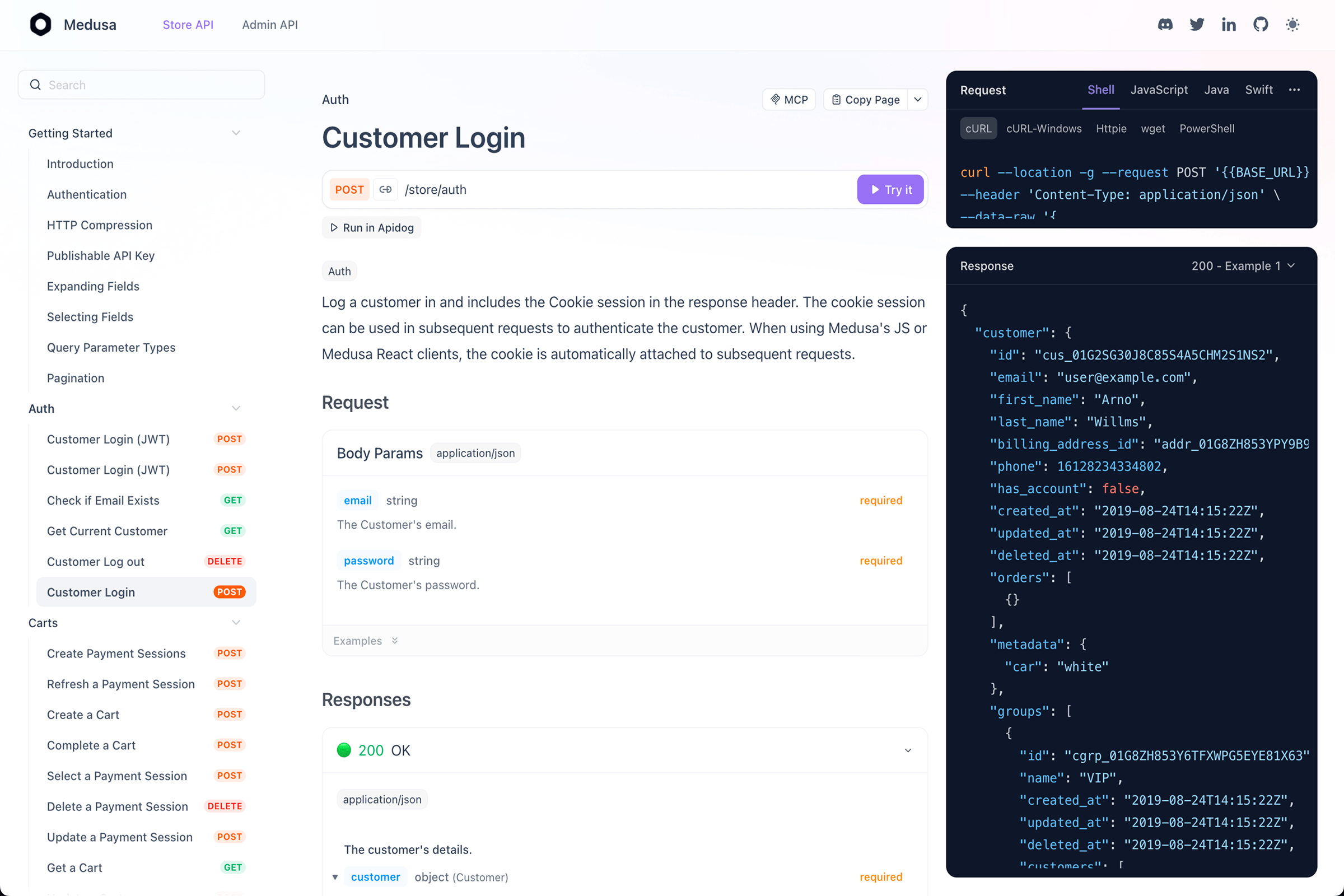
That last part matters for anyone leaving Redocly. The docs Apidog publishes aren’t a separate artifact you maintain; they regenerate whenever the spec changes. Every endpoint page ships with a working “Try it” console, code samples in 30+ languages, and your own custom domain. Compare that with Redoc, where the try-it console alone requires a paid plan.
Where it beats Redocly:
- Free plan includes hosted docs, try-it console, and unlimited projects; no per-page pricing anywhere
- API testing, mocking, and debugging are built in, so docs never drift from the actual API behavior
- Online spec editing with branch support, instead of a CLI-and-Git-only workflow
- Team collaboration with roles and real-time sync at no extra cost
Where Redocly still wins: if you want a docs-as-code pipeline with heavy CI linting rules and nothing else, the Redocly CLI is a focused tool for exactly that. For a deeper feature-by-feature breakdown, see our Apidog vs Redocly comparison.
Pricing: free for most teams; paid plans add enterprise features like SSO.
Download Apidog and import your existing OpenAPI spec; the docs render in about a minute.
2. Scalar
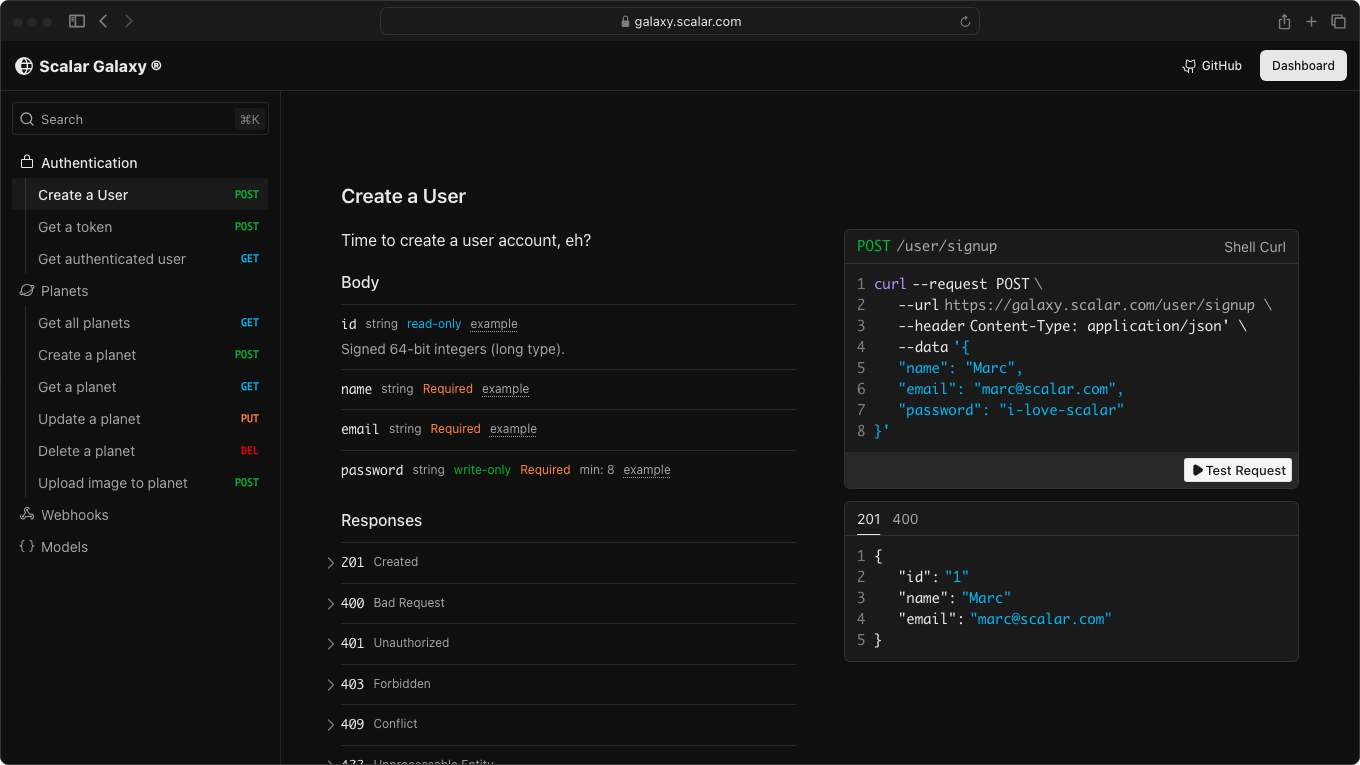
Scalar is the closest open-source successor to Redoc’s original promise: drop in an OpenAPI file, get a polished reference. The difference is the result looks current rather than like 2018, and the interactive client is free. The open-source package has over 100k weekly npm downloads and integrates directly with Fastify, Hono, Express, and .NET.
Where it beats Redocly:
- The try-it playground is free and open source; with Redoc it’s a paid feature
- Hosted Pro plan costs $24 per month, against Redocly’s $50 plus per-page charges
- First-class framework integrations make it one
app.use()call in your backend
Watch out for: Scalar focuses on API reference docs. Long-form guides, versioning workflows, and enterprise access control are thinner than Redocly’s Realm platform. Our Scalar beginner’s guide shows what the workflow looks like in practice.
Pricing: open source is free; hosted Pro is $24 per month.
3. Mintlify
Mintlify targets teams that want their docs to look like Stripe’s. It’s MDX-based, Git-synced, and ships with AI features like an assistant that answers questions from your docs. OpenAPI references render alongside guides, changelogs, and tutorials in one site.
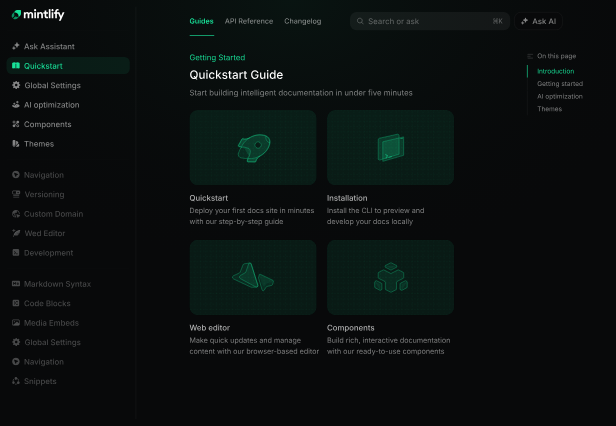
Where it beats Redocly: design quality out of the gate, and much stronger long-form content tooling. If your docs are 30% API reference and 70% guides, Mintlify’s structure fits better than a reference-first tool.
Watch out for: the Pro plan runs $250+ per month with five editor seats, which makes it one of the pricier options here; switching from Redocly for cost reasons points you elsewhere. The free Hobby tier works for side projects.
4. ReadMe
ReadMe is the veteran developer-hub platform. Beyond rendering your OpenAPI spec, it adds things Redocly doesn’t attempt: real-time API logs inside the docs, so users see their own recent requests, plus metrics on which endpoints confuse people.
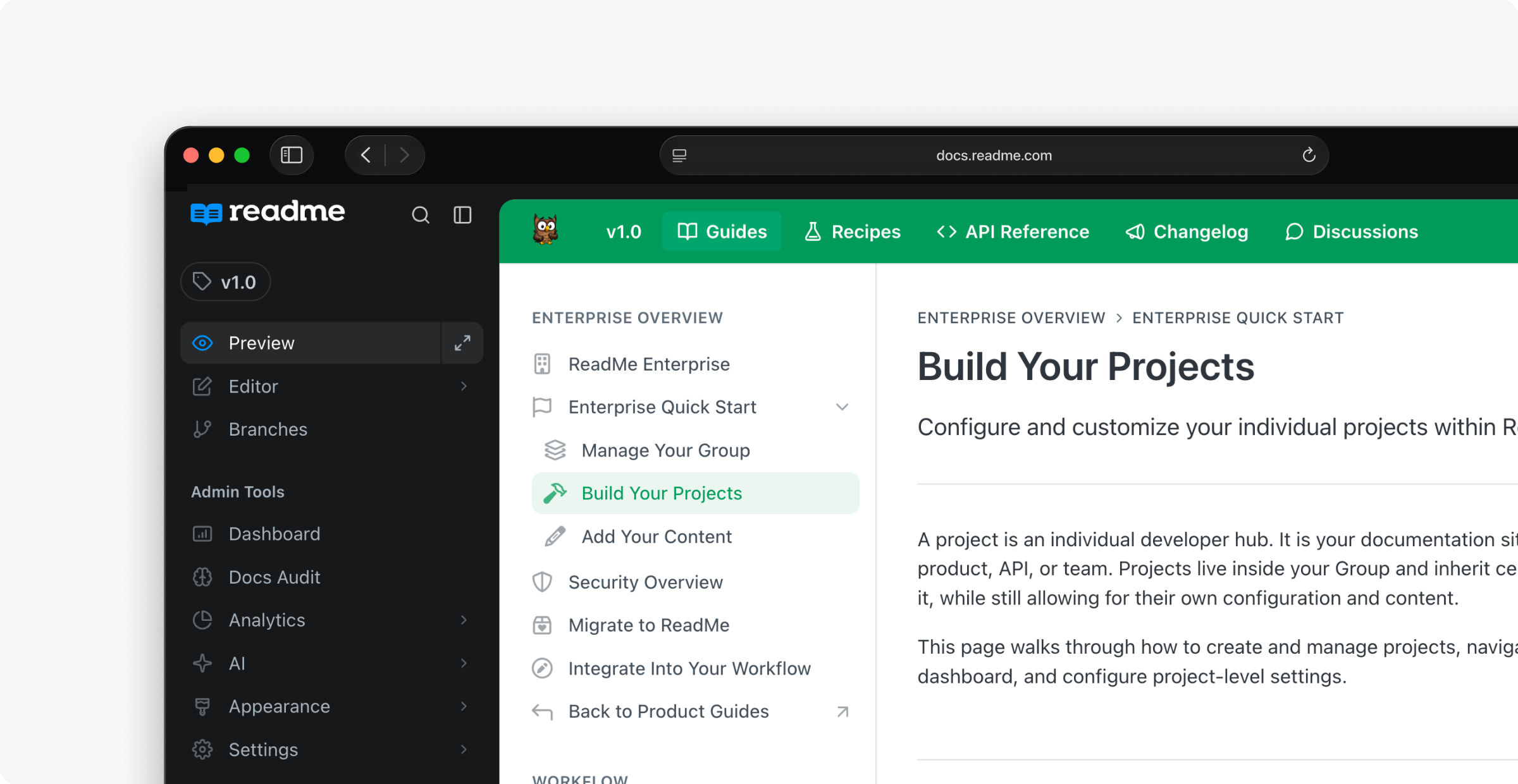
Where it beats Redocly: the personalized developer experience. When a user pastes their API key, every code sample updates with their real credentials, and support can look at their actual failed calls.
Watch out for: customization beyond the built-in theming requires their Business plan at $399 per month, and the editing experience is web-first rather than docs-as-code. Teams who love the Redocly CLI’s Git-centric flow may find ReadMe’s workflow loose. We compared the docs platforms head-to-head in Mintlify vs Scalar vs Bump vs ReadMe vs Redocly.
Pricing: free tier; paid plans from $99 per month.
5. Stoplight
Stoplight overlaps with Redocly more than any other tool on this list: both sell spec linting, style guides, and hosted docs to design-first teams. Stoplight adds a visual OpenAPI editor and built-in mock servers via Prism, which Redocly lacks.
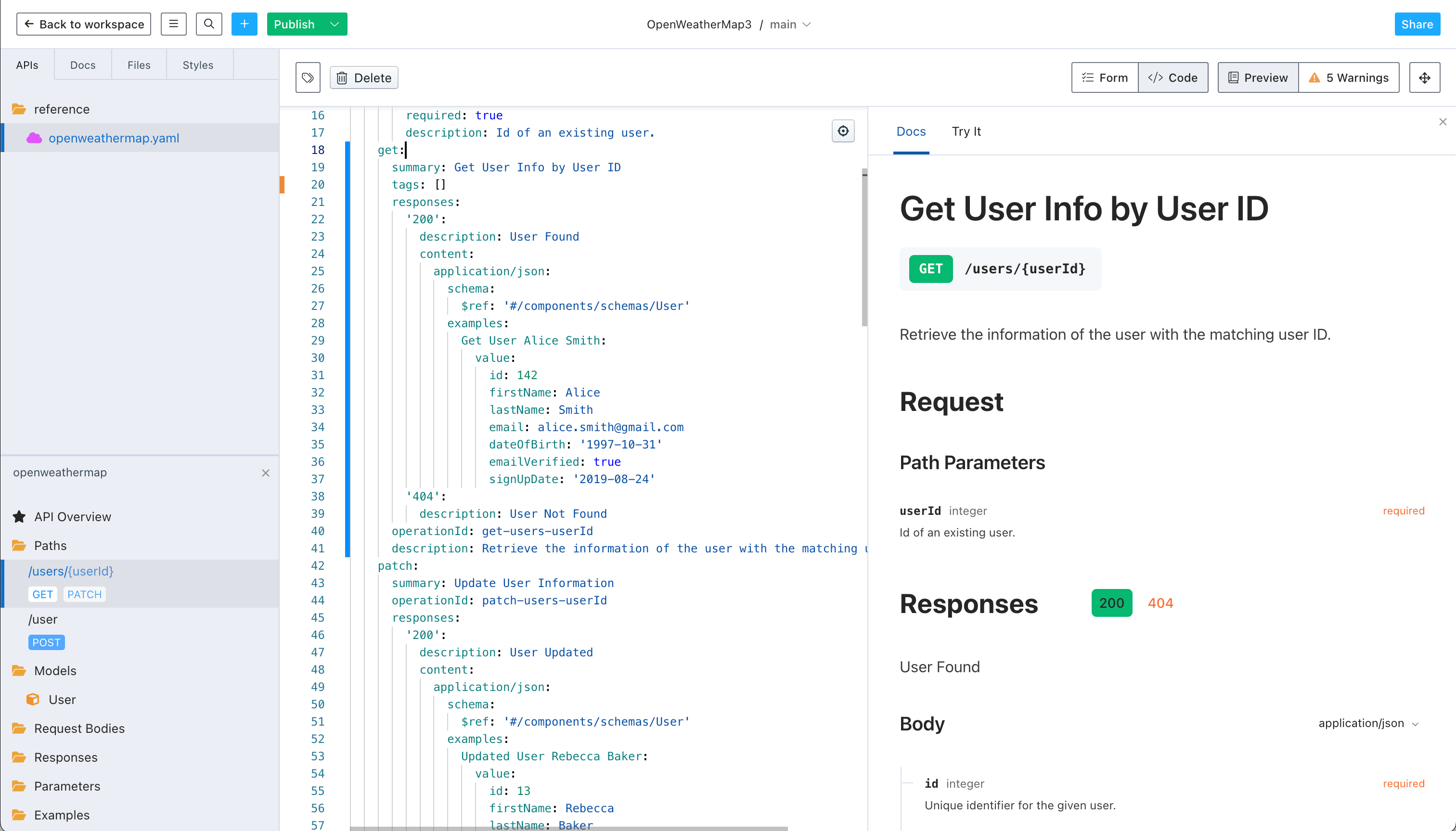
Where it beats Redocly: the visual designer lowers the barrier for teammates who don’t write YAML, and Prism mocking means frontend work can start before the backend ships.
Watch out for: since the SmartBear acquisition, Stoplight’s standalone future is murky; several features are merging into the SwaggerHub portfolio, and teams have been migrating their specs out. Evaluate with that roadmap risk in mind.
Pricing: free tier; paid plans per-user.
6. SwaggerHub
SwaggerHub is SmartBear’s hosted home for the Swagger toolchain. For organizations standardizing hundreds of OpenAPI specs with governance rules, versioning, and a central catalog, it’s the incumbent choice.
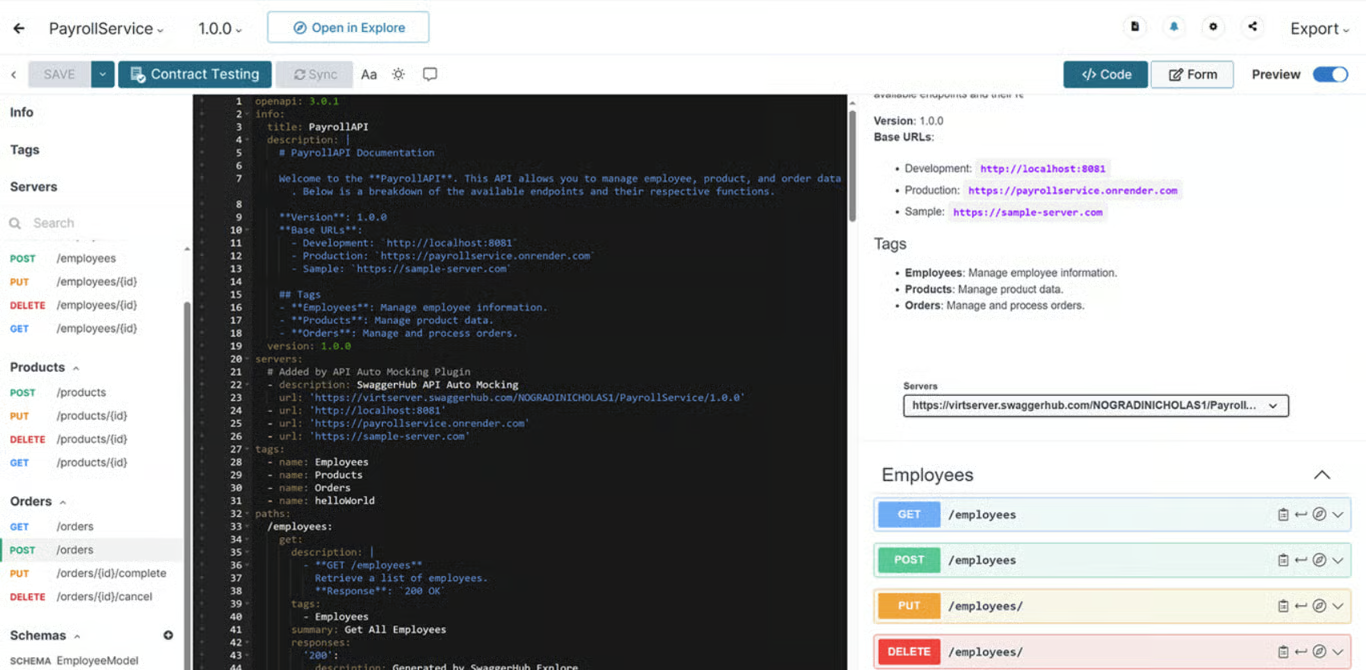
Where it beats Redocly: organization-wide standardization, domain reuse across specs, and integration with the broader SmartBear test tooling. Enterprise procurement teams already know SmartBear.
Watch out for: the rendered docs are functional but dated next to Redoc or Scalar output, and per-designer pricing adds up. The editing experience still feels like the classic Swagger editor.
7. Bump.sh
Bump.sh does one thing Redocly doesn’t: automatic API changelogs. Push a new spec version from CI and it diffs the contract, highlights breaking changes, and notifies consumers. The hosted docs themselves are clean and handle both REST and event-driven APIs (AsyncAPI).
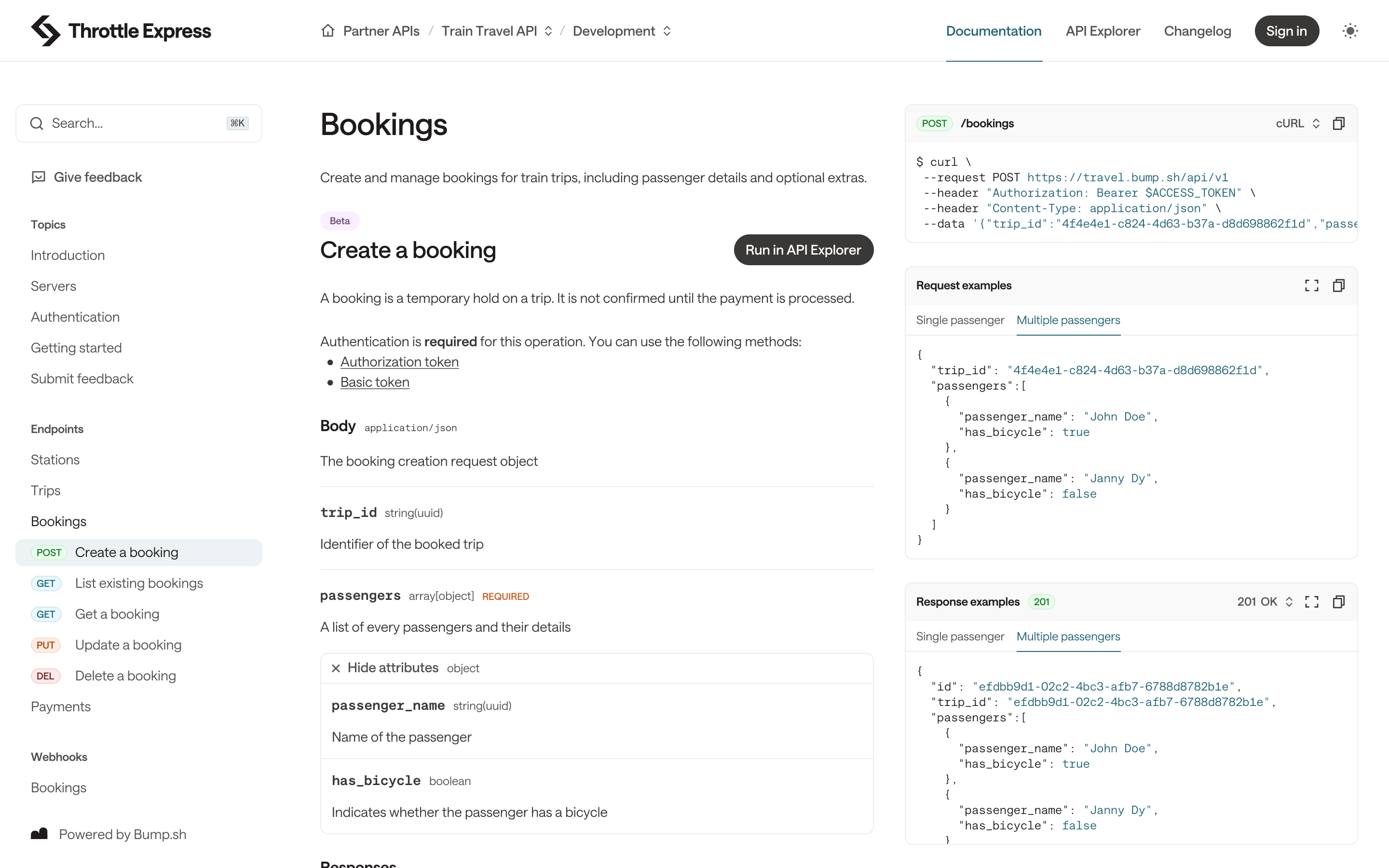
Where it beats Redocly: change management. If your main pain is consumers being surprised by API changes, Bump.sh solves that directly.
Watch out for: it’s deliberately narrow. No linting suite, no design tooling, no testing. Most teams pair it with something else, which can recreate the multi-tool sprawl you were trying to escape.
How to choose
Match the tool to the job you’re hiring it for:
| You need | Pick |
|---|---|
| Docs plus design, testing, and mocking in one tool | Apidog |
| Free, open-source reference with try-it | Scalar |
| Beautiful guides-heavy docs site | Mintlify |
| Developer hub with user-level API logs | ReadMe |
| Visual OpenAPI design and governance | Stoplight (with roadmap caution) |
| Enterprise spec catalog | SwaggerHub |
| Automatic changelogs and diff alerts | Bump.sh |
If the per-page pricing pushed you here, Apidog and Scalar remove that meter entirely. If the docs-only scope was the problem, only Apidog replaces the testing and mocking tools sitting next to Redocly in your stack. For a wider survey beyond Redocly replacements, our roundup of the 10 best REST API documentation tools covers the full field.
Before you switch: a 5-point checklist
Moving docs platforms is low-risk compared to most migrations, but a few details bite teams who skip them:
- Confirm OpenAPI version support. Export your spec and validate it first; a clean 3.0 or 3.1 file imports anywhere, but vendor extensions like
x-tagGroupsor Redocly-specific markup may need translation. Run it through one of the OpenAPI validator tools before importing. - Plan URL redirects. Redocly’s URL structure won’t match your new host’s. Map old doc URLs to new ones with 301 redirects, or you’ll bleed the search rankings the docs have earned.
- Keep your CI linting. If
redocly lintruns in your pipeline today, nothing forces you to drop it. The CLI stays useful regardless of where the docs render. - Test the try-it console against your auth. OAuth flows, API-key headers, and CORS settings behave differently across consoles. Verify a real authenticated call works before announcing the new docs.
- Check custom domain and SSL handling. Free tiers differ here: Apidog includes custom domains, Scalar gates them behind Pro at $24 per month, and others vary. Confirm the tier you’re planning to use covers your domain setup.
A half-day spike covers all five points. Import your spec into the top candidate, wire up a test domain, and make one authenticated try-it call end to end.
FAQ
Is Redoc still free? Yes. The open-source Redoc renderer remains MIT-licensed and free. The limits show up in what it leaves out: no try-it console, no multi-API search, no hosting. Tools like Scalar and Apidog include those for free.
What’s the cheapest Redocly alternative with a try-it console? Scalar’s open-source package and Apidog’s free plan both include an interactive console at no cost. Hosting interactive docs with a try-it console no longer requires a paid plan anywhere in the stack.
Can I keep my Redocly CLI linting workflow and switch the docs host? Yes. Redocly CLI is open source and works as a standalone linter in CI. Plenty of teams lint with it while publishing docs through Apidog, Scalar, or Bump.sh.
Which alternative handles docs-as-code with Git best? Mintlify, Bump.sh, and Apidog all sync from Git repos. See our comparison of API docs tools with Git integration for the setup details on each.
The fastest way to test any of these is with your own spec, not the vendor’s demo. Export your OpenAPI file, import it into Apidog or whichever tool fits your column above, and judge the output on your real API.