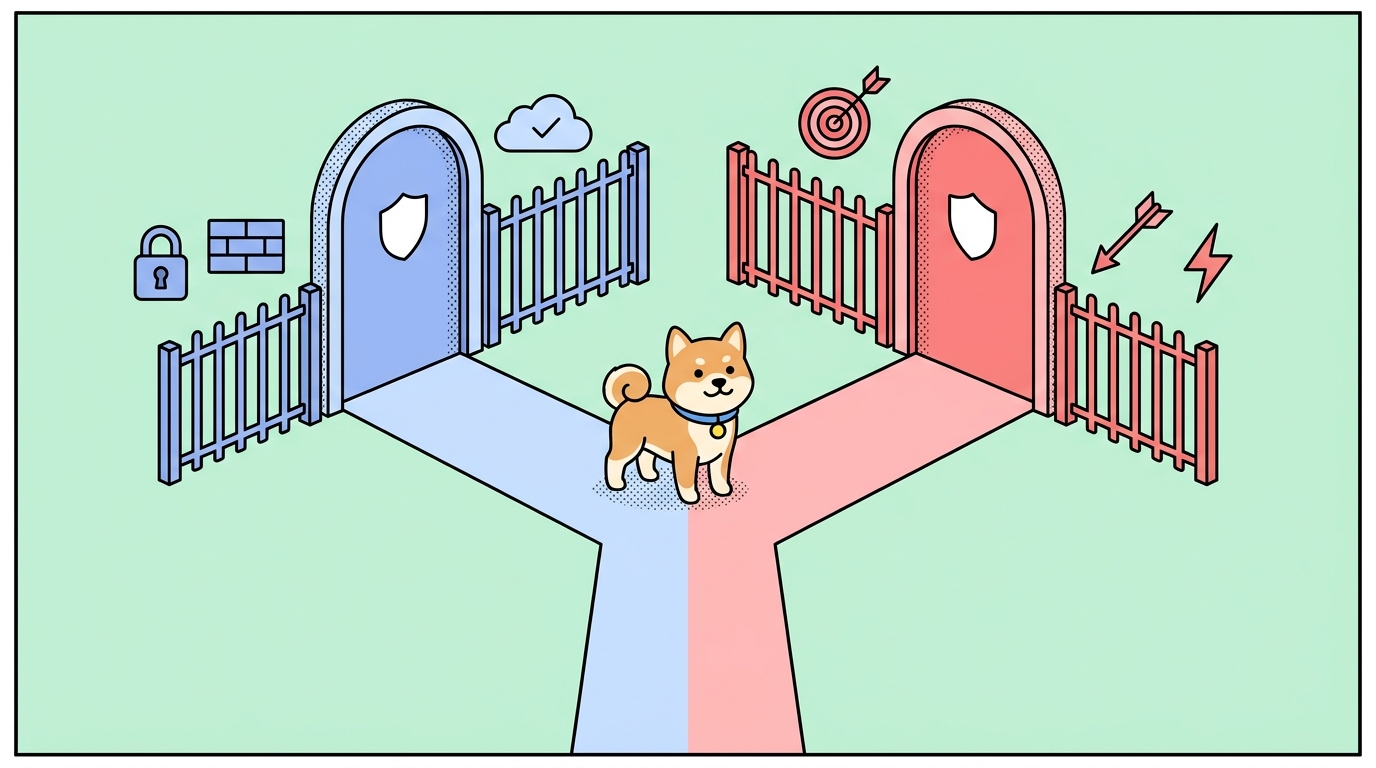
On August 10, 2026, OpenAI split its Daybreak cybersecurity program into two access tiers, Blue and Red, and they are not the same product. Blue gives approved defenders a de-guardrailed version of GPT-5.6 Sol. Red gives vetted security teams the purpose-trained cyber models, including the new GPT-5.6-Cyber. This guide explains the difference, who each tier is for, and how access actually works.
If you’re deciding which one to apply for, the short version is: most defenders want Blue, and only teams doing authorized offensive research need Red. The details matter, though, because the two tiers behave very differently on the exact prompts security work depends on.
The quick answer
| Daybreak Blue | Daybreak Red | |
|---|---|---|
| Model you get | GPT-5.6 Sol, guardrails removed | Purpose-trained cyber models, including GPT-5.6-Cyber |
| Built for | Defensive work | Offensive research and validation |
| Typical tasks | Vuln discovery, secure code review, malware analysis, incident response, patch validation | Vulnerability research, exploit validation, penetration testing |
| Advanced-cyber completion rate | 2.0% | 95.0% |
| OpenAI’s recommendation | Starting point for most defenders | Only for teams with authorized offensive scope |
The completion-rate row is the one to sit with. More on what it measures below.
What Daybreak is
Daybreak is OpenAI’s program for putting frontier cyber capability in the hands of trusted defenders. The premise, in OpenAI’s words in the Daybreak expansion announcement, is that attackers will use AI to run cyberattacks at speed and scale, so defenders need comparable tools before that happens. We covered the wider program earlier in OpenAI Daybreak vs Claude Mythos; this piece is about the new two-tier structure specifically.
The problem the tiers solve is guardrails. In normal production, OpenAI screens cybersecurity-related requests to prevent misuse. Those screens also block legitimate defensive work, like asking a model to analyze a live piece of malware or reason about an exploit in a system you’re authorized to test. Blue and Red are two different amounts of “guardrails off,” matched to two different levels of authorized work.
Daybreak Blue: de-guardrailed Sol for defenders
Daybreak Blue gives you GPT-5.6 Sol, the same flagship model available through the normal API, but with the production system-level cyber guardrails removed. Nothing about the model’s underlying training changes; you’re getting the standard Sol with fewer refusals on defensive security prompts.
That covers the bulk of real security work:
- Vulnerability discovery and secure code review
- Malware analysis and reverse engineering
- Incident detection, response, and investigations
- Vulnerability management and security assessments
- Patch validation
OpenAI recommends Blue as the starting point for most defenders, and that’s the honest call. If your work is protecting systems rather than attacking them, Blue removes the friction without handing you an exploit-generation engine you don’t need.
Daybreak Red: the cyber models, including GPT-5.6-Cyber
Daybreak Red is a different level. It gives you OpenAI’s purpose-trained cyber models, and the headline one is GPT-5.6-Cyber, built on Sol but trained to reduce refusals on higher-risk dual-use tasks and to perform better at exploit development and zero-day discovery.
Even with Blue’s guardrails off, Sol still refuses the most sensitive prompts, like generating a working exploit chain against a production system. Red’s models are trained to complete that class of request for authorized researchers. It’s aimed at:
- Vulnerability research on real targets
- Exploit validation and proof-of-concept development
- Scoped penetration tests and red-team exercises
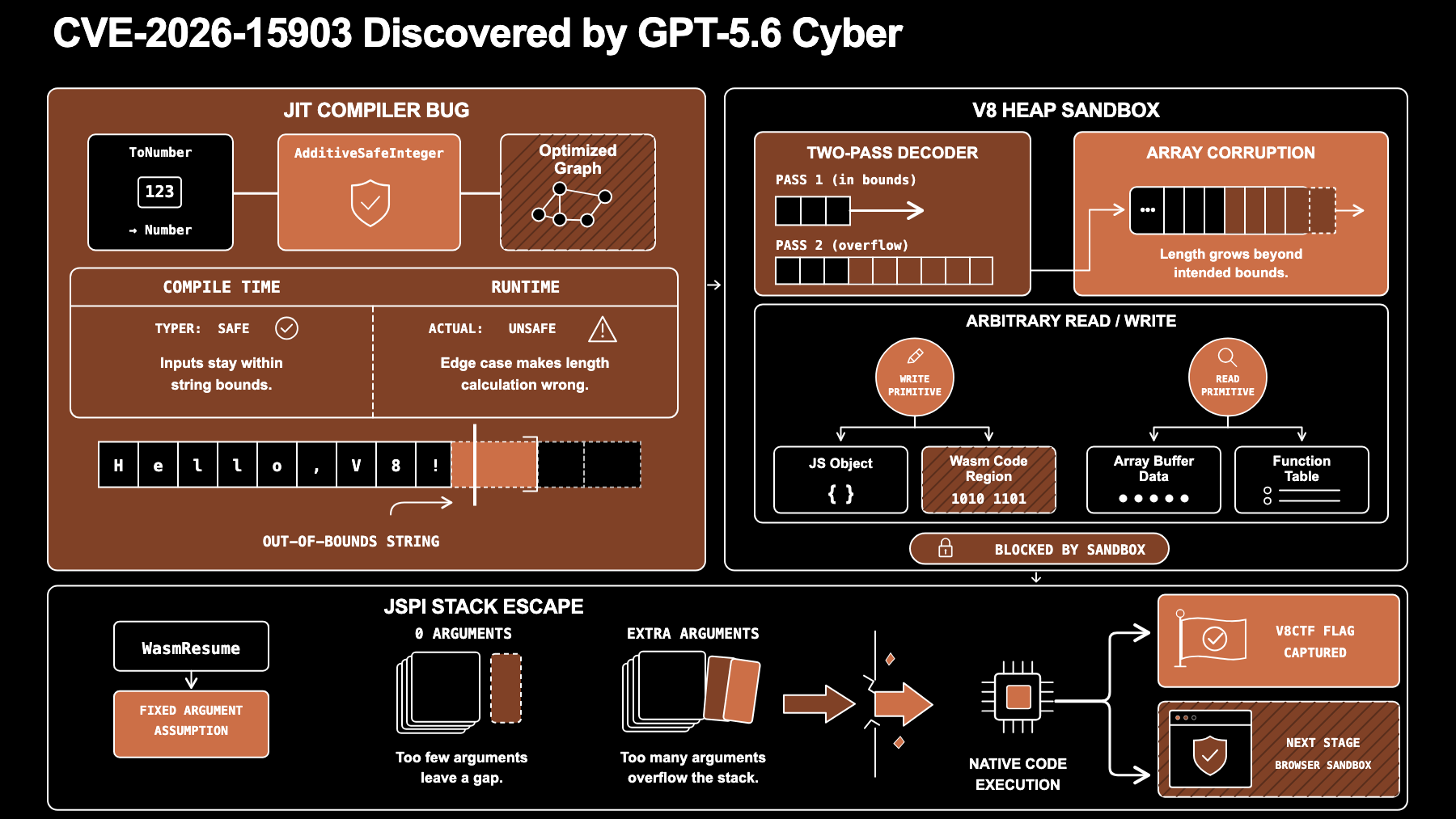
This is the tier that produced OpenAI’s launch findings: two chained V8 vulnerabilities in Chrome (CVE-2026-15903), plus reported issues across a mobile OS, a database, and an OS kernel. Powerful, and correspondingly gated.
The number that separates them
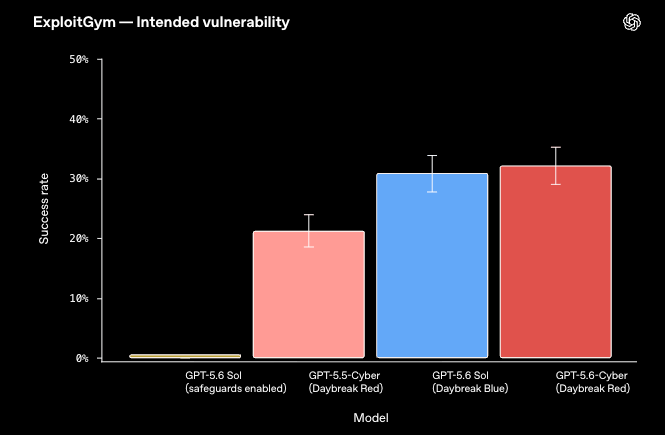
OpenAI built an internal test called the Advanced Cybersecurity Completion Rate. It measures how often a model will actually respond to prompts about exploit-chain development, authentication bypass, privilege escalation, and similar advanced scenarios. Here’s how the options compare:
- GPT-5.6-Cyber (Red): 95.0%
- GPT-5.5-Cyber (the older Red model): 57.3%
- GPT-5.6 Sol via Daybreak Blue: 2.0%
- GPT-5.6 Sol, standard guardrails: 1.5%
Two things jump out. Blue barely moves the needle on these advanced offensive prompts (2.0% vs 1.5%), which is by design; Blue is for defense. And the new Cyber model is a big jump over its predecessor (95.0% vs 57.3%), which OpenAI attributes to researcher feedback that GPT-5.5-Cyber refused too often to be useful.
How access actually works
Neither tier is self-serve. OpenAI controls access through identity verification, account security, monitoring, approved-use restrictions, and legal attestations. A few specifics worth planning around:
- You apply to the program. OpenAI vets individuals and organizations doing authorized work. You can apply through the Daybreak partners page, and OpenAI documents the mechanics in its Trusted Access for Cyber overview.
- Hardware security keys become mandatory for all individual Daybreak accounts starting September 1, 2026.
- Codex users are pushed toward auto-review mode, which evaluates elevated-permission actions before they execute and can block destructive ones, instead of full-access mode.
- Access doesn’t transfer. When a vendor embeds these models in a product, the underlying model access stays with the approved partner, not the end customer.
OpenAI’s own best-practice guidance for these models is worth repeating: sandbox and isolate the workflows, keep them off production systems and the open internet, define an explicit scope of authorized systems and actions, and keep human oversight on higher-risk steps.
Which tier do you actually need?
Start with the work, not the model. If your job is defending systems, finding and fixing your own vulnerabilities, analyzing incidents, or reviewing code, Blue is the right and sufficient tier. Applying for Red because it sounds more capable is the wrong instinct; you’d be requesting exploit-generation access you have no authorized use for, which makes verification harder and adds risk you don’t need.
Red is for teams with an explicit, authorized offensive mandate: pentest firms, red teams, and vulnerability researchers operating under clear rules of engagement. If that’s not you, Blue covers it.
What to do while you wait, or if you can’t get in
Most teams won’t get Daybreak Red access, and most don’t need it. The highest-impact security work is still the unglamorous kind: making sure your own APIs enforce the boundaries you think they do.
You don’t need a frontier cyber model to test that. With an API client like Apidog, you can:
- Send requests with missing, expired, and valid tokens and assert each returns the right status code. This is the same least-privilege thinking that applies to your agents; see what your AI agent’s API key can actually do.
- Verify transport security, including client certificates and mTLS.
- Schedule contract tests so a regression shows up on the day it ships.
The lesson from this year’s breaches, including the Hugging Face incident, is that the exploited weakness is usually a boring one: a token with too much scope, an endpoint that skipped an auth check. Download Apidog and close those first.
Frequently asked questions
What’s the difference between Daybreak Blue and Red in one sentence? Blue gives defenders GPT-5.6 Sol with production guardrails removed for defensive work; Red gives vetted teams the purpose-trained cyber models, including GPT-5.6-Cyber, for authorized offensive research.
Do I need Red to use GPT-5.6-Cyber? Yes. GPT-5.6-Cyber is available only through Daybreak Red. Blue gives you Sol, not Cyber.
How do I apply for Daybreak access? Through OpenAI’s Daybreak partners program. Expect identity verification, legal attestations, monitoring, and, from September 1, 2026, mandatory hardware security keys on individual accounts.
Is Daybreak the same as the government-gated GPT-5.6 access? No. Daybreak is about cybersecurity access tiers. The separate question of government preview and export gating for the base models is covered in GPT-5.6 is government-gated.
What if I just want to secure my own APIs? You don’t need Daybreak at all. Run auth boundary tests, transport-security checks, and scheduled contract tests against your own endpoints with a tool like Apidog.