
No. Anthropic’s own pricing table answers it in one row: under Models and usage, the Opus line reads No for Free. The free Claude plan gets Sonnet and Haiku. Reaching Opus, Opus 5.5 included, takes a paid plan, and the cheapest one is Pro at $17 per month on annual billing, which is $200 charged up front, or $20 billed monthly. Max starts at $100 per month. On the API the answer is the same in a different shape: claude-opus-5-5 is pay as you go from the first token, with no free tier underneath it.
That is the honest answer, stated first so nobody has to scroll for it. The rest of this article is the useful part: the routes that genuinely let you run Opus 5.5 without paying up front, and the arithmetic that makes the paid path as cheap as it legitimately gets. Opus 5.5 lists at $4 per million input tokens and $20 per million output, 20% below Opus 5’s $5 and $25, and the levers below cut a real bill to a fraction of that. Once you are calling the API, Apidog is where you send those requests and read the cost back out of the response.
The previous generation’s version of this question lives in how to use Claude Opus 5 for free, which remains the record for claude-opus-5 rates and plan access; this post is the Opus 5.5 answer, and the numbers differ. For the full spec sheet, see what is Claude Opus 5.5, and for why three frontier models shipped on one day, the September 2026 AI model price war.
What the free Claude plan actually includes
Anthropic’s pricing page gates access by model family rather than by point release, so this row decides Opus 5.5 the same way it decided Opus 5.
| Model | Free | Pro | Max 5x | Max 20x |
|---|---|---|---|---|
| Opus | No | Yes | Yes | Yes |
| Sonnet | Yes | Yes | Yes | Yes |
| Haiku | Yes | Yes | Yes | Yes |
| Fable | No | Usage credits | 50% of weekly limits | 50% of weekly limits |
The free plan is not empty. It is Sonnet and Haiku, which handle a great deal of ordinary drafting, summarizing and question answering at no cost. What it does not include is the Opus tier, and no amount of prompt wrangling moves a free account onto it. If Sonnet is enough for your work, how to use Claude Sonnet 5 for free covers that route.
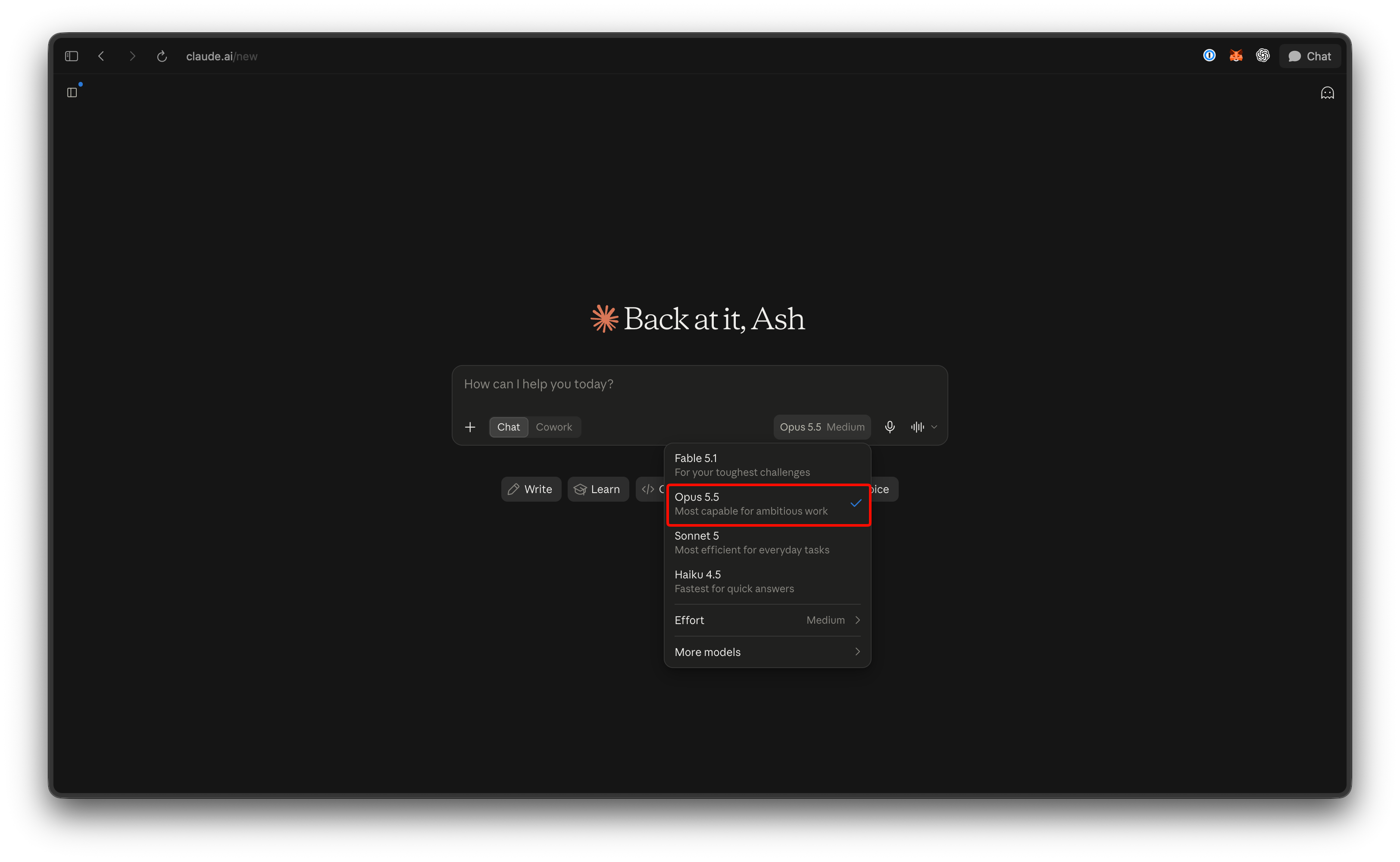
Two related facts fall out of the same table. Claude Code is included in the paid plans and not in Free, so an Opus-powered coding agent is a subscription feature. And usage limits reset on a rolling five hour window, with weekly limits layered on the paid tiers. That is not a daily allowance: a heavy hour at 09:00 still shapes what you can do at 13:00.
The cheapest subscription that reaches Opus 5.5
If the goal is Opus inside the Claude apps, Pro is the floor. Annual billing works out to $17 per month and is charged as $200 up front, so the cheaper rate carries a real commitment. Monthly billing is $20 and cancels whenever you like. Max starts at $100 per month, and it exists for people who hit Pro’s limits rather than for people who want a different model list, because the Opus row reads Yes on both.
So pick on usage, not on capability. Run a normal week on Pro and see whether you stall against the five hour reset.
The genuinely free API routes, and where they stop
Two routes let you call claude-opus-5-5 without paying first. Both are credit balances, so both end.
New account credits on the Anthropic API. A new account typically starts with a small balance, enough to confirm the integration works and to measure real token counts on your own prompts before a card is attached.
Cloud promotional credits. Anthropic lists Opus 5.5 on the Claude Platform, AWS, Google Cloud and Azure, and all three clouds run promotional credit offers for new accounts. Read each provider’s current offer directly, since amounts and terms change often enough that any figure printed here would be stale within a month.
Spend that balance on measurement rather than production traffic. Run your real prompts once, record the usage block from every response, and you will know your cost per task before you commit to anything.
There is no free unlimited API path
Worth saying flatly, because this question attracts dishonest answers. No tier of the Claude API gives unmetered claude-opus-5-5 calls, and no proxy, shared key pool or reseller legitimately grants free frontier-model access. Those schemes break Anthropic’s terms, get revoked, and route your prompts through infrastructure you do not control. When the balance runs out you pay per token or you stop.
The cheapest paid path
Base rate is $4 input and $20 output per million tokens. Here is what actually moves that number, in order of impact.
Lever 1: prompt caching, a 95% cut on repeated input
Opus 5.5 reads cached input at $0.20 per million tokens against a $4 standard input rate. That is 95% off the part of your prompt that does not change. Cache writes bill at $5 per million, a 25% premium over standard input, paid once.
The premium is small enough that break-even arrives almost immediately. Take a 50,000 token stable prefix, a tool schema plus a chunk of an OpenAPI spec:
- Uncached: 50,000 tokens at $4 per million is $0.20 on every single call.
- Cache write: 50,000 tokens at $5 per million is $0.25, once.
- Every hit after that: 50,000 tokens at $0.20 per million is $0.01.
Two calls uncached cost $0.40. Two calls with a write and a hit cost $0.26, so you are ahead before the second response finishes. Twenty calls cost $4.00 uncached and $0.44 cached, which is 11% of the bill. The full caching cost model works through agent loops, multi-tenant prefixes and the hit rates where this stops paying.
The expensive mistake is caching the wrong half of the prompt. A prefix that changes on every request never gets a hit, so you pay the 25% write premium forever and receive nothing back.
Lever 2: the Batch API, 50% off
Anything that does not need an answer in the next few seconds belongs in Anthropic’s Batch API, which runs asynchronously at half the standard rate. Applied to Opus 5.5’s list price that is $2 input and $10 output per million tokens, which is our arithmetic on a stated 50% discount rather than a separately published rate.
More workloads fit this than teams expect: nightly evaluation runs, bulk document processing, backfilled classification, regression suites over a spec. The cost is latency and nothing else. Same model, same request, same quality. If you are modeling batch and caching together, verify on your own invoice how the 50% interacts with cached-token rates before promising anyone a combined saving.
Lever 3: leave fast mode off
Fast mode bills at $8 input and $40 output per million tokens, exactly double the standard rate. It is a latency purchase and the easiest line item to remove from a bill that is optimizing for cost. Pay double only where somebody is watching tokens appear. Everything else runs at $4 and $20, or $2 and $10 through batch.
Lever 4: check that Opus is the right tier at all
Sometimes the cheapest path is a smaller model. The same week Opus 5.5 shipped, GPT-6 Luna arrived at $0.10 input and $0.50 output per million tokens with a 1,000,000 token context window, a fortieth of Opus 5.5’s input rate for a comparable window. Bulk classification, extraction and routing rarely need Opus-tier reasoning, and what is GPT-6 Luna covers where that tier holds up. Test the gap before you spend a month optimizing the expensive model’s bill.
Cost at a glance
| Configuration | Input per Mtok | Output per Mtok | Best for |
|---|---|---|---|
| Standard | $4.00 | $20.00 | Interactive default |
| Batch API, 50% off (our arithmetic) | $2.00 | $10.00 | Anything asynchronous |
| Cached input reads | $0.20 | n/a | Repeated long-context calls |
| Cache writes | $5.00 | n/a | Paid once per prefix |
| Fast mode | $8.00 | $40.00 | Latency-critical paths only |
| Claude Opus 5, for reference | $5.00 | $25.00 | The model you are migrating off |
Migrating is an id swap plus a regression run, and the Opus 5 to Opus 5.5 migration notes cover the rest of what changes for a caller.
Proving the savings in Apidog
Every lever above shows up in one HTTP response, which makes an API client the fastest way to confirm you are spending less. Start from a baseline call:
curl https://api.anthropic.com/v1/messages \
  --header "x-api-key: $ANTHROPIC_API_KEY" \
  --header "anthropic-version: 2023-06-01" \
  --header "content-type: application/json" \
  --data '{
    "model": "claude-opus-5-5",
    "max_tokens": 8192,
    "messages": [
      {"role": "user", "content": "Summarize this OpenAPI spec in three sentences."}
    ]
  }'
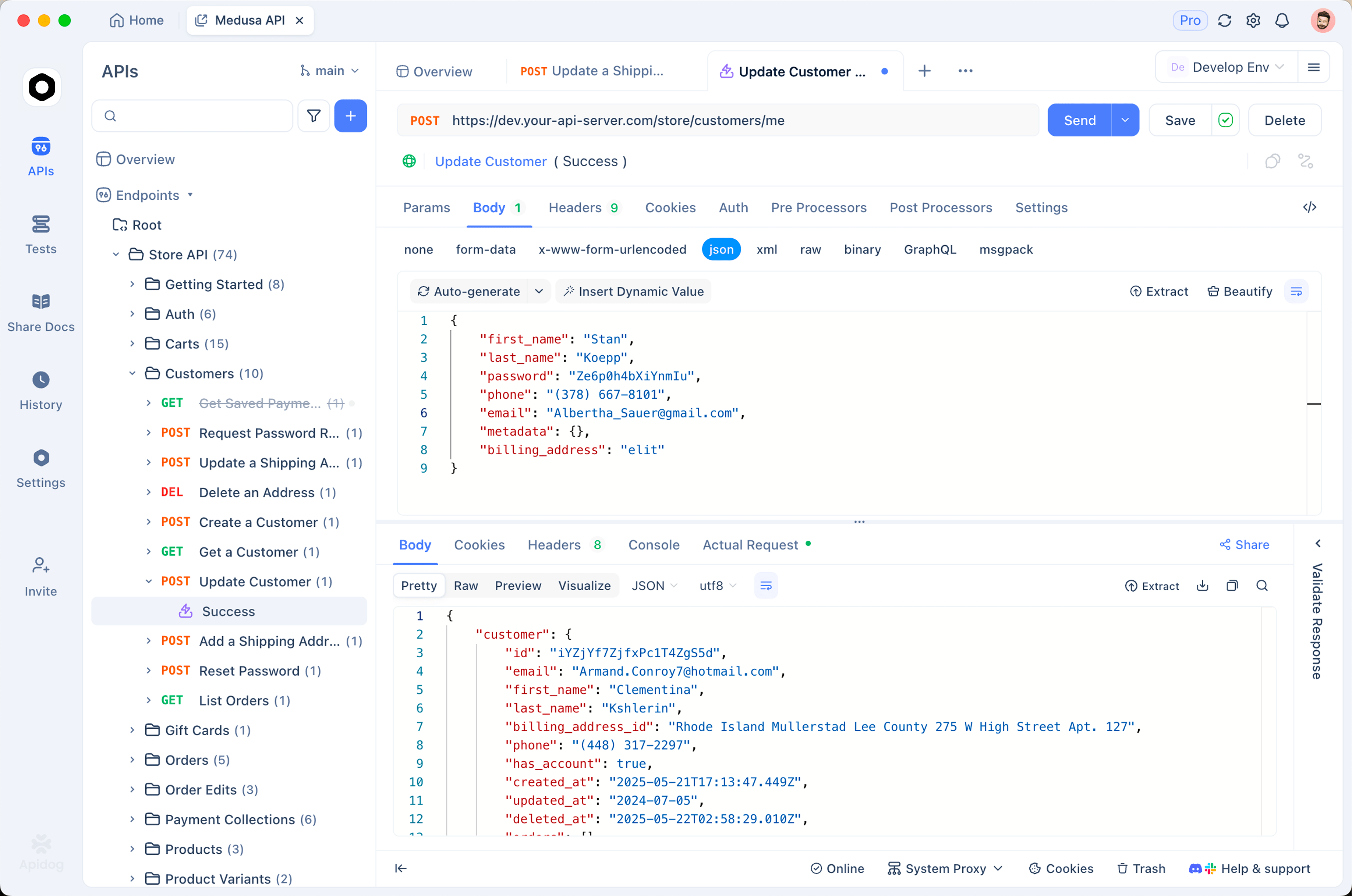
In Apidog, save that as a POST request with the key in an environment variable rather than pasted into the body, so it never reaches a shared collection. From there:
- Confirm cache hits. Send the same long-prefix request twice and assert that
cache_read_input_tokensis non-zero on the second call. If it stays at zero, your breakpoint is in the wrong place and you are paying $4 per million for input you thought cost $0.20. - Watch for truncation. Opus 5.5 allows a 128,000 token maximum output, so a
stop_reasonofmax_tokensmeans you paid for output you never received. Assert on it. - Compare batch against standard. Run the same prompt both ways, record the token counts, and you have your own cost-per-task figure rather than a vendor’s.
Download Apidog to follow along, and cut your Claude API bill goes wider across the lineup.
If free is the hard requirement
Then Opus 5.5 is not your model, and that is fine. Claude Free gives you Sonnet and Haiku, with no credit card and no trial clock. And on the other side of the September launches, GPT-6 Luna is genuinely free on OpenAI’s Free and Go tiers, in the desktop app specifically, though not in Chat yet.
Neither is Opus, and neither is an API key: both are chat-app access, not a programmatic route. Both beat a key pool that stops working in a fortnight.
FAQ
Is Claude Opus 5.5 free? No. Anthropic’s pricing table lists Opus as unavailable on the Free plan, which carries Sonnet and Haiku instead. Opus needs Pro at $17 per month on annual billing, $200 up front, or $20 monthly, or Max from $100 per month.
Can I get free Claude Opus 5.5 API access? Only through new-account credits on the Anthropic API or promotional credits on AWS, Google Cloud or Azure, all of which carry Opus 5.5. Each is a finite balance. There is no free unlimited API tier and no legitimate third party can grant one.
What is the cheapest legitimate way to run Opus 5.5 at volume? Prompt caching on any stable prefix, at $0.20 per million read against $4 standard input, plus the Batch API at half price for anything asynchronous. Leave fast mode off; it doubles both sides of the meter.
Is Claude Code free with Opus 5.5? No. Claude Code is included in the paid plans only. Usage limits reset on a rolling five hour window, and paid plans also carry weekly limits, so an agent running long sessions feels the ceiling before a chat user does.