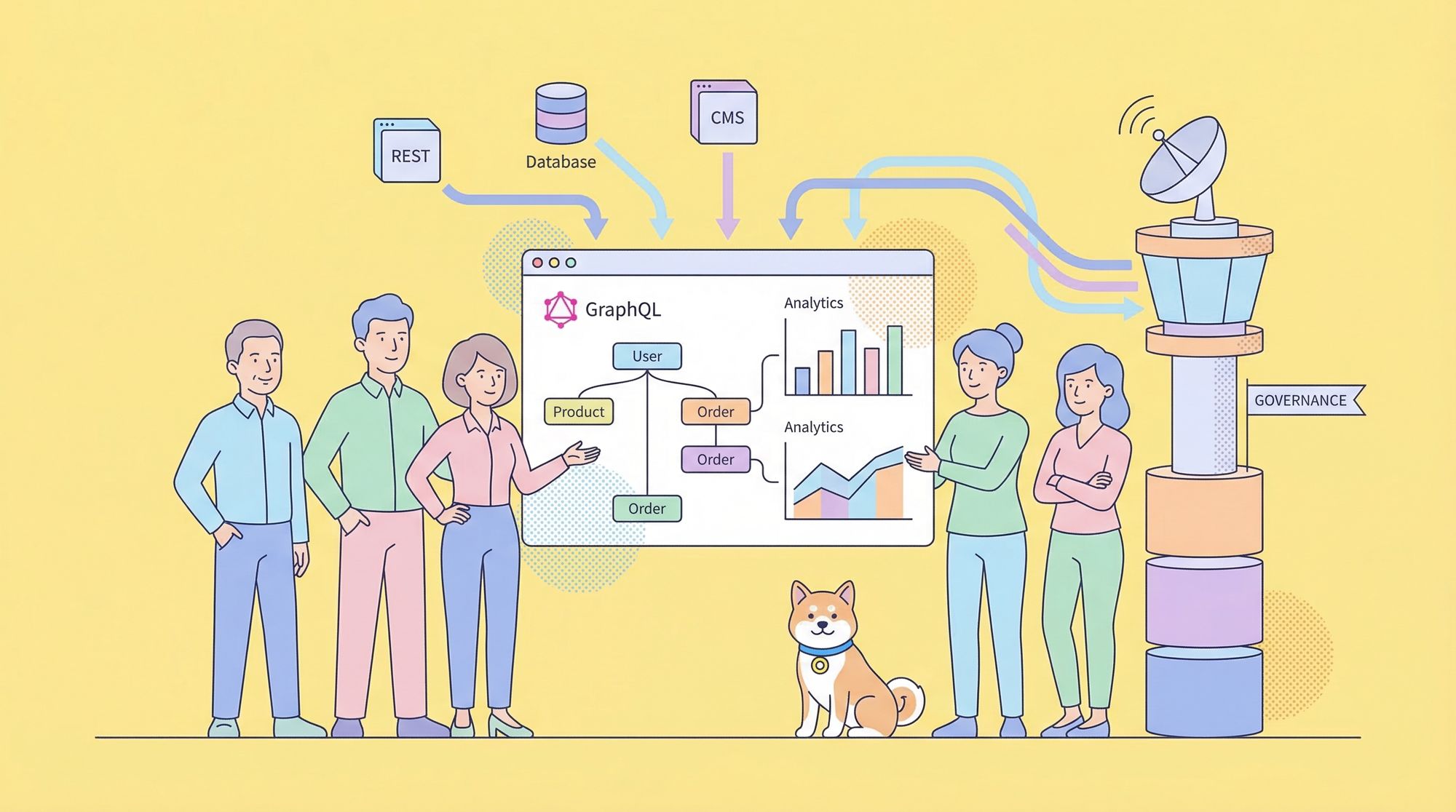
GraphQL has transformed the way modern applications access and manipulate data, but its flexibility also introduces new challenges for organizations looking to manage APIs at scale. GraphQL API Management Platforms have emerged as essential tools for efficiently governing, securing, and optimizing GraphQL APIs throughout their lifecycle. In this comprehensive guide, we’ll define what GraphQL API management platforms are, explain why they matter, outline core features, discuss real-world examples, and show how platforms like Apidog empower teams to harness the full power of GraphQL.
What Are GraphQL API Management Platforms?
GraphQL API management platforms are specialized software solutions designed to oversee the entire lifecycle of GraphQL APIs—from design and deployment to monitoring, security, and analytics. Unlike traditional REST API management, these platforms are tailored to address the unique characteristics of GraphQL, such as its single-endpoint model, dynamic query structure, and deep data fetching capabilities.
Why Do Organizations Need GraphQL API Management Platforms?
While GraphQL offers unmatched flexibility for frontend and backend teams, it also poses unique operational risks:
- Complex Query Handling: Clients can craft arbitrary queries, which may lead to excessive data fetching or expensive server operations.
- Security & Governance: The dynamic nature of GraphQL requires new approaches for authorization, rate limiting, and schema evolution.
- Performance Optimization: Caching, query cost analysis, and response optimization are crucial for scalability.
- Developer Experience: Providing clear, interactive documentation and testing tools is essential for API consumers.
GraphQL API Management Platforms address these challenges, providing structured tools and workflows to manage, monitor, and secure GraphQL APIs at scale.
Key Features of GraphQL API Management Platforms
To effectively manage GraphQL APIs, platforms must offer a set of core features purpose-built for the GraphQL paradigm.
1. Schema Management & Versioning
Managing the GraphQL schema—the contract between frontend and backend—is critical. Leading platforms provide:
- Schema evolution tracking: Manage breaking and non-breaking changes.
- Automated documentation generation: Keep reference docs in sync with schema updates.
- Schema validation and linting: Ensure changes are safe and follow best practices.
Pro Tip: Apidog supports robust schema definition, interactive documentation, and change tracking, helping teams avoid breaking changes during development.
2. Query Governance & Security
Because clients can send complex queries, GraphQL API Management Platforms must offer:
- Query complexity analysis: Prevent resource-intensive queries before execution.
- Depth limiting: Restrict how deep a single query can traverse the schema.
- Rate limiting and throttling: Protect backend resources from abuse.
- Granular authorization: Enforce user- and field-level access control.
3. Performance Optimization
Optimizing the performance of GraphQL APIs is vital:
- Advanced caching strategies: Cache query results intelligently based on query structure and variables.
- Persistent queries: Predefine allowed queries to reduce server processing and improve security.
- Query cost analysis: Monitor and limit resource usage per query.
4. Monitoring, Logging, and Analytics
Visibility is key for reliable operations:
- Real-time monitoring: Track API health, usage, and error rates.
- Detailed logging: Capture query payloads, execution time, and performance bottlenecks.
- Analytics dashboards: Visualize API adoption, usage trends, and client behaviors.
5. Developer Portals & Collaboration
Empowering API consumers is a core function:
- Interactive playgrounds: Enable developers to test queries and mutations live.
- Online documentation: Always up-to-date docs generated from the schema.
- Feedback mechanisms: Allow developers to report issues or request features.
Apidog automatically generates interactive GraphQL documentation and provides a built-in playground, making internal and external collaboration smoother.
6. Lifecycle Management & Automation
Supporting the full API lifecycle:
- CI/CD integration: Automate schema validation, deployment, and testing.
- Mocking and sandboxing: Simulate API responses for frontend or testing teams.
- Rollback and migration tooling: Safely revert schema changes if issues arise.
Leading GraphQL API Management Platforms
Apidog
Apidog stands out by integrating spec-driven API design, mocking, testing, and documentation for both REST and GraphQL APIs in a unified platform. Its collaborative workspace and CI/CD integrations enable streamlined GraphQL API management across teams.
Apollo GraphOS
A GraphQL-native platform offering schema management, federation, security, and deep analytics. Apollo GraphOS is popular for organizations adopting GraphQL at scale and seeking strong governance.
Tyk
Tyk provides multi-protocol API management, with robust native support for GraphQL. Features include intuitive dashboards, extensive security controls, and deployment flexibility (cloud, hybrid, on-prem).
Kong Gateway
Kong supports REST, gRPC, and GraphQL APIs, offering plugins for authentication, rate limiting, and analytics. Its extensibility makes it suitable for diverse API ecosystems.
Gravitee.io
An open-source API management platform supporting REST and GraphQL, focused on design-first workflows, traffic management, and comprehensive monitoring.
WunderGraph
Purpose-built for federated GraphQL deployments, WunderGraph excels in complex microservices environments needing efficient cross-service data access.
Azure API Management
Microsoft’s Azure API Management service now provides robust support for GraphQL APIs, including schema import, policy enforcement, and developer portals.
How Do GraphQL API Management Platforms Work?
Most GraphQL API Management Platforms operate as gateways or proxies between clients and the GraphQL server. Here’s a typical workflow:
1. Client sends a GraphQL query to the managed endpoint.
2. Gateway intercepts the query, applying schema validation, complexity analysis, and access control policies.
3. Authenticated and authorized queries are forwarded to the backend.
4. Results are cached, logged, and monitored for analytics and troubleshooting.
5. Responses are returned to clients, with potential optimizations or transformations applied.
Some platforms, like Apidog, also offer design-time tools—interactive schema editors, documentation generators, and test automation—to boost productivity and ensure reliable API delivery.
Practical Examples of GraphQL API Management Platforms
Example 1: Scaling E-commerce APIs
An online retailer migrates from REST to GraphQL to speed up their mobile app. They deploy Tyk as their GraphQL API Management Platform to:
- Limit query depth to prevent expensive data fetching.
- Enforce rate limits on public API consumers.
- Monitor query patterns and identify slow resolvers.
- Provide interactive docs for external partners.
Example 2: Enterprise Data Federation
A large enterprise uses Apollo GraphOS to federate multiple microservices into a unified GraphQL schema. Their API management platform:
- Tracks schema changes and ensures safe rollout of new fields.
- Enables granular field-level authentication (e.g., HR data vs. public catalog).
- Surfaces analytics on which teams use which parts of the schema.
Example 3: Rapid Prototyping and Testing with Apidog
A startup leverages Apidog for GraphQL API management to:
- Rapidly design and iterate on their GraphQL schema.
- Generate mock endpoints for frontend teams to develop against, even before the backend is ready.
- Automatically publish up-to-date documentation for all team members.
- Integrate API tests into their CI/CD pipeline to catch breaking changes early.
Best Practices for Using GraphQL API Management Platforms
1. Design for Governance: Use schema versioning and documentation tools to maintain clarity as your API evolves.
2. Prioritize Security: Apply query complexity analysis and depth limiting to protect backend systems.
3. Monitor Proactively: Leverage analytics dashboards to understand usage and anticipate scaling needs.
4. Empower Developers: Provide interactive documentation and sandboxes to support rapid integration.
5. Automate Lifecycle Tasks: Integrate schema validation and API testing into automated pipelines.
Choosing the Right GraphQL API Management Platform
Consider these factors when selecting a platform:
- GraphQL-native vs. multi-protocol: Do you need pure GraphQL features, or support for REST/gRPC as well?
- Deployment model: Cloud, on-premises, or hybrid?
- Integration ecosystem: Does it fit with your CI/CD, identity providers, and monitoring tools?
- Collaboration tools: Does it enable easy teamwork, documentation, and feedback loops?
- Usability: Is the platform intuitive for your developers and API consumers?
Pro Tip: Apidog is ideal for teams seeking a collaborative, spec-driven approach to GraphQL API design, documentation, and testing, all in one place.
Conclusion: Unlocking the Potential of GraphQL with API Management Platforms
The rise of GraphQL has made API management more critical—and more complex—than ever before. GraphQL API Management Platforms deliver the specialized capabilities required to securely scale, monitor, and govern modern GraphQL APIs. By providing tools for schema management, security, performance optimization, and developer experience, these platforms help organizations realize the full value of GraphQL while minimizing operational risks.
Whether you’re building a greenfield project or modernizing legacy APIs, investing in a robust GraphQL API Management Platform—like Apidog, Apollo GraphOS, or Tyk—will accelerate development, enhance security, and ensure your APIs are ready for the demands of today’s digital landscape.