
Z.ai now sells two models with nearly the same name, the same 1M-token context window, and a nine-fold price difference between them. The naming does not help you choose. “Flash” implies a smaller, faster, weaker variant, and only one of those three words is accurate.
Here is the short version: GLM-5.3-Flash is cheaper, handles images natively, and gives coding-plan users three times the quota. GLM-5.3 is somewhat smarter and generates almost twice as fast. For most workloads, Flash is the correct default and the burden of proof is on choosing the expensive one.
This post works through where that rule breaks.
The comparison table
| GLM-5.3-Flash | GLM-5.3 | |
|---|---|---|
| Intelligence Index (Artificial Analysis) | 57 | 60 |
| Blended price per 1M tokens | $0.10 | $0.90 |
| List input / output per 1M | $0.15 / $0.50 | $1.40 / $4.40 |
| Output speed | ~49 tokens/sec | ~86 tokens/sec |
| Time to first token | 1.52s | 1.57s |
| Context window | 1,048,576 | 1,048,576 |
| Native image input | Yes | No, adapter-based |
| Parameters | 320B total / 18B active | Larger, not fully disclosed |
| License | MIT, open weights | Open weights |
| Coding Plan quota | 3x | 1x |
Speed and intelligence figures are Artificial Analysis measurements. Pricing is Z.ai list, before the launch discount discussed below.
Where the nine-fold price gap comes from
GLM-5.3-Flash is a 320B mixture-of-experts model activating 18B parameters per token, built on a new base with hybrid linear and sparse attention. Z.ai reports roughly three times less attention compute than GLM-5.3 and a KV cache about 4.4 times smaller.
KV cache size is the thing that makes long-context serving expensive. Cutting it by 4.4x is most of the reason Z.ai can offer a 1M-token window at a tenth of the price. You are not paying less for a shorter context or a weaker model. You are paying less because the serving footprint per request is genuinely smaller.
That is a real engineering result rather than a promotional discount, which matters for whether the price holds.
What the three-point intelligence gap means
57 versus 60 on the Artificial Analysis Intelligence Index is a narrow gap in absolute terms. For calibration, the median open-weight model of comparable size scores 27, so both of these sit far above the field.
Three points is not nothing, though. Index gaps of that size typically show up as: slightly worse performance on multi-step reasoning chains, a bit more drift on very long agentic tasks, and more sensitivity to ambiguous instructions. They rarely show up on straightforward extraction, classification, summarization, or single-file code edits.
The practical test is whether your task has a verifiable answer. If you can check the output programmatically, Flash’s occasional miss is cheap to catch and cheap to retry, and at a ninth of the price you can retry a lot. If your task produces prose that a human has to read and judge, the quality difference is harder to recover from and the price gap matters less than the outcome.
Speed is the one place Flash actually loses
This is the part the name gets backwards. GLM-5.3 generates at roughly 86 tokens per second. GLM-5.3-Flash manages about 49. The bigger, more expensive model is nearly twice as fast at producing output.
Time to first token is effectively tied, at 1.52 against 1.57 seconds, so both feel equally responsive at the start of a response.
The consequence depends entirely on output length:
- Short responses. Irrelevant. Both start in about 1.5 seconds and finish before anyone notices the throughput difference.
- Long generations. A 4,000-token response takes about 82 seconds on Flash and about 47 on GLM-5.3. In an interactive tool, that is a meaningful gap.
- Batch jobs with concurrency. Also mostly irrelevant, because you scale with parallel requests rather than per-stream speed, and the price difference buys a lot of parallelism.
If you are streaming long-form output to someone who is waiting, GLM-5.3 is the better experience. That is the clearest case for paying nine times more.
Multimodality is the real dividing line
GLM-5.3-Flash accepts images, video, and files as content blocks in the same chat completion request as your text. GLM-5.3 does not do this natively; vision goes through separate adapters.
If your application needs a model to look at something, this is not a comparison, it is a requirement. Flash is the only one of the two that does it in one call, in one context window, on one billing line.
That capability combines with the 1M context in a way that is genuinely new for this model family: a long specification document and a screenshot of the built result can occupy the same prompt. Z.ai’s own positioning talks about observing interfaces and rendering results, which is a coding-agent framing rather than an image-captioning one.
Our vision guide covers the payload and the workflows. The older dedicated vision models are covered in GLM-5V-Turbo’s API guide if you are maintaining something built on that path.
The coding-plan angle
For GLM Coding Plan subscribers, the calculus is different and simpler. Flash is included in the plan and reportedly carries three times the usable quota of GLM-5.3. Z.ai also notes that off-peak calls consume half the standard points.
If you are running Claude Code or Cline against your plan quota, three times the requests for a three-point index drop is an easy trade for routine work. Keep GLM-5.3 for the hard problems and let Flash absorb the volume. Setup for both harnesses is in our Claude Code and Cline guide.
Verify the quota multiplier on z.ai before planning around it, since plan terms change more often than model specs.
The pricing deadline
A 50% launch discount on GLM-5.3-Flash runs through September 9, 2026. Until then, effective rates are $0.075 input and $0.25 output per million, which widens the gap against GLM-5.3 to roughly eighteen-fold.
After it lapses, list pricing of $0.15 and $0.50 applies and the gap settles back to about nine-fold. Either way Flash is dramatically cheaper. The deadline matters for locking in cost projections, not for the choice between the two models. Our pricing breakdown has the worked numbers.
A decision rule
Use GLM-5.3-Flash when:
- Your inputs include images, video, or files.
- Cost per token is the constraint you are optimizing.
- You run high-volume extraction, classification, or routing.
- You are on the Coding Plan and want your quota to go further.
- You want MIT-licensed open weights you can self-host. Running it locally covers the hardware.
Use GLM-5.3 when:
- You stream long responses to a waiting human and throughput is the felt experience.
- Your work is long-horizon reasoning where three index points compound across steps.
- Output quality is judged by a person rather than checked by a test.
Use both when: you can route. Send the bulk of traffic to Flash and escalate to GLM-5.3 on failure, low confidence, or task type. The nine-fold price gap makes a router worth building, and because both models sit behind the same OpenAI-compatible endpoint, routing is a model-id swap rather than an integration.
Migrating between them
If you are already on GLM-5.3 and evaluating a move, the mechanical part is trivial and the validation part is where the work is.
What does not change. The base URL, the authentication scheme, the request and response shapes, streaming semantics, and tool-calling schemas. Both models sit behind the same OpenAI-compatible surface. Swapping is a model id string.
What does change. Cost per call drops by roughly nine-fold. Generation slows by roughly half. Reasoning quality shifts by three index points. And you gain image input that was not available before.
What to check before committing. Run your real prompts through both and compare on four axes: output correctness on cases you can verify, end-to-end latency including generation time rather than just first token, token counts from the usage object on each response, and behavior on your longest realistic context.
The fourth one catches the most problems. Models that look equivalent on short prompts can diverge noticeably when the context is full, and a benchmark table will never tell you that about your own data.
If you started on the base model, what GLM-5.3 is covers it on its own terms, and the GLM-5.3 API guide has the setup you are migrating from.
Test it rather than trusting the table
Every number above is either a vendor claim or a third-party benchmark run on somebody else’s workload. Neither tells you how these two models behave on your prompts.
The swap is one string. Point an OpenAI-compatible client at https://api.z.ai/api/paas/v4/, run your real prompts through glm-5.3-flash and glm-5.3, and compare outputs, latency, and token counts on traffic you care about. The API guide has the setup.
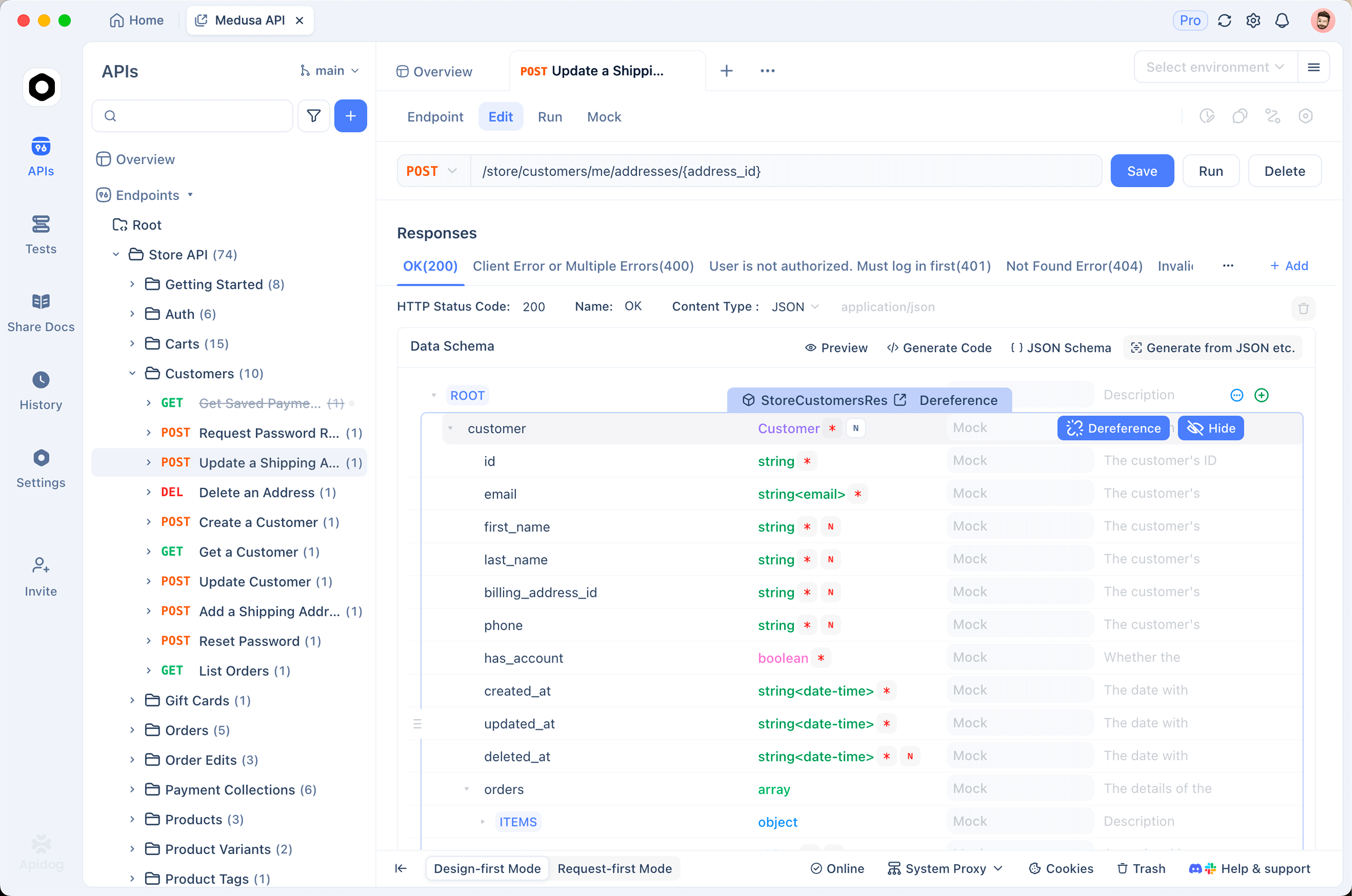
This is where saving the comparison as a repeatable suite pays off. In Apidog you can hold both calls in one collection with the model id as an environment variable, attach assertions to the fields your application reads, and re-run the whole thing when the discount lapses or Z.ai ships the next revision. A model choice you can re-test in thirty seconds is a decision you can revisit; one that lives in a shell history is not.
FAQ
Is GLM-5.3-Flash just a smaller GLM-5.3? No. It is a separately trained base model with a different attention architecture, not a distillation or a pruned variant.
Do they have the same context window? Yes, 1,048,576 tokens for both.
Which is better for coding? Flash scores 84.3 on Terminal-Bench 2.1 and 63.4 on DeepSWE per Z.ai, which is strong. GLM-5.3 is somewhat stronger on general reasoning. For coding-plan users the 3x quota usually decides it.
Can I switch between them without code changes? Yes. Same OpenAI-compatible endpoint, different model id. Only image input is Flash-exclusive.
Is the cheaper one going to stay cheap? The price reflects a smaller KV cache and lower attention compute rather than a promotion, so the structural advantage should persist. The additional 50% launch discount does expire on September 9, 2026.