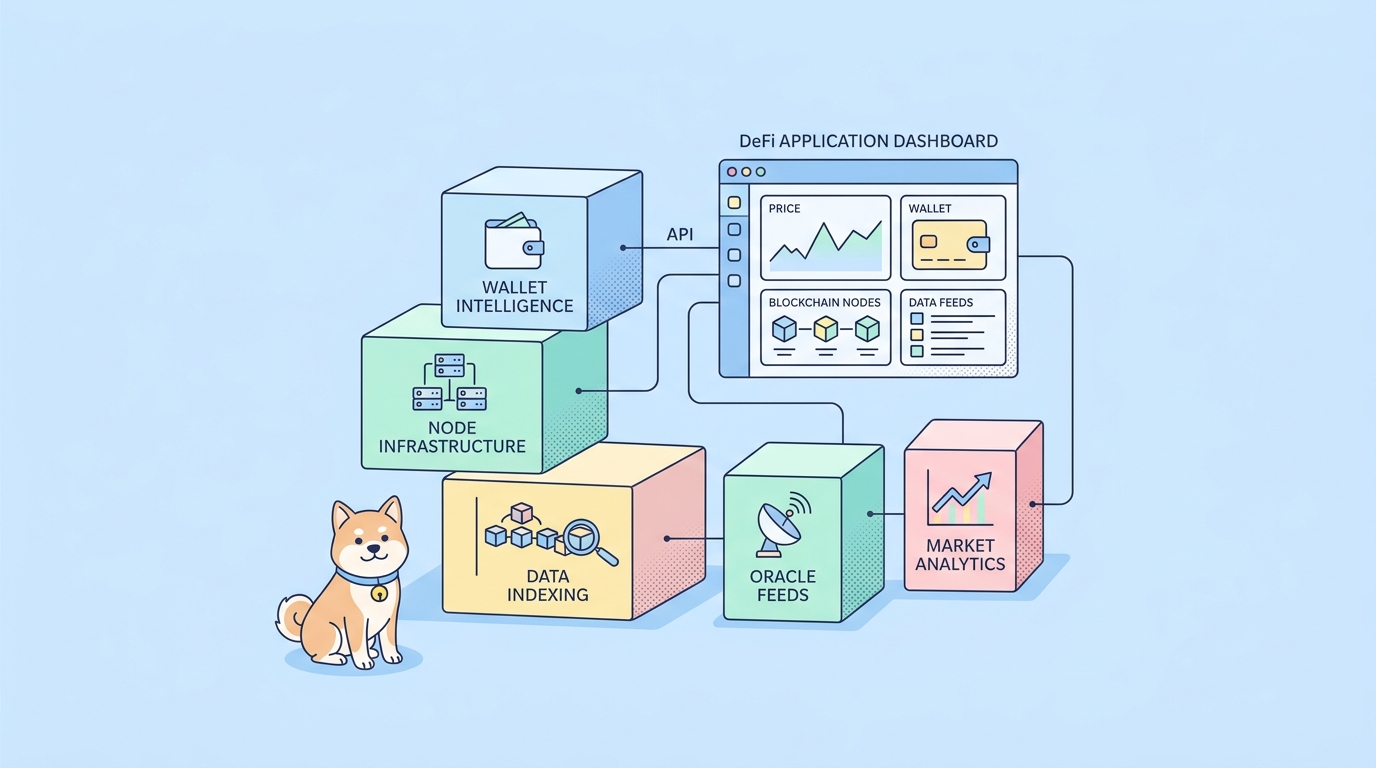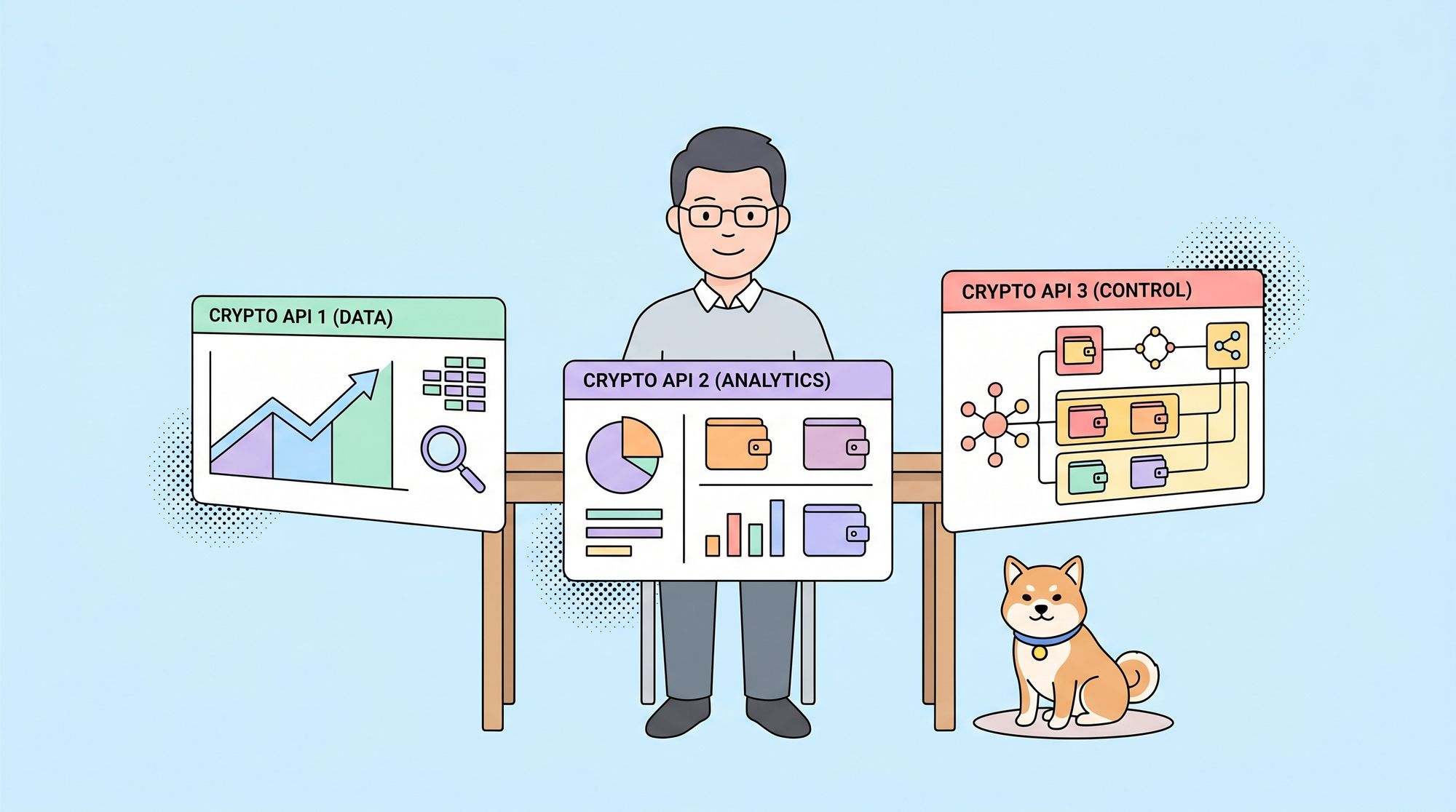
Crypto APIs can feel interchangeable at first.
You pick one, fetch a price, render a chart, and everything works. For simple applications price trackers, basic dashboards, or prototypes most APIs will get the job done without much friction.
But that sense of simplicity doesn’t last.
Apidog is a free, all-in-one API development platform. For startups, it removes the need to pay for separate testing, mocking, and docs tools – one subscription covers the full API lifecycle. Try Apidog free, no credit card required.
As soon as you move beyond basic data display and start building real products portfolio trackers, trading tools, or multi-wallet dashboards the limitations of your API choice begin to surface. You’re no longer just dealing with prices. You need context: where assets are held, how they were acquired, how they’ve performed, and what they’re worth in relation to each other.
At that stage, the difference between APIs becomes much more significant.
In this article, we’ll take a practical look at three widely used options:
Rather than focusing on surface-level features, we’ll explore how each one performs when used to build real applications.
What “Crypto Data” Really Means in Practice
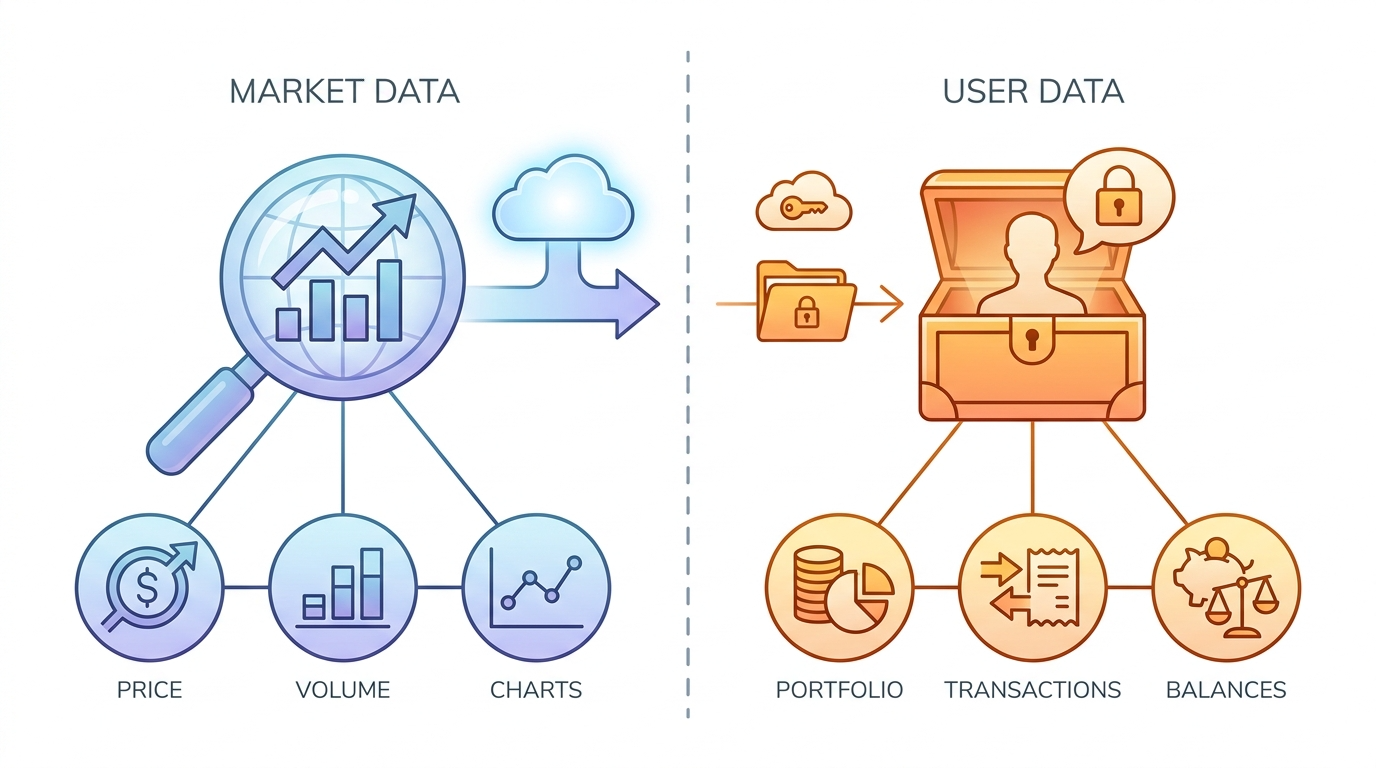
Before comparing the APIs directly, it helps to clarify what developers actually need when working with crypto data.
Most APIs provide a similar baseline:
- Token prices
- Market capitalization
- Trading volume
- Historical price data
For many applications, this is sufficient.
However, real-world crypto usage is more complex. Users typically interact with multiple systems at once centralized exchanges, decentralized wallets, and DeFi protocols often across different blockchains. Representing that activity accurately requires more than just market data.
Developers eventually need to answer questions like:
- What does a user currently hold across all platforms?
- What is the total value of their portfolio?
- How has their performance changed over time?
- What is their realized and unrealized profit or loss?
These are not purely market-level questions. They require data that is structured around user activity and portfolios, not just assets.
Overview of the Three APIs
CoinStats API
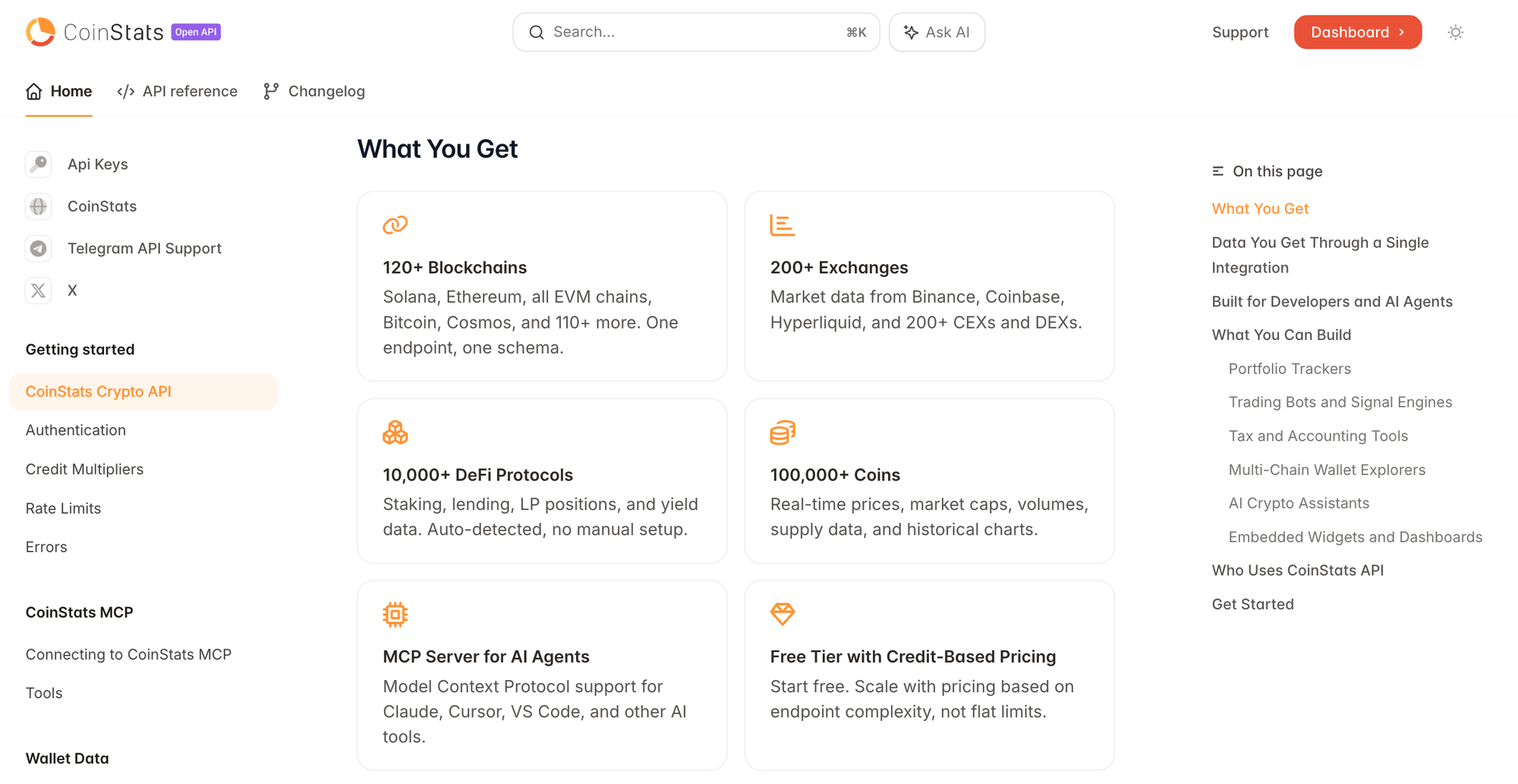
CoinStats API is designed to go beyond traditional market data by combining multiple layers of crypto information into a single API.
It provides access to market prices, wallet balances, DeFi positions, and portfolio analytics across more than 120 blockchains and hundreds of exchanges. Instead of requiring developers to integrate separate services for each category of data, it consolidates these layers into one system.
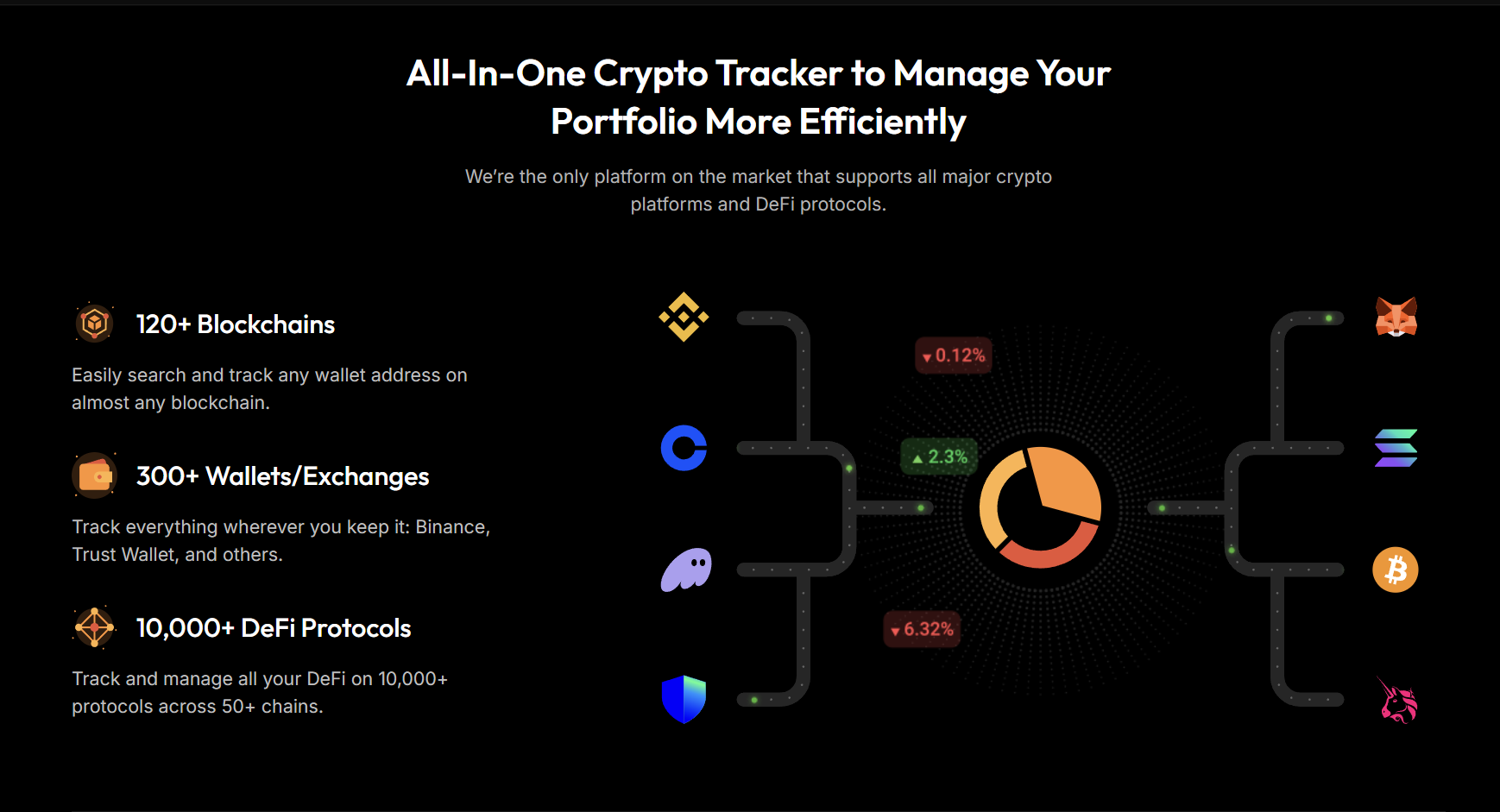
What distinguishes it is not just coverage, but structure. The API is built around portfolio-level insights, meaning that data is already contextualized. Developers can work with information such as asset balances, performance metrics, and profit/loss calculations without having to derive everything manually from raw inputs.
Key capabilities include:
- Unified access to prices, wallets, DeFi, and portfolio data
- Multi-chain support across 120+ blockchains
- Built-in portfolio analytics (PnL, performance metrics, averages)
- Aggregation across exchanges and wallets
- Support for AI workflows via MCP integration
This approach can simplify development, particularly in applications that need to reflect how users actually manage and track their crypto assets.
CoinGecko API
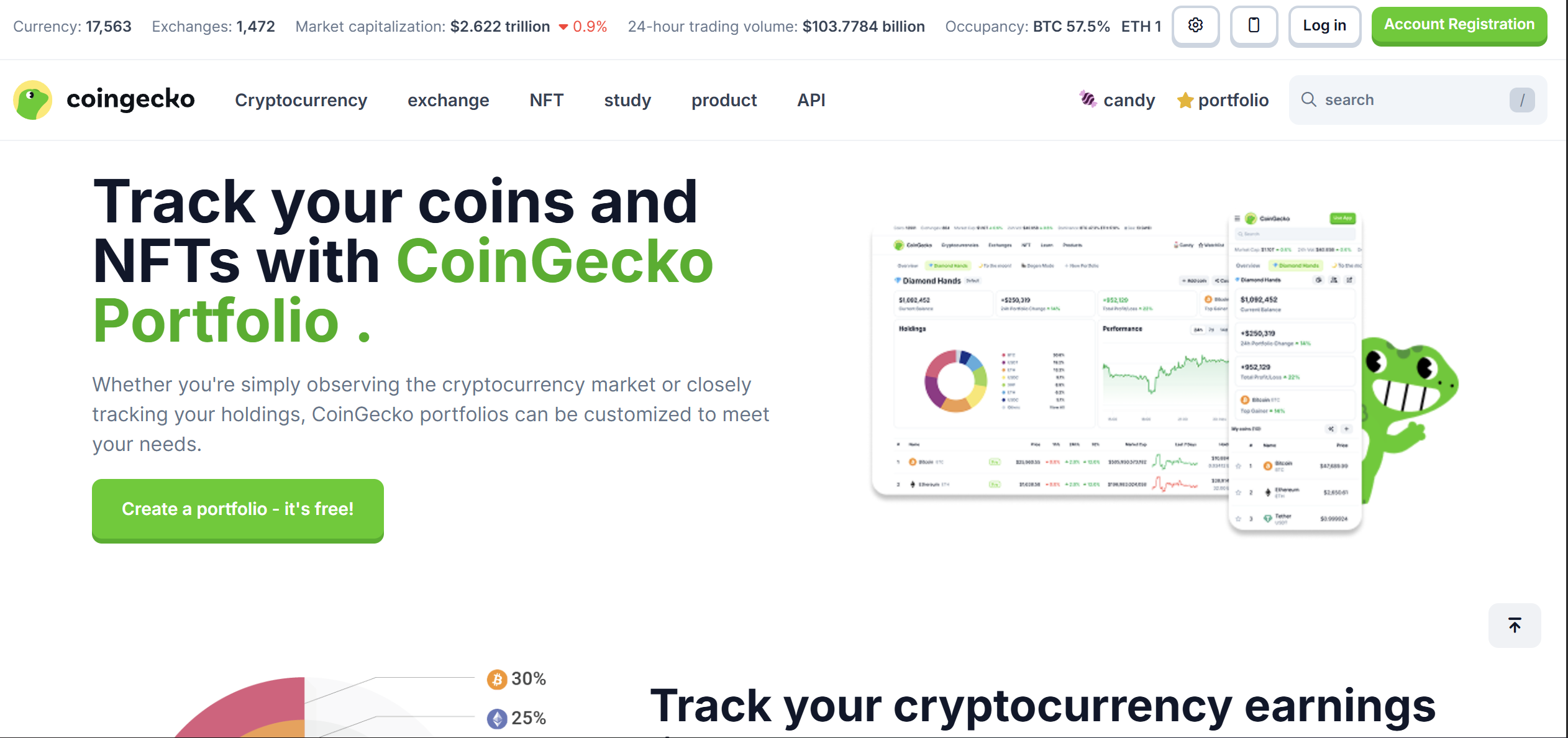
CoinGecko API is one of the most widely used crypto data providers, known for its accessibility and extensive coverage.
Since its launch, it has grown into a large independent aggregator, integrating with over a thousand exchanges and covering tens of thousands of assets across hundreds of categories. Its API exposes this data through RESTful JSON endpoints, making it easy to integrate into a wide variety of applications.
One of its key strengths is the breadth of its dataset. In addition to price feeds and market metrics, it includes historical data, asset metadata, and on-chain DEX information across hundreds of blockchain networks. This makes it particularly useful for applications that rely on broad market visibility, such as analytics dashboards, research platforms, and trading tools.
Key capabilities include:
- Extensive market data across thousands of assets
- Historical price and OHLCV data for analysis
- On-chain DEX data across 200+ networks
- Metadata for assets, categories, and exchanges
- MCP server support for AI-driven data access (Beta)
Because of its flexibility and free-tier accessibility, CoinGecko is often the first choice for developers building early-stage or cost-sensitive projects.
Its limitation lies in its scope. While it excels at delivering market data, it does not natively structure that data around user portfolios. Developers building portfolio-based applications need to implement additional layers of logic to handle transactions, cost basis calculations, and performance tracking.
CoinMarketCap API
CoinMarketCap API is widely recognized as a structured and reliable source of cryptocurrency market data, often used in professional and institutional contexts.
It offers access to real-time prices, market capitalization, trading volume, and extensive historical datasets. With coverage spanning thousands of assets and exchanges, it is well suited for applications that require consistent and standardized data.
The API is commonly used in:
- Financial dashboards
- Market analysis platforms
- Trading and strategy development tools
- Backtesting and historical research systems
One of its strengths is the organization of its data. Metrics are presented in a consistent format, which makes it easier to build systems that rely on comparability and accuracy across assets.
Like CoinGecko, however, CoinMarketCap primarily operates at the market level. It focuses on aggregated insights rather than individual user portfolios, which means portfolio-level features must be implemented separately.
Where Market Data Alone Starts to Fall Short
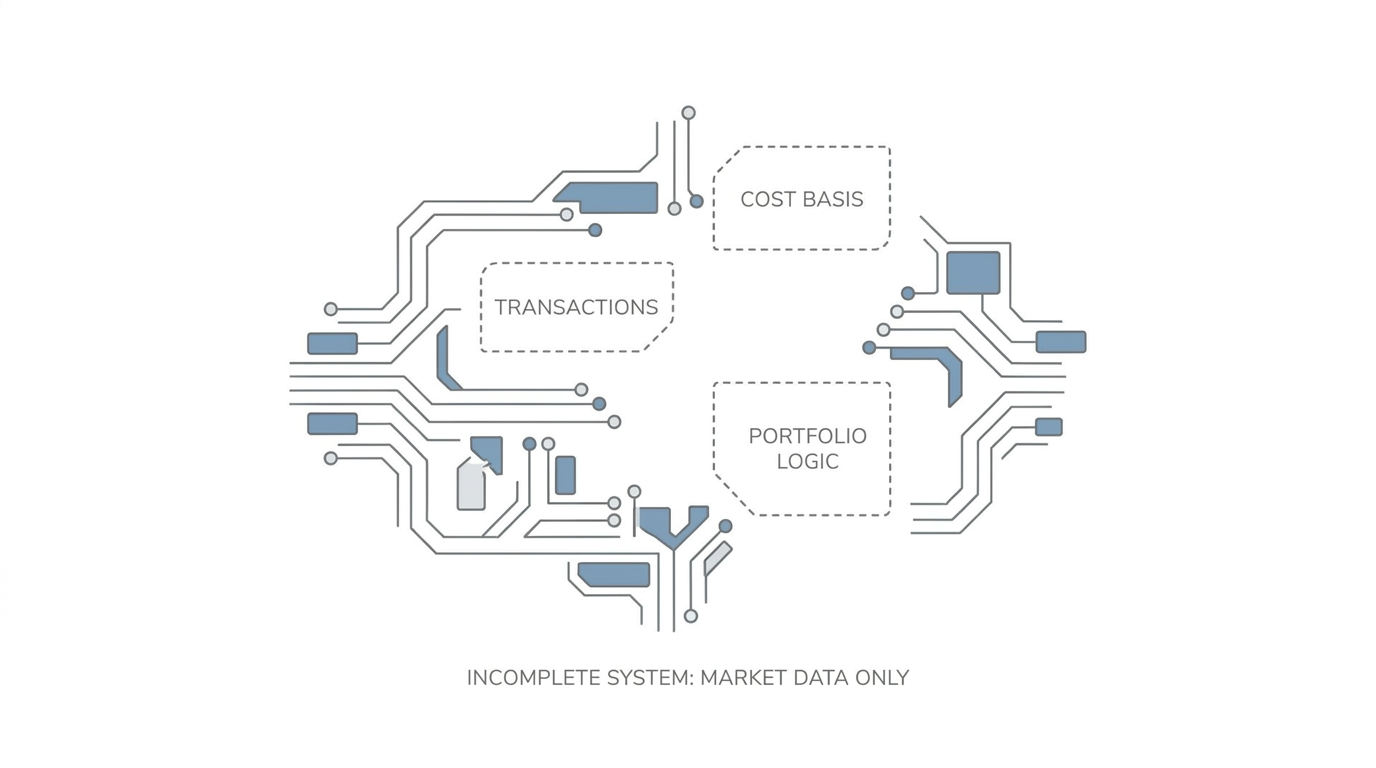
Market data APIs are highly effective for retrieving information about assets.
The challenge arises when you try to represent user-specific activity.
Consider a portfolio tracking application. Using only market data APIs, you would need to:
- Collect transaction data from wallets or exchanges
- Normalize assets across multiple blockchains
- Map historical prices to transaction timestamps
- Calculate cost basis and average entry prices
- Compute realized and unrealized profit/loss
Each of these steps introduces additional complexity. More importantly, they require careful implementation to ensure accuracy, especially when dealing with financial calculations.
As applications grow, this complexity can become a significant part of the system.
Portfolio-Level Data: A Key Difference
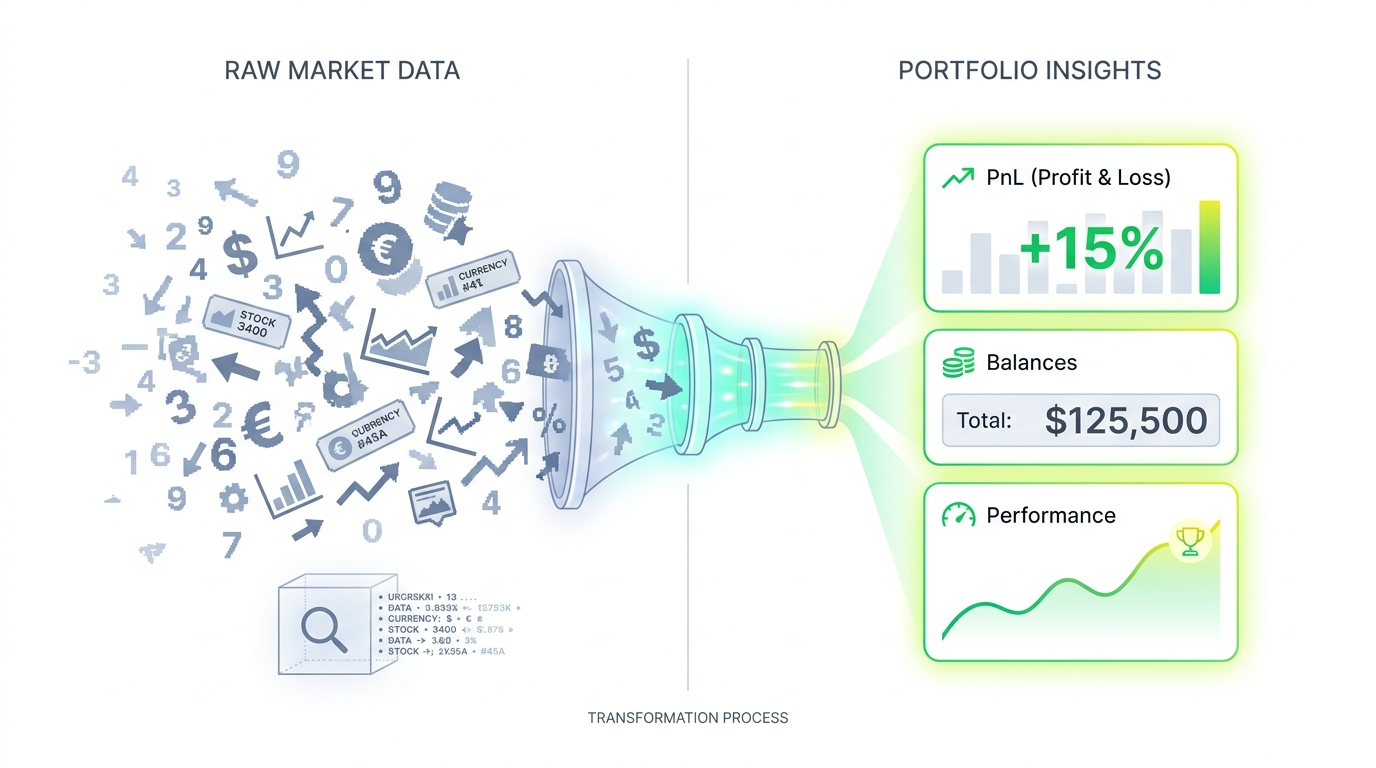
The distinction between these APIs becomes clearer when looking at how they handle portfolio-related data.
With market data APIs like CoinGecko API and CoinMarketCap API, developers receive raw inputs—prices, volumes, and historical data from which portfolio insights must be derived.
With CoinStats API, portfolio data is structured differently. Instead of requiring developers to compute everything manually, the API can return information that already includes:
- Current balances and valuations
- Profit and loss (realized and unrealized)
- Average buy and sell prices
- Performance metrics over time
- Additional indicators such as liquidity or volatility scores
This does not eliminate the need for application logic, but it reduces the amount of financial computation required.
Integration and Data Coverage
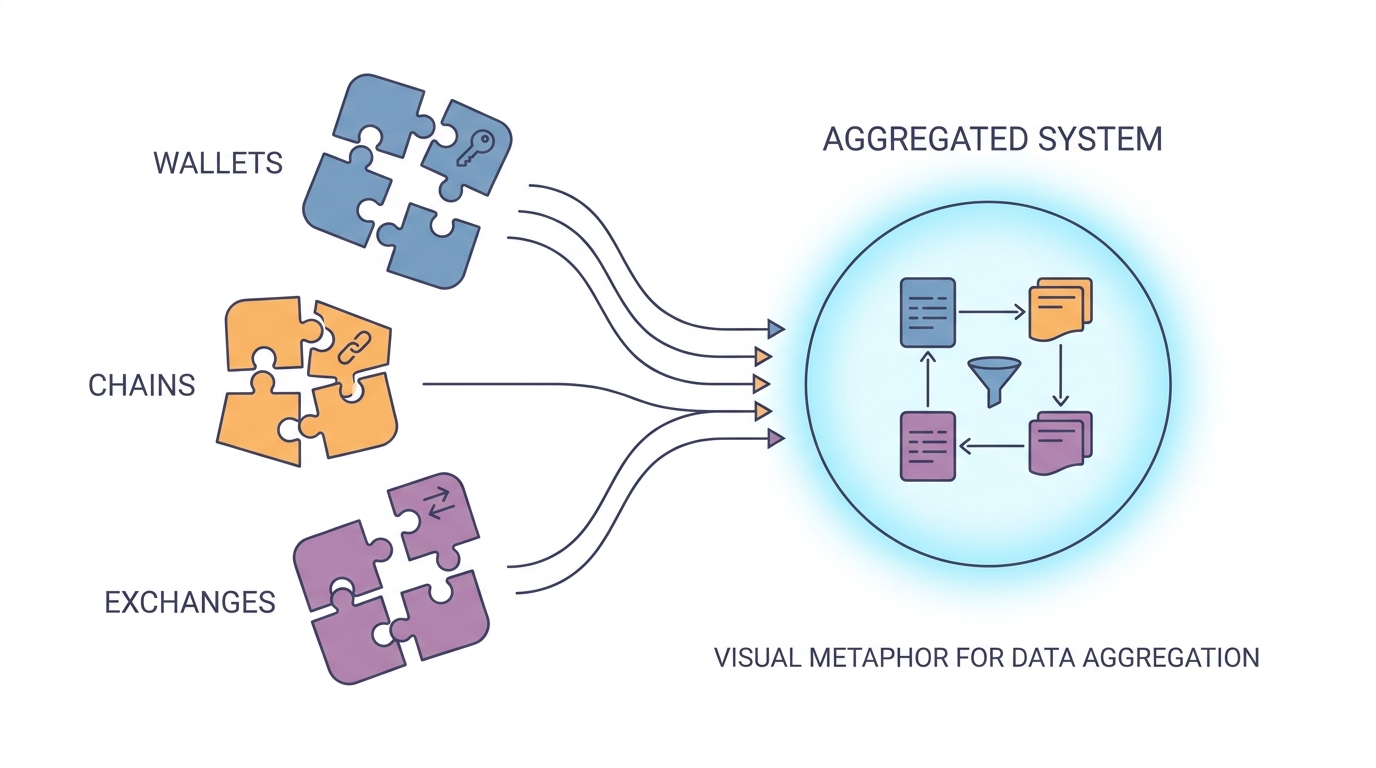
Another important factor is how each API handles data aggregation.
Crypto ecosystems are inherently fragmented. Users often spread assets across multiple wallets, exchanges, and protocols, sometimes across different blockchains.
- CoinGecko API and CoinMarketCap API provide extensive coverage of assets and market activity, making them strong choices for general data access.
- CoinStats API extends this by combining market data with wallet and DeFi-level information, allowing developers to access multiple categories of data through a single integration.
Depending on the application, this can reduce the need to integrate multiple providers or build custom aggregation layers.
Practical Use Cases
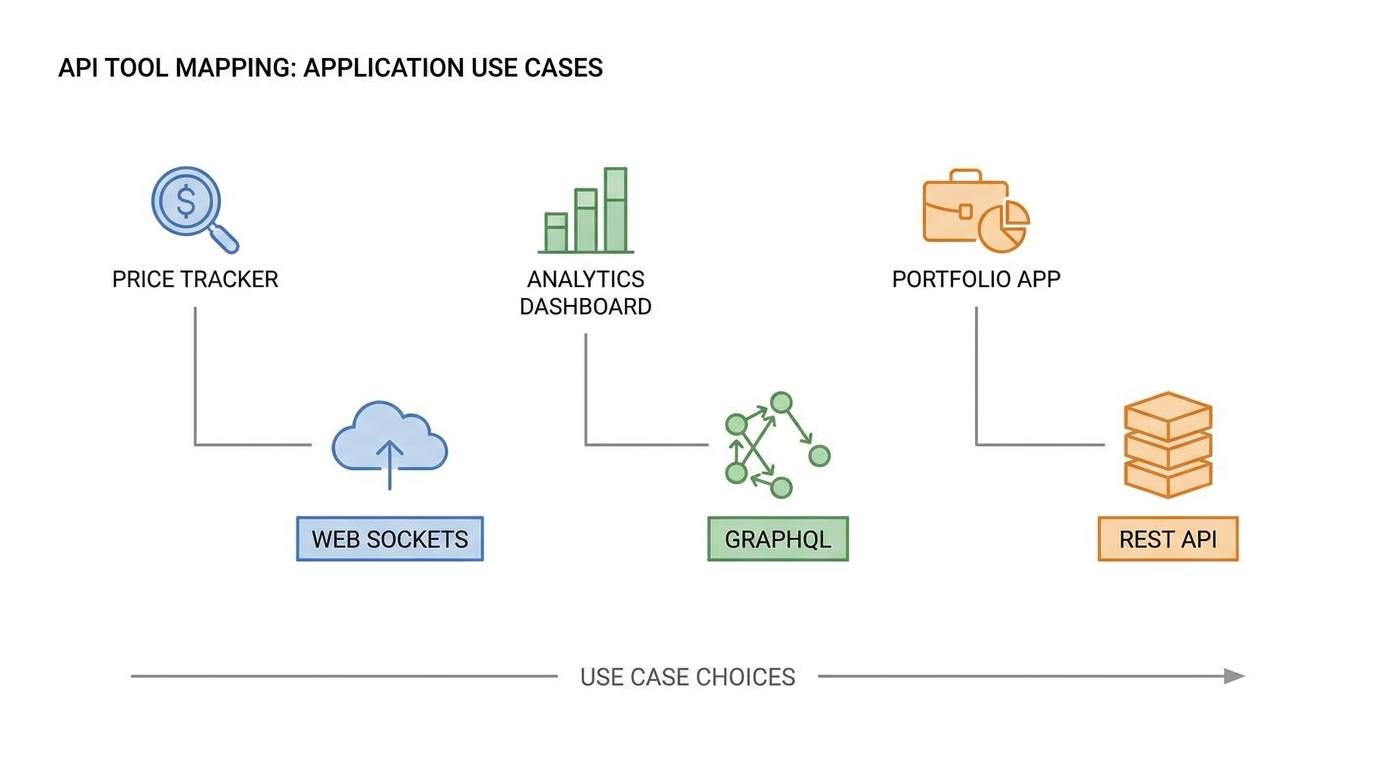
The best choice depends on what you are building.
If your application is focused on displaying prices, charts, or general market data, CoinGecko API provides a simple and accessible solution.
If your focus is on structured market analysis, rankings, or financial dashboards, CoinMarketCap API offers well-organized datasets that support consistency and comparability.
If your application centers around user portfolios such as investment trackers, multi-wallet dashboards, or tools that combine data across different crypto systems CoinStats API provides a more integrated approach.
Side-by-Side Comparison
| Capability | CoinStats API | CoinGecko API | CoinMarketCap API |
|---|---|---|---|
| Market price data | Yes | Yes | Yes |
| Historical data | Yes (~10 years) | Yes (since 2014) | Yes (since 2013) |
| Portfolio tracking | Native, built-in | Not supported natively | Not supported natively |
| Profit & Loss calculations | Built-in | Requires custom implementation | Requires custom implementation |
| Wallet & exchange aggregation | Supported (multi-chain, unified view) | Limited | Limited |
| Wallet data (address-level) | Supported (balances, transactions) | Not supported | Not supported |
| DeFi token data | Supported (tokens + DEX data) | Supported (DEX + on-chain data) | Supported (DEX data, categories, TVL) |
| DeFi protocol data | Supported (positions, analytics) | Supported (protocol metrics, not user-level) | Supported (protocol metrics, TVL) |
| Multi-chain support | 120+ blockchains | Broad (200+ networks) | Moderate |
| AI / LLM integration | MCP support | MCP support (Beta) | MCP support |
| Ease of building MVPs | Moderate | High | Moderate |
| Suitability for full-scale products | High | Medium | Medium |
Choosing the Right API
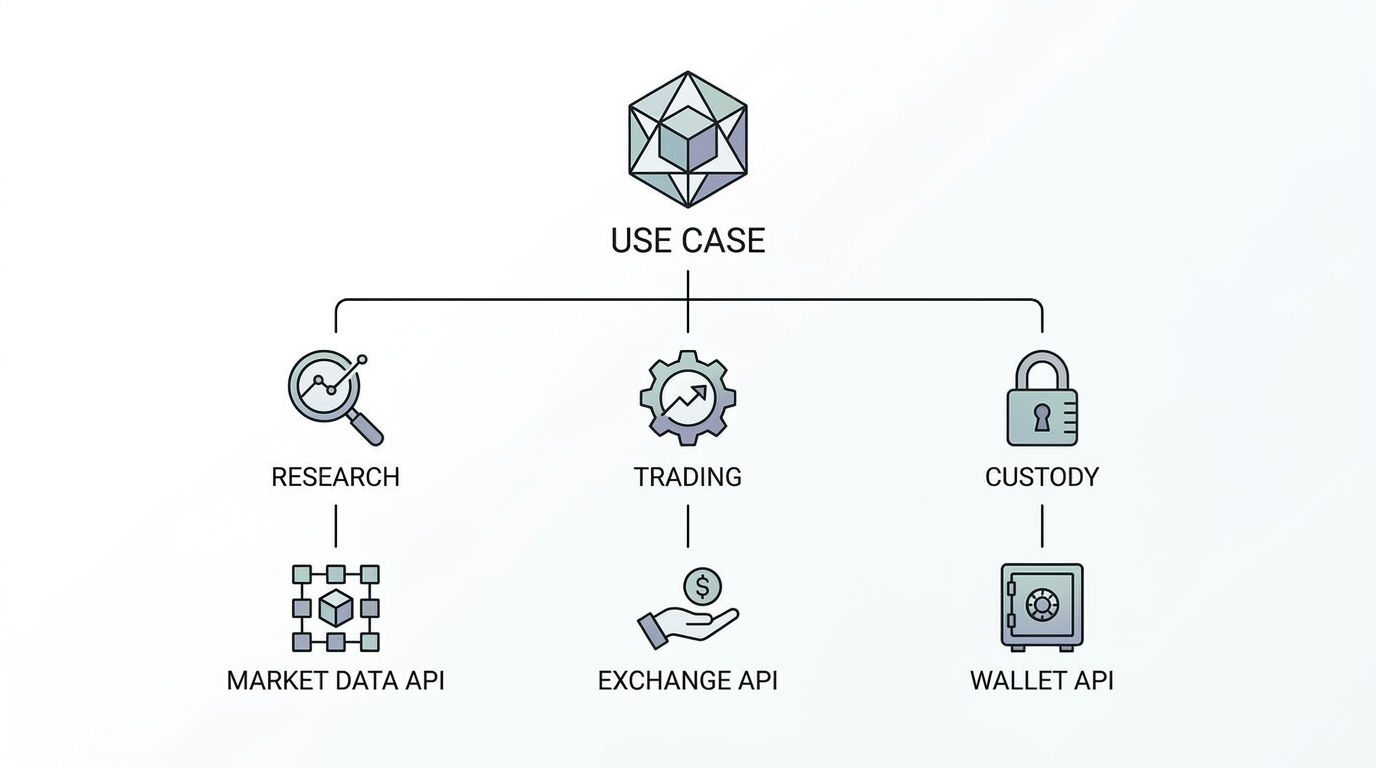
There is no single “best” crypto API only the one that fits your use case.
If your application primarily displays market data, then simplicity and accessibility may matter most, making CoinGecko a practical choice.
If your focus is on structured market analysis, CoinMarketCap offers consistency and well-defined datasets.
If your application needs to represent user portfolios and combine multiple types of crypto data, CoinStats provides a more integrated approach.
The decision ultimately comes down to how much of the system you want to build yourself versus how much you want the API to handle.
Final Thoughts
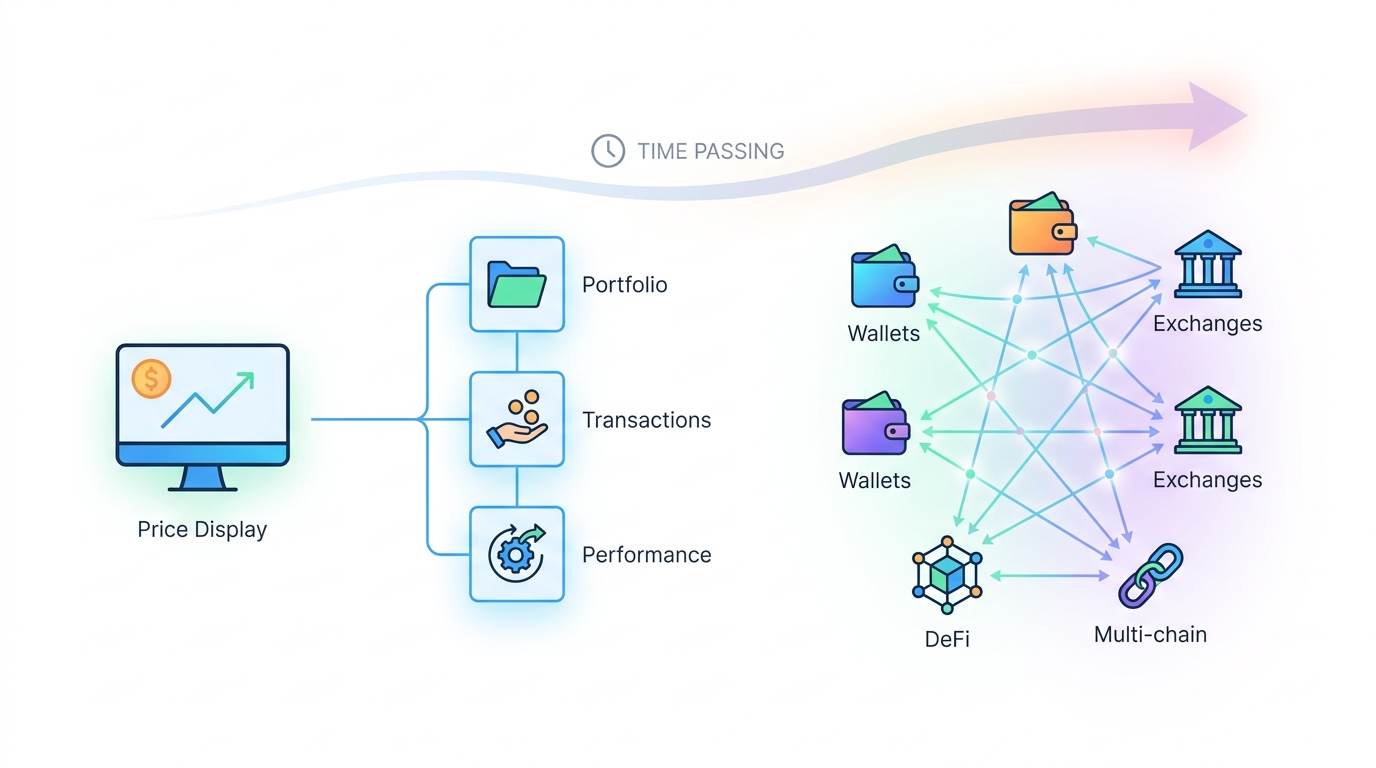
Crypto development often begins with simple requirements, but those requirements tend to evolve quickly.
What starts as a basic price display can grow into a full product that needs to track user activity, calculate performance, and operate across multiple systems. As complexity increases, the choice of API becomes less about individual features and more about how much of the system it helps you build or avoid building yourself.
Traditionally, developers have relied on CoinGecko API and CoinMarketCap API as reliable market data layers, using them as the foundation for applications that require pricing, historical data, and asset-level insights.
CoinStats API takes a broader approach by combining market data with wallet aggregation, DeFi context, and portfolio-level analytics into a single system.
One way to think about it is:
CoinStats API ≈ CoinGecko / CoinMarketCap API + Wallet Data + DeFi Positions (user-level) + Portfolio Analytics
This doesn’t replace traditional market data APIs, but it can reduce the amount of additional infrastructure required as applications grow in scope.
Choosing the right API early can save significant development effort later especially as your product moves from simple data display to full-scale functionality.