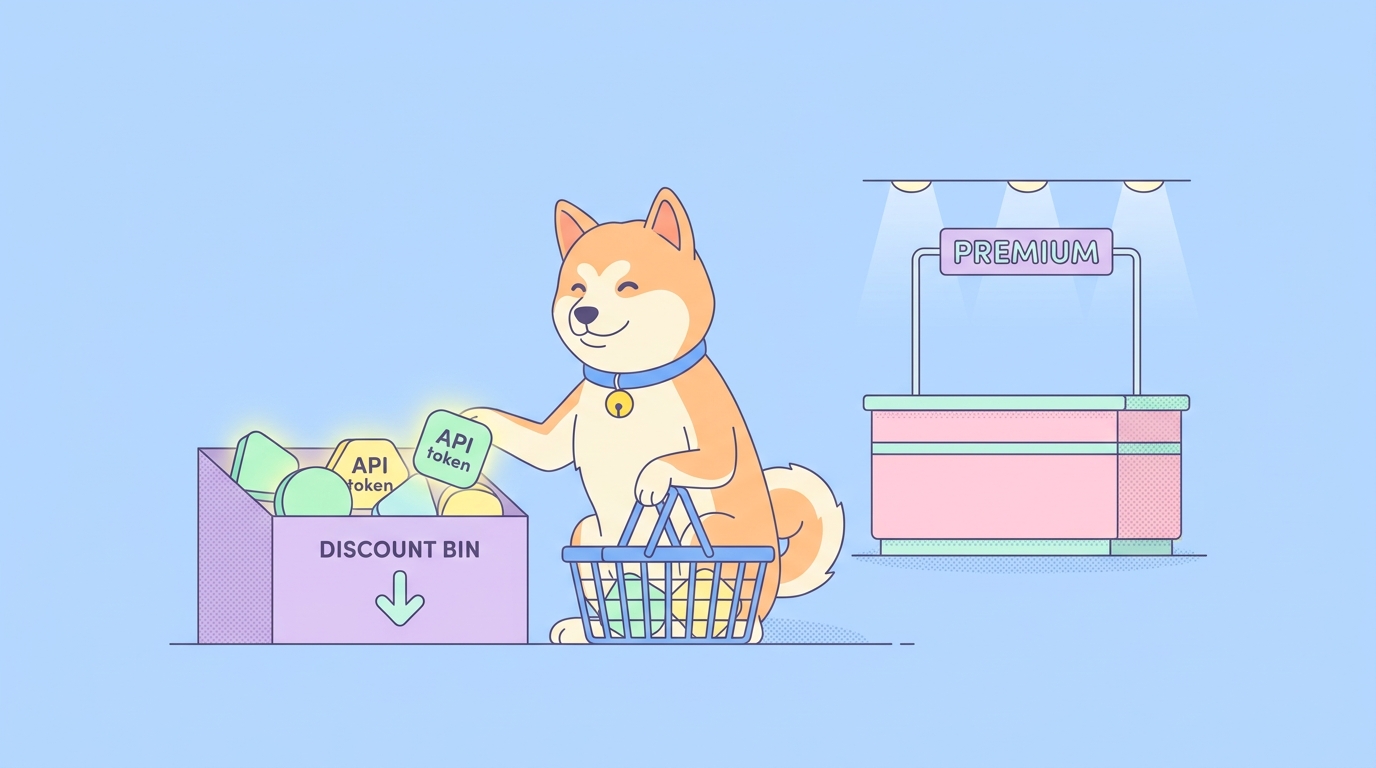
A single AI feature can quietly become your biggest cloud line item. Push a few million tokens a day through GPT-5.5 or Claude Opus at list price, and the monthly bill clears four figures before you’ve shipped anything. The model is the same no matter where you call it from, so paying full retail is a choice, not a requirement.
That’s the opening for this guide. The cheapest LLM API in 2026 is rarely the provider’s own endpoint. Discount gateways, prepaid credit platforms, and open-model hosts now undercut official rates by 40-80%, and a few open options cost almost nothing at scale. The catch is that “cheapest” depends on which models you call and how you call them, so a single price tag never tells the whole story.
TL;DR: the cheapest LLM API providers in 2026
Short on time? Here’s the ranking.
- Hypereal AI is the cheapest way to reach premium models. Its coding plan prices Claude and GPT well below official rates, and one API also covers image and video models.
- Blackmagic AI is the cheapest prepaid gateway across providers, with 48-74% off list prices and a single balance.
- DeepSeek, Google Gemini 3.5 Flash, Groq, and DeepInfra are the cheapest routes for frontier-on-a-budget, high-volume, and open-model workloads.
- Self-hosting open models is the cheapest option at scale if you can run the infrastructure.
The fastest savings come from matching the model to the job, then routing it through a discount provider instead of the vendor’s retail endpoint.
Why LLM API costs spiral, and how to read a price
Most teams overpay for one reason: they call expensive models at list price for work a cheaper model would handle. Before the list, here’s how to read an LLM price so the rankings make sense.
Input and output tokens are billed separately, and output costs more. A model quoted at “$1.32 / $7.92 per million” charges $1.32 for every million tokens you send and $7.92 for every million it generates. Output is often 4-6x the input rate, so chatty responses cost more than long prompts.
List price is the ceiling, not the floor. Providers publish a retail rate. Gateways and resellers buy in volume and pass on a discount, which is why a third party can legitimately charge less than the model’s own maker. This is the same pressure fueling the Chinese LLM price war of 2026, where frontier-class models keep getting cheaper.
Prepaid credits usually beat subscriptions. Pay-as-you-go with no monthly floor means you spend only on real usage. Watch for platform fees on top, since a percentage cut on every top-up quietly raises your effective rate.
Caching is a hidden discount. Prompt caching reuses tokens you’ve already paid to process, which can cut repeat-call costs by half or more on agents that resend the same context.
Free tiers exist, but they’re rate-limited. Several providers give you a free allowance to evaluate them. It’s enough for testing, rarely enough for production. If a free option fits your volume, our guides on using Gemini 3.5 for free and Qwen 3.7 for free cover the no-cost routes.
How we ranked the cheapest LLM APIs
The order below weighs four things: real per-token price after discounts, how much of the popular model catalog you can reach, whether the API is OpenAI-compatible so migration is trivial, and whether billing stays predictable (prepaid, spend caps, no surprise fees). A provider that’s cheap only on one obscure model ranks lower than one that’s cheap across the models people ship.
The 10 cheapest LLM API providers in 2026
1. Hypereal AI: cheapest access to premium models
Hypereal AI tops the list because it makes the expensive models cheap. The models people most want to use, Claude Opus and Sonnet, GPT-5.5, and Gemini 3.5, carry the highest retail prices. Hypereal’s coding plan attacks exactly those. On that plan, Claude Opus 4.7 runs about 32% below official API rates and Claude Sonnet runs about 77% below, with the same OpenAI-compatible endpoint your code already targets.
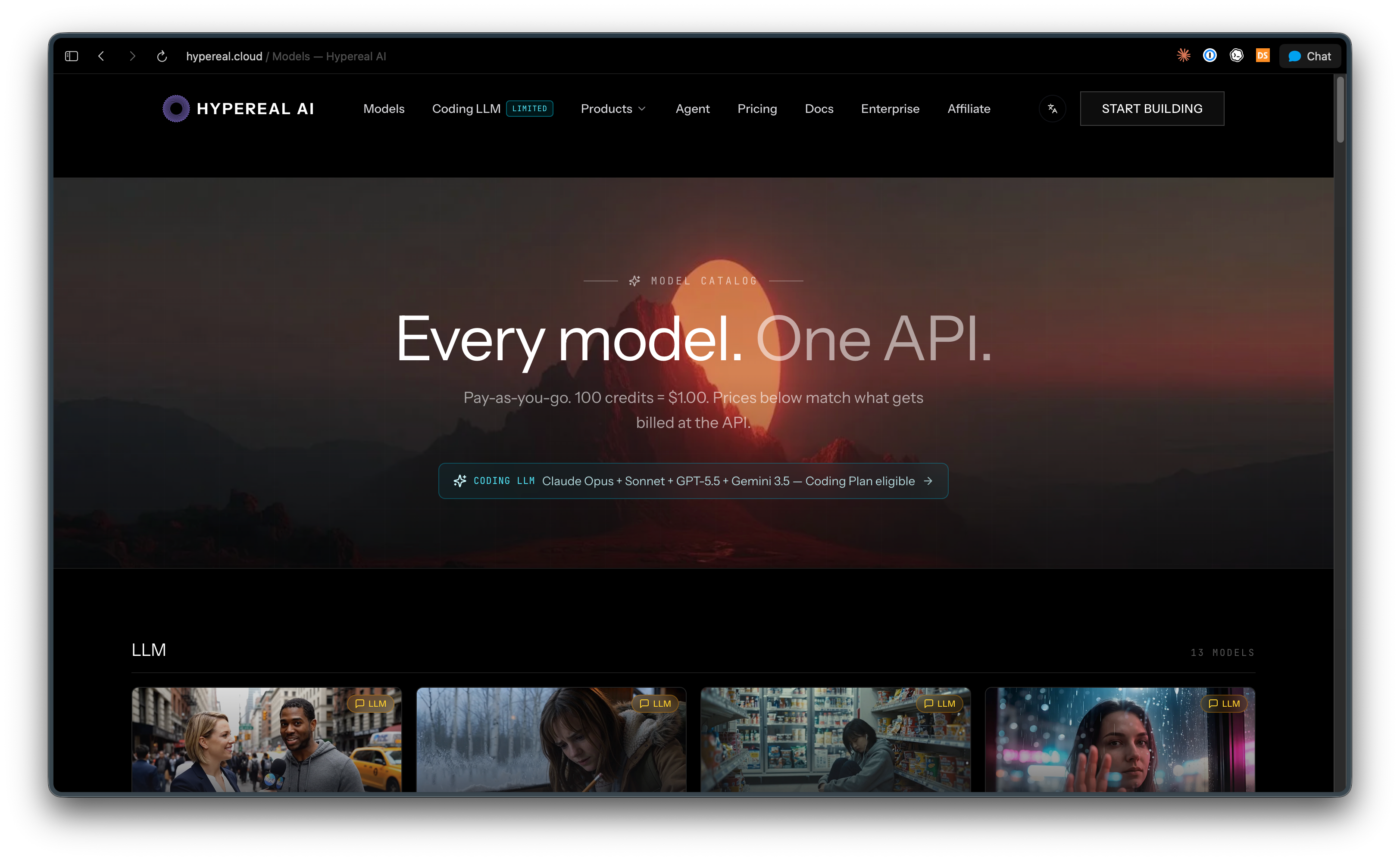
Pricing is credit-based and simple: 100 credits equal $1, you pay only for usage, and there’s no subscription. The coding plan uses prepaid packs with a usage multiplier that scales with size, from 4.4x on the $10 pack up to 7.7x on the $1,000 pack, applied to five coding-grade models (Claude Opus 4.7 and 4.6, Claude Sonnet 4.6, GPT-5.5, and Gemini 3.5 Thinking and Fast). Input and output tokens are metered separately, and a prompt cache plus the built-in Hypereal Cache trim repeat-token spend further. A free tier gives you 60 requests per minute to test before you pay anything.
Cheapest for: teams running Claude, GPT, or Gemini in coding agents, and anyone who wants text, image, and video under one cheap bill. If you’ve watched Claude Opus 4.8 pricing climb, this is the discount that resets it.
2. Blackmagic AI: cheapest prepaid gateway across providers
Blackmagic AI is the closest thing to a flat 48-74% discount across the whole model catalog. It’s an OpenRouter-style gateway with prepaid credits, a single balance across every provider, and OpenAI-compatible routes.
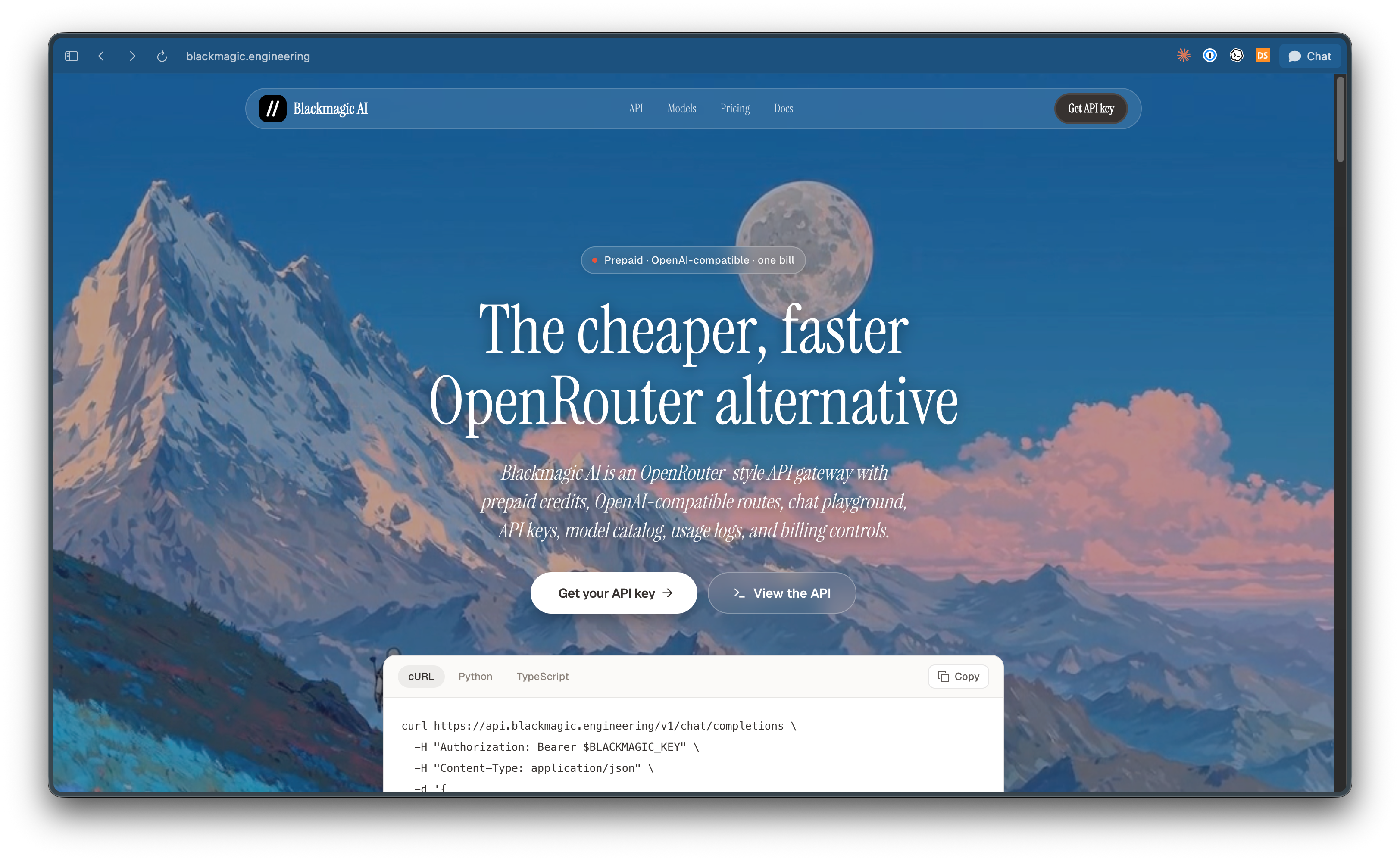
Coverage spans 13+ providers, including OpenAI, Anthropic, Google, Meta, Mistral, xAI, DeepSeek, Qwen, Black Forest Labs, Moonshot AI, Cohere, Perplexity, and Stability AI. Billing is built to stay predictable: no subscription, top-ups from $9.99 to $499.99, real-time per-request cost logs, and a monthly spend cap on every API key. Blackmagic’s own calculator puts 20 million GPT-5.5 tokens a month at $66 versus roughly $250 at retail.
Cheapest for: developers who want one prepaid balance, deep flat discounts across many providers, and clean cost tracking without per-modality complexity.
3. DeepSeek: cheapest frontier-class model
DeepSeek built its reputation on aggressive pricing for frontier-class reasoning. Its native API is among the lowest-cost ways to run a capable general model, and off-peak discounts push it lower still. The models are open-weight, so you can also self-host or reach them through the gateways above. If your workload tolerates a non-US frontier model, DeepSeek is often the cheapest credible option per token.
Cheapest for: high-volume reasoning and coding where you want frontier quality at open-model prices.
4. Google Gemini 3.5 Flash: cheapest big-name flash tier
Gemini 3.5 Flash is Google’s answer to high-volume, cost-sensitive work, and it’s one of the lowest per-token rates from a major lab. It handles summarization, classification, extraction, and routing at a fraction of a frontier model’s cost, with a large context window. For pipelines that fire millions of small calls, Flash is hard to beat. See our Gemini 3.5 Flash pricing breakdown for the per-token numbers and where it fits.
Cheapest for: high-throughput tasks that don’t need a top-tier reasoning model.
5. Groq: cheapest fast inference for open models
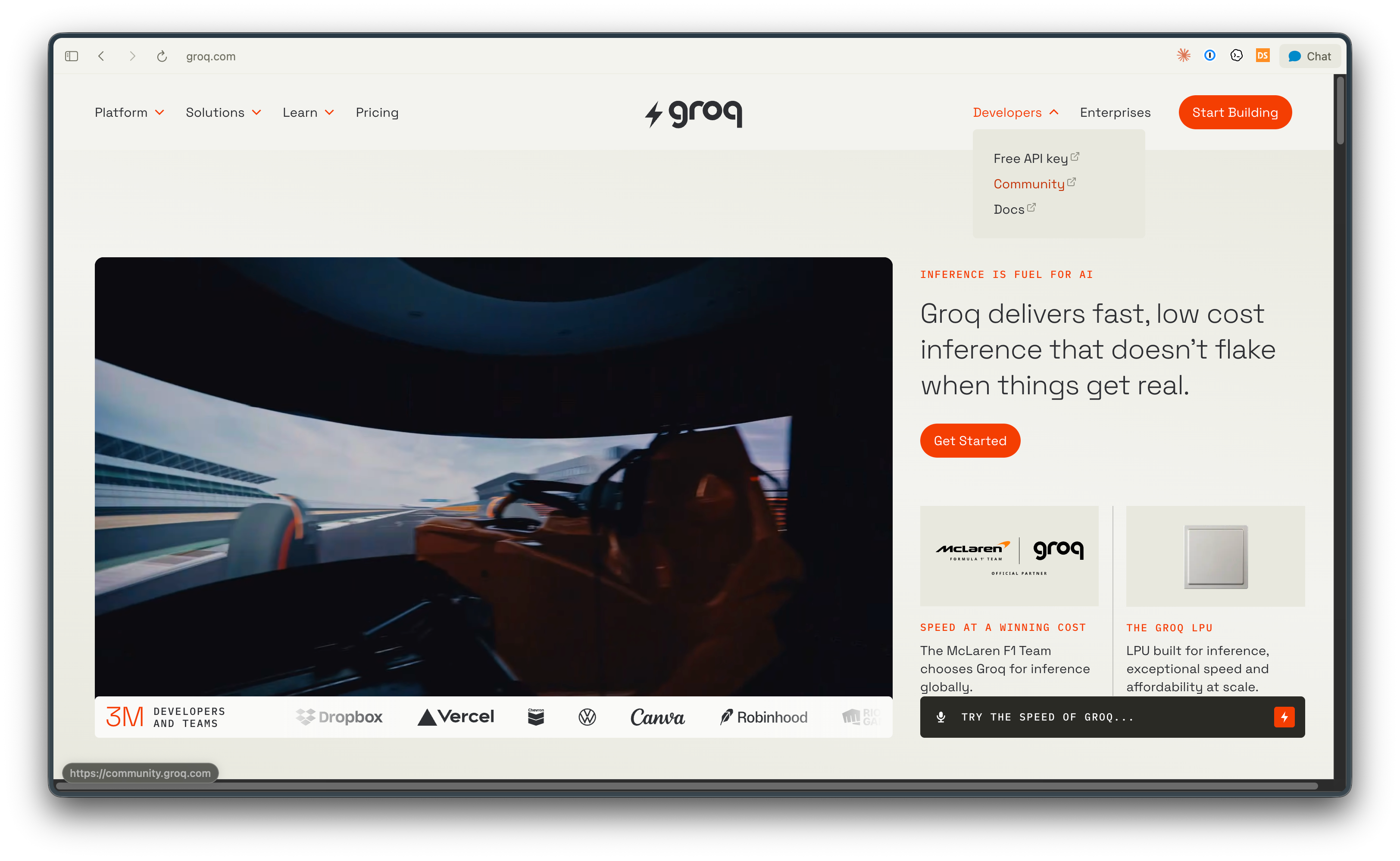
Groq runs open models on custom LPU hardware and serves them at high tokens-per-second for a low per-token price. GroqCloud is OpenAI-compatible and hosts Llama, Qwen, and Gemma. You get speed and a low rate at once, which is rare. The catalog is narrower than a full aggregator, so it suits specific models rather than every workload.
Cheapest for: latency-sensitive apps that also want a low bill, like voice agents and real-time tools.
6. DeepInfra: lowest per-token open-model hosting
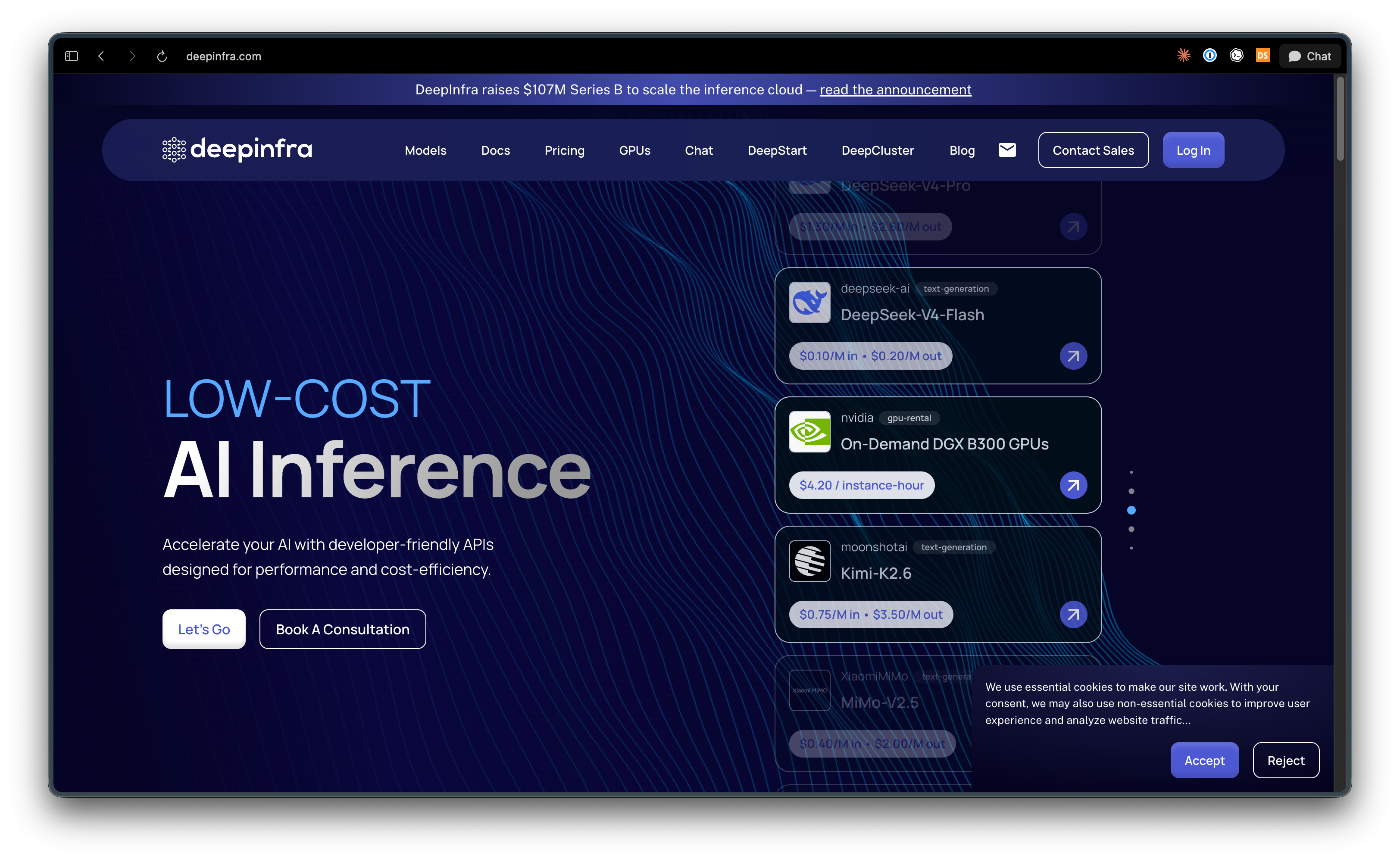
DeepInfra specializes in cheap, no-frills hosting of open models with pay-per-token billing and an OpenAI-compatible API. It consistently posts some of the lowest rates for Llama, Qwen, Mistral, and DeepSeek variants. There’s no subscription and no minimum, so it’s a clean fit for hobby projects and cost-capped production alike.
Cheapest for: open-model inference where raw per-token price is the only thing that matters.
7. Together AI: cheap open models with fine-tuning
Together AI serves 200+ open models behind an OpenAI-compatible API at competitive per-token rates, and adds fine-tuning plus dedicated endpoints. The pitch is that you can take an open model from a cheap shared endpoint to a tuned, reserved deployment without changing vendors. For teams standardizing on open weights, that keeps costs down as you scale.
Cheapest for: open-model teams that want low rates plus a path to fine-tuning. Our Qwen 3.7 API guide covers the kind of model that runs well here.
8. Fireworks AI: cheap production serving for open models
Fireworks AI focuses on fast, reliable open-model inference with function calling, JSON mode, and fine-tuning. Per-token prices are competitive with the other open-model hosts, and the production features reduce the engineering cost around the raw API. It’s OpenAI-compatible, so it drops into existing code.
Cheapest for: teams shipping open models in production that want low rates plus structured output and tuning.
9. OpenRouter: convenient, but the fees add up
OpenRouter earns a mention because it’s the default many teams reach for. One key, 300+ models. The price problem is the fees: a 5.5% charge with an $0.80 minimum on every credit purchase, plus a 5% fee on bring-your-own-key requests past a million a month. You also pay the provider’s list price underneath. For breadth and quick experimentation it’s fine, but it’s rarely the cheapest, which is why we wrote a full guide to the best OpenRouter alternatives including the two at the top of this list.
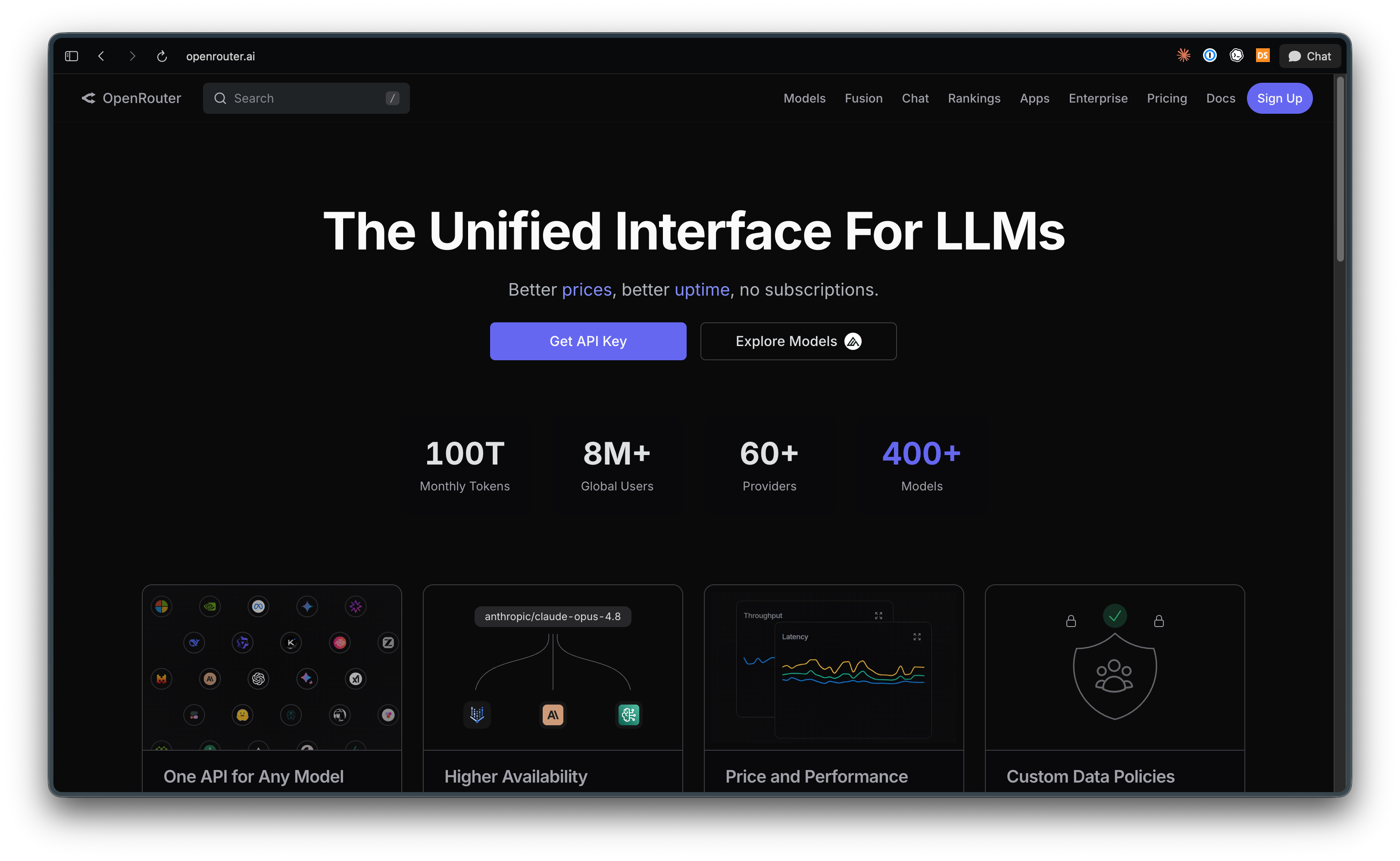
Cheapest for: experimentation and breadth, not lowest cost at scale.
10. Self-hosting open models: cheapest at scale
If you can run the infrastructure, self-hosting an open model with a server like vLLM behind a proxy such as LiteLLM removes the per-token reseller cost entirely. You pay for GPUs, not tokens, so past a certain volume it’s the cheapest option by a wide margin. The trade-off is honest: you own the capacity planning, the uptime, and the upgrades. Below that volume, a discount gateway is cheaper once you price in your own time.
Cheapest for: steady, high-volume workloads where a dedicated GPU stays busy.
Cheapest LLM API providers compared
| Provider | Cheapest for | Pricing model | Example price or discount | OpenAI-compatible |
|---|---|---|---|---|
| Hypereal AI | Premium models + media | Credits (100 = $1) | Opus ~32% / Sonnet ~77% under official | Yes |
| Blackmagic AI | Prepaid multi-provider | Prepaid credits | GPT-5.5 $1.32 / $7.92 per 1M (74% off) | Yes |
| DeepSeek | Frontier on a budget | Pay-as-you-go | Among the lowest frontier rates | Yes |
| Gemini 3.5 Flash | High-volume tasks | Pay-as-you-go | Lowest big-name flash tier | Yes |
| Groq | Fast + cheap open models | Pay-as-you-go | Low rate, high speed | Yes |
| DeepInfra | Open-model hosting | Pay-as-you-go | Lowest open-model per-token | Yes |
| Together AI | Open models + tuning | Pay-as-you-go | Competitive open rates | Yes |
| Fireworks AI | Production open models | Pay-as-you-go | Competitive open rates | Yes |
| OpenRouter | Breadth + convenience | Credits + 5.5% fee | List price plus fees | Yes |
| Self-host (vLLM) | Scale | Infra cost only | Near-zero per token at scale | Yes |
Five ways to cut your LLM API bill further
Picking a cheap provider is half the work. These moves cut the rest.
- Right-size the model. Route summarization, classification, and extraction to a flash-tier model, and reserve a frontier model for the hard 10% of requests. This single change often halves a bill.
- Turn on prompt caching. Agents resend the same system prompt and context constantly. Caching reuses those tokens at a fraction of the cost, which is why platforms like Hypereal enable it by default.
- Batch where latency allows. Grouping background jobs into batched requests is cheaper than firing them one at a time on many providers.
- Buy bigger prepaid packs. Discount tiers reward volume. Hypereal’s coding multiplier climbs from 4.4x to 7.7x as the pack grows, so fewer, larger top-ups stretch further than many small ones.
- Cap spend per key. Both Hypereal and Blackmagic let you set monthly caps and alerts, so a runaway loop can’t drain your balance overnight.
Measure and compare token costs with Apidog
Marketing pages quote the rate. Your bill reflects reality, which depends on how many tokens your prompts burn. Before you commit to any provider on this list, measure it.
Apidog is an all-in-one API platform that fits this job well. Point a request at a provider’s /chat/completions route, send a representative prompt, and read the usage block in the response to see the real input and output token counts. A few moves that pay off:
- Store each provider in an environment with its own
base_urlandapi_key, then run the same prompt against each by switching a dropdown. No code changes. - Assert on the usage fields so you catch a provider that counts tokens differently, which directly changes your cost math.
- Save the calls as a collection and re-run them monthly, since prices and routing shift and last quarter’s cheapest option may not be this quarter’s.
Because every provider here is OpenAI-compatible, one Apidog test suite covers all of them, and the comparison stays fair: same prompt, same parameters, real token counts. If you’re consolidating tools, this slots in beside the workflow in our best Postman alternatives guide. Download Apidog and you can price your shortlist in a few minutes.
Frequently asked questions
What is the cheapest LLM API in 2026? For premium models like Claude and GPT, Hypereal AI’s coding plan is the cheapest practical route, pricing them well below official rates. For open models, DeepInfra and Groq post some of the lowest per-token rates, and DeepSeek is the cheapest credible frontier-class option. The true cheapest depends on which model your workload needs.
Is there a free LLM API? Yes, with limits. Hypereal has a free tier at 60 requests per minute, and most major labs offer a rate-limited free allowance for testing. Several open models are free to use beyond inference cost. Our guide on using Claude Opus 4.8 for free covers the no-cost routes worth knowing.
Why are these cheaper than OpenAI or Anthropic directly? Gateways and resellers buy capacity at volume and pass on a discount, and open-model hosts run efficient infrastructure at scale. You’re paying the same model, served through a cheaper channel. The savings are real as long as the provider is OpenAI-compatible and stable.
Will my existing code work if I switch? Almost always. Every provider here supports the OpenAI API format, so you change the base URL and key and map the model name. Test the streaming behavior and the token-usage fields, since those are the usual compatibility gaps.
What’s the cheapest API for coding agents like Claude Code or Cursor? Hypereal’s coding plan, which prices Claude and GPT below retail and works with Claude Code, Cursor, Cline, Aider, Continue.dev, and OpenCode. Pair it with the tactics in our agent token cost guide for the biggest reduction.
Is the cheapest option always the best choice? No. A model that’s cheap per token but wrong for the task costs more in retries and bad output. Match the model to the job first, then pick the cheapest provider that serves it. Predictable billing and spend caps matter as much as the headline rate.
Which cheap LLM API should you pick?
Match the provider to the workload:
- Running Claude, GPT, or Gemini in coding agents? Hypereal AI and its coding plan give the deepest discount on the models that cost the most.
- Want one prepaid balance with flat discounts across many providers? Blackmagic AI at 48-74% off list.
- Running open models? DeepInfra and Groq for the lowest rates, Together AI and Fireworks AI when you also want fine-tuning or production features.
- High volume on a budget? DeepSeek for frontier quality, Gemini 3.5 Flash for cheap throughput, or self-hosting once a GPU stays busy.
Whatever you shortlist, prove the price before you migrate. Set up an OpenAI-compatible request in Apidog, run your real prompts against each provider, and let the token counts pick the winner. Download Apidog to price your shortlist today.