Written by the Apidog team. Apidog is on this list. Licenses and prices were checked on each project's repository or pricing page on September 8, 2026.
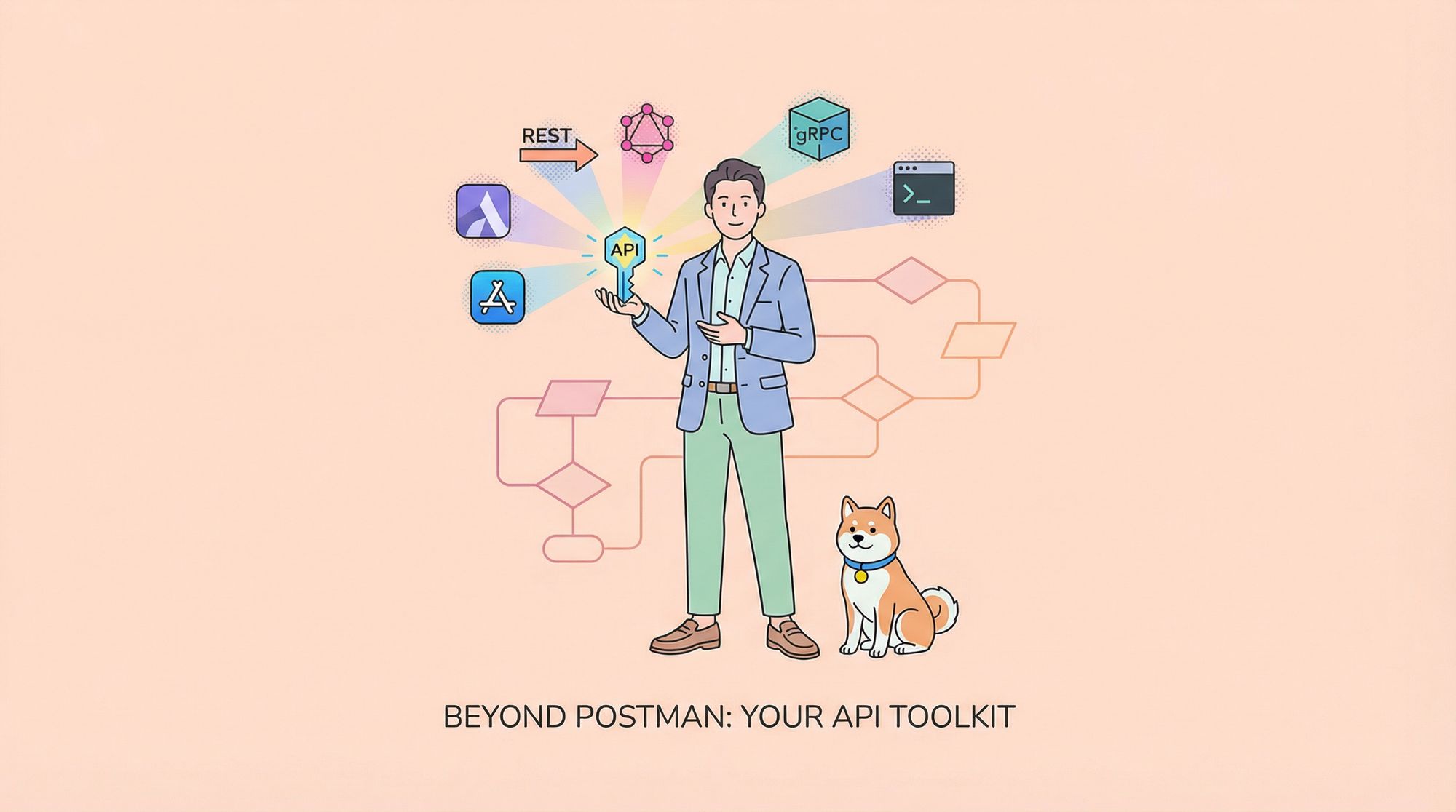
The job most people actually use Postman for is sending a request and reading the response. If that is your job too, the field is wider and cheaper than the platform comparisons suggest. Here are ten API clients judged on that job first: protocols, speed to first request, where your data lives, and what it costs when a second person joins.
The 10 clients
| Client | License | Protocols | Runs | Where data lives | Price beyond free |
|---|---|---|---|---|---|
| Apidog | Proprietary | REST, GraphQL, gRPC, WebSocket, SSE, SOAP | Desktop and web | Cloud (global or EU), self-hosted runner, on-prem | Free for 4; Basic $9/user/month |
| Bruno | MIT | REST, GraphQL, gRPC, WebSocket | Desktop | Files in your repo | Pro $6; Ultimate $11 |
| Insomnia | Apache 2.0 | REST, GraphQL, gRPC, WebSocket, SSE | Desktop | Local, Git, or Kong cloud | Pro $12; Enterprise $45 |
| Hoppscotch | MIT | REST, GraphQL, WebSocket, SSE, MQTT | Browser, desktop, self-host | Browser or your server | Organization $6 |
| Yaak | MIT | REST, GraphQL, gRPC, WebSocket, SSE | Desktop | Local only | $79/year commercial |
| Thunder Client | Proprietary | REST free; WebSocket, SSE, gRPC paid | VS Code | Extension storage; Git on paid | Starter $3; Business $7; Enterprise $16 |
| HTTPie | BSD-3 CLI | REST | Terminal, desktop | Local | Desktop app |
| Posting | Apache 2.0 | REST | Terminal UI | YAML files | None |
| Restfox | MIT | REST, sockets | Web, desktop | Local | None |
| API Dash | Apache 2.0 | REST, GraphQL | Desktop | Local | None |
1. Apidog
The client is the front of a larger platform, but as a client it stands on its own: REST, GraphQL, gRPC, WebSocket, SSE, and SOAP; native apps for macOS, Windows, and Linux plus a web app; environments with global, environment, and local variables; dynamic values; and SQL steps for checking a database after a call. Because each request lives under a designed endpoint, the response schema validates automatically and the mock exists without setup. Free for four users with unlimited runs and mocks; paid seats from $9.
Best for: a team that wants the client and the platform (mocks, tests, docs) in one place. See Apidog vs Postman.
2. Bruno
Collections as .bru files in your repository, offline, no account, MIT. The fastest way to put API requests under code review. Pro ($6) adds in-app Git integration and an unlimited runner.
Best for: developers who want requests versioned with the code. See Apidog vs Bruno.
3. Insomnia
The most established open-source desktop client (Apache 2.0, about 40,000 stars), with a choice of local, Git, or cloud storage. Free includes Git Sync for three users.
Best for: a mature desktop client with protocol breadth. See Apidog vs Insomnia.
4. Hoppscotch
Open a tab and send. MIT, about 80,000 stars, uncapped free plan, self-hostable, and one of the few with MQTT.
Best for: zero-install and locked-down machines. localhost needs the desktop app or an extension. See Postman vs Hoppscotch.
5. Yaak
Local-first, MIT, never syncs or transmits data. Clean interface, all the main protocols, free for personal use.
Best for: privacy-first individual work. See what is Yaak.
6. Thunder Client
A request panel inside VS Code. HTTP is free; WebSocket, SSE, gRPC, scripting, Git storage, and the CLI are paid from $3.
Best for: never leaving the editor, on a budget for the paid tier. See the Thunder Client paywall.
7. HTTPie
The terminal client with readable output: JSON by default, sessions, plugins. BSD-3.
Best for: quick checks and shell scripts.
8. Posting
A keyboard-driven terminal UI with requests stored as YAML. Apache 2.0.
Best for: SSH sessions and tmux.
9. Restfox
Offline-first, minimal, web or desktop, MIT.
Best for: a lightweight local client with a familiar layout.
10. API Dash
Flutter desktop client with HTTP and GraphQL, code generation, and AI-assisted features. Apache 2.0.
Best for: trying a young, fast-moving open-source client.
Choosing a client
- Solo, files in Git: Bruno.
- Solo, nothing installed: Hoppscotch.
- Solo, terminal: HTTPie or Posting.
- Team of two or more: Apidog, because the client comes with the shared layer (live collaboration, mocks, docs, tests) that every other client on this list leaves to Git or a paid tier.
For the platform-level comparison see Postman alternatives in 2026; for clients that must run offline see offline Postman alternatives; for the open-source-only view see open-source Postman alternatives.
FAQ
What is the best free API client? For one person, Bruno or Hoppscotch. For a team of up to four, Apidog's free plan.
Which API clients support gRPC? Apidog, Bruno, Insomnia, Yaak, and Thunder Client on paid plans.
Which API client works fully offline? Bruno, Yaak, Restfox, Posting, HTTPie, and Insomnia with local projects.
Do these clients import Postman collections? Apidog, Bruno, Hoppscotch, Insomnia, Yaak, and Thunder Client import Postman JSON. Apidog runs pm.* scripts unchanged.
Checked on September 8, 2026.