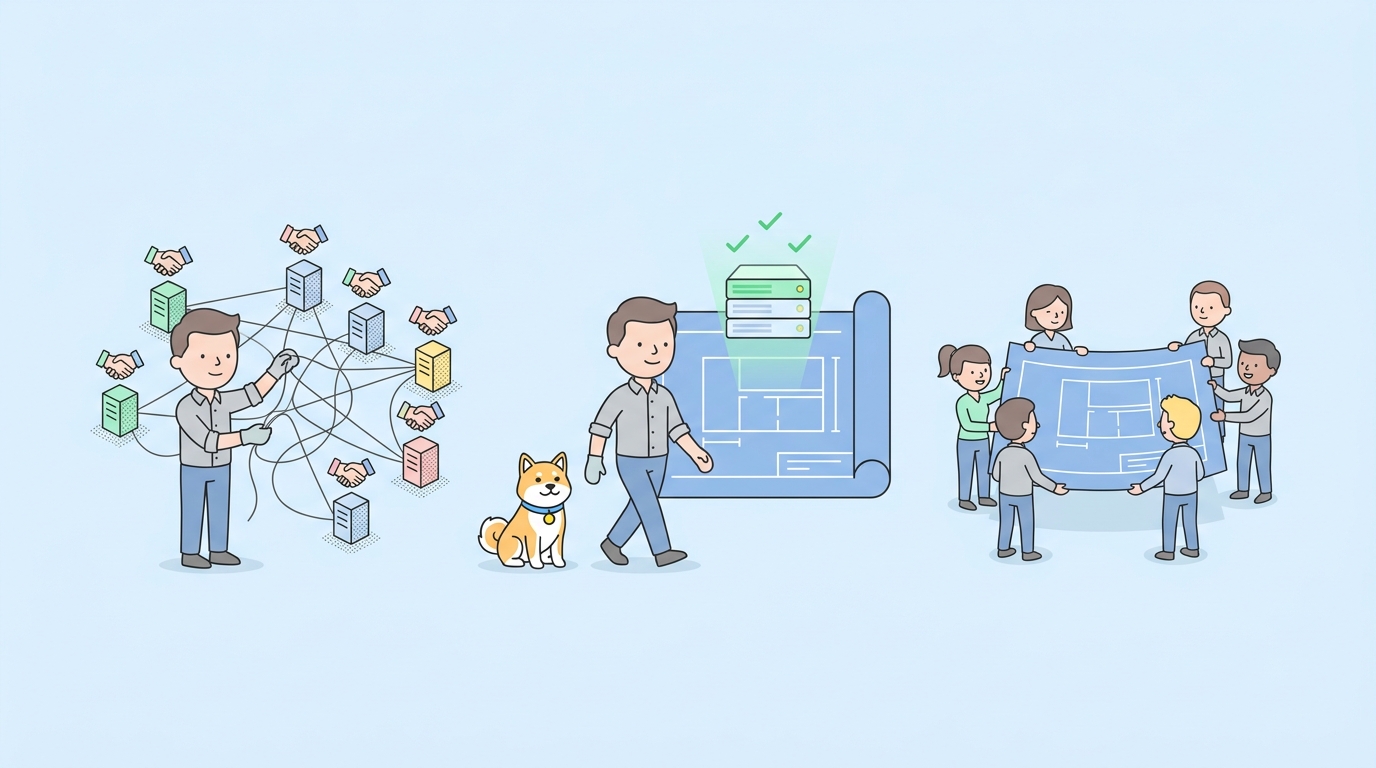
If you are comparing Apidog CLI vs Keploy, the first thing to understand is that they sit in different categories. They both end up running API tests, but they get there from opposite directions.
Keploy auto-generates tests and dependency mocks by recording real traffic at the network layer using eBPF. No code changes, no SDK, language-agnostic. Apidog CLI runs test scenarios that you author (or generate from an API spec) inside a full design, mock, documentation, and testing platform.
That core difference shapes everything else. So before you pick one, get clear on which problem you are actually solving: capturing how an existing service already behaves, or building a maintainable test suite that the whole team owns. This Keploy comparison walks through both honestly.
The core difference in one paragraph
Keploy watches your running application. You start your app under keploy record, send real requests, and Keploy captures those calls plus their downstream dependencies (database queries, network and streaming events) at the eBPF layer. It then turns that captured traffic into test cases and into mocks for those dependencies, so you can replay everything deterministically later. Apidog works the other way around: you design and author test scenarios, or generate them from an OpenAPI schema, then run them from the terminal with apidog run. One records reality. The other expresses intent.
Neither approach is wrong. They answer different questions.
How tests get created
With Keploy, tests come from observed behavior. You install it with one line:
curl --silent -O -L https://keploy.io/install.sh && source install.sh
Then you record and replay against your real app:
keploy record -c "CMD_TO_RUN_APP"
keploy test -c "CMD_TO_RUN_APP" --delay 10
During the record phase, every real interaction becomes a test case, and every dependency call becomes a mock. Keploy also has an AI test-generation path that builds validated suites from OpenAPI, Postman, cURL, or a live endpoint, with auto-cleanup. The capture happens at the network layer through eBPF, which is why it needs no SDK and works across Go, Java, Node.js, Python, Rust, C#, C/C++, and TypeScript, and across gRPC, GraphQL, HTTP/REST, Kafka, and RabbitMQ.
With Apidog, tests come from design. You define endpoints and schemas in the platform, then assemble test scenarios with steps, assertions, and data flow between requests. Apidog also offers AI test-case generation from your API schema and endpoints, authored inside the app. Once a scenario exists, the CLI runs it:
apidog run --access-token <TOKEN> -t <SCENARIO_ID> -e <ENV_ID>
The tests are version-controlled artifacts your team reviews and maintains, not a snapshot of one recording session. If you want the full picture of the runner, the Apidog CLI complete guide covers scenarios, tokens, and exit codes.
Apidog CLI vs Keploy: feature comparison
| Dimension | Keploy | Apidog CLI |
|---|---|---|
| Core approach | Record real traffic, replay deterministically | Run authored / AI-spec-generated test scenarios |
| How tests are created | Captured from live API calls + dependencies | Designed in-platform or generated from a spec |
| Code changes required | None (eBPF capture, no SDK) | None to your app; you author scenarios |
| Language-agnostic | Yes, capture is at the eBPF network layer | Yes, runs against any HTTP API regardless of stack |
| Dependency mocking | Auto-generated from captured traffic (DB, network, streams) | Designed mock servers you configure |
| Data-driven testing | Derived from recorded variations | Built in via -d with CSV or JSON |
| Reporters | Test results from replay runs | CLI, HTML, JSON, plus cloud reports via --upload-report |
| OS constraints | Leans Linux and elevated privileges for eBPF | Runs anywhere the CLI runs (macOS, Linux, Windows, CI) |
| Platform breadth | Focused testing and test-generation tool | Full lifecycle: design, debug, mock, document, test |
| Open source | Yes, Apache-2.0 | Free tier; commercial platform |
A few of these deserve more than a table cell.
Dependency mocking: the real dividing line
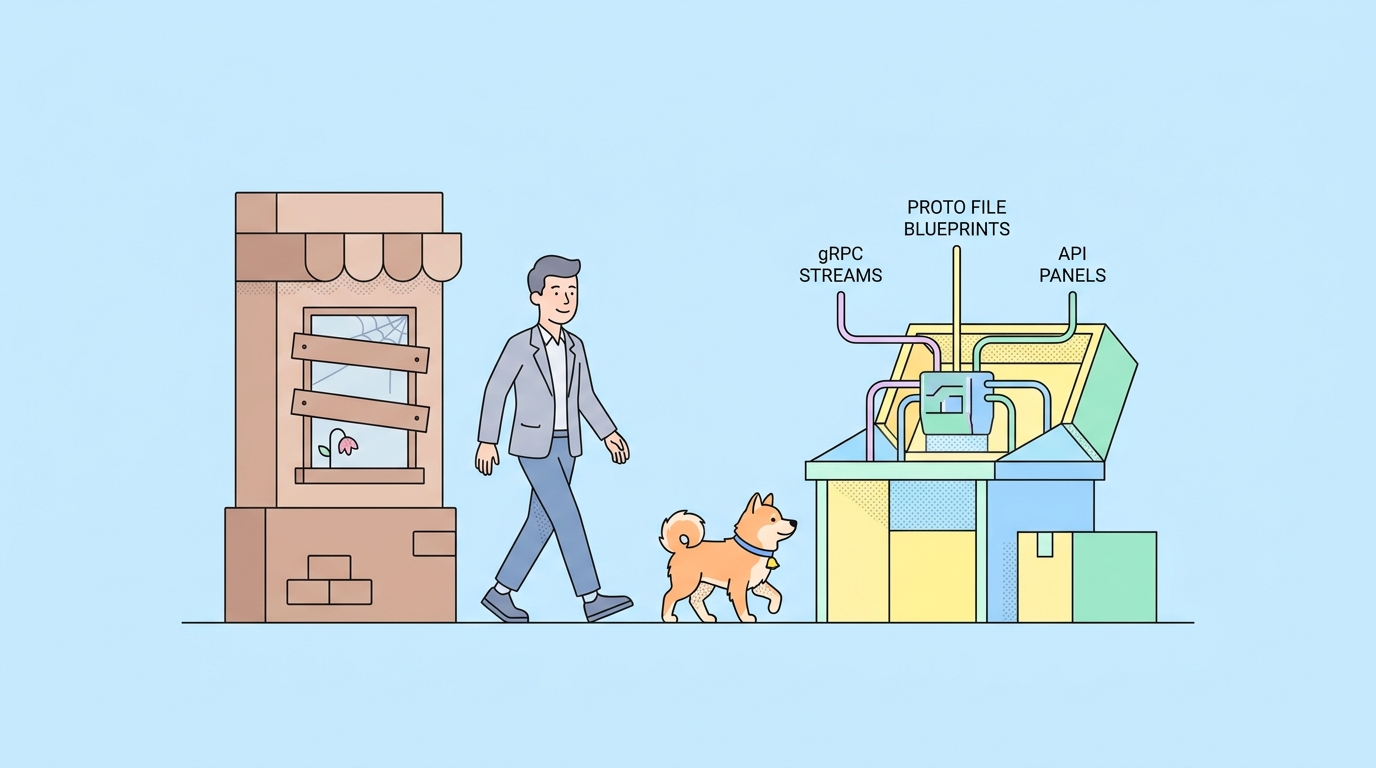
This is where the two tools genuinely diverge. Keploy’s standout strength is that it mocks your dependencies automatically. Because it captures DB queries and network events alongside the API calls, the replay does not need a live database or a running third-party service. You get isolated, deterministic runs from real recorded behavior, with zero mock-writing effort. For a service with messy downstream dependencies, that is a real time saver.
Apidog approaches mocking by design. You set up mock servers with dynamic responses, and you control exactly what they return. It will not auto-capture your production database calls and turn them into stubs, and you should not expect it to. If your goal is to model intended behavior or to mock an endpoint that does not exist yet, the designed approach fits.
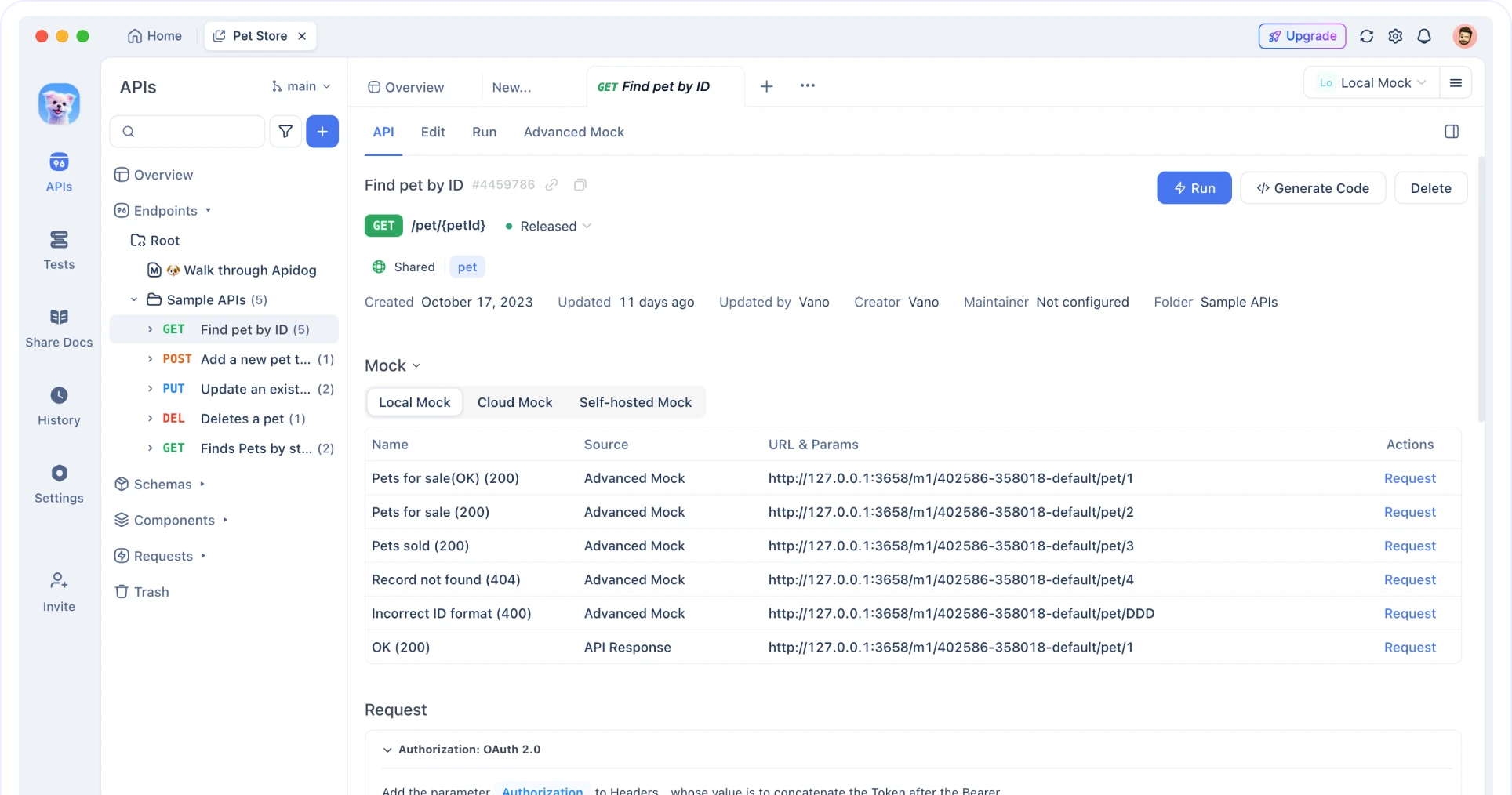
If your goal is to freeze how a live service already talks to its database, Keploy fits. Tools like these sit in the broader contract testing and mocking space, and the right pick depends on whether you are capturing or designing.
To be precise about one thing: Apidog does not capture live traffic via eBPF, and it does not auto-generate tests by recording production calls plus dependency mocks. That record-and-replay-from-real-traffic capability is Keploy’s distinct strength. The overlap between the two is narrower than it looks: both can generate tests from a spec, but only Keploy generates them from runtime behavior.
Data-driven runs and reporting
Once you are running authored scenarios, Apidog’s CLI gives you the operational pieces you expect from a CI test runner. You can drive a scenario across many input rows with a data file:
apidog run -t <SCENARIO_ID> -e <ENV_ID> -d ./users.csv -r html,cli
The -d flag accepts CSV or JSON, -e selects the environment, and -r picks reporters: CLI for the pipeline log, HTML for a shareable artifact, JSON for machine parsing. Add --upload-report to push results to the cloud. The data-driven testing guide and the test reports breakdown go deeper on both. This is the kind of structured, repeatable run you wire into a pipeline, and the CI/CD setup walkthrough shows it end to end.
Keploy reports on the outcome of replaying your recorded suite: which captured cases still pass against the current code. That is excellent for catching regressions in existing behavior. It is a different reporting question than “did my designed assertions hold across 200 input rows.”
OS and environment constraints
Worth being upfront here. Keploy’s eBPF capture means it leans on Linux and on elevated privileges to instrument the network layer. That is the price of code-less, language-agnostic capture, and on Linux or in Linux-based CI it is rarely a problem. But it is a real consideration for teams on other setups. Apidog’s CLI is a portable binary that runs on macOS, Linux, Windows, and standard CI runners, because it is sending HTTP requests rather than instrumenting the kernel.
There is also a curation point. Tests generated from real traffic capture whatever happened, including one-off states and noisy data. Those suites need review and cleanup before you trust them as a baseline. Designed tests start from intent, so they tend to be cleaner up front but cost you the authoring effort that Keploy skips.
Platform breadth
Keploy is a focused testing and test-generation tool, and it is very good at that focus. It is not trying to be your API design surface or your documentation host.
Apidog is the opposite shape. The CLI is one entry point into an all-in-one platform that also handles API design, debugging, mock servers, and auto-generated documentation. You can import OpenAPI, manage endpoints and schemas as code, and work across branches and merge requests, then run the same authored tests from the terminal. If your pain is fragmentation across separate design, mock, and test tools, that consolidation is the draw. If you only need to capture and replay one service, the platform breadth is more than you need. For a sense of where Apidog fits among general API test automation tools, the platform angle is the differentiator.
Honest verdict: who should pick which
Pick Keploy when you want to capture how an existing service already behaves, including its database and network dependencies, with essentially zero effort. If you have a running app, no test suite, and you need coverage fast without writing mocks or touching code, Keploy’s record-and-replay is hard to beat. It is open source under Apache-2.0, language-agnostic, and purpose-built for exactly this. Just plan for a curation pass on the generated suite, and check the Linux and privilege requirements against your environment.
Pick Apidog CLI when you want designed, maintainable, cross-team API testing inside one platform. If your team is authoring tests as part of API design, sharing them across people, driving them with data files, and wiring HTML and JSON reports into CI, Apidog’s authored-scenario model fits the workflow. It also covers the rest of the lifecycle, so the same tool that runs your tests also designs, mocks, and documents the API.
In practice, the apidog vs keploy decision is rarely about which is “better.” It is about whether you are capturing reality or expressing intent. Some teams use Keploy to bootstrap coverage on a legacy service and Apidog to design and maintain tests for the APIs they are actively building. That is a reasonable split.
If you are leaning toward the designed approach, Apidog has a free tier, and you can download Apidog to try the workflow. To go deeper on either side, see what is Keploy, the best Keploy alternative roundup, the focused Apidog CLI vs Keploy breakdown, or the migrate from Keploy to Apidog CLI guide. Keploy’s own documentation, its GitHub repository, and the eBPF project site are good primary sources on the record-and-replay side.
FAQ
Does Apidog record live traffic like Keploy? No. Apidog does not capture live traffic via eBPF and does not auto-generate tests from production calls. You author test scenarios or generate them from an API spec, then run them with the CLI. Recording runtime behavior plus dependency mocks is Keploy’s distinct capability.
Is Keploy or Apidog better for a service with lots of database dependencies? For capturing and replaying those dependencies automatically, Keploy. Its eBPF capture records DB queries and mocks them so replays run without a live database. Apidog uses designed mock servers you configure yourself, which is better when you want to model intended behavior.
Do I need to change my code to use either tool? No code changes are needed for either. Keploy instruments at the eBPF network layer, so it works without an SDK. Apidog sends HTTP requests against your API and does not touch your application code; you only author the scenarios.
Can both generate tests from an OpenAPI spec? Yes. This is the genuine overlap. Keploy can generate validated suites from OpenAPI, Postman, cURL, or a live endpoint. Apidog generates AI test cases from your schema and endpoints inside the platform. The difference is that only Keploy also generates tests from recorded runtime behavior.
Which one runs more easily across operating systems? Apidog CLI runs as a portable binary on macOS, Linux, Windows, and standard CI runners. Keploy’s eBPF capture leans on Linux and elevated privileges, which is fine on Linux-based CI but a consideration elsewhere.
The short version of this keploy vs apidog comparison: if you need to snapshot an existing service with no effort, start with Keploy. If you need designed, maintainable tests inside a platform that also handles design, mocks, and docs, start with Apidog CLI. Match the tool to whether you are capturing or designing, and the choice gets easy.