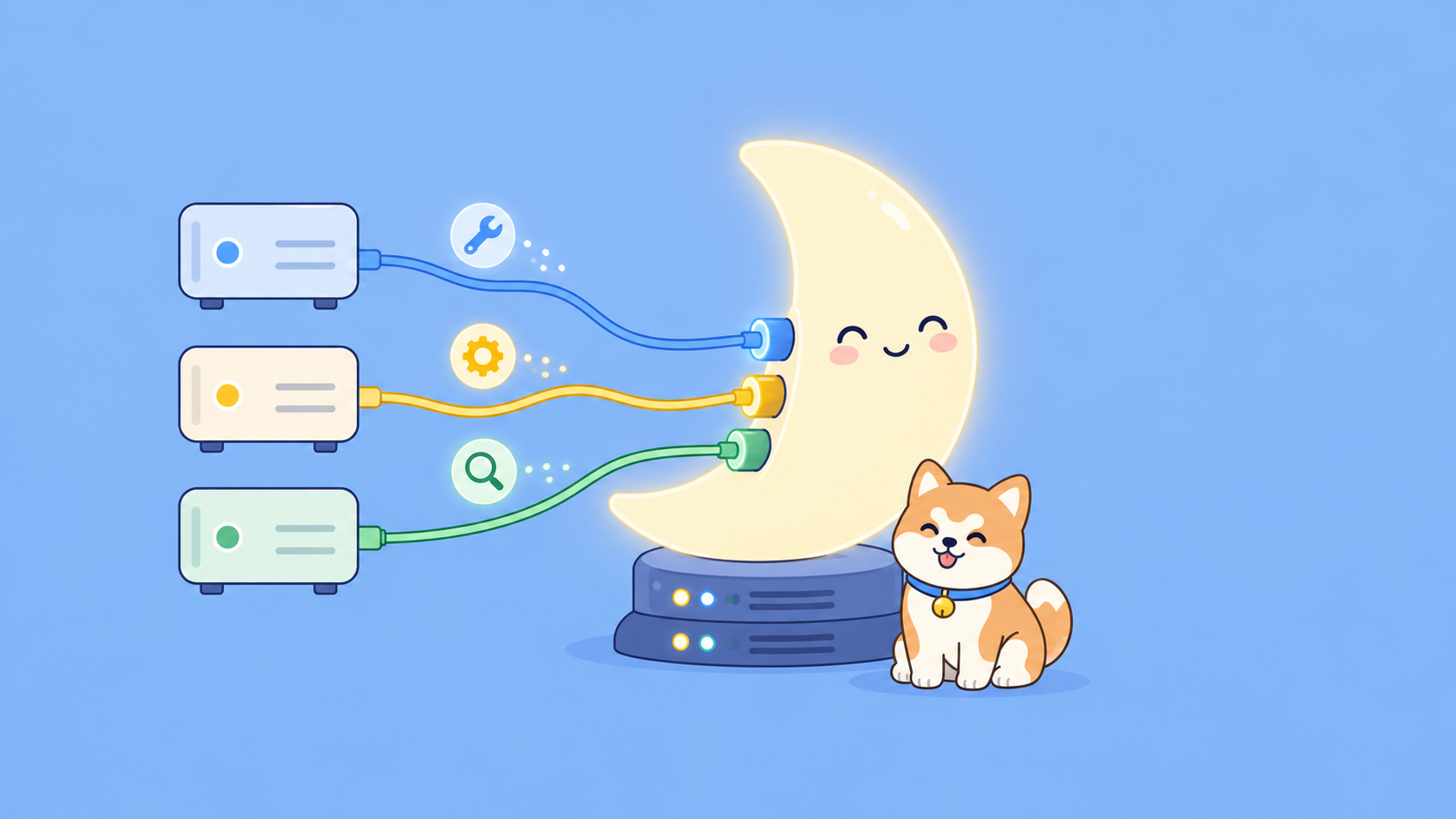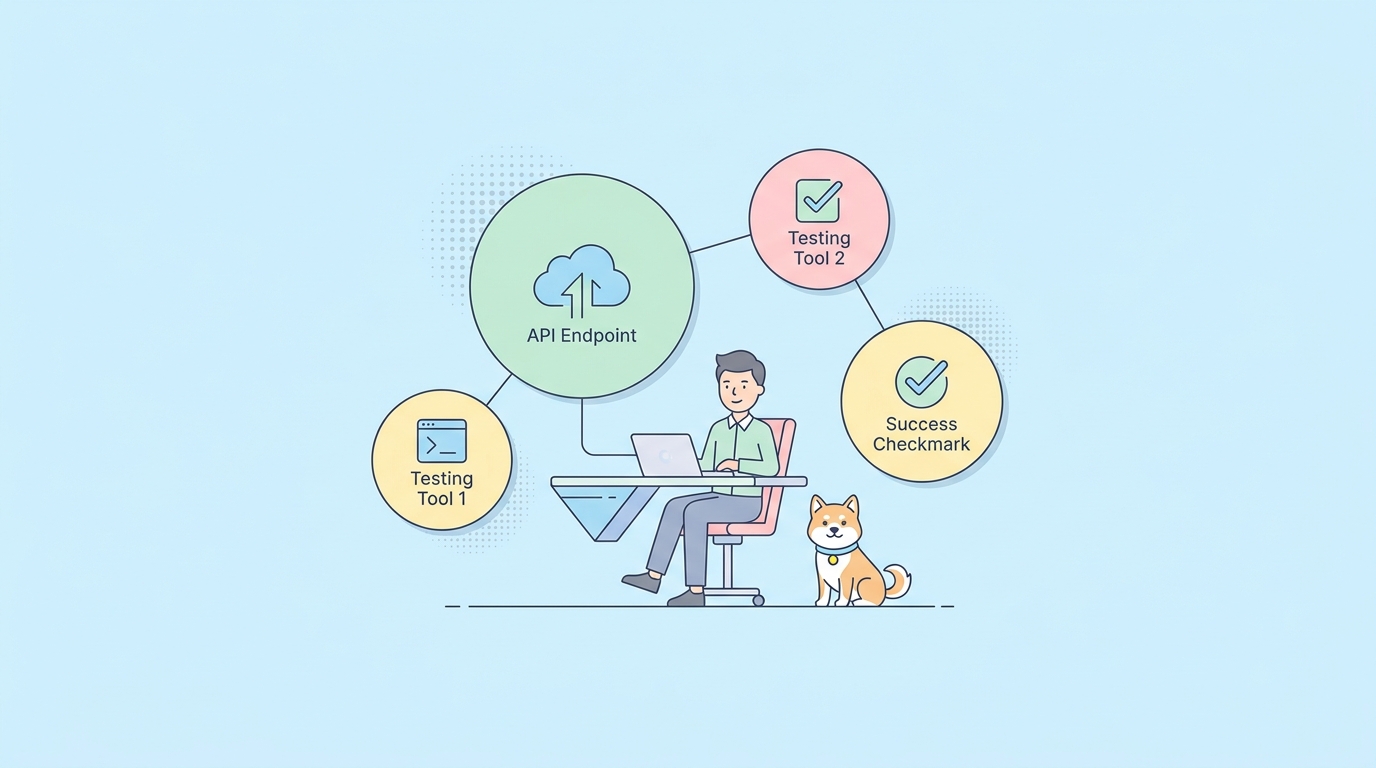
Swagger postman drift is not a process failure. It is what happens when you store the same contract in two places with no mechanism keeping them in sync. You write an OpenAPI spec, point Swagger UI at it for docs, then export a Postman collection for tests. A week later, someone changes an endpoint in the collection without touching the YAML, and now your docs and your tests describe different APIs. This article explains why that outcome is structurally guaranteed, and what a single-source-of-truth model looks like in practice. For a step-by-step on generating tests from a spec, see the existing how-to on OpenAPI test generation.
Why two files always drift apart
You maintain an openapi.yaml in your repo. You also keep a Postman collection. These two objects describe the same API contract, but they are stored separately, edited by different people, and updated on different schedules. Nothing in either tool enforces consistency between them.
Consider a realistic scenario. Your backend team ships a new POST /payments/refund endpoint with a required reason field. Someone adds it to the Postman collection because that is where they run their tests. The openapi.yaml update goes on a sprint backlog. Three days later, a frontend developer reads the Swagger docs, calls the endpoint without reason, and gets a 400 they cannot explain from the documentation alone.
The root cause is not negligence. It is the absence of any binding between the two artifacts. Neither tool knows the other exists.
| Artifact | Who updates it | Update trigger | Validation |
|---|---|---|---|
openapi.yaml |
API designer / tech lead | Scheduled doc sprint | Optional linter (e.g., Spectral) |
| Postman collection | QA / backend dev | When a test needs to run | Manual review or none |
| Swagger UI view | Auto-rendered from YAML | Only when YAML is pushed | Reflects YAML, not reality |
The table above shows the problem plainly. Three rows, three different update owners, zero cross-validation. Even if you run a linter like Spectral against your YAML, it catches schema errors, not gaps between the YAML and the collection that lives in another tool entirely.
The three-copy problem
Teams that also use a separate documentation platform such as Stoplight compound the issue. Now you have three copies of the contract:
- The
openapi.yamlcommitted to Git. - The Postman collection exported and shared as a workspace.
- The rendered documentation in Stoplight (or Swagger UI, or a wiki).
Each copy can drift independently. The OpenAPI Specification itself has no runtime enforcement mechanism. It is a description format, not a synchronization protocol. You can describe any API you want in YAML; nothing stops your Postman collection from doing something different.
This is the same pressure that teams at the World Economic Forum encounter when they maintain OpenAPI specs in GitHub alongside separate Postman collections and separate documentation sites. Three places for the same contract means three failure points and three manual synchronization loops. When you add team size and multiple services, the maintenance cost scales nonlinearly.
How drift breaks testing silently
The insidious part of swagger postman drift is that tests keep passing even when they are wrong. If your Postman collection still sends the old request body schema, and your test backend accepts both old and new schemas during a migration window, your green test run tells you nothing about whether the current spec is covered.
Here is a concrete YAML fragment showing a spec change that would slip past a stale Postman collection:
# openapi.yaml - updated spec (v2)
paths:
  /payments/refund:
    post:
      summary: Initiate a refund
      requestBody:
        required: true
        content:
          application/json:
            schema:
              type: object
              required:
                - transaction_id
                - reason          # NEW required field added in v2
              properties:
                transaction_id:
                  type: string
                  example: "txn_8x9Ka21"
                reason:
                  type: string
                  enum: [duplicate, fraudulent, requested_by_customer]
                  example: "requested_by_customer"
      responses:
        '200':
          description: Refund initiated
          content:
            application/json:
              schema:
                type: object
                properties:
                  refund_id:
                    type: string
                  status:
                    type: string
A Postman collection frozen at v1 sends only transaction_id. If the backend team adds a lenient default for reason during the rollout, the old Postman test passes. The spec says reason is required; the test never sends it. Nobody notices until a frontend integration breaks in staging.
Running a proper OpenAPI validator against your YAML catches schema inconsistencies within the spec. It does not catch the gap between the spec and what your Postman collection actually sends.
What OpenAPI-driven testing actually means
OpenAPI-driven testing means the spec is the authoritative source. Tests are derived from it, not written in parallel with it. When the spec changes, the tests reflect the change automatically because they share the same source.
This is different from “import Swagger into Postman.” Importing is a one-time copy operation. You press import, get a collection, and the two objects immediately become independent again. The next spec change requires another manual import or another manual collection edit. You have not solved drift; you have reset it to zero.
True spec-first execution looks like this:
- The OpenAPI file lives in Git as the canonical contract.
- A tool reads that file and derives mocks, docs, and test cases from it.
- When the file changes (via PR review), the mocks and test cases update.
- There is no separate collection to keep synchronized.
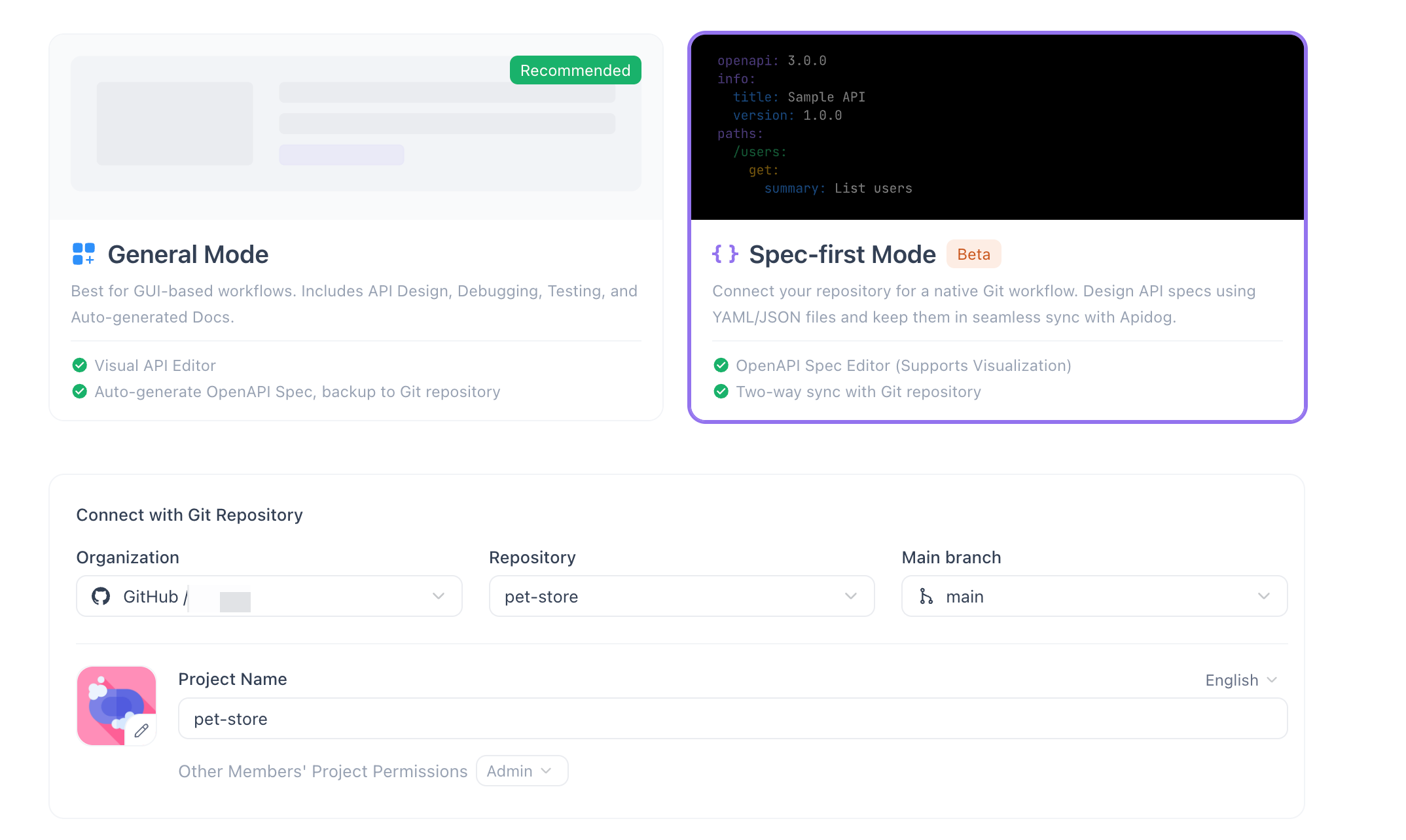
The spec-first API development model explains the broader workflow philosophy. This article focuses on the specific problem of drift between docs and tests.
Apidog as the execution layer over a single spec
Apidog’s model treats Git as the source of truth and Apidog as the execution layer on top of it. You commit your openapi.yaml. Apidog reads it and produces three outputs from that one file: interactive documentation, a mock server, and a test suite.
Apidog’s Spec-First Mode (currently in beta) is designed precisely for this workflow. You point it at your OpenAPI file, and the platform derives all three outputs without you maintaining a separate collection. When you update the YAML and push, the downstream outputs update.
The practical result is that there is no Postman collection to drift. There is one file. The sync-openapi-spec workflow covers how teams commit specs to GitHub and keep Apidog aligned.
For teams coming from a Postman-centered workflow, worth verifying in a trial: how Apidog handles data-driven test scenarios with your specific schema complexity, and whether report visibility permissions match your organization’s access model. These are good POC questions before you migrate a production suite.
API mocking is also a significant piece of the picture. When a mock derives from the same spec as the tests, a frontend developer calling the mock gets a response consistent with what the tests validate. For more on where mocking fits in, see API mocking use cases.
What the migration path looks like
If you are coming from a Swagger + Postman setup, the migration is not a big-bang replacement. A reasonable sequence:
- Audit your current
openapi.yamlagainst your Postman collection. Find every endpoint in the collection that is not in the spec, and every spec endpoint the collection does not cover. - Reconcile the spec. It should describe the actual current API, not the API as it existed when you first wrote the YAML.
- Import the spec into Apidog. Let Apidog generate an initial test suite from the spec structure.
- Deprecate the Postman collection incrementally. Run both in parallel for one sprint to compare results.
- Archive the collection. Git stays the source of truth. Apidog handles execution.
Step 1 is usually the most uncomfortable, because it surfaces how far apart the two artifacts have drifted. Teams that have let drift accumulate for six months often find endpoint coverage gaps of 20 to 40 percent.
For generating the initial test collection from your spec, the dedicated how-to at generating test collections from OpenAPI specs covers the mechanics in detail. This article deliberately stops before that step; the generation tutorial is the better reference once you have a clean spec.
Comparison: dual-maintenance vs. spec-as-source
| Dimension | Swagger + Postman (dual-maintenance) | OpenAPI-driven (spec as source) |
|---|---|---|
| Drift risk | High; two artifacts updated independently | Low; one artifact, derived outputs |
| Test coverage accuracy | Depends on manual sync discipline | Tracks spec changes automatically |
| Onboarding new devs | Two tools to learn and keep aligned | One spec, one tool reads it |
| CI/CD integration | Collection must be exported and versioned separately | Spec in Git; CI reads directly |
| Mock consistency | Mock must be maintained separately or imported | Mock derived from same spec as tests |
| Cost of a schema change | Update spec AND update collection AND update mock | Update spec once |
The dual-maintenance column is not a failure of Postman as a tool. Postman is strong at collection-based testing and has a large ecosystem. The problem is the workflow pattern of treating a collection as a parallel contract rather than a derived artifact.
FAQ
Why does importing Swagger into Postman not solve drift?
Importing creates a point-in-time copy. After the import, the two objects are independent. The next change to your openapi.yaml does not propagate to the collection automatically. You would need to re-import or manually edit the collection on every spec change, which returns you to the dual-maintenance problem.
Can I keep using Postman for exploratory testing while adopting a spec-first model?
Yes. Spec-first does not prohibit ad-hoc testing. You can keep Postman for one-off exploratory calls while moving your automated regression suite to a spec-driven runner. The key is not committing the exploratory collection as a source of truth for contract validation.
How do I know when my spec has drifted from the actual API implementation?
The most reliable check is a contract testing layer. Your API server can validate incoming requests and outgoing responses against the OpenAPI spec at test time. Tools like Spectral lint the spec for internal consistency, but you need runtime validation to catch implementation drift. This is a separate concern from Swagger-Postman drift, but it compounds the problem when both are present.
Does Apidog replace Postman entirely?
That depends on your team’s workflow. Apidog handles design, mocking, testing, and docs from a single workspace. For teams whose primary use of Postman is contract testing and regression suites, Apidog covers that ground. If your team uses Postman’s collection runner in CI or has extensive collection scripts, testing with Postman remains an option alongside a spec-first design workflow. Worth evaluating both in a trial sprint.
What if my openapi.yaml is already out of date?
Reconciling the spec is a prerequisite. There is no shortcut. You compare the spec against actual API behavior, update the YAML to reflect reality, then treat it as the canonical source going forward. The audit step in the migration path above is where that work happens.
One way to reduce drift programmatically is to let an AI agent query and update your collections — the Postman MCP server gives tools like Claude direct access to your workspace for inspection and automated maintenance.
Conclusion
Swagger docs and Postman collections drift because they are two separate artifacts with no binding between them. That is a structural property of the dual-maintenance workflow, not a team discipline problem. The fix is removing the second artifact: one OpenAPI file in Git, with a tool that derives mocks, tests, and docs from it rather than letting each live independently.
Download Apidog and import your existing OpenAPI spec. You can see in a single session how one file replaces both your Swagger doc and your Postman collection, with mocks, tests, and docs all reading from the same source. If you are evaluating the Spec-First Mode (currently in beta), check the Apidog Spec-First Mode page for the current feature scope and access details.