API testing and development tools have become essential components of modern software development workflows. Two names frequently dominate discussions in this space: Postman, the long-established industry leader, and Bruno, the newer open-source challenger positioning itself as a simpler, more developer-friendly alternative.
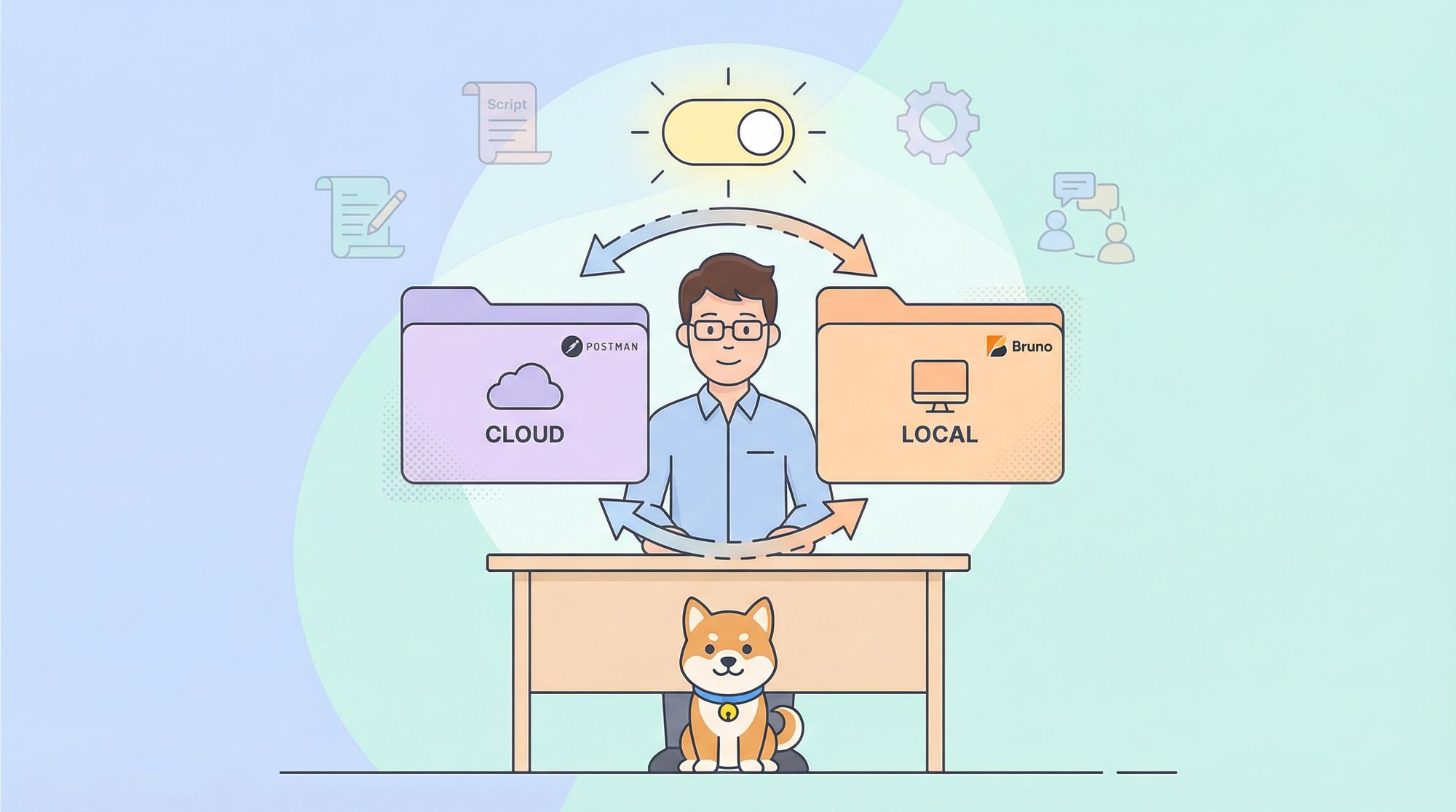
Both tools aim to help developers test APIs, manage collections, and streamline API development—but they approach these goals from fundamentally different philosophies. Postman has evolved into a comprehensive "API platform" with cloud-based collaboration features, while Bruno emphasizes local-first development with Git-native collections.
This comparison will help you understand the key differences and determine which approach best fits your workflow—or whether a third option might serve you better.
Overview of Postman and Bruno
What is Postman?

Postman launched in 2012 as a simple Chrome extension for API testing and has grown into a full-featured API development platform. It now includes:
- API design and documentation tools
- Mock server capabilities
- Automated testing with Newman CLI
- Team collaboration features
- API monitoring and analytics
- AI-powered features (Postman AI)
Postman's evolution reflects its strategy: transform from a developer tool into an enterprise platform that organizations depend on for their entire API lifecycle.
What is Bruno?

Bruno emerged as a response to Postman's platform expansion and pricing changes. It's an open-source, local-first API client that stores collections as plain-text files on your filesystem. Key characteristics include:
- Git-native collections (stored as folders and files)
- No cloud dependency or login required
- Declarative scripting for variable management
- Offline-first design philosophy
- Free and open-source core functionality
Bruno's philosophy is "stay focused on being the best API client possible" rather than expanding into a full API platform.
Head-to-Head Comparison
1. Collections and Version Control
| Aspect | Postman | Bruno |
|---|---|---|
| Storage Format | Single JSON file | Plain-text markup (bru format) in folders |
| Version Control | Proprietary workspace-based versioning | Native Git integration |
| Collaboration | Cloud-based workspace sharing | Git repository-based collaboration |
Postman's Approach: Collections are stored as single JSON files in Postman's cloud workspace system. Version control happens through Postman's proprietary system—you must manage workspace permissions, create forks, and merge changes through Postman's interface rather than standard Git workflows.
Bruno's Approach: Collections are stored directly on your filesystem as a folder structure with plain-text .bru files. This means you can use any version control system (Git, Mercurial, etc.) to manage your API collections exactly like you manage your code.
The Trade-off: Postman's approach provides a centralized, managed system but creates workflow separation between your code and API tests. Bruno's approach integrates API testing into your existing Git workflow, but requires you to manage collaboration through your own infrastructure.
2. Online vs Offline Capabilities
| Aspect | Postman | Bruno |
|---|---|---|
| Login Required | Yes, must sign in | No login concept |
| Offline Usage | Limited, requires prior sync | Fully functional offline |
| Cloud Dependency | Core functionality requires cloud sync | Zero cloud dependency |
Postman: You must log in and be online to use Postman effectively. While limited offline functionality exists, it requires prior synchronization and can be unreliable for teams.
Bruno: Bruno is a local desktop application with no cloud dependencies. You can work entirely offline, and your data never leaves your computer unless you explicitly choose to share it through Git.
Why This Matters: For developers working in restricted environments (banking, government, healthcare) or those who simply prefer owning their data, offline-first tools offer significant advantages.
3. Pricing and Collection Run Limits
| Aspect | Postman | Bruno |
|---|---|---|
| Free Tier | Limited | Fully functional, open source |
| Paid Plans | 8-16/user/month (Basic), Enterprise pricing varies | Golden Edition: 4-7/user/month |
| Collection Runs | Limited to 25/month on free tier | Unlimited |
The Collection Run Controversy: Postman's most criticized limitation is restricting local collection runs to 25 per month on free plans. Many developers find this insufficient for meaningful testing workflows—since collection runs execute locally (not in Postman's cloud), the restriction feels artificial.
Bruno places no limits on collection runs, aligning with its philosophy that local functionality should be unrestricted.
4. Platform Complexity vs Focused Tool
| Aspect | Postman | Bruno |
|---|---|---|
| Feature Scope | Full API lifecycle platform | Focused API client |
| Learning Curve | Steeper, many features to navigate | Simpler, focused interface |
| Enterprise Features | Extensive (monitoring, governance, analytics) | Basic collaboration via Git |
Postman's Platform Strategy: Postman has expanded into API design, documentation, monitoring, mock servers, governance, and AI features. This comprehensive approach serves enterprise needs but adds complexity that many developers never use.
Bruno's Focused Approach: Bruno intentionally stays focused on core API testing functionality. It doesn't attempt to be an API platform—it's an API client that integrates with your existing development workflow.
The Real Question: Do you need an API platform, or do you need an excellent API client that works with your existing tools (CI/CD, documentation generators, monitoring systems)?
5. Security and Data Privacy
| Aspect | Postman | Bruno |
|---|---|---|
| Data Storage | Postman cloud servers | Local filesystem |
| API Request Routing | Postman proxy servers | Direct from your machine |
| AI Data Usage | User data may train AI models | No AI features, no data collection |
Postman's Security Considerations: Collections, including sensitive data like tokens and API keys, are stored in Postman's cloud. API requests route through Postman's proxy servers, introducing an additional security consideration.
According to Postman's AI Terms, the company may use "deidentified" user inputs and outputs to train AI models, sharing data with third-party AI providers (Microsoft Azure OpenAI, OpenAI).
Bruno's Privacy-First Design: All data stays local—collections, requests, responses, and variables remain on your computer. Bruno has no cloud infrastructure, no proxy servers, and no ability to access your data.
For Security-Conscious Organizations: If your APIs contain sensitive information (financial data, healthcare records, proprietary algorithms), local-first tools reduce your security perimeter and compliance concerns.
6. Team Collaboration
| Aspect | Postman | Bruno |
|---|---|---|
| Collaboration Mechanism | Cloud workspaces with permissions | Git repositories |
| Access Management | Postman-specific permission system | Existing Git/GitHub permissions |
| Administrative Overhead | Requires workspace management | Minimal, uses existing infrastructure |
Postman: Teams collaborate through Postman's workspace system, which requires administrators to manage team structures, workspace permissions, and user access—all separate from your existing identity management systems.
Bruno: Collaboration happens through Git—the same system you use for code. Team access, permissions, and history are managed through your existing repository infrastructure.
Enterprise Reality: Organizations deploying Postman often dedicate staff to manage workspace structures and permissions. Bruno requires virtually no administrative overhead beyond existing Git management.
Where Both Tools Fall Short
Despite their respective strengths, both Postman and Bruno have limitations that may not serve all users:
Postman Limitations:
- Cost escalation as teams grow
- Vendor lock-in through proprietary formats and cloud dependency
- Workflow separation from development processes
- Privacy concerns for sensitive API work
- Artificial limits on local functionality
Bruno Limitations:
- No cloud sync—teams must manage Git infrastructure
- Limited enterprise features compared to platform tools
- Smaller community and fewer integrations
- Less mature ecosystem for advanced workflows
- No built-in mock servers or monitoring
A Third Option: Apidog
For developers and teams seeking a balanced approach—combining enterprise capabilities with flexibility and reasonable pricing—Apidog offers an compelling alternative that addresses the limitations of both Postman and Bruno.
Why Consider Apidog?
Comprehensive Yet Accessible: Apidog provides the full API lifecycle platform features that Postman offers—API design, documentation, testing, mock servers, and automation—without the enterprise pricing pressure or artificial limitations on functionality.
True Data Ownership: Unlike Postman, Apidog allows you to own your data completely. You can export collections in standard formats, integrate with your existing Git workflows, and maintain control over where your API information lives.
Flexible Collaboration Models: Apidog supports both cloud-based collaboration (for teams that want it) and local-first workflows (for security-conscious organizations). You choose your collaboration model rather than being forced into one.
No Artificial Limits: Apidog doesn't restrict local collection runs or impose usage limits that frustrate developers. Core functionality remains fully available.
Competitive Pricing: Apidog's pricing structure is designed to be accessible for individual developers while remaining reasonable for growing teams—addressing the cost concerns that drive many users away from Postman.
Seamless Migration: Transitioning from Postman is straightforward—Apidog imports Postman collections directly, preserving your existing work without disruption.
Apidog vs Postman vs Bruno: Summary
| Feature | Postman | Bruno | Apidog |
|---|---|---|---|
| API Testing | ✓ Comprehensive | ✓ Focused | ✓ Comprehensive |
| Mock Servers | ✓ Included | ✗ Not available | ✓ Included |
| API Documentation | ✓ Platform feature | ✗ External tools needed | ✓ Built-in |
| Git Integration | Limited workspace sync | ✓ Native | ✓ Supported |
| Cloud Collaboration | ✓ Required | ✗ Not available | ✓ Optional |
| Offline Capability | Limited | ✓ Full | ✓ Supported |
| Collection Runs | 25/month (free) | Unlimited | Unlimited |
| Data Ownership | Cloud-dependent | Local-only | Your choice |
| Pricing | $8-16+/user/month | Free/Open source | Accessible tiers |
| Migration Support | — | Postman import | Postman/Bruno import |
Which Tool Should You Choose?
Choose Postman if:
- You need a comprehensive API platform with governance and monitoring
- Your organization already uses Postman and has established workflows
- Cloud collaboration is essential for distributed teams
- Budget is not a primary constraint
Choose Bruno if:
- You prefer local-first, offline-capable tools
- Your team already uses Git extensively
- You want free, open-source software with no usage limits
- Privacy and data ownership are critical concerns
- You don't need platform features beyond API testing
Consider Apidog if:
- You want enterprise features without enterprise pricing
- You need flexibility in collaboration models (cloud or local)
- You're migrating from Postman and want a smooth transition
- You value data ownership and export capabilities
- You want unlimited functionality without artificial restrictions
- You need mock servers, documentation, and automation in one tool
Conclusion
The "Postman vs Bruno" debate reflects a broader question: Do you need an API platform or an API client?
Postman has evolved into a platform—comprehensive, cloud-centric, and increasingly expensive. Bruno has remained a focused tool—local-first, Git-native, and free.
But many teams need something in between: enterprise capabilities without enterprise costs, flexibility without complexity, and ownership without isolation. That's where Apidog positions itself—not as another polarized option, but as a balanced solution that lets you choose your workflow while providing the features modern API development requires.
The best API tool is one that fits your workflow, respects your data, and scales with your needs without breaking your budget. Evaluate your requirements carefully—and consider whether a third path might serve you better than the established binary.
Ready to explore a better alternative? Try Apidog free and experience an API development platform designed for developers, not just enterprises.
Frequently Asked Questions
Is Bruno completely free?
Bruno's core functionality is free and open-source. They offer a "Golden Edition" with additional collaboration features for 4-7 per user per month.
Can I migrate from Postman to Bruno?
Yes, Bruno can import Postman collections. However, complex Postman features (environments with multiple layers, advanced scripting) may require manual adjustment.
Does Apidog support Git-based workflows?
Yes, Apidog supports Git integration for teams that prefer version control-based collaboration, while also offering cloud sync for teams that want managed collaboration.
Which tool is best for enterprise use?
Postman offers the most enterprise features (governance, monitoring, analytics). Apidog provides similar capabilities at more accessible pricing. Bruno may require additional infrastructure investment for enterprise collaboration needs.