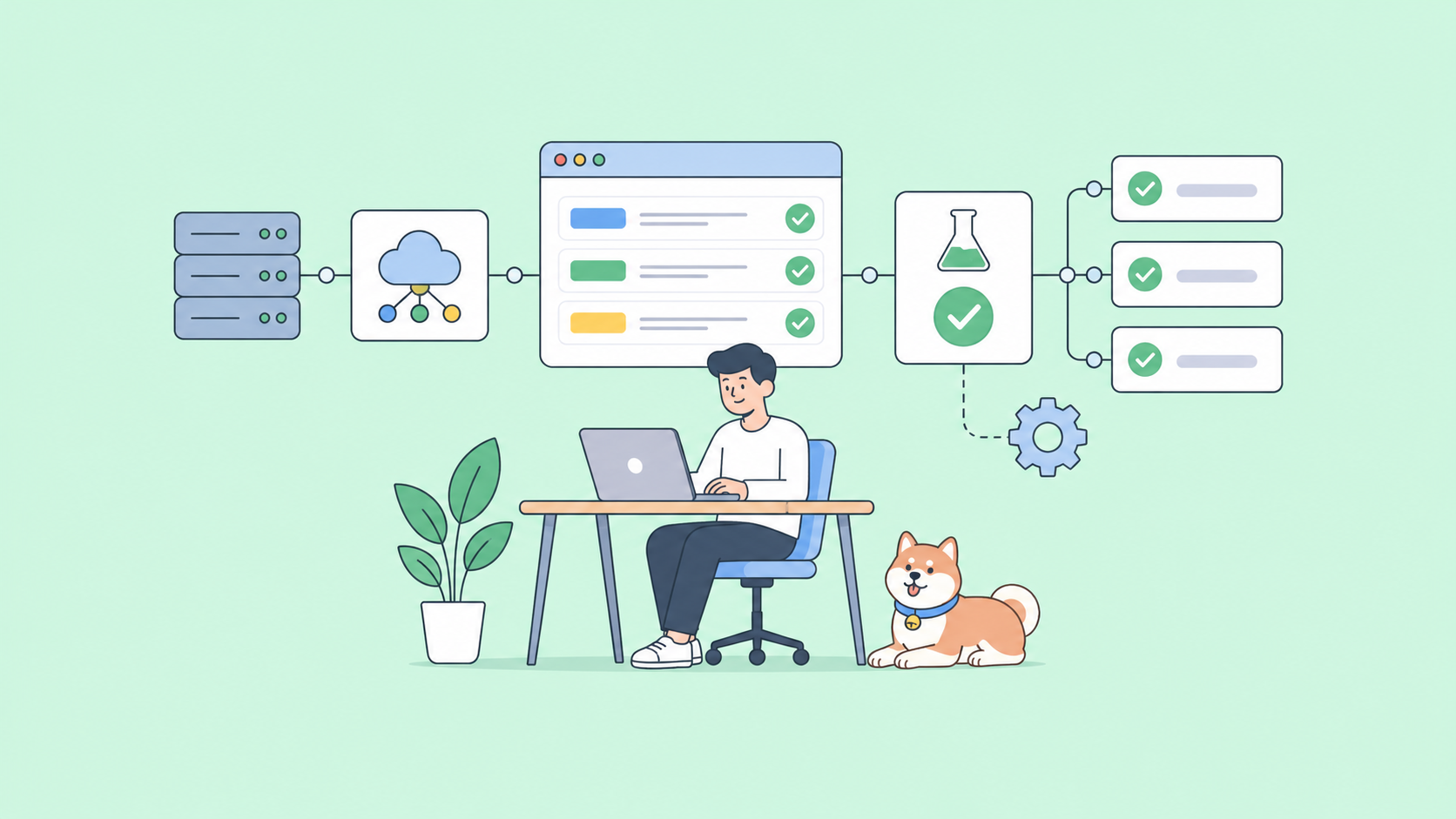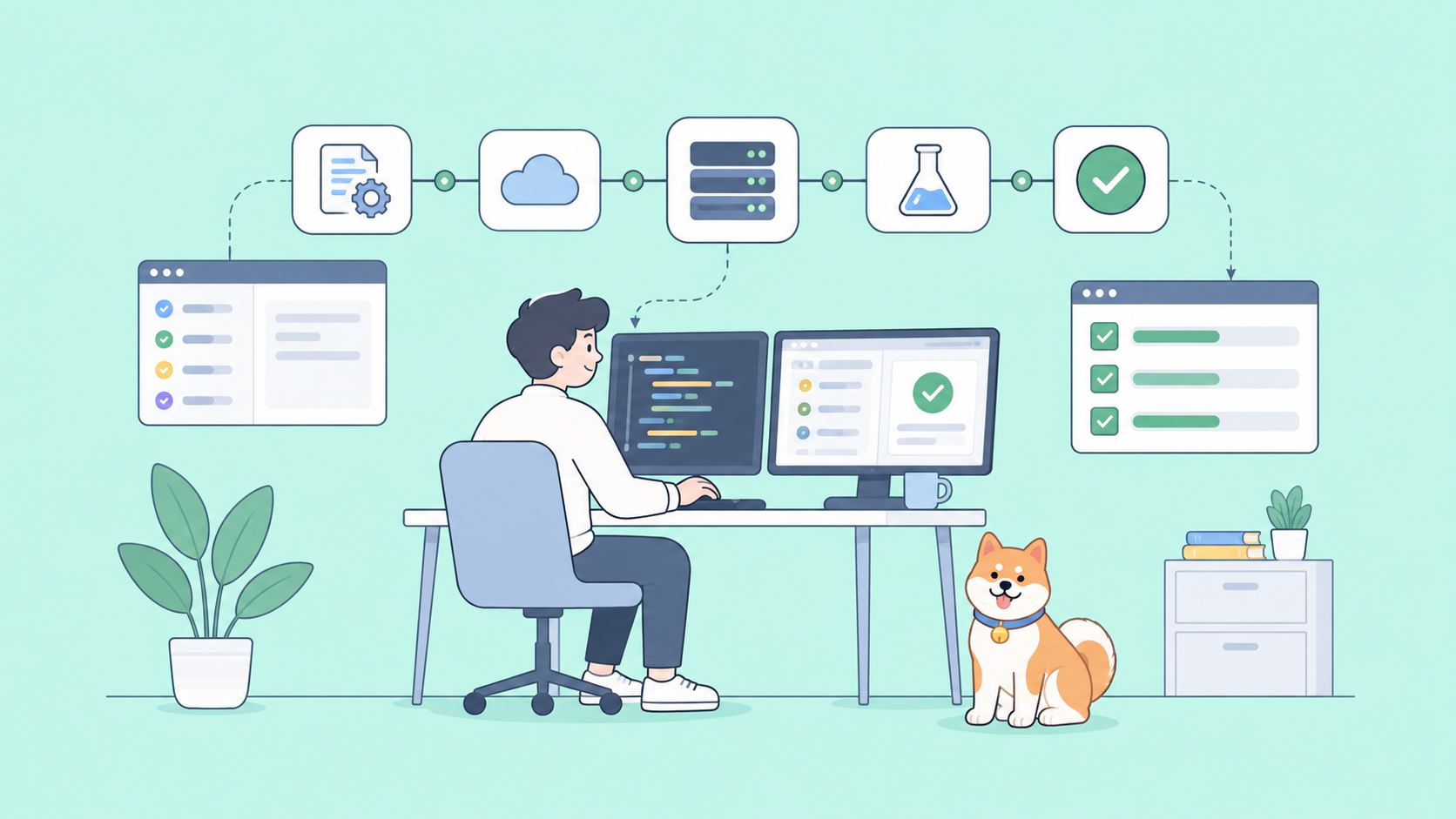
Most API design tooling is heavier than the job needs. You want to check a naming rule, bundle a split spec, or catch a breaking field rename, and suddenly you are booting a desktop app or wiring up a service. From the terminal, each of those tasks is one command with almost no setup.
This piece is the lightweight cut of the API design toolchain. Every tool here installs fast, starts fast, and does one thing well. No account to create for the core job, no long config file before you see output, and in most cases a single binary or an npx invocation you can drop straight into CI. If you want the bigger picture of the workflow these fit into, start with our guide on how to design an API, then come back to pick your CLIs.
You will get six tools, each with a real install command and the one command that proves it works: a spec linter, a bundler that also validates, a code and doc generator, two ways to catch breaking changes between versions, and Apidog’s CLI for designing endpoints and schemas from the terminal. The OpenAPI Specification is the shared language all of them read, so a spec one tool produces feeds cleanly into the next.
What makes a CLI tool lightweight for API design
Lightweight is about footprint and friction, not feature count. For this list, a tool earns the label when three things hold.
First, small install and fast start. A single compiled binary, or an npx call with no global install, beats anything that pulls a large runtime or spins up a service. You should be able to run it in a fresh container without a five-minute setup.
Second, low or zero config to get a first result. The tool should do something useful the moment you point it at a spec, before you write a config file. Tighten the rules later.
Third, terminal-first and scriptable. Structured or greppable output, a clear exit code, and no GUI in the loop. That is what lets the same command run on your laptop and in a pull-request check without changes.
The tools below run roughly from smallest footprint to largest, so the fastest to adopt come first.
Redocly CLI: lint and bundle with zero install
Redocly CLI is the lightest way to start because you do not have to install it at all. Prepend npx @redocly/cli@latest to any command and you are running it, which is ideal for CI or a one-off check on someone else’s machine. It is MIT-licensed and covers two jobs: it lints, and it bundles.
npx @redocly/cli@latest lint openapi.yaml
npx @redocly/cli@latest bundle openapi.yaml -o dist/openapi.yaml
The bundle command is the standout. It takes a spec split across many $ref files, the sane way to keep a large design maintainable, and flattens it into one document that mock servers, doc sites, and other tools expect. Splitting your spec into per-resource files keeps diffs readable and merge conflicts small, which is core to a Git-native API design workflow. Redocly is fast too; it lints a 1 MB spec in under a second.
Best at: bundling multi-file specs plus a quick validation pass, with nothing to install. Honest limit: its default lint rules are lighter than a full custom ruleset, so many teams run Redocly for bundling and Spectral for deep style enforcement.
Spectral: the flexible style linter
Spectral from Stoplight is the reference open-source linter for API descriptions, licensed under Apache-2.0. It reads a ruleset, a YAML, JSON, or JavaScript file listing your rules, and applies it to OpenAPI 3.x, OpenAPI 2.0, AsyncAPI, and Arazzo documents. If you want a smaller footprint than the npm package, Spectral also ships as a standalone CLI binary for macOS, Linux, and Windows.
npm install -g @stoplight/spectral-cli
spectral lint openapi.yaml
It stays lightweight in practice because of the zero-config start: point it at a spec with no ruleset file and it applies the built-in oas ruleset, flagging missing descriptions, invalid examples, and structural problems right away. The real value shows up later in custom rules: require an operationId on every operation, a shared error schema, a naming convention on paths. Those rules live in your repo and run identically for every contributor. This is how you make an API style guide executable, which pairs with the fundamentals in API design principles.
Best at: enforcing a team style guide as code. Honest limit: Spectral checks a single spec; it cannot compare two versions, so pair it with a diff tool for breaking changes.
oasdiff: catch breaking changes as a single binary
A linter tells you whether one spec is clean. It cannot tell you that renaming a field just broke every client in production. oasdiff fills that gap, and it is about as lightweight as a tool gets: a single Go binary, Apache-2.0 licensed, with no runtime to install. Grab a pre-built release, brew install oasdiff, or go install, then feed it two versions of a spec.
go install github.com/oasdiff/oasdiff@latest
oasdiff breaking old-openapi.yaml new-openapi.yaml
The breaking command surfaces only the changes that break existing consumers; changelog gives a human-readable list of everything that shifted; diff gives the full machine-readable delta. It detects hundreds of distinct change types across the whole spec. Wire oasdiff breaking into a pull-request check and a breaking change becomes a failed build instead of a 3 a.m. page.
Best at: gating breaking changes in CI with almost no setup. Honest limit: it compares specs, so it is only as good as your discipline in keeping the spec current with the real API. It does not lint style; run it alongside Spectral or Redocly.
Optic: lint and diff in one CLI (with a caveat)
Optic is MIT-licensed and does something the others split apart: it lints and diffs OpenAPI in one tool, comparing two versions to flag breaking changes while also applying style rules. Install is a single npm package, and the core command is short.
npm install -g @useoptic/optic
optic diff old-openapi.yaml new-openapi.yaml --check
Here is the honesty a tools list owes you. Optic’s public repository was archived in January 2026, and the project is no longer maintained; the last release predates that by months. The MIT source still runs, so you can vendor it, but you will get no new rules and no security patches. For breaking-change detection today, oasdiff is the maintained, lighter option. Optic stays on this list because you will still meet it in existing pipelines and should know what it is.
Best at: teams already invested in it who want lint and diff in one CLI. Honest limit: no longer maintained as of early 2026; treat it as legacy and plan a migration.
openapi-generator: turn the design into clients and stubs
Design is not finished until other people can build against it. openapi-generator is Apache-2.0 and generates client SDKs, server stubs, and documentation from an OpenAPI spec across dozens of languages. It is the heaviest tool here because it runs on the JVM, but the CLI wrapper keeps day-to-day use simple.
npm install -g @openapitools/openapi-generator-cli
openapi-generator-cli generate -i openapi.yaml -g typescript-axios -o ./client
Swap -g typescript-axios for go, python, java, kotlin, or any supported generator. Run it in CI on every spec change and your client libraries never drift from the contract. Treating the spec as the source of truth and generating the rest is the heart of design-first API development.
Best at: keeping generated code and docs in lockstep with the design. Honest limit: it needs a JDK (11 or newer), so it is not a single small binary; the generated code is a starting point you will often customize, and generator quality varies by language.
Apidog CLI: design endpoints and schemas from the terminal
The five tools above check and transform a spec you already have. Apidog covers the step before that: creating the endpoints and data schemas in the first place, from the command line. The lightweight piece is the apidog-cli binary, not the full desktop app, and it installs from npm in seconds.
npm install -g apidog-cli
apidog login --with-token <YOUR_TOKEN>
apidog endpoint list
apidog schema list
apidog export --format openapi -o openapi.yaml
The CLI has command groups for endpoint, schema (data models), security-scheme, folder, mock, and import/export, so you can script API design from the terminal and then export the result as OpenAPI. Output is structured JSON with agentHints.nextSteps, which makes it easy to pipe into other steps. See the complete Apidog CLI guide for the full command set.
The honest framing, since it matters on a design list: Apidog does not lint your OpenAPI or enforce style rules; that is Spectral and Redocly. And Apidog is not open source; it is a commercial product with a free tier. What its free tier plus the CLI give you is an integrated place to design endpoints and schemas, then export clean OpenAPI to feed right back into oasdiff, openapi-generator, and the rest of this toolchain.
Best at: designing and exporting a spec from one place without stitching separate binaries together. Honest limit: not a linter, and not open source, so it complements the tools above rather than replacing them.
How to choose
Most teams run two or three of these together, not one. Match the tool to the job.
| Tool | Best for | Install | Open source? | Notes |
|---|---|---|---|---|
| Redocly CLI | Bundling + quick lint | npx @redocly/cli@latest |
Yes (MIT) | Zero install via npx; best for multi-file specs |
| Spectral | Style-guide linting | npm i -g @stoplight/spectral-cli |
Yes (Apache-2.0) | Zero-config start; write custom rules |
| oasdiff | Breaking-change detection | go install github.com/oasdiff/oasdiff@latest |
Yes (Apache-2.0) | Single Go binary; maintained |
| Optic | Lint + diff in one | npm i -g @useoptic/optic |
Yes (MIT) | Repo archived Jan 2026; legacy |
| openapi-generator | SDK / stub / doc generation | npm i -g @openapitools/openapi-generator-cli |
Yes (Apache-2.0) | Needs a JDK 11+; heaviest here |
| Apidog CLI | Design endpoints + export spec | npm i -g apidog-cli |
No (free tier) | Not a linter; designs and exports OpenAPI |
A practical lightweight stack: design your endpoints and schemas with the Apidog CLI and export OpenAPI, lint that spec with Spectral, bundle multi-file sources with Redocly, and gate breaking changes with oasdiff. Add openapi-generator when you need client SDKs. For a wider look at the tooling landscape beyond the CLI, see our guide to Swagger alternatives for API design and testing and the fundamentals in how to design REST APIs.
Wrapping up
The lightweight CLI toolchain for API design is small, fast, and easy to wire into CI: Redocly bundles and lints with nothing to install, Spectral enforces your style guide, oasdiff guards against breaking changes as a single binary, and openapi-generator produces clients, with Optic as a legacy option to recognize. Design the spec, then let these commands check it on every push, no GUI required.
If you would rather design endpoints and schemas in one place and export clean OpenAPI into that same pipeline, Download Apidog and try the apidog-cli. It is the integrated design step in front of the open-source checks, not a replacement for your linter.