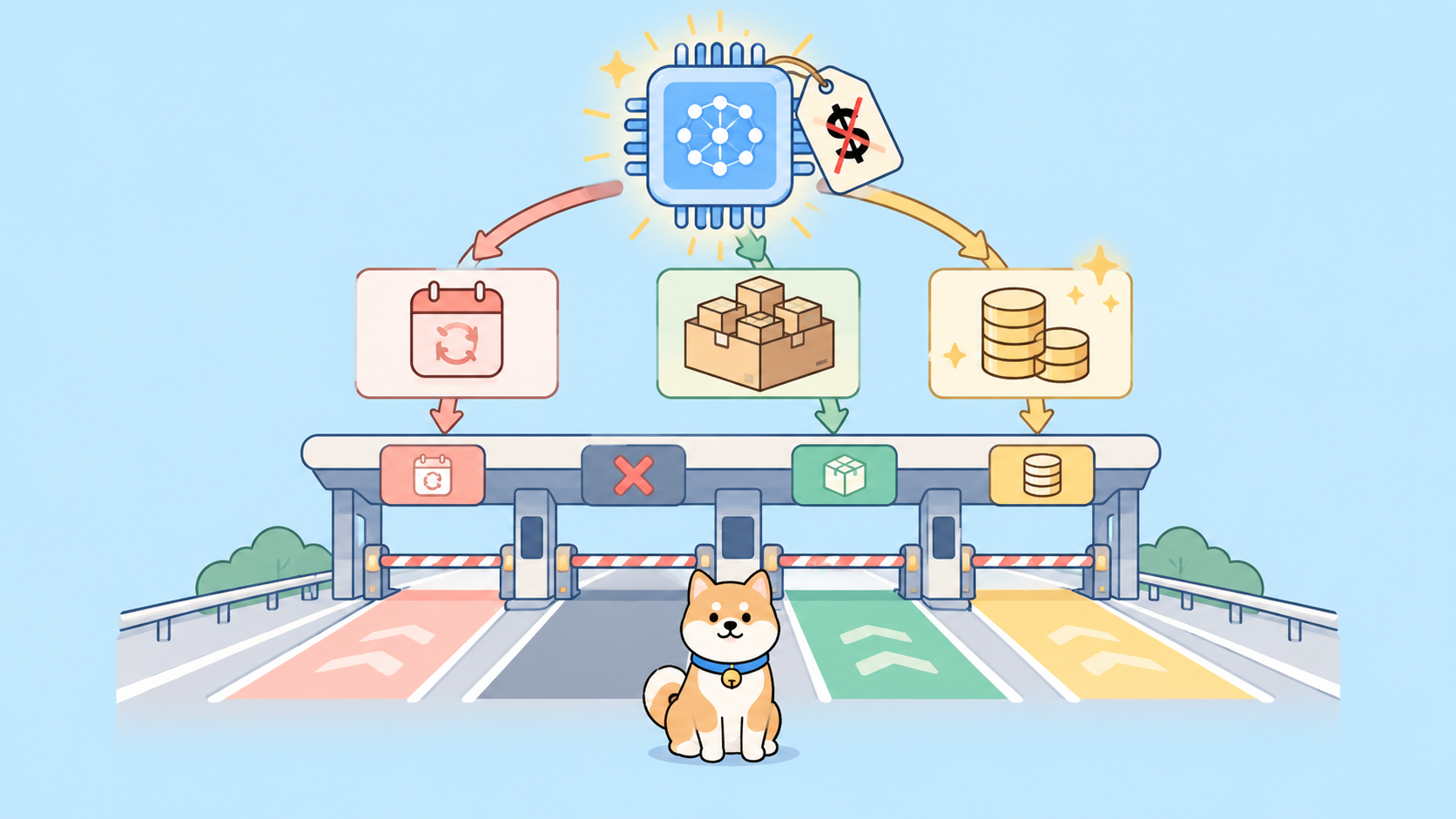
Alibaba released Qwen 3.8-Max in early August 2026, and the search results are already filling up with “use it free forever” claims that don’t survive contact with the actual terms. Here’s the honest version, checked against Alibaba’s own pages as of August 3, 2026.
There are exactly four routes worth your time. Two work today. One is a promise with a date attached. One is a fallback. If you want the full picture of the model first (2.4 trillion total parameters, 95B active, 1M-token context), start with our Qwen 3.8 overview and come back.
Quick map before the details:
| Route | Free? | Works today? | Catch |
|---|---|---|---|
| Qwen Chat | Yes | Yes | Consumer app, no API |
| Model Studio API quota | 1M tokens | Yes | Singapore region only, 90 days |
| Open weights (self-host) | Weights free | Not yet | Promised “next week,” and the hardware isn’t free |
| Older Qwen models | Yes | Yes | Not Qwen 3.8 |
Route 1: Qwen Chat, the zero-setup option
The fastest free path is the one Alibaba wants consumers on: Qwen Chat. Sign in, pick the model, and you’re talking to Qwen 3.8-Max with no card and no cloud console. The official release post points here as the default way to try the model.
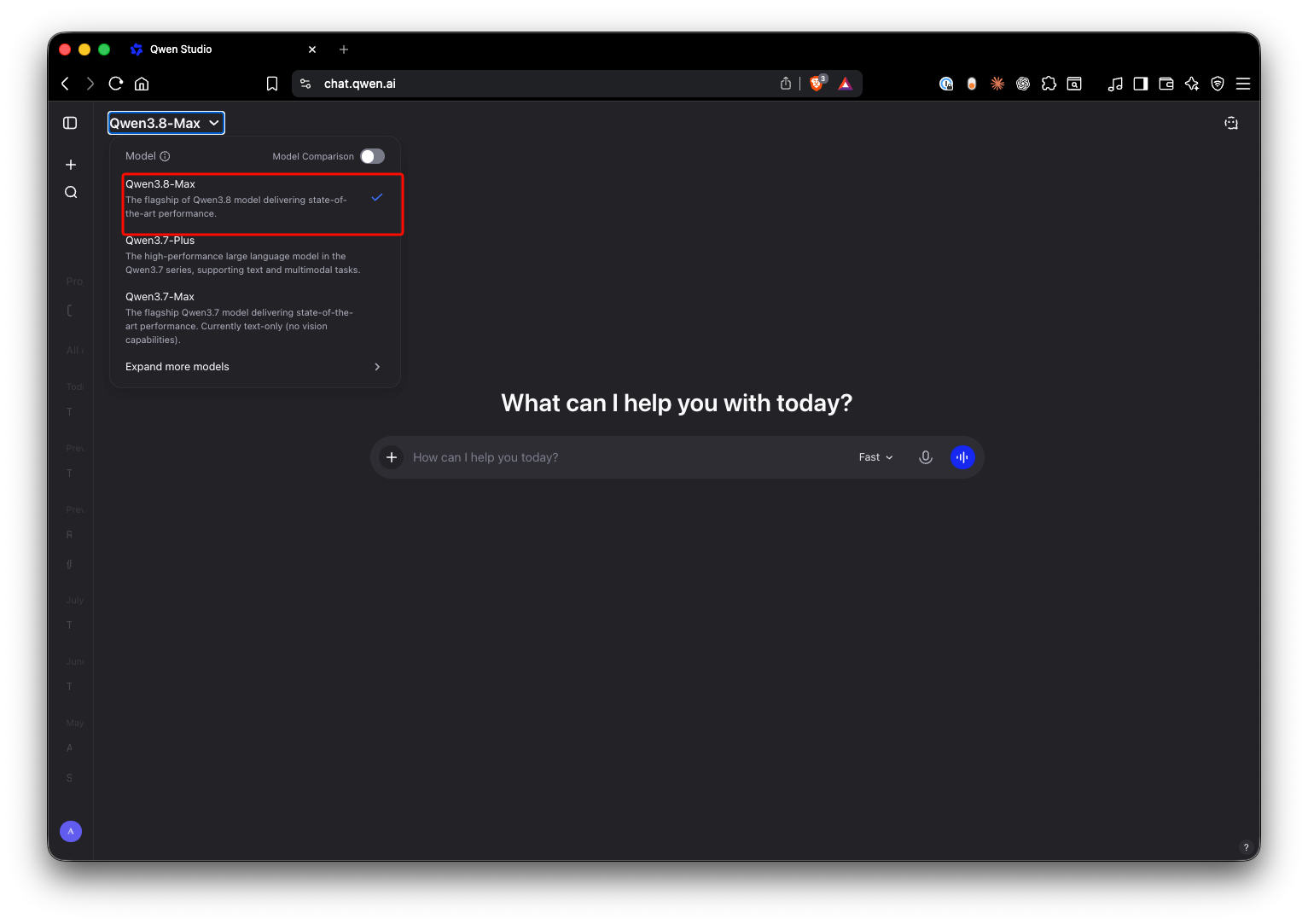
What you get: free usage of the flagship through a chat interface, including the image and document understanding the launch demos lean on.
What you don’t get: an API. No keys, no automation, no way to wire it into your app or test suite. Chat apps also apply their own system prompts and settings, so the behavior you see there won’t exactly match what the raw API returns. If you’re evaluating Qwen 3.8 for a product, treat Qwen Chat as a demo, not a benchmark.
Verdict: real, free, and fine for kicking the tires. Not a developer route.
Route 2: the Model Studio free quota (read the fine print)
This is the route that matters if you write code. Alibaba Cloud Model Studio gives new activations a free quota for qwen3.8-max: 1 million tokens. It’s a genuinely useful amount, and it’s also wrapped in fine print that most roundup posts skip.
Here’s what the pricing page actually says, translated into decisions:
1. Singapore region only. The free quota applies to the Singapore (international) region. That means your base URL is:
https://dashscope-intl.aliyuncs.com/compatible-mode/v1
Point at the Beijing or US-Virginia endpoints and you’re paying from token one. If your latency budget requires a US endpoint, the free quota doesn’t help you.
2. 90 days, then it’s gone. The quota is valid for 90 days from activation. Unused tokens don’t roll over; they expire. The clock is already running against the model’s early-August release, so don’t activate now and plan to evaluate in November.
3. After the quota: $2 input / $6 output per million tokens. That’s the flat rate across the full 1M context, no tiering. It’s cheap for a flagship, but it’s not free, and the transition is automatic once your quota drains or expires. Set a billing alert before you start. We break down what real workloads cost in our Qwen 3.8 pricing guide.
To claim the quota: create an account at Model Studio, activate the service, and generate an API key (the env var convention is DASHSCOPE_API_KEY). The model catalog lists qwen3.8-max at the top of the recommended models. The endpoint speaks the OpenAI-compatible protocol, and there’s an Anthropic-compatible endpoint too. Our Qwen 3.8 API walkthrough covers both, with streaming and reasoning output included.
One quota-eating trap: reasoning is on by default
Qwen 3.8-Max ships with reasoning_effort set to xhigh, and thinking tokens bill as output. A single hard prompt can quietly produce thousands of reasoning tokens before the answer even starts. On a paid account that’s a cost line; on a 1M free quota it’s the difference between two weeks of testing and two days. Drop reasoning_effort to low or medium for anything that isn’t a genuine reasoning task.
Make the million tokens last
One million tokens disappears fast when every debugging iteration re-sends your whole prompt chain. A few habits stretch it:
- Get the request right before you loop it. Build the call in Apidog, tweak parameters, and inspect the streamed response, including the reasoning deltas, one request at a time. Interactive debugging in a client beats burning quota on a retry loop in your app code.
- Mock what you’ve already seen. Once you know the response shape, save an example and let Apidog’s mock server serve it to your frontend or agent while you build. Development iterations against a mock cost zero tokens; you only hit the live endpoint for final verification.
- Watch your actual usage. Token counts come back in every response body. Keep an eye on them per request, and you’ll know your real burn rate instead of finding out when the quota dies mid-sprint.
Download Apidog free if you want to follow that workflow; it also makes the region switching painless, since you can store the Singapore, Beijing, and US base URLs as environments and flip between them.
Verdict: real, genuinely free for 90 days, and the best developer route right now. Just respect the region lock and the expiry date.
Route 3: open weights, promised but not downloadable yet
The launch’s biggest headline for the free crowd: Qwen 3.8-Max is the first Qwen-Max-class model with open weights. Alibaba says the weights land on Hugging Face and ModelScope “next week,” which puts them around August 10.
As of August 3, 2026, they are not downloadable. There’s nothing to pull, nothing to quantize, nothing to run. If you see a “run Qwen 3.8 locally today” tutorial dated before the weights actually exist, close the tab. For reference, Kimi K3 made the same open-weights promise at launch and delivered 11 days later, so the timeline is plausible. It just hasn’t happened yet.
The self-host reality check
Even when the weights drop, “free” needs an asterisk the size of a server rack. Qwen 3.8-Max is 2.4 trillion total parameters. The closest precedent is Kimi K3: a 2.8T-parameter model that shipped as 594 GB of weights even at aggressive MXFP4 quantization. Scale that down slightly for Qwen’s 2.4T and you’re still looking at hundreds of gigabytes of weights and a multi-GPU, realistically multi-node, serving setup. No consumer GPU holds this. No single workstation holds this. We walked through exactly what that class of hardware looks like for running Kimi K3 locally, and the economics apply here unchanged.
So what do open weights actually buy you? Mostly this: once weights are public, third-party hosts can serve the model, and competition tends to push hosted prices below first-party rates. For most readers, “free open weights” will translate to cheaper API access through hosting providers, not a model running on your laptop. That’s still a win. It’s just a different win than the phrase suggests.
Verdict: not real yet. Check back mid-August, and budget for hosting, not hardware.
Route 4: the fallback, genuinely free older Qwen models
If what you need is “a capable Qwen model at zero cost” rather than “Qwen 3.8-Max specifically,” the previous generation has free routes that don’t expire in 90 days. Smaller open-weight Qwen models already run on hardware people actually own, and the older lineup has its own no-cost access paths. We keep a separate guide to using Qwen 3.7 for free that stays current on those options.
The honest trade-off: you give up the benchmark gains that made 3.8-Max news. For a side project, a classifier, or learning the Qwen API shape before spending money, the older models are often enough.
What isn’t real
To save you some searching, here’s what does not exist as of August 3, 2026:
- No unlimited free API tier. The 1M-token quota is it, and it expires.
- No free tier outside Singapore. Beijing and US-Virginia endpoints bill from the first token.
- No downloadable weights yet. “Next week” is a promise, not a link.
- No official free Qwen 3.8 on third-party aggregators. Hosted third-party access will likely appear after the weights ship; anything before that claiming to be free 3.8-Max deserves skepticism about what model is actually behind it.
FAQ
Is the Qwen 3.8 API actually free?
Partly. You get 1 million free tokens through Alibaba Cloud Model Studio, valid for 90 days and only in the Singapore region. After that, the rate is $2 per million input tokens and $6 per million output tokens, so plan your evaluation inside the 90-day window.
Can I download and run Qwen 3.8 locally right now?
No. The weights are promised for Hugging Face and ModelScope around August 10, 2026, and haven’t shipped as of this writing. When they do, plan for hundreds of gigabytes and multi-GPU serving; this is a 2.4T-parameter model, not something a laptop runs.
How is this different from Kimi K3’s free options?
Kimi K3’s weights are already live and downloadable, so its self-host route is real today, while Qwen 3.8’s is still pending. Both are far too large for consumer hardware, though. Our guide to using Kimi K3 for free covers that model’s routes if you want to compare.
Does the free quota cover thinking tokens?
Yes, but they drain it. Reasoning output bills like normal output, and the default reasoning_effort is xhigh. Lower it for routine calls or your quota will vanish into chain-of-thought you never read.
The bottom line
Free Qwen 3.8 access is real, but it’s specific: Qwen Chat for casual use, and 1M Singapore-region tokens with a 90-day fuse for developers. The open-weights route is days away on paper and will mostly mean cheaper hosted access in practice. Everything beyond that is either an older model or wishful blogging.
If you take the API route, spend your quota on answers, not on debugging. Prototype the requests in Apidog, mock the responses while you build, and save the live tokens for the evaluation runs that actually tell you whether Qwen 3.8-Max earns a place in your stack.