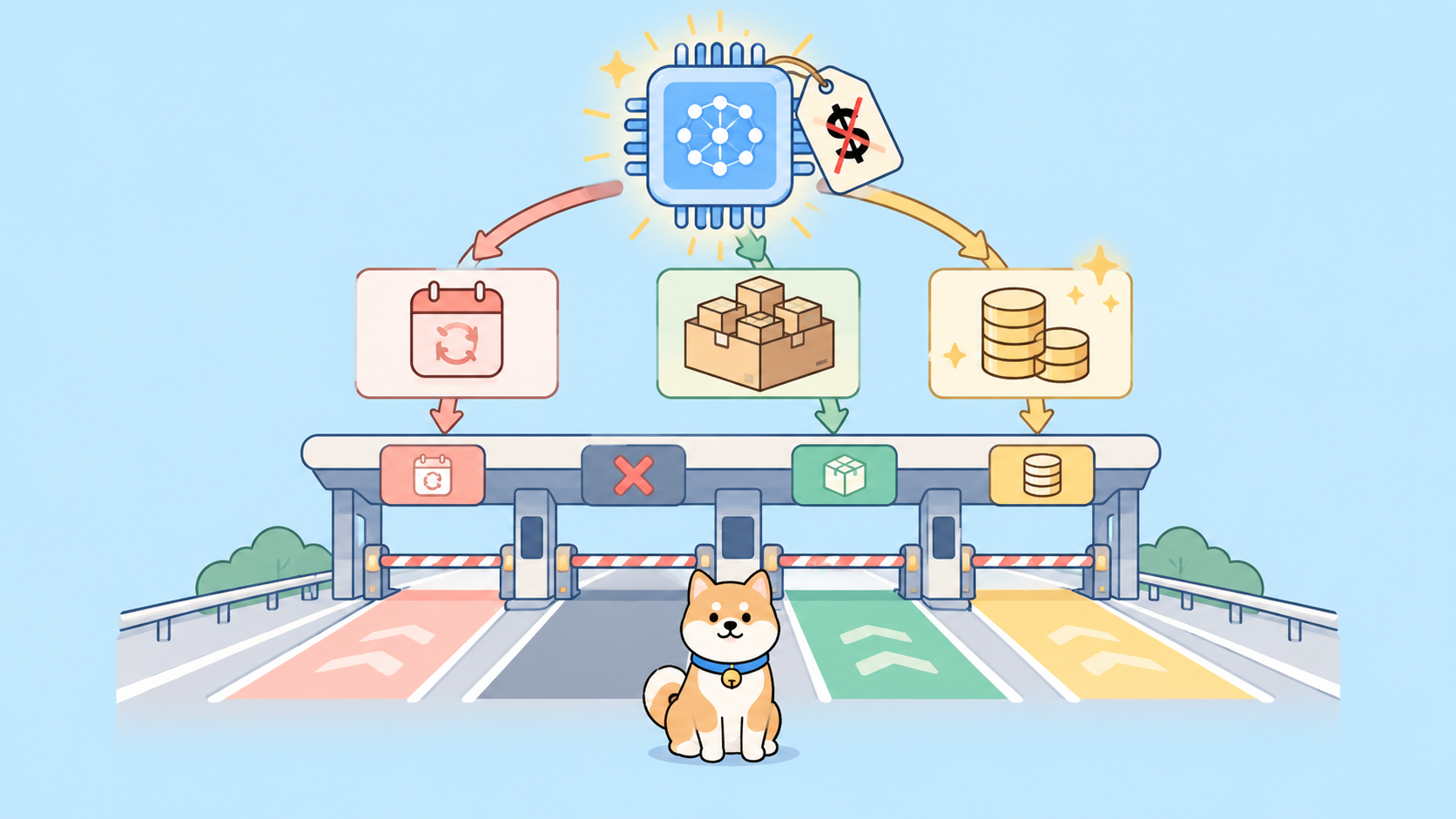
Most frontier models lock you out unless you pay. Claude Opus, GPT, Gemini Pro: you rent access through an API key, and the meter never stops. MiniMax M3 breaks that pattern. It’s an open-weight model, released on June 1, 2026, which means the path to genuinely free usage is real once the weights go public.
That “once” matters, so let’s be honest up front. MiniMax has promised to open-source the weights, but as of this writing they aren’t on Hugging Face yet. The company says they’ll land within days. Until they do, free self-hosting is a plan you can prepare for, not something you can do this afternoon. This guide walks through every route to low-cost and no-cost M3 access, what’s available today, and what’s coming. If you want the full background on the model itself, read what is MiniMax M3 first.
Here’s the short version. M3 gives you a context window up to 1,000,000 tokens, frontier-grade coding, and native multimodal input. The official launch post lives at the MiniMax M3 announcement. Now let’s get you using it without burning cash.
Route 1: run the open weights yourself
This is the route that makes “free” honest. Once MiniMax open-sources the weights, you download them, run them on your own hardware or a rented GPU, and pay nothing in per-token API fees. You own the inference. No rate limits beyond your own machine, no data leaving your network, no monthly bill.
The catch is that “free weights” doesn’t mean “free to run.” You still need compute. If you have a capable local GPU, your only cost is electricity. If you rent a cloud GPU by the hour, you trade the API meter for an instance meter, which can still beat hosted pricing for steady workloads.
When the weights land on Hugging Face, you’ll pick an inference stack based on the released format:
- vLLM for high-throughput serving with an OpenAI-compatible endpoint. Strong choice if you’re running an agent or app that hits the model constantly. See the vLLM docs to get started.
- SGLang for structured generation and fast multi-turn workloads.
- llama.cpp if a quantized GGUF build ships and you want to run on consumer hardware or even CPU.
A note on hardware: MiniMax hasn’t disclosed parameter counts for M3, so anyone quoting you exact VRAM numbers today is guessing. Your real requirement depends on the released weight size and which quantization you use. A 4-bit quant needs far less memory than full precision. When the weights drop, check the model card on Hugging Face for the recommended setup. That page is the source of truth, not a blog post written before launch.
If self-hosting an open-weight Chinese model sounds appealing but you’d rather start with one that’s already downloadable, the same playbook works for Qwen. We covered it step by step in how to use Qwen 3.7 for free.
Route 2: the cheapest hosted access
Not everyone wants to manage a GPU. If you’d rather call an endpoint and forget about infrastructure, MiniMax’s hosted API is the fast path. It isn’t free, but the entry price is low for what you get.
MiniMax sells access through subscription token plans:
| Plan | Price | Tokens per month |
|---|---|---|
| Plus | $20/mo | ~1.7B |
| Max | $50/mo | ~5.1B |
| Ultra | $120/mo | ~9.8B |
The $20 Plus plan is the realistic entry point. Roughly 1.7 billion tokens a month covers a lot of experimentation, prototyping, and light production use before you’d need to step up. Check the MiniMax API overview for current plan details, since token allotments and pricing can shift.
Hosted access wins when your usage is bursty or low-volume. If you only hit the model a few thousand times a month, paying $20 beats renting a GPU that sits idle most of the day. It also wins when you need the 1M-token context without provisioning enough memory to hold it yourself. The full request setup, including the base URL https://api.minimax.io/v1 and the model id MiniMax-M3, is covered in how to use the MiniMax M3 API.
Route 3: free trials and the playground
This is where you should be skeptical of anyone promising a permanent free tier. As of now, MiniMax doesn’t document a standing free API allowance for M3. We’re not going to invent one.
What you can do is check the platform directly for current trial credit. New-account credit and promotional grants come and go, and they’re the kind of thing that changes faster than any article can track. Sign in at the MiniMax platform, look at your billing dashboard, and see whether a trial balance is sitting there. If a web playground is available, that’s often the zero-setup way to test prompts before you commit to a plan or a self-host build.
Treat any free credit as a way to evaluate M3, not as a production strategy. Once you know the model fits your use case, pick Route 1 or Route 2 for sustained work.
Route 4: third-party hosts (watch for these)
Here’s the route that opens up the moment the weights go public. When an open-weight model ships, inference aggregators race to host it. OpenRouter-style platforms and independent GPU providers add new open models within days, and they often compete on price hard enough to has free or near-free tiers to pull in users.
So the practical advice is to watch the aggregators after the weights land. You might find an M3 endpoint at a fraction of first-party pricing, or a free daily quota meant to get you in the door. The tradeoff is that you’re trusting a third party with your prompts and your uptime, so read their data policy before you route anything sensitive through them.
This dynamic is part of a bigger story. The reason Chinese labs keep open-sourcing frontier models and slashing prices is a genuine race for developer mindshare. We unpacked it in the Chinese LLM price war of 2026, and M3’s open-weight release is the latest move in that game.
Testing your free setup
Whichever route you pick, you need to know your setup actually works before you build on it. A self-hosted endpoint and the hosted API should both speak the same OpenAI-compatible format, but “should” isn’t “does.” Latency, output quality, and token handling can differ between a quantized local build and the first-party service.
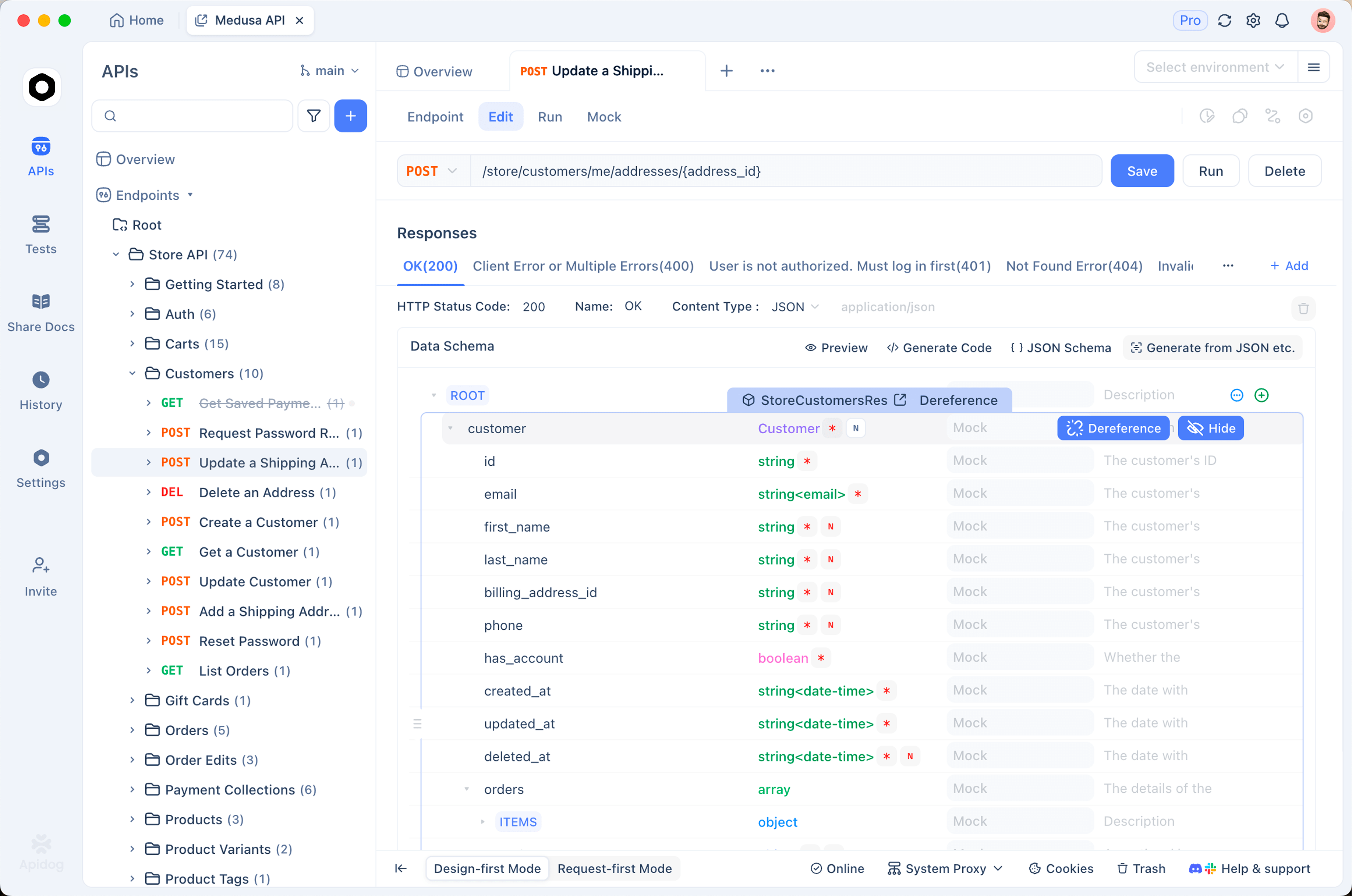
This is where an API client earns its keep. Point your requests through Apidog and you can fire the same prompt at your self-hosted M3 and the hosted endpoint side by side, then compare the responses, response times, and token usage in one place. Save both as requests in a collection, swap the base URL between http://localhost:8000/v1 and https://api.minimax.io/v1, and you’ve got a clean A/B test of free versus paid access.
Apidog also lets you save the MiniMax-M3 model id and your auth header as environment variables, so switching between a local vLLM server and the cloud is one dropdown away. If you want to follow along, Download Apidog and create a new request against your endpoint. The same workflow scales to other models too, which is handy if you’re already running something like the setup in how to use DeepSeek V4 Pro with Cursor.
Free vs paid: which should you pick
There’s no single right answer. It depends on what you’re building and how often you call the model.
| Use case | Best route | Why |
|---|---|---|
| Hobby project, occasional calls | Hosted Plus ($20) or trial credit | Cheap, zero ops, no idle GPU cost |
| Learning and prototyping | Self-host the open weights | Free per-token, full control, no rate limits |
| Agentic coding at scale | Self-host on a rented GPU | Steady high volume makes owned inference cheaper than per-token |
| Occasional 1M-token jobs | Hosted API | Skip provisioning the memory to hold huge contexts yourself |
| Privacy-sensitive work | Self-host | Prompts never leave your machine |
The pattern is simple. Low or bursty volume favors the hosted API. High, steady volume favors self-hosting once the weights are out. Privacy needs push you toward self-hosting regardless of volume.
FAQ
Is MiniMax M3 really free? It can be. M3 is an open-weight model, so once MiniMax publishes the weights you can run it on your own hardware with no per-token fees. You’ll still pay for compute, whether that’s your electricity bill or a rented GPU. The model itself is free to use; the infrastructure to run it isn’t.
Are the weights out yet? Not at the time of writing. MiniMax has committed to open-sourcing M3 and says the weights will arrive within days of the June 1 launch. Until they appear on Hugging Face, you can’t download and run them. Check the official channels and the model’s Hugging Face page for the live release.
What hardware do I need to self-host M3? That depends on the released weight size and the quantization you choose, and MiniMax hasn’t published parameter counts yet. Don’t trust specific VRAM figures before the weights ship. When the model card lands on Hugging Face, it’ll list the recommended setup. A 4-bit quant through llama.cpp will run on far more modest hardware than a full-precision build through vLLM.
Is there a free API key? No standing free tier is documented for the hosted API. The cheapest confirmed route is the $20/mo Plus plan, which includes roughly 1.7B tokens. Check the platform for any current trial credit on new accounts, and watch third-party aggregators after the open weights drop, since some has free quotas.
How does free M3 access compare to Qwen or DeepSeek? All three are part of the same open-weight wave from Chinese labs, and the self-host playbook is nearly identical across them. Qwen weights are already downloadable today, so if you want to start now, see how to use Qwen 3.7 for free. The full competitive picture is in the Chinese LLM price war of 2026.
Can I use M3 for free with a coding tool like Cursor? Once you have a working endpoint, self-hosted or hosted, you can point most OpenAI-compatible coding tools at it. The approach mirrors what we documented in how to use DeepSeek V4 Pro with Cursor: set the base URL, supply your key, and select the model id.
Wrap
Free MiniMax M3 access comes down to one fact: it’s an open-weight model. That puts self-hosting on the table in a way closed frontier models never allow. Today, your honest options are the $20 hosted Plus plan and whatever trial credit your account shows. The moment the weights hit Hugging Face, Route 1 and Route 4 open up, and genuinely free usage becomes a download away. Prepare your inference stack now, watch for the release, and test every endpoint through Apidog so you know exactly what you’re getting before you build on it.