GPT-5.5 shipped on April 23, 2026 with a paywall for most surfaces; Plus, Pro, Business, and Enterprise in ChatGPT, and paid API tokens for programmatic calls. Hidden inside the launch, though, are three no-cost paths that work today. If you are willing to accept rate limits and some eventual expiration, you can run real GPT-5.5 calls without adding a payment method.
This guide walks through every free path we can verify, which one fits which use case, and how to pre-build a production-ready collection in Apidog so you move off the free tier smoothly when the usage grows.
TL;DR
- Codex CLI on ChatGPT Free or Go — temporary free access to GPT-5.5 through the Codex command-line tool. No credit card. Works today.
- OpenAI trial credit for new API accounts — a small starter balance on the first key that unlocks real GPT-5.5 calls once the Responses API opens.
- OpenRouter and aggregator free tiers — third-party gateways that occasionally offer free quota on new frontier models within days of launch.
- Each path has caps. For any production workload, move to paid billing before the trial runs out.
Path 1: Codex CLI (the most practical free route)
OpenAI included Codex with every ChatGPT plan at launch, including Free and Go, for a limited time. That matters because Codex exposes GPT-5.5 through a ChatGPT sign-in instead of an API key. You sign in with a free account, run the CLI, and the model responds against a 400 K-token window.
Install
npm install -g @openai/codex
# or
brew install codex
Verify:
codex --version
Authenticate
Run codex for the first time and it opens a browser for ChatGPT OAuth. On headless boxes:
codex login --device-auth
The device code flow gives you a short URL and a code to paste on another machine. No API key required.
Pick the model
Inside an active Codex session:
/model gpt-5.5
Or start the CLI with the flag:
codex --model gpt-5.5
Check remaining quota with /status. On Free and Go, caps are tighter than paid plans, but still enough to prototype a small tool.
What you get, and what you do not
You get the real GPT-5.5 model at 400 K context, with file reads, terminal command execution, and repo edits inside the CLI. You do not get direct API access; the model is reachable only through Codex while you are signed in. For a full walkthrough of the Codex path, see our free GPT-5.5 with Codex guide.
The “limited time” framing in OpenAI’s announcement means Free and Go access to Codex will end. Plan for it by wiring your project so the model ID is configurable; when the trial closes, you swap to a paid plan or the API without rewriting the app.
Path 2: OpenAI trial credit for new API accounts
New OpenAI developer accounts often start with a small trial credit. The exact amount rotates; in past rollouts it has been $5 of credit for the first 90 days, sometimes more for .edu emails. Once the GPT-5.5 API goes general, that trial balance will unlock gpt-5.5 calls.
How to claim it
- Create a new developer account at
platform.openai.com. Use an email you have not registered before; accounts with previous billing history do not always get the trial. - Verify the phone number. OpenAI gates trial credit behind a verified number.
- Create a project-scoped API key under the trial organization.
- Check the usage dashboard for the grant amount and expiry date.
What that buys you on GPT-5.5
At $5 of credit and current pricing of $5 / M input, $30 / M output, you can run roughly 1 M input tokens of gpt-5.5 before the credit runs out, or about 160 K output tokens. That is enough to test a prototype, benchmark a workflow against your own data, or validate a small agent loop; not enough for production traffic.
Two cost-savers inside the trial window:
- Use Batch mode. Requests queued through the Batch API run at 50 % of the standard rate. Good for any workflow where you do not need a live response. Batch is documented on the OpenAI API pricing page.
- Keep
reasoning.effortatlow. Thinking-style runs eat token budget fast. For routine calls,lowis the default and matches GPT-5.4 behavior.
The catch
Trial credit does not auto-refresh. Once it burns, billing switches off and GPT-5.5 calls start returning 402. The account does not get a second trial.
Path 3: Aggregator free tiers
Third-party model gateways such as OpenRouter, Together, and Groq occasionally offer free quota on newly released frontier models. These tiers come and go, so verify availability the day you set up the account.
The pattern with every aggregator is the same:
- Create an account, verify email.
- Get an aggregator API key.
- Swap the OpenAI base URL in your SDK for the aggregator’s.
- Change the model string to the aggregator’s alias, e.g.
openai/gpt-5.5.
from openai import OpenAI

client = OpenAI(
    base_url="https://openrouter.ai/api/v1",
    api_key="sk-or-v1-...",
)

response = client.chat.completions.create(
    model="openai/gpt-5.5",
    messages=[{"role": "user", "content": "Explain the Responses API in two paragraphs."}],
)

print(response.choices[0].message.content)
The catch is different here: aggregators add their own rate limits, the free quota is shared, and the moment the provider pulls GPT-5.5 off free tier your requests return 402 or 429. Treat it as a prototyping surface, not a production dependency.
Which free path should you pick?
| Use case | Best free path |
|---|---|
| Terminal-based coding assistant | Codex CLI (Path 1) |
| Quick Python or Node experiments | Trial credit (Path 2) |
| Testing from a hosted app | Aggregator (Path 3) |
| Comparing GPT-5.5 against GPT-5.4 on real prompts | Trial credit + Apidog collection |
| One-off “can this answer my question” research | ChatGPT Plus (not free, but cheapest per hour) |
For anything more than a prototype, all three paths cap out fast. The real value is learning the request shape and tuning prompts before you spend paid tokens on them.
Pre-build the request shape in Apidog
The fastest way to move from “free trial” to “production key” without a rewrite is to build the request once and keep the collection version-controlled.
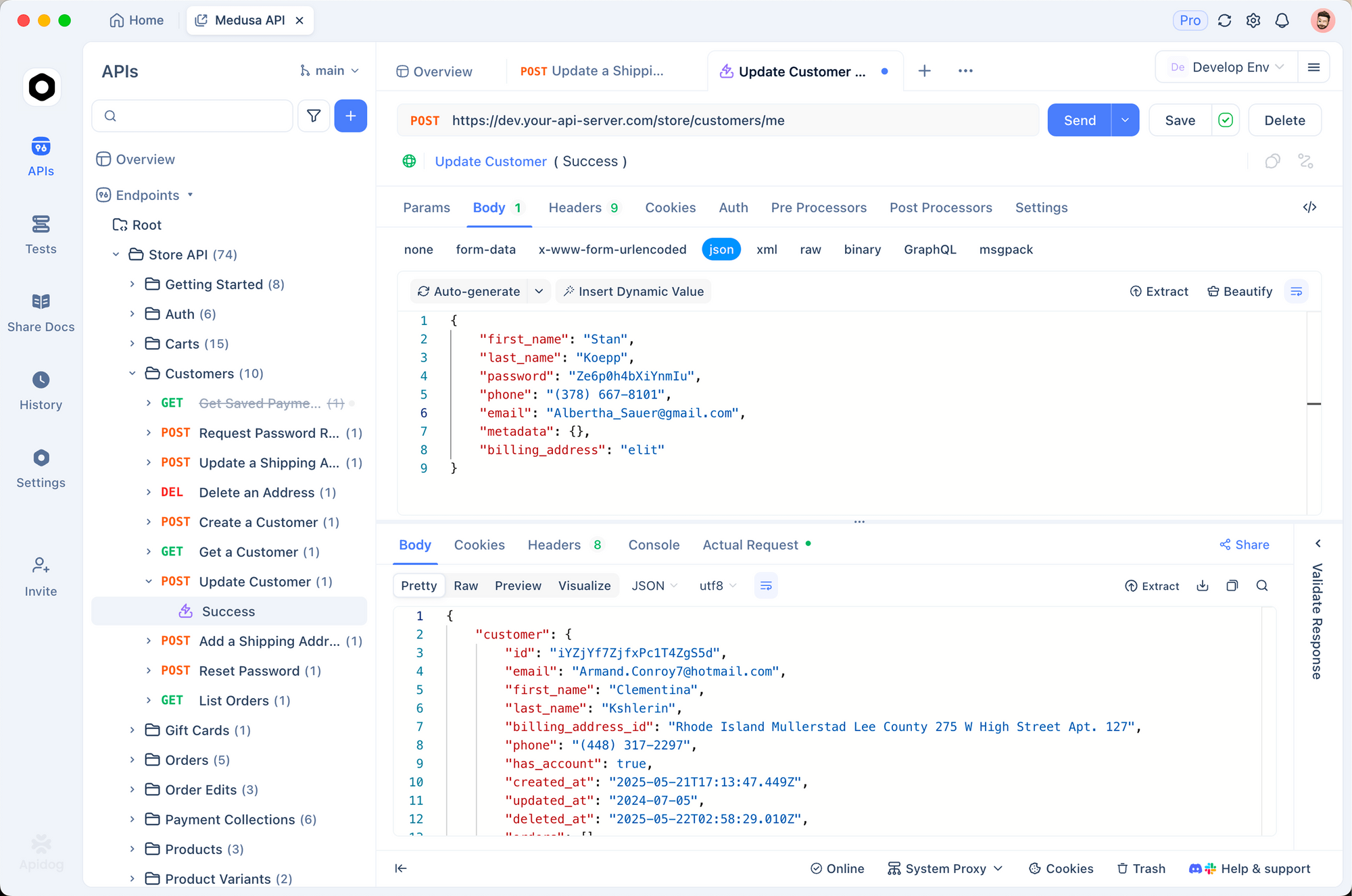
In Apidog:
- Create a new collection, add a
POST https://api.openai.com/v1/responsesrequest. - Set the auth header from an environment variable so you can swap keys without touching the request body.
- Save an example response so downstream developers can work against a mock while the real key is empty.
- Clone the collection for the aggregator path by pointing
baseUrlat OpenRouter and changing the model string.
When the trial burns out or you upgrade the plan, you flip the environment variable and the same collection keeps working. See our Apidog in VS Code walkthrough if you want the collection accessible from inside Cursor or Claude Code.
Free-path limitations to plan around
- Rate limits are load-dependent. Codex Free and Go tiers slow down during peak hours.
- Trial credit does not stack. A second OpenAI account will not get a second trial if the card, phone, or IP is flagged as a duplicate.
- GPT-5.5 Pro is not on any free surface. Pro remains paid-tier only.
- Thinking mode eats budget. On any free path, keep
reasoning.effortatlowunless you are deliberately spending the quota on a correctness-critical test. - The free windows are temporary. Codex Free and Go access is explicitly “for a limited time” in the OpenAI launch announcement.
A realistic free-tier prototype
The workflow that gets the most signal out of free quota:
- Pick one task the team actually does; a report, a code review, a research brief.
- Run ten real examples through GPT-5.4 on your existing tooling. Log output quality.
- Run the same ten examples through GPT-5.5 on Codex CLI or the trial credit.
- Compare output-per-token and error rate side-by-side.
- Decide whether the upgrade earns the price doubling on your specific workload.
That is a one-afternoon exercise. It pays for itself the first month you run production traffic on whichever model actually fits.
FAQ
Is the Codex Free and Go trial permanent?No. OpenAI’s own announcement calls it “limited time.” Assume it ends within a few months of launch.
Does ChatGPT Free give me GPT-5.5 in the browser?No. The free ChatGPT plan stays on GPT-5.3 by default. GPT-5.5 inside ChatGPT needs Plus or higher.
Can I run GPT-5.5 on Hugging Face or Ollama for free?No. GPT-5.5 is closed-weight; it runs only on OpenAI infrastructure or on the Codex sign-in path that wraps it.
Is there a student discount?OpenAI has offered .edu email discounts and higher trial credits in past rollouts. Check the OpenAI education page for the current offer.
How do I move from free to paid without rewriting code?Environment-variable-driven keys and base URLs. Set OPENAI_API_KEY and OPENAI_BASE_URL once; flip them when the trial ends. This is the reason our GPT-5.5 API guide insists on project-scoped keys.