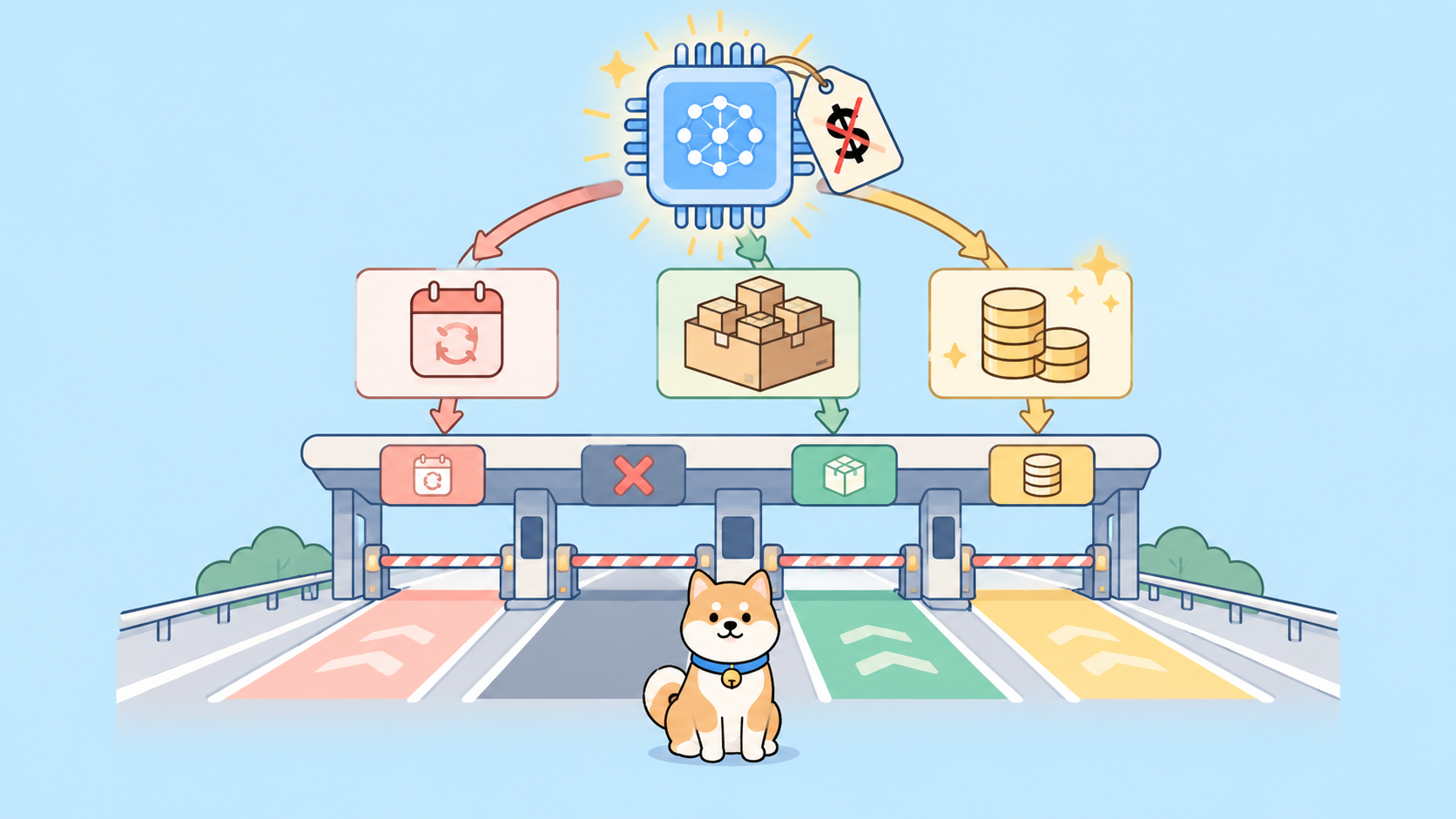
DeepSeek V4 launched on April 23, 2026 with the API priced low enough that most teams skip the free-tier hunt entirely. But a real free path exists for developers who want to call V4 programmatically before committing a card. Aggregator gateways expose :free variants, Hugging Face ships a shared inference endpoint, and the official API hands new accounts a trial credit. Stack the three, build a fallback chain in Apidog, and you can prototype a V4-powered product without a dollar of spend.
This guide is the API-specific free path. For the broader guide that includes the web chat and self-hosting, see how to use DeepSeek V4 for free. For the paid walkthrough, see how to use the DeepSeek V4 API. For the product overview, see what is DeepSeek V4.
TL;DR
- OpenRouter free tier —
deepseek/deepseek-v4-flash:freeand sometimesdeepseek-v4-pro:free. OpenAI-compatible, a few hundred requests per day per key. - Hugging Face Inference Providers — free shared endpoint at
https://router.huggingface.co/hf-inference; rate-limited, handy for prototyping. - Chutes free tier — community GPU network that frequently exposes free DeepSeek endpoints within a week of launch.
- DeepSeek trial credit — new accounts on
platform.deepseek.comsometimes receive a small starter balance. - Self-hosted V4-Flash on your own GPU is also free at the license level; see how to run DeepSeek V4 locally.
- Build a fallback chain in Apidog so the request shape stays identical across providers.
Why the free API path exists
DeepSeek’s paid rates are already the lowest in the frontier tier, so why hunt for free? Three reasons.
- Pre-card prototyping. You want to call V4 from code before committing a payment method, either for procurement reasons or for a quick proof-of-concept.
- Student, research, and open-source work. Small projects that cannot carry a budget still want real frontier quality.
- Provider comparison. Running the same prompt against V4 on three different free endpoints exposes latency, quality, and reliability differences that only show up in production traffic.
If any of those fit, this guide is for you. If you are building a shipping product, skip to the paid API guide; the $2 minimum top-up on the official DeepSeek API is a better deal than wrestling with rate limits.
Path 1: OpenRouter free tier
OpenRouter is a request-level gateway that aggregates frontier models behind one OpenAI-compatible API. The platform reliably opens free variants on DeepSeek releases; the pattern held for V3, V3.1, V3.2, and now V4.
Setup
- Sign up at openrouter.ai.
- Create an API key under Settings → Keys.
- Check the model catalog for entries suffixed
:free, usuallydeepseek/deepseek-v4-flash:free. - Call the endpoint with any OpenAI-compatible SDK.
from openai import OpenAI

client = OpenAI(
    api_key=OPENROUTER_API_KEY,
    base_url="https://openrouter.ai/api/v1",
)

response = client.chat.completions.create(
    model="deepseek/deepseek-v4-flash:free",
    messages=[{"role": "user", "content": "Refactor this Go function to use channels."}],
)

print(response.choices[0].message.content)
What the caps look like
Free-tier requests on OpenRouter queue behind paid traffic under load. Typical limits sit around 50 to 200 requests per day per key with tight concurrency. The variant may throttle or disappear without notice; this is a prototyping tool, not a production backend.
Node version
import OpenAI from "openai";

const client = new OpenAI({
  apiKey: process.env.OPENROUTER_API_KEY,
  baseURL: "https://openrouter.ai/api/v1",
});

const response = await client.chat.completions.create({
  model: "deepseek/deepseek-v4-flash:free",
  messages: [{ role: "user", content: "Explain MoE routing like I'm 12." }],
});

console.log(response.choices[0].message.content);
Path 2: Hugging Face Inference Providers
Hugging Face runs a shared inference endpoint that exposes V4 checkpoints shortly after release. It is free to call with a logged-in HF token, but rate limits are the tightest of the free paths.
import os
from huggingface_hub import InferenceClient

client = InferenceClient(
    model="deepseek-ai/DeepSeek-V4-Flash",
    token=os.environ["HF_TOKEN"],
)

response = client.chat_completion(
    messages=[
        {"role": "user", "content": "Write a Python decorator that retries with jitter."}
    ],
    max_tokens=512,
)

print(response.choices[0].message.content)
The HF token is free from huggingface.co/settings/tokens. Latency varies with load and the token counts against a shared per-account daily budget. Upgrade to HF Pro to loosen the caps without going to the paid DeepSeek API.
Path 3: Chutes and community gateways
Chutes is a decentralized GPU network that often hosts DeepSeek models under free or near-free pricing. It exposes an OpenAI-compatible endpoint at https://llm.chutes.ai/v1.
client = OpenAI(
    api_key=CHUTES_API_KEY,
    base_url="https://llm.chutes.ai/v1",
)

response = client.chat.completions.create(
    model="deepseek-ai/DeepSeek-V4-Flash",
    messages=[{"role": "user", "content": "Compare CSA and HCA attention in two sentences."}],
)
Availability changes fast. Always verify the current model ID and cost in the provider dashboard before building a dependency on it.
Path 4: DeepSeek trial credit
DeepSeek has historically granted a small trial credit to new accounts. The amount and the window vary; sometimes $1 lands in your balance after email verification. Always check the billing dashboard at platform.deepseek.com after signup.
Even a $1 trial goes far at V4 rates. A full $1 covers roughly 7 million input tokens on V4-Flash or 570K input tokens on V4-Pro. That is enough for hundreds of production-grade prototype calls.
Build a provider-agnostic free chain in Apidog
The payoff for supporting this many free paths is a resilient prototype that gracefully degrades when any one provider throttles. The workflow:
- Download Apidog and create a new project.
- Create four environments:
openrouter,huggingface,chutes,deepseek-trial. - In each, store the respective API key as a secret variable and set
BASE_URL. - Save one POST request to
{{BASE_URL}}/chat/completionswith a parameterizedmodelfield. - Use environment switching to re-run the same prompt across every provider with one click.
The same approach works for the matching GPT-5.5 API free paths; copy the collection and swap the providers.
Wire a fallback chain in code
When a free provider throttles, the cleanest fix is an automatic fallback. Using the OpenAI SDK:
import os
from openai import OpenAI, RateLimitError, APIError

PROVIDERS = [
    {
        "base_url": "https://openrouter.ai/api/v1",
        "api_key": os.environ["OPENROUTER_API_KEY"],
        "model": "deepseek/deepseek-v4-flash:free",
    },
    {
        "base_url": "https://llm.chutes.ai/v1",
        "api_key": os.environ["CHUTES_API_KEY"],
        "model": "deepseek-ai/DeepSeek-V4-Flash",
    },
    {
        "base_url": "https://api.deepseek.com/v1",
        "api_key": os.environ["DEEPSEEK_API_KEY"],
        "model": "deepseek-v4-flash",
    },
]

def call_v4(messages):
    for provider in PROVIDERS:
        try:
            client = OpenAI(
                api_key=provider["api_key"],
                base_url=provider["base_url"],
            )
            return client.chat.completions.create(
                model=provider["model"],
                messages=messages,
            )
        except (RateLimitError, APIError) as e:
            print(f"{provider['base_url']} failed: {e}")
            continue
    raise RuntimeError("all providers exhausted")
What each free path is actually good for
| Path | Best for | Worst for |
|---|---|---|
| OpenRouter free | Prototyping, daily dev | Anything with strict SLAs |
| HF Inference | Exploratory calls, notebooks | Low-latency workloads |
| Chutes | Experimental community work | Long-term dependencies |
| DeepSeek trial | Full-fidelity testing | Sustained production |
| Self-hosted V4-Flash | Compliance-bound work | Teams without GPU capacity |
Quota math that matters
A quick reality check on daily throughput before you commit to any free path.
- OpenRouter free: ~100 requests/day/key, ~50K tokens each. Useful for maybe 30 to 50 real development calls per day.
- HF Inference free: shared rate limits, roughly 1K requests/day total on the account; sometimes slower under load.
- Chutes: variable; treat as best-effort.
- DeepSeek trial ($1): roughly 700 calls of 10K input tokens each on V4-Flash. Finite but generous.
- Self-hosted V4-Flash: throughput-limited by your hardware. A 4 × H100 box sustains 50 to 150 tok/s.
If your prototype needs more than that, the economics flip. At $0.14 / M on V4-Flash, 10,000 calls with 2K context and 500 output tokens costs roughly $2.80. The paid API is usually the simpler choice past the prototype stage.
When to move to the paid API
Three signals say you have outgrown the free tier:
- Rate limits hit more than once per day.
- You are chaining multiple free providers together just to cover one workload.
- Your tests need predictable latency or SLAs.
The minimum top-up on platform.deepseek.com is $2. One day of heavy prototyping on free tiers often costs more developer time than the paid API would charge. See the DeepSeek V4 pricing guide for the full rate card.
FAQ
Is any of these paths permanently free?No. Free tiers change without notice. Treat them as prototype tools, not production backends.
Does OpenRouter :free run the real V4?Yes, but on shared infrastructure with tight rate limits. Quality matches; throughput does not.
Can I use free-path output in a shipping product?Check each provider’s terms. OpenRouter allows commercial use within the rate cap. HF Inference allows commercial use but caps it tightly. DeepSeek’s own trial credit follows the main terms.
Which free path has the best latency?DeepSeek’s own trial credit; you are hitting the production infrastructure. OpenRouter is second. HF Inference and Chutes vary.
Can I self-host V4 for free?The license is MIT, so yes at the license level. Hardware is the cost. See how to run DeepSeek V4 locally for the setup.
How do I track which free path I burned today?Use Apidog and pin usage in the response viewer. Most aggregators also expose a usage dashboard on their admin console.