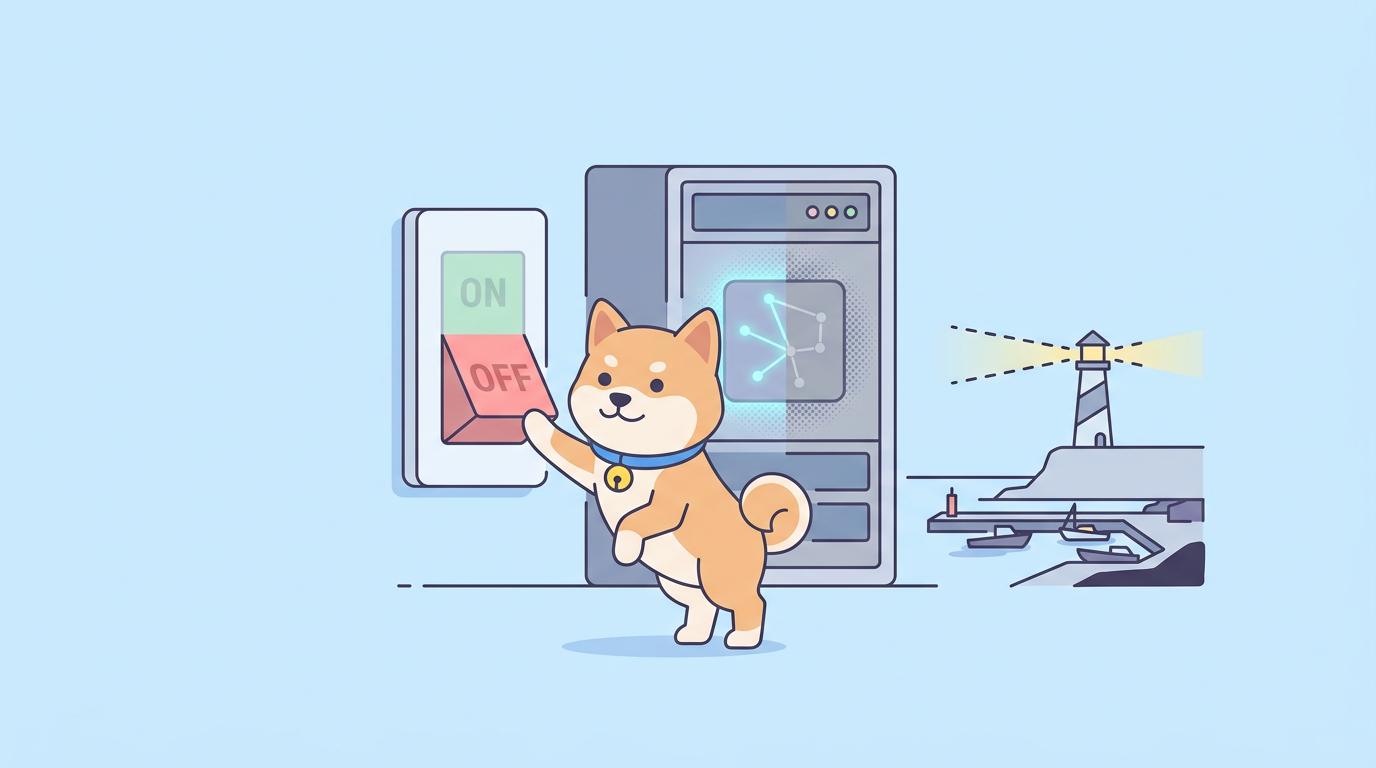
On June 12, 2026, the most capable model most developers had ever shipped against simply stopped answering. Not a rate limit. Not a regional outage. A hard, global shutoff. At 5:21 PM ET, Anthropic received a U.S. government export-control directive ordering it to suspend access to Claude Fable 5 and Claude Mythos 5. For everyone.
If your app, agent, or CI pipeline calls claude-fable-5, those calls are now failing. Here is what happened, why it happened, and what it means if you build on top of frontier models.
TL;DR
- What: Anthropic suspended all access to Fable 5 and Mythos 5 on June 12, 2026, complying with a U.S. government export-control directive.
- Who’s affected: Everyone. The order targets “any foreign national, whether inside or outside the United States.” Providers can’t reliably separate foreign nationals from everyone else in real time, so the practical result is a worldwide shutoff.
- Why: The government cited national security after another company claimed it had found a jailbreak. Anthropic says it has only seen a “narrow potential jailbreak” using code-analysis techniques that are “widely available from other models.”
- What still works: Opus, Sonnet, and Haiku are unaffected. Only the two Mythos-class models are down.
- What’s next: Anthropic disputes the rationale, is complying anyway, and says it is working to restore access. It promised more details within 24 hours.
- The lesson for builders: A model can vanish for reasons that have nothing to do with your code. Treat model availability as a dependency you don’t control.
What happened
Anthropic published a statement confirming it received a directive from the U.S. government on June 12, 2026, at 5:21 PM ET. The directive, issued under export-control authorities, required the company to suspend access to Fable 5 and Mythos 5 immediately.
The order’s wording is the reason this became a global event. It applies to “any foreign national, whether inside or outside the United States, including foreign national Anthropic employees.” No cloud provider can perfectly verify the nationality of every user behind every API key in real time. Faced with that, the only way to comply with certainty is to turn the models off for everybody. So that is what happened.
The scope is narrow in one important sense: only Fable 5 and Mythos 5 are affected. Anthropic was explicit that “access to all other Anthropic models will not be affected.” Opus, Sonnet, and Haiku stayed online throughout.
What Fable 5 and Mythos 5 actually are
Both models launched only days before the suspension, so a lot of teams had just finished migrating to them.
Claude Fable 5 is the general-availability, Mythos-class model: frontier capability with built-in safeguards, released June 9, 2026. It is the one most developers were calling, via claude-fable-5 through the Claude API, at $10 per million input tokens and $50 per million output tokens.
Claude Mythos 5 is the same underlying model with safeguards lifted for vetted users such as cybersecurity professionals and authorized researchers working through trusted-access programs.
What made them worth migrating to:
- Software engineering: Anthropic says Fable 5 “compressed months of engineering into days,” citing a Stripe migration of a 50-million-line Ruby codebase completed in a single day.
- Long-context reasoning: both models “stay focused across millions of tokens” on autonomous, long-running tasks.
- Vision: state-of-the-art, including rebuilding web app source from screenshots and pulling precise numbers out of scientific figures.
- Life sciences: Mythos 5 reportedly accelerated drug design roughly 10x.
Fable’s safeguards are worth understanding because they are central to the controversy. Fable 5 routes risky queries (offensive cyber, certain biology and chemistry, distillation attempts) through AI classifiers that fall back to Claude Opus 4.8. Anthropic notes “more than 95% of Fable sessions involve no fallback at all.” If you want the deeper background on how Anthropic and OpenAI split on locked-down versus open cyber models, we covered it in OpenAI Daybreak vs Claude Mythos.
Why the government pulled them
According to reporting from CNBC and Bloomberg, the Commerce Department acted after another company claimed it had jailbroken Mythos. The stated concern was national security: that a method existed to bypass Fable’s safeguards and unlock dangerous capabilities for foreign nationals.
Anthropic’s account is more measured. The company says it reviewed the demonstration and found “a narrow potential jailbreak” built on code-analysis techniques, capabilities it argues are “widely available from other models.” It also says it has so far seen only verbal evidence of the exploit, not a reproducible, universal break.
This is the crux of the disagreement: whether a narrow, possibly non-reproducible jailbreak justifies pulling a model deployed to hundreds of millions of people.
Anthropic’s response
Anthropic is doing two things at once: complying and pushing back.
It complied immediately, and the models went dark the same evening. But it also publicly disputes the rationale, arguing that:
- Perfect jailbreak resistance isn’t possible for anyone. No model provider, Anthropic included, can guarantee a model is unbreakable. It points to its own defense-in-depth safeguards as industry-leading while conceding they aren’t perfect.
- The capability isn’t unique. If the jailbreak leans on general code-analysis skills, comparable capability already exists across other frontier models, so removing one provider’s model doesn’t close the gap.
- The cost is disproportionate. A narrow exploit, the company argues, doesn’t warrant cutting off a model that “hundreds of millions of people” rely on.
Anthropic said it would share more within 24 hours and is working to restore access.
What this means if you build on the API
If you ship software on top of a model, this is the scenario you rarely plan for. The model didn’t get deprecated on a published timeline, didn’t degrade, and didn’t price you out. A third party switched it off. A government did, for reasons entirely outside your control, with effectively zero notice.
Concretely, if you depended on claude-fable-5, you woke up to:
- Failing production calls. Every request to the suspended models errors out. Anything in the hot path, whether chat, agents, or background jobs, breaks until you reroute.
- No graceful migration window. This wasn’t a 6-month sunset notice. It was same-day.
- A capability cliff, not just an outage. Falling back to a smaller model isn’t a no-op when you were relying on Fable 5’s long-context reasoning or vision. Outputs change. Token costs change. Latency changes.
- Agent workflows that silently stall. Multi-step agents that assumed a specific model can hang, loop, or produce degraded results rather than failing loudly.
The takeaway is uncomfortable. Model availability is a dependency you don’t own, governed by forces you can’t predict: regulation, export law, security incidents. You can’t prevent it. You can absolutely make it a controlled failover instead of a fire drill.
How to make your stack survive a model going dark
This is squarely an API-engineering problem, and it is the kind of thing Apidog exists to help you get right: design, mock, test, and monitor your AI endpoints so a provider event becomes a config change rather than an incident.
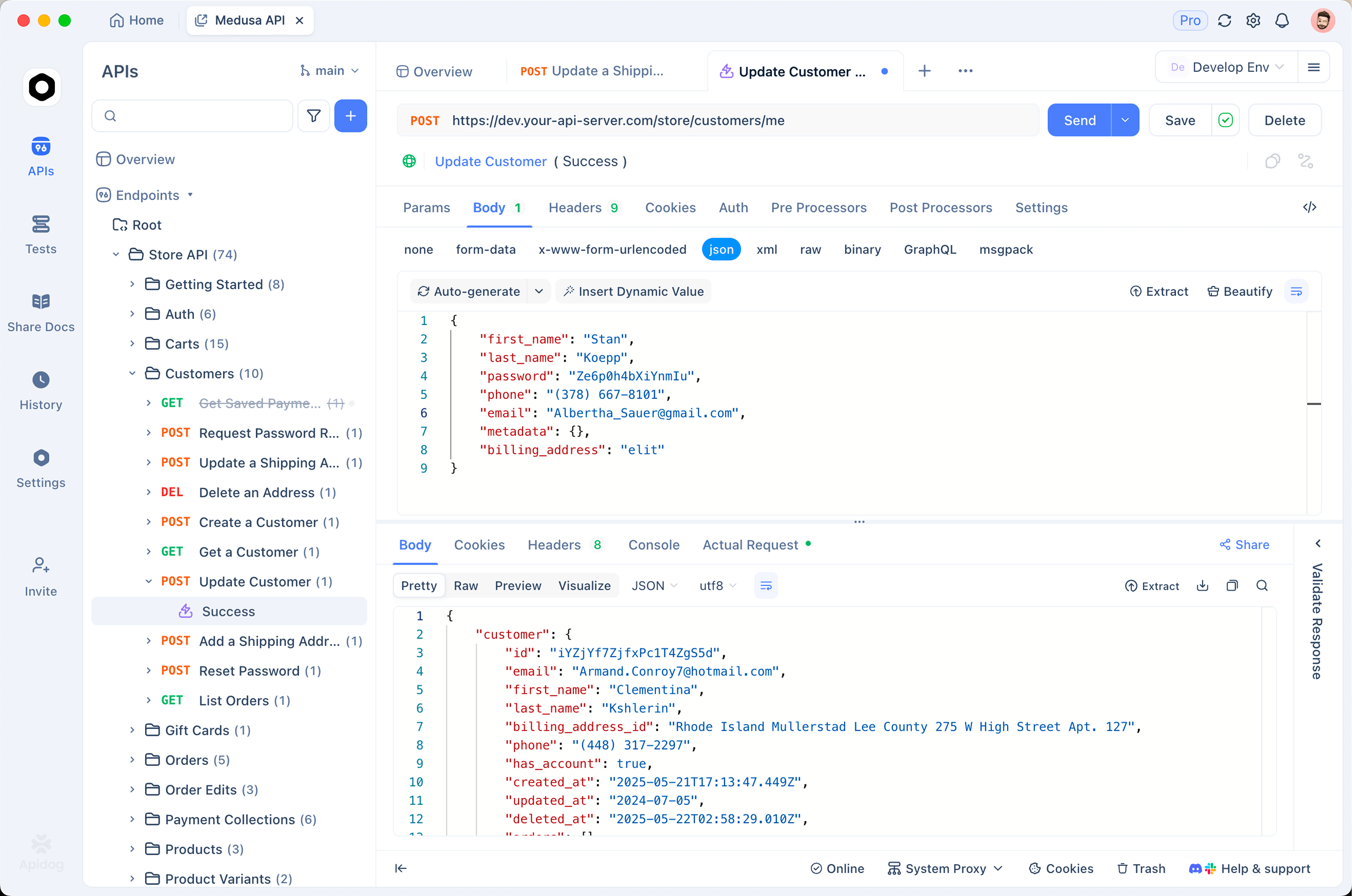
1. Abstract the model behind your own endpoint. Don’t let application code call a provider’s model ID directly. Put a thin internal API in front of it, such as POST /v1/complete, and resolve the model server-side. Swapping claude-fable-5 for a fallback becomes one config change instead of a redeploy across every service. This is the same contract-first discipline that protects you from any upstream breaking change.
2. Define and test a fallback chain. Decide in advance: if the primary model returns an availability error, what comes next? Opus 4.8 for reasoning-heavy paths, a smaller model for the rest. Then actually test it. Use Apidog to mock the failure mode by returning the provider’s error shape from a mock server, then assert your gateway fails over correctly instead of finding the bug in production.
3. Test your agents against degraded models, not just the happy path. Agentic flows are the most fragile under a model swap because they chain assumptions across steps. Our guide on how to test AI agents through their APIs walks through running the same agent suite against multiple backends so you know what breaks before your users do.
4. Monitor provider health as a first-class signal. A scheduled health check that pings each model you depend on, and alerts when one starts erroring, buys you minutes that matter. You want to learn a model is down from your own monitor, not from a customer ticket.
5. Keep a working secondary provider warm. If continuity is business-critical, have a second provider already wired, tested, and ready behind your abstraction layer. If you want a zero-cost way to keep experimenting and validating against Claude while you build that resilience, see how to get free, unlimited Claude API access.
None of this is new. It is standard API resilience (circuit breakers, abstraction, contract testing, monitoring) applied to a dependency most teams forgot they didn’t control.