TL;DR
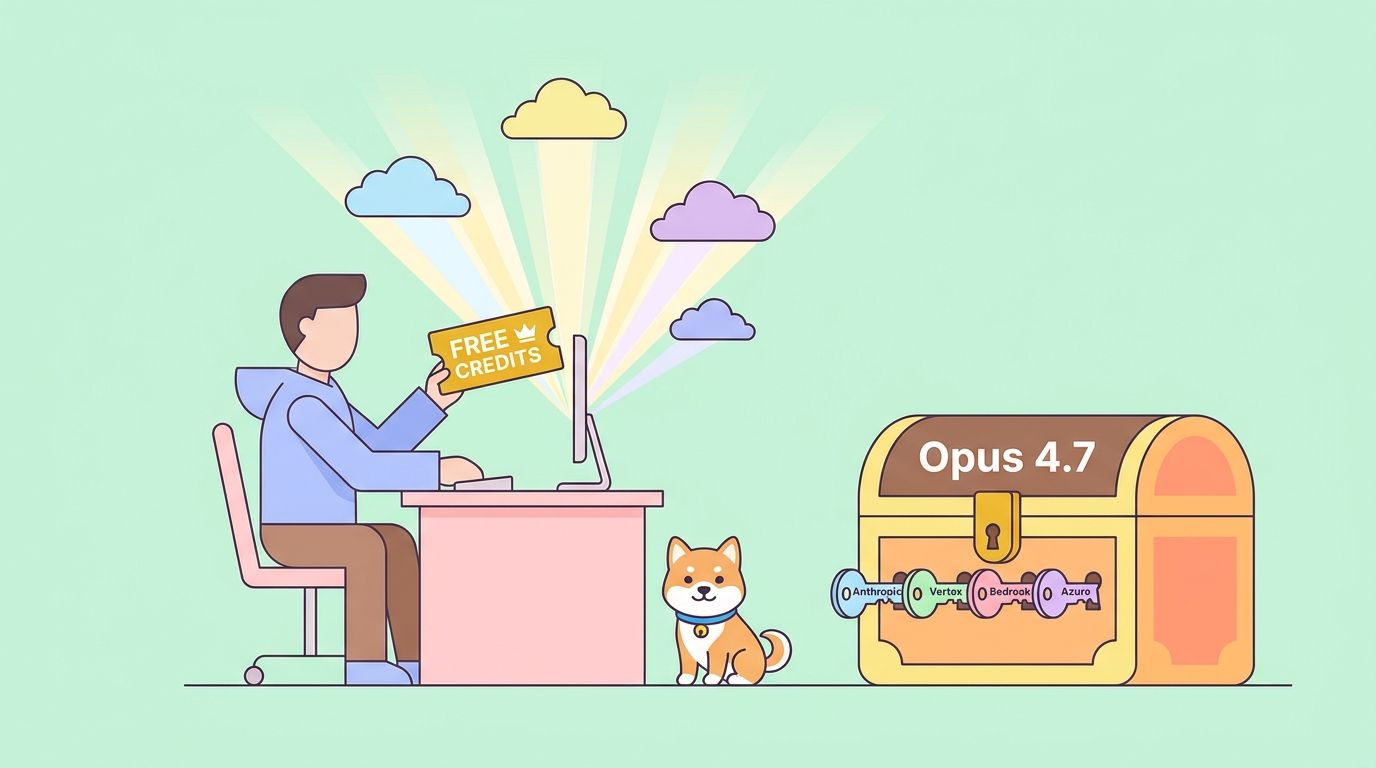
Claude Opus 4.7 costs $5 per million input tokens and $25 per million output tokens. There is no unlimited free tier for it, but there are seven honest ways to use it at zero cost: Anthropic API signup credit, Google Cloud Vertex AI credits ($300), AWS Bedrock new-customer credits, Microsoft Foundry trial, Claude.ai limited access, the Anthropic Builder Program for startups, and academic research credits. This guide covers each one, how to access it, and how much Opus 4.7 usage you actually get.
Introduction
Anthropic released Claude Opus 4.7 on April 16, 2026. It’s the most capable model in the Claude family. It’s also one of the most expensive, at $25 per million output tokens. A single heavy coding session can eat a few dollars fast.
So the question every developer asks: can you use Opus 4.7 for free?
Honest answer: not forever, but enough to run real experiments, test an integration, or complete a side project. The key is knowing where the free credits live and how to stretch them.
This guide walks through every legitimate path. No shady key-sharing sites. No “unlock unlimited Opus” scams. Just the programs Anthropic and its cloud partners actually offer, with the limits stated upfront.
You’ll also see how to test your API calls with Apidog so you don’t burn credits on debugging malformed requests.
What “free” actually means for Claude Opus 4.7
Before anything else, set expectations.
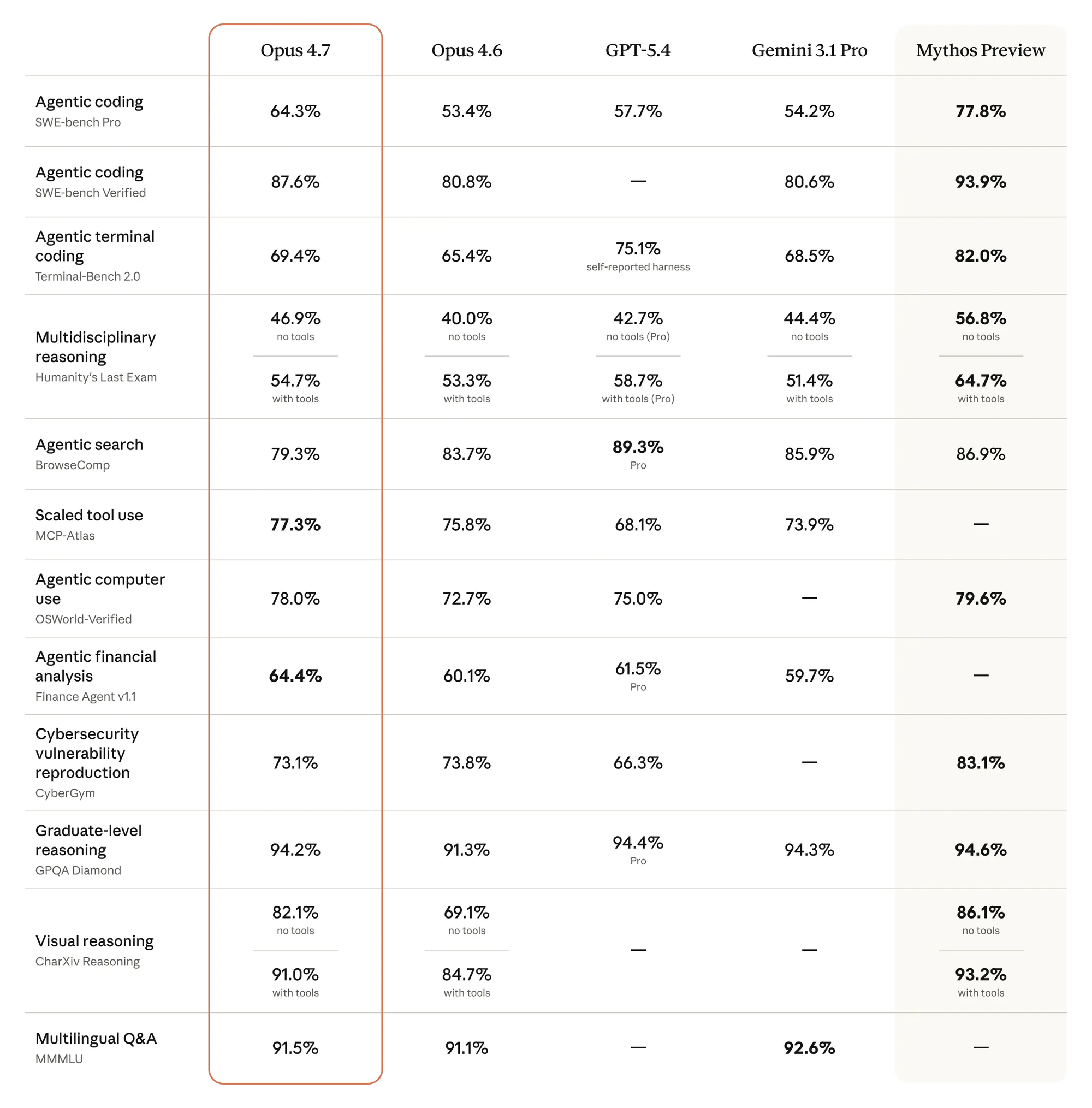
Opus 4.7 is Anthropic’s flagship. It uses a 1M token context window, a new tokenizer that produces up to 35% more tokens than Opus 4.6 did, and the xhigh effort level for coding tasks. Running it costs real compute. Anthropic prices it at the same rate as Opus 4.6: $5 per million input tokens, $25 per million output tokens.
No provider gives you Opus 4.7 at zero cost indefinitely. What you can get is:
- Trial credits that expire
- New-account credits from cloud platforms
- Program-based credits for startups, students, and researchers
- Rate-limited free access on certain third-party surfaces
Stack two or three of these and you can run meaningful workloads without paying. Here’s how.
Method 1: Anthropic API signup credit
The simplest path. Every new Anthropic account gets a small amount of free credit to test the API.
How to claim it:
- Go to console.anthropic.com
- Sign up with your email or Google account
- Verify your phone number
- The credit lands in your account balance automatically
What you get:
New accounts typically see $5 in free credits. That’s not a lot, but it translates to real Opus 4.7 usage:
- ~1 million input tokens (the full 1M context window, once)
- Or ~200,000 output tokens (about 150,000 words)
- Or a mix: a few dozen medium-sized coding conversations
Best for: Running your first Opus 4.7 test. Verifying that your prompts work. Benchmarking against your existing setup.
Limits: Credits expire. Rate limits on new accounts are tight (Tier 1: 50 requests per minute, 20K input tokens per minute on Opus). Don’t plan production traffic on this tier.
Method 2: Google Cloud Vertex AI free credits
This is the highest-value path for most developers.
Claude Opus 4.7 runs natively on Google Cloud’s Vertex AI platform. New Google Cloud customers get $300 in free credits, valid for 90 days. You can spend every dollar of that on Opus 4.7.
How to claim it:
- Go to cloud.google.com/free
- Sign up with a new Google account (or one that hasn’t used GCP before)
- Enter a payment method for verification (not charged during the trial)
- Enable the Vertex AI API
- Request access to Claude models in the Model Garden
What $300 buys you on Opus 4.7:
- 60 million input tokens at standard pricing, or
- 12 million output tokens, or
- A typical mix of 30M input + 5M output tokens
That’s enough for weeks of real agent development. Full codebase reviews. Multi-session debugging. Real prototypes.
How to call it:
from google.cloud import aiplatform
from anthropic import AnthropicVertex

client = AnthropicVertex(region="us-east5", project_id="your-gcp-project")

message = client.messages.create(
    model="claude-opus-4-7@20260416",
    max_tokens=4096,
    messages=[
        {"role": "user", "content": "Summarize this log file..."}
    ]
)

print(message.content[0].text)
Limits: The $300 covers all GCP services, not only Vertex AI. If you’re also running Cloud Run or BigQuery, those eat into the same budget. Regional endpoints carry a 10% premium over global routing.
Method 3: AWS Bedrock new-customer credits
Claude Opus 4.7 runs on Amazon Bedrock. AWS offers a free tier and credits for new accounts.
How to claim it:
- Sign up at aws.amazon.com/free with a new email
- Add a credit card for verification
- Apply for AWS Activate if you run a startup (up to $5,000 in credits)
- Enable Bedrock and request access to Claude models in the Bedrock console
What you get:
Standard new-account credits run $100-200. Startups accepted into AWS Activate can get $1,000-5,000 depending on the track. All of it works with Opus 4.7.
How to call it:
import boto3
import json

client = boto3.client("bedrock-runtime", region_name="us-west-2")

response = client.invoke_model(
    modelId="anthropic.claude-opus-4-7-v1:0",
    body=json.dumps({
        "anthropic_version": "bedrock-2023-05-31",
        "max_tokens": 4096,
        "messages": [
            {"role": "user", "content": "Review this pull request..."}
        ]
    })
)

result = json.loads(response["body"].read())
print(result["content"][0]["text"])
Limits: Bedrock pricing matches Anthropic’s direct rates, sometimes with a slight regional premium. Credits are typically locked to specific services.
Method 4: Microsoft Foundry (Azure) trial
Claude Opus 4.7 is available on Microsoft Foundry (formerly Azure AI Foundry). New Azure accounts get a $200 credit that lasts 30 days, plus 12 months of free tier services.
How to claim it:
- Sign up at azure.microsoft.com/free
- Verify your identity and payment method
- Navigate to Foundry in the Azure portal
- Deploy Claude Opus 4.7 from the model catalog
What $200 buys you on Opus 4.7:
About 40 million input tokens or 8 million output tokens. Plenty for a multi-week prototype.
Limits: The 30-day window is tight. Make sure you use the credit within the trial period, or it expires.
Method 5: Anthropic Builder Program and startup credits
If you run a startup or are building a product on Claude, Anthropic offers credit programs.
Anthropic Builder Program:
- Apply at anthropic.com/build-with-claude (or similar landing page)
- Provide your company info, use case, and expected traffic
- Approved applicants typically get $5,000-25,000 in API credits
- Larger programs exist for VC-backed startups
AWS Activate + Anthropic:
- AWS Activate accepts startups with some investor backing
- Up to $5,000 AWS credits that work with Bedrock + Opus 4.7
- Apply through your accelerator or directly at aws.amazon.com/activate
Google Cloud for Startups:
- Up to $200,000 in Google Cloud credits for funded startups
- Works with Vertex AI and Claude Opus 4.7
- Requires VC or accelerator association
When to apply: You’re building a product that needs real Opus 4.7 volume. You have at least a prototype. You can articulate your use case in one paragraph.
Method 6: Academic and research credits
Anthropic runs a research access program for academic researchers studying AI safety, alignment, and beneficial applications.
How to apply:
- Go to anthropic.com/research
- Find the researcher access form
- Describe your research project, your institution, and your expected API usage
- Approved researchers receive credit grants
Eligibility:
- Current faculty, postdocs, or graduate students at accredited institutions
- Independent researchers with published work
- Projects with clear alignment or safety relevance get priority
What you get:
Variable. Typical grants run $500-10,000 in credits depending on the project scope.
Method 7: OpenRouter and third-party aggregators
OpenRouter aggregates multiple AI providers behind a single API, including Claude Opus 4.7. They occasionally run promotions with free credits.
How it works:
- Sign up for an OpenRouter account
- Get onboarding credits (usually a few dollars)
- Call Opus 4.7 through their unified API
Pros:
- One API key for many models
- Easy to switch between Opus 4.7, GPT-5, Gemini, etc.
- Built-in usage tracking
Cons:
- Prices are close to Anthropic’s direct rates, sometimes with a small markup
- Free credits are small compared to the cloud platforms
- Rate limits apply
When it makes sense: You want to test Opus 4.7 against other frontier models without setting up separate accounts for each provider.
How to stretch your free credits
Once you have credits from one or more of these sources, make them last.
Use prompt caching
Opus 4.7 charges $0.50 per million tokens for cache reads, 10x cheaper than fresh input tokens. If you’re sending the same system prompt or document repeatedly, cache it:
response = client.messages.create(
    model="claude-opus-4-7",
    max_tokens=1024,
    system=[
        {
            "type": "text",
            "text": "You are a senior code reviewer...",
            "cache_control": {"type": "ephemeral"}
        }
    ],
    messages=[{"role": "user", "content": "Review this function..."}]
)
One cache read pays for the 5-minute cache write. Two reads pay for the 1-hour write. For any workflow that repeats context, caching cuts your spend by 70-90%.
Use the Batch API
Non-urgent workloads get 50% off through the Batch API. Opus 4.7 batch pricing: $2.50 per million input, $12.50 per million output. Great for bulk summarization, dataset generation, and offline evaluation.
Use adaptive thinking selectively
Adaptive thinking is off by default on Opus 4.7. When you enable it, the model spends more output tokens on internal reasoning. For simple tasks, leave it off. For hard coding or multi-step analysis, turn it on.
Downsample images
High-resolution vision is a new Opus 4.7 feature (up to 3.75 megapixels). Images at that resolution consume a lot of tokens. If your use case doesn’t need the extra fidelity, resize images to 1024x1024 or smaller before sending.
Pick the right effort level
The xhigh effort level spends significantly more tokens than low or medium. Use xhigh for complex coding agents, but drop to high or medium for routine Q&A.
Set a task budget
Task budgets (beta, requires the task-budgets-2026-03-13 header) let you cap total spend across an agentic loop:
response = client.beta.messages.create(
    model="claude-opus-4-7",
    max_tokens=128000,
    output_config={
        "effort": "high",
        "task_budget": {"type": "tokens", "total": 50000}
    },
    betas=["task-budgets-2026-03-13"],
    messages=[{"role": "user", "content": "Refactor this module..."}]
)
Minimum task budget is 20,000 tokens. Perfect for keeping agent runs inside your free credit budget.
Test before you burn credits with Apidog
Free credits disappear fast when your code has bugs. You make a request, get a 400 error, fix the payload, make another request, and so on. Each failed call still counts.
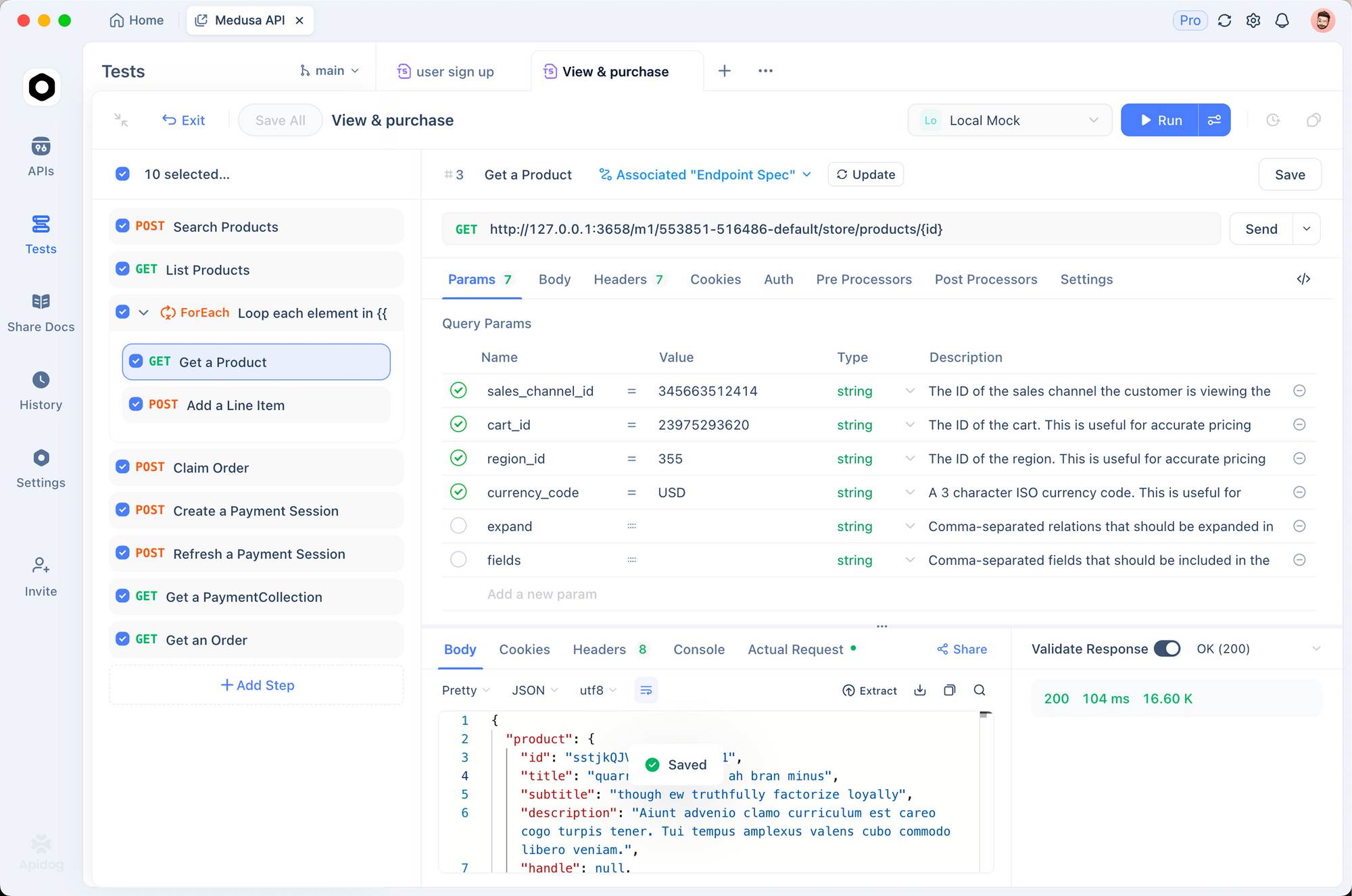
Apidog solves this by letting you build and test Claude API requests in a visual interface before you put them in code:
Set up the Anthropic endpoint. Create a new project and add the Messages API endpoint with your headers (x-api-key, anthropic-version, content-type).
Build requests visually. Drop in your model ID (claude-opus-4-7), messages, tools, and thinking config. Apidog validates the JSON structure before sending.
Run test scenarios. Chain multi-turn conversations, test tool-use loops, and confirm your tool_use_id references are correct.
Track token usage. Apidog shows you the full request and response, including usage metadata. You can see exactly how many tokens each call consumed before scaling up.
Switch between providers. If you have credits on both Anthropic API and Vertex AI, set up two environments and point Apidog at whichever one has the budget.
button: Download Apidog free
Common pitfalls with free credits
A few things that trip up developers using free paths:
Credit expiry. Most credits have a time limit. $300 GCP credits expire in 90 days. Azure’s $200 expires in 30. Anthropic signup credits have their own window. Check the expiry date the day you claim the credit.
Service scope. Cloud platform credits cover multiple services. If you’re also running databases or compute on GCP, those charges come out of the same $300 bucket.
Rate limits. Free-tier accounts hit rate limits fast. New Anthropic accounts start at Tier 1. You need to spend real money on credits to move up tiers. Plan production workloads around this.
Regional pricing. Starting with Claude Sonnet 4.5 and newer, regional and multi-region endpoints on AWS and Vertex charge a 10% premium. Use global endpoints to save.
The new tokenizer. Opus 4.7 uses a tokenizer that can produce up to 35% more tokens than Opus 4.6 did for the same text. Your free credits stretch less far than they would have with the older model. Use /v1/messages/count_tokens to measure your actual consumption.
Quick comparison table
| Method | Credit amount | Time limit | Best for |
|---|---|---|---|
| Anthropic API signup | ~$5 | Varies | First test |
| Google Cloud Vertex AI | $300 | 90 days | Multi-week projects |
| AWS Bedrock (new account) | $100-200 | Varies | AWS-native stacks |
| AWS Activate (startups) | $1,000-5,000 | 12-24 months | Funded startups |
| Microsoft Foundry | $200 | 30 days | Short-term prototypes |
| Anthropic Builder Program | $5,000-25,000+ | Project-based | Startups shipping on Claude |
| Academic research | $500-10,000 | Project-based | Researchers |
| OpenRouter | ~$1-5 | Varies | Multi-model testing |
Conclusion
Claude Opus 4.7 is not free forever. But between Anthropic’s signup credit, $300 on Vertex AI, $200 on Foundry, and the various startup and academic programs, you can easily run thousands of dollars of effective usage at zero cost if you plan it right.
The highest-impact path for most developers: sign up for Google Cloud and spend the $300 Vertex AI credit on Opus 4.7. It’s the biggest single grant, it works across a full 90-day window, and it covers the official Claude Opus 4.7 model with no compromises.
Stack it with prompt caching, batch processing, and adaptive thinking on a need-only basis, and you can get months of real development out of credits alone.
For everything you build, Apidog gives you a no-cost way to test requests, debug tool-use flows, and confirm your payloads before they touch your credit balance. Protect your free tier. Test first, ship second.