Bruno earned its following for a good reason. It treats your API collection as plain text on disk, keeps everything offline, and never asks you to log in. For developers who were tired of cloud-locked request clients, that was a refreshing reset.
But “Git-native” has quietly become table stakes. Most serious API tools can now store specs in a repo. So if you’re evaluating an all-in-one API platform vs Bruno, the more useful question isn’t “which one speaks Git?” It’s “once my requests live in Git, what else does my workflow need?” This article is an honest look at where a single request client stops, and what a broader platform adds. If you’re shopping for a Bruno alternative, the gap is rarely the request runner itself. It’s everything that surrounds it.
What Bruno Does Well
Let’s start by giving Bruno its due, because it gets several things genuinely right.
- Plain-text
.brufiles. Bruno stores each request as a human-readable.brufile in your project folder. You can open one in any editor and understand it. No opaque database, no proprietary export step. - Offline-first. Bruno runs entirely on your machine. No cloud round-trip, no sync service in the loop. If your network is down or you simply prefer local-only tooling, it keeps working.
- Git-native by design. Because collections are files, version control is the storage layer, not a bolt-on. Diffs are readable, branches are natural, and pull requests review API changes the same way they review code.
- Open-source. Bruno is open-source with roughly 40k GitHub stars and an active community. You can read the code, self-host nothing because there’s nothing to host, and trust that your collections aren’t hostage to a vendor.
- No login, lightweight, free. Install it and go. No account, no seat math, no onboarding wall. For individual developers and DevOps engineers who live in the terminal, that friction-free start is a real has.
If your need is “a fast, scriptable, file-based request client I fully control,” Bruno is a strong, defensible choice. None of what follows is a knock on that core job. It does that job well.
Where a Single Request Client Stops
The limits show up when your work crosses from sending requests into building and shipping an API with other people. A request client, by definition, is scoped to one slice of the lifecycle.
- No built-in mock server. Bruno sends requests to APIs that already exist. When the backend isn’t ready and your frontend team needs something to call today, you’re reaching for a separate mocking tool or standing up a stub service yourself. (We cover that gap in detail in a Bruno mock-server alternative.)
- No hosted or auto-generated docs. Your
.brufiles describe requests, but they don’t publish a documentation site your consumers can browse. Generating and hosting readable API docs is a separate pipeline you have to assemble. (More on closing that gap in Bruno API documentation generation.) - Request-first, not design-first. Bruno’s mental model starts from a request you send. There’s no visual editor for designing an endpoint, its schema, and its responses before the code exists. Design-first teams who want a spec to be the source of truth work against the grain.
- Limited protocol and SDK tooling. Bruno’s heart is HTTP. If your stack spans gRPC, WebSocket, SOAP, or you want generated client SDKs and server stubs from a spec, you’ll stitch those together from other tools.
These aren’t bugs. They’re the natural boundary of a tool that chose to do one thing cleanly. The friction is integration tax: the more separate tools you glue together, the more places your API’s “truth” can drift apart.
What an All-In-One Platform Adds
An all-in-one API platform collapses that toolchain into one workspace. Instead of a request client plus a mock service plus a docs generator plus a design tool, you get design, debug, mock, test, documentation, and collaboration sharing a single underlying spec.
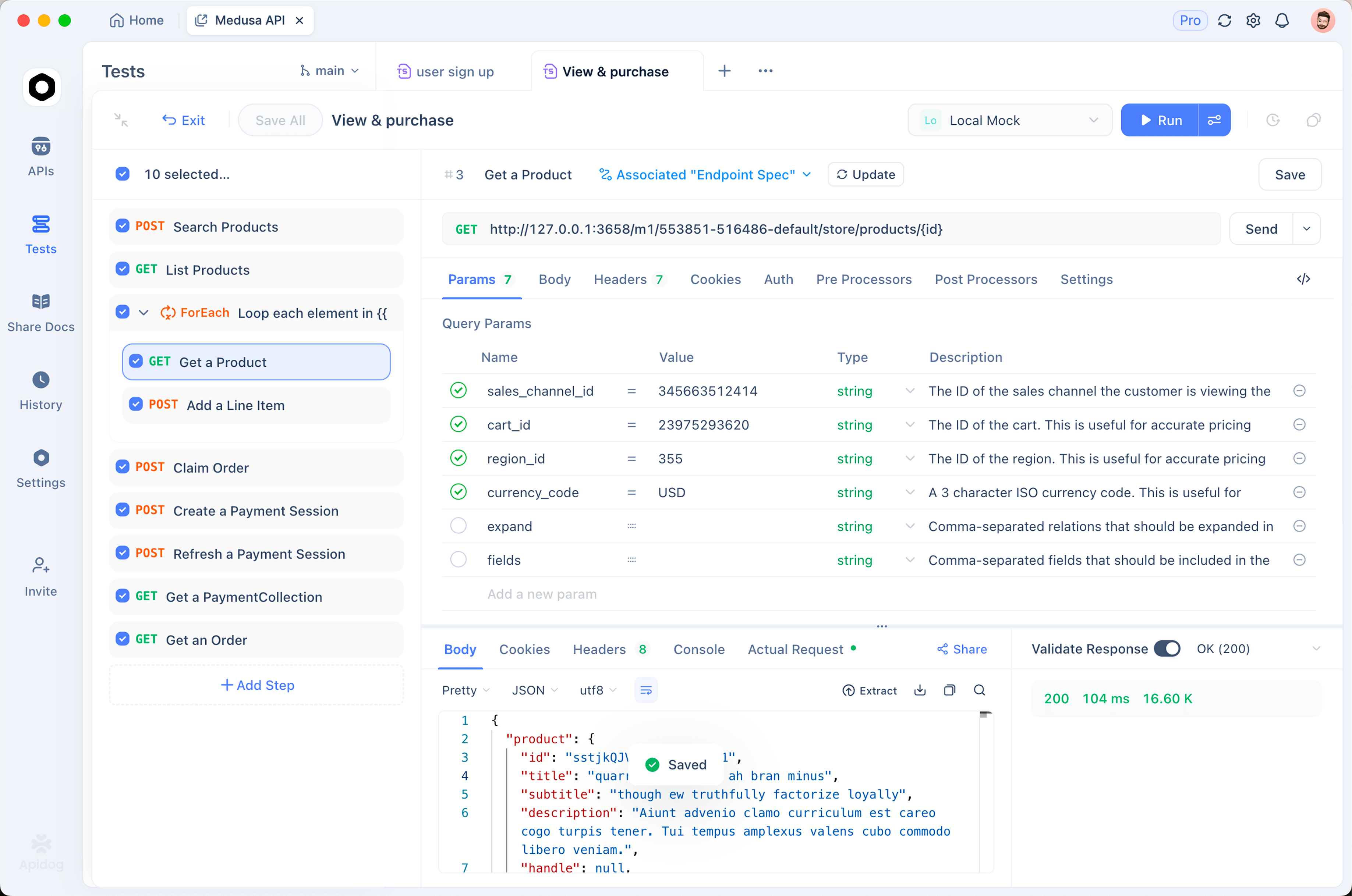
The practical payoff is consistency. When you change an endpoint’s schema, the change propagates to the same place your team reads the docs, runs the mock, and writes the tests. There’s no manual re-sync between four tools, because there’s one source of truth.
Apidog is built around exactly this model:
- Visual API design. Define endpoints, schemas, and example responses in a visual editor, or import an existing OpenAPI spec. The design is the contract.
- One-click mocking. Every endpoint gets a smart mock automatically from its schema. Frontend work starts before the backend exists, no separate tool required.
- Hosted, auto-generated docs. Documentation is generated from the same spec and published to a shareable site that stays in step with your design.
- Integrated debugging and testing. Send requests, chain them into test scenarios, and run them in CI. The request client you’d use Bruno for is in the box, alongside everything else.
- Team collaboration. Shared projects, roles, and review keep a team working from one definition rather than scattered local files.
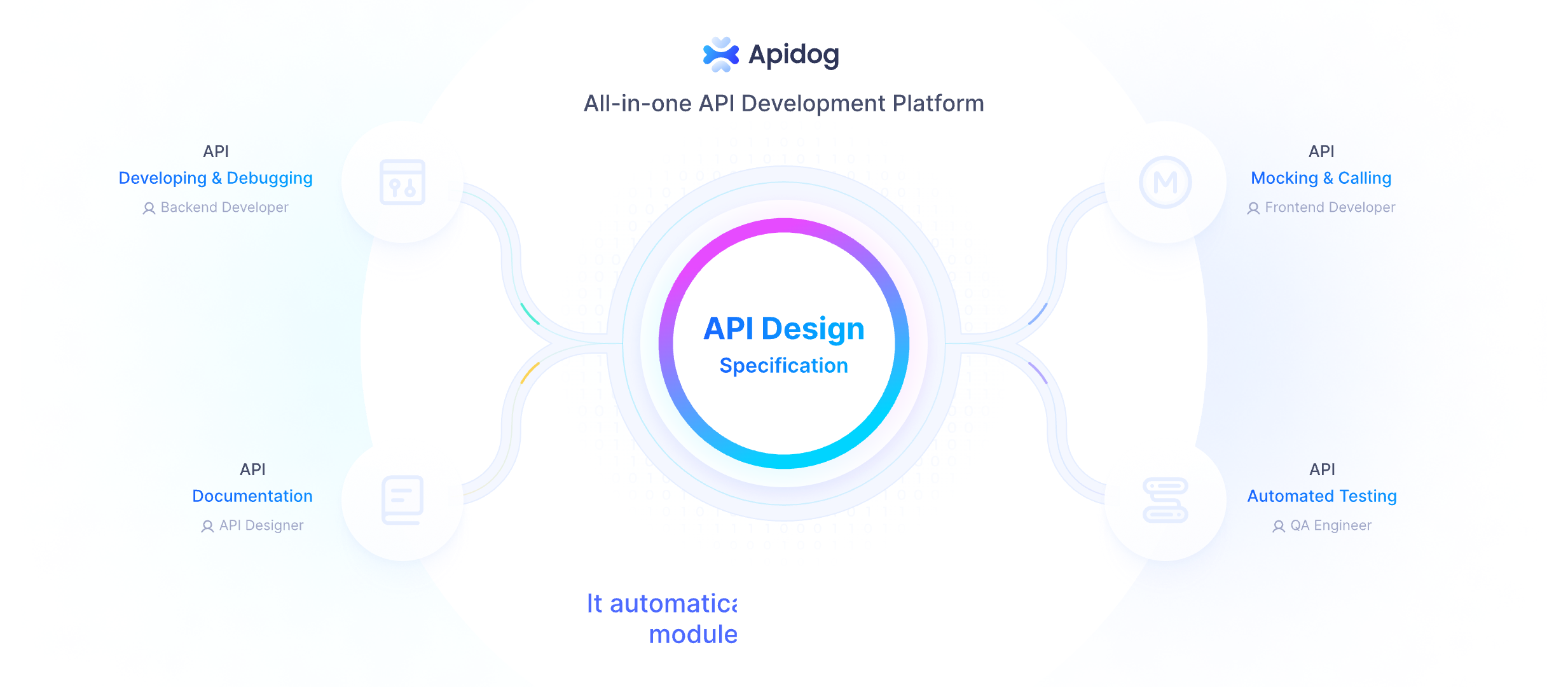
The point isn’t that more has are automatically better. It’s that if your API touches a team and a product, those stages already exist in your workflow. The only question is whether they live in one connected place or four disconnected ones.
Apidog Is Also Git-Native Now
Here’s the part that often surprises people weighing this trade-off: choosing an all-in-one platform no longer means giving up the Git-native workflow that drew you to Bruno.
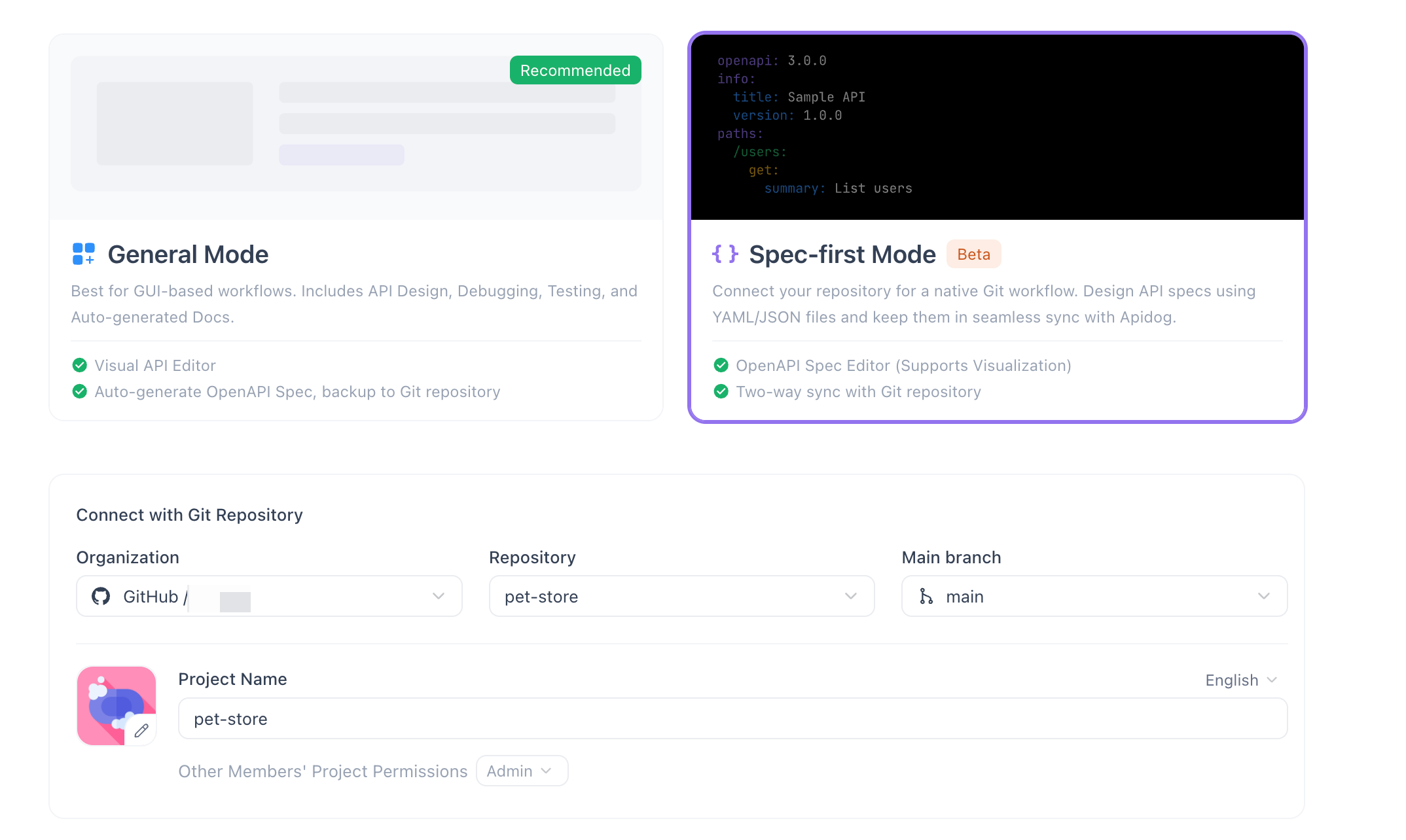
Apidog’s Spec-First Mode lets you edit your API definition directly as OpenAPI YAML or JSON and keep it in two-way sync with your repository. Edit the spec in your editor and commit it, and Apidog reflects the change. Change it in Apidog, and it writes back to the file your repo tracks. The OpenAPI document is the source of truth, version-controlled exactly the way you’d version-control code.
So the comparison sharpens. Both store specs in Git and produce readable diffs. Apidog ** layers mocking, hosted docs, visual design, and testing on top of that same Git-tracked spec. You get the file-based, reviewable workflow Bruno popularized, plus the rest of the lifecycle on the same foundation. If you want the longer has-by-has breakdown, we keep a fuller Apidog vs Bruno head-to-head. And if Git-native workflows are your priority, this guide to a Git-native API workflow walks through the whole loop.
Side-by-Side: Bruno vs an All-In-One Platform
| Capability | Bruno | Apidog |
|---|---|---|
| Git-native specs | Yes .bru files in your repo |
Yes, OpenAPI YAML/JSON, two-way Git sync via Spec-First Mode |
| Built-in mock server | No, use a separate tool | Yes, auto-generated from schema |
| Hosted / auto-generated docs | No | Yes, published from the same spec |
| Visual API design | No, request-first | Yes, design-first visual editor |
| Protocols beyond HTTP | Primarily HTTP | HTTP, gRPC, WebSocket, SOAP, plus SDK generation |
| Open-source / pricing | Open-source, free, no account | Free tier; paid plans for teams; account required |
| Best for | Individuals and DevOps who want a lightweight, local, file-based client | Teams unifying design, docs, mocking, and testing in one workspace |
The table isn’t a scoreboard. Read it as a description of two different scopes. Bruno optimizes for a focused, local, no-account request client. Apidog optimizes for the full lifecycle with Git compatibility carried along.
Who Should Pick Which
Pick Bruno if you want a lightweight request client, you work mostly solo or in a small DevOps-minded group, and your API surface is HTTP-centric.
Pick an all-in-one platform like Apidog if your API is a shared product, not just a set of calls. If you need mocks before the backend ships, docs your consumers actually browse, a design-first contract your team agrees on, and testing that runs in CI, and you’d rather not maintain four tools to get there, the consolidation pays for itself. The Git-native workflow you’d miss from Bruno is still there via Spec-First Mode.
Plenty of teams even start with Bruno for quick local work and adopt a platform as collaboration needs grow. These aren’t mutually exclusive religions. They’re tools sized to different jobs.
FAQ
Is Apidog a drop-in replacement for Bruno?
For the request-client job, yes, Apidog includes a full request runner and can import your existing collections, including OpenAPI specs. The difference is scope: Apidog adds design, mocking, docs, and testing around that runner. If you only ever wanted the runner and nothing else, Bruno’s lighter footprint may still suit you better. If you wanted the runner plus the rest of the lifecycle, Apidog covers it in one place.
Can I keep my API spec in Git with Apidog like I do with Bruno?
Yes. Apidog’s Spec-First Mode stores your definition as OpenAPI YAML or JSON and syncs two ways with your repository. You get readable diffs, branch-based review, and a version-controlled spec, the same Git-native benefits Bruno has, with the spec as the single source of truth.
Is Bruno still a good choice in 2026?
Absolutely. Bruno remains an excellent open-source, offline-first request client, and its file-based model is a clean fit for developers who want full local control with no account. The decision isn’t “good versus bad.” It’s whether your workflow needs only a request client or the whole API lifecycle in one connected workspace.
If you’ve gotten everything you need from Bruno, keep using it, it’s a solid tool. But if your team keeps reaching for separate mocking, docs, and design tools around it, it may be worth seeing how much of that collapses into one workspace. You can try Apidog and keep your Git-native habits intact.