
SwaggerHub built its reputation on being the serious home for OpenAPI design, and SmartBear has since folded it into the relaunched Swagger platform alongside portal, testing, and contract-testing modules. The new packaging is where searches for a SwaggerHub alternative start: per Swagger’s pricing page, plans run from $22.80 per user per month for Individual to $34.44 for Team and $58.80 for Enterprise, test executions are metered at 50 to 100 per month unless you reach the custom tier, SSO is a $6 per user add-on, and your API portal carries SmartBear branding on every plan below Enterprise Plus.
Here’s the direct answer: Apidog is the best SwaggerHub alternative for teams that want spec-first design without metered testing and add-on math. It pairs a visual OpenAPI designer with unlimited test runs, schema-aware mocking, and hosted docs on your own domain, free for up to 4 users and $9 per user per month after. This article walks through the new Swagger packaging, what Apidog does differently, and where SwaggerHub still earns its price.
What the new Swagger packaging actually costs
The relaunched platform bundles four modules (Studio, Portal, Contract Testing, Functional Testing) into every plan, but the limits do the real pricing work:
- Per-seat prices stack fast. Team at $34.44 per user per month is nearly four times Apidog’s $9 seat. A 10-person team pays about $4,133 a year before any add-on. We tracked the broader SmartBear bill in SmartBear pricing and top alternatives.
- Test executions are metered. Individual and Team plans include 50 test executions per month; Enterprise includes 100. A CI pipeline that runs a modest suite on every merge burns 50 executions in a day or two. Parallel test execution exists only on Enterprise Plus.
- The portal wears SmartBear’s logo. One to five “products” can be published depending on tier, all with SmartBear branding; a custom domain and full white-labeling require Enterprise Plus, the contact-sales tier.
- Identity is an add-on. Enterprise SSO costs $6 per user per month on top of Team or Enterprise. Portal Pro ($29.40), Contract Testing Pro ($23), and Test Pro ($30) are further per-user add-ons, so the realistic per-seat cost of a fully-equipped Team plan is far above the sticker.
- API counts are capped. 10 APIs on Individual, 50 on Team. Mid-sized platform teams hit 50 specs sooner than they expect.
None of this makes the design tooling worse; SwaggerHub’s editor and governance features remain strong. It means the pricing model charges you separately for the things around the spec: publishing it, testing it, and logging into it.
The answer: Apidog
Apidog is an API development platform used by over 500,000 developers, built spec-first like SwaggerHub, with the rest of the lifecycle included rather than metered.
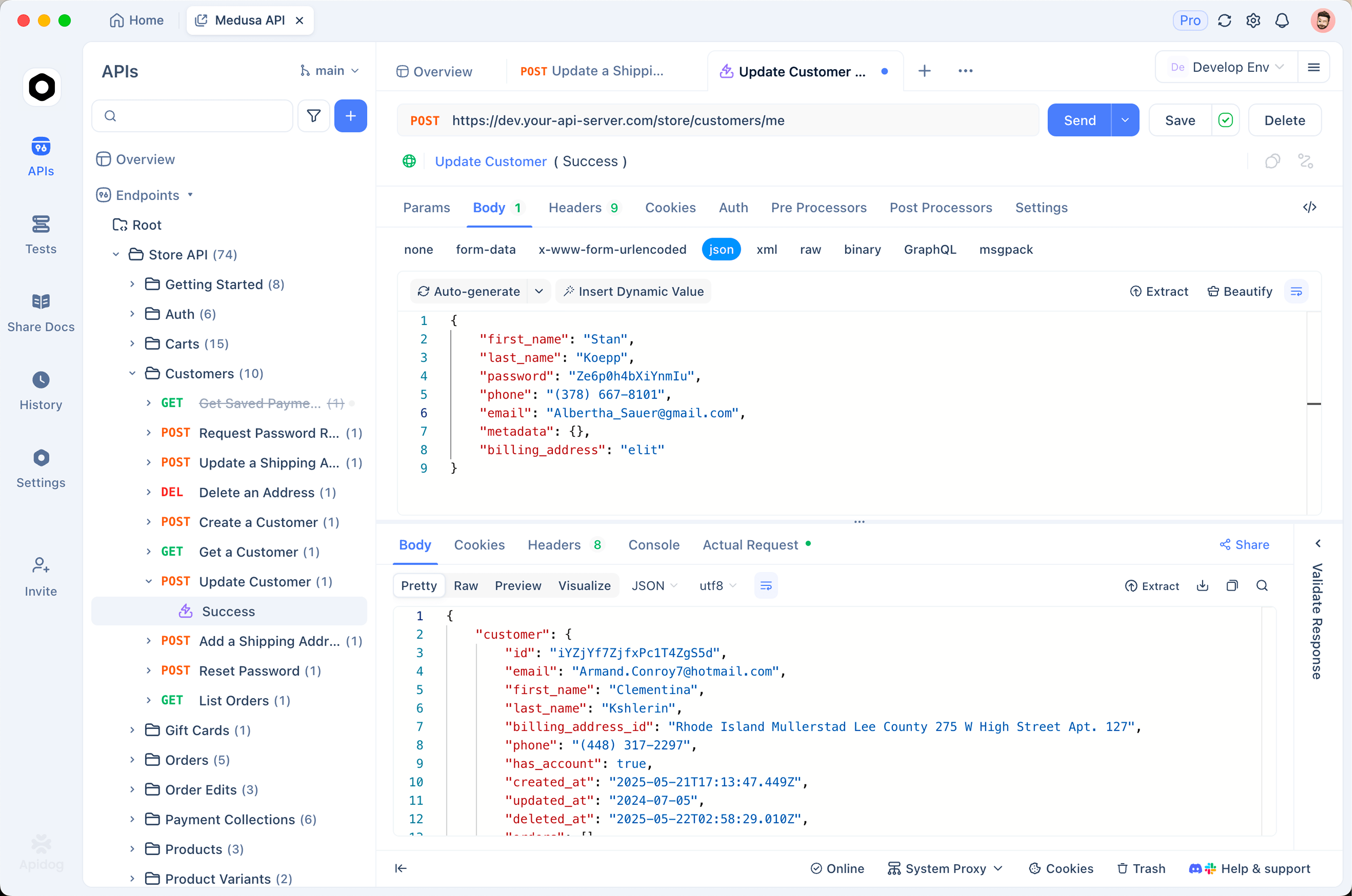
Four differences carry the comparison:
- Unlimited everything on the axes SwaggerHub meters. Unlimited APIs, unlimited test runs, and unlimited scheduled executions on every plan, including free. CI can run the suite on every commit without anyone watching a counter.
- The spec drives working artifacts, not just published ones. From one OpenAPI definition, Apidog generates interactive docs, a schema-aware mock server, and runnable test scenarios. Design changes propagate to all three automatically.
- Docs live on your domain without an enterprise negotiation. Custom domains, custom layouts, and Markdown pages are standard publishing features, with no vendor logo requirement.
- Pricing is one number. Free up to 4 users, $9 per user per month after. SSO, SCIM, and RBAC exist on the Enterprise plan as a plan, not as a stack of per-user add-ons.
The seat math
At Team-plan rates, the gap compounds with every hire. Annual cost, Swagger Team at $34.44 per user per month against Apidog free-for-4 plus $9 per seat beyond:
| Team size | Swagger Team per year | Apidog per year | Difference |
|---|---|---|---|
| 4 people | $1,653 | $0 (free plan) | $1,653 |
| 10 people | $4,133 | $1,080 | $3,053 |
| 20 people | $8,266 | $2,160 | $6,106 |
Add Enterprise SSO at $6 per user per month and a 20-person team’s Swagger bill grows by another $1,440 a year for login alone. The table also flatters the Swagger side by assuming the 50-API cap and 50-execution meter never force an upgrade to Enterprise rates.
Feature by feature against the Swagger modules
Studio → visual + code spec editing
Apidog offers both a visual designer and a code editor for OpenAPI, with branch support for proposing and reviewing spec changes. Reusable schema components cover the everyday case of SwaggerHub’s Domains. What Apidog doesn’t have is organization-wide style-guide enforcement with custom linting rules; if Spectral-based governance across hundreds of specs is your core need, that’s a genuine SwaggerHub strength.
Portal → hosted docs
Apidog publishes interactive documentation with a try-it console wired to real environments or the built-in mock server. Versioning, custom domain, your branding. The SwaggerHub portal’s tiered “product” counts and branding rules simply don’t have an equivalent because publishing isn’t the upsell.
Functional Testing → unlimited scenarios
This is the starkest gap. SwaggerHub’s included testing meters executions per month; Apidog’s visual test scenarios (chained steps, data extraction, assertions, data-driven runs from CSV/JSON) run without limits and execute in CI through the Apidog CLI:
npm install -g apidog-cli
apidog run scenario --scenario-id 12345 --env staging
Every run emits an HTML report. There’s no execution budget to ration across teams.
Automocking → smart mocks
SwaggerHub’s automocking returns example-based responses (and isn’t in the Individual tier). Apidog’s smart mock engine reads field names and types from the schema and fabricates realistic data (emails for email, URLs for avatar_url) with zero rules, plus custom expectations when you need fixed responses and a self-hosted option for internal networks. The wider mock-tool landscape is in best Swagger alternatives.
Beyond the modules
Apidog is also the request client your developers debug with, so the spec isn’t a governance artifact reviewed quarterly; it’s the thing everyone works inside daily. And the spec publishes through an MCP server so AI coding agents can consume it directly, covered in what is Apidog MCP Server.
SwaggerHub (Swagger) vs Apidog at a glance
| Swagger / SwaggerHub | Apidog | |
|---|---|---|
| Entry price | $22.80 per user/mo (Individual) | Free up to 4 users |
| Team price | $34.44 per user/mo + add-ons | $9 per user/mo |
| APIs | 10 (Individual) / 50 (Team) | Unlimited |
| Test executions | 50-100 per month, unlimited only on Enterprise Plus | Unlimited, all plans |
| Parallel testing | Enterprise Plus only | Included |
| Mocking | Automocking (not on Individual) | Schema-aware smart mocks, self-hostable |
| Portal branding | SmartBear branding below Enterprise Plus | Your domain, your branding |
| SSO | $6 per user/mo add-on | Enterprise plan |
| Spec governance / custom linting | Strong (Spectral-based standardization) | Basic validation, no org-wide rulesets |
| Contract testing (Pact) | Yes, dedicated module | No |
| Gateway sync (AWS, Azure, Apigee) | Yes | No native gateway push |
| Request client for daily debugging | No | Yes |
The last four rows are deliberate: two wins each. The governance and integration rows are why large platform teams buy SwaggerHub; the price and metering rows are why everyone else looks elsewhere.
Migrating from SwaggerHub
Because both tools speak OpenAPI natively, this is one of the cleaner migrations in the category:
- Export your specs from SwaggerHub (YAML or JSON) and import them into Apidog. Endpoints, schemas, and examples arrive structured; resolve shared Domain references into component schemas during export.
- Recreate review flow with branches. Spec changes propagate to docs, mocks, and tests on merge.
- Point consumers at the new docs URL on your custom domain and set redirects from the old portal.
- Turn on what was metered: schedule the test suite to run on every deploy, and hand frontend teams the mock URL.
A 50-spec workspace (the Team plan’s ceiling) typically moves in under a week, and the export step doubles as an audit of which specs are still alive.
When SwaggerHub still makes sense
Three honest cases. If you run API governance at organizational scale (custom style guides, Spectral rulesets, standardization reports across hundreds of specs and dozens of teams), SwaggerHub’s Enterprise tiers are built for that and Apidog doesn’t compete there yet. If Pact-based contract testing between microservice teams is central to your workflow, the Contract Testing module is a real differentiator. And if your specs must sync bi-directionally with AWS API Gateway, Azure API Management, or Apigee as part of deployment, SwaggerHub’s integrations are mature. The switch pays off when your team mainly designs, tests, documents, and mocks APIs, and the metered executions, branded portal, and add-on stack are charging platform-governance prices for everyday work. Teams comparing the design-first field should also read our Stoplight comparison, since Stoplight now lives under the same SmartBear roof.
Frequently asked questions
What does SwaggerHub cost now?
Under the relaunched Swagger platform: Individual starts at $22.80 per user per month, Team at $34.44, Enterprise at $58.80, and Enterprise Plus is quote-based. Enterprise SSO ($6), Portal Pro ($29.40), Contract Testing Pro ($23), and Test Pro ($30) are per-user monthly add-ons.
Is Apidog really unlimited where SwaggerHub is metered?
Yes. APIs, requests, test runs, and scheduled executions are unlimited on every Apidog plan, including the free tier. SwaggerHub meters test executions (50 to 100 per month below Enterprise Plus) and caps APIs at 10 to 50 on the lower tiers.
Can I import my SwaggerHub specs into Apidog?
Yes. Export as OpenAPI YAML or JSON and import directly. Schemas, endpoints, examples, and descriptions carry over; shared Domains should be resolved into the spec on export.
Does Apidog support spec-first design like SwaggerHub?
Yes. Apidog offers visual and code editors for OpenAPI with branch-based review, and the spec drives docs, mocks, and tests automatically. What it doesn’t offer is organization-wide custom linting rulesets; that remains SwaggerHub’s governance edge.
What about SwaggerHub’s API gateway integrations?
Apidog doesn’t push specs to AWS, Azure, or Apigee gateways natively. If gateway sync is a hard requirement, keep that workflow in mind before migrating; export/import via OpenAPI remains available on both sides.
Design the spec, then run it
Import one spec from SwaggerHub and watch what it generates: docs on your domain, a mock server with realistic data, and a test scenario you can schedule tonight, none of it metered. Download Apidog; a team of 4 evaluates free, and the per-seat math for everyone else is $9 against $34.44 plus add-ons.