OpenRouter made it simple to reach hundreds of models behind one API key. That convenience carries a tax. You pay a 5.5% fee every time you top up credits, and an $0.80 minimum quietly turns small top-ups into a 10-20% surcharge. Cross a million bring-your-own-key (BYOK) requests in a month and a 5% routing fee lands on top of what the provider already charges. For a weekend project, that’s noise. For a team pushing real traffic, it compounds into a line item you can feel.
So developers are shopping for an OpenRouter alternative that keeps the one-API-for-every-model convenience without the markup, the billing surprises, or the opaque routing. The category has exploded. You can now find gateways that undercut official model prices, aggregators that bundle text, image, and video behind a single endpoint, and open-source proxies you host yourself for zero platform fees.
This guide ranks the 10 best OpenRouter alternatives for 2026. Every option here speaks the OpenAI API format, so you can point existing code at a new base URL and keep moving.
TL;DR: the best OpenRouter alternatives in 2026
Short on time? Here’s the ranking.
- Hypereal AI is the best overall. One OpenAI-compatible API for 1,000+ text, image, and video models, prices below official rates, and a coding plan that stretches spend up to 7.7x on Claude and GPT models.
- Blackmagic AI is the best pick for prepaid LLM discounts, with 48-74% off list prices and a single balance across 13+ providers.
- Merge Gateway, Requesty, Portkey, Together AI, Groq, Fireworks AI, LiteLLM, Cloudflare AI Gateway, and Eden AI round out the field for routing, raw speed, self-hosting, and enterprise governance.
The cheapest route for coding agents is Hypereal’s coding plan. The cheapest route for raw open-model inference is Groq or Together. The most control comes from self-hosting LiteLLM.
Why look for an OpenRouter alternative?
OpenRouter is a good product. It solved a real problem: one key, one billing relationship, and a catalog of 300+ models you can swap with a single string. The reasons to leave are rarely about features. They’re about money, control, and predictability.
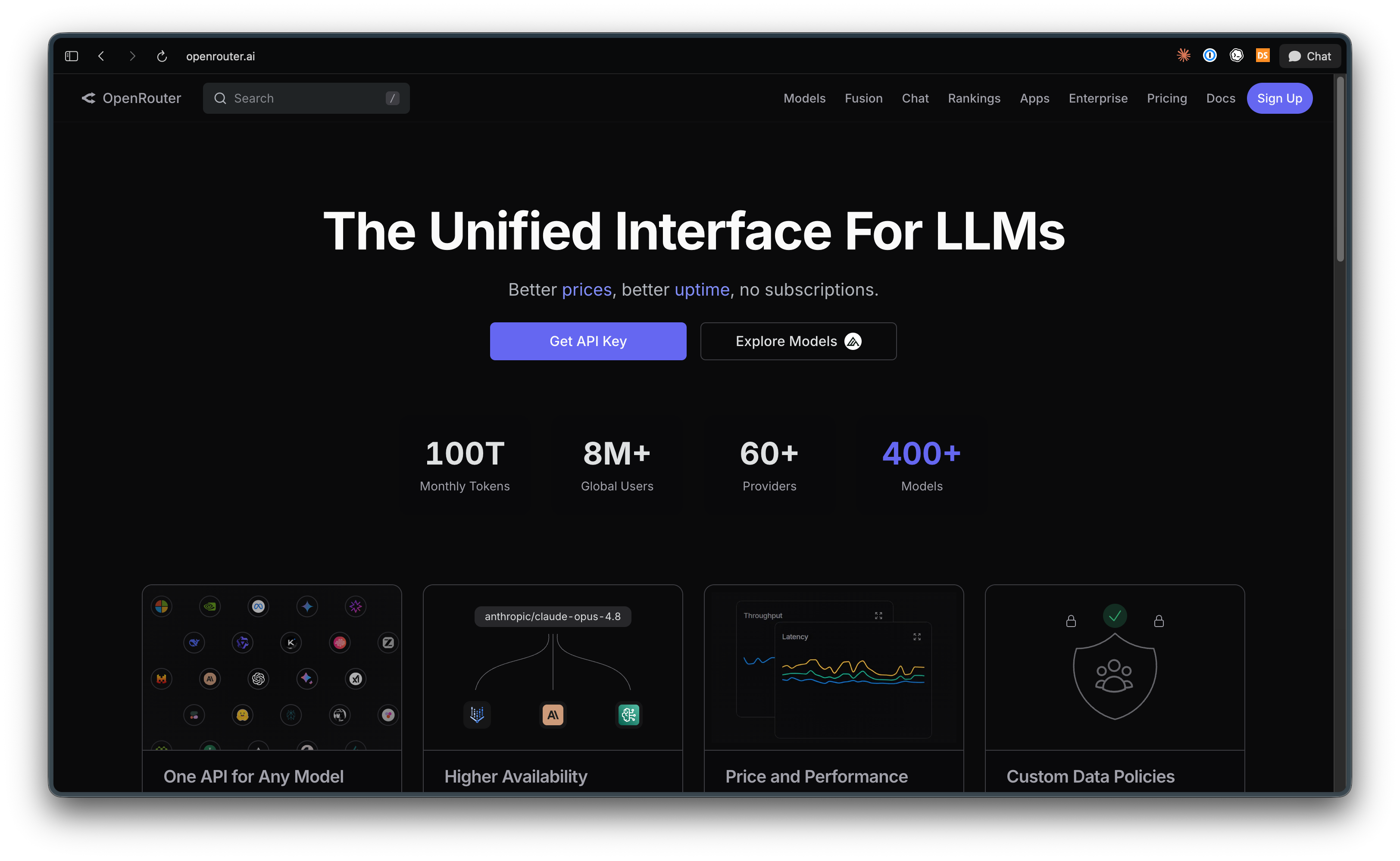
The fees add up. OpenRouter passes through provider pricing, then charges a 5.5% fee with an $0.80 minimum when you buy credits. On a $5 top-up, that floor alone is a 16% surcharge. The OpenRouter pricing page spells this out, and the OpenRouter FAQ documents the BYOK terms: your first million BYOK requests each month are free, then every request after that costs 5% of what the same call would cost on the provider. None of these numbers are huge on their own. Together, at scale, they’re a tax on every token you move.
You pay list price, not a discount. Pass-through pricing sounds fair until you realize a discount aggregator can charge less than the provider’s published rate. If your goal is the lowest possible per-token cost, paying list price plus a platform fee is the wrong direction. This is the gap that tools like Hypereal and Blackmagic exist to close, and it’s the same pressure driving the broader Chinese LLM price war of 2026.
Routing can be opaque. When a model is served by several providers, you don’t always control which backend handles your request, and quality or speed can vary between them. Teams with latency budgets want that decision in their hands.
Small top-ups and big BYOK bills surprise people. The two pain points teams report most: the $0.80 floor eating small balances during early testing, and the 5% BYOK fee quietly switching on once traffic crosses a million requests a month. If you’re trying to cut agent token costs, those are exactly the leaks you want sealed.
If none of that bites you, OpenRouter is fine. If any of it does, one of the ten below will fit better.
What makes a good OpenRouter alternative?
Before the list, here’s the scorecard. A strong replacement should give you most of these:
- OpenAI-compatible API so migration is a base-URL swap, not a rewrite.
- Wide model coverage across providers, ideally text plus image and video.
- Real cost savings versus official rates, not convenience alone.
- Reliability with failover when a provider degrades.
- Billing controls like spend caps, per-key budgets, and usage logs.
- Privacy and compliance posture you can show an auditor.
Now the ranking.
The 10 best OpenRouter alternatives in 2026
1. Hypereal AI: the best all-in-one gateway for cheaper models
Hypereal AI tops this list because it does three hard things at once: it’s cheaper, it’s all-in-one, and it’s built for teams that need governance. One OpenAI-compatible API reaches 1,000+ models from 20+ providers across five modalities, so the same key that calls Claude Opus 4.7 also calls Gemini 3.5, DeepSeek V3.2, Flux 2 Max for images, and Veo 3.1 or Sora 2 for video. It’s a drop-in for the OpenAI Chat Completions and Images APIs, so swapping the base URL is the whole migration.
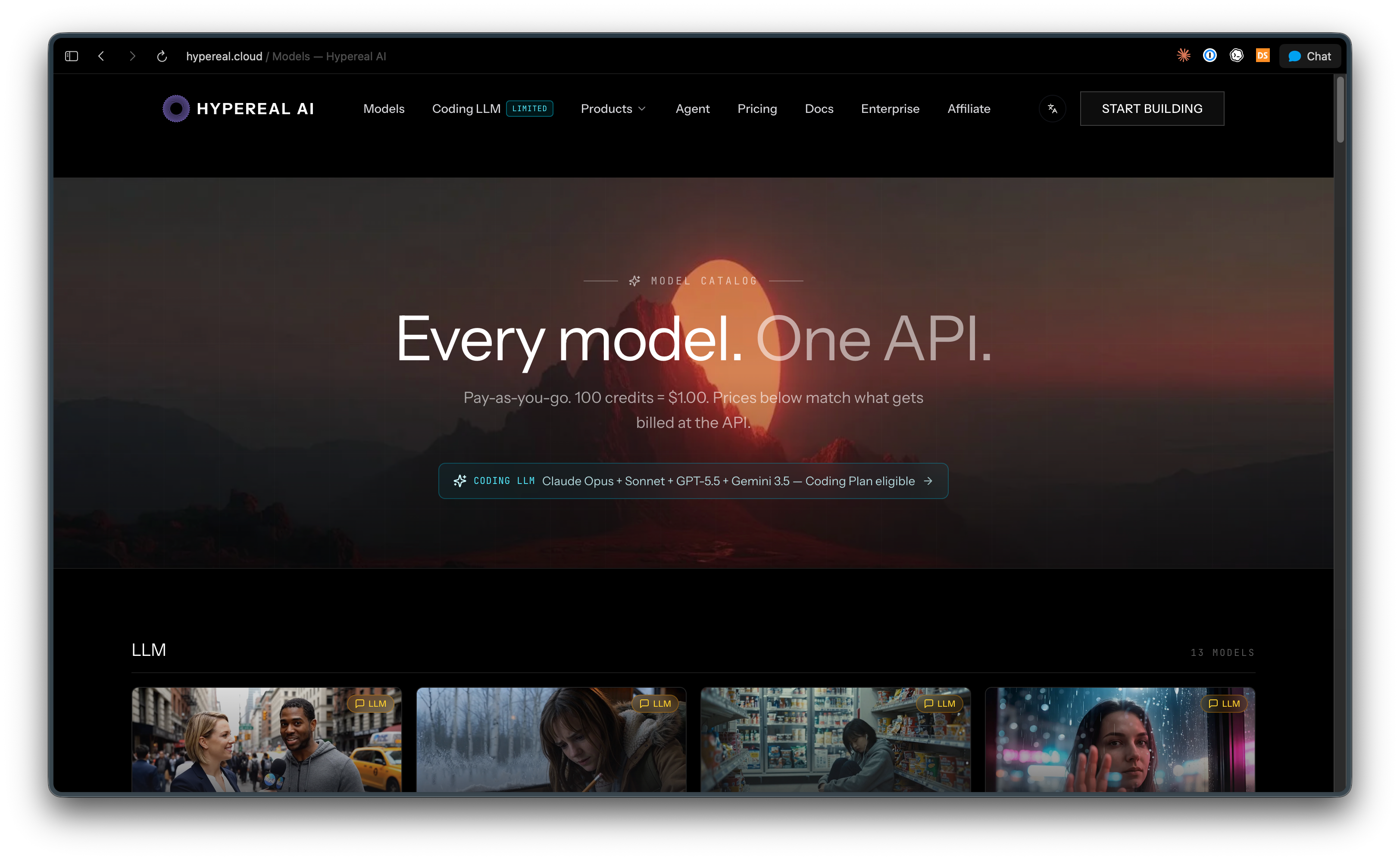
Pricing is credit-based and refreshingly simple: 100 credits equal $1, you pay only for usage, and there’s no subscription. A free tier gives you 60 requests per minute to evaluate the platform, and paid tiers scale from $10 to $1,000+ without locking you into a plan. Under the hood, smart routing sends each request to the cheapest qualified provider, and failover kicks in around 240 ms when a backend degrades. The live dashboard reports 99.98% uptime and a 312 ms p50 latency.
The standout for developers is the coding plan. It uses prepaid credit packs with a usage multiplier that grows with pack size, from 4.4x on the $10 pack up to 7.7x on the $1,000 pack. The multiplier applies to coding-grade models like Claude Opus models and more. The effect on price is concrete. On this plan, Claude Opus 4.7 lands about 32% below official API rates, and Claude Sonnet runs about 77% below. Input and output tokens are metered separately, and a prompt cache plus the built-in Hypereal Cache cut repeat-token spend further. It works with Claude Code, Cursor, Cline, Aider, Continue.dev, OpenCode, and any OpenAI or Anthropic SDK-compatible tool, which makes it a natural fit if you’re wiring up a Claude Agent SDK setup. If you’ve been watching Claude Opus 4.8 pricing and wincing, this is the sort of discount that changes the math.
Best for: teams that want one bill for text, image, and video, coding shops chasing cheaper Claude and GPT calls, and anyone who needs SSO and audit logs on top of a model gateway.
Watch for: the headline coding discounts apply to the five supported models, so price the exact models you use before you switch.
2. Blackmagic AI: the best prepaid discounts for LLM work
Blackmagic AI is an OpenRouter-style gateway built around prepaid credits and steep discounts. It gives you OpenAI-compatible routes, a chat playground, API keys, a model catalog, usage logs, and billing controls, all behind a single balance that works across every provider. If OpenRouter’s model is what you like but its fees are what you don’t, this is the closest swap.
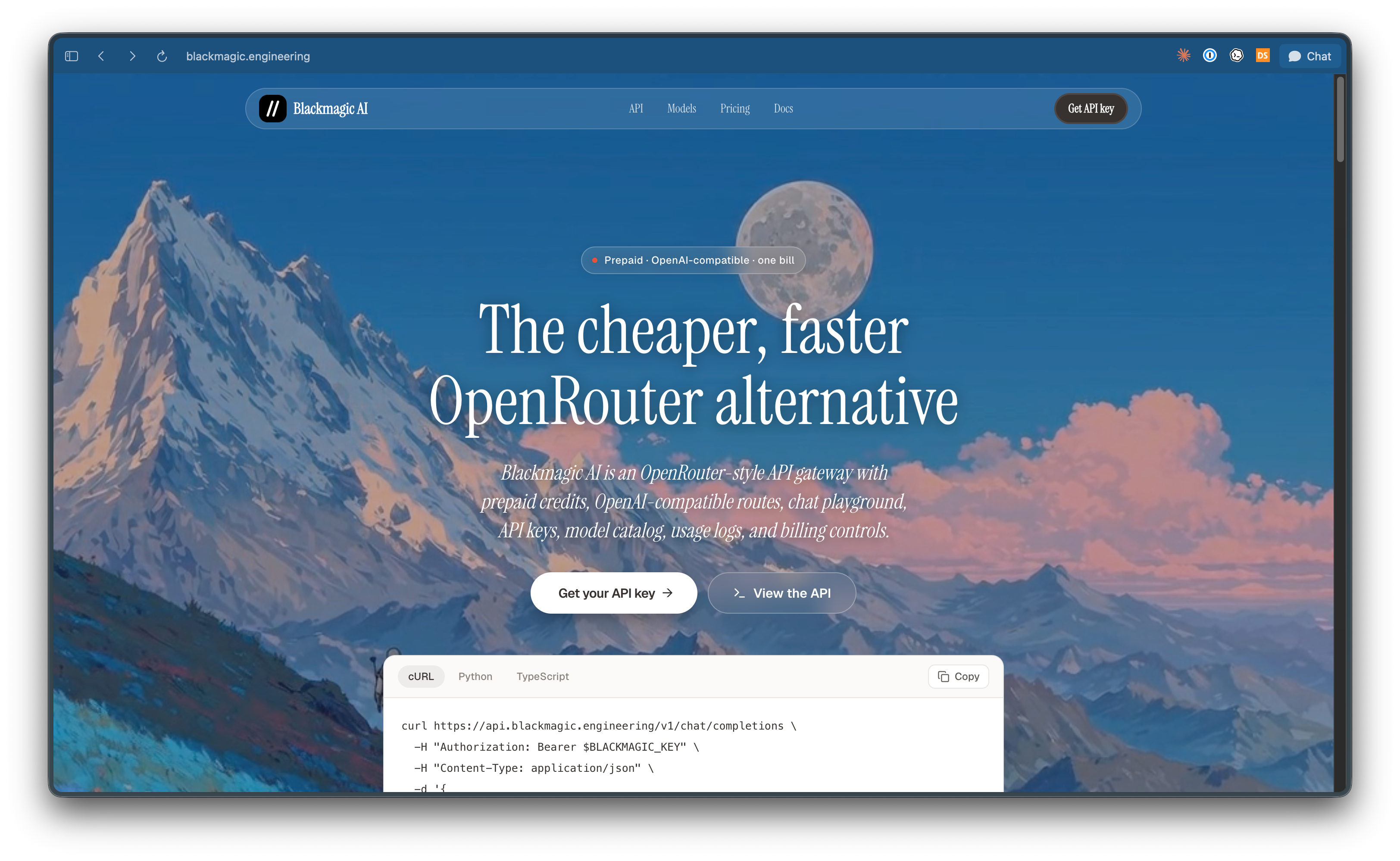
Coverage spans 13+ providers, including OpenAI, Anthropic, Google Gemini, Meta, Mistral, xAI (Grok), DeepSeek, Qwen, Black Forest Labs (Flux), Moonshot AI, Cohere, Perplexity, and Stability AI. The pricing is where it earns its spot. Discounts run 48-74% below official list prices. GPT-5.5 is listed at $1.32 input and $7.92 output per million tokens, a 74% discount. Claude Opus 4.8 runs $1.76 input and $8.81 output per million, a 65% discount, and Claude Sonnet 4.6 sits at $1.06 and $5.28, also 65% off. Blackmagic’s own savings calculator puts 20 million GPT-5.5 tokens a month at $66 versus roughly $250 at official rates.
Billing is built for teams that hate surprises. There’s no subscription and no monthly fee. You drop in $10 or more, top-ups range from $9.99 to $499.99, and every API key can carry a monthly spend cap. Real-time usage logs break down cost per request, so you can see exactly where the money went. The OpenAI compatibility covers /chat/completions, /images/generations, /completions, and model listing, so most SDKs work after a base-URL change.
Best for: developers who want the OpenRouter experience, one balance and many providers, with deeper discounts and clean prepaid billing.
Watch for: it’s focused on text and image models rather than video, so it’s a pure LLM-and-image play, not a five-modality platform.
3. Merge Gateway: one API with per-customer spend caps
Merge Gateway routes requests across OpenAI, Anthropic, Google, xAI, Mistral, Cohere, and AWS Bedrock through one endpoint, gateway.merge.dev/v1. It works with the OpenAI SDK, Vercel AI SDK, and LangChain, so switching over is usually a one-line change.
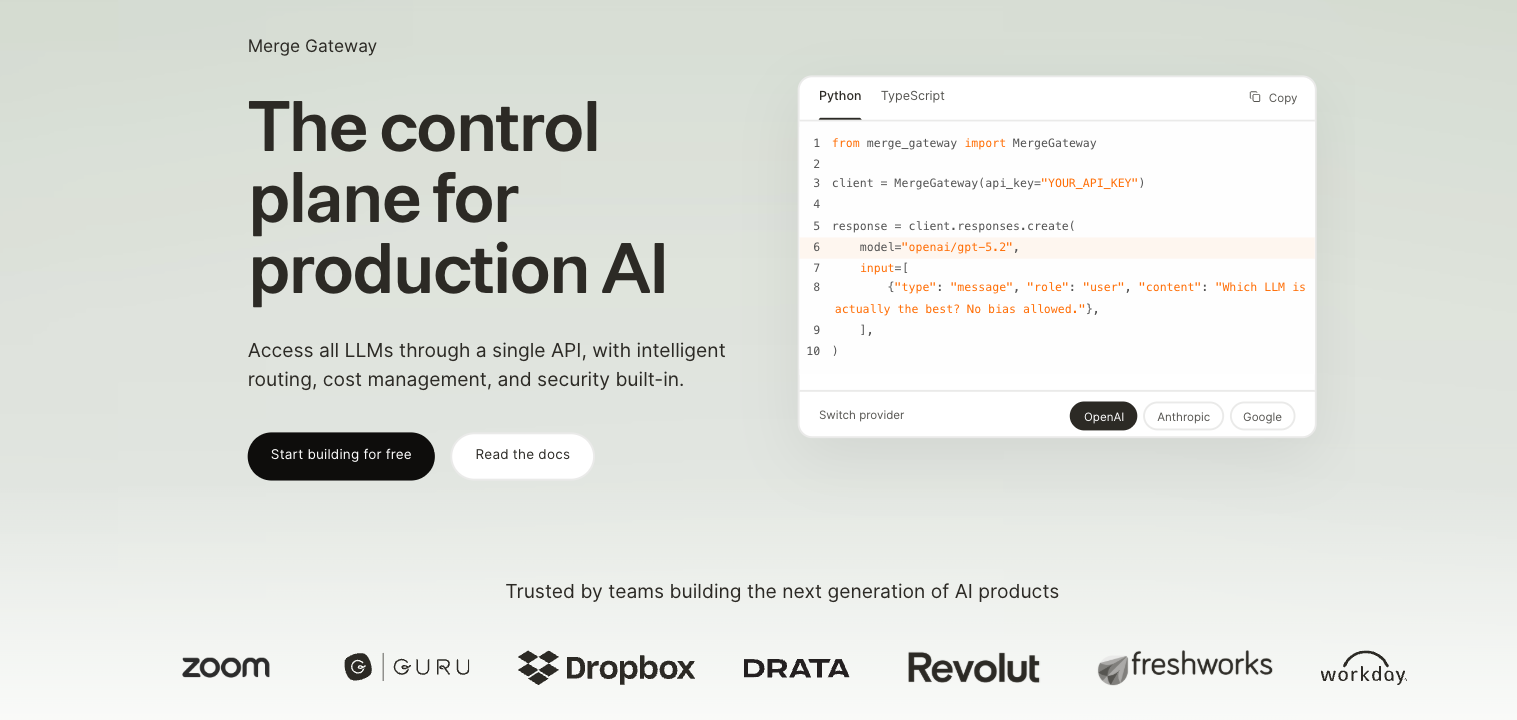
Routing can run on Merge's own benchmarks or a team's custom ones, a feature called Build Your Own Router, and every request passes through DLP and prompt-injection screening.
Teams can set budget caps by project, team, or customer, and get one invoice across all providers. The free tier includes $10 of usage, and paid usage has a 0% platform fee through June 2026.
Best for: teams that need to cap and explain spend per customer, not just route requests.
4. Requesty: smart routing with cost optimization
Requesty is the closest thing to OpenRouter’s routing model with cost in the foreground. It fronts 300+ models behind one OpenAI-compatible endpoint and adds automatic fallbacks, caching, and spend analytics so a failed or slow provider doesn’t take your app down. The dashboards focus on where your tokens go and how to trim them.
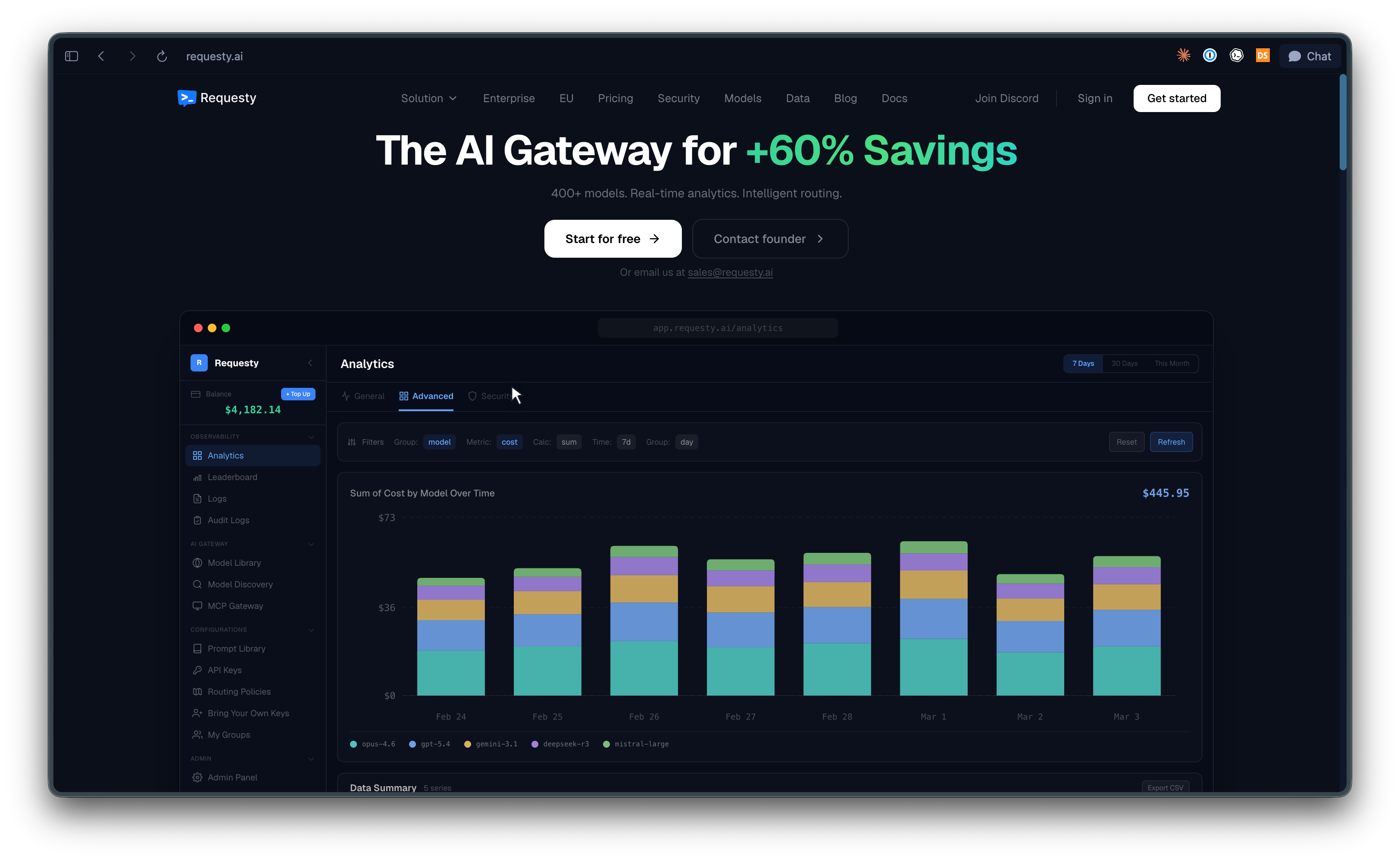
Best for: teams that liked OpenRouter’s routing but want tighter cost controls and failover baked in.
5. Portkey: the enterprise AI gateway with observability
Portkey leads with governance. Its open-source gateway core plus a hosted control plane give you virtual keys, guardrails, semantic caching, retries, fallbacks, and detailed tracing across 200+ models. If your problem is less “which model” and more “who called what, how much did it cost, and can I prove it,” Portkey is built for that.
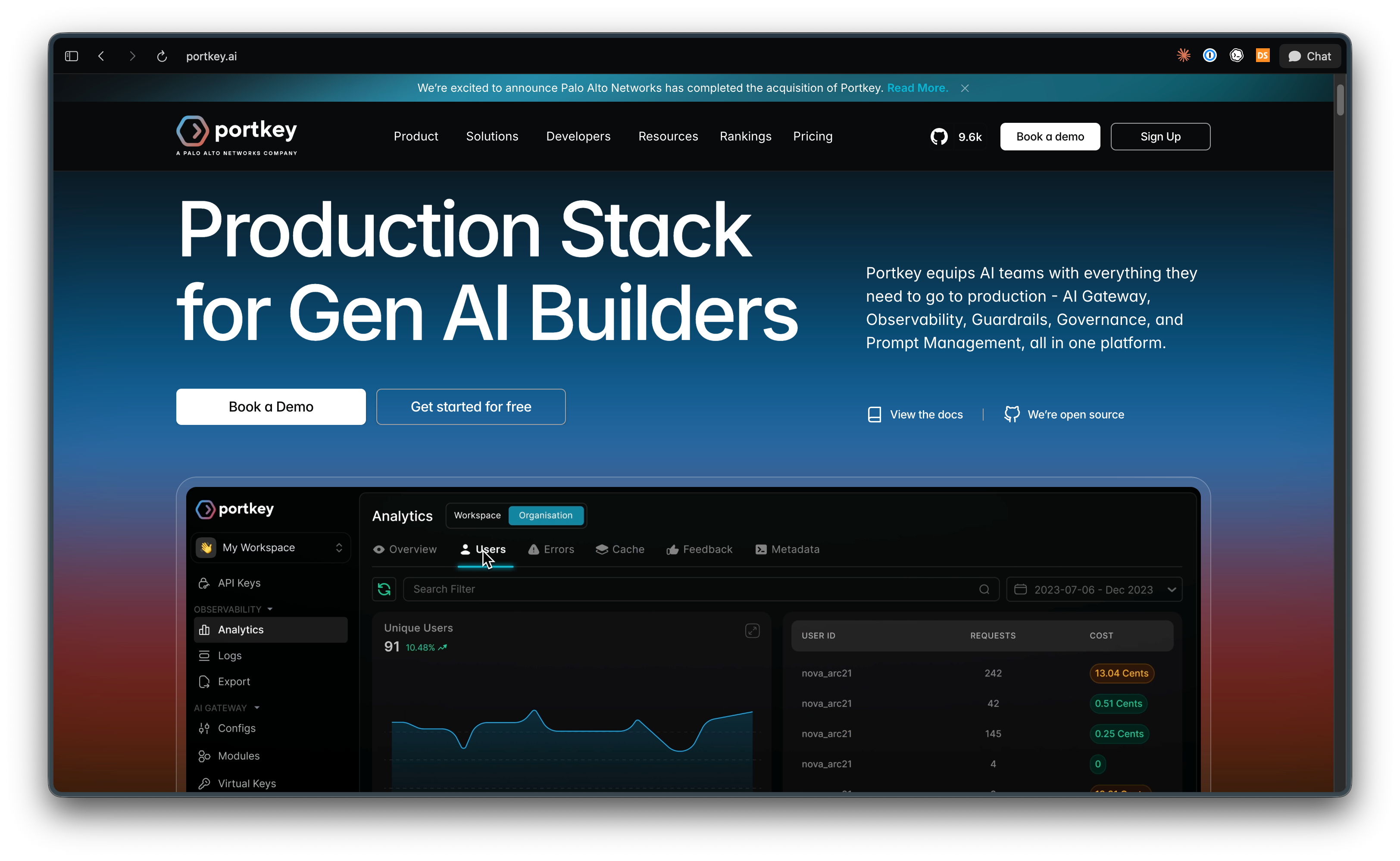
Best for: production teams that need observability, guardrails, and per-team budgets across many model calls.
6. Together AI: fast inference for open models
Together AI is an inference cloud for open-weight models like Llama, Qwen, DeepSeek, and Mixtral, with 200+ models behind an OpenAI-compatible API. Beyond serving, it offers fine-tuning and dedicated endpoints, so you can take an open model from prototype to a tuned, reserved deployment without switching vendors. Pricing is per-token and competitive for the open ecosystem.
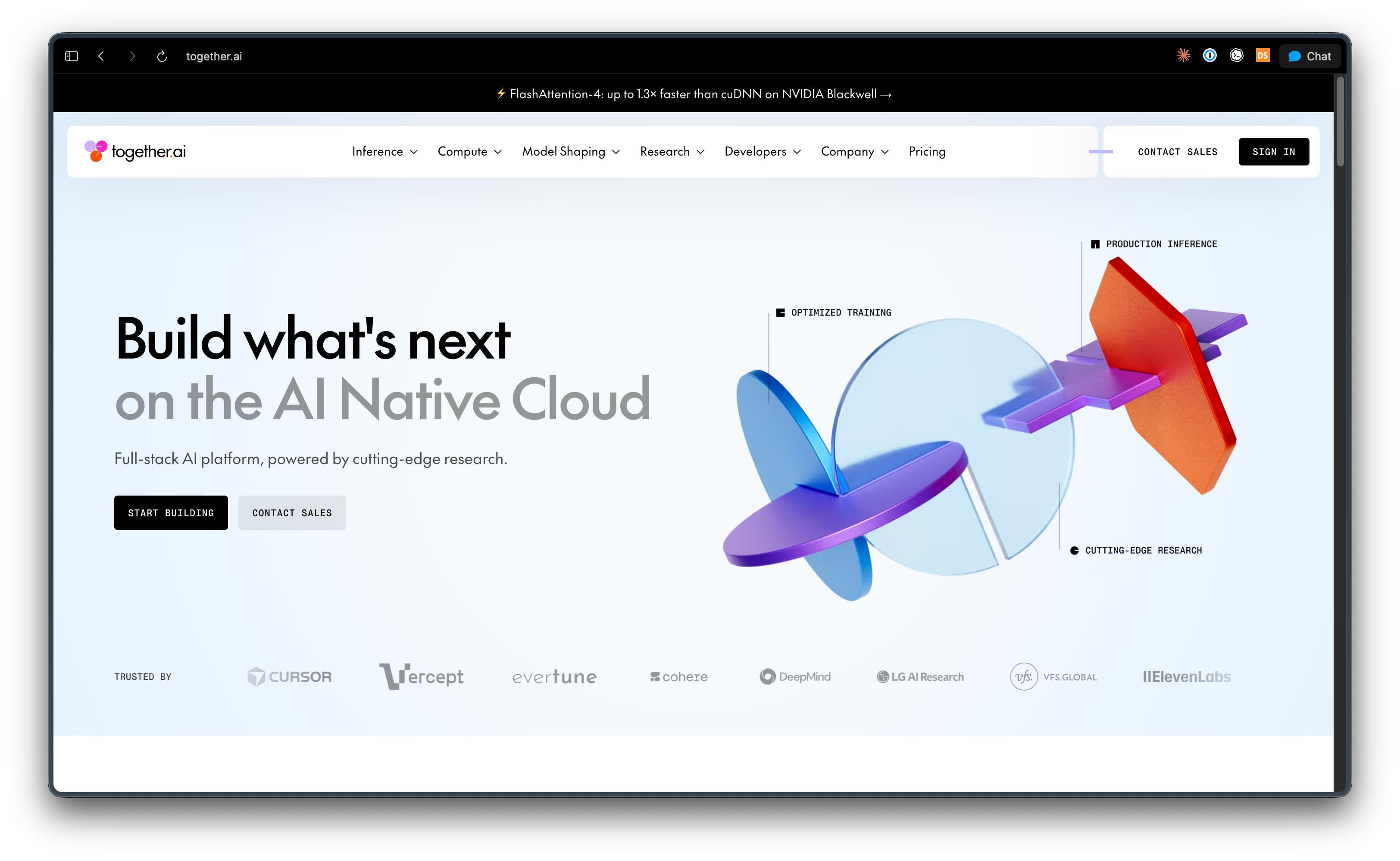
Best for: teams standardizing on open models that want speed plus fine-tuning under one roof. See our Qwen 3.7 API guide for the kind of open model that runs well here.
7. Groq: the speed king
Groq runs open models on custom LPU hardware and serves them at high tokens-per-second with low latency. GroqCloud is OpenAI-compatible and hosts models like Llama, Qwen, and Gemma. The catalog is narrower than a full aggregator, but for latency-sensitive work, the speed is the selling point.
Best for: voice agents, real-time apps, and any workload where response speed beats model breadth.
8. Fireworks AI: production inference for open models
Fireworks AI serves open models fast and adds the production extras: function calling, JSON mode, fine-tuning, and reliable serving at scale. Like Groq and Together, it’s OpenAI-compatible, so it slots into existing code. The pitch is dependable open-model inference for teams shipping features, not demos.
Best for: teams running open models in production that want tuning and structured output without operating their own GPUs.
9. LiteLLM: the open-source, self-hosted gateway
LiteLLM flips the model. Instead of paying a platform, you run an open-source proxy that unifies 100+ providers behind the OpenAI format. Self-host it and the platform fee is zero. You set budgets and rate limits per key, log spend, and keep every request inside your own network. The trade-off is honest: you own the infrastructure and the upgrades.
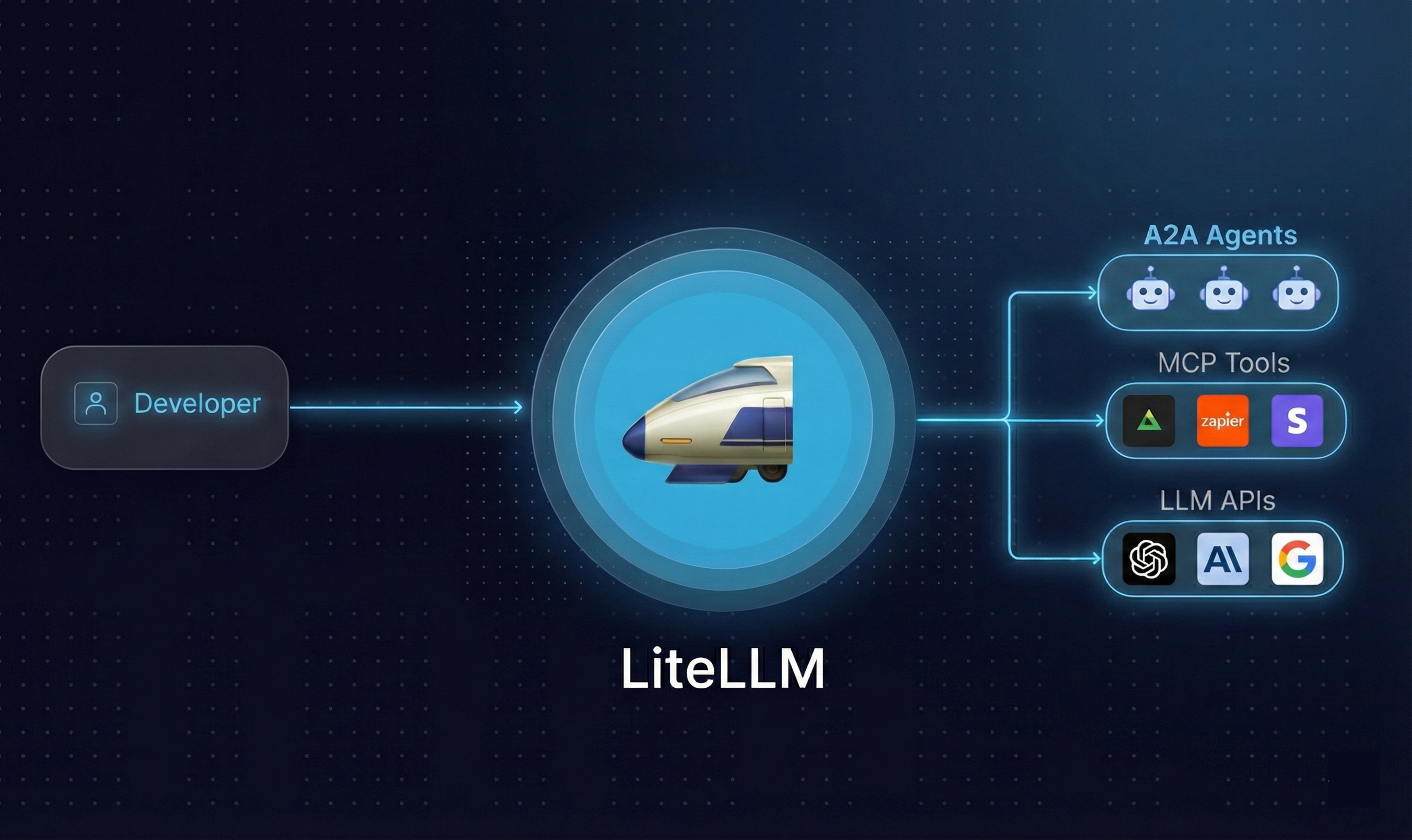
Best for: teams that want full control, no middleman markup, and data that never leaves their perimeter.
10. Cloudflare AI Gateway: caching and analytics at the edge
Cloudflare AI Gateway sits in front of your existing provider APIs and adds caching, rate limiting, retries, analytics, and logging across providers. It’s free to start and doesn’t resell tokens; you keep your provider keys and Cloudflare gives you the observability layer on top. If you already run on Cloudflare, it’s a small step.
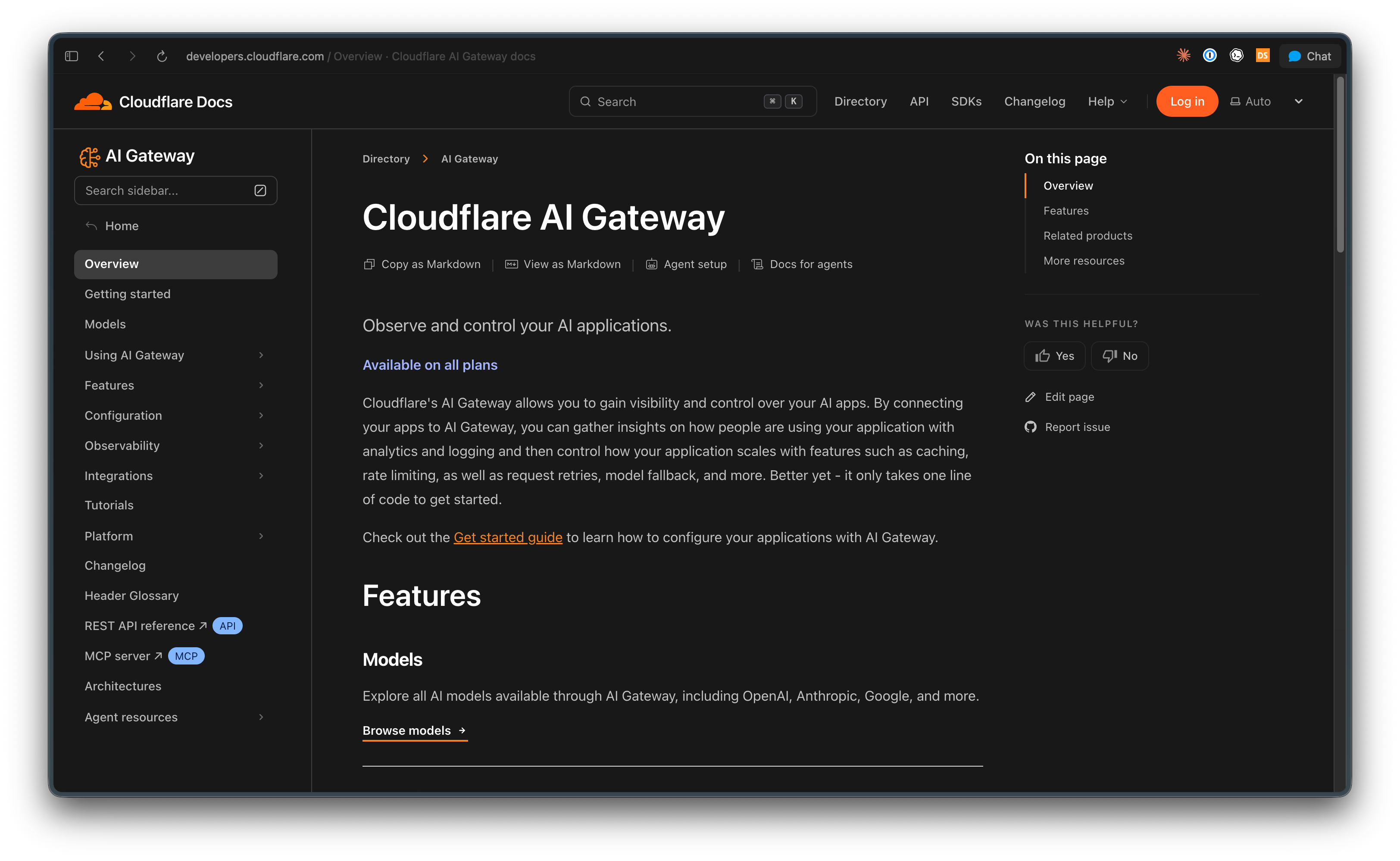
Best for: teams that want caching and analytics over their current providers without changing who serves the tokens.
Bonus: Eden AI: one API across every AI modality
Eden AI aggregates many providers across modalities, including LLMs, OCR, speech, translation, and image generation, behind a single API and one bill, with provider fallback. It’s less about the cheapest chat tokens and more about covering an entire AI feature set from one integration.
Best for: products that need more than chat, like document processing plus generation, from a single vendor.
OpenRouter alternatives compared
| Tool | Type | Model coverage | Pricing model | OpenAI-compatible | Best for |
|---|---|---|---|---|---|
| Hypereal AI | All-in-one gateway | 1,000+ (text, image, video) | Credits, below list price | Yes | Cheapest coding plan + all modalities |
| Blackmagic AI | LLM gateway | 13+ providers | Prepaid, 48-74% off list | Yes | Deep prepaid LLM discounts |
| Merge Gateway | LLM gateway | 300+ models | Free tier + usage | Yes | Per-customer cost governance | Requesty | Smart router | 300+ models | Usage + routing | Yes | Routing with cost controls |
| Portkey | Enterprise gateway | 200+ models | Usage + plan | Yes | Observability and governance |
| Together AI | Inference cloud | 200+ open models | Per-token | Yes | Open models + fine-tuning |
| Groq | Inference (LPU) | Select open models | Per-token | Yes | Lowest latency |
| Fireworks AI | Inference cloud | Open models | Per-token | Yes | Production open-model serving |
| LiteLLM | Open-source proxy | 100+ providers | Free (self-host) | Yes | Full control, zero platform fee |
| Cloudflare AI Gateway | Edge gateway | Your providers | Free + usage | Yes (proxy) | Caching and analytics |
| Eden AI | Multi-modal aggregator | Many providers | Usage | Yes | One API across modalities |
Test and debug any LLM gateway with Apidog
Here’s the part most “alternatives” lists skip: switching gateways is easy to get wrong. Two endpoints can both claim OpenAI compatibility and still differ on streaming behavior, token accounting, error shapes, and rate-limit headers. You want proof before you move production traffic, and that’s an API testing problem.
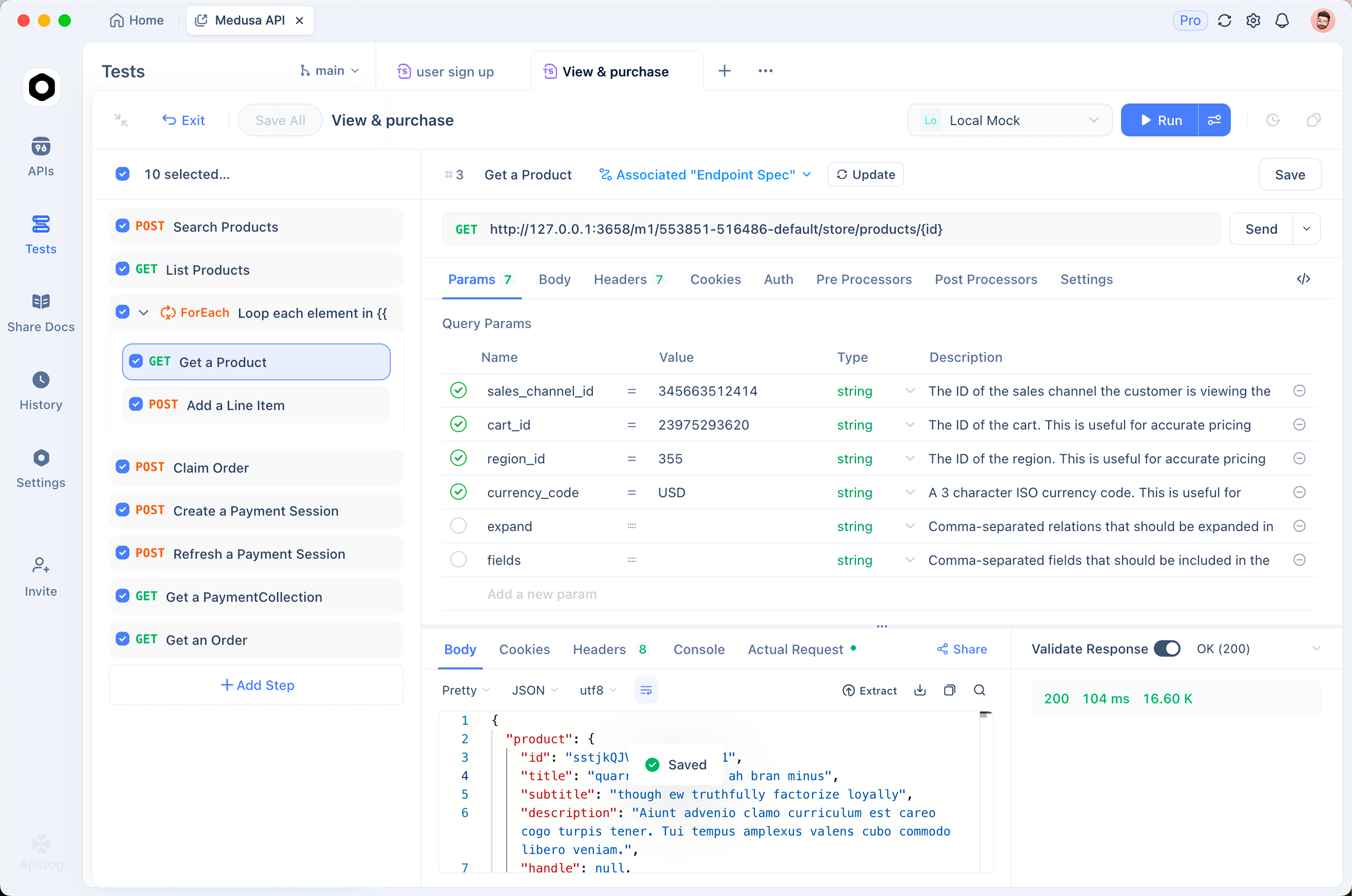
Apidog is an all-in-one API platform that’s a good fit for this exact job. Point a request at the new gateway’s /chat/completions route, drop in the base URL and key, and you can compare responses, latency, and token usage across Hypereal, Blackmagic, and OpenRouter side by side. A few moves that save real time:
- Use environments to store each gateway’s
base_urlandapi_key, then run the identical request against each by flipping a dropdown. No code edits. - Validate streaming by sending a request with
stream: trueand confirming the server-sent events arrive in the right shape before your app depends on it. - Assert on the response schema and usage block so you catch a gateway that returns token counts differently, which matters when cost tracking depends on it.
- Save the calls as a collection and re-run them after a provider change, so a silent routing switch doesn’t break you in production.
Because every tool on this list is OpenAI-compatible, the same Apidog test suite works across all of them. That makes a head-to-head fair: same prompt, same parameters, real numbers. If you’ve already moved off other tools, this slots in next to the workflow in our best Postman alternatives for API testing guide. And since you’ll be juggling several API keys during a migration, tighten up how you store them; our notes on API key security in VS Code extensions apply here too. Download Apidog and you can run your first cross-gateway comparison in a few minutes.
How to switch from OpenRouter in three steps
Migration is mechanical when the target is OpenAI-compatible. Here’s the pattern.
- Create an account and key on the new gateway, then add credits. For Hypereal or Blackmagic, that’s a prepaid top-up; for LiteLLM, you stand up the proxy and point it at your provider keys.
- Change the base URL and API key in your client, then map model names. With the OpenAI SDK, set
base_urlto the new endpoint andapi_keyto the new key. Model identifiers differ between catalogs, so check the names (for example,claude-opus-4-7versus a provider-specific slug). - Test before you cut over. Send a chat completion through Apidog or curl, confirm streaming, token counts, and cost look right, then shift traffic gradually. Keep OpenRouter configured as a fallback until the new gateway proves itself for a few days.
The whole change is usually a config edit plus a test pass, not a rewrite. That’s the upside of an OpenAI-compatible ecosystem.
Frequently asked questions
Is there a free OpenRouter alternative? Yes. Hypereal AI has a free tier with 60 requests per minute, Cloudflare AI Gateway is free to start, and LiteLLM is open-source and free if you self-host. Several gateways also expose free or low-cost open models; our guide on using Claude Opus 4.8 for free covers the no-cost routes worth knowing.
Which OpenRouter alternative is the cheapest? It depends on your workload. For coding agents on Claude and GPT, Hypereal’s coding plan stretches spend up to 7.7x and lands well below official rates. For prepaid LLM discounts, Blackmagic runs 48-74% off list. For open models, Groq and Together post low per-token prices. If you self-host LiteLLM, the platform fee is zero and you pay only the provider.
Will my existing OpenAI code work with these? Almost always. Every tool here supports the OpenAI API format, so you change the base URL and key and map model names. Test the streaming behavior and the token-usage fields, since those are where compatibility gaps usually hide.
What’s the best OpenRouter alternative for Claude Code and coding agents? Hypereal’s coding plan is built for this. It works with Claude Code, Cursor, Cline, Aider, Continue.dev, and OpenCode, and prices Claude and GPT models below official API rates. If your costs are creeping up, pair it with the tactics in our guide to reducing agent token costs.
Is OpenRouter still worth using? For breadth and quick experimentation, yes. The 5.5% credit fee, the $0.80 floor, and the 5% BYOK fee past a million requests a month are the reasons teams move once spend gets serious. Below that, the convenience can be worth the cost.
Does Hypereal handle images and video, or only text models? Yes. That’s a main differentiator. The same API reaches 1,000+ models spanning text, image (Flux 2 Max, Seedream 5.0, Nano Banana 2), and video (Veo 3.1, Sora 2, Kling, WAN), so you bill text and media generation through one account.
How do I keep my API keys and data safe across gateways? Pick a vendor whose compliance matches your needs (Hypereal carries SOC 2, ISO 27001, HIPAA, and GDPR), or self-host LiteLLM so nothing leaves your network. Either way, store keys in environment variables or a secrets manager, never in source, and review the guidance in our API key security write-up.
Which OpenRouter alternative should you pick?
Match the tool to the job:
- Want one bill for text, image, and video plus the cheapest coding models and enterprise controls? Hypereal AI is the strongest all-rounder, and its coding plan is the clearest win for Claude and GPT workloads.
- Want OpenRouter’s exact model with steeper discounts and clean prepaid billing? Blackmagic AI at 48-74% off list.
- Want to cap and explain LLM spend per customer, with one invoice across providers? Pick Merge Gateway.
- Want the lowest latency or open-model scale? Groq, Together AI, or Fireworks AI.
- Want full control and zero platform fees? Self-host LiteLLM.
- Want caching and analytics over your current providers? Cloudflare AI Gateway.
Whichever you choose, prove it before you migrate. Set up an OpenAI-compatible request in Apidog, run the same prompt against your shortlist, and let the latency and token numbers pick the winner. Download Apidog to run your first side-by-side gateway test today.