Hoppscotch deserves its popularity. It’s open source, loads in a browser tab in seconds, and sends a request faster than most desktop clients finish booting. For quick, one-off API calls, it’s hard to beat.
The search for a Hoppscotch alternative usually starts the day your work outgrows quick calls: a localhost API the browser can’t reach, a frontend teammate waiting on mock data, docs that need publishing, or a test suite that should run in CI. The direct answer for that day is Apidog: a free-for-teams desktop platform that imports your Hoppscotch collections and OpenAPI specs in one click and covers the whole API lifecycle. Hoppscotch sends requests; Apidog ships APIs.
Where Hoppscotch runs out of road
The browser is the ceiling
Hoppscotch’s greatest strength, living in the browser, is also its structural limit. Browsers enforce CORS, so cross-origin requests fail and localhost APIs are unreachable from the web app until you add scaffolding: a browser extension, a proxy, or a separate agent. Hoppscotch does offer a desktop app now, but the fixes are add-ons around a web-first core. Apidog’s desktop apps for Windows, macOS, and Linux make the whole category of problem disappear: no CORS, direct access to local services, files, and even databases. We covered this pattern in alternatives to browser-based API clients.
Why the CORS scaffolding exists
It helps to understand why the workarounds exist at all, because none of them are Hoppscotch’s fault. The web app runs inside a browser tab, and the browser treats it like any other website. The same-origin policy stops a page served from one domain from calling APIs on another domain, and it walls off localhost entirely. That policy protects users from malicious pages; the browser has no way to know your API client is trusted.
So every path out of the sandbox is an official escape hatch, and each one is another moving part:
- The browser extension relays requests outside the sandbox. Every developer installs it, per browser, and keeps it updated.
- The proxy (Proxyscotch) routes traffic through a server that makes the request on your behalf. Someone hosts it, and every request now passes through it.
- The agent and desktop path runs a local process that does the sending. It works, and it concedes the point: the request had to leave the browser anyway.
Each hatch functions. Each also adds setup on every developer’s machine, a support question when it stops working, and one more hop between you and the API you’re debugging. When a request fails, you first rule out the scaffolding before you can trust the failure.
A native desktop client skips this whole chapter. Requests originate from a local process, the same-origin policy never applies, and localhost is one hostname among many. The desktop client isn’t doing extra work to dodge CORS; the problem never reaches it.
A request tool, not an API workspace
Run down what a team needs to ship an API and check what Hoppscotch provides:
- API design. No visual OpenAPI designer, no spec-driven workflow, no branches. Specs can be imported but they don’t drive anything.
- Documentation. No published, interactive API docs with access control or custom domains.
- Mocking. No mock servers at all. Your frontend team waits for the backend or hand-rolls fakes.
- Automated testing. Scripting per request, but no visual orchestration, scheduled runs, performance tests, or online reports. The CLI covers basic collection runs; we compared Hoppscotch CLI alternatives in depth.
- Protocols. REST, GraphQL, WebSocket, SSE, Socket.IO and MQTT are covered. gRPC and SOAP are not.
Team features mean infrastructure or invoices
Individual Hoppscotch use is free and open source, genuinely. Team workspaces change the math: real-time collaboration requires accounts and either the cloud plans starting at $6 per user per month or self-hosting the full stack with PostgreSQL and the works, which your team then maintains. Apidog’s free plan gives 4 users a shared workspace with no servers to run.
The honest self-hosting math
Self-hosting deserves an honest accounting, because “free and open source” describes the license, not the cost of running the software. Hosting the full Hoppscotch stack means standing up PostgreSQL and the rest of the infrastructure, then keeping it alive: version upgrades, database backups, auth configuration, and monitoring. None of that is exotic work, but it recurs, and it lands on whichever engineer volunteered first. Every hour spent patching the API-testing tool is an hour not spent on your own product.
Compare the starting position on the other side. Apidog’s free plan gives 4 users a shared cloud workspace with unlimited APIs, requests, and test runs, and there is no server to provision, upgrade, or back up. You create a workspace and invite three teammates; the setup is finished. Teams with strict data-residency requirements have options on Apidog’s side too: the smart mock engine and the test runner can both run self-hosted on your own infrastructure, and Apidog Europe keeps data in GDPR-compliant AWS regions in Ireland and Germany. The default path, though, asks nothing of your ops capacity.
Choose self-hosted Hoppscotch when the open-source license is the requirement. Choose a managed workspace when shipping your API is.
The answer: Apidog
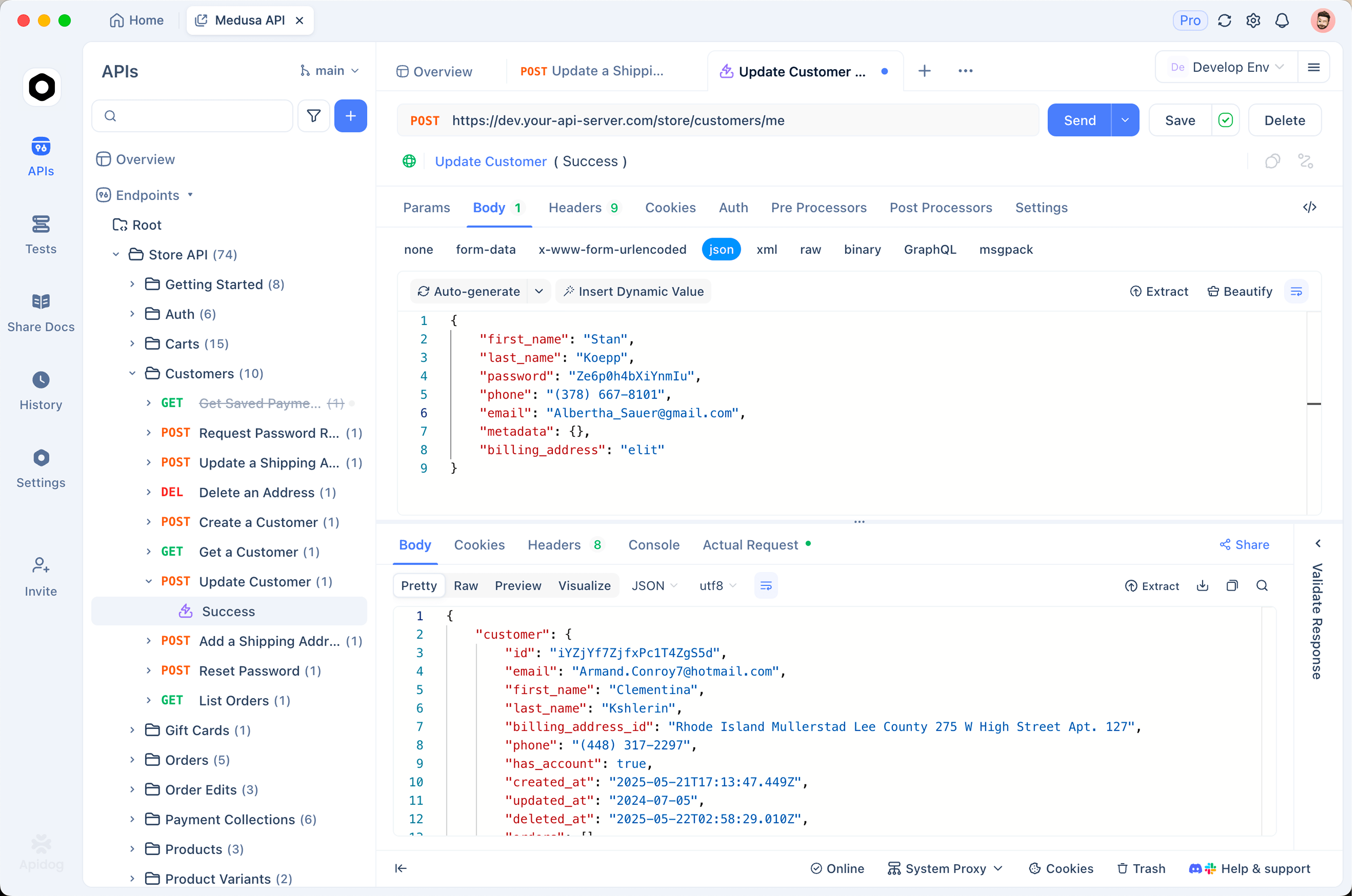
Apidog is an all-in-one API platform used by over 500,000 developers: design, debug, mock, test, and document in one workspace, with the spec as the single source of truth.
From first draft to production, one tool
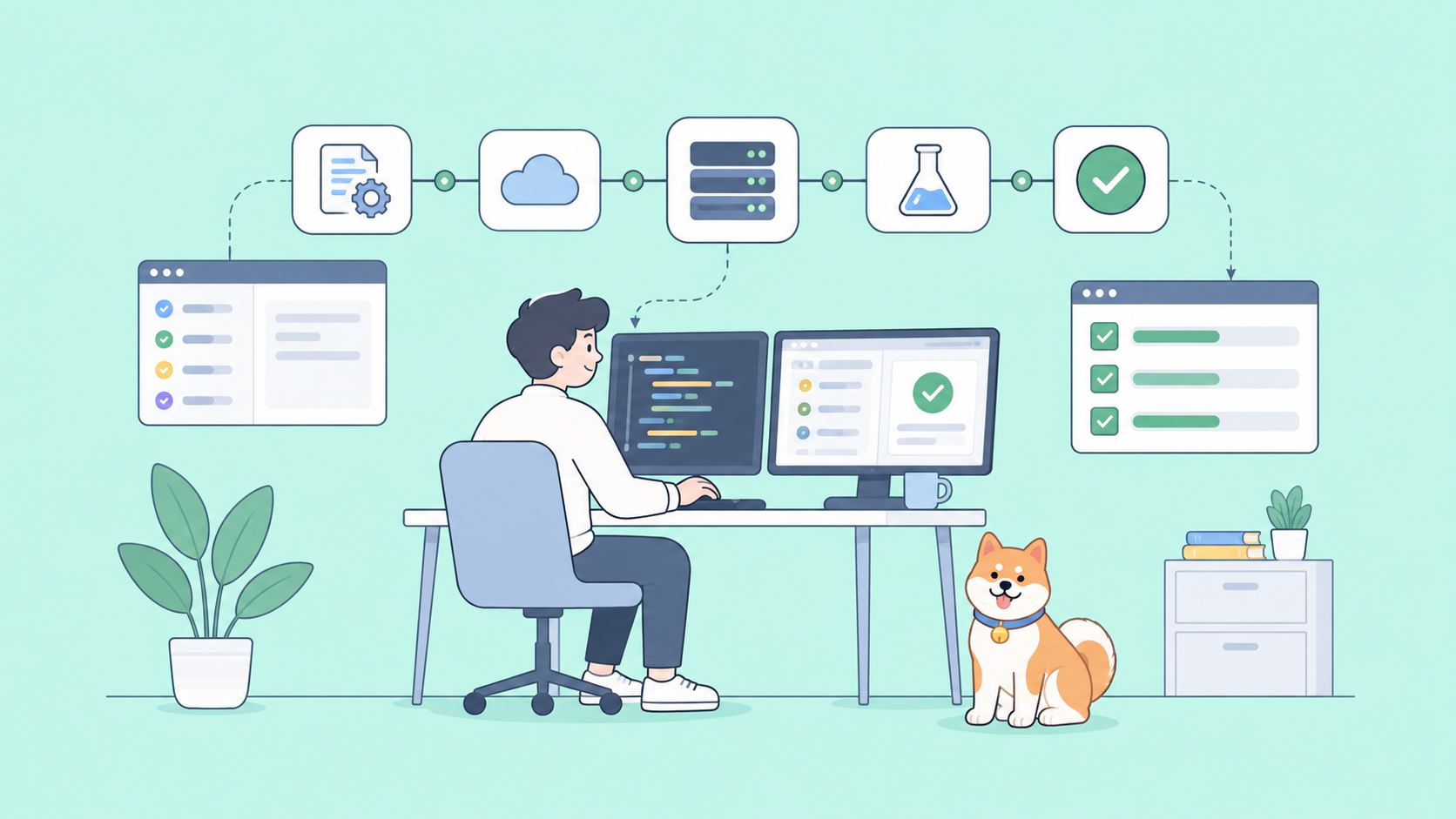
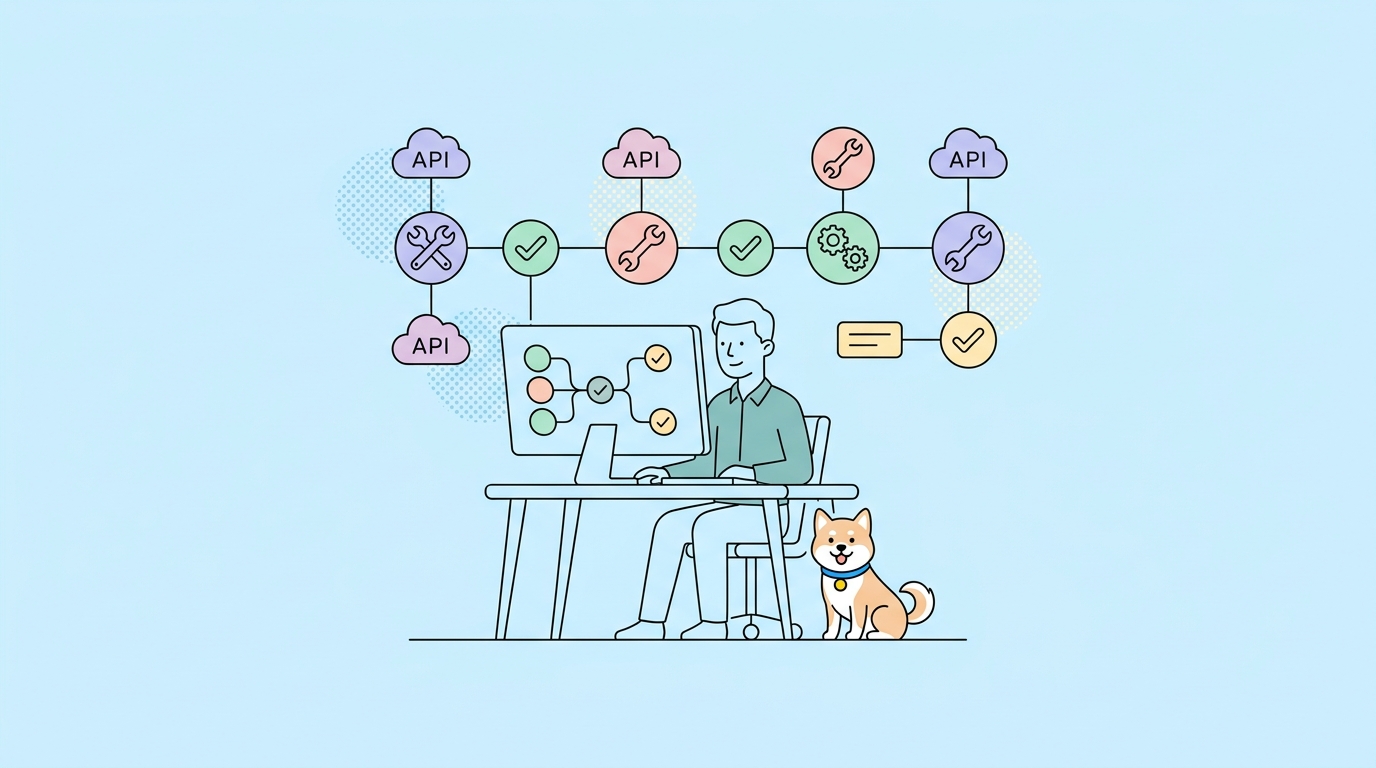
Design APIs in a visual OpenAPI editor with branches for parallel work. The spec then drives everything automatically: requests, realistic mock responses generated from your JSON Schemas with zero configuration, interactive published docs with custom domains and a “try it” console, and visual test scenarios with assertions and dynamic variables that run in GitHub Actions, GitLab CI, or Jenkins.
That last mile matters for teams: role-based permissions, project-level access control, SSO with Okta and Microsoft Entra ID, SCIM provisioning, and a GDPR-compliant European deployment. Hoppscotch’s RBAC and SSO live in its paid and enterprise self-hosted tiers; in Apidog the collaboration core is free for small teams.
Every protocol on one screen
Apidog debugs REST, GraphQL, WebSocket, SSE, Socket.IO, gRPC, SOAP, and WebService APIs. If your company still has that one SOAP integration (someone’s company always does), you stop keeping a second tool around for it.
MCP and AI-agent debugging built in
Apidog tests MCP servers over STDIO and streamable HTTP with visual debugging, OAuth 2.0 auto-config, inspection of tools and prompts, and AI agent execution traces. Its CLI is built for agents like Claude Code, Cursor, and Codex to drive API workflows from the terminal:
npm install -g apidog-cli
npx apidog-cli install-skill
Hoppscotch has no MCP story. As AI-assisted development becomes the default, this gap compounds; see what is Apidog MCP Server.
Hoppscotch vs Apidog at a glance
| Hoppscotch | Apidog | |
|---|---|---|
| Quick browser-based requests | Yes | Web app available |
| Native desktop apps, no CORS setup | Partial, web-first | Windows, macOS, Linux |
| gRPC and SOAP debugging | No | Yes |
| Visual API design with branches | No | Yes |
| Published interactive docs | No | Custom domain, versioned |
| Mock servers | No | Smart mock engine, cloud + self-hosted |
| Visual test orchestration + CI reports | No | Yes |
| MCP server/client debugging | No | Yes |
| Team workspace on free plan | Paid cloud or self-hosted | 4 users free |
| Entry price | $6/user/mo | $9/user/mo |
Hoppscotch’s paid entry is cheaper per seat. What you’re buying differs: Hoppscotch charges for collaboration around a request client, while Apidog’s $9 tier covers design, mocks, tests, and docs that would otherwise be two or three more subscriptions. The wider field is ranked in our top Hoppscotch alternatives comparison.
Migration takes one click
Export your Hoppscotch collections or OpenAPI specs and import them into Apidog directly. Requests, folders, and environments arrive intact. From there, generate specs from existing requests, turn schemas into mocks, and publish docs from the same source. The evaluation loop is short: pick one API, rebuild its full lifecycle in an afternoon.
One endpoint, full lifecycle
Here’s what that evaluation afternoon looks like in practice. Pick one endpoint your team touches often and take it through five steps.
- Import. Bring in the Hoppscotch collection that contains the endpoint. Folders, requests, and environments land as they were, so there’s nothing to rebuild before you start.
- Design. Open the request in the visual OpenAPI editor and refine it into a spec: name the fields, mark which are required, and attach response schemas. If a teammate wants to propose a change, they work on a branch instead of overwriting the shared definition.
- Mock. The moment the schema exists, the smart mock engine serves realistic responses for it with zero configuration. Hand the mock URL to your frontend teammate and they build against it while the real endpoint is still unfinished. This is the step with no Hoppscotch equivalent at all.
- Test. Build a visual test scenario: chain requests, add assertions on status codes and response fields, and pass dynamic variables between steps. Wire the scenario into GitHub Actions, GitLab CI, or Jenkins so it runs on every push, with scheduled runs and online reports on top. The same scenarios run from the terminal through the CLI; see how to manage APIs with the Apidog CLI.
- Publish. Turn the spec into interactive documentation with a try-it console, hosted on your custom domain, with access control and versioning if the API isn’t public.
One endpoint, five artifacts, one source of truth. Change the spec and the mocks, tests, and docs follow. In Hoppscotch, steps two through five belong to other tools, or to nobody.
When Hoppscotch is still the right call
For solo developers firing quick requests at public APIs, Hoppscotch remains excellent and its open-source ethos is worth supporting. If your organization mandates fully self-hosted open source and you have the infrastructure team to run it, self-hosted Hoppscotch is a legitimate choice. The switch makes sense when API work becomes team work: shared specs, mocks, docs, and CI checks that one browser client was never designed to carry.
Frequently asked questions
Does Apidog fix the CORS problems I hit in Hoppscotch?
Yes. Apidog’s native desktop apps send requests directly from your machine, so browser CORS rules don’t apply. Localhost services, internal APIs, and local files work without extensions or proxies.
Can I import my Hoppscotch collections into Apidog?
Yes. Apidog imports Hoppscotch collections and OpenAPI specs in one click, keeping folders, requests, and environments.
Is Apidog free like Hoppscotch?
Apidog’s free plan covers 4 users with unlimited APIs, requests, and test runs, including the shared team workspace. Hoppscotch is free for solo use, while team features require paid cloud plans or self-hosting your own instance.
Is Apidog open source like Hoppscotch?
No, and it’s worth being straight about the trade. Hoppscotch is open source: you can read the code, fork it, and self-host it under its license. Apidog is a commercial platform with a free plan. What you give up in license openness you get back in scope; design, mocks, tests, docs, and collaboration ship in one maintained product instead of a request client you extend and operate yourself. If open source is a hard requirement, Hoppscotch wins that criterion outright.
Can my whole team use Apidog for free?
Up to 4 users share a workspace free, with unlimited APIs, requests, and test runs included. Larger teams move to paid plans starting at $9 per user per month. In Hoppscotch, any real-time team collaboration requires accounts plus either the $6 per user cloud plan or a self-hosted deployment your team operates.
Does Hoppscotch support MCP server testing?
No. Apidog includes a visual MCP client for testing MCP servers over STDIO and streamable HTTP, plus AI agent debugging; the Hoppscotch CLI alternatives guide covers the automation gap in detail.
See the difference on one real API
Download Apidog, import a Hoppscotch collection, and take one endpoint through the full loop: spec, mock, test, published doc. If the browser tab was all that kept you on Hoppscotch, the desktop app closes that argument in minutes. The complete feature matrix is on the Apidog vs Hoppscotch comparison page.