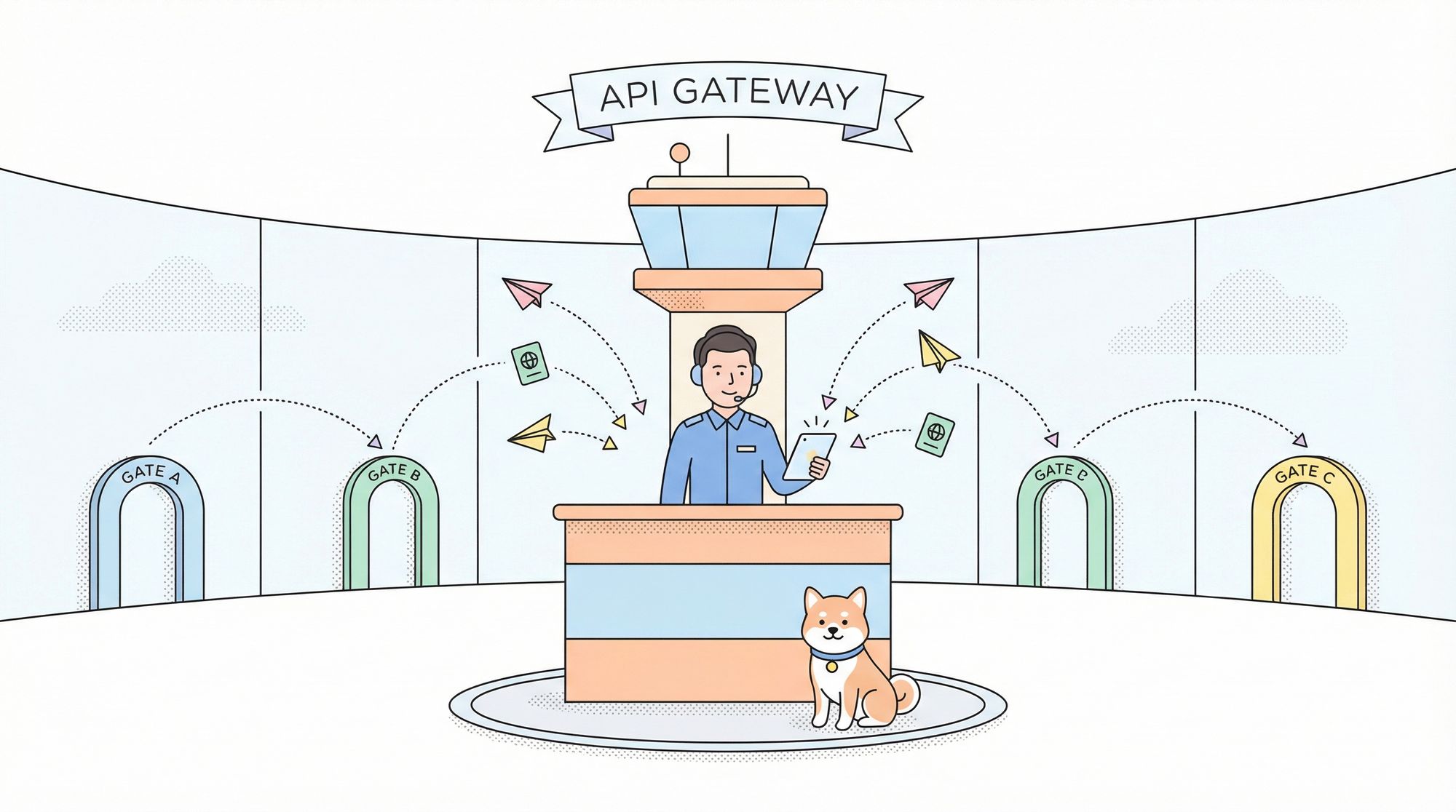
Imagine a busy international airport. Thousands of passengers (requests) arrive every minute. Without a central authority to check passports (authentication), manage lines (rate limiting), and direct people to their specific gates (routing), chaos would ensue.
In the world of software architecture, your API Gateway is that central authority.
As systems evolve from monolithic blocks into distributed microservices, the complexity of communication skyrockets. An API Gateway sits between your clients (mobile apps, web browsers, IoT devices) and your backend services, acting as a single entry point that manages, secures, and directs traffic.
In this guide, we’ll break down what an API gateway is, why it’s critical for modern development, and how tools like Apidog can help you design and test your gateway strategy effectively.

How Does an API Gateway Work?
At its core, an API gateway is a reverse proxy on steroids. It accepts all incoming application traffic and routes it to the appropriate backend microservice. But it does much more than just forwarding requests.
Here is the typical lifecycle of a request passing through a gateway:
- Entry: The client sends a request (e.g.,
GET /users/123) to the gateway's public URL. - Authentication & Security: The gateway verifies the user's identity (via JWT, OAuth, or API Keys) and checks if they have permission to access the resource.
- Rate Limiting: It checks if the client has exceeded their request quota (e.g., "1000 requests per hour"). If they have, it rejects the request immediately, protecting your backend from overload.
- Routing & Transformation: The gateway maps the public endpoint (
/users/123) to the internal service address (internal-user-service:8080/get/123). It might also modify headers or query parameters to match what the backend expects. - Response: The backend processes the request and sends data back to the gateway. The gateway might aggregate data from multiple services before sending a unified response to the client.
API Gateway vs. Load Balancer vs. Reverse Proxy
These terms are often confused. Here is the signal-to-noise breakdown:
| Feature | Load Balancer | Reverse Proxy | API Gateway |
|---|---|---|---|
| Primary Goal | Distribute traffic to prevent server crashes. | Hide backend servers for security/caching. | Expose, manage, and secure APIs as a product. |
| Awareness | Network-level (IPs/Ports). | Server-level. | API-level (Endpoints, Auth, Data). |
| Key Functions | Health checks, round-robin distribution. | Caching, SSL termination. | Auth, Rate Limiting, Analytics, Versioning. |
Verdict: An API Gateway includes the functionality of a reverse proxy and often works in tandem with load balancers, but its logic is much "smarter" regarding the actual API data.
Why You Need an API Gateway
If you are building a simple monolith, a gateway might be overkill. But for microservices, it is non-negotiable.
1. Decoupling Clients from Services
Without a gateway, your frontend needs to know the IP address of every single microservice (User Service, Order Service, Payment Service). If you refactor a service, you break the client. A gateway provides a single consistent URL, hiding the messy internal architecture.
2. Centralized Security (AuthN & AuthZ)
Instead of implementing "Login" logic in 50 different microservices, you implement it once at the gateway. This "termination at the edge" ensures that invalid requests never even touch your internal infrastructure.
3. Protocol Translation
Your internal services might use gRPC or GraphQL for efficiency, while your public clients expect standard REST. A gateway can translate between these protocols on the fly.
4. Monitoring and Analytics
Since all traffic flows through one pipe, the gateway is the perfect place to measure latency, error rates, and usage patterns.
Designing and Testing Your Gateway Strategy with Apidog
Implementing an API Gateway is only half the battle. You first need to define what APIs you are exposing and ensure they work as expected. This is where Apidog shines.
Apidog is an all-in-one API development platform that unifies design, documentation, debugging, and testing.
1. Design First, Deploy Second
Before you configure your gateway routes (e.g., in Kong, NGINX, or AWS API Gateway), you should define your API contract.
- Use Apidog to design your API specs (OpenAPI/Swagger).
- Define clear paths, parameters, and response structures.
- This spec becomes the blueprint for your Gateway configuration.
2. Mocking Backend Services
When setting up a gateway, your actual backend microservices might not be ready.
- Apidog generates Smart Mocks based on your API design.
- You can point your API Gateway to Apidog’s mock servers during development. This allows you to test the gateway's routing and security logic without waiting for the backend team to finish coding.
3. Validating Gateway Behavior
Once your gateway is running, how do you know it’s actually enforcing rate limits or handling authentication correctly?
- Automated Testing: Create test scenarios in Apidog to hit your gateway.
- Negative Testing: specifically design tests that send invalid tokens or exceed rate limits to verify the gateway returns
401 Unauthorizedor429 Too Many Requests.
Common Pitfalls to Avoid
- The "God" Gateway: Do not put business logic in your gateway. It should handle traffic logic (routing, auth), not domain logic (calculating taxes).
- Single Point of Failure: If the gateway goes down, everything goes down. Ensure you deploy your gateway in a high-availability cluster.
- Latency Creep: Every "hop" adds time. Keep your gateway logic lightweight to avoid slowing down user requests.
Summary
An API Gateway is the bouncer, traffic controller, and translator for your digital ecosystem. It simplifies client integration and secures your backend. However, a gateway is only as good as the API definitions it serves.
By using Apidog to design your contracts and validate your gateway's response to traffic, you ensure that your "Control Tower" is always directing flights safely and efficiently.
Ready to streamline your API lifecycle? Download Apidog for free and start designing better APIs today.