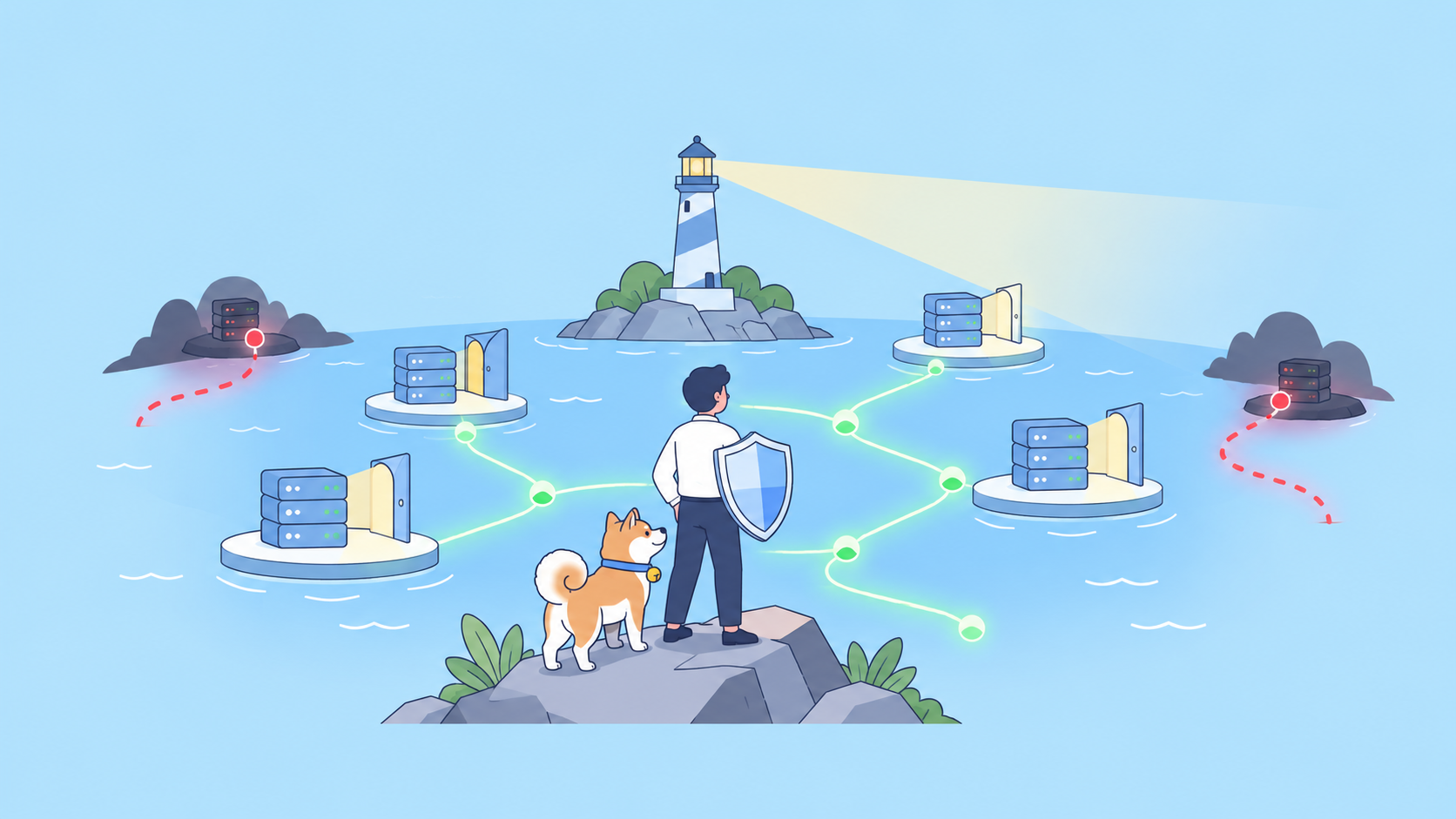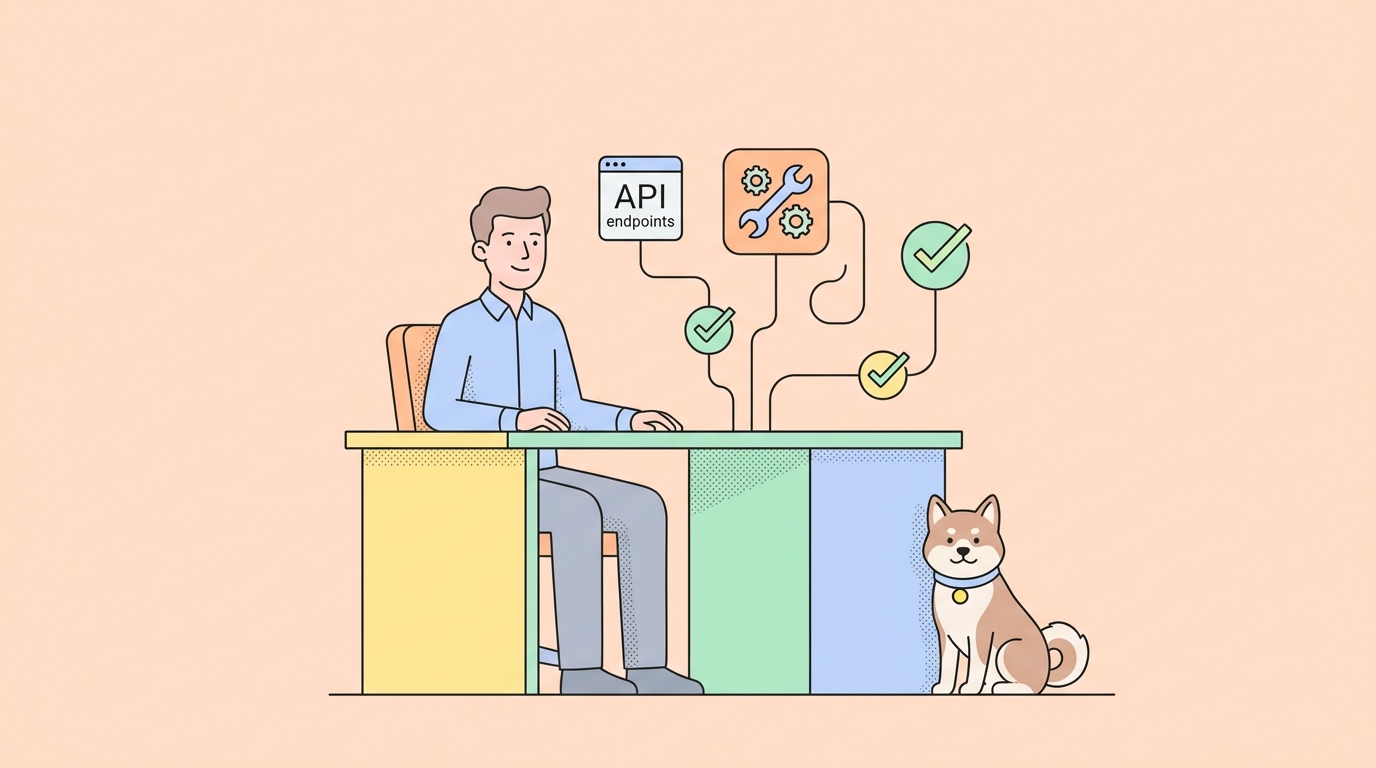
A headless API is an API-first service that’s fully decoupled from any frontend, so the contract is the only product you ship. If you’ve searched the term and landed on headless CMS guides or headless browser tutorials, you’re not confused; the word “headless” gets reused across three different ideas. This guide separates them, defines the headless API properly, and shows how you design, test, mock, and manage one when there’s no UI to fall back on. For the architectural backdrop, the MACH Alliance frames “headless” as one of four principles alongside microservices, API-first, and cloud-native.
Headless API vs headless CMS vs headless browser
“Headless” means the same thing in all three cases: no graphical front end attached. What changes is what got decapitated.
| Term | What “headless” refers to | Example tools | Who consumes it |
|---|---|---|---|
| Headless API | A backend service with no bundled UI; the API contract is the interface | Any API-first service, payment APIs, internal microservices | Frontends, mobile apps, partners, AI agents |
| Headless CMS | A content repository exposed over an API instead of a coupled template layer | Contentful, Strapi, Sanity | Websites and apps that render the content |
| Headless browser | A real browser engine that runs without a visible window | Puppeteer, Playwright, Lightpanda | Scrapers, test runners, AI automation |
A quick note on the browser case, because it trips people up. Puppeteer and Playwright are automation libraries that drive a browser; Lightpanda is an actual headless browser engine built from scratch in Zig for AI and automation workloads. None of them are APIs in the “service contract” sense. They’re tools for controlling a browser with no screen. If that’s what you came for, you want the browser explainer, not this one.
The headless CMS is closer to our topic, and it’s worth being precise: a headless CMS is a headless API. It’s a content backend that ships an API (usually REST or GraphQL) and deliberately drops the coupled presentation layer. Contentful’s own definition frames it the same way: content delivered over an API, decoupled from any presentation layer. So the headless CMS isn’t a different category; it’s a popular, content-shaped instance of the general idea. More on that bridge later.
So what is a headless API, really?
A headless API is a service designed so the API comes first and the user interface comes never, at least not from the same team. The backend exposes its capabilities through a documented contract: endpoints, request and response schemas, auth, error shapes, versioning. Anyone can build a head on top: a web app, a native mobile client, a partner integration, an internal dashboard, an AI agent. The service doesn’t know or care which.
This is the API-first idea taken to its logical end. When you commit to API-first, you accept that the API is not a side door into your application; it is the application’s public surface. We’ve written about this shift directly in Software is going headless. Your API is now the product. and in the broader case for treating your API as a product. Both land on the same point from different angles.
Why the contract is the product
When there’s no UI, the contract carries all the weight. A frontend can paper over a clumsy backend with a nice screen. A headless API has no screen. The only thing your consumers experience is the shape of your requests and responses, the consistency of your error codes, the clarity of your docs, and whether you broke them on the last release.
That has a few consequences worth sitting with:
- Breaking changes are customer-facing incidents. Rename a field and someone’s integration fails in production. There’s no graceful UI degradation to hide behind.
- Documentation is the product surface, not an afterthought. If a consumer can’t understand an endpoint from the docs, the endpoint may as well not exist.
- Design quality compounds. Inconsistent naming or weird pagination across endpoints becomes the permanent texture of working with you.
This is why the principles of API-first development matter more here than in a UI-coupled app. The contract isn’t documentation about the product. The contract is the product.
Headless API testing
When you test a UI-coupled app, you can click around. A QA person opens the screen, fills a form, watches what happens. A headless API gives you nothing to click. There’s no fallback. Either the contract behaves as promised or it doesn’t, and you find out from the responses or from an angry consumer.
So testing a headless API is contract testing plus execution you can automate. Two things matter:
First, you test against the contract, not against a hunch. Does the response match the schema you published? Are the status codes right? Do the error bodies have the documented shape? Contract-level checks catch the drift between what you said the API does and what it actually does. That gap is exactly what burns headless consumers.
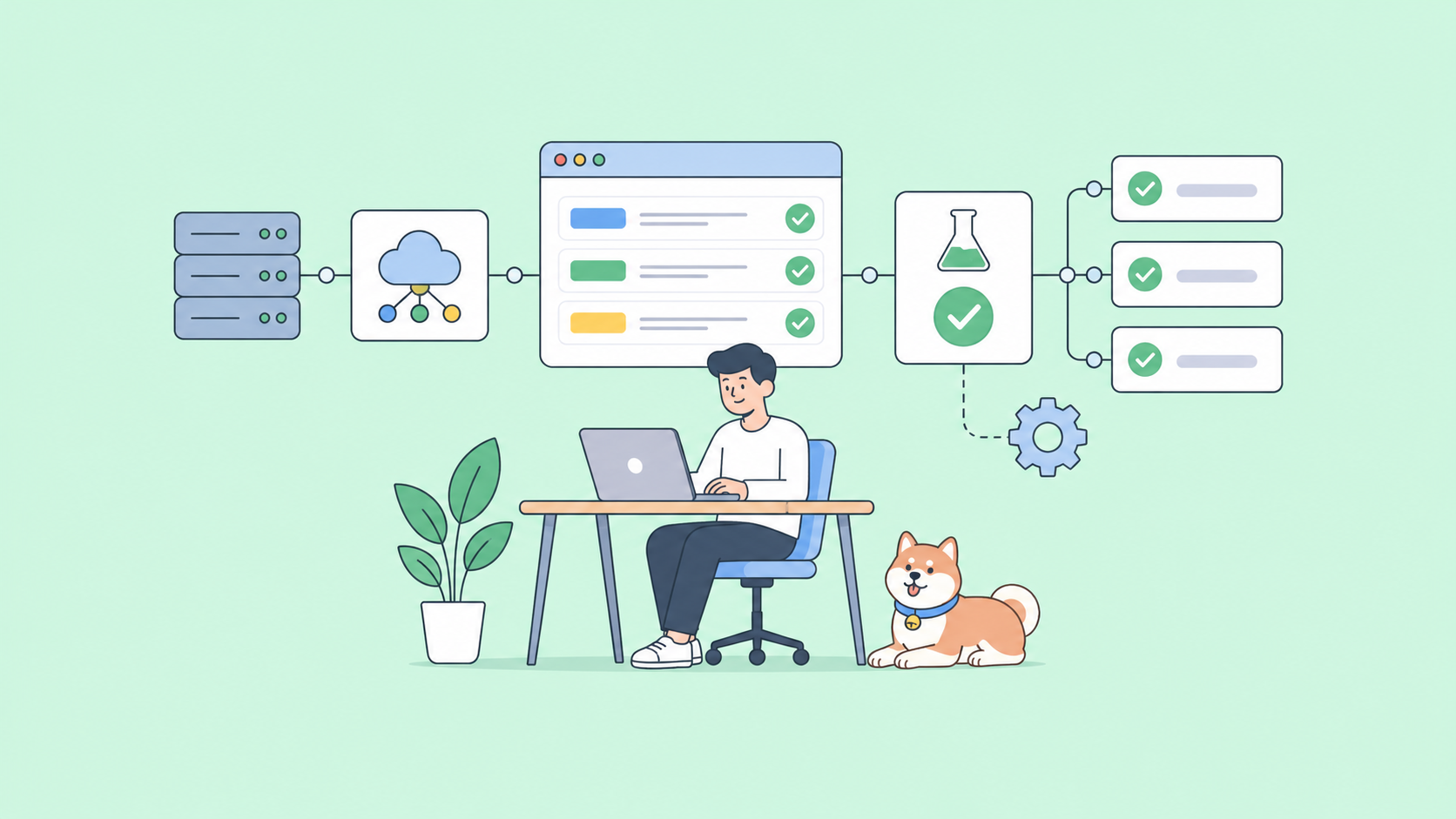
Second, you run those tests where the API lives, which is the terminal and the pipeline, not a GUI. This is the part that rhymes with “headless” in a satisfying way: your test runner should itself be headless. You want to execute a suite from the command line, get a pass or fail, and gate a deploy on it. A no-GUI runner is how you make contract testing a CI step instead of a manual ritual. The complete guide to the Apidog CLI walks through running tests this way: define them in a project, execute them headless in a pipeline, and fail the build when the contract regresses.
The shape of a sane headless testing setup looks like this:
- Schema validation on every response, asserting against the published contract.
- Functional tests for the real workflows consumers depend on, run as scenarios.
- A headless CLI runner wired into CI so nothing ships without passing.
- Diffing the spec between versions so breaking changes get caught before merge, not after.
Headless API mocking
Here’s a problem unique to decoupled teams: the frontend, the mobile app, and the partner integration all need the API to exist before the backend is built. In a coupled app, everyone waits on the backend. In a headless world, that wait is unacceptable, because the whole point was to let teams move independently.
Mocking solves it. You mock the contract, not the implementation. As soon as the API design exists, you stand up a mock server that returns realistic responses matching the schema. Now the frontend team builds against it. The partner integrates against it. The mobile app wires up its data layer against it. Nobody waits for the database, the business logic, or the deploy.
This only works if the mock follows the contract faithfully. A mock that returns made-up shapes teaches consumers the wrong API. A mock generated from the spec teaches them the right one. Our ultimate guide to API mocking covers the workflow end to end, and if you’re shopping, the roundup of the best API mock tools compares the options. For the plain-language version of the concept, see what a mock API is.
The headless angle is the reason mocking stops being a nicety and becomes structural. When the contract is the product, the mock is a working preview of the product. Decoupled teams build against the preview while the real thing gets implemented behind it.
Headless API management
This is where terms collide, so let’s split them cleanly. “API management” usually means a runtime gateway: Kong, Apigee, Zuplo, and friends sit in front of your live traffic and handle rate limiting, auth enforcement, routing, analytics, and monetization. That’s real, and it’s important, but it’s runtime management. It’s about what happens when requests hit your deployed service.
A headless API has a second management problem that comes earlier: managing the contract itself across its lifecycle. Design, review, versioning, deprecation, keeping the published spec honest. This is design-time management, and it’s distinct from the gateway’s job.
| Design-time contract management | Runtime gateway management | |
|---|---|---|
| When | Before and between deploys | While serving live traffic |
| Concern | The contract: schema, versions, breaking changes, docs | Traffic: rate limits, auth, routing, analytics |
| Examples | Spec design, contract review, version diffs, mock servers | Kong, Apigee, Zuplo |
| Failure mode | Consumers integrate against a stale or wrong contract | Live requests get throttled, mis-routed, or rejected |
Both matter. A gateway like Apigee even models explicit lifecycle states (design, develop, live, deprecated, retired), which shows how the two halves connect. But notice the order: the gateway manages a contract that already exists. Design-time management is where that contract gets defined, reviewed, and kept truthful. Skip it and your gateway will faithfully serve a contract nobody agreed on.
For a headless API, design-time management isn’t optional polish. The contract is the product, so managing the contract is managing the product.
Your headless CMS API is a contract too
Circle back to the headless CMS, because it makes the whole thing concrete. Contentful, Strapi, and Sanity all ship content over an API and drop the coupled template layer. That’s the headless pattern exactly: the content backend has no head, and any number of frontends consume it.
And everything above applies. The CMS’s API has a contract. Your Next.js site, your native app, and your digital signage all build against that contract. If a field changes shape, every consumer feels it. The content team thinks they’re managing content; they’re also managing an API surface, whether they framed it that way or not. The same testing, mocking, and design-time discipline that protects any headless API protects a headless CMS API. The label on the box changed. The job didn’t.
Where Apidog fits
Apidog is not a CMS, a commerce engine, an API gateway, or an architecture platform. It doesn’t “do” headless or MACH, and it won’t replace Contentful or Kong. What it owns is the API-first pillar: the layer where you design, test, mock, and document the contract that headless architectures put at the center.
That’s a clean fit, because the contract is the one thing every headless API has in common. In Apidog you design the contract design-first as an OpenAPI document, so the shape exists before anyone writes implementation code. You generate mock servers straight from that design, which is exactly what decoupled teams need to build before the backend exists. You run contract and functional tests, and the Apidog CLI executes them headless in CI, a true conceptual rhyme with the architecture itself, no GUI in the loop. And through Apidog’s MCP support, you can drive the API from an AI agent or your IDE, which matters more as agents become first-class API consumers.
If you want to operate a headless API in practice, the loop is straightforward: design the contract, mock it so consumers start immediately, test it against the published schema on every change, document it as the real product surface, and gate deploys on the headless CLI run. Download Apidog if you want to set that loop up in one workspace, or read more about treating the API as a product first.
Frequently asked questions
Is a headless API the same as a REST API?
No. REST is one style a headless API can use; GraphQL and gRPC work too. “Headless” describes the decoupling (no bundled UI, contract as the interface), while REST describes the protocol and conventions. A headless API can be REST, GraphQL, or something else entirely. The headless part is about who consumes it and how, not the wire format.
Is a headless CMS a type of headless API?
Yes. A headless CMS is a content backend that exposes an API and drops the coupled presentation layer, which is the headless API pattern applied to content. The same disciplines apply: version the contract, test against the schema, and mock it so frontend teams can build before content modeling is finished.
How do you test a headless API without a UI?
You test the contract directly and automate execution. Validate responses against the published schema, write functional tests for the workflows consumers rely on, and run them with a headless CLI runner in CI so nothing ships without passing. The Apidog CLI guide shows the full setup, from defining tests to gating a pipeline on the result.
What’s the difference between headless API management and an API gateway?
A gateway (Kong, Apigee, Zuplo) manages runtime traffic: rate limits, auth, routing, analytics. Headless API management in the design-time sense is about the contract itself: designing it, reviewing changes, versioning, deprecation, and keeping the published spec honest. The gateway serves a contract; design-time management is where that contract gets defined and kept truthful.
Wrapping up
A headless API removes the UI and promotes the contract to the product. That single move reshapes how you test (no screen, so test the contract), how you mock (build a preview from the spec so decoupled teams move now), and how you manage (design-time contract lifecycle, separate from the runtime gateway). The headless CMS is just the most familiar instance of the same idea. Whatever flavor you’re building, the contract is what your consumers actually live with, and tools like Apidog exist to keep that contract designed, mocked, tested, and documented well.