If you’ve ever pushed code, merged a pull request, or managed a release, you already know one simple truth:
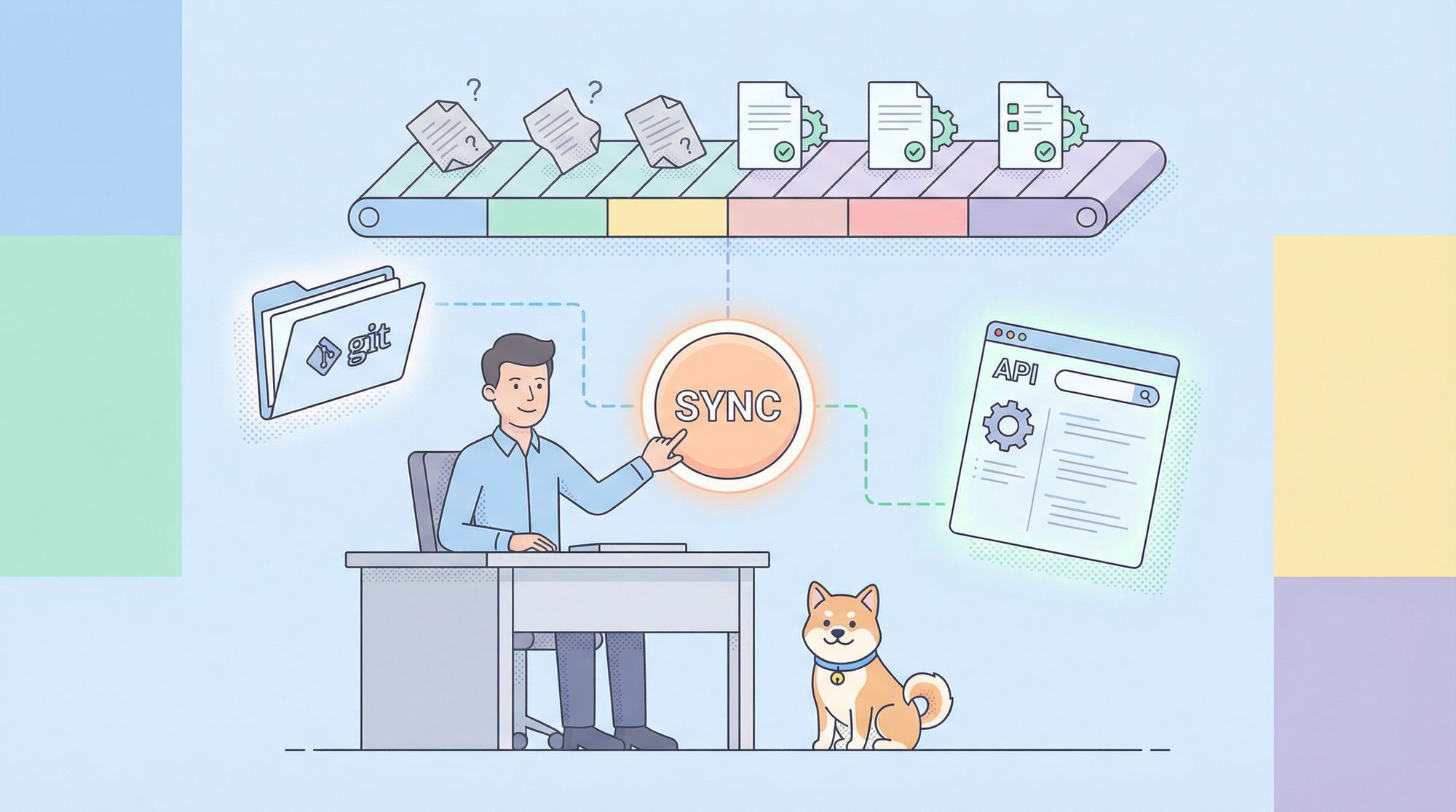
Documentation goes out of sync faster than code changes.
And when your docs are outdated, things break. Developers get confused. API consumers get frustrated. Teams lose trust. Bugs multiply. Onboarding slows down. You already know the pain.
That’s exactly why engineers everywhere now ask the same important question:
“What should I use to sync documentation automatically with my CI/CD pipelines?”
Whether you're documenting APIs, SDKs, architecture diagrams, configuration guides, or onboarding workflows, syncing docs through CI/CD has shifted from nice-to-have to must-have.
Now, let's explore how to make API documentation synchronization an automatic, reliable part of your deployment process.
The Problem: Why Documentation Drift Happens
Documentation drift occurs when your API documentation doesn't match your actual API implementation. This happens for several reasons:
- Manual Updates: Developers forget to update documentation after changing code
- Separate Processes: Documentation lives in a different system from your codebase
- Timing Gaps: Docs get updated hours or days after code changes
- Human Error: Typos and omissions in manual documentation
The consequences are severe: confused developers, integration errors, support tickets, and ultimately, poor adoption of your API.
The Solution: Documentation as Code
The fundamental shift in mindset is treating documentation as code. This means:
- Version Control: Store documentation specifications alongside your code
- Automated Generation: Generate docs from your code or API specifications
- Continuous Integration: Validate and deploy docs with every code change
- Single Source of Truth: Maintain one authoritative API specification
Why You Need Doc Syncing in CI/CD
Teams today ship fast really fast, changes happen daily or even hourly without automation, and your documentation simply can’t keep up. That’s why syncing docs with CI/CD is now essential for:
- Accuracy: Always reflect the latest code.
- Consistency: Avoid version mismatches across teams.
- Automation: Stop manually updating docs (because… no one actually remembers).
- Developer Experience: Make sure engineers trust what they’re reading.
- Continuous Delivery: Ship documentation improvements alongside code.
In other words, syncing docs in CI/CD enables your docs to be:
- Generated automatically
- Built automatically
- Deployed automatically
- Validated automatically
All without human intervention.
Tools and Approaches for Syncing Docs in CI/CD
There isn’t one universal tool, because it depends on your documentation type.
Let’s break them down clearly.
Static Site Generators (SSGs)
If you’re writing developer or user-facing docs, static site generators are extremely popular.
Popular SSGs Used in Documentation Pipelines:
- Docusaurus
- MkDocs
- Hugo
- Jekyll
- VuePress / VitePress
Why they pair well with CI/CD:
- They convert markdown → a complete documentation site
- They rebuild fast
- They integrate with GitHub Actions, GitLab, Jenkins, CircleCI
- They allow versioning
Typical SSG CI/CD Workflow:
- Write markdown
- Commit to repo
- CI auto-builds your static site
- CI auto-deploys your site to hosting
SSGs are great for:
- product documentation
- tutorials
- onboarding docs
- internal developer knowledge bases
But they aren’t enough for:
- API docs
- automated spec syncing
- endpoint testing
- mock servers
For those, you need another class of tool — Apidog.
Why Apidog Is One of the Easiest Ways to Sync API Docs
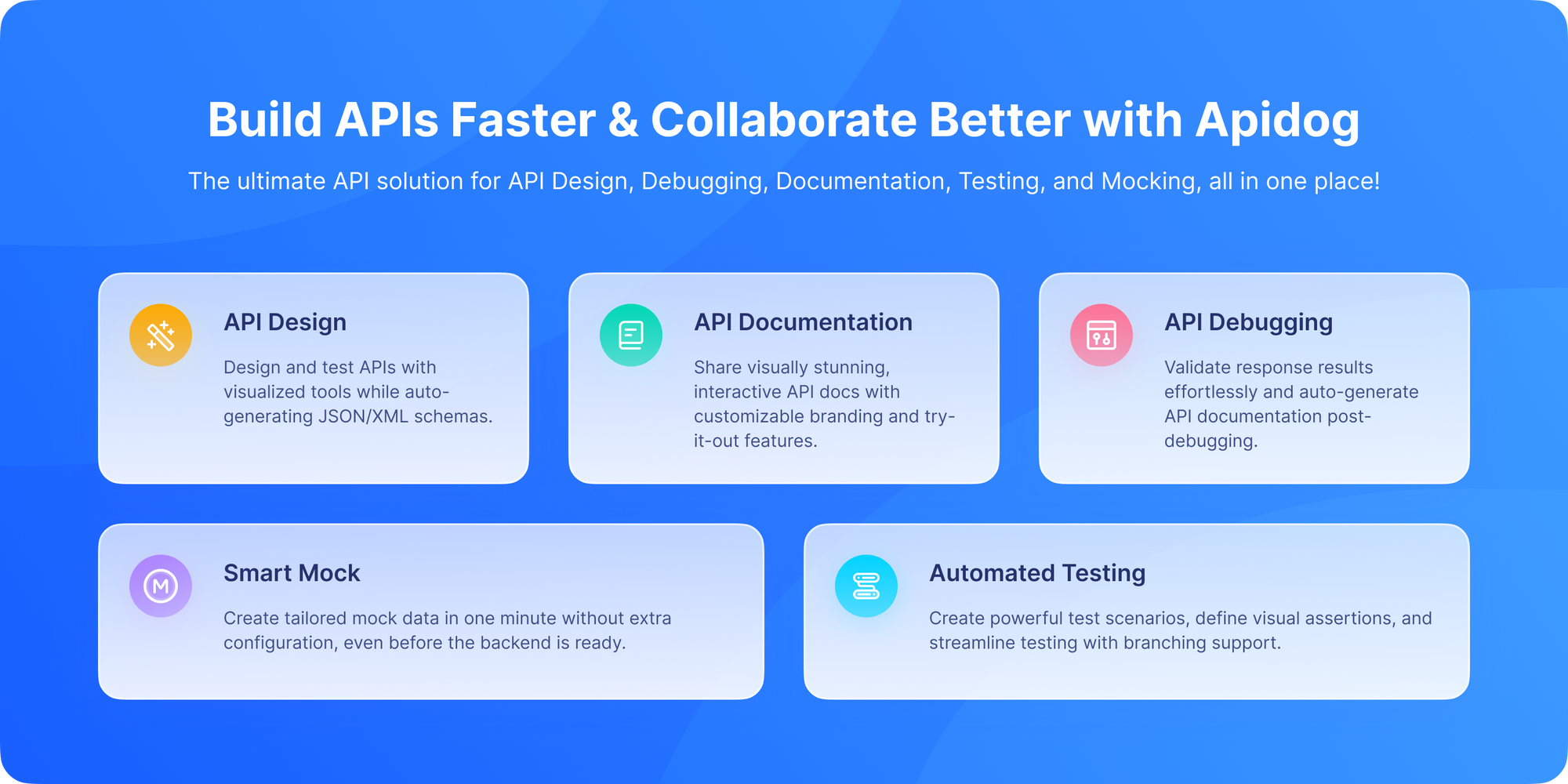
Most companies need automated API doc syncing, not just markdown publishing, and that's exactly why Apidog is becoming the go-to solution.
Here’s what makes Apidog different:
Works for both code-first and design-first workflows
Whether you generate docs from code annotations or design APIs first, Apidog syncs your documentation automatically.
Auto-generate documentation from OpenAPI
As soon as you push an updated spec, docs update instantly.
Supports collaboration
Teams can modify API designs in the UI, then sync back to repositories.
CI/CD friendly
You can wire Apidog into:
- GitHub Actions
- GitLab CI
- Jenkins
- CircleCI
- Azure Pipelines
Mock server integration
Your pipeline can generate mock servers automatically.
Instant try-it-out console
Interactive API documentation improves developer experience immediately.
Built-in testing
You can run tests and ensure your APIs match their documentation.
Single source of truth
Instead of APIs scattered across:
- text files
- old Swagger specs
- notebooks
- tribal knowledge
Everything is unified.
Free to download
One of its biggest advantages over enterprise API platforms.
In short?
If your API documentation and pipeline syncing are currently painful, Apidog simplifies nearly everything.
It removes friction from:
- designing APIs
- updating specs
- ensuring docs match code
- generating mocks
- publishing docs
- syncing with CI/CD
And you can adopt it smoothly without reworking your entire system.
Conclusion: Documentation as a Continuous Process
Syncing API documentation with your CI/CD pipeline transforms documentation from a burdensome chore into a natural, automated part of your development workflow. By treating documentation as code and integrating it into your continuous delivery process, you ensure that your API docs are always accurate, up-to-date, and valuable to your users.
Remember, the goal isn't perfection from day one. Start with basic validation, gradually add automation, and continuously improve your process. The investment in automated documentation sync pays dividends in reduced support burden, better developer experience, and increased API adoption.
Whether you choose OpenAPI with custom CI/CD scripts or an integrated platform like Apidog, the important thing is to start automating your documentation process today. Your future self and your API consumers will thank you.