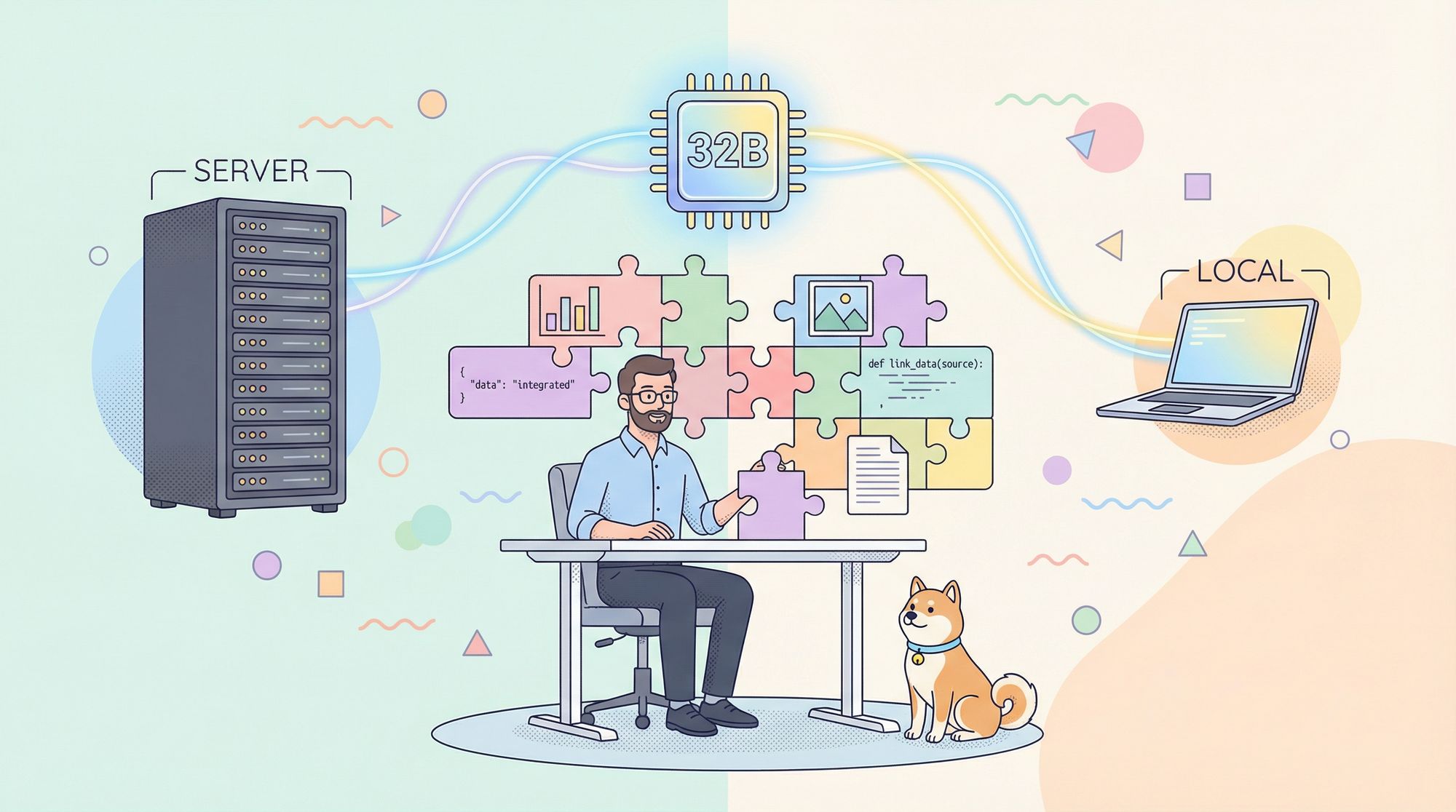
Alibaba's Qwen team has released the Qwen2.5-VL-32B-Instruct model—a 32-billion-parameter vision-language model (VLM) that sets new benchmarks for efficiency, performance, and developer usability. Designed for local deployment and advanced multimodal reasoning, this model is built to empower API developers, backend engineers, and technical leaders looking to integrate state-of-the-art AI into their workflows.
For professionals seeking smooth API integration and testing, a tool like Apidog is essential. Apidog streamlines API development, making it easy to test endpoints and automate interactions with language models like Qwen2.5-VL-32B. Enhance your workflow as you experiment with cutting-edge AI capabilities.
What Sets Qwen2.5-VL-32B Apart?
Striking the Balance: Power Meets Practicality
Qwen2.5-VL-32B addresses a key challenge faced by API teams: balancing model performance with local deployment feasibility. Larger models like Qwen2.5-VL-72B deliver impressive results but are resource-intensive, while smaller models often lack depth for complex tasks. The 32B variant bridges this gap—providing robust multimodal reasoning, advanced mathematical logic, and practical speed for real-world, on-premise use.
Key Differentiators
- Optimized with Reinforcement Learning (RL): This model leverages RL to align outputs with human preferences, producing more accurate and user-friendly responses.
- Enhanced Mathematical and Visual Reasoning: Outperforms larger models on benchmarks requiring complex logic, code generation, and visual data analysis.
- Efficient Local Deployment: Designed to run on high-end consumer hardware, making it accessible for in-house teams without extensive GPU clusters.
Technical Advancements for Developers
Qwen2.5-VL-32B brings several technical enhancements directly relevant to API development and backend integration:
- Improved Output Coherence: RL-based training ensures consistently formatted, context-aware outputs—crucial for downstream API processing.
- Superior Multimodal Understanding: Excels at tasks involving both text and images, such as interpreting charts, extracting data from documents, and visual logic deduction.
- Benchmark Performance: Demonstrates significant gains on tests like MathVista and MMMU, indicating better code generation and mathematical reasoning.
Qwen2.5-VL-32B Benchmarks: Performance Highlights
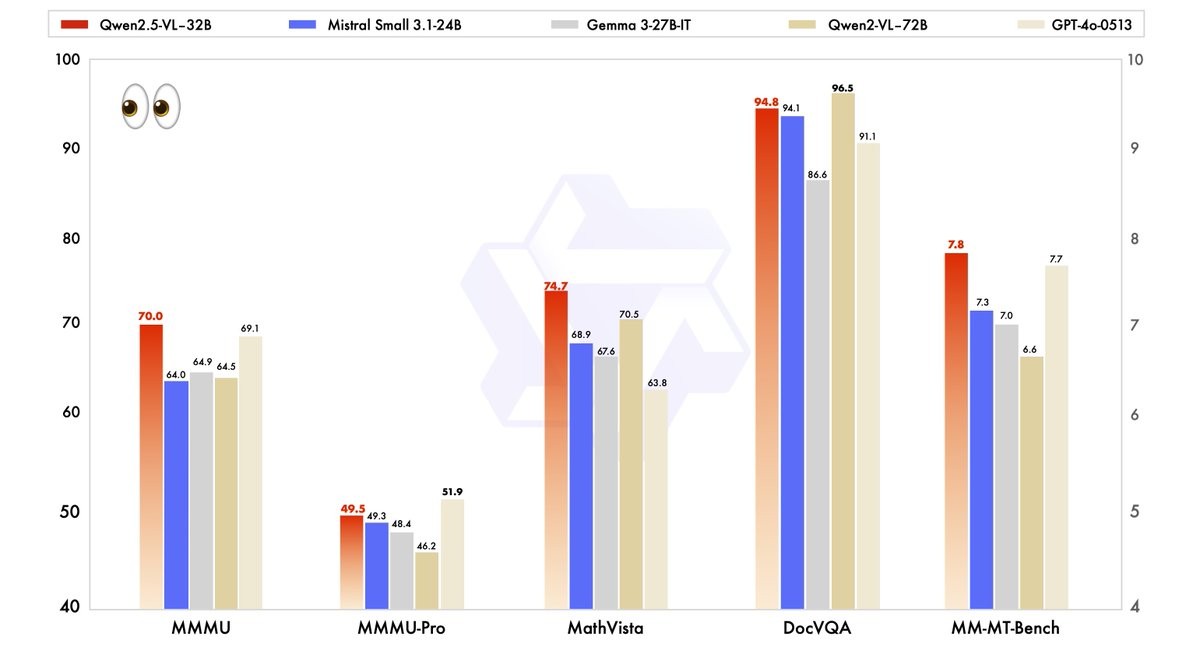
Qwen2.5-VL-32B stands out when compared to both larger and similarly sized models:
- MMMU (Massive Multitask Language Understanding): 70.0 (outperforms Qwen2.5-VL-72B’s 64.5)
- MathVista: 74.7 (vs. 70.5 for Qwen2.5-VL-72B)
- MM-MT-Bench: Leads in subjective human preference alignment
- Text-Based Tasks: Matches or exceeds GPT-4o-Mini and Mistral-Small-3.1–24B on MMLU (78.4), MATH (82.2), and HumanEval (91.5)
These results show Qwen2.5-VL-32B delivers top-tier reasoning and vision-language understanding while remaining computationally accessible.
Why Choose 32B? Local Deployment and API Efficiency
The 32-billion-parameter size is a strategic sweet spot:
- Lower Resource Footprint: Easier deployment on local hardware, including workstations with modern Apple Silicon or high-memory x86 servers.
- Fast Inference: Compatible with efficient engines like SGLang and vLLM for low-latency API responses, ideal for production use.
- Versatility: Handles structured outputs, object recognition, and document parsing for diverse industry needs.

How to Run Qwen2.5-VL-32B Locally (MLX Example)
Running Qwen2.5-VL-32B on your Mac (Apple Silicon) enables rapid prototyping and API endpoint development:
System Requirements
- Apple Silicon Mac (M1/M2/M3)
- 32GB+ RAM (64GB recommended)
- macOS Sonoma or newer
- 60GB+ free storage
Quick Setup Steps
- Install Python Dependencies
pip install mlx mlx-llm transformers pillow - Download the Model
git lfs install git clone https://huggingface.co/Qwen/Qwen2.5-VL-32B-Instruct - Convert to MLX Format
python -m mlx_llm.convert --model-name Qwen/Qwen2.5-VL-32B-Instruct --mlx-path ./qwen2.5-vl-32b-mlx - Run a Simple Inference Script
import mlx.core as mx
from mlx_llm import load, generate
from PIL import Image

model, tokenizer = load("./qwen2.5-vl-32b-mlx")
image = Image.open("path/to/your/image.jpg")
prompt = "What do you see in this image?"
outputs = generate(model, tokenizer, prompt=prompt, image=image, max_tokens=512)
print(outputs)
With this setup, API engineers can quickly iterate on model endpoints and test real-world inputs.
Real-World Use Cases for API Teams
Vision-Language Applications
Qwen2.5-VL-32B is ideal for:
- Visual Agents: Automate UI navigation or data extraction from computer/phone interfaces via multimodal prompts.
- Document Parsing: Recognize and extract data from complex, multi-language documents, invoices, or handwritten forms.
- Video Analysis: Analyze long-form videos (up to an hour), identify relevant segments, and extract structured insights.
Advanced Text & Mathematical Reasoning
- API-driven Math Engines: Integrate as a backend for math solvers, code evaluators, or real-time analytics.
- Coding Assistants: Use in developer tools for code generation and review based on text or visual input.

Example output from Qwen2.5-VL-32B via Simonwillison.net Blog
Seamless Integration: Open Source & APIs
Flexible Access
- Apache 2.0 License: Open-source and business-friendly for integration in commercial or internal tools.
- Hugging Face: Download or use via the Transformers library for rapid prototyping.
- ModelScope: Alternative access with Alibaba’s ecosystem.
API & Inference Engine Support
- Qwen API: Enables simplified, reliable interaction from your apps and backend systems.
- Inference Engines: Supports SGLang and vLLM for low-latency, scalable deployment—whether on-premise or cloud.
To test and debug your model endpoints efficiently as you build, consider using Apidog. It helps API developers streamline workflows and ensure robust integration with models like Qwen2.5-VL-32B.
Tips for Optimizing Local Performance
- Quantize: Use the
--quantizeflag during conversion to reduce RAM usage. - Manage Context: Limit input tokens for quicker responses.
- Resource Management: Close unnecessary applications to free up memory.
- Batch Processing: For bulk image tasks, process in batches to maximize throughput.
Conclusion: Qwen2.5-VL-32B for Modern API-Driven AI
Qwen2.5-VL-32B is a standout vision-language model for developers who need both power and efficiency. Its unique size makes it practical for local deployment without sacrificing advanced reasoning or multimodal capabilities. Whether you’re building data extraction pipelines, AI-powered document analysis, or smarter chatbots, this model offers a balanced solution for API-centric teams.
Integrating with open-source libraries, robust APIs, and efficient tools like Apidog, Qwen2.5-VL-32B unlocks new opportunities for innovative, scalable applications in AI and automation.