Two of the most consequential AI labs in the world both launched cybersecurity platforms within five weeks of each other. Anthropic announced Claude Mythos on April 7, 2026. OpenAI followed with Daybreak on May 11, 2026.
They look similar on the surface. Both use frontier models to find vulnerabilities, generate exploits, and help defenders move faster. But the strategies behind them are different in almost every way that matters: who can use them, how access is granted, what the models can actually do, and what each company believes about the right way to ship dangerous capability.
Here’s how they compare and which one fits your team.
The short answer
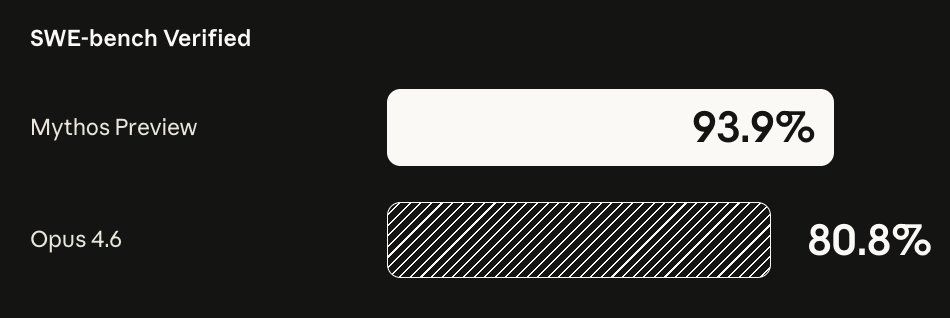
Claude Mythos is a frontier research model from Anthropic, deliberately gated behind an invitation-only consortium called Project Glasswing. It’s the more capable cyber model on raw benchmarks. You probably cannot get access.
OpenAI Daybreak is a platform built around GPT-5.5 with three access tiers, a Codex Security plugin, and a wide partner ecosystem. Capability is more modest, but distribution is broader and the workflow story is more developed.

If you want raw exploit-finding capability, Mythos wins on paper. If you want something your security team can actually deploy this quarter, Daybreak wins on practice.
Side-by-side comparison
| Feature | Claude Mythos | OpenAI Daybreak |
|---|---|---|
| Launched | April 7, 2026 | May 11, 2026 |
| Vendor | Anthropic | OpenAI |
| Type | Frontier research model | Platform (multiple models + Codex Security) |
| Public availability | No (Project Glasswing only) | Yes, with verification tiers |
| Tiers | Single research model | GPT-5.5 / Trusted Access for Cyber / GPT-5.5-Cyber |
| Code platform | Claude Code | Codex Security plugin |
| CTF success rate | 73% on expert-level CTFs | Not publicly disclosed |
| Zero-day discovery | Thousands in pre-release testing | Capability claimed, no public numbers |
| Exploit reproduction | 83% first-attempt success | Not publicly disclosed |
| Partners | ~40 orgs incl. AWS, Apple, Microsoft, Google, CrowdStrike, Palo Alto | 20+ vendors incl. Cisco, Cloudflare, Snyk, Tenable, Fortinet, Zscaler |
| Access model | Invitation only via Project Glasswing | Application + vetting for elevated tiers |
| Primary use case | Critical infrastructure vulnerability research | Continuous secure development workflow |
| Pricing | Not disclosed (consortium) | OpenAI platform pricing for accessible tiers |
What Claude Mythos is
Claude Mythos Preview is an Anthropic frontier model that sits above the public Claude 4 family. It’s general purpose but pushes hardest on long-horizon reasoning and software security.
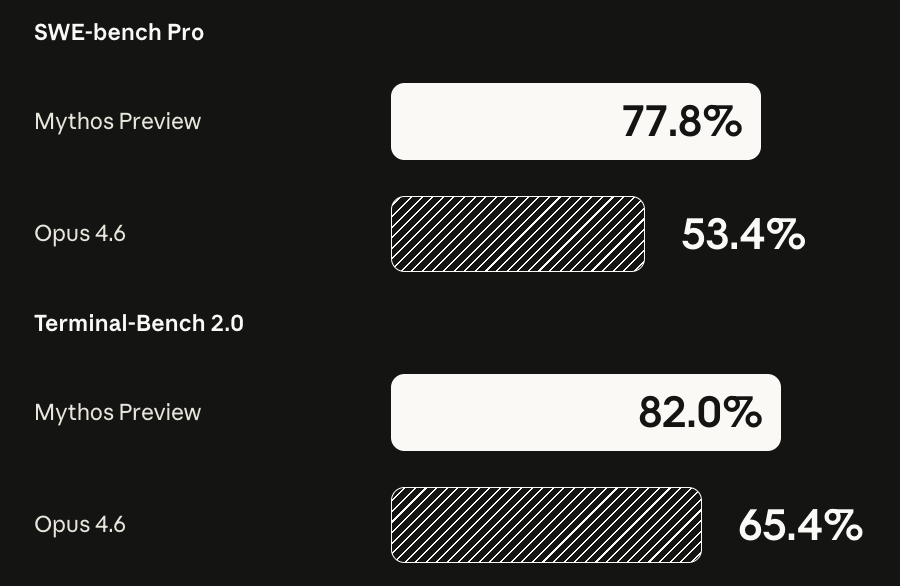
The numbers are striking. Mythos hit 73% on expert-level CTF challenges that no prior model could solve. In pre-release testing, it identified thousands of zero-day vulnerabilities across major operating systems and browsers; bugs that had survived decades of human review. It reproduced vulnerabilities and produced working exploits on the first try 83% of the time.
That kind of capability comes with risk. Anthropic decided not to release Mythos publicly. Instead, they built Project Glasswing: a private consortium that uses Mythos to harden critical software before attackers can use similar capabilities against it.
Project Glasswing partners include AWS, Apple, Microsoft, Google, CrowdStrike, and Palo Alto Networks, with approximately 40 additional organizations brought in by invitation. If you’re not in the consortium, you’re not getting Mythos.
What OpenAI Daybreak is
Daybreak is a complete platform, not a single model. It combines three capability tiers with a Codex-based agentic harness and a broad partner ecosystem.
The three tiers:
- GPT-5.5 — the general-purpose model, available to all OpenAI users
- GPT-5.5 with Trusted Access for Cyber — verified defenders get lower refusal rates for legitimate security work like malware analysis and reverse engineering
- GPT-5.5-Cyber — limited preview, for red teaming and penetration testing in authorized environments
The operational layer is Codex Security, a plugin that connects to your repository, builds a threat model from the code, and monitors continuously for vulnerabilities. Findings flow into existing security tooling. Patches get generated and validated inside the same loop.
We covered the full platform breakdown in what is OpenAI Daybreak. The short version: Daybreak is built for security teams that want AI capability integrated into their everyday workflow, not a research model they need to query manually.
Capability: where Mythos wins
On raw benchmarks, Mythos is ahead.
Vulnerability discovery. Mythos found thousands of zero-days in pre-release testing on operating systems and browsers. OpenAI claims similar capability for GPT-5.5-Cyber but hasn’t published comparable numbers.
Exploit reproduction. Mythos produces working exploits on the first attempt 83% of the time. This is the metric that matters for both red teams and defenders trying to verify exploitability before prioritizing a fix.
Long-horizon reasoning. Mythos can execute multi-stage attacks autonomously: tasks that would take a human professional days. The model chains discovery, exploitation, and post-exploitation steps without losing context.
Independent evaluation. The UK AI Safety Institute’s evaluation of Mythos cyber capabilities confirmed step-change performance over the prior generation. AISI also published an evaluation of GPT-5.5 cyber capabilities, but the headline numbers favor Mythos.
If the question is “which model is better at finding and exploiting vulnerabilities right now,” Mythos is the answer.
Availability and workflow: where Daybreak wins
Capability you can’t access doesn’t help your team.
Distribution. Anyone with an OpenAI account can use GPT-5.5 for security-adjacent work today. Trusted Access for Cyber requires an application but is open to vetted defenders. Mythos is invitation-only with no public path to access.
Workflow integration. Codex Security is a working product. It connects to your repo, integrates with your security tools, and runs continuously. Mythos access through Project Glasswing is more research-oriented; partners get model access for vulnerability programs, not a packaged developer workflow.
Ecosystem breadth. Daybreak ships with partner integrations across the security stack: endpoint (CrowdStrike, SentinelOne), cloud (Cloudflare, Akamai), identity (Okta), code security (Snyk, Semgrep, Socket), vulnerability management (Qualys, Rapid7, Tenable). Project Glasswing has prestige partners but a tighter circle and less developer-tool integration.
Self-service path. A team can adopt Daybreak by signing up, applying for elevated access, and connecting a repo. There’s no equivalent self-service path for Mythos.
For most security and engineering teams, this is the deciding factor. Daybreak is something you can buy and deploy. Mythos is something you read about in a press release.
Philosophy: two different bets on safety
The deeper difference is how each company thinks about releasing dangerous capability.
Anthropic’s bet: capability this powerful is too dangerous for general release. The right move is to use it privately, with a small consortium of trusted partners, to harden critical software before attackers catch up. Project Glasswing is the product, not Mythos itself.
OpenAI’s bet: verification and tiering can scale safely. Standard users get a capable defensive model. Verified defenders get fewer refusals. The most sensitive workflows get a dedicated model with hard account-security requirements. The system is the safeguard.
Both approaches have logic. Anthropic’s approach minimizes diffusion of offensive capability but limits defensive impact to a small group. OpenAI’s approach gets more capability to more defenders but depends on the verification system holding up.
The market will eventually answer which works better. For now, security teams should plan for both: monitor for Glasswing-adjacent disclosures, and evaluate Daybreak as a tool you can actually use.
What about Claude Code for security work?
If you can’t access Mythos, you can still use Claude Code with the public Claude 4 family for security-adjacent work. Many of the techniques Mythos demonstrates at scale (code reading, exploit hypothesis, proof-of-concept generation) work at smaller scale with public Claude models.
We covered the broader Claude API surface in get free unlimited Claude API access. For security teams already invested in the Anthropic ecosystem, this is the most realistic on-ramp until Glasswing opens up or a successor model ships publicly.
OpenAI’s equivalent path is using GPT-5.5 API for security-adjacent tasks before applying for Trusted Access for Cyber.
Which one should you pick?
For almost everyone reading this, the answer is obvious: Daybreak. Not because it’s necessarily the better tool, but because it’s the only one you can actually use.
Mythos is gated behind Project Glasswing. If you have to ask whether you’re in Project Glasswing, you aren’t. The consortium is about 40 organizations: AWS, Apple, Microsoft, Google, CrowdStrike, Palo Alto Networks, and a tight circle around them. There is no application form. There is no pricing page. There is no waitlist you can join.
So the real decision tree is short:
If you’re at a Project Glasswing partner: use both. Mythos for deep vulnerability research on critical systems, Daybreak for the day-to-day defensive workflow your broader engineering team plugs into. They cover different parts of the pipeline.
If you’re not at a Project Glasswing partner (which is almost certainly you): Daybreak is your answer. It’s the platform you can sign up for today, integrate with the security tools you already pay for, and roll out to your team this quarter. Track Mythos through public reporting and AISI evaluations, but don’t build a security strategy around access you can’t get.
The “Mythos vs Daybreak” framing is mostly a press-cycle artifact. In practice it’s “Daybreak vs waiting.” Daybreak wins.
What this means for API developers
Most production attacks target APIs. Authentication bypasses, broken authorization, injection vulnerabilities at request boundaries, and dependency vulnerabilities in service code are where exploits live.
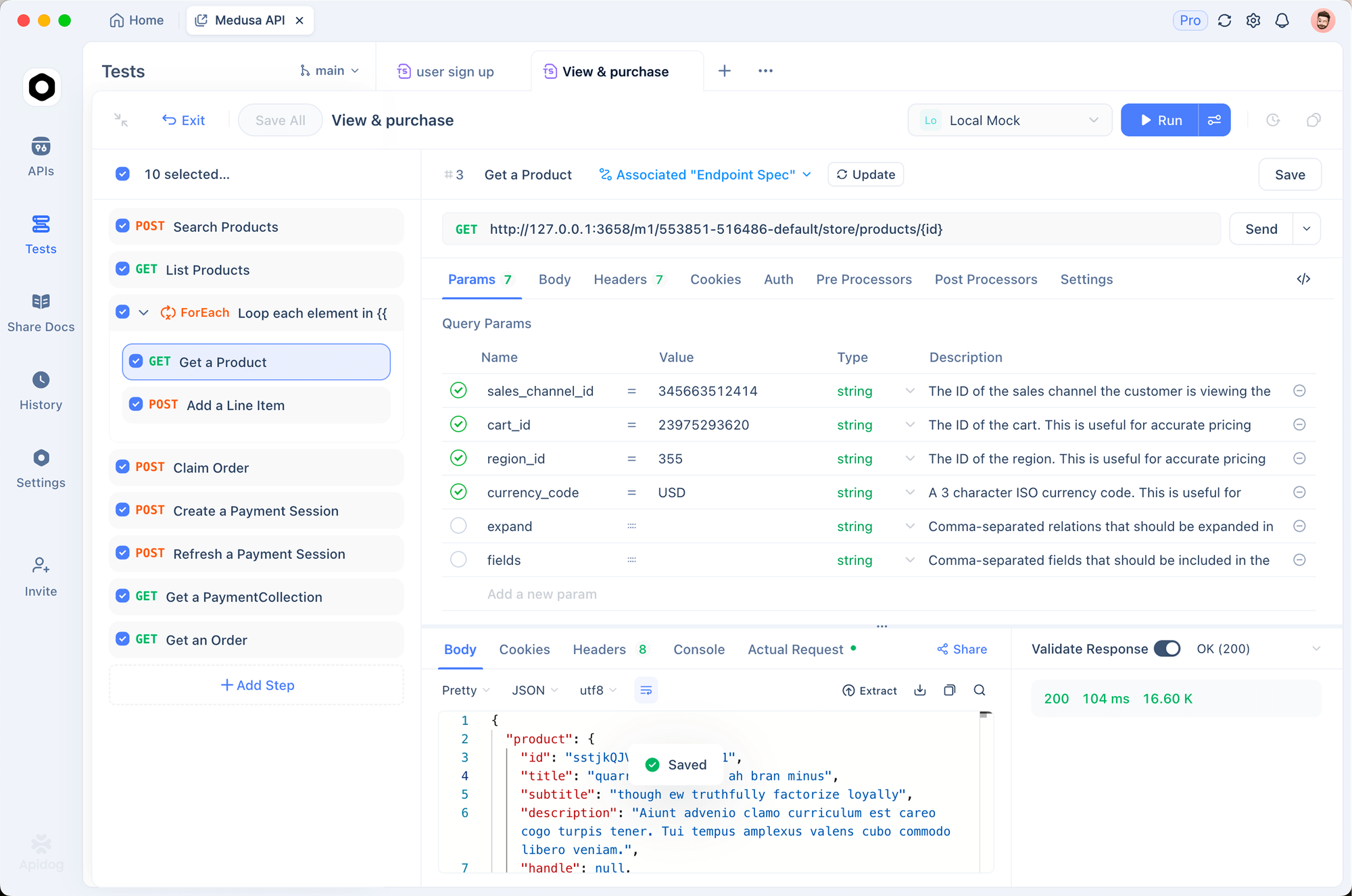
Neither Mythos nor Daybreak is specifically an API security tool. Both can analyze API code, but they treat APIs as part of the broader codebase. For API-specific security work, combining either of these models with API design and testing tools like Apidog gives better coverage than the security model alone.
Apidog catches contract drift, broken schemas, and behavior changes through contract-first API development and MCP server testing. Daybreak or Mythos catches exploitable logic flaws in the implementation. Together they cover the API attack surface from spec to runtime.
Download Apidog if you want to start the API security side of this stack today, while you wait for security model access.
FAQ
Is Claude Mythos available to the public?
No. Mythos is restricted to Project Glasswing partners. Anthropic has not announced a public release timeline. As of May 2026, there is no application process for individuals or smaller organizations.
Can I get Trusted Access for Cyber on OpenAI?
Yes, with verification. Apply through the OpenAI platform. Approval is based on legitimate defensive use cases. Individual access to GPT-5.5-Cyber requires Advanced Account Security enabled by June 1, 2026.
Is Mythos more capable than GPT-5.5-Cyber?
On published benchmarks, yes. Mythos hit 73% on expert CTFs and produces working exploits on the first attempt 83% of the time. OpenAI has not published equivalent numbers for GPT-5.5-Cyber. The capability gap may close as Daybreak matures and as OpenAI releases more capable cyber models.
Are Mythos and Daybreak competing products?
In market positioning, yes. In practice, less so. Mythos is a research model behind a private consortium. Daybreak is a self-service platform with workflow integration. A security team can realistically choose between Daybreak and “wait for public Mythos access,” not between the two products directly.
Can either model be used for offensive security against third parties?
No. Both have safeguards that block exploitation of systems you don’t own. GPT-5.5-Cyber supports red teaming and pen testing in authorized environments, and Mythos through Glasswing is used for defensive vulnerability discovery on partner systems. Offensive use against third parties is blocked regardless of access tier.
How does this compare to Microsoft Security Copilot?
Microsoft Security Copilot focuses on SOC operations: alert triage, incident response, threat intelligence. Daybreak and Mythos focus on code-level vulnerability discovery and remediation. They cover different parts of the security workflow. Related context: what is GPT Realtime 2.
The bottom line
This is the first time two frontier AI labs have shipped competing cybersecurity platforms in the same quarter. The strategies are different, the capability profiles are different, and the access models are different.
Mythos is a statement that some capability is too dangerous to release broadly. Daybreak is a statement that the right answer is verification, tiering, and workflow integration. Neither company is wrong. Both bets will play out over the next year.
For your team, the practical answer is straightforward. Evaluate Daybreak now. Track Mythos through public reporting. Plan for the security workflow you can deploy, not the model you might get access to.