Google continues to push the boundaries of artificial intelligence, with Nano Banana 2 poised as a major leap forward in AI-powered image generation. For API developers and engineers, this rumored successor brings not only technical improvements, but also new opportunities for integrating cutting-edge visual creation into modern applications.
As the ecosystem around AI models like Nano Banana 2 evolves, robust API testing becomes essential. Apidog equips development teams with the ability to mock, debug, and validate APIs, streamlining the adoption of advanced AI services such as those rumored for Nano Banana 2.
What Is Nano Banana 2? Core Concepts for Developers
Nano Banana 2 is Google's next-generation AI image generator, reportedly built on Gemini 3 Pro and designed to outperform its predecessor in both fidelity and performance. Where the original Nano Banana model attracted millions by generating stylized figurine portraits and cinematic scenes, Nano Banana 2 is expected to deliver:
- Higher-quality outputs: Native 2K image generation with AI-driven 4K upscaling
- Faster processing: Under 10 seconds per prompt
- Smarter prompt understanding: Improved context and consistency, even with complex descriptions
This hybrid model combines the language reasoning of Gemini 3 Pro with advanced diffusion rendering. Instead of simply mapping text to visuals, Nano Banana 2 interprets user intent—capturing narrative, emotion, and context—before generating high-quality images.
For developers, this means APIs that can power features like real-time photo edits, dynamic slide templates, or visual search in consumer and enterprise apps.
Technical Innovations: How Nano Banana 2 Advances AI Image Generation
Key Improvements Over Previous Generations
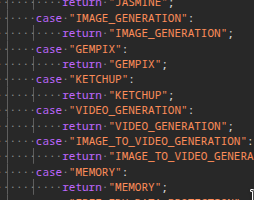
Sources indicate Nano Banana 2 (codenamed GEMPIX2, now "KETCHUP") is engineered to address common pain points in AI image generation tools:
- Sharper image fidelity: Legible text, clean edges, and higher pixel density
- Global context awareness: Incorporates cultural and geographic cues for more authentic results
- Improved subject consistency: Maintains lighting, geometry, and character details across multi-image sequences
- Self-correcting workflows: AI analyzes and fixes errors (like anatomy or off-prompt details) before output
- Creative editing modes: "Edit with Gemini" allows region-based changes via user input and model suggestions
- Multimodal capabilities: Supports text-to-image, image-to-image, and even hints at initial video diffusion functionality
These upgrades enable developers to prototype marketing banners, generate immersive game environments, or automate personalized content with greater speed and reliability.
Example: Context-Aware Image Generation
Imagine a prompt like, “A family picnic in Tokyo during cherry blossom season.” Nano Banana 2's expanded training and context parsing would generate accurate flora, attire, and atmosphere—raising the bar for realism and localization.
Architecture and Specifications: Under the Hood
Model Structure
- Multimodal LLM backbone: Gemini 3 Pro Image processes text, images, and context to create "intent vectors"
- Diffusion rendering: Converts intent vectors into high-quality images, leveraging shared latent representations
- 16-bit depth: Supports richer gradients and photorealistic visuals
Performance & Deployment
- Native 2K output, 4K upscaling: Super-resolution powered by fine-tuned convolutional models
- Optimized for mobile: Quantization (INT8/FP16) enables on-device generation on modern Pixels and future hardware
- Cloud scalability: Vertex AI integration supports batch and enterprise use cases
- Security: Built-in filters for harmful content, watermarks for traceability, and privacy-first on-device options
Developer Considerations
Efficient API integration is crucial for hybrid deployments (cloud and edge). Apidog simplifies this process, allowing teams to simulate endpoints, test latency, and handle error management before full-scale rollout.
Release Timeline and Rollout Strategy
Current leaks suggest a mid-November 2025 launch for Nano Banana 2, with initial access for Gemini beta users and wider availability in early 2026. The rollout is expected to follow a phased approach:
- On-device release: Starting with Pixel devices
- Cloud API access: For broader integration across platforms
Developers should monitor Google I/O extensions and official Gemini updates for early access opportunities.
Nano Banana 2 vs. Competitors: How Does It Stack Up?
Nano Banana 2 is positioned to compete directly with tools like Midjourney, Adobe Firefly, DALL-E 3, and Stable Diffusion. Here’s how it compares:
| Model | Speed | Resolution | Consistency | Ecosystem |
|---|---|---|---|---|
| Nano Banana 2 | <10 sec | 2K/4K | High | Gemini, Pixel |
| Midjourney | ~10–30 sec | Up to 4K | Medium | Discord, web |
| Adobe Firefly | 10–20 sec | Up to 4K | High | Adobe Cloud |
| DALL-E 3 | ~30 sec | 1K–2K | Medium | API, web |
| Stable Diffusion | Varies | Up to 4K | Varies | Open-source |
- Nano Banana 2: Prioritizes mobility, multimodal reasoning, and closed-ecosystem consistency
- Midjourney: Focuses on artistic versatility but requires a subscription
- Firefly: Emphasizes ethical data training
- DALL-E 3: Excels at creativity but slower and less mobile-focused
For teams building image-driven products, Nano Banana 2 offers a blend of speed, accuracy, and integration potential.
Implications for API Developers and Product Teams
Integrating advanced AI models like Nano Banana 2 can transform workflows across:
- Marketing: Automate campaign visuals while maintaining brand consistency
- Education: Generate custom illustrations and concept diagrams on demand
- Healthcare: Simulate clinical scenarios or patient education materials
To ensure seamless integration, API-focused tools are essential. Apidog allows teams to:
- Mock image generation endpoints to test prompt-response cycles
- Debug and validate error handling for edge cases (e.g., failed generations, latency spikes)
- Simulate different deployment scenarios (on-device vs. cloud)
Addressing Challenges and Looking Ahead
Despite its promise, Nano Banana 2 faces challenges:
- Computational costs: High-res generation requires efficient hardware and may strain edge devices
- Ethical considerations: Preventing data bias and misuse remains critical
- Future expansion: Rumored features like "Audio Papaya" point to upcoming audio and video integration, expanding the multimodal toolkit
Google may open-source select components, sparking new innovation in the developer community.
Conclusion
Nano Banana 2 signals a major step forward for AI-powered image generation. Its integration-ready APIs, multimodal reasoning, and rapid output open doors for developers to build smarter, more creative applications.
As you explore integrating these next-gen AI features, leverage Apidog’s free toolkit to streamline API testing and validation—ensuring your products are ready for the future of AI imaging.