Moonshot AI shipped Kimi K3 on July 16, 2026, and the launch coverage framed it as a direct challenge to Anthropic. TechCrunch reported that K3 was expected to close the gap with closed-source models, citing sources who said it could match or even surpass Claude Opus 4.8. This piece runs the head-to-head dimension by dimension, with the numbers we can verify and the ones we can’t clearly marked.
The short version: K3 wins on price, context window, and openness; Opus 4.8 offers the assurances of a mature managed vendor. Because both speak the OpenAI SDK format, you can run the same request through each and compare outputs, latency, and cost in a tool like Apidog.
TL;DR and the verdict at a glance
Kimi K3 is a 2.8-trillion-parameter mixture-of-experts model with a 1 million token context window, cheap input pricing, and open weights arriving around July 27, 2026. Claude Opus 4.8 is a closed proprietary model in Anthropic’s Opus line, priced higher, with a strong reasoning and agentic reputation. Independent scoring from Artificial Analysis puts K3 at an Intelligence Index of 57, ranked #4 of 189 models, best-in-class among open weights.
Here is the quick read:
- Pick Kimi K3 for a very large context window, low cost at high volume, or the ability to self-host and fine-tune open weights.
- Pick Claude Opus 4.8 for a mature vendor relationship, managed support and SLAs, and a long production track record on hard agentic work, if you’ll pay the premium.
- It’s close, not settled. No independent, apples-to-apples K3-versus-Opus-4.8 benchmark table exists yet, so treat any “one beats the other overall” headline with caution.
One framing note. Anthropic’s current top generally available model is Claude Fable 5; Opus 4.8 is a strong tier below that frontier, not the flagship. Moonshot’s launch blog says K3 “still trails the most powerful proprietary models, Claude Fable 5 and GPT 5.6 Sol,” naming Fable 5 and Sol, not Opus. So the honest story is not “open model dethrones Anthropic.” It is “open model closes the gap, wins on price, context, and openness, and trails only at the very top end of quality.”
The launch, and why this comparison exists
K3 is Moonshot’s biggest step up the open-weight ladder, and at 2.8 trillion total parameters it is the largest open-weight model out of China to date. The architecture leans on Kimi Delta Attention, Attention Residuals, and a design Moonshot calls Stable LatentMoE, which activates 16 of 896 experts per token. Moonshot has not published the active parameter count, so we won’t estimate it. The pillar explainer on what Kimi K3 is covers the architecture and access in full.
The comparison exists because enterprises keep asking whether expensive closed models are worth it when an open-weight model gets close on quality and runs on your own hardware. The framing became “K3 vs Opus 4.8” rather than “K3 vs Fable 5” because Opus 4.8 is the tier where an open challenger has a plausible shot. The TechCrunch report has the market context.
Kimi K3 and Claude Opus 4.8 at a glance
Here is the side-by-side on the dimensions that change a buying decision. Where a figure isn’t publicly confirmed, the cell says so.
| Dimension | Kimi K3 | Claude Opus 4.8 |
|---|---|---|
| Vendor | Moonshot AI | Anthropic |
| Launched | July 16, 2026 | Part of the Claude Opus 4 line |
| Model type | 2.8T-param MoE (Stable LatentMoE, 16 of 896 experts active) | Proprietary, architecture undisclosed |
| Model id / access | kimi-k3, OpenAI SDK compatible |
Claude API (claude-opus-4-8 family) |
| Context window | 1,048,576 tokens (1M) | Large, but below K3’s 1M window |
| Input price | $0.30 / M cache hit, $3.00 / M cache miss | $5.00 / M |
| Output price | $15.00 / M | $25.00 / M |
| Output speed | ~62 tokens/sec (Artificial Analysis) | Not cited here; see Artificial Analysis |
| Independent score | Intelligence Index 57, #4 of 189 (Artificial Analysis) | Top proprietary tier (see Artificial Analysis) |
| Weights | Open weights, around July 27, 2026 | Closed |
| Quality position | Best among open; trails Fable 5 and GPT 5.6 Sol (Moonshot) | Strong proprietary tier below Anthropic’s Fable 5 frontier |
Most cells favor K3 on economics and access. Quality is the contested row, and we dig into it next.
Intelligence and quality: where the top tier still holds
Quality is the hardest dimension to pin down, because no shared independent benchmark runs K3 and Opus 4.8 head to head yet. The cleanest independent signal is Artificial Analysis, whose Intelligence Index puts K3 at or near the frontier on a blend of reasoning, coding, and knowledge evaluations, and the top open-weight model on that board. It also notes K3 runs slower than average and is verbose.
The counterweight comes from Moonshot itself. Its launch blog is candid: K3’s overall performance “still trails the most powerful proprietary models, Claude Fable 5 and GPT 5.6 Sol.” That sentence names Fable 5 and Sol, not Opus 4.8. So Moonshot’s own admission puts K3 behind Fable 5 and Sol, and says nothing about K3 losing to Opus 4.8.
The vendor benchmark table backs that up. On Moonshot’s launch numbers, at the max reasoning setting, K3 outscores Opus 4.8 on every benchmark listed:
| Benchmark | Kimi K3 | Claude Opus 4.8 |
|---|---|---|
| Terminal-Bench 2.1 | 88.3 | 84.6 |
| DeepSWE | 67.5 | 59.0 |
| BrowseComp | 91.2 | 84.3 |
| Automation Bench | 30.8 | 27.2 |
| SpreadsheetBench 2 | 34.8 | 31.6 |
These are vendor-run figures, not an independent head-to-head: a lab publishes the suites where it looks good. But they are Moonshot’s actual published numbers, and they show K3 ahead of Opus 4.8 across the board, including on DeepSWE, the hardest agentic-coding metric in the set. For a source-tagged view see the Kimi K3 benchmarks breakdown, and for the frontier peer that genuinely leads K3, Kimi K3 vs GPT-5.6 Sol. The honest bottom line: on the numbers we have, K3 is at least even with Opus 4.8 and ahead on Moonshot’s own suite. Opus 4.8’s real advantages are not benchmark scores; they are Anthropic’s tooling maturity, reliability track record, and managed-vendor assurances.
Price: the widest gap
Cost is where the two diverge most, and the numbers are published. Kimi K3 charges $0.30 per million tokens for cache-hit input, $3.00 for cache-miss input, and $15.00 for output. Claude Opus 4.8 charges $5.00 input and $25.00 output. So K3 is dramatically cheaper on cached input ($0.30 vs $5.00), still under half price on a cache miss ($3.00 vs $5.00), and 40% cheaper on output ($15.00 vs $25.00).
For a workload heavy on repeated context, like a chatbot re-sending the same system prompt and documents, K3’s cache-hit pricing compounds into a large saving, and for high-volume generation the output gap alone can reshape a monthly bill. To model your own traffic, the Kimi K3 pricing guide walks through the tiers, and the Claude Opus 4.8 pricing post does the same on the Anthropic side.
One caution: cheaper per token is not always cheaper per task. A verbose model can erase some of its per-token advantage by generating more tokens, and Artificial Analysis flags K3 as verbose, so measure total cost on real prompts, not the rate card.
Context window: room to work
Context is a clear K3 win on paper. Kimi K3 exposes a 1,048,576 token window, enough to hold very large codebases, long document sets, or extended multi-turn histories in one request without aggressive chunking. Claude Opus 4.8 offers a large window too, but below K3’s 1M ceiling.
If your workload is genuinely long-context (an entire repository, a book-length contract set, a long research corpus in one prompt), K3 gives more headroom before you build retrieval machinery. But a bigger window is a capability, not a guarantee of quality across the whole span, so validate that answers stay accurate deep into a million-token prompt before you rely on it.
Openness: open weights versus closed
Openness changes what you are allowed to do with the model, and no amount of pricing or benchmarking substitutes for it. Kimi K3’s weights release around July 27, 2026, opening options a closed model cannot: self-hosting for data residency or air-gapped environments, fine-tuning on your own data, and freedom from a single vendor’s rate limits or roadmap. For regulated industries, “the weights run on our hardware” can be the deciding factor regardless of benchmark scores.
Claude Opus 4.8 is closed. You reach it through Anthropic’s API and get a managed service: consistent hosting, a support relationship, published policies, and no infrastructure to run. Anthropic’s API documentation covers the model family. K3 hands you control and responsibility; Opus hands you convenience and a vendor to lean on.
Speed and latency
Speed is more nuanced than a single number. Artificial Analysis measures K3 at roughly 62 output tokens per second, below the ~73 median for its price tier, though its time to first token is a fast ~1.99 seconds. So K3 feels responsive at the start of a reply but generates the body slowly, and verbose output makes long completions feel slower still. We don’t have a matching independent figure for Opus 4.8, so benchmark both on your own prompts if throughput on long outputs matters.
Decision matrix by workload
Rather than crown one winner, match the model to the job.
| Workload | Better fit | Why |
|---|---|---|
| Very long-context tasks (whole repos, large doc sets) | Kimi K3 | 1M token window reduces chunking and retrieval work |
| High-volume, cost-sensitive generation | Kimi K3 | Lower input and output rates, strong cache-hit pricing |
| Self-hosting, data residency, or fine-tuning | Kimi K3 | Open weights around July 27, 2026 |
| Hardest reasoning and agentic quality ceiling | Test both | Contested: Moonshot’s own launch benchmarks put K3 ahead of Opus 4.8, but those are vendor-run and Opus has a longer production track record on complex agents |
| Mission-critical reliability and support | Claude Opus 4.8 | Managed commercial service with SLAs, support, and published policies |
| Latency-sensitive interactive apps | Test both | K3 has fast time-to-first-token but slower, more verbose generation |
| Budget-constrained prototypes and side projects | Kimi K3 | Cheapest path to near-frontier quality |
K3 owns economics, context, and control, and by Moonshot’s own benchmarks it matches or beats Opus 4.8 on quality too. What Opus 4.8 owns is the comfort of a managed vendor. Most teams will find some workloads point one way and some the other, so keep both in reach rather than standardizing on one.
Real-world use-cases
A startup building a document-analysis product. Long contracts, high query volume, tight margins. K3’s 1M context and low pricing fit almost perfectly, and open weights give a self-hosting path if data residency becomes a requirement later.
An enterprise automating multi-step agent workflows. Reliability matters and mistakes are expensive. Moonshot’s benchmarks put K3 ahead, but Opus 4.8’s longer production track record is what some teams pay a premium for until those numbers are reproduced.
A regulated bank that cannot send data to third-party APIs. The benchmark debate is beside the point: K3’s open weights run inside the bank’s own environment, while Opus 4.8 as a closed API service may be off the table entirely.
Testing both against the same request in Apidog
Paper comparisons only get you so far. Since Kimi K3 is OpenAI SDK compatible and Claude Opus 4.8 is reachable through its own API, you can set up both as requests in Apidog and fire the same payload at each.
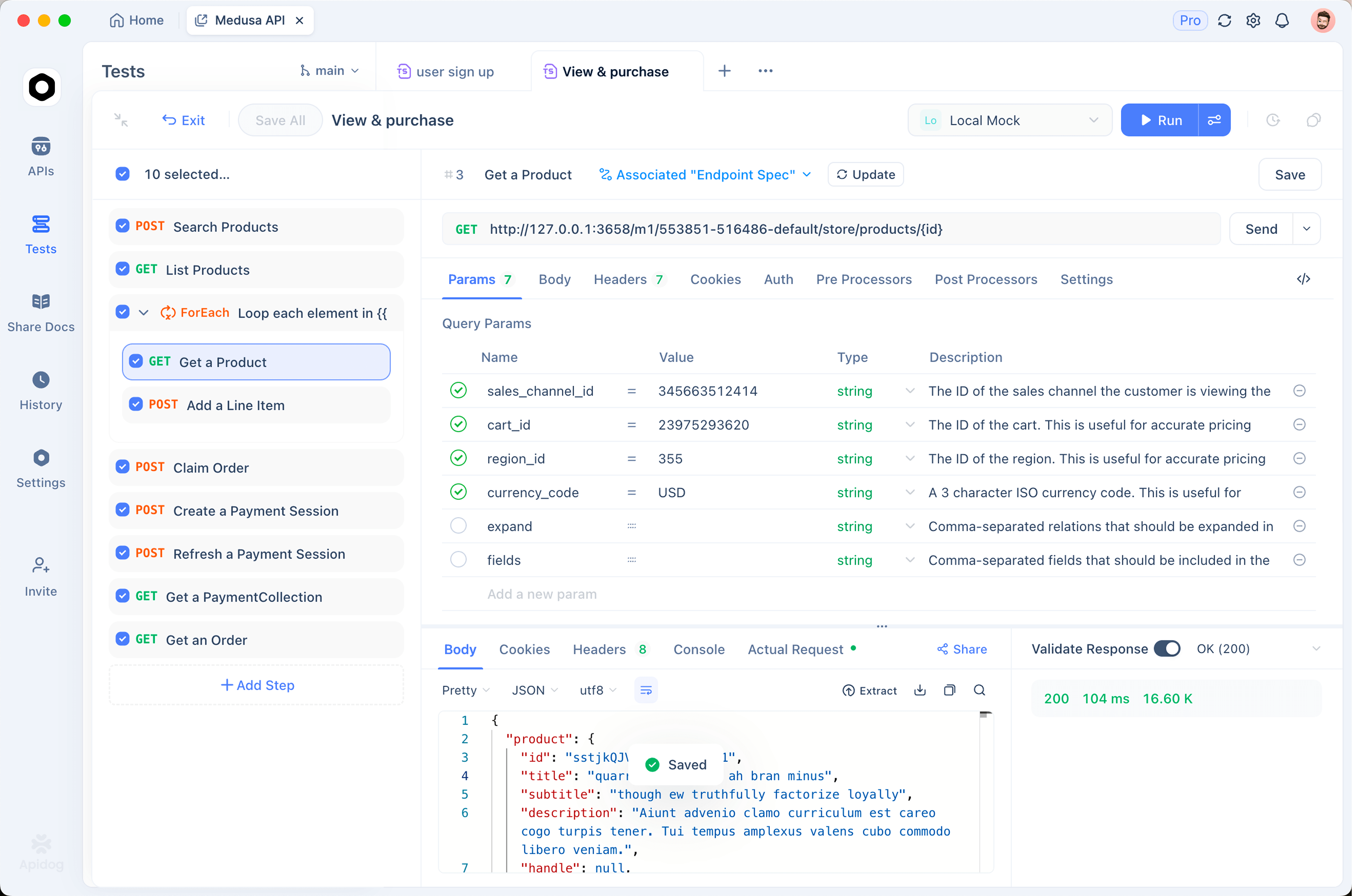
Create one request for the K3 endpoint and one for Opus, store your keys and base URLs as environment variables, then send the same prompt to both. Apidog shows the response body, status, and timing for each call, so you can compare answer quality, latency, and token cost on identical inputs, and saving them as a collection gives you a repeatable harness to re-run whenever either model updates. You can drive these checks with Apidog inside VS Code, and the approach doubles as API testing without Postman. Download Apidog to set it up yourself. The goal: replace “which model is better in general” with “which is better for this prompt, at this cost, at this latency.”
The bottom line
Kimi K3 beats Claude Opus 4.8 decisively on price, context window, and openness, and on Moonshot’s own launch benchmarks it outscores Opus 4.8 on quality too, though those numbers are vendor-run and not yet independently reproduced. What Opus 4.8 keeps is the assurance side: a managed vendor, published policies, and a proven reliability track record on hard agentic work. If your workload is long-context, cost-sensitive, or needs self-hosting, K3 is the pragmatic pick; if you want a commercial relationship and a proven track record, Opus 4.8 earns its premium. Since no independent head-to-head exists yet, test both on your own prompts before you commit.
Frequently asked questions
Is Kimi K3 better than Claude Opus 4.8? It’s close, and on the numbers we have K3 looks at least even. It wins on price, context, and openness, and on Moonshot’s own launch benchmarks it outscores Opus 4.8 on every listed task, though those numbers are vendor-run and not yet independently reproduced. Moonshot says K3 trails the top proprietary models, but it names Fable 5 and GPT-5.6 Sol, not Opus 4.8, so Opus 4.8’s real edge is its track record and managed support, not a benchmark lead.
How much cheaper is Kimi K3? K3 lists $0.30 per million tokens for cache-hit input, $3.00 for cache-miss input, and $15.00 for output. Opus 4.8 lists $5.00 input and $25.00 output. So K3 is far cheaper on cached input, under half price on a cache miss, and about 40% cheaper on output. Real savings depend on how much of your input is cacheable.
Is there an independent benchmark comparing Kimi K3 and Opus 4.8 directly? Not yet. Artificial Analysis provides independent Intelligence Index scores for individual models, and Moonshot publishes its own benchmark numbers, but there is no shared, apples-to-apples K3-versus-Opus-4.8 table. Treat vendor-reported wins, including the “first in four of eight automation benchmarks” figure, as self-reported until reproduced independently.
Is Kimi K3 a competitor to Opus 4.8 or to Claude Fable 5? K3 competes across the field. The launch coverage framed it against Opus 4.8 because that is the tier an open challenger can plausibly reach. Anthropic’s current frontier is Claude Fable 5, which Moonshot acknowledges K3 still trails, so K3 is best understood as closing in on the proprietary field rather than topping it.