OpenAI announced GPT-5.6 on June 26, 2026, and the most lasting thing about it might not be the model at all. It’s the names. Sol, Terra, and Luna are not three separate releases. They are one generation, GPT-5.6, split into three durable capability tiers. The number tells you the generation. The name tells you the tier. That’s a structural change in how OpenAI labels what it ships, and it will shape how you read every release that follows.
First, the part that resets expectations: you can’t use any of these yet. GPT-5.6 launched as a limited preview through the OpenAI API and Codex only. It is not in ChatGPT during the preview, and access is restricted to roughly 20 partners whose names were individually approved by the US government. OpenAI says general availability across ChatGPT, Codex, and the API is coming “in the coming weeks.” So treat this as a structural explainer, not a buying decision. There is nothing to buy right now.
TL;DR
- GPT-5.6 is one generation. Sol, Terra, and Luna are three capability tiers inside it.
- Sol is the flagship and strongest. Terra is balanced. Luna is the fastest and lowest cost.
- The number is the generation; the name is the tier, and tiers can advance on their own cadence.
- The launch is a government-gated limited preview: API and Codex only, not in ChatGPT, about 20 approved partners.
- Pricing signals the spectrum: Sol $5/$30, Terra $2.50/$15, Luna $1/$6 per 1M tokens (input/output).
What changed about the names
Until now, an OpenAI model name was mostly a version number. GPT-4, GPT-5, GPT-5.5: each bump meant “newer, generally better, replace the old one.” A name like that bundles two separate ideas into a single label. One is generation: which training run, which round of capability. The other is tier: how much you want to spend on speed versus depth for a given job.
GPT-5.6 pulls those two ideas apart. The 5.6 is the generation. Sol, Terra, and Luna are the tiers. You read the name in two parts now. You can have the same generation expressed as a flagship reasoning model, a balanced workhorse, and a fast low-cost option, all at once, without anyone pretending one is simply “better” than the others. They serve different jobs.
If you want the baseline this builds on, our explainer on what GPT-5.5 is covers the generation that Sol, Terra, and Luna are measured against.
The three tiers, at a glance
Here is how OpenAI positions each tier. None of this is a recommendation to buy, because you can’t yet. It’s a map of what each name is meant to signal.
- Sol is the flagship. It’s tuned for the hardest work: deep reasoning, coding, science, and security analysis. It gets the most compute and the new high-effort reasoning controls.
- Terra is the balanced tier. OpenAI describes it as roughly 2x cheaper than GPT-5.5 while delivering similar performance. It’s the one most teams would reach for day to day once it opens up.
- Luna is the fast, low-cost tier. OpenAI calls it strong capability at the lowest price, built for high-volume work where latency and cost matter more than maximum depth.
The tier idea isn’t entirely new in spirit. OpenAI already shipped speed-versus-depth splits before, and we wrote about that pattern in our piece on GPT-5.5 Pro versus Instant. What’s new with 5.6 is that the split now has stable, named identities instead of suffixes glued onto a version number.
Why durable tiers matter
A version suffix is disposable. “Pro” and “Instant” are descriptions tied to one release. When the next generation lands, the suffix gets reused or quietly retired, and you relearn the lineup.
A durable tier is a lane. Sol is meant to stay the flagship lane across generations. Terra stays the balanced lane. Luna stays the fast lane. The promise is that the name carries meaning forward, so a future GPT-5.7 Terra or GPT-6 Terra would still mean “the balanced one,” even though the underlying model is new.
That’s why OpenAI frames these as tiers that advance on their own cadence. Sol might get a capability jump while Terra and Luna hold steady, or the reverse. The generation number moves when the whole family moves. The tier name moves when that specific lane gets an upgrade. You stop asking “is this newer?” and start asking “which lane do I need, and how current is it?”
For a fuller picture of the model itself and the government gate around it, see our overview of GPT-5.6 Sol and why you can’t use it yet.
The price spectrum reads as a positioning map
OpenAI published a rate card for the preview, and it lines up cleanly with the tier story. Per 1M tokens, input and output:
- Sol: $5 input, $30 output
- Terra: $2.50 input, $15 output
- Luna: $1 input, $6 output
Read that as a spectrum, not a menu, because there’s nothing to order. Each step down the tiers roughly halves the price. Sol costs the most because it does the heaviest reasoning. Terra sits in the middle, which fits the “2x cheaper than GPT-5.5, similar performance” framing. Luna is the floor for cost.
The shape of the pricing is the point. It tells you OpenAI expects the three tiers to coexist, each owning a different cost-to-capability slot, rather than one replacing the others. That’s the durable-tier model showing up in dollars.
The capability controls that come with Sol
The tier split also shows up in how you’d steer the models, not only what they cost. GPT-5.6 introduces new reasoning controls, and they cluster at the Sol end.
There’s a new max reasoning effort that, per OpenAI, gives Sol the most time to reason deeply on a problem. And there’s a new ultra mode that, in OpenAI’s words, “goes beyond a single agent by leveraging subagents to accelerate complex work.” That’s a flagship-tier capability: a single call that can fan out into subagents rather than reasoning as one linear pass.
These controls reinforce why the tiers are named the way they are. Sol isn’t just “GPT-5.6 but pricier.” It’s the lane where the heaviest reasoning machinery lives.
Verify live as of June 2026. GPT-5.6 is in limited preview and OpenAI has not published every detail. The exact API model identifiers have not been published yet, so don’t hardcode model ID strings. Reported figures like the context window (some coverage cites around 1.5M tokens, one outlet says it is not specified) are unconfirmed. Treat them as signals, not settled facts, until OpenAI documents them.
What the tiers are tuned for
OpenAI’s stated focus for this generation is coding, science and biology (it cites a GeneBench v1 evaluation), and cybersecurity (ExploitBench and ExploitGym). The security framing matters and is easy to misread.
Sol is tuned to find software vulnerabilities and write fixes, while resisting efforts to assemble full exploit chains. That’s a defensive posture. OpenAI calls the result its “most robust safety stack to date.” Read it as a model built to harden code, not to attack it. The capability and the safety story are the same story here, which is part of why the launch is gated at all.
Per OpenAI and early coverage, the benchmark numbers point in the same direction, with Sol and the ultra configuration leading on agentic coding tasks. Those figures come from secondary reporting rather than a page we fetched directly, so weigh them as claims, not measurements, until the system card spells them out. You can read OpenAI’s own framing in its GPT-5.6 Sol announcement and the details collected by VentureBeat.
Why the launch is gated
The naming change arrived inside a launch that almost nobody can touch, and the two are connected. The US administration limited the launch under a June 2, 2026 executive order that set up benchmarking and assessment for new AI models. Access went to roughly 20 government-approved partners through the API and Codex, with ChatGPT left out for now.
OpenAI framed it as temporary. As reported by MacRumors, the company said: “We are taking this short-term step because we believe it is the strongest path to broader availability in the coming weeks.” So the tiers exist on paper, the prices are published, and the controls are documented, but the gate stays shut for most developers until GA.
How this changes the way you read future releases
Once you internalize the split, OpenAI announcements get easier to parse. When the next one lands, ask two questions instead of one.
First, what’s the generation? That’s the number, and it tells you roughly how capable the whole family is. Second, which tier are you looking at? That’s the name, and it tells you where on the cost-and-speed spectrum a given model sits.
A headline like “GPT-5.7 Sol” would then read instantly: newer generation, flagship lane. “Luna gets an update” would read as: the fast lane moved, the rest may not have. You no longer have to decode a fresh suffix every release. The vocabulary stays stable even as the models behind it change.
Where Apidog fits
You can’t test Sol, Terra, or Luna today, and we won’t pretend otherwise. What you can do is work against the frontier models that are available right now: Claude Mythos 5, Claude Fable 5, GPT-5.5, Gemini 3.5 and 3.1 Pro, GLM-5.2, and Fugu Ultra. Those all expose OpenAI-compatible or standard HTTP endpoints, which means you can send requests, inspect responses, and build assertions against them in Apidog today.
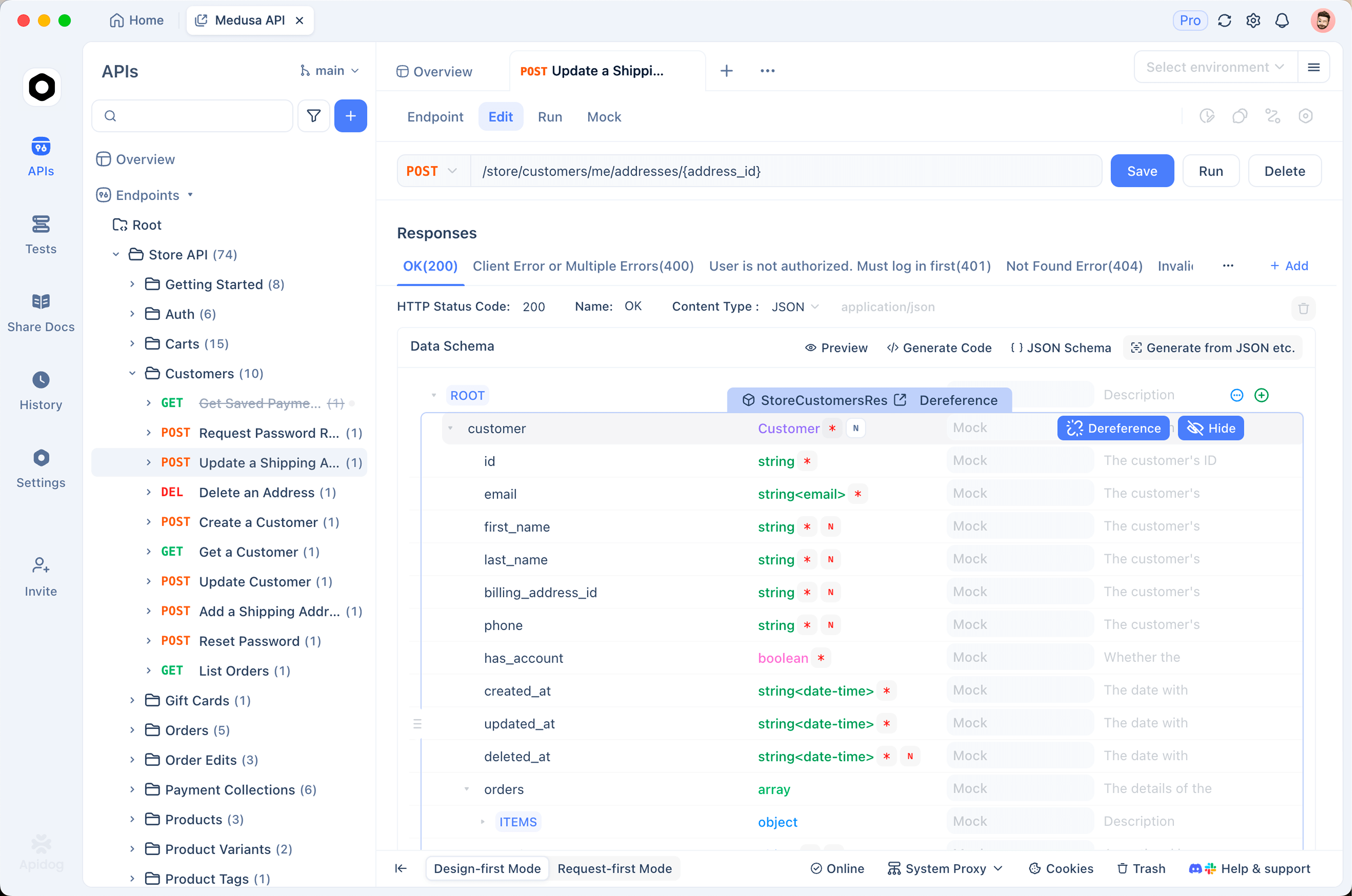
The practical move is to get your request setup, environment variables, and test scenarios ready against a model you can reach now. When your preview access to GPT-5.6 lands, swapping the base URL and model identifier into an existing test scenario is a small change, not a rebuild. That’s the honest prep: be ready to test Sol the day your access opens, using the rails you already have.
FAQ
What do Sol, Terra, and Luna mean? They are the three capability tiers of GPT-5.6. Sol is the flagship and strongest, Terra is the balanced mid tier (OpenAI says about 2x cheaper than GPT-5.5 with similar performance), and Luna is the fastest and lowest cost. The 5.6 is the generation; the name is the tier.
Is Sol a different model from GPT-5.6? No. Sol is GPT-5.6, expressed at the flagship tier. Terra and Luna are the same generation expressed at lower cost-and-speed tiers. One generation, three lanes.
Can I pick a tier and start using it today? Not yet. GPT-5.6 is in a government-gated limited preview through the API and Codex, restricted to about 20 approved partners, and it isn’t in ChatGPT during the preview. OpenAI says wider availability is coming in the coming weeks. For the full background, see our piece on what GPT-5.6 Sol is.
What’s the difference between Sol, Terra, and Luna in price? Per 1M tokens, OpenAI lists Sol at $5 input and $30 output, Terra at $2.50 and $15, and Luna at $1 and $6. Each tier down roughly halves the cost, which mirrors the capability spectrum.
Will the names carry over to future generations? That’s the intent. Tiers are meant to be durable and advance on their own cadence, so a future generation’s Terra should still signal “the balanced one” even though the model underneath is new.
Conclusion
The headline isn’t a model. It’s a naming system. GPT-5.6 splits the generation from the tier: 5.6 says how new it is, while Sol, Terra, and Luna say which lane you’re in and roughly what it costs. Internalize that and every future OpenAI release gets easier to read at a glance. For now you’re a spectator, since the preview is gated to a handful of approved partners, but the framework is here to stay.
When the gate opens, you’ll want your tests already built. Download Apidog to set up your request scenarios against the models you can reach today, so testing Sol is a config swap, not a fresh start.