
You are already running GLM-5.1 in production. Your agent loops work, your coding assistant ships diffs, and the bills are predictable. Then Z.ai drops GLM-5.2, and the question lands on your desk: do you change one line in your config and swap the model id, or do you stay put?
This is a GLM-5.2 vs GLM-5.1 decision, not a tutorial. So this article skips the from-scratch explainer (if you need that, the GLM-5.1 overview and the GLM-5.1 API guide are the right starting points) and goes straight to the diff: what actually changed, what it costs you to move, and a clear “upgrade if / stay if” verdict at the end.
Short version up front: the GLM-5.2 upgrade is mostly about agentic and long-horizon coding, the price tier looks unchanged, and the switch is a one-line model-id change. For most coding-heavy and tool-use workloads, that combination makes it an easy yes. The nuance is in the details below.
The 30-second version
| GLM-5.1 | GLM-5.2 | |
|---|---|---|
| API model id | glm-5.1 |
glm-5.2 |
| Context window | up to 1M tokens | 1M tokens (1,048,576) |
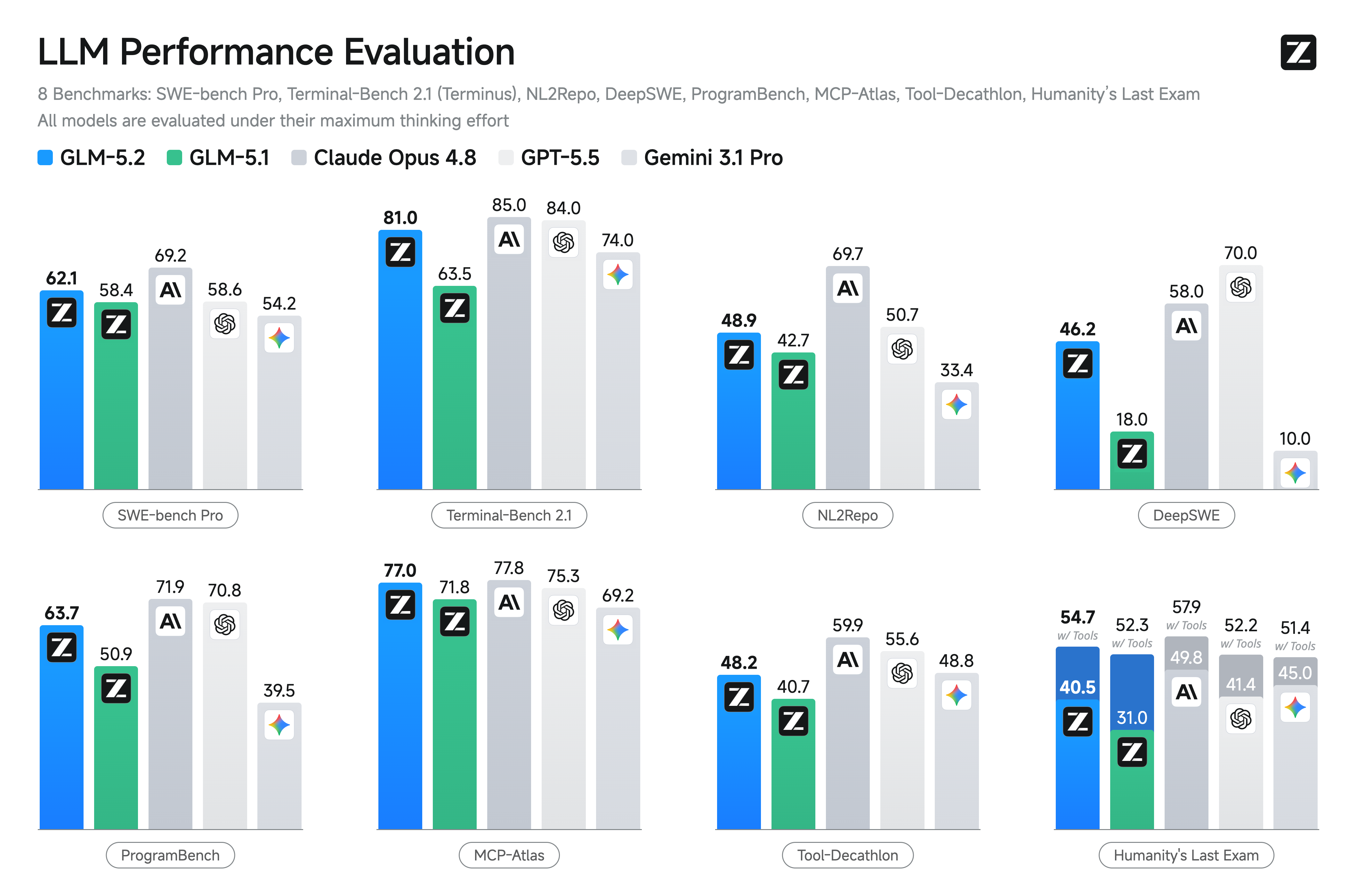
| Terminal-Bench 2.1 | 62.0 | 81.0 |
| SWE-bench Pro | 58.4 | 62.1 |
| MCP-Atlas | (prior gen) | 77.0 |
| Attention | dense/standard | IndexShare sparse attention |
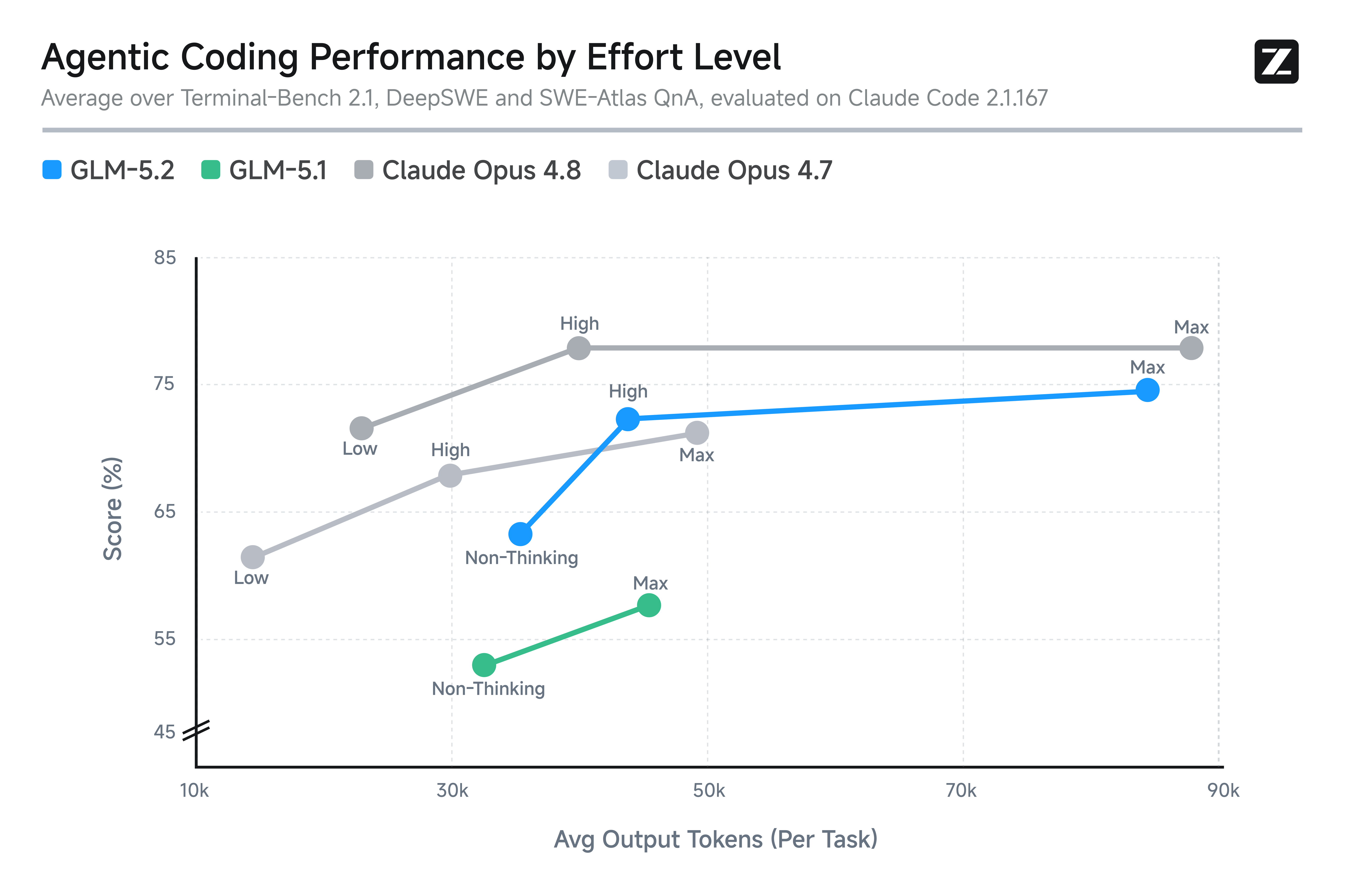
| Thinking effort | thinking on/off | adds High and Max levels |
| API price tier | (same tier) | $1.40 in / $4.40 out per 1M (verify live) |
The headline of the whole GLM-5.1 to GLM-5.2 jump is Terminal-Bench. Everything else is incremental; Terminal-Bench is not.
What actually changed in GLM-5.2
Agentic and terminal coding got a real jump
Z.ai’s published results put GLM-5.2 at 81.0 on Terminal-Bench 2.1, up from GLM-5.1’s 62.0. That is the kind of gap you do not usually see inside a single minor version. Terminal-Bench measures whether a model can drive a real shell to completion: read output, recover from errors, chain commands, finish the task. If your use case is an agent that lives in a terminal or runs multi-step tool chains, this is the GLM-5.2 improvement that matters most.
The other coding numbers move too, just less dramatically:
- SWE-bench Pro: 58.4 to 62.1 (Z.ai also reports GLM-5.2 ahead of GPT-5.5 at 58.6 here)
- MCP-Atlas: 77.0, in the same band as GPT-5.5 (75.3) and Claude Opus 4.8 (77.8)
- Humanity’s Last Exam with tools: 54.7 (GPT-5.5 52.2, per Z.ai)
- AIME 2026: 99.2, GPQA-Diamond: 91.2
Z.ai also lists GLM-5.2 as the highest open-source model on FrontierSWE, PostTrainBench, and SWE-Marathon. Treat the launch benchmarks as Z.ai’s published results until third parties reproduce them, but the direction is clear: the bigger gains are in agentic, long-horizon, tool-using work rather than single-shot Q&A. For a wider field comparison, the GLM-5.1 vs Claude/GPT/Gemini/DeepSeek breakdown is a useful baseline for where 5.1 sat.
IndexShare: the new sparse attention
The architectural change in GLM-5.2 is a sparse attention scheme Z.ai calls IndexShare. Instead of recomputing an attention index at every layer, it reuses one indexer across every group of four sparse-attention layers. The practical effect is lower attention cost at long context, which is the expensive part when you are feeding a model hundreds of thousands of tokens.
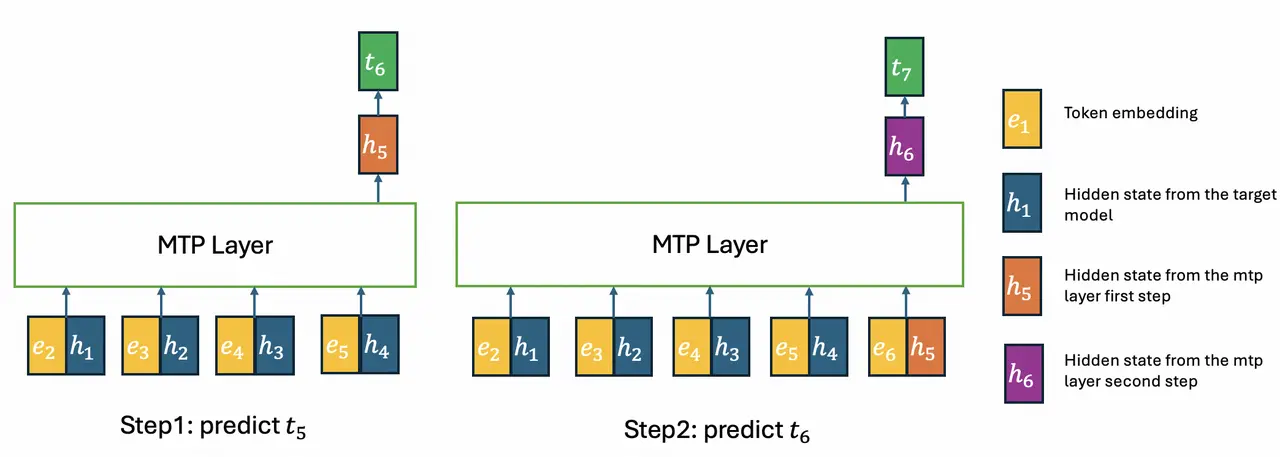
The model itself is still a large mixture-of-experts design (around 753B parameters, BF16) with the same 1M-token context window (1,048,576 tokens). IndexShare does not change the headline context number; it changes how cheaply the model can chew through that context. If your prompts are short, you will barely notice. If you stuff whole repos or long transcripts into context, this is the under-the-hood reason the upgrade can feel snappier without costing more.
Thinking-effort levels: High and Max
GLM-5.1 let you toggle thinking on or off. GLM-5.2 adds graded thinking effort: High and Max. Z.ai recommends Max for coding. You can still disable thinking entirely for latency-sensitive, low-complexity calls.
In the API, that maps to two knobs you set together:
{
  "model": "glm-5.2",
  "thinking": { "type": "enabled" },
  "reasoning_effort": "max",
  "temperature": 0.6,
  "stream": true,
  "messages": [
    { "role": "user", "content": "Refactor this module and explain the diff." }
  ]
}
This is the most behavior-affecting change for everyday use. The same prompt at reasoning_effort: "max" will think longer and usually return stronger code, at the cost of more output tokens and higher latency. So part of the GLM-5.2 upgrade is not the model getting smarter for free; it is you getting a dial to spend reasoning where it pays off and skip it where it does not.
What stayed the same
This is the part that makes the decision easy, so it deserves its own section.
- The API surface is unchanged. Still OpenAI-compatible, same endpoint shape at
https://api.z.ai/api/paas/v4/chat/completions(base URLhttps://api.z.ai/api/paas/v4/), same Bearer-key auth, same function/tool-calling and streaming. The GLM-5.1 API guide you already wrote against still applies. - The context window is the same 1M tokens. No re-architecting your chunking strategy.
- Licensing and access are the same. Open weights, MIT license, no regional restrictions, available on Hugging Face, OpenRouter (
z-ai/glm-5.2), and Ollama (glm-5.2). - It is still text in, text out. There is no confirmed vision variant. Do not plan around a “GLM-5.2V”; it has not been announced.
- The price tier looks unchanged. This is the big one for upgrade economics, covered next.
The upgrade economics
Here is why “should I upgrade GLM-5.2” has a friendlier answer than most version bumps: the cost penalty appears to be roughly zero.
OpenRouter lists GLM-5.2 at $1.40 per 1M input tokens and $4.40 per 1M output tokens. VentureBeat reports cached input around $0.26 per 1M (attribute that figure to VentureBeat). Those input/output rates sit in the same tier GLM-5.1 users have been paying, so moving up does not mean moving up a price bracket. Confirm the live numbers at the source before you commit budget; pricing pages change. The full pricing breakdown lives in the GLM-5.2 pricing article.
VentureBeat’s framing is the one to quote to a finance-minded stakeholder: they describe GLM-5.2 as beating GPT-5.5 on long-horizon coding benchmarks at roughly one-sixth the cost. That is their characterization, not an Apidog measurement, but it captures the value proposition: frontier-adjacent agentic coding at open-weights pricing.
A few cost caveats so you go in clear-eyed:
- Max thinking spends output tokens. If you flip every call to
reasoning_effort: "max", your output-token bill rises even though the per-token rate is flat. Reserve Max for the calls that benefit (hard refactors, multi-file changes) and leave routine calls at High or thinking-off. - The GLM Coding Plan tiers are separate from per-token API pricing, and the published tier prices (Lite, Pro, Max, Team) come from secondary sources that do not fully agree. Verify the current plan pricing at z.ai before you build a budget on it. As of June 2026, do not assume a free OpenRouter lane exists for
glm-5.2; there is no confirmed free tier.
For a broader cost-and-speed lens across vendors, the GLM-5 vs DeepSeek vs GPT-5 speed and cost comparison sets useful context.
How to actually do the swap
For straight API calls, the change is the model id. That is it.
- "model": "glm-5.1",
+ "model": "glm-5.2",
If you want graded reasoning, add the two thinking knobs shown earlier. Everything else (auth, endpoint, message format) stays put.
For Claude Code and other Anthropic-compatible coding clients, GLM-5.2 routes through Z.ai’s coding endpoint. As of June 2026 the coding base URL is https://api.z.ai/api/coding/paas/v4 (some sources show an open.z.ai path; verify the live URL before you wire it up). A typical Claude Code environment block:
export ANTHROPIC_BASE_URL="https://api.z.ai/api/coding/paas/v4"
export ANTHROPIC_API_KEY="your-glm-coding-plan-key"
export ANTHROPIC_DEFAULT_SONNET_MODEL="glm-5.2[1m]"
export ANTHROPIC_DEFAULT_OPUS_MODEL="glm-5.2[1m]"
export CLAUDE_CODE_AUTO_COMPACT_WINDOW=1000000
export API_TIMEOUT_MS=3000000
Two things to know here. The [1m] suffix selects the 1M-context variant. And API_TIMEOUT_MS matters more than it looks: long large-context calls will get killed by the default timeout, so raise it. The deeper end-to-end walkthrough for editor and CLI clients is in the GLM-5.2 with Claude Code, Cline, and Cursor guide, and the GLM-5.1 equivalent is the GLM-5.1 + Claude Code setup if you are comparing the two configs side by side.
Test the swap before you trust it
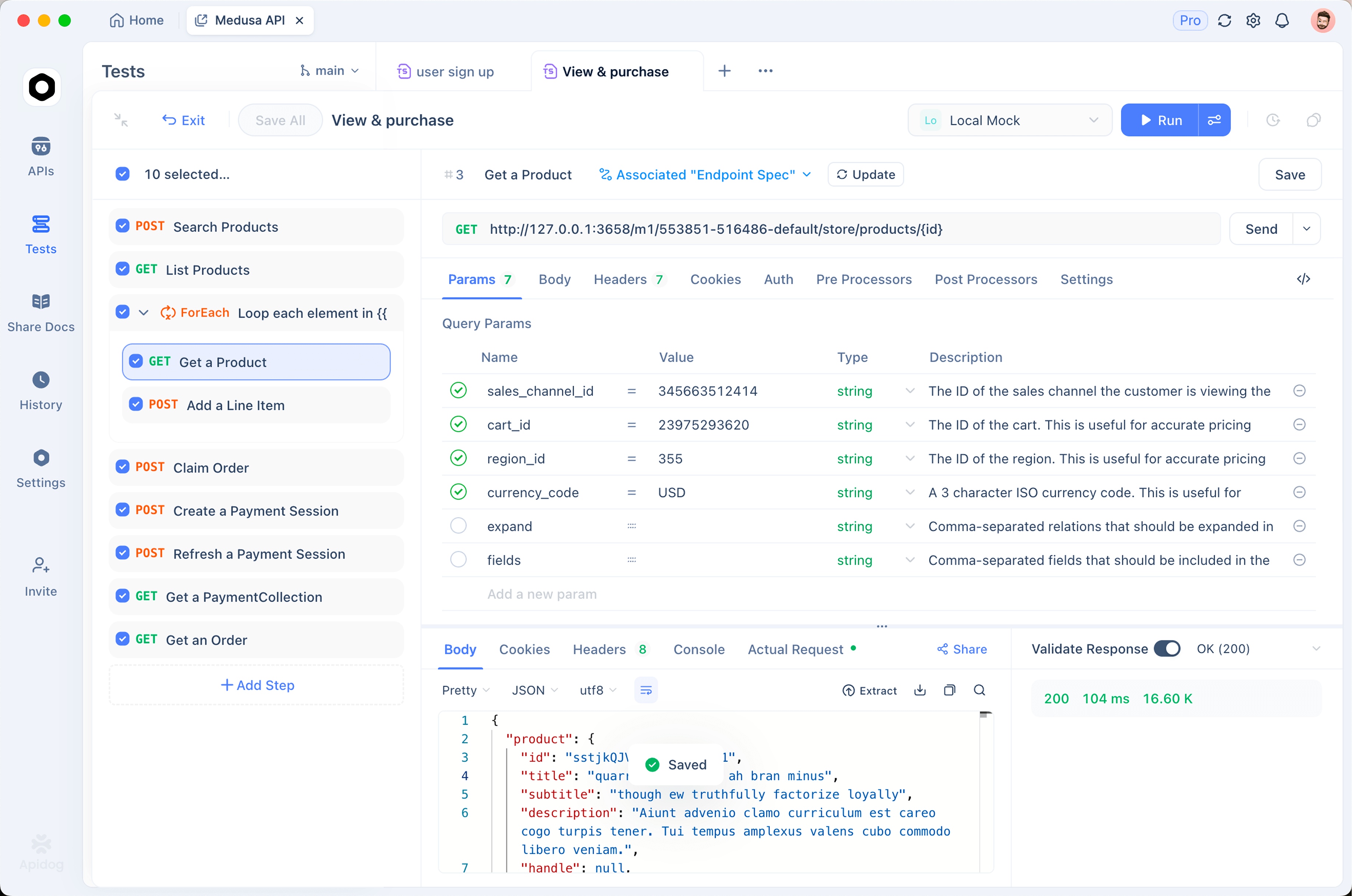
A model-id change is one line, but the behavior change is real, so verify it like an API change rather than a config tweak. Send the same set of prompts to glm-5.1 and glm-5.2, diff the responses, and check latency and token usage. An API client like Apidog makes this concrete: save a request collection, swap the model field, run both, and compare status, output, and timing in one place. Because the Z.ai API is OpenAI-compatible, you point Apidog at the same endpoint, change one field, and re-run. If you do not already have it, you can download Apidog and set up a side-by-side test environment in a few minutes. That five-minute check is the difference between “the benchmarks say it is better” and “it is better on my actual prompts.”
So, is the GLM-5.2 upgrade worth it?
Here is the verdict, framed as a decision rather than a rating.
Upgrade to GLM-5.2 if:
- Your workload is agentic, terminal-driven, or multi-step tool use. The Terminal-Bench jump from 62.0 to 81.0 is the single strongest reason to move, and it lands exactly where 5.1 was weakest.
- You do real coding work (refactors, multi-file changes, SWE-bench-style tasks). The SWE-bench Pro and MCP-Atlas gains compound over a workday.
- You run long-context prompts. IndexShare makes big-context calls cheaper to process, and the price tier looks unchanged, so there is little downside.
- You want a reasoning dial. High and Max let you spend thinking where it pays and skip it where it does not.
Stay on GLM-5.1 if:
- You are running short, simple, latency-sensitive prompts where the new strengths do not apply and 5.1 already meets your bar. In that case the upgrade is real but invisible; keep the GLM-5.1 setup you trust.
- You are mid-release and frozen. A one-line model-id change is low risk, but no change beats a low-risk change during a freeze. Schedule it for the next window.
- You self-host and cannot yet pull or serve the 753B weights at the precision and throughput you need. The benchmarks do not help if you cannot run the model.
For most teams reading a GLM-5.2 vs GLM-5.1 comparison because they already use 5.1, the honest answer is: upgrade, but test first. The switch is cheap, the agentic gains are substantial, and the price tier does not punish you for moving. The only real cost is the hour you spend validating it on your own prompts, and that hour is worth spending.