Google released Gemini 3.7 Flash on August 13, 2026, three weeks after 3.6 Flash, and called it “our most intelligent workhorse model”. The benchmark deltas back the confidence. DeepSWE jumps from 49.0% to 65.3%, AutomationBench climbs from 17.0% to 30.4%, and the introductory price of $0.75 per 1M input tokens lands at half of what 3.6 Flash cost at launch.
That combination forces a question every API team faces this quarter: does a fast, cheap Gemini model now cover workloads you were routing to Claude or GPT? This comparison sticks to what you can verify: context windows, modalities, tool support, pricing structure, and the request schemas you’ll integrate against; where competitor numbers aren’t comparable, it says so. And because the honest answer to “which API should you use” is “the one that wins on your workload”, the final section shows how to run all three side by side in Apidog before you commit.
If you end up picking Gemini and want the setup steps, the Gemini 3.7 Flash API quickstart covers keys, endpoints, and first requests.
TL;DR
- Gemini 3.7 Flash: 1M token context, 64k output limit, native input across text, image, video, audio, and PDF, plus function calling, search as a tool, and computer use.
- Intro pricing: $0.75 per 1M input tokens and $3.75 per 1M output through December 31, 2026, doubling to $1.50 and $7.50 on January 1, 2027.
- Coding gains over 3.6 Flash: DeepSWE v1.1 49.0% to 65.3%, FrontierCode 1.1 Main 34.4% to 43.6%, AutomationBench 17.0% to 30.4%.
- Claude Fable 5 and GPT-5.6 Sol still lead on frontier coding depth and agent consistency, at several times the per-token price.
- The three providers use incompatible request schemas: Google
contents, Anthropic Messages, OpenAImessages. - Benchmarks predict averages, not your workload; run a 20-prompt bake-off across all three APIs before deciding.
How to read this comparison
This is not a frontier-versus-frontier matchup. Claude Fable 5 and GPT-5.6 Sol are flagships priced for maximum capability; Gemini 3.7 Flash is a workhorse priced for volume. Google is shipping it while its flagship waits: Axios reported that Gemini 3.5 Pro remains delayed, with Flash updates landing ahead of it.
The comparison is still worth making: 3.7 Flash’s launch scores now overlap the band where frontier models sat weeks ago, and that changes the routing calculus even if the flagships stay ahead.
Two cautions apply throughout. First, every number here is a launch-week, vendor-reported figure; treat them as directional until independent evaluations land. Second, benchmark variants matter. Google reports FrontierCode 1.1 Main, while the numbers published for Claude and GPT at their launches came from the Extended split, so those columns never share a table here.
Specs side by side
The spec sheet is where Gemini 3.7 Flash holds its own against models that cost far more. Full technical details live on the Gemini Flash model page.
| Gemini 3.7 Flash | Claude Fable 5 | GPT-5.6 Sol | |
|---|---|---|---|
| Developer | Anthropic | OpenAI | |
| Context window | 1M tokens | 1M tokens | 1.05M tokens |
| Output limit | 64k tokens | See provider docs | See provider docs |
| Input modalities | Text, image, video, audio, PDF | Text, image | Text, image |
| Output | Text | Text | Text |
| Tool support | Function calling, search as a tool, computer use | Function calling, tool use | Function calling, built-in tools |
| Request schema | Google contents + generationConfig |
Anthropic Messages | OpenAI messages |
| Auth | x-goog-api-key header |
x-api-key + version header |
Bearer token |
| Pricing (per 1M tokens) | $0.75 in / $3.75 out intro; $1.50 / $7.50 from Jan 2027 | Premium frontier tier | Premium frontier tier |
| Positioning | High-volume workhorse | Long-horizon agent work | Repo-scale coding depth |
The context windows are now effectively equal, so that row no longer decides anything. The modality and pricing rows are where the three diverge, and the next sections unpack both.
Coding and agent tasks
Google’s headline claims for 3.7 Flash are developer-shaped: better at debugging, more capable of producing deployable code on the first try, and more diligent on multi-step planning and tool calls. The generation-over-generation numbers, confirmed in 9to5Google’s launch coverage, support the claims.
| Benchmark | Gemini 3.6 Flash | Gemini 3.7 Flash |
|---|---|---|
| DeepSWE v1.1 (repo-scale fixes) | 49.0% | 65.3% |
| FrontierCode 1.1 Main | 34.4% | 43.6% |
| WebDev Arena (Elo) | 1538 | 1588 |
| GDP.pdf (document reasoning) | 22.0% | 34.0% |
| AutomationBench (agent tasks) | 17.0% | 30.4% |
The AutomationBench jump is the one agent builders should stare at. Nearly doubling an agentic benchmark in three weeks suggests the “thinks more diligently on tool calls” claim is more than marketing.
How does that stack against Claude and GPT? On DeepSWE v1.1, the frontier tier posted 73.0% for GPT-5.6 Sol Max at its launch, with Grok 4.6 at 65.9%; our Grok 4.6 vs GPT-5.6 Sol vs Claude Fable 5 comparison covers those results in depth. Sol Max keeps a real lead on repository-scale bug fixing, and Claude Fable 5’s strength is consistency across coding and agent evaluations, where it is rarely worse than second. Gemini 3.7 Flash has not closed that gap. It has arrived within striking distance at a fraction of the cost, which is a different value proposition than “best score wins.”
Two specialist numbers round out the picture: 90.7% on Harvey LAB-AA for legal reasoning, and 97.0% on 128k-needle retrieval, the score that makes the 1M window trustworthy in practice.
Multimodal input
This is the cleanest structural difference between the three APIs. Gemini 3.7 Flash accepts text, images, video, audio, and PDF in the same contents array against one endpoint. Claude and GPT handle text and images well, but video and audio workloads typically route through separate transcription or preprocessing steps before the text reaches the model.
If your product touches documents, the GDP.pdf jump from 22.0% to 34.0% is the relevant signal: that benchmark measures reasoning over real-world PDFs with tables, scans, and broken layouts. Feeding a contract or an invoice straight into the model without an OCR pipeline removes an entire failure-prone stage from your architecture.
The practical rule: for text-and-image chat, modality is a wash. For video frames, call recordings, or document piles, Gemini is the only one of the three where the input pipeline collapses into a single API call.
Pricing philosophy
The three vendors are running different pricing strategies, and the difference tells you who each model is for.
Google prices 3.7 Flash for land grab. The introductory rate of $0.75 per 1M input and $3.75 per 1M output tokens holds through December 31, 2026, and it is half of what 3.6 Flash cost at launch. On January 1, 2027 the standard rate takes over at $1.50 and $7.50, a clean 2x. That deadline is a forcing function: Google wants your traffic committed before the price resets. The full token math, with worked examples for chatbots and agent loops, is in our Gemini 3.7 Flash pricing breakdown.
Anthropic and OpenAI price their flagships as premium capability. Rates vary by tier and change often, but the shape is consistent: frontier output tokens cost several times what Flash charges, and both vendors sell the premium on fewer failed runs, not cheaper tokens. Anthropic adds an effort parameter that trades cost against capability inside one model; OpenAI tiers across model sizes instead.
Which philosophy wins depends on your failure economics. A cheap model that fails a task creates repair work costing more than the tokens saved; a premium model earns its rate only when it prevents those failures. Compare cost per completed task, not cost per token, and reprice after January 1, 2027 when Gemini’s rates double.
API ergonomics
Schema differences are the tax you pay when you switch providers or route between them. Here is the same one-turn request in all three shapes.
Google’s Gemini API wraps turns in contents with parts, and generation settings live in generationConfig:
{
  "contents": [
    { "role": "user", "parts": [{ "text": "Summarize this changelog." }] }
  ],
  "generationConfig": { "temperature": 0.3, "maxOutputTokens": 1024 }
}
Anthropic’s Messages API puts the model and a required max_tokens at the top level, with the system prompt as its own field:
{
  "model": "claude-fable-5",
  "max_tokens": 1024,
  "system": "You summarize changelogs in three bullets.",
  "messages": [{ "role": "user", "content": "Summarize this changelog." }]
}
OpenAI folds the system prompt into the messages array itself:
{
  "model": "gpt-5.6-sol",
  "messages": [
    { "role": "system", "content": "You summarize changelogs in three bullets." },
    { "role": "user", "content": "Summarize this changelog." }
  ]
}
The text case looks close enough to paper over with an adapter. Tool use is where the abstraction leaks: Google declares functions in a tools array with functionDeclarations and controls invocation through toolConfig, Anthropic uses its own tool schema with different response blocks, and OpenAI has its own function format again. Streaming chunk shapes differ too, even though all three ride server-sent events. Gateways and compatibility endpoints normalize the basic chat shape, but multimodal parts and tool calls rarely survive translation cleanly; we documented the same problem across vendors in the API format comparison for DeepSeek V4 Pro.
The integration advice is unglamorous: keep a thin provider layer between your product and the model. Teams that do switch providers in days instead of quarters.
When to pick each
Benchmarks and schemas condensed into a decision list:
- Pick Gemini 3.7 Flash for high-volume agent traffic, multimodal pipelines that ingest video, audio, or PDFs, and any workload where per-call cost caps the product’s margin. It’s also the obvious sandbox for computer-use experiments; our breakdown of computer use versus structured APIs covers when that capability earns its keep.
- Pick Claude Fable 5 for long-horizon autonomous work: multi-hour agent sessions, tasks where one derailed step wastes an hour of progress, and workloads that reward the effort parameter’s cost-capability dial.
- Pick GPT-5.6 Sol for repository-scale coding agents that operate across large existing codebases with minimal supervision, and for teams that want the deepest third-party ecosystem around the API.
- Pick a router if you can. The pattern most production teams converge on: a cheap default model handles the bulk of traffic, and the hardest 10% escalates to a frontier model. Gemini 3.7 Flash’s launch numbers make it a credible default in that architecture, which was not true of 3.6 Flash.
Test all three providers in one Apidog workspace
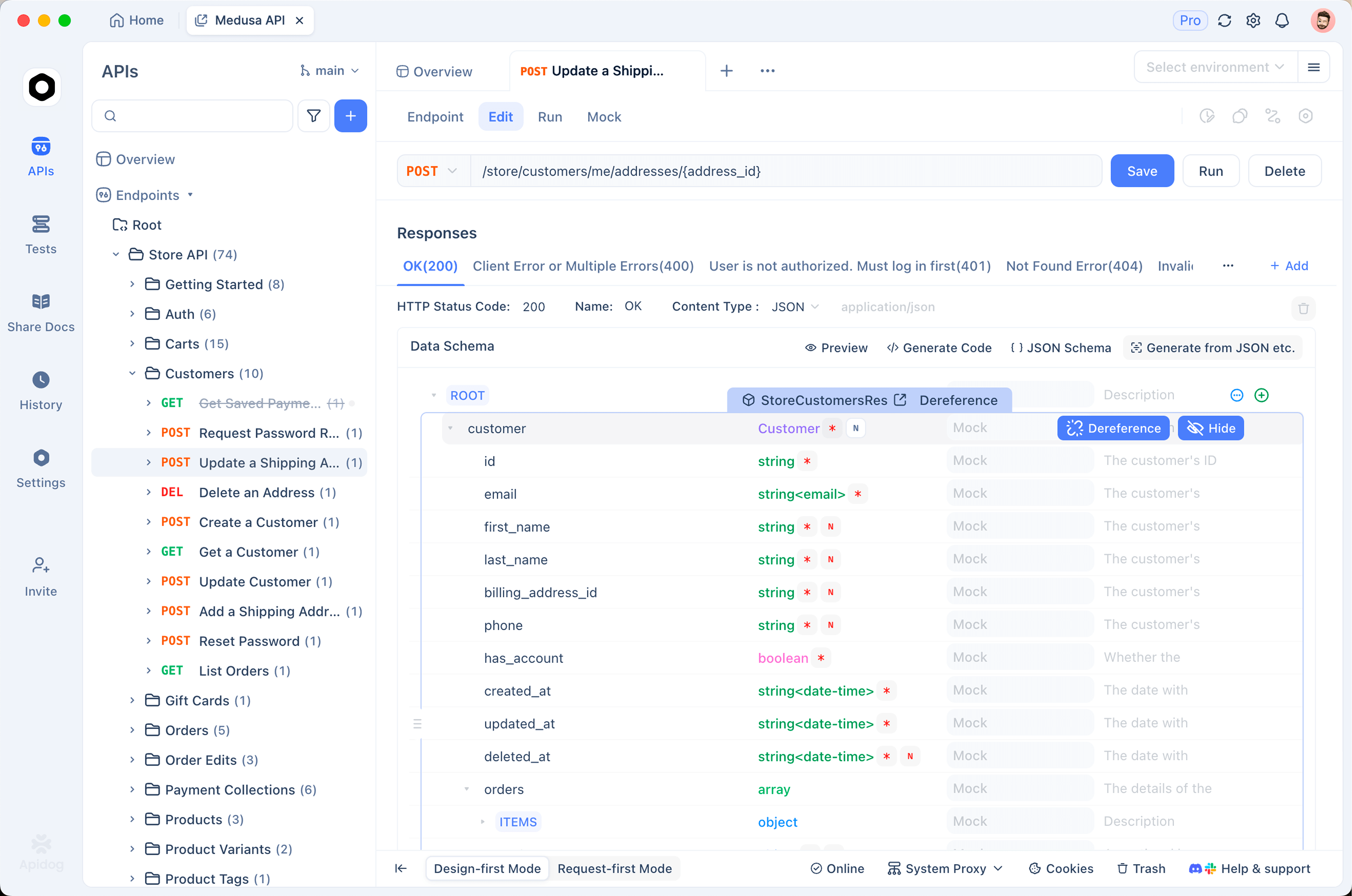
The comparison that matters is the one you run on your own prompts. Apidog holds collections for Google, Anthropic, and OpenAI in a single project, so the bake-off takes an afternoon instead of a sprint:
- Create three environments, one per provider, each carrying its own base URL and auth header:
x-goog-api-keyfor Gemini,x-api-keyfor Anthropic, a Bearer token for OpenAI. Switching providers becomes a dropdown, not a code change. - Collect 20 real prompts from your product. Include your system prompt, your tool definitions if you use function calling, and at least five known-hard cases.
- Add assertions for what you care about: response validity, token counts from each provider’s usage block, latency thresholds. For tool-calling workloads, assert that the tool-call JSON parses and matches your schema; models fail there far more often than in prose.
- Run each suite three times per model. LLM output varies; three runs expose the variance a single demo hides. Compare success rate and cost per successful task.
- Keep the suite. Model releases now land weeks apart; 3.7 Flash followed 3.6 by three weeks. Teams with a standing harness re-decide in an afternoon instead of by anecdote.
FAQ
Is Gemini 3.7 Flash better than Claude or GPT for coding?
Not at the top end. GPT-5.6 Sol Max posted 73.0% on DeepSWE v1.1 against 3.7 Flash’s 65.3%, and Claude Fable 5 leads on consistency across coding and agent benchmarks. What changed is the price-to-score ratio: 3.7 Flash reaches scores that sat in frontier territory weeks ago while charging workhorse rates.
How much cheaper is Gemini 3.7 Flash than Claude or GPT?
Through December 31, 2026, Gemini 3.7 Flash costs $0.75 per 1M input tokens and $3.75 per 1M output tokens. Frontier Claude and GPT models charge several times more per token; check the live pricing pages before you model costs. Remember the intro rate doubles on January 1, 2027.
Can I call Gemini 3.7 Flash through the OpenAI SDK?
Google exposes an OpenAI-compatible endpoint that handles the basic chat shape, so a base_url swap works for text-in, text-out. Multimodal parts and tool calls don’t map cleanly, so use the native contents schema for anything past plain chat. The function calling tutorial for Gemini 3.7 Flash shows the native tool format end to end.
Does Gemini 3.7 Flash support computer use and search grounding?
Yes. It ships with function calling, search as a tool, and computer use, plus updated CBRN and cyber safety guardrails. The AutomationBench improvement from 17.0% to 30.4% is the closest published proxy for how much better the agentic loop got.
Where is Gemini 3.7 Flash available?
The Gemini API with an AI Studio key, Google AI Studio, the Gemini app, Gemini Spark for AI Pro and Ultra subscribers, Google Antigravity, Android Studio, and Gemini Enterprise, across 160+ countries. Production GCP teams can call it through Vertex AI with OAuth instead of an API key.
Where 3.7 Flash fits in your stack
The wrong takeaway from this comparison is “Gemini caught the frontier.” It hasn’t; Sol still owns repo-scale coding depth and Fable 5 still owns long-horizon reliability. The right takeaway is that the floor moved: workhorse prices now buy scores that justified premium rates a quarter ago, which resets the default in any router architecture. Flash-class models handle the bulk, flagships handle the escalations.
The decision is measurable, so measure it. Wire all three providers into one workspace, run your real prompts with assertions, and let cost per completed task pick the winner. Download Apidog for free, set up the three environments, and you’ll have provider-level evidence before the intro pricing window closes.