
Three flagship models, three different bets. Claude Opus 4.8 is built for agentic coding and long-horizon autonomy. GPT-5.5 is the broad generalist. Gemini 3.5 is the fast, cheap, multimodal workhorse. They overlap on plenty of tasks, so the real question isn’t “which is best” but “which is best for the work you’re actually doing.”
This comparison sorts that out. One caveat worth stating plainly: most headline benchmarks are vendor-reported, and vendors pick the tests they win. Treat the numbers as a starting point, then validate on your own workload. For the Opus 4.8 details, see what is Claude Opus 4.8.
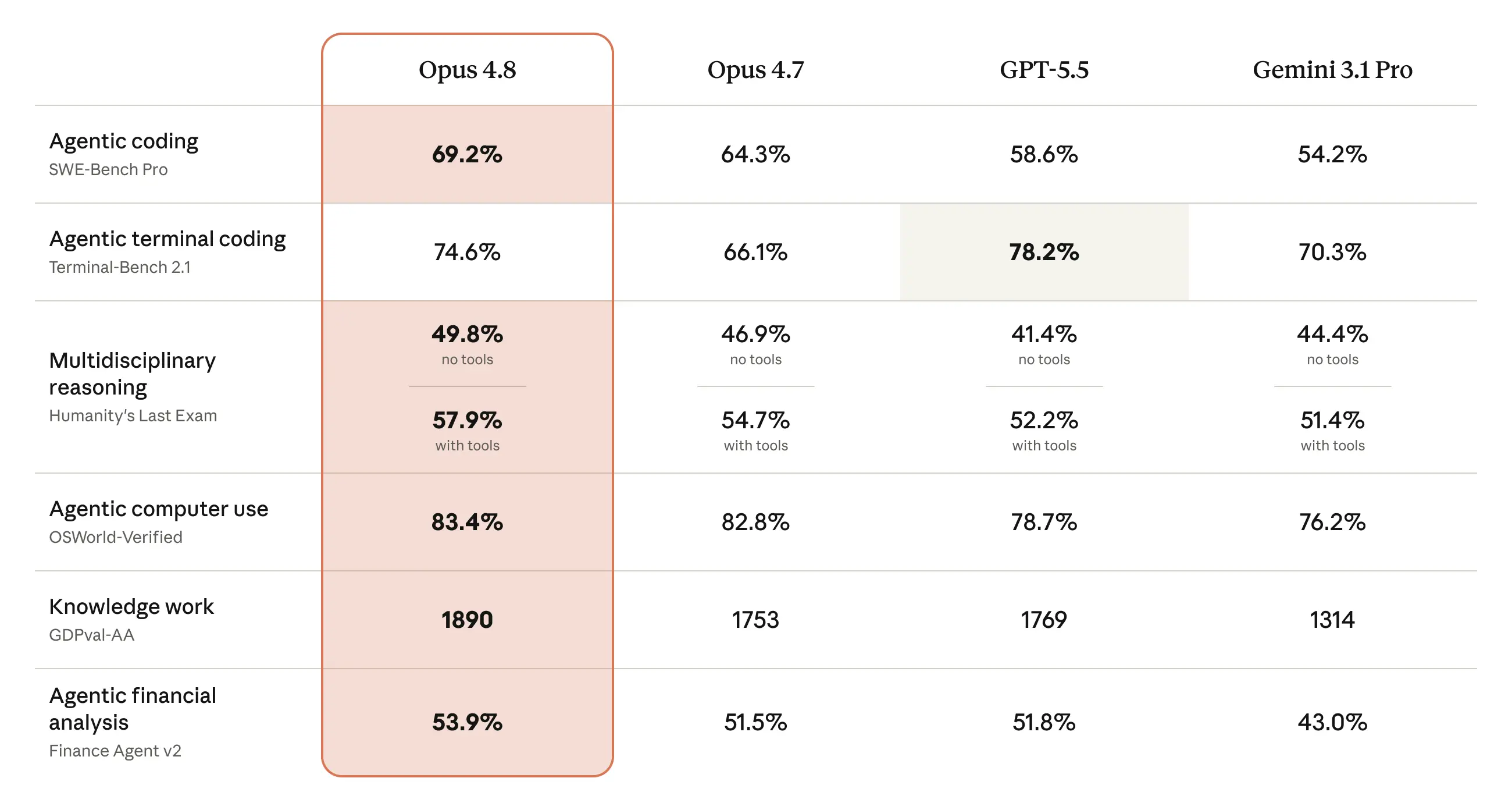
Quick verdict
- Pick Opus 4.8 for agentic coding, long autonomous runs, and tasks where a silent bug is expensive
- Pick GPT-5.5 for general-purpose reasoning, writing, and the widest ecosystem of integrations
- Pick Gemini 3.5 when speed and cost matter most, or when you need heavy multimodal throughput
If you split workloads across providers, the Apidog section below shows how to test all three from one place.
The three contenders
Claude Opus 4.8, released May 28, 2026, is Anthropic’s most capable model. It runs a 1M token context with up to 128K output tokens, uses adaptive thinking, and exposes an effort parameter that trades thoroughness for token efficiency. Anthropic positions it squarely at coding and agents.
GPT-5.5 is OpenAI’s flagship generalist, with deep tool-use support and the largest third-party ecosystem of the three. It’s the safe default for mixed workloads and the model most libraries and platforms integrate first. We compared its predecessor lineup in Cursor Composer 2.5 vs Opus 4.7 vs GPT-5.5.
Gemini 3.5 leads on speed and price. The Flash variant runs a 1M token context at a fraction of flagship pricing and streams output several times faster than other frontier models. The Gemini 3.5 Flash pricing breakdown has the numbers, and the Gemini 3.5 vs GPT-5.5 vs Opus 4.7 comparison covers the previous Opus generation.
What Anthropic reported for Opus 4.8
Anthropic’s launch announcement leads with agentic results, which tells you where the model is aimed:
- Beats GPT-5.5 on the Super-Agent benchmark, which measures end-to-end task completion
- Tops the Legal Agent Benchmark and is the first model to break 10% overall on it
- 84% on Online-Mind2Web, a web-navigation agent test
- About 4x less likely than Opus 4.7 to let a code flaw pass unremarked
These are agent and coding scores, not chat-quality scores. On general reasoning and writing, the three models trade blows, and the gap is small enough that your prompt design matters more than the model choice.
Pricing and specs
Confirmed figures for Opus 4.8, with the others framed by what’s public. Verify competitor rates on the vendor sites before you budget, since they change often.
| Dimension | Claude Opus 4.8 | GPT-5.5 | Gemini 3.5 Flash |
|---|---|---|---|
| Positioning | Agentic coding, autonomy | Generalist | Speed and cost |
| Input price (per 1M) | $5 | Check vendor | about $1.50 |
| Output price (per 1M) | $25 | Check vendor | about $9 |
| Context window | 1M tokens | Large | 1M tokens |
| Max output | 128K tokens | Large | 64K tokens |
| Thinking control | Adaptive + effort dial | Reasoning effort | Built in |
Two honest takeaways. Gemini 3.5 Flash is the clear cost leader, because Flash is a fast tier rather than a flagship; comparing it to Opus is comparing a hatchback to a truck. For exact GPT-5.5 rates, check OpenAI’s platform, and for Gemini see Google’s AI docs. Opus 4.8’s full cost math is in the pricing breakdown.
Coding and agentic work
This is Opus 4.8’s home turf. The combination of adaptive thinking, the xhigh effort level, and efficient tool calling is tuned for long agent runs where the model has to plan, call tools, and self-correct over many steps. The roughly 4x drop in code defects that slip through review is the number that matters most for unattended coding.
GPT-5.5 is a strong coder too, and its ecosystem advantage means more ready-made agent frameworks support it first. Gemini 3.5 Flash handles coding well for its price, but it’s optimized for throughput, not the deepest reasoning. For multi-agent architectures specifically, our managed agents vs Agent SDK guide covers the build choices that apply regardless of model.
Speed and cost
If your workload is high-volume, latency-sensitive, or cost-capped, Gemini 3.5 Flash wins on raw economics. It’s built to stream fast and bill light.
Opus 4.8 narrows the gap with two levers GPT-5.5 and Gemini handle differently. Dropping the effort level to low or medium cuts Opus output tokens sharply on simple work, and fast mode buys 2.5x faster output when a user is waiting. So Opus can be tuned toward speed and cost, but Gemini Flash starts there by default.
When to pick each
Opus 4.8 when:
- You’re running agentic coding sessions and a silent bug costs real money
- You need an agent to make sound judgment calls unattended
- The task genuinely needs frontier reasoning over many steps
GPT-5.5 when:
- You want one model for a broad mix of tasks
- Your stack depends on the widest ecosystem of integrations
- You’re already invested in OpenAI tooling
Gemini 3.5 when:
- Throughput and cost are the binding constraints
- You’re doing heavy multimodal or long-document work
- You need the fastest streaming for a chat UI
Test all three from one workspace
Benchmarks are a starting point. The only comparison that counts is the one run on your prompts, your data, and your latency budget. The fastest way to do that is to fire the same request at all three APIs and diff the results.
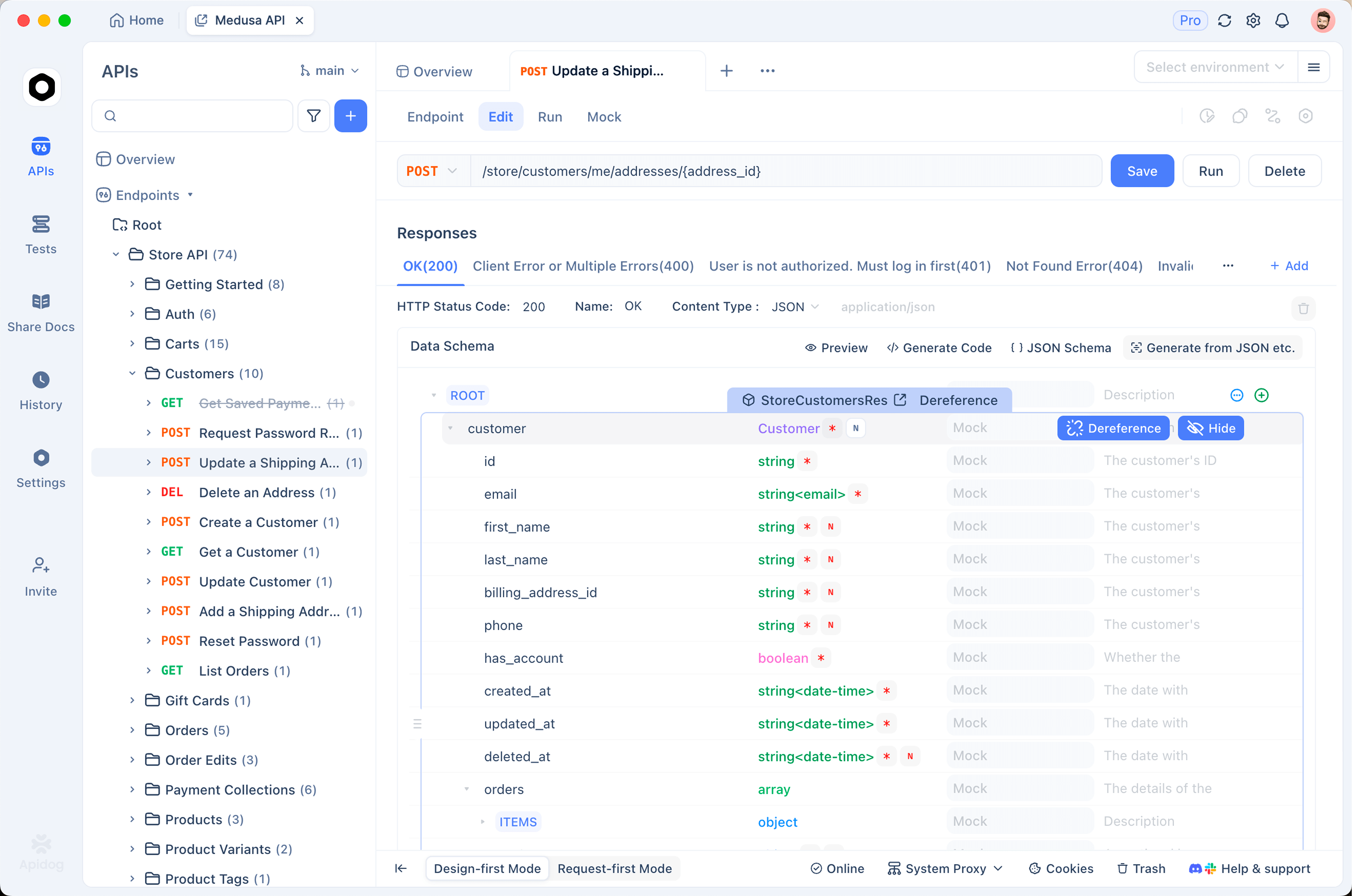
Apidog handles every provider’s API in one place:
- Save the same prompt as three requests, one each for
claude-opus-4-8, GPT-5.5, and Gemini 3.5 - Compare response quality, latency, and the
usagetoken counts side by side - Add assertions so you can score structured outputs consistently across models
- Mock each endpoint to test your fallback logic without spending credits
Download Apidog, build the three requests, and run your real workload against each. The winner for your use case is usually obvious within a dozen prompts. The Opus 4.8 API guide has the request shape to start from.
If you want to narrow that three-way comparison down to the models most relevant for code-heavy workloads,a focused GPT-5 versus Claude Opus cost and capability breakdown clarifies which is cheaper to run at production scale.
For a broader head-to-head that brings GLM-5.2 into the same field, the full 2026 frontier model roundup extends the comparison to four models and maps them across the same evaluation axes.
FAQ
Is Claude Opus 4.8 better than GPT-5.5? On agentic benchmarks Anthropic reports a win, including on Super-Agent. On general chat and writing the two are close. Opus 4.8 is the stronger pick for autonomous coding; GPT-5.5 for a broad generalist with a larger ecosystem.
Which is cheapest, Opus 4.8, GPT-5.5, or Gemini 3.5? Gemini 3.5 Flash is the cost leader because it’s a fast tier, not a flagship. Opus 4.8 is $5/$25 per million tokens. Check vendor sites for current GPT-5.5 rates.
Which model is best for coding? Opus 4.8 is built for it, with adaptive thinking, the xhigh effort level, and about 4x fewer code defects slipping through than Opus 4.7. GPT-5.5 is a close second with broader tooling.
Do all three support a 1M token context? Opus 4.8 and Gemini 3.5 Flash do. GPT-5.5 offers a large context; check OpenAI for the exact figure.
Should I trust vendor benchmark numbers? Use them as a starting point, not a verdict. Vendors report the tests they win. Validate on your own workload before committing.
Can I switch between the three without rewriting my app? Largely. Each has its own SDK, but a thin abstraction over the request and response shapes lets you swap models. Testing each one in Apidog first makes the differences clear.