
If you searched for “Claude Fable 5 without restrictions,” you probably mean one of two things. Either you want to know if the model is usable again after the shutdown, or you’re hoping for an “uncensored” version with the safety filter switched off. This article answers both honestly.
The short version: the big restriction that blocked you is gone. Fable 5 (claude-fable-5) was suspended for 19 days under U.S. export controls. Those controls lifted on June 30, 2026, and the model came back on July 1. You can use it again, worldwide, through the API, the Claude apps, and the major clouds.
What “Fable 5 without restrictions” actually means
There are two separate restrictions in the story, and search traffic mixes them up.
The first is the one people actually hit: the export-control suspension. On June 12, 2026, the U.S. Commerce Department restricted Fable 5 and its sibling Mythos 5 after the models were tied to jailbreak-driven cybersecurity misuse. Access went dark for everyone. That is the “restriction” that made the model unusable, and it’s the one that lifted. For the full timeline of that shutdown, see our writeup on why Fable 5 went down.
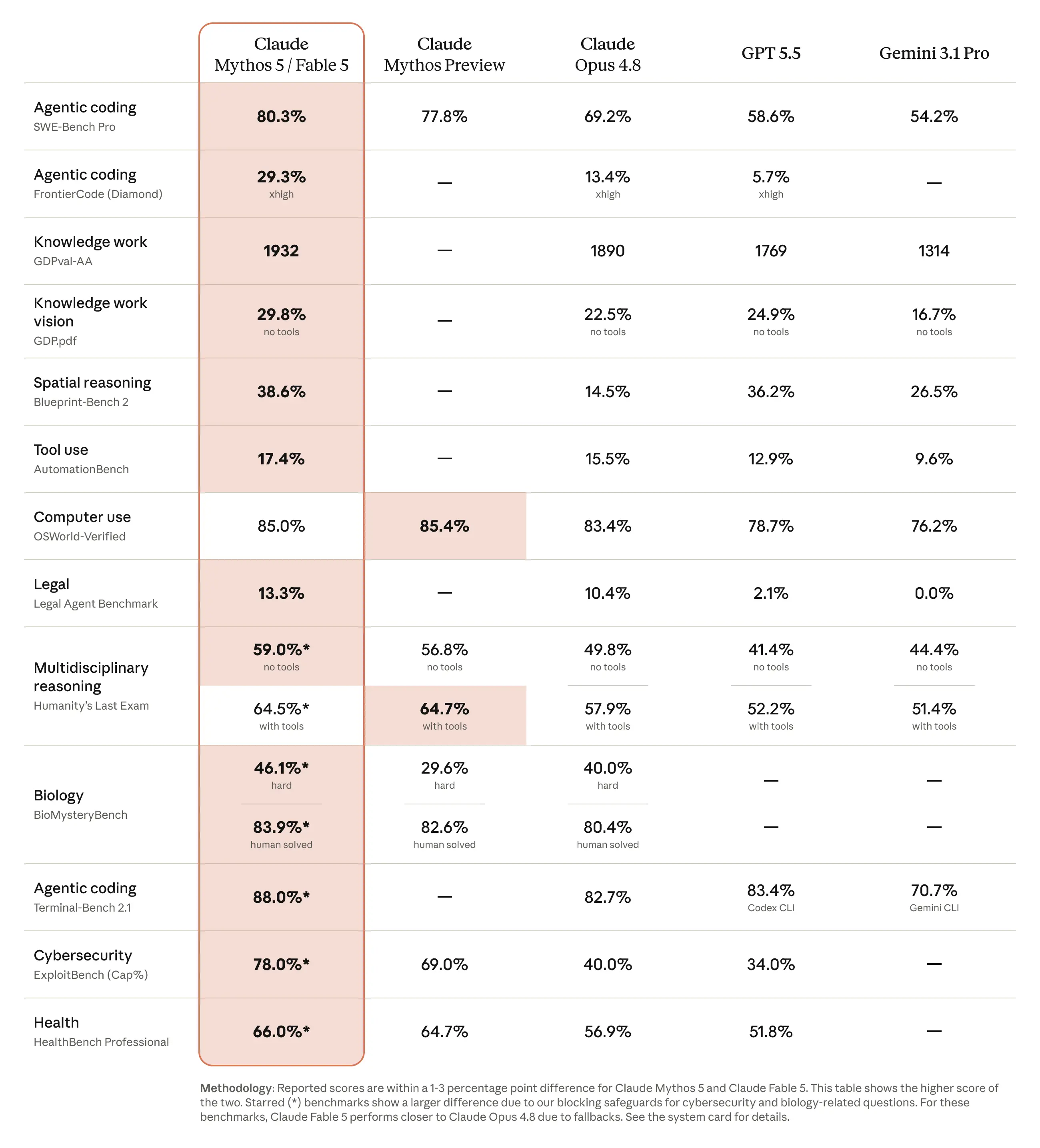
The second is the safety classifier that ships inside the redeployed model. This is not a geographic block or a licensing gate. It’s part of how Fable 5 works now, and it’s permanent. When people ask for Fable 5 “without restrictions” hoping the filter is off, they’re asking for something that doesn’t exist as a legitimate product.
So when we say you can use Fable 5 “freely” again, we mean the real thing: full access is back, and you can run it with the fewest practical limits by configuring your integration correctly. We do not mean bypassing the safety layer. If you want the deeper backstory on the return, Fable 5 is back covers what changed at launch.
The restriction that actually lifted: the export suspension
Here’s what changed on the dates that matter.
- June 12, 2026: Commerce suspends Fable 5 and Mythos 5. Global access stops.
- June 30, 2026: The administration lifts the export controls after Anthropic strengthens the models’ safeguards with the U.S. government and cloud partners.
- July 1, 2026: Fable 5 comes back online worldwide.
That’s the restriction that was blocking you, and it’s fully gone. As of today, July 6, 2026, Fable 5 is available again on the Claude apps, Claude Code, the Anthropic API, and the major cloud platforms. AWS Bedrock confirmed the model returned on July 1. Google Vertex AI and Microsoft Foundry are also listing it, though rollout can lag by account and region, so check your own model catalog before you assume it’s live for you.
If your workloads were pointed at Fable 5 before the shutdown and you cut over to a fallback model, you can move them back. Do it deliberately rather than flipping a flag. Our guide on switching back to Fable 5 walks through re-pointing API workloads without breaking anything downstream.
What stays: the safety classifier, and why you can’t turn it off
The model that came back is not the same binary that left. Anthropic retrained it with a new safety classifier, and that classifier is the price of the model being allowed back at all.
Here’s how it behaves. When a request trips the classifier (patterns tied to offensive cyber operations, bioweapon-adjacent biology, or distillation-style extraction), Fable 5 doesn’t return a hard error. It reroutes the request to Opus 4.8, which answers instead. Anthropic reports the classifier catches the flagged jailbreak in over 99% of cases. For the mechanics of how that routing decision gets made, see how Fable 5’s safety safeguards work.
You cannot disable this. It isn’t a setting, an account tier, or a header. It lives inside the model. And the reason it can’t be turned off is the whole reason Fable 5 was suspended: the misuse that triggered the export controls came through jailbreaks. The classifier is what let the model come back. Removing it would recreate the exact problem that took it offline. So “Fable 5 with the filter off” isn’t a locked feature waiting to be switched on. It’s a thing that was deliberately made impossible.
The practical takeaway: if you’re building on Fable 5, treat the reroute as normal behavior your code has to handle, not as a failure. More on that below.
How to use Fable 5 with the fewest legitimate limits
You can’t remove the safety layer, but you can remove almost every other friction point. Here’s where the real headroom is.
Full API access
The most direct route is the API. It gives you the whole model with no app-imposed session caps, and you configure everything yourself. If you’re wiring it up for the first time, how to use the Claude Fable 5 API covers the request shape end to end. If you need to know which surfaces expose the model, how to access Fable 5 lays out the API, the Claude apps, and the plans side by side.
Higher rate-limit tiers
Rate limits are the ceiling most builders actually hit, and they scale with your usage tier. Moving up a tier is the legitimate way to get more throughput. The limits and how tiers work are broken down in Fable 5 rate limits explained. If you’re bumping into caps in the Claude apps rather than the API, the perfect-prompt approach to extending your usage shows how to get more done inside the same allowance.
The July 7 usage-credits switch
This one is time-sensitive. Through July 7, Fable 5 is included for up to 50% of weekly usage limits on Pro, Max, Team, and select Enterprise plans. After July 7, continued use moves to a usage-credits model. Standard Enterprise seats don’t get the included allowance and go straight to credits.
The reported post-July-7 credit rate is $10 per million input tokens and $50 per million output tokens, but confirm the exact rates on your own billing page before you plan around them. The switch itself is real and it’s close. We track the details in the July 7 usage-credits switch explained. If you’re near the cliff, know that heavy users can exhaust the 50% ceiling before July 7 even arrives.
Handling refusals gracefully with the fallbacks parameter
Since the classifier reroutes flagged requests, your integration should expect responses that come from Opus 4.8 instead of Fable 5. The API gives you a clean way to handle this: the beta fallbacks parameter.
You send a beta header and name the fallback model. The shape looks like this:
response = client.beta.messages.create(
    model="claude-fable-5",
    betas=["server-side-fallback-2026-06-01"],
    fallbacks=[{"model": "claude-opus-4-8"}],
    max_tokens=1024,
    messages=[{"role": "user", "content": "Summarize this API spec."}],
)
The beta header string must be exactly server-side-fallback-2026-06-01. Re-verify the parameter shape against the current Claude docs before you ship, since beta syntax can move. A rerouted response bills at Opus 4.8 rates, not Fable 5 rates, so watch your cost accounting. This parameter is available on the Anthropic API and the Claude Platform on AWS; on the Message Batches API, Bedrock, Vertex, and Foundry you handle the reroute with client-side middleware instead. Full details live in how to handle Fable 5 refusals.
Writing clear, in-policy prompts
The simplest lever is often the prompt. Clear, specific, in-policy requests are less likely to trip the classifier in the first place. If a legitimate coding or research prompt keeps getting rerouted, tightening the wording and adding context usually fixes it. To be clear, this only helps genuinely in-policy work: it is not a way to disguise a request the policy blocks, and nothing in your phrasing will get a prohibited request answered. It is about not accidentally pattern-matching a flagged behavior when your actual task is benign. Ambiguous phrasing near sensitive topics is what causes those false positives, so say plainly what you are doing and why.
The honest warning about “uncensored” or “jailbroken” Fable 5
If you find a site, a Discord, a browser extension, or an API reseller advertising an “uncensored,” “jailbroken,” or “no-limits” Fable 5, walk away. There’s no polite version of this: the offer is not real, and taking it up puts you at risk.
Here’s why, mechanically. The safety classifier is part of the model weights Anthropic redeployed. A third party can’t strip it out, because they don’t have an unfiltered Fable 5 to sell. So whoever is advertising one is doing one of three things:
- Lying. They’re reselling normal Fable 5 API access with marketing copy about “no filters,” and you’re paying a markup for a feature that doesn’t exist.
- Reselling a different model. They point you at some other model (often a smaller open-weights one) dressed up as Fable 5.
- Violating Anthropic’s terms. They’re proxying real API calls through stolen or shared keys, which gets accounts banned and can expose your prompts and data to whoever runs the proxy.
Every one of those is a security and account risk. You could lose access, leak whatever you send through the proxy, or pay for a model you never actually get. The legitimate ways to reduce limits are the ones above: API access, rate tiers, credits, and fallbacks. There is no fourth door, and the people claiming there is are the risk.
Regression-test your re-enabled Fable 5 integration
If you’re re-pointing workloads back to Fable 5, the reroute behavior is a real change to your API contract, and it deserves a test pass. A request that used to return a Fable 5 completion might now come back from Opus 4.8. Does your code handle that? Does it read the response the same way, bill it correctly, and keep working when a call reroutes mid-flow?
This is where an API testing tool earns its keep. In Apidog, you can design the Fable 5 request contract, mock both the normal response and the rerouted-to-Opus response, and assert that your integration handles each correctly. Set up test scenarios that cover the fallback path so you catch a broken assumption before production does. The Apidog CLI runs that same suite in CI, so every deploy re-checks the contract instead of trusting that nothing shifted.
To be clear about scope: Apidog doesn’t remove any Fable 5 restriction, change the classifier, or open up anything gated. It tests the API behavior you already have, including the reroute, so your integration stays correct after the model came back. For the broader set of API changes to validate, our notes on Fable 5 and Mythos API changes list what to check.
FAQ
Can I use Claude Fable 5 again as of July 2026? Yes. The export-control suspension lifted on June 30, 2026, and the model returned on July 1. As of today it’s available on the API, the Claude apps, Claude Code, and the major clouds, subject to normal rollout by account and region.
Is there an uncensored version of Fable 5? No. The safety classifier is built into the redeployed model and can’t be disabled. Any “uncensored” or “jailbroken” Fable 5 being sold is either mislabeled normal access, a different model entirely, or a terms-violating proxy that risks your account and data.
Why can’t the safety filter be turned off? Because the misuse it prevents is exactly what got the model suspended. The classifier is the condition under which Fable 5 was allowed back. Removing it would recreate the problem that took it offline, so it was deliberately made non-optional.
What happens after July 7, 2026? Fable 5’s included allowance (up to 50% of weekly usage limits on Pro, Max, Team, and select Enterprise plans) ends. After that, continued use runs on usage credits. Confirm the exact credit rates on your billing page before you plan around them.
How do I keep my app working when Fable 5 reroutes a request? Handle the reroute explicitly. Use the beta fallbacks parameter (server-side-fallback-2026-06-01) on the Anthropic API to name claude-opus-4-8 as the fallback, or client-side middleware on Bedrock, Vertex, and Foundry. Then regression-test both response paths so a rerouted call doesn’t break your integration.